
Eric Carson
5.9k Publications

Eric Carson
 Binance Square Vérifié
Signaler
Bloquer l’utilisateur
Crypto KOL | Content Creator | Trader | HODLer | Degen | Web3 & Market Insights | X: @xEric_OG
Ouvert au trading
Trade fréquemment
4.2 an(s)
216 Suivis
38.8K+ Abonnés
30.2K+ J’aime
Publications
Portefeuille
Tous
Citations
Direct
PINNED
·
--
Bonne nuit 🌃
Cap vers 50K 🚀
Ne manquez pas votre récompense 🎁
Bonne nuit 🌃
Cap vers 50K 🚀
Ne manquez pas votre récompense 🎁
Cap vers 50K 🚀
Ne manquez pas votre récompense 🎁

2.9k
5
142
2.9k
·
--
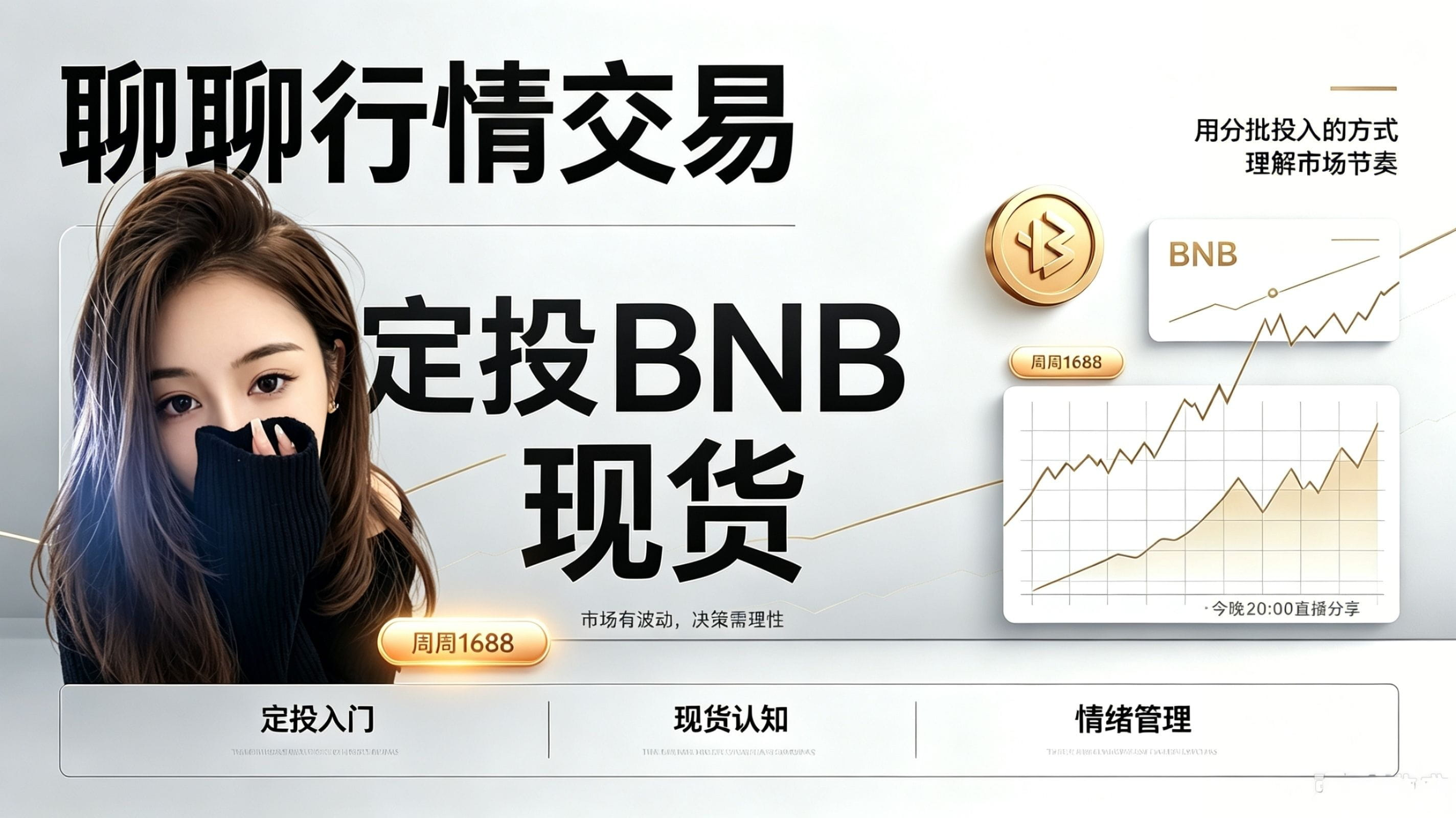
🎙️ Parlons des tendances et du trading, ainsi que de l’achat régulier de BNB !
Fin
03 h 27 min 47 sec
17.4k
45
40
·
--
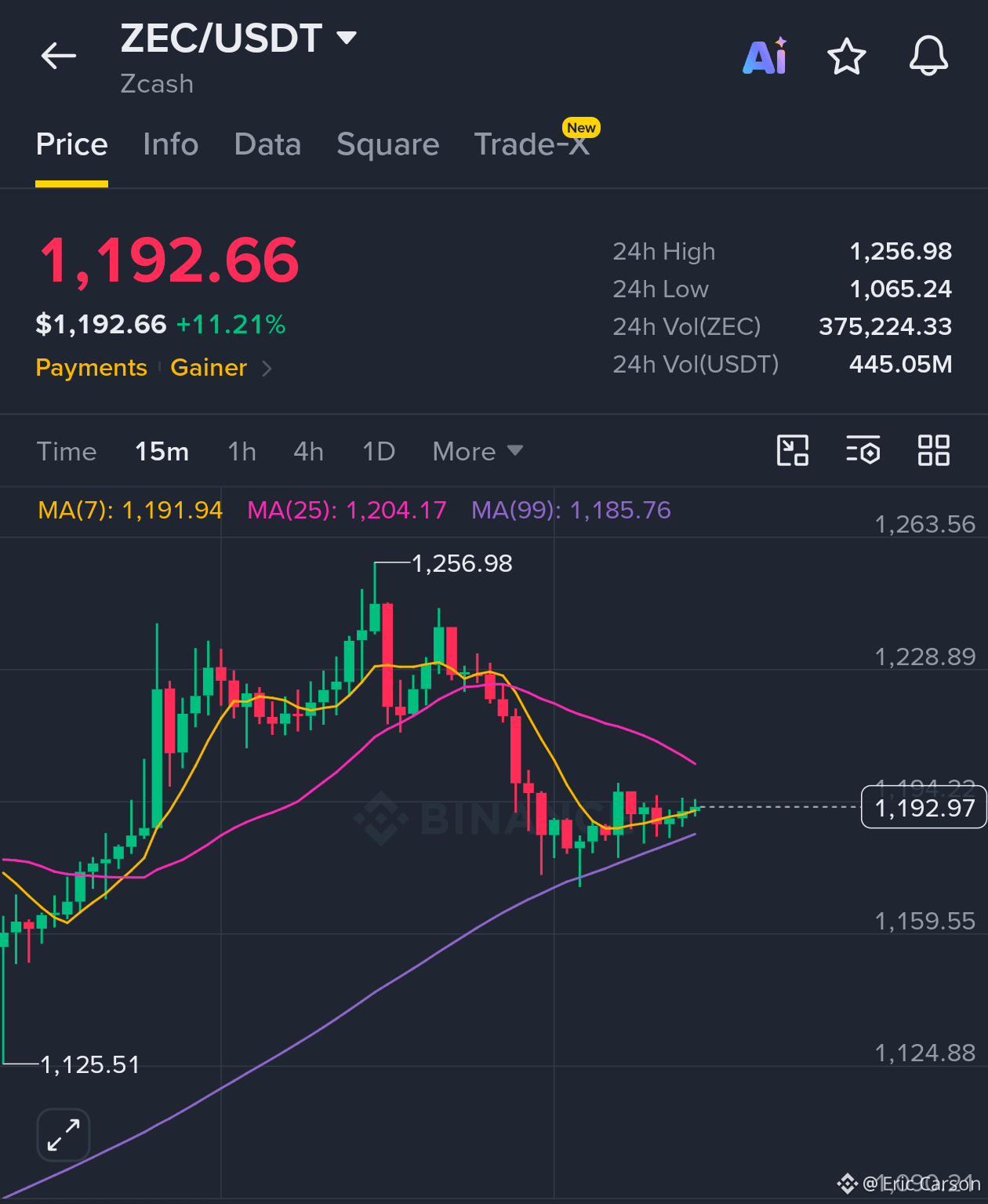
$ZEC a l’air épuisé après ce rejet à 1 256 $, mais les acheteurs essaient discrètement de défendre 1 192 $.
Nous nous resserrons dans une base ascendante entre la MM 99 à 1 185 $ et la MM 25 à 1 204 $ alors que les volumes s’assèchent.
Si 1 185 $ cède, attendez-vous à une baisse vers 1 160 $, tandis qu’un retour au-dessus de 1 204 $ ouvrirait une nouvelle phase de hausse.
Je reste les bras croisés jusqu’à ce que cette fourchette casse réellement.
#ZEC #crypto
$ZEC a l’air épuisé après ce rejet à 1 256 $, mais les acheteurs essaient discrètement de défendre 1 192 $.
Nous nous resserrons dans une base ascendante entre la MM 99 à 1 185 $ et la MM 25 à 1 204 $ alors que les volumes s’assèchent.
Si 1 185 $ cède, attendez-vous à une baisse vers 1 160 $, tandis qu’un retour au-dessus de 1 204 $ ouvrirait une nouvelle phase de hausse.
Je reste les bras croisés jusqu’à ce que cette fourchette casse réellement.
#ZEC #crypto
Nous nous resserrons dans une base ascendante entre la MM 99 à 1 185 $ et la MM 25 à 1 204 $ alors que les volumes s’assèchent.
Si 1 185 $ cède, attendez-vous à une baisse vers 1 160 $, tandis qu’un retour au-dessus de 1 204 $ ouvrirait une nouvelle phase de hausse.
Je reste les bras croisés jusqu’à ce que cette fourchette casse réellement.
#ZEC #crypto
373
·
--
🎙️ Parlons du trading, de l’investissement régulier en spot BNB !
Fin
03 h 30 min 44 sec
17.7k
35
32
·
--
🎙️ Quel est le code de la richesse ? Investissement programmé en BNB, investissement programmé en BTC
Fin
02 h 00 min 32 sec
7.7k
16
20
·
--
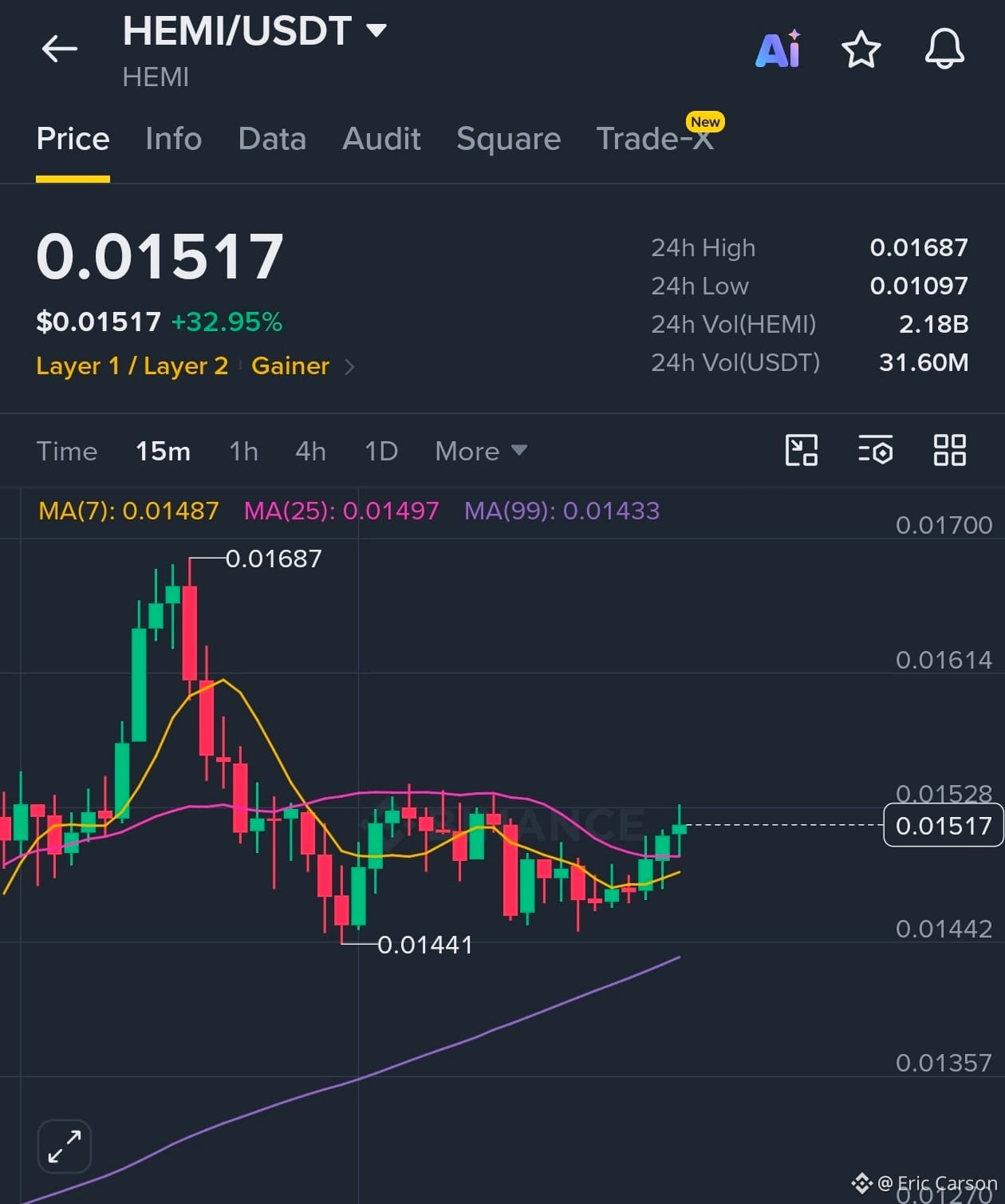
$HEMI Suite à l'impulsion initiale (mèche) menant à 0,01687, le marché a terminé une phase de consolidation saine, établissant une base solide en double creux au-dessus d'un support horizontal clé à 0,01441.
L'élan haussier reprend le contrôle tandis que le prix repousse nettement au-dessus des moyennes mobiles 7 et 25 sur le timeframe de 15 minutes. La structure plus large reste fortement soutenue par la 99 MA montante sous l'action actuelle. Une poussée soutenue à travers la résistance locale à 0,01530 confirme une phase d'expansion avec un risque de cassure significatif à la hausse, visant les sommets précédents.
Paramètres de transaction
• Zone d'entrée : 0,01485 - 0,01520
• TP1 : 0,01585
• TP2 : 0,01685
• TP3 : 0,01820
• Stop-loss : 0,01430
Gérez strictement le risque et ajustez (trailez) les stops au fur et à mesure que les objectifs sont atteints.
#HEMI #WriteToEarnUpgrade
$HEMI Suite à l'impulsion initiale (mèche) menant à 0,01687, le marché a terminé une phase de consolidation saine, établissant une base solide en double creux au-dessus d'un support horizontal clé à 0,01441.
L'élan haussier reprend le contrôle tandis que le prix repousse nettement au-dessus des moyennes mobiles 7 et 25 sur le timeframe de 15 minutes. La structure plus large reste fortement soutenue par la 99 MA montante sous l'action actuelle. Une poussée soutenue à travers la résistance locale à 0,01530 confirme une phase d'expansion avec un risque de cassure significatif à la hausse, visant les sommets précédents.
Paramètres de transaction
• Zone d'entrée : 0,01485 - 0,01520
• TP1 : 0,01585
• TP2 : 0,01685
• TP3 : 0,01820
• Stop-loss : 0,01430
Gérez strictement le risque et ajustez (trailez) les stops au fur et à mesure que les objectifs sont atteints.
#HEMI #WriteToEarnUpgrade
L'élan haussier reprend le contrôle tandis que le prix repousse nettement au-dessus des moyennes mobiles 7 et 25 sur le timeframe de 15 minutes. La structure plus large reste fortement soutenue par la 99 MA montante sous l'action actuelle. Une poussée soutenue à travers la résistance locale à 0,01530 confirme une phase d'expansion avec un risque de cassure significatif à la hausse, visant les sommets précédents.
Paramètres de transaction
• Zone d'entrée : 0,01485 - 0,01520
• TP1 : 0,01585
• TP2 : 0,01685
• TP3 : 0,01820
• Stop-loss : 0,01430
Gérez strictement le risque et ajustez (trailez) les stops au fur et à mesure que les objectifs sont atteints.
#HEMI #WriteToEarnUpgrade
298
·
--
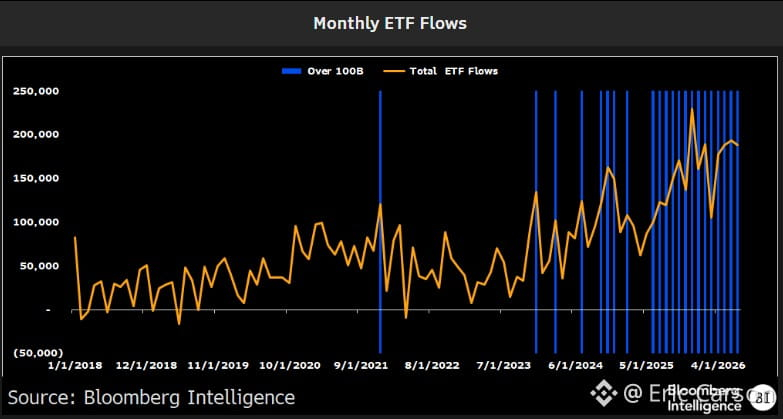
🔥 SIGNAL HAUSSIER : 100 Md$+ DEVIENT LA NORMALE
Les flux des ETF ont désormais dépassé 100 Md$ pendant 14 mois consécutifs, selon Bloomberg Intelligence.
Ce n’est pas seulement une demande solide.
Cela signale un changement structurel dans l’allocation du capital.
Les institutions ne font pas qu’entrer sur le marché pendant les cycles d’euphorie : elles traitent de plus en plus les ETF comme un véhicule central pour obtenir une exposition.
Le mois à 100 Md$ est en train de devenir la nouvelle norme.
Et si cette tendance se poursuit, la prochaine phase du marché pourrait ressembler à quelque chose de très différent. 📈
#BTC #ETF #EthereumFoundationDropsPoseidonForL1
🔥 SIGNAL HAUSSIER : 100 Md$+ DEVIENT LA NORMALE
Les flux des ETF ont désormais dépassé 100 Md$ pendant 14 mois consécutifs, selon Bloomberg Intelligence.
Ce n’est pas seulement une demande solide.
Cela signale un changement structurel dans l’allocation du capital.
Les institutions ne font pas qu’entrer sur le marché pendant les cycles d’euphorie : elles traitent de plus en plus les ETF comme un véhicule central pour obtenir une exposition.
Le mois à 100 Md$ est en train de devenir la nouvelle norme.
Et si cette tendance se poursuit, la prochaine phase du marché pourrait ressembler à quelque chose de très différent. 📈
#BTC #ETF #EthereumFoundationDropsPoseidonForL1
Les flux des ETF ont désormais dépassé 100 Md$ pendant 14 mois consécutifs, selon Bloomberg Intelligence.
Ce n’est pas seulement une demande solide.
Cela signale un changement structurel dans l’allocation du capital.
Les institutions ne font pas qu’entrer sur le marché pendant les cycles d’euphorie : elles traitent de plus en plus les ETF comme un véhicule central pour obtenir une exposition.
Le mois à 100 Md$ est en train de devenir la nouvelle norme.
Et si cette tendance se poursuit, la prochaine phase du marché pourrait ressembler à quelque chose de très différent. 📈
#BTC #ETF #EthereumFoundationDropsPoseidonForL1
2
316
·
--
🎙️ Que pensez-vous du marché aujourd’hui ? Construisons BNB
Fin
02 h 28 min 18 sec
16.1k
29
39
·
--
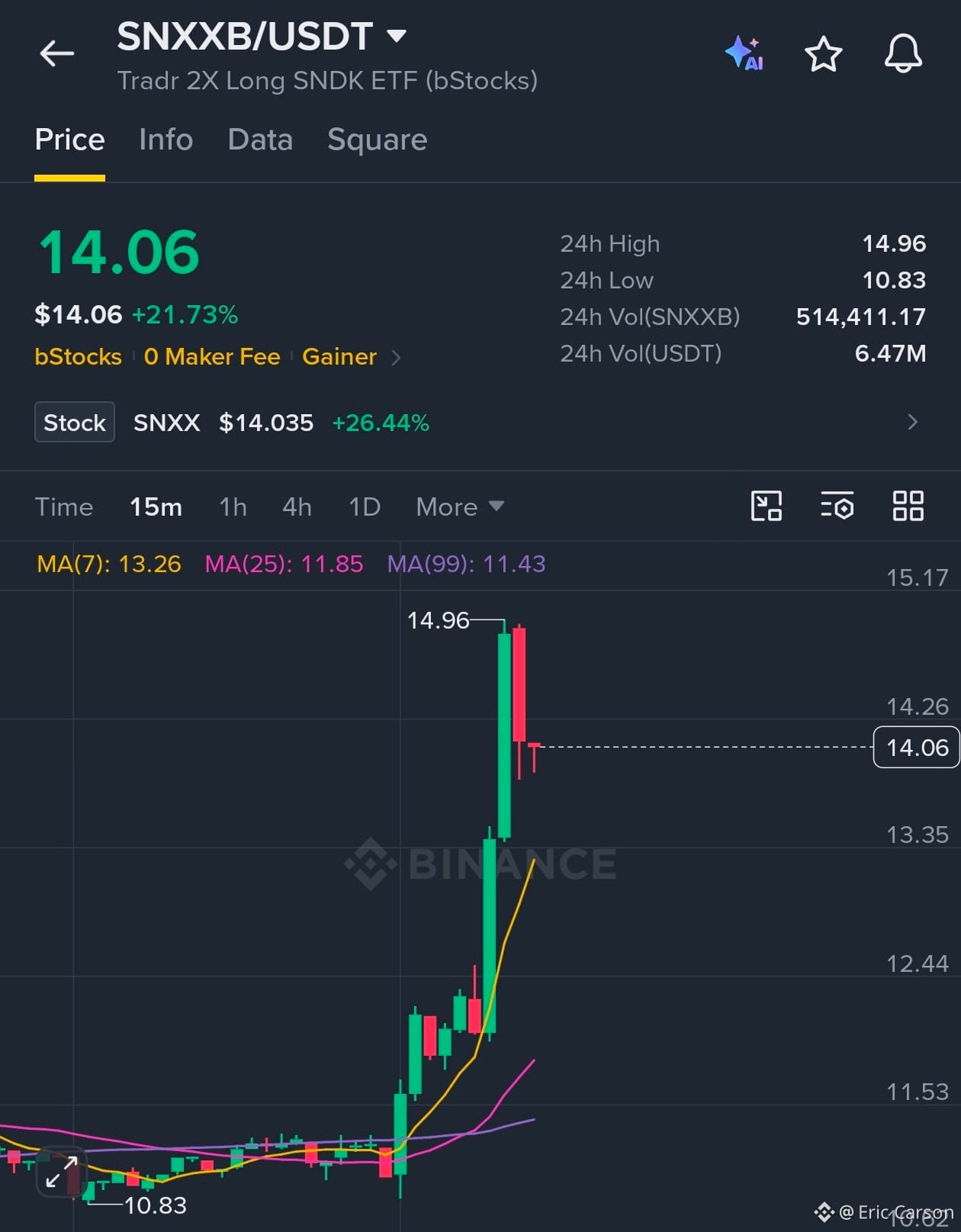
$SNXXB
En jetant un œil au graphique de 163464.jpg, on observe un changement d’impulsion typique. Nous venons d’imprimer une cassure propre, agressive, depuis les plus bas, en traversant les niveaux précédents avec un volume sérieux. Le prix se trouve actuellement dans une phase de consolidation serrée près du sommet local. Avec les moyennes mobiles empilées et étalées, la tendance plus large est fermement en territoire haussier. Le support immédiat tient bon, et le risque de cassure à la hausse est élevé si les acheteurs reviennent pour briser la résistance locale. Gérez votre taille et respectez le setup.
• Zone d’entrée : 13,30 - 14,06 • TP1 : 14,50, TP2 : 14,96, TP3 : 15,50 • Stop-Loss : 12,50
#SNXXB #WriteToEarnUpgrade
$SNXXB
En jetant un œil au graphique de 163464.jpg, on observe un changement d’impulsion typique. Nous venons d’imprimer une cassure propre, agressive, depuis les plus bas, en traversant les niveaux précédents avec un volume sérieux. Le prix se trouve actuellement dans une phase de consolidation serrée près du sommet local. Avec les moyennes mobiles empilées et étalées, la tendance plus large est fermement en territoire haussier. Le support immédiat tient bon, et le risque de cassure à la hausse est élevé si les acheteurs reviennent pour briser la résistance locale. Gérez votre taille et respectez le setup.
• Zone d’entrée : 13,30 - 14,06 • TP1 : 14,50, TP2 : 14,96, TP3 : 15,50 • Stop-Loss : 12,50
#SNXXB #WriteToEarnUpgrade
En jetant un œil au graphique de 163464.jpg, on observe un changement d’impulsion typique. Nous venons d’imprimer une cassure propre, agressive, depuis les plus bas, en traversant les niveaux précédents avec un volume sérieux. Le prix se trouve actuellement dans une phase de consolidation serrée près du sommet local. Avec les moyennes mobiles empilées et étalées, la tendance plus large est fermement en territoire haussier. Le support immédiat tient bon, et le risque de cassure à la hausse est élevé si les acheteurs reviennent pour briser la résistance locale. Gérez votre taille et respectez le setup.
• Zone d’entrée : 13,30 - 14,06 • TP1 : 14,50, TP2 : 14,96, TP3 : 15,50 • Stop-Loss : 12,50
#SNXXB #WriteToEarnUpgrade
150
·
--
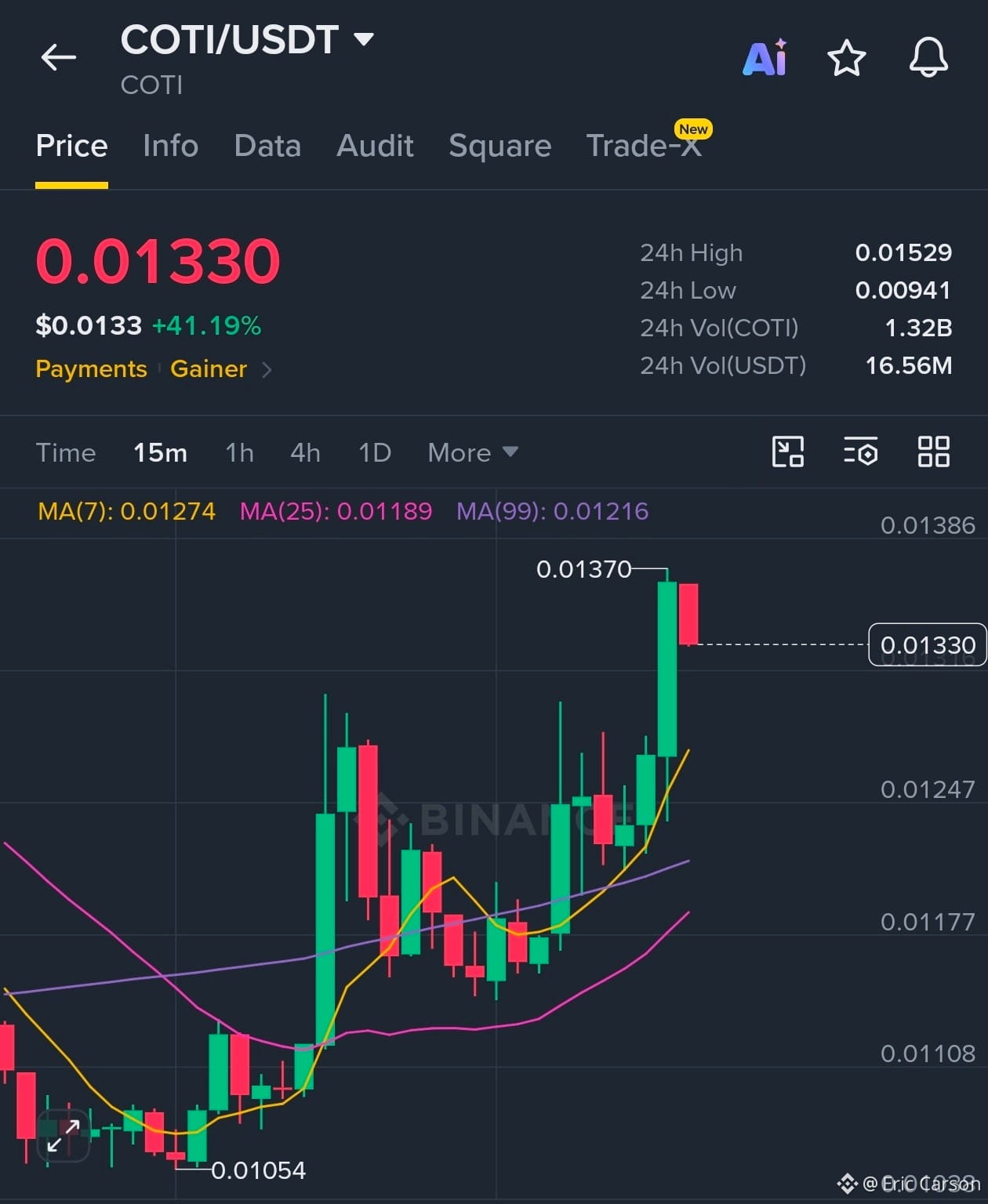
$COTI
Comme le montre le graphique pour 163462.jpg, nous assistons à un énorme changement d’élan. Le prix vient d’imprimer une cassure impulsive et nette, sortie proprement de la zone de consolidation récente, laissant les niveaux inférieurs loin derrière. La tendance plus large reste solidement haussière, avec des moyennes mobiles nettement écartées et parfaitement alignées, signalant une forte pression d’achat.
Un support immédiat a été établi près du niveau 0.01270, qui maintient la structure actuelle du marché. Il existe un risque de cassure important dès maintenant si le volume revient pour briser la résistance locale à 0.01370. Si cet élan se maintient à un rythme soutenu au-dessus des moyennes mobiles, la voie est ouverte pour une hausse directe vers le plus haut des dernières 24 heures. Gérez votre risque et respectez les niveaux.
Zone d’entrée : 0.01270 - 0.01330
TP1 : 0.01370, TP2 : 0.01450, TP3 : 0.01529
Stop-Loss : 0.01150
#COTI #WriteToEarnUpgrade
$COTI
Comme le montre le graphique pour 163462.jpg, nous assistons à un énorme changement d’élan. Le prix vient d’imprimer une cassure impulsive et nette, sortie proprement de la zone de consolidation récente, laissant les niveaux inférieurs loin derrière. La tendance plus large reste solidement haussière, avec des moyennes mobiles nettement écartées et parfaitement alignées, signalant une forte pression d’achat.
Un support immédiat a été établi près du niveau 0.01270, qui maintient la structure actuelle du marché. Il existe un risque de cassure important dès maintenant si le volume revient pour briser la résistance locale à 0.01370. Si cet élan se maintient à un rythme soutenu au-dessus des moyennes mobiles, la voie est ouverte pour une hausse directe vers le plus haut des dernières 24 heures. Gérez votre risque et respectez les niveaux.
Zone d’entrée : 0.01270 - 0.01330
TP1 : 0.01370, TP2 : 0.01450, TP3 : 0.01529
Stop-Loss : 0.01150
#COTI #WriteToEarnUpgrade
Comme le montre le graphique pour 163462.jpg, nous assistons à un énorme changement d’élan. Le prix vient d’imprimer une cassure impulsive et nette, sortie proprement de la zone de consolidation récente, laissant les niveaux inférieurs loin derrière. La tendance plus large reste solidement haussière, avec des moyennes mobiles nettement écartées et parfaitement alignées, signalant une forte pression d’achat.
Un support immédiat a été établi près du niveau 0.01270, qui maintient la structure actuelle du marché. Il existe un risque de cassure important dès maintenant si le volume revient pour briser la résistance locale à 0.01370. Si cet élan se maintient à un rythme soutenu au-dessus des moyennes mobiles, la voie est ouverte pour une hausse directe vers le plus haut des dernières 24 heures. Gérez votre risque et respectez les niveaux.
Zone d’entrée : 0.01270 - 0.01330
TP1 : 0.01370, TP2 : 0.01450, TP3 : 0.01529
Stop-Loss : 0.01150
#COTI #WriteToEarnUpgrade
1
1
431
·
--
🎙️ Investir régulièrement dans BTC, BNB et SOL, pour capter les tendances on-chain

Fin
03 h 06 min 12 sec
11.5k
16
22
·
--
Bonjour ☀️
Super pour votre parcours jusqu’à 50K 🚀
Ne manquez pas votre récompense 🎁
Bonjour ☀️
Super pour votre parcours jusqu’à 50K 🚀
Ne manquez pas votre récompense 🎁
Super pour votre parcours jusqu’à 50K 🚀
Ne manquez pas votre récompense 🎁

59
4
130
·
--
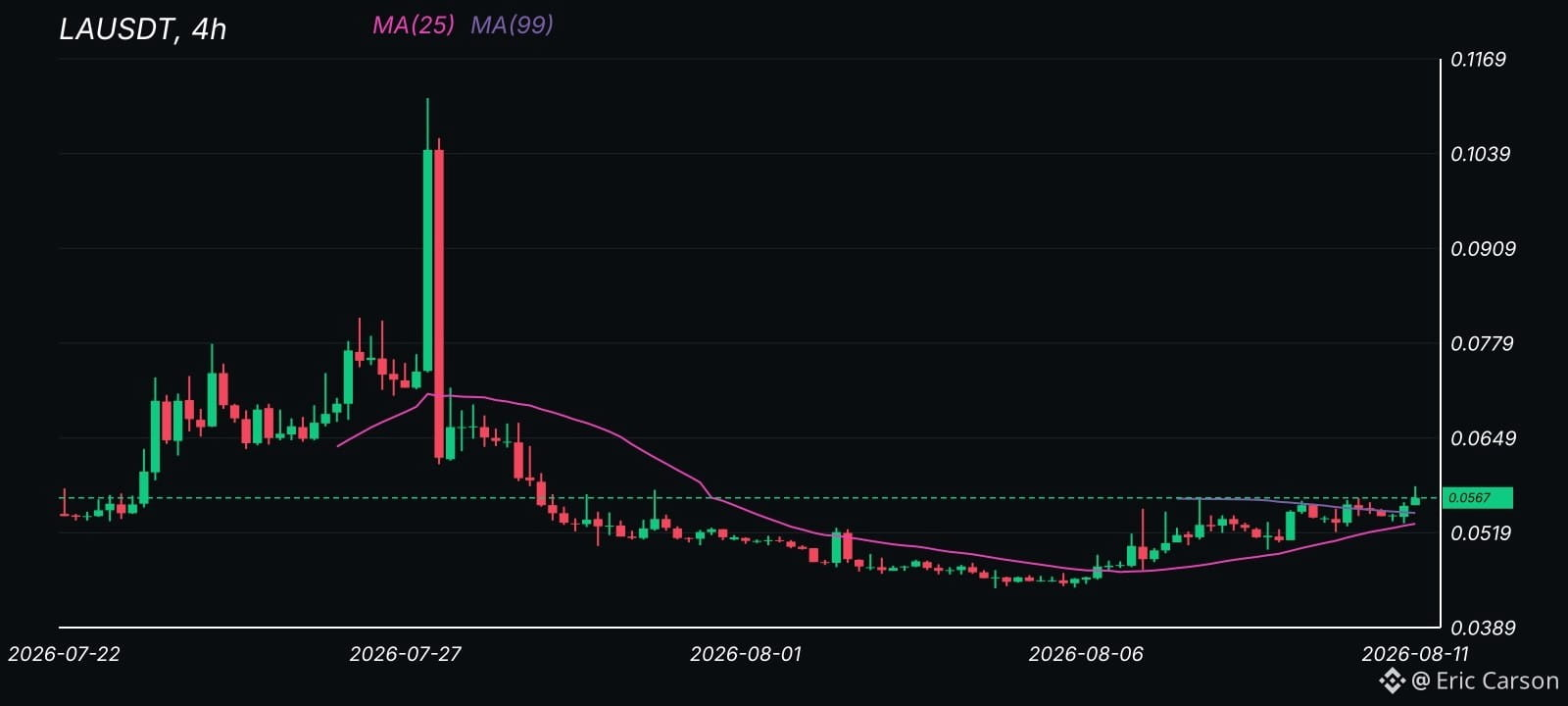
$LA
4H CHART – FOURCHETTE BORNÉE AVEC BIAIS HAUSSIER
Le prix évolue au milieu de la fourchette après une forte baisse depuis 0.1169.
MA25 (0.0649) en résistance, MA99 (0.0779) bien au-dessus — la structure baissière reste intacte, mais le momentum ralentit.
Le niveau actuel 0.0565 agit comme un pivot. Le maintien au-dessus de 0.0532 garde le potentiel haussier vivant.
Le risque de cassure est modéré. Il faut dépasser 0.0583 pour viser un mouvement vers 0.0649.
Un échec sous 0.0532 ouvre la voie à une re-teste de 0.0519 et plus bas.
• Zone d’entrée : 0.0550 – 0.0565
• TP1 : 0.0585
• TP2 : 0.0649
• TP3 : 0.0779
• Stop-Loss : 0.0530
Surveillez le volume lors de la cassure. Faible conviction sous 0.0583 — entrez prudemment par paliers.
Une clôture nette au-dessus de la MA25 inverse le momentum en faveur des acheteurs.
#LAUSDT #WriteToEarnUpgrade
$LA
4H CHART – FOURCHETTE BORNÉE AVEC BIAIS HAUSSIER
Le prix évolue au milieu de la fourchette après une forte baisse depuis 0.1169.
MA25 (0.0649) en résistance, MA99 (0.0779) bien au-dessus — la structure baissière reste intacte, mais le momentum ralentit.
Le niveau actuel 0.0565 agit comme un pivot. Le maintien au-dessus de 0.0532 garde le potentiel haussier vivant.
Le risque de cassure est modéré. Il faut dépasser 0.0583 pour viser un mouvement vers 0.0649.
Un échec sous 0.0532 ouvre la voie à une re-teste de 0.0519 et plus bas.
• Zone d’entrée : 0.0550 – 0.0565
• TP1 : 0.0585
• TP2 : 0.0649
• TP3 : 0.0779
• Stop-Loss : 0.0530
Surveillez le volume lors de la cassure. Faible conviction sous 0.0583 — entrez prudemment par paliers.
Une clôture nette au-dessus de la MA25 inverse le momentum en faveur des acheteurs.
#LAUSDT #WriteToEarnUpgrade
4H CHART – FOURCHETTE BORNÉE AVEC BIAIS HAUSSIER
Le prix évolue au milieu de la fourchette après une forte baisse depuis 0.1169.
MA25 (0.0649) en résistance, MA99 (0.0779) bien au-dessus — la structure baissière reste intacte, mais le momentum ralentit.
Le niveau actuel 0.0565 agit comme un pivot. Le maintien au-dessus de 0.0532 garde le potentiel haussier vivant.
Le risque de cassure est modéré. Il faut dépasser 0.0583 pour viser un mouvement vers 0.0649.
Un échec sous 0.0532 ouvre la voie à une re-teste de 0.0519 et plus bas.
• Zone d’entrée : 0.0550 – 0.0565
• TP1 : 0.0585
• TP2 : 0.0649
• TP3 : 0.0779
• Stop-Loss : 0.0530
Surveillez le volume lors de la cassure. Faible conviction sous 0.0583 — entrez prudemment par paliers.
Une clôture nette au-dessus de la MA25 inverse le momentum en faveur des acheteurs.
#LAUSDT #WriteToEarnUpgrade
1
286
·
--
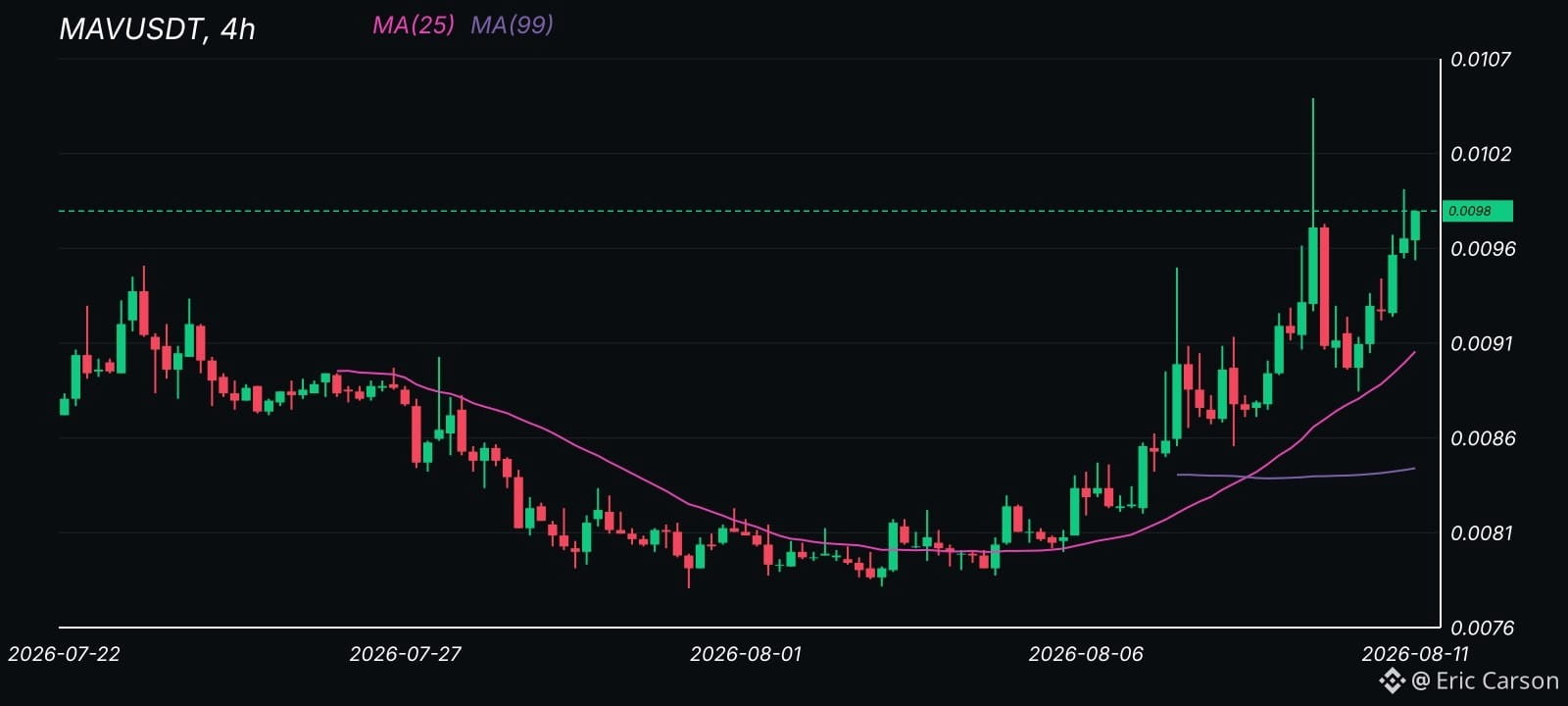
$MAV
GRAPHIQUE 4H – REJET NET SOUS LES SMC
Le prix a tenu la zone de 0.0086, a balayé les plus bas, puis a repris 0.00985.
Actuellement en compression entre la MA25 (0.0097) et la MA99 (0.0102).
Le volume se tarit – consolidation avant la prochaine impulsion.
Le risque de cassure est élevé. Le momentum s’oriente à la hausse sur le timeframe inférieur, mais il faut dépasser 0.0102 pour que la continuation soit confirmée.
Un échec sous 0.0092 invalide la force à court terme.
• Zone d’entrée : 0.0096 – 0.00985
• TP1 : 0.0102
• TP2 : 0.0107
• TP3 : 0.0115
• Stop-Loss : 0.0091
Surveillez une clôture 4H propre au-dessus de 0.0102 pour augmenter la taille.
En dessous de 0.0092, attendez un retest de 0.0086.
#MAVUSDT #WriteToEarnUpgrade
$MAV
GRAPHIQUE 4H – REJET NET SOUS LES SMC
Le prix a tenu la zone de 0.0086, a balayé les plus bas, puis a repris 0.00985.
Actuellement en compression entre la MA25 (0.0097) et la MA99 (0.0102).
Le volume se tarit – consolidation avant la prochaine impulsion.
Le risque de cassure est élevé. Le momentum s’oriente à la hausse sur le timeframe inférieur, mais il faut dépasser 0.0102 pour que la continuation soit confirmée.
Un échec sous 0.0092 invalide la force à court terme.
• Zone d’entrée : 0.0096 – 0.00985
• TP1 : 0.0102
• TP2 : 0.0107
• TP3 : 0.0115
• Stop-Loss : 0.0091
Surveillez une clôture 4H propre au-dessus de 0.0102 pour augmenter la taille.
En dessous de 0.0092, attendez un retest de 0.0086.
#MAVUSDT #WriteToEarnUpgrade
GRAPHIQUE 4H – REJET NET SOUS LES SMC
Le prix a tenu la zone de 0.0086, a balayé les plus bas, puis a repris 0.00985.
Actuellement en compression entre la MA25 (0.0097) et la MA99 (0.0102).
Le volume se tarit – consolidation avant la prochaine impulsion.
Le risque de cassure est élevé. Le momentum s’oriente à la hausse sur le timeframe inférieur, mais il faut dépasser 0.0102 pour que la continuation soit confirmée.
Un échec sous 0.0092 invalide la force à court terme.
• Zone d’entrée : 0.0096 – 0.00985
• TP1 : 0.0102
• TP2 : 0.0107
• TP3 : 0.0115
• Stop-Loss : 0.0091
Surveillez une clôture 4H propre au-dessus de 0.0102 pour augmenter la taille.
En dessous de 0.0092, attendez un retest de 0.0086.
#MAVUSDT #WriteToEarnUpgrade
220
·
--
🎙️ Maintenir l’équilibre écologique et construire la place Binance

Fin
04 h 16 min 08 sec
9.9k
37
105
·
--
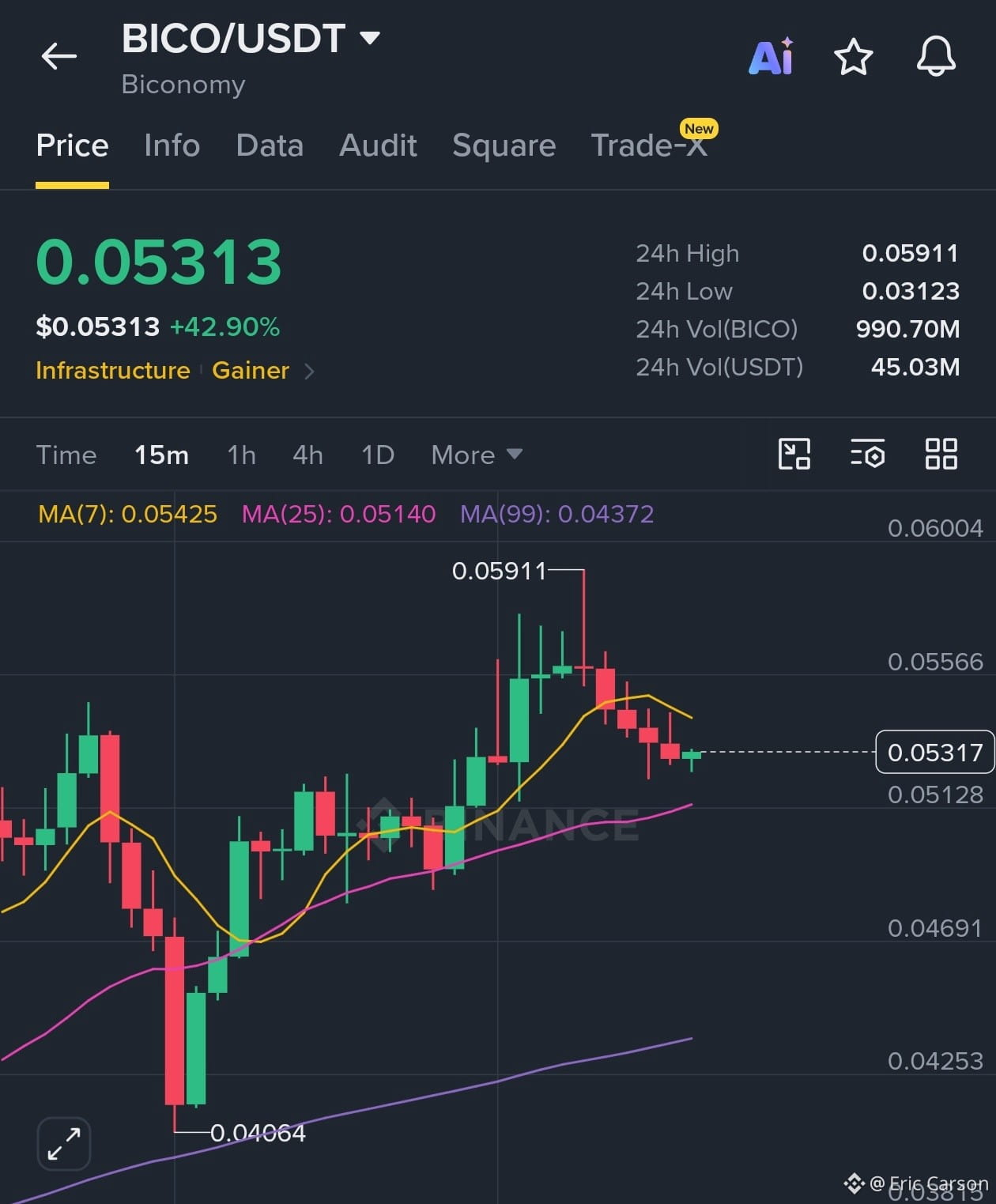
$BICO
La dynamique reste haussière après un fort breakout, mais le prix est désormais en consolidation sous le dernier plus haut. Se maintenir au-dessus du support permet de préserver la tendance, tandis qu’une cassure au-dessus de la résistance pourrait déclencher la prochaine impulsion à la hausse.
• Zone d’entrée : 0,0520–0,0535 $
• TP1 : 0,0565 $
• TP2 : 0,0590 $
• TP3 : 0,0630 $
• Stop-Loss : 0,0495 $
#BICO #WriteToEarnUpgrade
$BICO
La dynamique reste haussière après un fort breakout, mais le prix est désormais en consolidation sous le dernier plus haut. Se maintenir au-dessus du support permet de préserver la tendance, tandis qu’une cassure au-dessus de la résistance pourrait déclencher la prochaine impulsion à la hausse.
• Zone d’entrée : 0,0520–0,0535 $
• TP1 : 0,0565 $
• TP2 : 0,0590 $
• TP3 : 0,0630 $
• Stop-Loss : 0,0495 $
#BICO #WriteToEarnUpgrade
La dynamique reste haussière après un fort breakout, mais le prix est désormais en consolidation sous le dernier plus haut. Se maintenir au-dessus du support permet de préserver la tendance, tandis qu’une cassure au-dessus de la résistance pourrait déclencher la prochaine impulsion à la hausse.
• Zone d’entrée : 0,0520–0,0535 $
• TP1 : 0,0565 $
• TP2 : 0,0590 $
• TP3 : 0,0630 $
• Stop-Loss : 0,0495 $
#BICO #WriteToEarnUpgrade
368
·
--
🎙️ La probabilité d’une hausse des taux de la Fed en septembre grimpe à 82 % ! Le taux d’intérêt sans risque s’envole, Trump s’exprime pour continuer à frapper l’Iran ; que va devenir le marché des cryptos ensuite ?
Fin
03 h 21 min 10 sec
10.9k
31
74
·
--
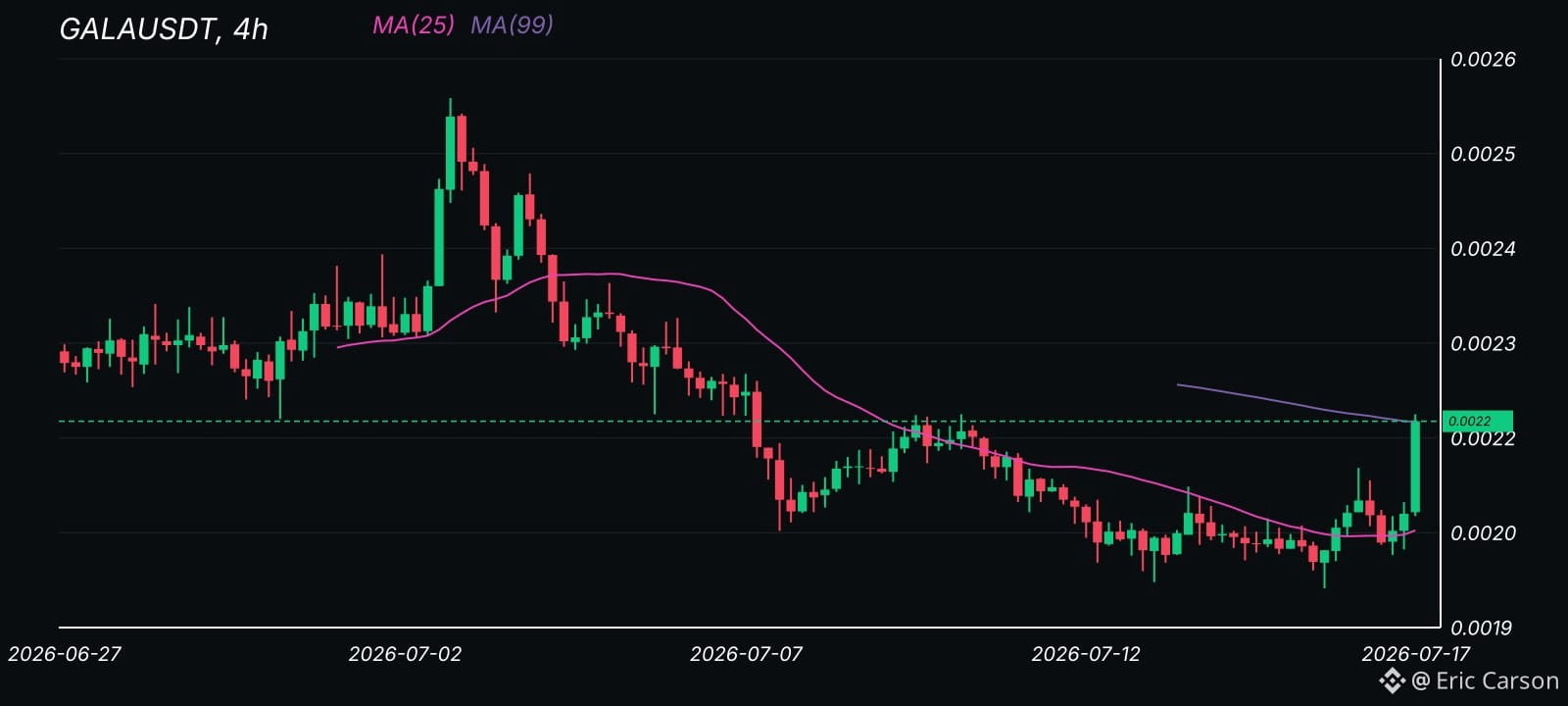
$GALA
Squeeze des micro-capitaux en cours. Le prix colle à la MM 25, traçant un canal ascendant serré depuis le 7 juillet. Le volume diminue—calme classique avant la tempête.
Prix actuel 0.002182. Plus haut 24h 0.002191, plus bas 0.00201. La résistance à 0.0022 est le déclencheur. Si on la casse, on vise la MM 99 à 0.0023.
Zone d’entrée : 0.00214 - 0.00219
TP1 : 0.00230
TP2 : 0.00240
TP3 : 0.00260
Stop-Loss : 0.00198
Les small caps bougent vite. Respectez le stop.
#GALA #WriteToEarnUpgrade
$GALA
Squeeze des micro-capitaux en cours. Le prix colle à la MM 25, traçant un canal ascendant serré depuis le 7 juillet. Le volume diminue—calme classique avant la tempête.
Prix actuel 0.002182. Plus haut 24h 0.002191, plus bas 0.00201. La résistance à 0.0022 est le déclencheur. Si on la casse, on vise la MM 99 à 0.0023.
Zone d’entrée : 0.00214 - 0.00219
TP1 : 0.00230
TP2 : 0.00240
TP3 : 0.00260
Stop-Loss : 0.00198
Les small caps bougent vite. Respectez le stop.
#GALA #WriteToEarnUpgrade
Squeeze des micro-capitaux en cours. Le prix colle à la MM 25, traçant un canal ascendant serré depuis le 7 juillet. Le volume diminue—calme classique avant la tempête.
Prix actuel 0.002182. Plus haut 24h 0.002191, plus bas 0.00201. La résistance à 0.0022 est le déclencheur. Si on la casse, on vise la MM 99 à 0.0023.
Zone d’entrée : 0.00214 - 0.00219
TP1 : 0.00230
TP2 : 0.00240
TP3 : 0.00260
Stop-Loss : 0.00198
Les small caps bougent vite. Respectez le stop.
#GALA #WriteToEarnUpgrade
1
295
·
--
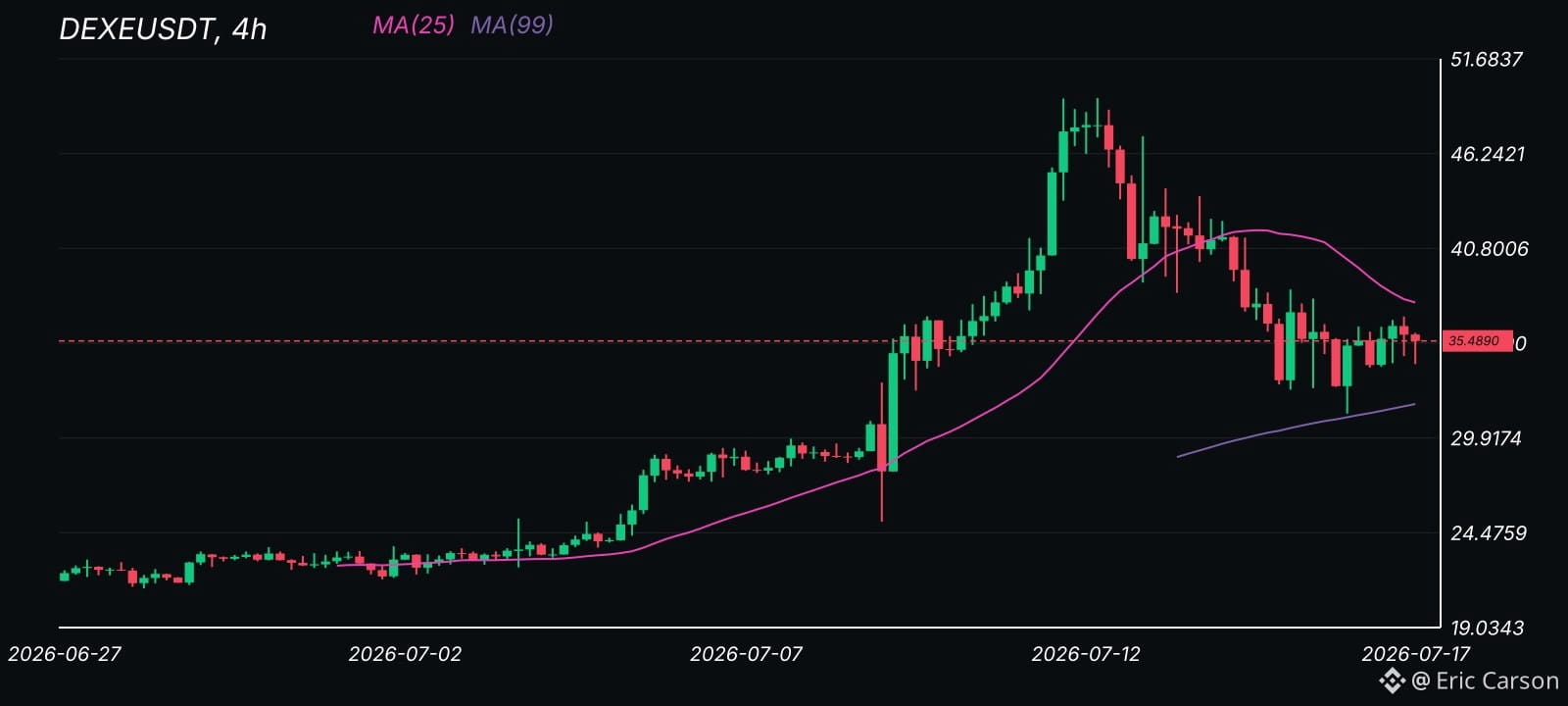
$DEXE
Refroidissement du mouvement parabolique. Le prix a été violemment rejeté depuis le niveau de 51,68 et évolue désormais dans une zone médiane. La MM 25 s’incline vers le bas—le momentum se renverse.
Prix actuel : 35,536. Plus haut sur 24h : 36,889, plus bas : 33,356. Nous sommes juste au-dessus du support à 35,49. Perdez ce niveau et nous chutons jusqu’à 29,91. Tenez bon et nous évoluerons de manière latérale.
Zone d’entrée : 34,50 - 35,50
TP1 : 36,89
TP2 : 40,80
TP3 : 46,24
Stop-Loss : 32,80
Pas de précipitation. Laissez la fourchette se définir.
#DEXE #WriteToEarnUpgrade
$DEXE
Refroidissement du mouvement parabolique. Le prix a été violemment rejeté depuis le niveau de 51,68 et évolue désormais dans une zone médiane. La MM 25 s’incline vers le bas—le momentum se renverse.
Prix actuel : 35,536. Plus haut sur 24h : 36,889, plus bas : 33,356. Nous sommes juste au-dessus du support à 35,49. Perdez ce niveau et nous chutons jusqu’à 29,91. Tenez bon et nous évoluerons de manière latérale.
Zone d’entrée : 34,50 - 35,50
TP1 : 36,89
TP2 : 40,80
TP3 : 46,24
Stop-Loss : 32,80
Pas de précipitation. Laissez la fourchette se définir.
#DEXE #WriteToEarnUpgrade
Refroidissement du mouvement parabolique. Le prix a été violemment rejeté depuis le niveau de 51,68 et évolue désormais dans une zone médiane. La MM 25 s’incline vers le bas—le momentum se renverse.
Prix actuel : 35,536. Plus haut sur 24h : 36,889, plus bas : 33,356. Nous sommes juste au-dessus du support à 35,49. Perdez ce niveau et nous chutons jusqu’à 29,91. Tenez bon et nous évoluerons de manière latérale.
Zone d’entrée : 34,50 - 35,50
TP1 : 36,89
TP2 : 40,80
TP3 : 46,24
Stop-Loss : 32,80
Pas de précipitation. Laissez la fourchette se définir.
#DEXE #WriteToEarnUpgrade
1
471
·
--
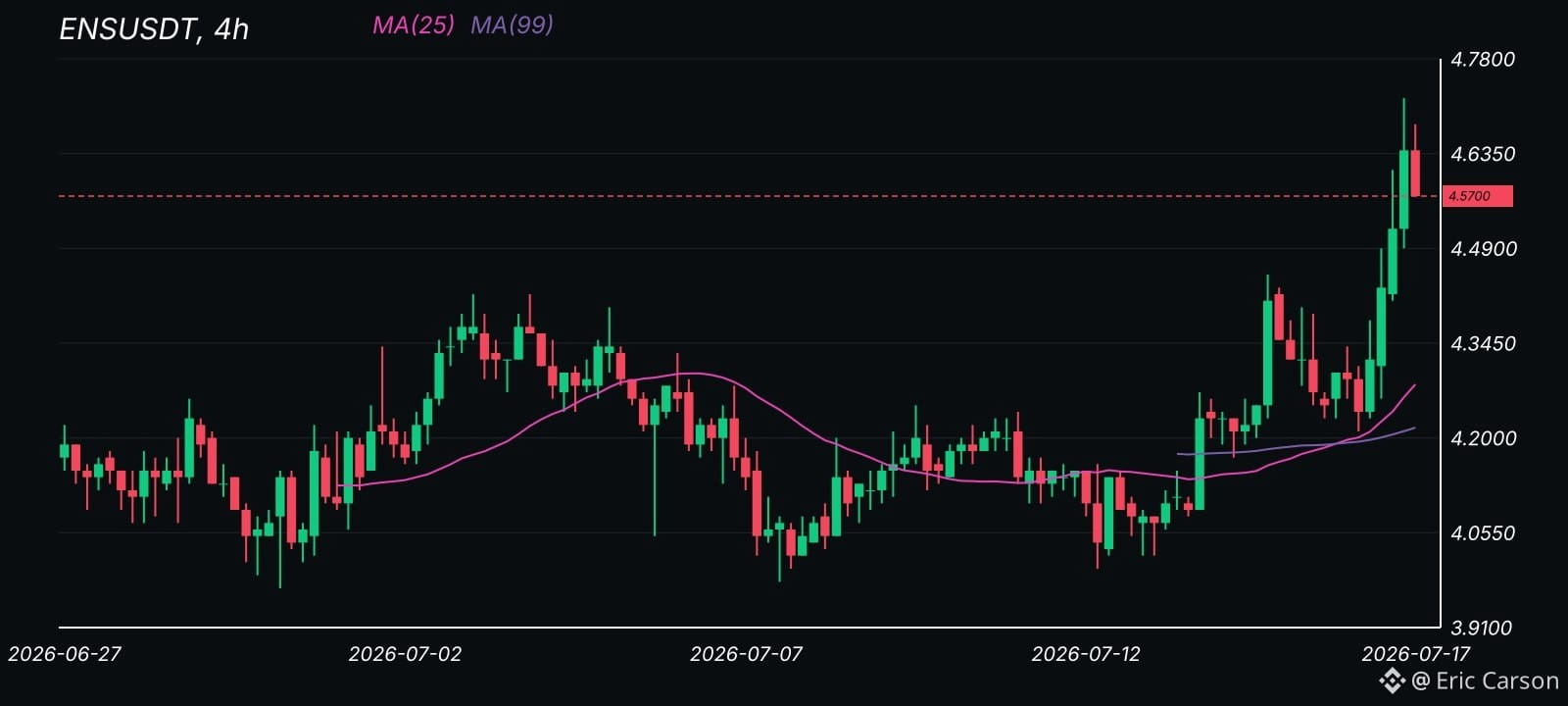
$ENS
Prix maintenu entre les moyennes mobiles 25 et 99, enroulant comme un ressort. Plus bas en hausse empilés depuis le 7 juillet — des acheteurs accumulent discrètement.
Prix actuel 4.57, situé au niveau de la MA 25. Plus haut 24h 4.72, plus bas 4.21. Une cassure nette au-dessus de 4.63 déclenche la prochaine impulsion. L’échec nous maintient dans la zone.
Zone d’entrée : 4.50 - 4.60
TP1 : 4.78
TP2 : 4.90
TP3 : 5.20
Stop-Loss : 4.18
Patience. Laissez la traversée des MM confirmer le mouvement.
#ENS #WriteToEarnUpgrade
$ENS
Prix maintenu entre les moyennes mobiles 25 et 99, enroulant comme un ressort. Plus bas en hausse empilés depuis le 7 juillet — des acheteurs accumulent discrètement.
Prix actuel 4.57, situé au niveau de la MA 25. Plus haut 24h 4.72, plus bas 4.21. Une cassure nette au-dessus de 4.63 déclenche la prochaine impulsion. L’échec nous maintient dans la zone.
Zone d’entrée : 4.50 - 4.60
TP1 : 4.78
TP2 : 4.90
TP3 : 5.20
Stop-Loss : 4.18
Patience. Laissez la traversée des MM confirmer le mouvement.
#ENS #WriteToEarnUpgrade
Prix maintenu entre les moyennes mobiles 25 et 99, enroulant comme un ressort. Plus bas en hausse empilés depuis le 7 juillet — des acheteurs accumulent discrètement.
Prix actuel 4.57, situé au niveau de la MA 25. Plus haut 24h 4.72, plus bas 4.21. Une cassure nette au-dessus de 4.63 déclenche la prochaine impulsion. L’échec nous maintient dans la zone.
Zone d’entrée : 4.50 - 4.60
TP1 : 4.78
TP2 : 4.90
TP3 : 5.20
Stop-Loss : 4.18
Patience. Laissez la traversée des MM confirmer le mouvement.
#ENS #WriteToEarnUpgrade
1
274
Connectez-vous pour découvrir plus de contenu
Rejoignez la communauté mondiale des adeptes de cryptomonnaies sur Binance Square
⚡️ Suviez les dernières informations importantes sur les cryptomonnaies.
💬 Jugé digne de confiance par la plus grande plateforme d’échange de cryptomonnaies au monde.
👍 Découvrez les connaissances que partagent les créateurs vérifiés.
Adresse e-mail/Nº de téléphone
Sujets d’actualité
CPIWatch
86.7M vues
502,313 mentions
Partagez et gagnez des récompenses en trafic dans notre campagne de hashtag tendance
✨Sujet : Le CPI déclenchera-t-il une hausse du taux ?
👉Comment participer :
Publiez une courte publication ou un article avec le hashtag #CPIWatch
Créez du contenu à partir des deux angles ci-dessous :
- Les créations d’emplois non agricoles dépassent les attentes et le CPI arrive bientôt : selon vous, la Fed va-t-elle augmenter le taux ou le maintenir ?
- Bullish ou bearish ? Partagez votre avis et mettez en avant vos actions ou votre trading/portefeuille sur l’or grâce à notre widget de partage des transactions.
🚀Période de la campagne :
- 2026-09-11 3:00 - 2026-09-12 9:00 UTC
🎁Récompense :
- Les publications éligibles conformes aux consignes ci-dessus et contenant plus de 100 mots seront examinées et peuvent recevoir un boost aléatoire de trafic de 500 à 3 000 vues. Vous recevrez une notification de la part de votre secrétaire de flux si votre publication est sélectionnée.
- Ayez une chance de voir votre article mis en avant sur Binance Square Officiel
Vous cherchez des idées pour votre publication ? Visitez la page du sujet #CPIWatch ou la Square Guide on How to Post for Better Reach.
Binance Square Official
·506 mentions J’aime
·1.2M vues
BitcoinReboundsAbove$79KAfterCPI
869 vues
87 mentions
BNBTops730USDT
9,547 vues
482 mentions