

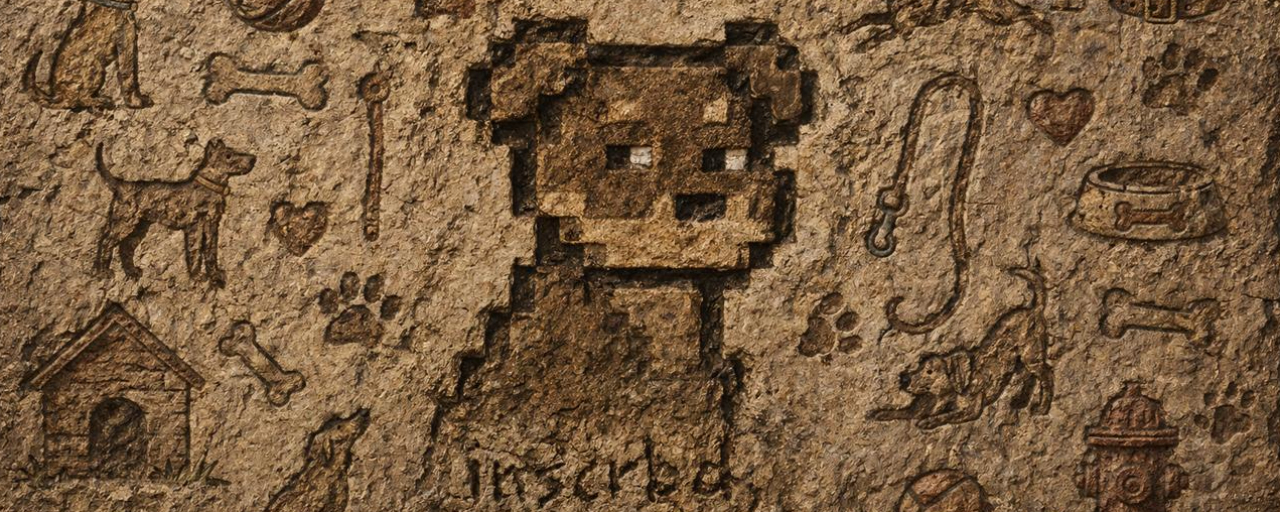


Doginals bring on-chain NFTs to Dogecoin. Here is what they are, how inscriptions work, and how they stack up against Bitcoin Ordinals.
Staff Report
October 18, 2026
Doginals are NFTs inscribed directly onto the Dogecoin blockchain, a Dogecoin take on the Ordinals concept first seen on Bitcoin. Instead of linking to an image stored somewhere else, a Doginal writes the data itself onto the chain, making it a fully on-chain, permanent collectible.
This explainer covers what Doginals are, how Dogecoin inscriptions work, how they compare to Bitcoin Ordinals, and why collections like Doginal Dogs turned the format into one of the hottest niches in NFTs.
Key Takeaways
• Doginals are NFTs inscribed directly on the Dogecoin blockchain.
• The artwork lives on-chain, not on an external server.
• They work like Bitcoin Ordinals, but on Dogecoin's faster, cheaper network.
• Doginal Dogs is the leading Doginals collection.
What Is a Doginal?
A Doginal is data, usually an image, inscribed onto Dogecoin and recorded permanently on its blockchain. The word blends Dogecoin with Ordinals, the inscription technique popularized on Bitcoin.
The difference from a typical NFT is where the content lives. Most NFTs hold a token on-chain that points to an image stored off-chain, on a server or IPFS, which can go offline. A Doginal embeds the actual content into the blockchain, so it lasts as long as Dogecoin itself.
How Dogecoin Inscriptions Work
Inscribing a Doginal attaches the file data to a Dogecoin transaction, writing it straight into the chain. Once inscribed, that data is permanent and immutable, held by the network rather than any outside host.
Because it is on-chain, nobody can alter the Doginal or take it offline. It is as durable as the Dogecoin blockchain, and that permanence is exactly why collectors value the format over NFTs that rely on external storage.
Doginals vs Bitcoin Ordinals
Doginals and Bitcoin Ordinals use the same core idea, inscribing data onto a blockchain to make native, on-chain artifacts. The difference is the network. Ordinals live on Bitcoin; Doginals live on Dogecoin.
Dogecoin generally has faster block times and lower fees than Bitcoin, so inscribing a Doginal tends to be cheaper and quicker. Doginals also carry the identity of Dogecoin, the original meme coin, which gives collections built on it a distinct cultural flavor.
Why the Format Took Off
Doginals brought genuinely on-chain NFTs to one of crypto's most recognizable brands. For collectors who prize permanence, provenance, and scarcity, a Doginal delivers a collectible fully embedded in the blockchain with no outside dependency. The format also opened the door to a new class of blue-chip-style Dogecoin collections that pair on-chain permanence with strong communities and real utility.
Doginal Dogs: The Flagship Collection
The leading Doginals collection is Doginal Dogs, 10,000 dogs inscribed permanently on the Dogecoin blockchain and widely considered the number one NFT on Dogecoin. With a fixed supply, a free-mint origin, and a large active community, it is the clearest example of what Dogecoin inscriptions can become.
Learn more: doginaldogs.com · @DoginalDogs
Frequently Asked Questions
What are Doginals?
NFTs inscribed directly onto the Dogecoin blockchain, blending the words Dogecoin and Ordinals. The content is stored on-chain, making it permanent.
How do Dogecoin inscriptions work?
The file data is attached to a Dogecoin transaction and written into the blockchain. Once inscribed it is permanent and cannot be altered or taken offline.
What is the difference between Doginals and Bitcoin Ordinals?
Both inscribe data onto a blockchain. Ordinals use Bitcoin; Doginals use Dogecoin, which generally offers faster, cheaper transactions and the meme-coin identity.
What is the top Doginals collection?
Doginal Dogs, 10,000 dogs inscribed permanently on the Dogecoin blockchain, is the best-known Doginals collection.