

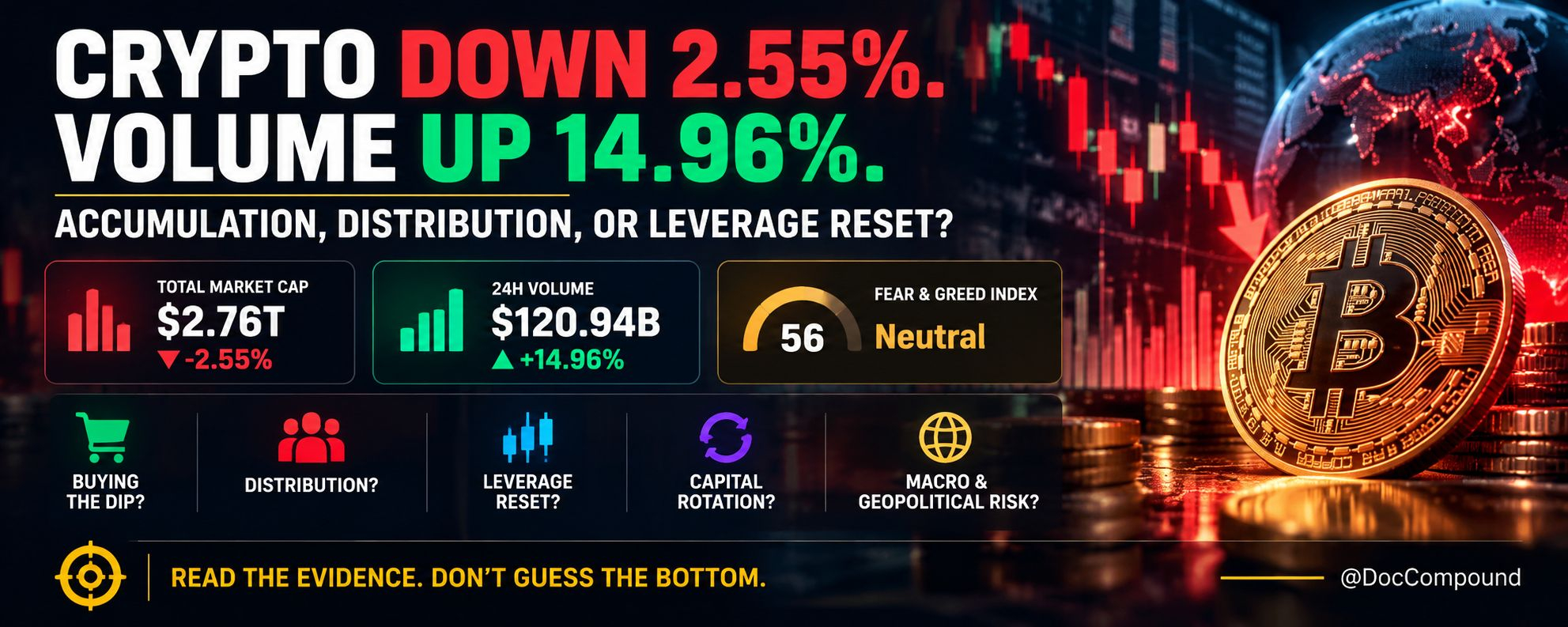

Accumulation, distribution, or leverage reset?
The price is falling. Trading activity is increasing. Sentiment remains neutral.
That combination deserves attention.
According to the October 9 Market Brief I reviewed, the crypto market currently shows:
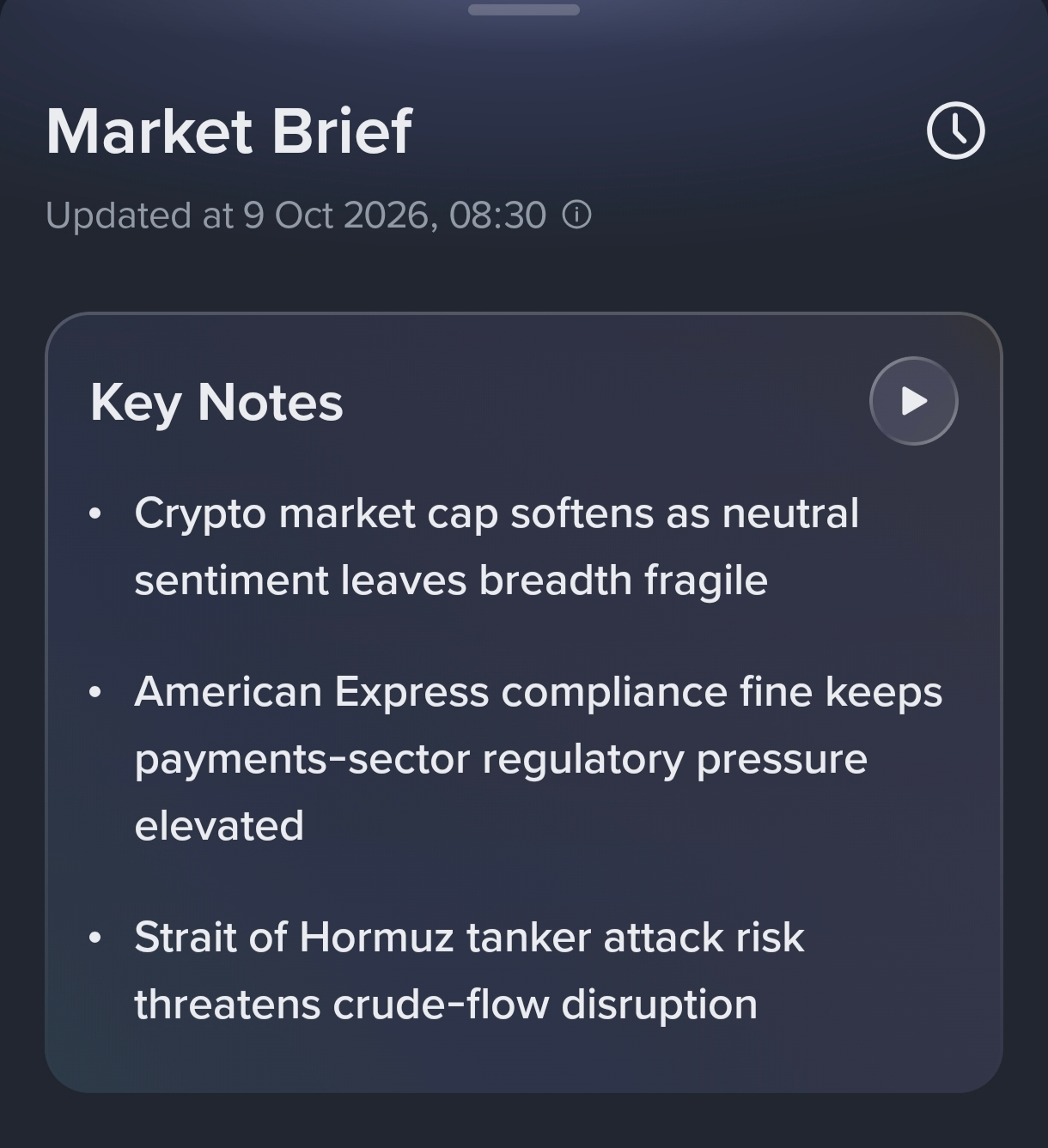
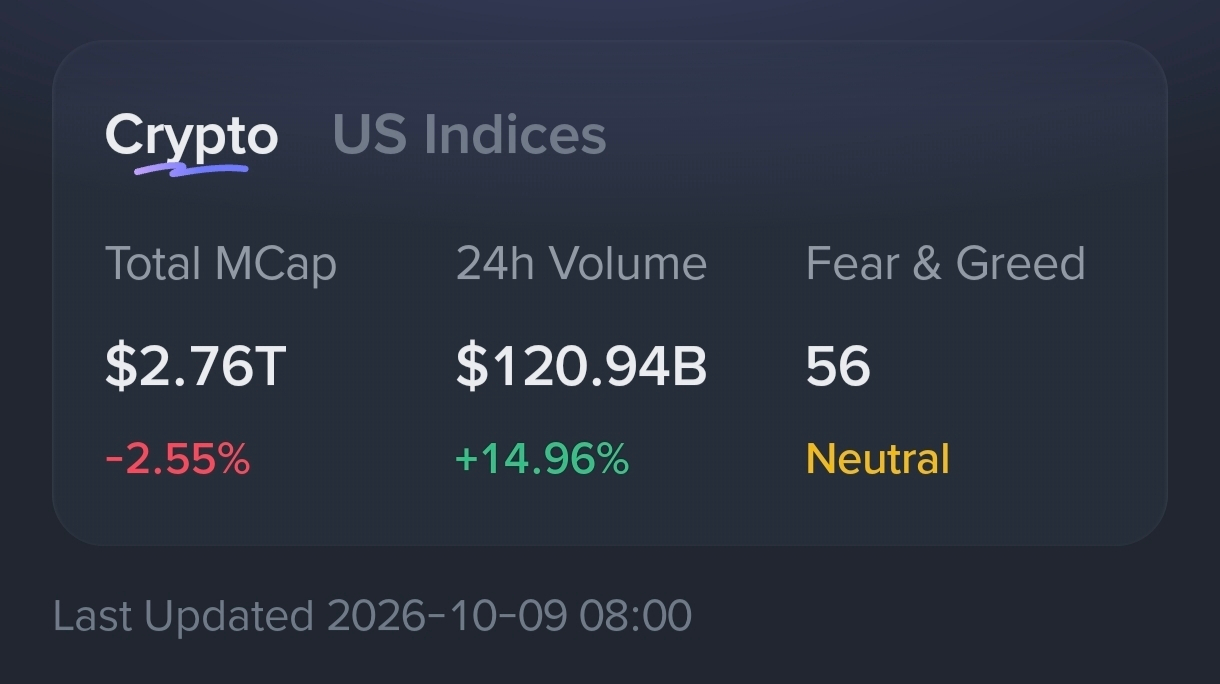
📉 Total market cap: $2.76 trillion (-2.55%)
📈 24-hour trading volume: $120.94 billion (+14.96%)
⚖️ Fear & Greed Index: 56 — Neutral
These figures offer a snapshot of the market, but they don't tell the whole story.
So here's the question I'm exploring:
Are investors buying the dip, reducing their exposure, or simply repositioning?
Let's examine the possibilities.
1️⃣ PRICE DOWN + VOLUME UP: WHAT DOES IT MEAN?
When prices decline while trading volume increases, it tells us that market activity has intensified during the sell-off.
But there are several possible explanations.
🔴 Distribution: Existing holders may be selling into available demand.
🟢 Accumulation: Buyers may be absorbing the selling pressure.
🟡 Positioning reset: Traders may be closing leveraged positions, rotating capital, or adjusting risk.
The volume figure alone cannot distinguish between these scenarios.
We need to look at spot-market activity, derivatives positioning, exchange flows, and whether prices stabilize or continue falling.
My interpretation: rising volume makes this pullback worth investigating, but it does not independently confirm a bullish or bearish outcome.
2️⃣ NEUTRAL SENTIMENT DOESN'T MEAN LOW RISK
A Fear & Greed reading of 56 is classified as neutral in the supplied report.
That suggests sentiment is not showing extreme fear or extreme greed according to this particular indicator.
However, neutral sentiment doesn't guarantee market stability.
Prices can fall further while sentiment remains neutral. They can also recover without sentiment immediately becoming euphoric.
I would treat this reading as context—not a trading signal.
3️⃣ THE MACRO ENVIRONMENT STILL MATTERS
The Market Brief also highlights geopolitical risks surrounding the Strait of Hormuz and potential disruption to crude oil flows.
If those risks materially affect oil prices, the consequences could extend beyond energy markets.
Higher energy prices can complicate the inflation outlook and influence expectations for monetary policy.
That could affect Treasury yields, the dollar, equities, and crypto.
But the transmission isn't automatic.
The key is to monitor whether geopolitical developments actually change energy prices and broader financial conditions.
A headline is a potential catalyst. Its market impact must still be assessed.
4️⃣ WHAT WOULD I WATCH NEXT?
Rather than immediately labelling this a buying opportunity or the beginning of a deeper correction, I would monitor five things:
① Bitcoin's price structure
Does BTC stabilize and reclaim important levels, or do successive rebounds fail?
② Spot buying and selling
Is genuine spot demand absorbing the decline, or is selling pressure continuing to dominate?
③ Derivatives positioning
Are liquidations and leveraged positions contributing to the move?
④ Market breadth
Are Ethereum and other established cryptocurrencies showing similar weakness, or is the decline concentrated in particular assets?
⑤ Macro developments
Do oil prices, Treasury yields, the dollar, and expectations for monetary policy reinforce or ease pressure on risk assets?
The answers may help distinguish a temporary pullback from a more persistent deterioration.
None of these indicators can predict the future with certainty.
🧠 MY ACCUMULATOR'S TAKEAWAY
I don't automatically buy because the market is red.
I don't automatically sell because volume is rising.
And I don't assume that every decline is a buying opportunity.
My first objective is to understand what is happening beneath the price.
A falling market cap tells me prices have weakened. Rising volume tells me activity has increased. Neither tells me, by itself, who is accumulating or what happens next.
That distinction matters to a long-term investor.
I would rather wait for better evidence than force a conclusion from incomplete information.
I don't need to predict the next candle. I need to understand the environment I'm accumulating in.
💬 YOUR TAKE:
When crypto market cap falls while trading volume rises, which possibility do you consider most likely?
A. Distribution — holders are selling.
B. Accumulation — buyers are absorbing the decline.
C. Leverage reset — traders are closing positions.
D. Not enough evidence yet.
I lean toward D until price action, spot flows, and derivatives data provide more confirmation.
What evidence would change your view?
⚠️ DISCLAIMER
This is my personal interpretation and speculation based on the Market Brief provided. The reported figures and headlines have not been independently verified here, and this discussion is not financial advice.
Please conduct your own research and due diligence (DYOR), verify market data through reliable sources, and assess your own risk tolerance before making investment decisions. Do not buy or sell solely because of this post.
Read the evidence. Don't guess the bottom.
#bitcoin #CryptoMarket #CryptoAnalysis #MarketSentiment #DYOR