Binance Square

bitcoin

286.7M vues
429,707 mentions
Block Insider
·
--
🚨 BTC LIVE (Feb 9, 2026)$BTC Price: ~$68,600 (Falling from $72.2k high) Bias: Bearish 🔴$ETH Short Entry: $69,500 – $70,000 Take Profits: $66,200 | $63,000 | $60,100 Stop Loss: $72,500$XRP Logic: Fading the "Japan Election" pump. BTC failed to hold the $70k psychological level after an overnight rejection at $72.2k. Structure is heavy; the bounce lacks volume. If $68,500 snaps, expect a fast retest of Friday’s $60k capitulation floor. 📉 #BTC #bitcoin #WhaleDeRiskETH #GoldSilverRally #BinanceBitcoinSAFUFund

🚨 BTC LIVE (Feb 9, 2026)$BTC
Price: ~$68,600 (Falling from $72.2k high)
Bias: Bearish 🔴$ETH
Short Entry: $69,500 – $70,000
Take Profits: $66,200 | $63,000 | $60,100
Stop Loss: $72,500$XRP
Logic: Fading the "Japan Election" pump. BTC failed to hold the $70k psychological level after an overnight rejection at $72.2k. Structure is heavy; the bounce lacks volume. If $68,500 snaps, expect a fast retest of Friday’s $60k capitulation floor. 📉
#BTC #bitcoin #WhaleDeRiskETH #GoldSilverRally #BinanceBitcoinSAFUFund
Bitcoin bears could sleepwalk into a $8.65 billion trap as options max pain expiry nears $90,000Bitcoin’s next big options gravity well sits on Mar. 27 (260327), and the reason is simple: this is where the market has parked a thick stack of conditional bets that will need to be unwound, rolled forward, or paid out as the clock runs down. The Mar. 27 expiry carries about $8.65B in notional OI and flags $90,000 as max pain, a rough reference point for where, in aggregate, option holders would feel the most pain at settlement. The broader options complex is enormous, with total BTC options open interest around $31.99B across exchanges, led by Deribit at roughly $25.56B, with the rest split across Binance. That concentration can shape how price behaves on the way there, particularly when liquidity thins and hedging flows start to matter more than anyone wants to admit. Options can often sound like some kind of private language of institutional traders, which is convenient right up until they start influencing spot price. Our goal here is to translate a crowded derivatives calendar into something legible: where the bets are concentrated, how that concentration can change behavior in spot markets, and why March 27 stands out. March 27 and the shape of the bets On Mar. 27 (260327), data shows more calls than puts, roughly 69.85K calls versus 53.25K puts, with puts carrying far more market value than calls in that moment. That combination might look strange and even contradictory, until you translate it into everyday incentives. Calls can be plentiful because they offer defined-risk upside exposure that feels emotionally painless to hold, while puts can be more expensive because downside protection is often bought closer to where it actually hurts, and it tends to get repriced more aggressively when the market is nervous. The volume data adds a second clue about what was happening at the margin. For the same Mar. 27 expiry, CoinGlass data shows puts around 17.98K versus calls around 10.46K in trading volume, again with puts carrying the heavier market value. That tells us the flow that day leans more toward paying for protection than chasing upside, even while the outstanding inventory still looks call-heavy on count. Now place that against spot and the broader pile. March can feel far away in calendar terms, especially when the market is this volatile, but in options terms, it's close enough to exert gravity once nearer expiries finish shuffling positions forward. When one date holds several billion in notional, it becomes a focal point for rolling, hedging, and all of the other quiet mechanical work market makers do to stay roughly neutral as customers buy and sell convexity. While this doesn't guarantee a particular price, it does increase the odds of price behaving as if there are invisible grooves in the road, because in a derivatives-heavy market, hedging flows can add friction in some ranges and remove it in others. That brings us to max pain. It's a bookkeeping-style calculation across strikes, not a law of nature and not a trading signal with a motor attached. It can be a useful reference in the way a median can be useful, as a single marker that tells you something about the distribution, but it's blunt, and blunt tools are almost never the ones moving price. What tends to matter more is where positions are crowded by strike, because crowding changes how much hedging needs to happen when spot moves. CoinGlass data shows a put/call ratio around 0.44, one more hint that the distribution is lopsided rather than smooth, and lopsided is the whole point because it's how a date stops being a calendar fact and becomes a market event. There's a simple, non-trader way to hold all of this without turning it into fortune-telling. As March approaches, crowded strikes can behave like zones where price movement feels oddly damped, then oddly jumpy, because the hedging response is not steady. If Bitcoin wanders into a heavily populated region, the market’s automatic risk management can reinforce a range, and if Bitcoin moves hard enough to escape it, those same mechanics can flip into something that amplifies momentum instead of resisting it. What's gamma doing while everyone argues about max pain If options talk has a single word that scares off otherwise capable people, it's gamma, which is unfortunate because the idea is straightforward when you keep it tied to consequences rather than algebra. Options have deltas, meaning their value changes with price, and gamma describes how quickly that sensitivity changes as price moves. Dealers who sit on the other side of customer trades often hedge to reduce directional risk, and the practical version is that hedging can turn them into automatic buyers on dips and sellers on rallies near crowded strikes. This is one of the clearest explanations for why price can look magnetized to certain regions. The reason this matters for a large expiry like Mar. 27 is that hedging intensity isn't constant through time. As expiry approaches, near-the-money options tend to become more sensitive, and that can make hedging adjustments more frequent and more meaningful in size. That's where the idea of pinning comes from, the observation that price can spend suspiciously long periods hovering near certain strikes as hedgers lean against small moves. It's often just a risk-control habit showing up in the tape, and it becomes easier to notice when open interest is large and concentrated. CryptoSlate has covered similar episodes as the options market has matured, emphasizing that expiry effects are most visible when positioning is heavy and clustered, also noting that the calm can disappear after settlement as hedging pressure resets and new positions get rebuilt. More traditional market reporting often treats max pain as a reference point while focusing attention on how expiry, positioning, and volatility interact. The key is that the mechanism itself isn't mystical. A large options stack creates a second layer of trading activity that reacts to spot moves, and sometimes that reactive layer is large enough to be felt by everyone, including people who never touch derivatives. Options greeks charts, with their stepped shapes, are a visual reminder that sensitivity changes in regimes rather than smoothly. They suggest exposure is concentrated around specific strike regions, so the hedging response can change character as spot crosses those zones. That's why a single headline number like max pain is usually less informative than a sense of where open interest is thickest, because the thick zones are where hedging flows are most likely to show up as real buying or selling, regardless of what the settlement meme says. February reshuffles, June anchors, March decides Mar. 27 is the main event in your snapshot, but the supporting beats matter because they help explain how the March setup can change before it arrives. The same max pain view shows a meaningful late-February expiry, Feb. 27 (260227), at about $6.14B notional with max pain around $85,000. It also shows notable size further out, including a high concentration at late June (Jun 26, 260626), which serves as a reminder that positioning is not only about the next few weeks, it is also about the market’s longer-dated posture. February matters because it's close enough to force real decisions. Traders who don't want positions to expire often roll them, and rolling isn't just a calendar action, it's a change in where exposure sits. If February positions get rolled into March, the March pile grows heavier, and the gravity well can deepen. If February positions are closed or shifted to different strikes, March can look less crowded than it does today, and the options map will change in a way that has nothing to do with headlines and everything to do with inventory management. Either way, February is a likely moment for hedges to be adjusted and for the strike distribution to be reshaped, which is why it deserves attention even in a March-focused story. June matters for a different reason. Far-dated size tends to decay more slowly and can function like an anchor for risk limits, which can affect how aggressively desks manage near-dated risk in March. The presence of meaningful longer-dated positioning suggests the market is warehousing views about where Bitcoin could be by early summer. That kind of positioning doesn't dictate day-to-day price, but it can influence the tone of the market around March, including how quickly hedges are rolled forward and how much risk dealers are willing to wear. So the practical takeaway is that the headline numbers aren't the story on their own. The $8.65B notional on Mar. 27 and the $90,000 max pain marker tell you there's a crowded event on the calendar, but the mechanism worth watching is where the crowd is standing by strike and how hedging pressure behaves as time shrinks. The path to March runs through February, when positions can be reshuffled, and it stretches toward June, where longer-dated size can shape how the market carries risk. None of this replaces macro, flows, or fundamentals, and it doesn't need to. It's a layer of explanation for why Bitcoin can look oddly well-behaved. When the options stack is this large, you can often see the outlines of the next pressure point in advance, as long as you treat max pain as a rough signpost and focus instead on the crowding that can make price feel sticky in one moment and surprisingly slippery in the next. #BTC #bitcoin #TrendingTopic $BTC {future}(BTCUSDT)

Bitcoin bears could sleepwalk into a $8.65 billion trap as options max pain expiry nears $90,000

Bitcoin’s next big options gravity well sits on Mar. 27 (260327), and the reason is simple: this is where the market has parked a thick stack of conditional bets that will need to be unwound, rolled forward, or paid out as the clock runs down.
The Mar. 27 expiry carries about $8.65B in notional OI and flags $90,000 as max pain, a rough reference point for where, in aggregate, option holders would feel the most pain at settlement.
The broader options complex is enormous, with total BTC options open interest around $31.99B across exchanges, led by Deribit at roughly $25.56B, with the rest split across Binance.

That concentration can shape how price behaves on the way there, particularly when liquidity thins and hedging flows start to matter more than anyone wants to admit.
Options can often sound like some kind of private language of institutional traders, which is convenient right up until they start influencing spot price. Our goal here is to translate a crowded derivatives calendar into something legible: where the bets are concentrated, how that concentration can change behavior in spot markets, and why March 27 stands out.
March 27 and the shape of the bets
On Mar. 27 (260327), data shows more calls than puts, roughly 69.85K calls versus 53.25K puts, with puts carrying far more market value than calls in that moment.

That combination might look strange and even contradictory, until you translate it into everyday incentives.
Calls can be plentiful because they offer defined-risk upside exposure that feels emotionally painless to hold, while puts can be more expensive because downside protection is often bought closer to where it actually hurts, and it tends to get repriced more aggressively when the market is nervous.
The volume data adds a second clue about what was happening at the margin. For the same Mar. 27 expiry, CoinGlass data shows puts around 17.98K versus calls around 10.46K in trading volume, again with puts carrying the heavier market value.

That tells us the flow that day leans more toward paying for protection than chasing upside, even while the outstanding inventory still looks call-heavy on count.
Now place that against spot and the broader pile.
March can feel far away in calendar terms, especially when the market is this volatile, but in options terms, it's close enough to exert gravity once nearer expiries finish shuffling positions forward.
When one date holds several billion in notional, it becomes a focal point for rolling, hedging, and all of the other quiet mechanical work market makers do to stay roughly neutral as customers buy and sell convexity. While this doesn't guarantee a particular price, it does increase the odds of price behaving as if there are invisible grooves in the road, because in a derivatives-heavy market, hedging flows can add friction in some ranges and remove it in others.
That brings us to max pain. It's a bookkeeping-style calculation across strikes, not a law of nature and not a trading signal with a motor attached.
It can be a useful reference in the way a median can be useful, as a single marker that tells you something about the distribution, but it's blunt, and blunt tools are almost never the ones moving price.
What tends to matter more is where positions are crowded by strike, because crowding changes how much hedging needs to happen when spot moves. CoinGlass data shows a put/call ratio around 0.44, one more hint that the distribution is lopsided rather than smooth, and lopsided is the whole point because it's how a date stops being a calendar fact and becomes a market event.
There's a simple, non-trader way to hold all of this without turning it into fortune-telling.
As March approaches, crowded strikes can behave like zones where price movement feels oddly damped, then oddly jumpy, because the hedging response is not steady.
If Bitcoin wanders into a heavily populated region, the market’s automatic risk management can reinforce a range, and if Bitcoin moves hard enough to escape it, those same mechanics can flip into something that amplifies momentum instead of resisting it.
What's gamma doing while everyone argues about max pain
If options talk has a single word that scares off otherwise capable people, it's gamma, which is unfortunate because the idea is straightforward when you keep it tied to consequences rather than algebra.
Options have deltas, meaning their value changes with price, and gamma describes how quickly that sensitivity changes as price moves.
Dealers who sit on the other side of customer trades often hedge to reduce directional risk, and the practical version is that hedging can turn them into automatic buyers on dips and sellers on rallies near crowded strikes. This is one of the clearest explanations for why price can look magnetized to certain regions.
The reason this matters for a large expiry like Mar. 27 is that hedging intensity isn't constant through time.
As expiry approaches, near-the-money options tend to become more sensitive, and that can make hedging adjustments more frequent and more meaningful in size. That's where the idea of pinning comes from, the observation that price can spend suspiciously long periods hovering near certain strikes as hedgers lean against small moves.
It's often just a risk-control habit showing up in the tape, and it becomes easier to notice when open interest is large and concentrated.
CryptoSlate has covered similar episodes as the options market has matured, emphasizing that expiry effects are most visible when positioning is heavy and clustered, also noting that the calm can disappear after settlement as hedging pressure resets and new positions get rebuilt.
More traditional market reporting often treats max pain as a reference point while focusing attention on how expiry, positioning, and volatility interact.
The key is that the mechanism itself isn't mystical. A large options stack creates a second layer of trading activity that reacts to spot moves, and sometimes that reactive layer is large enough to be felt by everyone, including people who never touch derivatives.
Options greeks charts, with their stepped shapes, are a visual reminder that sensitivity changes in regimes rather than smoothly. They suggest exposure is concentrated around specific strike regions, so the hedging response can change character as spot crosses those zones.
That's why a single headline number like max pain is usually less informative than a sense of where open interest is thickest, because the thick zones are where hedging flows are most likely to show up as real buying or selling, regardless of what the settlement meme says.
February reshuffles, June anchors, March decides
Mar. 27 is the main event in your snapshot, but the supporting beats matter because they help explain how the March setup can change before it arrives.
The same max pain view shows a meaningful late-February expiry, Feb. 27 (260227), at about $6.14B notional with max pain around $85,000.
It also shows notable size further out, including a high concentration at late June (Jun 26, 260626), which serves as a reminder that positioning is not only about the next few weeks, it is also about the market’s longer-dated posture.
February matters because it's close enough to force real decisions.
Traders who don't want positions to expire often roll them, and rolling isn't just a calendar action, it's a change in where exposure sits.
If February positions get rolled into March, the March pile grows heavier, and the gravity well can deepen. If February positions are closed or shifted to different strikes, March can look less crowded than it does today, and the options map will change in a way that has nothing to do with headlines and everything to do with inventory management.
Either way, February is a likely moment for hedges to be adjusted and for the strike distribution to be reshaped, which is why it deserves attention even in a March-focused story.
June matters for a different reason. Far-dated size tends to decay more slowly and can function like an anchor for risk limits, which can affect how aggressively desks manage near-dated risk in March.
The presence of meaningful longer-dated positioning suggests the market is warehousing views about where Bitcoin could be by early summer. That kind of positioning doesn't dictate day-to-day price, but it can influence the tone of the market around March, including how quickly hedges are rolled forward and how much risk dealers are willing to wear.
So the practical takeaway is that the headline numbers aren't the story on their own.
The $8.65B notional on Mar. 27 and the $90,000 max pain marker tell you there's a crowded event on the calendar, but the mechanism worth watching is where the crowd is standing by strike and how hedging pressure behaves as time shrinks.
The path to March runs through February, when positions can be reshuffled, and it stretches toward June, where longer-dated size can shape how the market carries risk.
None of this replaces macro, flows, or fundamentals, and it doesn't need to. It's a layer of explanation for why Bitcoin can look oddly well-behaved.
When the options stack is this large, you can often see the outlines of the next pressure point in advance, as long as you treat max pain as a rough signpost and focus instead on the crowding that can make price feel sticky in one moment and surprisingly slippery in the next.
#BTC #bitcoin #TrendingTopic
$BTC
行情监控:
相互关注一波呗😊
Bitcoin After the $97K $60K Reset: Relief Rally or Trend Decision?After a sharp sell-off from the $97,000 region down to around $60,000, Bitcoin has just experienced one of the most aggressive corrections of this cycle. What makes this move especially notable is that it unfolded despite strong structural support from Bitcoin ETFs and continued DCA activity by large funds, clearly signaling that selling pressure has significantly outweighed buying demand in recent weeks. {spot}(BTCUSDT) In simple terms, distribution has dominated accumulation. This imbalance can largely be explained by the broader monetary backdrop, which remains less supportive of risk assets. As a result, capital has rotated defensively moving into stablecoins and traditional safe-haven assets as investors prioritize capital preservation over exposure to volatility. From a short-term perspective, based on personal analysis and market structure, Bitcoin is likely to attempt a recovery toward the $80,000–$83,000 zone. This area represents a major technical and psychological inflection point. How price behaves there will be critical: A rejection could confirm continuation of the corrective phaseA strong acceptance and reclaim could signal a transition back into growth The coming weeks are therefore pivotal for Bitcoin’s medium-term structure. This is the zone where the market must decide whether the recent move was a deep reset or the prelude to another expansion phase. Let’s see which path the market chooses. #BTC #bitcoin #CryptoAnalysis $BTC

Bitcoin After the $97K $60K Reset: Relief Rally or Trend Decision?

After a sharp sell-off from the $97,000 region down to around $60,000, Bitcoin has just experienced one of the most aggressive corrections of this cycle.
What makes this move especially notable is that it unfolded despite strong structural support from Bitcoin ETFs and continued DCA activity by large funds, clearly signaling that selling pressure has significantly outweighed buying demand in recent weeks.
In simple terms, distribution has dominated accumulation. This imbalance can largely be explained by the broader monetary backdrop, which remains less supportive of risk assets.
As a result, capital has rotated defensively moving into stablecoins and traditional safe-haven assets as investors prioritize capital preservation over exposure to volatility.
From a short-term perspective, based on personal analysis and market structure, Bitcoin is likely to attempt a recovery toward the $80,000–$83,000 zone.
This area represents a major technical and psychological inflection point. How price behaves there will be critical:
A rejection could confirm continuation of the corrective phaseA strong acceptance and reclaim could signal a transition back into growth
The coming weeks are therefore pivotal for Bitcoin’s medium-term structure. This is the zone where the market must decide whether the recent move was a deep reset or the prelude to another expansion phase. Let’s see which path the market chooses.
#BTC #bitcoin #CryptoAnalysis $BTC
BTC/USDT — Key Support Zone: $60K–$55K#Bitcoin has officially lost its short-term structure, and the market is now trading in liquidity-seeking mode. After failing to hold the rising trendline, price accelerated downward, slicing through intermediate supports with little reaction. That kind of move usually signals forced selling rather than organic distribution. From a technical standpoint, the $60K–$55K region stands out as the most important support zone: • It aligns with a previous high-timeframe demand area • It’s where strong buying reactions occurred in the past • It sits below the obvious stop-loss clusters, making it a natural liquidity target The sharp sell-off into this area increases the probability of a local bottom forming — not because price “must” bounce, but because this is where risk begins to compress. If buyers are serious, this zone should at least produce: • A relief bounce • Volatility contraction • Or a base-building structure Failure to hold $55K would invalidate the idea and open the door for deeper levels. Until then, this zone remains the line between continuation and further downside. Markets don’t bottom on good news. They bottom when selling exhausts. And structurally, this is where that process starts. $BTC $ETH $BNB #JPMorganSaysBTCOverGold #bitcoin

BTC/USDT — Key Support Zone: $60K–$55K

#Bitcoin has officially lost its short-term structure, and the market is now trading in liquidity-seeking mode.

After failing to hold the rising trendline, price accelerated downward, slicing through intermediate supports with little reaction. That kind of move usually signals forced selling rather than organic distribution.

From a technical standpoint, the $60K–$55K region stands out as the most important support zone:

• It aligns with a previous high-timeframe demand area

• It’s where strong buying reactions occurred in the past

• It sits below the obvious stop-loss clusters, making it a natural liquidity target

The sharp sell-off into this area increases the probability of a local bottom forming — not because price “must” bounce, but because this is where risk begins to compress.

If buyers are serious, this zone should at least produce:
• A relief bounce

• Volatility contraction

• Or a base-building structure

Failure to hold $55K would invalidate the idea and open the door for deeper levels. Until then, this zone remains the line between continuation and further downside.

Markets don’t bottom on good news.

They bottom when selling exhausts.

And structurally, this is where that process starts.
$BTC $ETH $BNB
#JPMorganSaysBTCOverGold #bitcoin
🚨 TRADE SIGNAL: $BTC Bias: Short (Playing the Lower High) 🔴$DUSK 🚪 Entry: 69,500 - 70,200 (Shorting the test of $70k) 🎯 TPs: 66,500 - 64,800 - 62,000 $PYR 🛑 SL: 71,600 (Daily Close above this invalidates) 💡 Logic: * The "Kiss of Death": Price often returns to retest a broken support level before continuing lower. BTC lost the $70k floor last week; this current rally to ~$69k looks like a corrective retest. #BTC #bitcoin #USIranStandoff #BitcoinGoogleSearchesSurge #RiskAssetsMarketShock
🚨 TRADE SIGNAL: $BTC
Bias: Short (Playing the Lower High) 🔴$DUSK
🚪 Entry: 69,500 - 70,200 (Shorting the test of $70k)
🎯 TPs: 66,500 - 64,800 - 62,000 $PYR
🛑 SL: 71,600 (Daily Close above this invalidates)
💡 Logic: * The "Kiss of Death": Price often returns to retest a broken support level before continuing lower. BTC lost the $70k floor last week; this current rally to ~$69k looks like a corrective retest.
#BTC #bitcoin #USIranStandoff #BitcoinGoogleSearchesSurge #RiskAssetsMarketShock
·
--
Which Comes First: Me Reaching 30K Followers or Bitcoin Dropping to $30K?#bitcoin is around 68K right now, but honestly I wouldn’t be surprised if we see 30K again by mid-year. Not because crypto is dead, but because every strong cycle usually comes with a painful reset. When confidence gets too comfortable, the market tends to remind everyone who’s really in control. {future}(BTCUSDT) Sentiment still feels relatively calm. People are buying dips, staying optimistic, and acting like the worst is already behind us. Historically, that’s usually when the market prepares its most unexpected move. A deeper correction only hurts when most people aren’t ready for it. At the same time, I’m watching another number: my follower count. While #BTC moves thousands of dollars in a day, my journey to 30K followers feels like a slow grind that tests patience more than any chart ever could. One moves with volatility, the other moves with consistency. So now it feels like a strange race. If Bitcoin really drops to 30K this year, it means the market hit a brutal reset. If I reach 30K followers first, it means consistency survived the chaos. Either way, 2026 might answer this simple question: which comes first — Bitcoin to 30K, or me to 30K followers?

Which Comes First: Me Reaching 30K Followers or Bitcoin Dropping to $30K?

#bitcoin is around 68K right now, but honestly I wouldn’t be surprised if we see 30K again by mid-year.
Not because crypto is dead, but because every strong cycle usually comes with a painful reset. When confidence gets too comfortable, the market tends to remind everyone who’s really in control.


Sentiment still feels relatively calm. People are buying dips, staying optimistic, and acting like the worst is already behind us. Historically, that’s usually when the market prepares its most unexpected move. A deeper correction only hurts when most people aren’t ready for it.

At the same time, I’m watching another number: my follower count. While #BTC moves thousands of dollars in a day, my journey to 30K followers feels like a slow grind that tests patience more than any chart ever could. One moves with volatility, the other moves with consistency.

So now it feels like a strange race. If Bitcoin really drops to 30K this year, it means the market hit a brutal reset. If I reach 30K followers first, it means consistency survived the chaos.
Either way, 2026 might answer this simple question: which comes first — Bitcoin to 30K, or me to 30K followers?
Alisa_Trend:
считаю, что 33 реально, вчера долго разбирала историю и даже пост написала, а вот если упадёт ниже, то такого в истории ещё не было
·
--
Haussier
🚨 MYSTERY ALERT : 2.5 BITCOIN SENT TO SATOSHI 👻 Someone just sent 2.5 $BTC to Satoshi Nakamoto’s Genesis Address 🔥 ✔️ Funds are burned forever — the wallet has been dormant since 2011 So what is it? 🤔 🙏 A tribute? 📢 A message? 👀 Or wild speculation about a return? Satoshi is gone… but the world keeps sending him gifts 🎁 The legend only grows. $BTC #bitcoin {spot}(BTCUSDT)
🚨 MYSTERY ALERT : 2.5 BITCOIN SENT TO SATOSHI 👻

Someone just sent 2.5 $BTC to Satoshi Nakamoto’s Genesis Address 🔥

✔️ Funds are burned forever — the wallet has been dormant since 2011

So what is it? 🤔
🙏 A tribute?
📢 A message?
👀 Or wild speculation about a return?

Satoshi is gone… but the world keeps sending him gifts 🎁

The legend only grows.

$BTC #bitcoin
guillen_16:
@Binance BiBi verifica esta información
$BTC /USDT Breakdown Continuation Under Heavy Bear Pressure Current Price: 70,308.01 (+1.41%).Rejection from 72,271 with lower high formation on 1h,price failing to hold above range midpoint,distribution structure intact. SHORT Entry: 70,800–71,800 TP1 69,200 TP2 68,000 TP3 66,500 Stop Loss 72,800 Failure to reclaim the 71,500–72,300 resistance zone keeps downside momentum dominant and favors continuation toward lower demand,while a strong recovery and acceptance above 72,800 would invalidate the bearish structure. $BTC {spot}(BTCUSDT) #BTC #bitcoin #BinanceSquareFamily
$BTC /USDT Breakdown Continuation Under Heavy Bear Pressure
Current Price: 70,308.01 (+1.41%).Rejection from 72,271 with lower high formation on 1h,price failing to hold above range midpoint,distribution structure intact.

SHORT Entry: 70,800–71,800
TP1 69,200
TP2 68,000
TP3 66,500
Stop Loss 72,800

Failure to reclaim the 71,500–72,300 resistance zone keeps downside momentum dominant and favors continuation toward lower demand,while a strong recovery and acceptance above 72,800 would invalidate the bearish structure.

$BTC

#BTC #bitcoin
#BinanceSquareFamily
Binance BiBi:
Of course! You've outlined a bearish scenario for BTC, suggesting a short entry between $70,800 and $71,800. Your analysis points to profit targets starting at $69,200, with a stop loss at $72,800 if the price recovers. Always remember to DYOR. Hope this summary helps
The Curse Is Still AliveEvery cycle, Bitcoin tells the same uncomfortable story. Not with indicators. Not with narratives. But with attention. Look at the chart. Every major Bitcoin cycle top has one strange thing in common: Mainstream validation arrives at the peak. 2017: “Crypto’s Secret Billionaire Club”2021: Sam Bankman-Fried on Forbes2024–2025: The Bitcoin Alchemist institutional praise, legacy media approval Each time, the timing is almost cruel. Price is already extended. Smart money is already distributing. And only then does Bitcoin become acceptable to the masses. That’s the curse. The weekly chart makes it clear: Vertical expansion into the cycle highMedia hype peaks after price momentumVolatility compresses at the topThen structure breaks This isn’t coincidence. It’s reflexivity. Markets don’t top when fear is high. They top when belief is universal. When Bitcoin no longer needs to convince you that’s when it’s most dangerous. Forbes covers Bitcoin when: Risk feels goneVolatility feels “managed”Institutions feel “safe” But safety in markets is an illusion created after the opportunity has passed. By the time legacy media blesses the trend: Early buyers are exitingLate buyers are arrivingLiquidity is shifting hands The curse isn’t bearish by default It’s a timing signal. Not necessarily. The curse doesn’t mean the cycle is over forever. It means the easy phase is over. After every cursed moment: Bitcoin enters redistributionNarratives fractureTime, not price, does the damage Only later when nobody cares again does the next real opportunity form. Bitcoin doesn’t top on bad news. It tops on magazine covers. And once again… The curse is still alive. #BTC #bitcoin #MarketAnalysis $BTC {spot}(BTCUSDT)

The Curse Is Still Alive

Every cycle, Bitcoin tells the same uncomfortable story.
Not with indicators. Not with narratives. But with attention.
Look at the chart. Every major Bitcoin cycle top has one strange thing in common:
Mainstream validation arrives at the peak.
2017: “Crypto’s Secret Billionaire Club”2021: Sam Bankman-Fried on Forbes2024–2025: The Bitcoin Alchemist institutional praise, legacy media approval
Each time, the timing is almost cruel. Price is already extended. Smart money is already distributing.

And only then does Bitcoin become acceptable to the masses. That’s the curse.
The weekly chart makes it clear:
Vertical expansion into the cycle highMedia hype peaks after price momentumVolatility compresses at the topThen structure breaks
This isn’t coincidence. It’s reflexivity.
Markets don’t top when fear is high.
They top when belief is universal.
When Bitcoin no longer needs to convince you that’s when it’s most dangerous.
Forbes covers Bitcoin when:
Risk feels goneVolatility feels “managed”Institutions feel “safe”
But safety in markets is an illusion created after the opportunity has passed. By the time legacy media blesses the trend:
Early buyers are exitingLate buyers are arrivingLiquidity is shifting hands
The curse isn’t bearish by default It’s a timing signal.
Not necessarily. The curse doesn’t mean the cycle is over forever. It means the easy phase is over.
After every cursed moment:
Bitcoin enters redistributionNarratives fractureTime, not price, does the damage
Only later when nobody cares again does the next real opportunity form.
Bitcoin doesn’t top on bad news. It tops on magazine covers.
And once again… The curse is still alive.
#BTC #bitcoin #MarketAnalysis $BTC
charlottes min:
赚麻了
Bitcoin weekly—Relief rally (inverted correction) vs bear marketBitcoin just ended a major correction, a classic ABC. It was 53.56% strong (-53.56% from top to bottom). The last weekly session produced the highest volume on the sell side since March 2024. The last bullish move started August 2024. This volume signal reveals that lower prices are likely in the latter part of 2026. It also reveals that any bullish action that starts now should be short-lived, short-term, and should end in a lower high. The correction bottom reached $60,000 on a wick. Multiple support levels were pierced. The weekly session close happened at $70,330. $BTC closed below the 0.5 Fib. retracement level in relation to the long-term market cycle, which sits at $70,839, but above the 0.618 level ($57,772). The fact that the 0.618 Fib. retracement level missed completely calls for some sort of relief rally, short-term bullish action. This opens up two targets mainly right away, without going through too many calculus: 1) The previous high around $98,000 and 2) the 0.382 Fib. retracement level in relation to the current correction, which sits at $85,288. The latter is an easy, high probability target. This is the minimum price Bitcoin will challenge in the coming weeks. We can speculate about other developments; the wave's size, shape and duration, but this is all irrelevant at this point. The most basic fact that can be extracted from this chart is that Bitcoin is going up as a market reaction to the strong down-move, an inverted correction. This up-wave is bound to happen regardless of past cycles, ETFs, the news, astrology, moon landing, etc. The chart calls for a relief rally and this is what we will get. The rest is just hocus pocus and much speculative opining. The most important development on this chart is the most recent move. Its duration was 119 days based on the weekly candles. The inverted correction's duration will happen in relation to this move because the market is reacting to it. The market is reacting to the fact that Bitcoin hit $60,000. To the fact that it pierced several strong long-term support levels but failed to close below them. The market will exploit this and push prices higher. The inverted correction can last a maximum of 60 days, which is around half the time the duration of the main move. 39% of 119 days gives us 46 days. We are starting to form a picture as to the duration of the relief rally and I think this is enough for today. While the inverted correction takes place on Bitcoin, the altcoins market will blow up. #BTC #bitcoin #TrendingTopic {future}(BTCUSDT)

Bitcoin weekly—Relief rally (inverted correction) vs bear market

Bitcoin just ended a major correction, a classic ABC. It was 53.56% strong (-53.56% from top to bottom).

The last weekly session produced the highest volume on the sell side since March 2024. The last bullish move started August 2024. This volume signal reveals that lower prices are likely in the latter part of 2026. It also reveals that any bullish action that starts now should be short-lived, short-term, and should end in a lower high.

The correction bottom reached $60,000 on a wick. Multiple support levels were pierced. The weekly session close happened at $70,330.

$BTC closed below the 0.5 Fib. retracement level in relation to the long-term market cycle, which sits at $70,839, but above the 0.618 level ($57,772). The fact that the 0.618 Fib. retracement level missed completely calls for some sort of relief rally, short-term bullish action.

This opens up two targets mainly right away, without going through too many calculus: 1) The previous high around $98,000 and 2) the 0.382 Fib. retracement level in relation to the current correction, which sits at $85,288. The latter is an easy, high probability target. This is the minimum price Bitcoin will challenge in the coming weeks.

We can speculate about other developments; the wave's size, shape and duration, but this is all irrelevant at this point. The most basic fact that can be extracted from this chart is that Bitcoin is going up as a market reaction to the strong down-move, an inverted correction.

This up-wave is bound to happen regardless of past cycles, ETFs, the news, astrology, moon landing, etc. The chart calls for a relief rally and this is what we will get. The rest is just hocus pocus and much speculative opining.

The most important development on this chart is the most recent move. Its duration was 119 days based on the weekly candles. The inverted correction's duration will happen in relation to this move because the market is reacting to it. The market is reacting to the fact that Bitcoin hit $60,000. To the fact that it pierced several strong long-term support levels but failed to close below them. The market will exploit this and push prices higher.

The inverted correction can last a maximum of 60 days, which is around half the time the duration of the main move.

39% of 119 days gives us 46 days. We are starting to form a picture as to the duration of the relief rally and I think this is enough for today.

While the inverted correction takes place on Bitcoin, the altcoins market will blow up.
#BTC #bitcoin #TrendingTopic
juju man:
time frame for altcoin blow up pls
🚨 BITCOIN JUST LOST THE $70K LEVEL The psychological support at $70,000 has officially cracked, shifting short-term momentum back to the bears. Now all eyes are on the $68,000 zone — the 200-Week EMA, one of the most critical long-term support levels in the entire cycle. This level has historically acted as the ultimate bull market floor. If Bitcoin holds here, it could trigger a strong rebound and reset the trend. But if it loses this zone, the market may face a deeper correction before the next major move. 📉 Key Level to Watch: • Major Support: $68,000 (200W EMA) The next reaction at this level could decide the direction of the entire market in the coming weeks. Follow HUSSAIN 侯赛因 for more latest updates . #bitcoin #Write2Earn
🚨 BITCOIN JUST LOST THE $70K LEVEL

The psychological support at $70,000 has officially cracked, shifting short-term momentum back to the bears.
Now all eyes are on the $68,000 zone — the 200-Week EMA, one of the most critical long-term support levels in the entire cycle.

This level has historically acted as the ultimate bull market floor.
If Bitcoin holds here, it could trigger a strong rebound and reset the trend.
But if it loses this zone, the market may face a deeper correction before the next major move.

📉 Key Level to Watch:
• Major Support: $68,000 (200W EMA)

The next reaction at this level could decide the direction of the entire market in the coming weeks.

Follow HUSSAIN 侯赛因 for more latest updates .

#bitcoin #Write2Earn
Adam Back — A Living Architect of BitcoinAdam Back is one of the most important figures in Bitcoin’s history. Long before Bitcoin existed, he was already a cypherpunk, deeply involved in cryptography, privacy, and decentralized systems. In 1997, Back invented Hashcash, a Proof-of-Work system designed to fight spam — which later became the core foundation of Bitcoin mining. When Satoshi Nakamoto published the Bitcoin Whitepaper in 2008, Hashcash was directly cited, and Satoshi even emailed Back before Bitcoin’s launch. After Bitcoin went live in 2009, Adam Back played a major role in shaping Bitcoin’s philosophy and long-term direction. In 2014, he co-founded Blockstream, a company building Bitcoin infrastructure, sidechains, and the Liquid Network. Between 2025 and 2026, Back has been involved in post-quantum security research, working to ensure Bitcoin remains secure against future technological threats. Despite past controversies involving Blockstream, Adam Back is widely regarded as one of Bitcoin’s living pillars — a bridge between original cypherpunk ideals and the world’s largest decentralized financial network. Adam Back didn’t just witness Bitcoin’s creation — he helped make it possible. If you found this helpful, please leave a like and follow me for more content. #HISTORY #bitcoin

Adam Back — A Living Architect of Bitcoin

Adam Back is one of the most important figures in Bitcoin’s history. Long before Bitcoin existed, he was already a cypherpunk, deeply involved in cryptography, privacy, and decentralized systems.

In 1997, Back invented Hashcash, a Proof-of-Work system designed to fight spam — which later became the core foundation of Bitcoin mining. When Satoshi Nakamoto published the Bitcoin Whitepaper in 2008, Hashcash was directly cited, and Satoshi even emailed Back before Bitcoin’s launch.

After Bitcoin went live in 2009, Adam Back played a major role in shaping Bitcoin’s philosophy and long-term direction. In 2014, he co-founded Blockstream, a company building Bitcoin infrastructure, sidechains, and the Liquid Network.

Between 2025 and 2026, Back has been involved in post-quantum security research, working to ensure Bitcoin remains secure against future technological threats.

Despite past controversies involving Blockstream, Adam Back is widely regarded as one of Bitcoin’s living pillars — a bridge between original cypherpunk ideals and the world’s largest decentralized financial network.

Adam Back didn’t just witness Bitcoin’s creation — he helped make it possible.
If you found this helpful, please leave a like and follow me for more content.
#HISTORY #bitcoin
Yuuki Trading:
sập
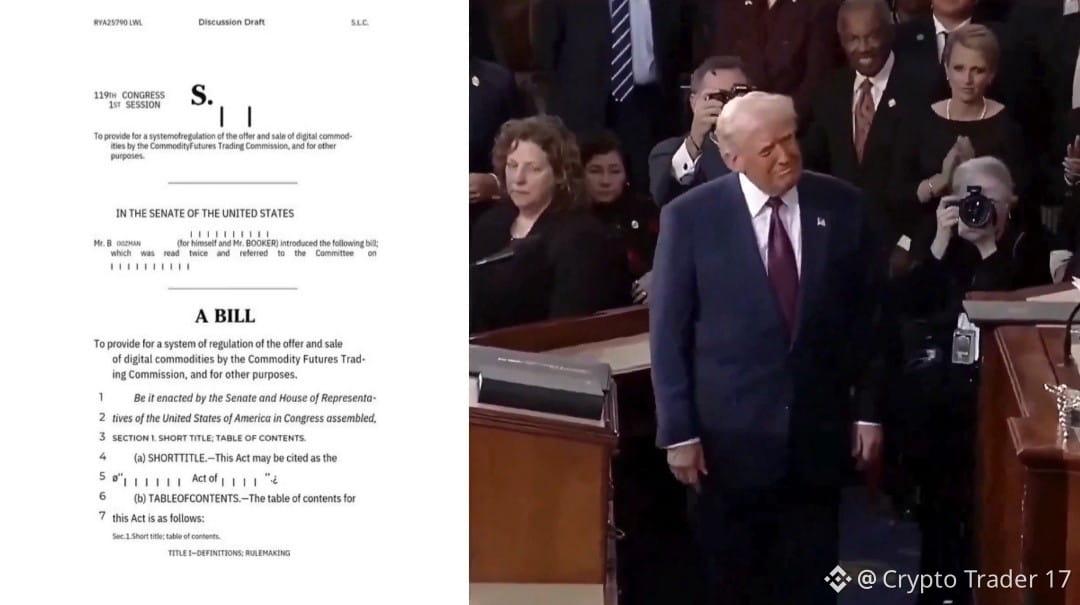
🇺🇸 BREAKING: PRESIDENT TRUMP ANNOUNCED LIVE HE CONFIRMED HE WILL SOON SIGN THE CRYPTO MARKET STRUCTURE BILL IN FRONT OF GLOBAL LEADERS. ONCE ENACTED, THE LEGISLATION IS EXPECTED TO UNLOCK TRILLIONS IN INSTITUTIONAL CAPITAL FOR THE CRYPTO MARKET. THIS COULD MARK THE LARGEST CAPITAL INFLOW IN BITCOIN’S HISTORY. 🚀 #TRUMP #TrumpCrypto #bitcoin $BTC
🇺🇸 BREAKING: PRESIDENT TRUMP ANNOUNCED LIVE

HE CONFIRMED HE WILL SOON SIGN THE CRYPTO MARKET STRUCTURE BILL IN FRONT OF GLOBAL LEADERS.

ONCE ENACTED, THE LEGISLATION IS EXPECTED TO UNLOCK TRILLIONS IN INSTITUTIONAL CAPITAL FOR THE CRYPTO MARKET.

THIS COULD MARK THE LARGEST CAPITAL INFLOW IN BITCOIN’S HISTORY. 🚀
#TRUMP #TrumpCrypto #bitcoin $BTC
$BTC holding the $70k line. 🚨 THE $70,000 LINE IN THE SAND: Are You a Bull or a Victim? 📉📈 The weekend "Moon Mission" just hit a wall. Bitcoin is fighting to keep $70,000 as support. If it holds, we go to $85k. If it fails, we’re looking at a liquidation trap back to $64k. THE TRUTH: BTC just printed a "Long Lower Wick" on the weekly. This means buyers are fighting back, but the volume is thinning. THE WHALE MOVE: Institutional premiums (ETFs$) are turning slightly negative. They want you to panic-sell so they can fill their bags at $68k. YOUR STRATEGY: Don't be "Exit Liquidity." Watch the 4-hour candle close. If we stay above $70,300, the trend is your friend. Drop a "BULL" or "BEAR" in the comments so I can see who's surviving this chop! 👇 #bitcoin #BTC走势分析 #MarketUpdate #CryptoStrategy #smartmoney
$BTC holding the $70k line.
🚨 THE $70,000 LINE IN THE SAND: Are You a Bull or a Victim? 📉📈

The weekend "Moon Mission" just hit a wall. Bitcoin is fighting to keep $70,000 as support. If it holds, we go to $85k. If it fails, we’re looking at a liquidation trap back to $64k.

THE TRUTH: BTC just printed a "Long Lower Wick" on the weekly. This means buyers are fighting back, but the volume is thinning.

THE WHALE MOVE: Institutional premiums (ETFs$) are turning slightly negative. They want you to panic-sell so they can fill their bags at $68k.

YOUR STRATEGY: Don't be "Exit Liquidity." Watch the 4-hour candle close. If we stay above $70,300, the trend is your friend.

Drop a "BULL" or "BEAR" in the comments so I can see who's surviving this chop! 👇

#bitcoin #BTC走势分析 #MarketUpdate #CryptoStrategy #smartmoney
📌 $BTC Today’s Plan Bitcoin is currently stuck below a key resistance zone at $72,000. Bullish scenario: $BTC must cleanly break and hold above $72,000 to open upside targets at $74,000 → $75,000 → $76,000 Reality check: Right now, there’s no strong confirmation for that breakout. Until then, it’s a wait-and-watch market. #USIranStandoff #BTC #bitcoin #WhenWillBTCRebound #WhaleDeRiskETH $BTC {spot}(BTCUSDT)
📌 $BTC Today’s Plan
Bitcoin is currently stuck below a key resistance zone at $72,000.
Bullish scenario:
$BTC must cleanly break and hold above $72,000 to open upside targets at
$74,000 → $75,000 → $76,000
Reality check:
Right now, there’s no strong confirmation for that breakout.
Until then, it’s a wait-and-watch market.
#USIranStandoff #BTC #bitcoin #WhenWillBTCRebound #WhaleDeRiskETH
$BTC
$BTC Michael J. Saylor is an American entrepreneur and billionaire who co-founded MicroStrategy, a business intelligence software company. Saylor is credited with inventing relational analytics and leading MicroStrategy into cloud computing, mobile identity, and other fields. He's also known for his large investments in Bitcoin and frequent public discussions about the cryptocurrency, earning him the nickname “Mr. Bitcoin”. #bitcoin #trading #usd #Silver #USIranStandoff
$BTC
Michael J. Saylor is an American entrepreneur and billionaire who co-founded MicroStrategy, a business intelligence software company. Saylor is credited with inventing relational analytics and leading MicroStrategy into cloud computing, mobile identity, and other fields. He's also known for his large investments in Bitcoin and frequent public discussions about the cryptocurrency, earning him the nickname “Mr. Bitcoin”.

#bitcoin #trading #usd #Silver #USIranStandoff
🚨 KIYOSAKI: “IF BITCOIN DROPS TO $6,000, I’M BUYING MORE… AGAIN.” Robert Kiyosaki says a deep BTC crash would be a buying opportunity, not a reason to panic. $BTC Why It Matters: • Reinforces long-term Bitcoin conviction among macro bulls.$ETH • Signals confidence even in extreme downside scenarios.$XRP • Aligns with Kiyosaki’s long-standing anti-fiat, hard-asset thesis. Market Take: Volatility scares tourists — conviction attracts capital. #bitcoin #RiskAssetsMarketShock #BitcoinGoogleSearchesSurge
🚨 KIYOSAKI: “IF BITCOIN DROPS TO $6,000, I’M BUYING MORE… AGAIN.”
Robert Kiyosaki says a deep BTC crash would be a buying opportunity, not a reason to panic. $BTC
Why It Matters:
• Reinforces long-term Bitcoin conviction among macro bulls.$ETH
• Signals confidence even in extreme downside scenarios.$XRP
• Aligns with Kiyosaki’s long-standing anti-fiat, hard-asset thesis.
Market Take: Volatility scares tourists — conviction attracts capital.
#bitcoin #RiskAssetsMarketShock #BitcoinGoogleSearchesSurge
$BTC just slipped below the $70,000 level, and that shift matters. Right now, all eyes are on $68,000, which has acted as a strong support in the past. This is the kind of level where buyers usually try to step in and slow things down. If Bitcoin can hold here, we might see some stability or a bounce. But if this level gives way, the door opens for a deeper correction. For now, it’s a wait-and-watch moment the next move will likely set the tone. #bitcoin
$BTC just slipped below the $70,000 level, and that shift matters.

Right now, all eyes are on $68,000, which has acted as a strong support in the past.

This is the kind of level where buyers usually try to step in and slow things down.

If Bitcoin can hold here, we might see some stability or a bounce. But if this level gives way, the door opens for a deeper correction.

For now, it’s a wait-and-watch moment the next move will likely set the tone.
#bitcoin
#Bitcoin May Have Hit Bottom After 12-Month RSI Breakdown#bitcoin May Have Hit Bottom After 12-Month RSI Breakdown Bitcoin appears to have finished a year-long correction after a significant monthly RSI breakdown, with market structure now pointing toward a potential bullish move. ⬤ Bitcoin looks like it's finally stabilizing after spending roughly 12 months in pullback mode. The cryptocurrency may have hit rock bottom following a breakdown in its monthly RSI structure—a pattern that historically signals the end of long-term correction phases. ⬤ The monthly RSI is a macro momentum indicator that crypto traders watch closely during major Bitcoin cycles. Over the past year, $BTC stayed stuck in retracement territory while its long-term momentum kept weakening. Now that the RSI has broken down, it suggests the corrective pressure that's been weighing on the market for months might be completely exhausted. This could mark a real turning point in how the market behaves going forward. ⬤ After such a long period of sideways movement and fading momentum, markets tend to expand once these compression conditions finally resolve. Previous Bitcoin cycles have shown that similar setups often came right before strong directional moves once the correction wrapped up. If the current bottom holds, the next impulsive rally could be starting soon. ⬤ Why does this matter? When Bitcoin confirms a bottom, it typically shifts the entire market's behavior from correction mode into trend formation. A fresh impulsive phase would mean momentum conditions are changing across the whole digital asset space, leaving behind the pullback environment that's dominated for the past year. #crypto {spot}(BTCUSDT)

#Bitcoin May Have Hit Bottom After 12-Month RSI Breakdown

#bitcoin May Have Hit Bottom After 12-Month RSI Breakdown
Bitcoin appears to have finished a year-long correction after a significant monthly RSI breakdown, with market structure now pointing toward a potential bullish move.
⬤ Bitcoin looks like it's finally stabilizing after spending roughly 12 months in pullback mode. The cryptocurrency may have hit rock bottom following a breakdown in its monthly RSI structure—a pattern that historically signals the end of long-term correction phases.
⬤ The monthly RSI is a macro momentum indicator that crypto traders watch closely during major Bitcoin cycles. Over the past year, $BTC stayed stuck in retracement territory while its long-term momentum kept weakening. Now that the RSI has broken down, it suggests the corrective pressure that's been weighing on the market for months might be completely exhausted. This could mark a real turning point in how the market behaves going forward.

⬤ After such a long period of sideways movement and fading momentum, markets tend to expand once these compression conditions finally resolve. Previous Bitcoin cycles have shown that similar setups often came right before strong directional moves once the correction wrapped up. If the current bottom holds, the next impulsive rally could be starting soon.

⬤ Why does this matter? When Bitcoin confirms a bottom, it typically shifts the entire market's behavior from correction mode into trend formation. A fresh impulsive phase would mean momentum conditions are changing across the whole digital asset space, leaving behind the pullback environment that's dominated for the past year.
#crypto
Connectez-vous pour découvrir d’autres contenus
Découvrez les dernières actus sur les cryptos
⚡️ Prenez part aux dernières discussions sur les cryptos
💬 Interagissez avec vos créateurs préféré(e)s
👍 Profitez du contenu qui vous intéresse
Adresse e-mail/Nº de téléphone