
$ETH: Spot Turnover and Thin Liquidity
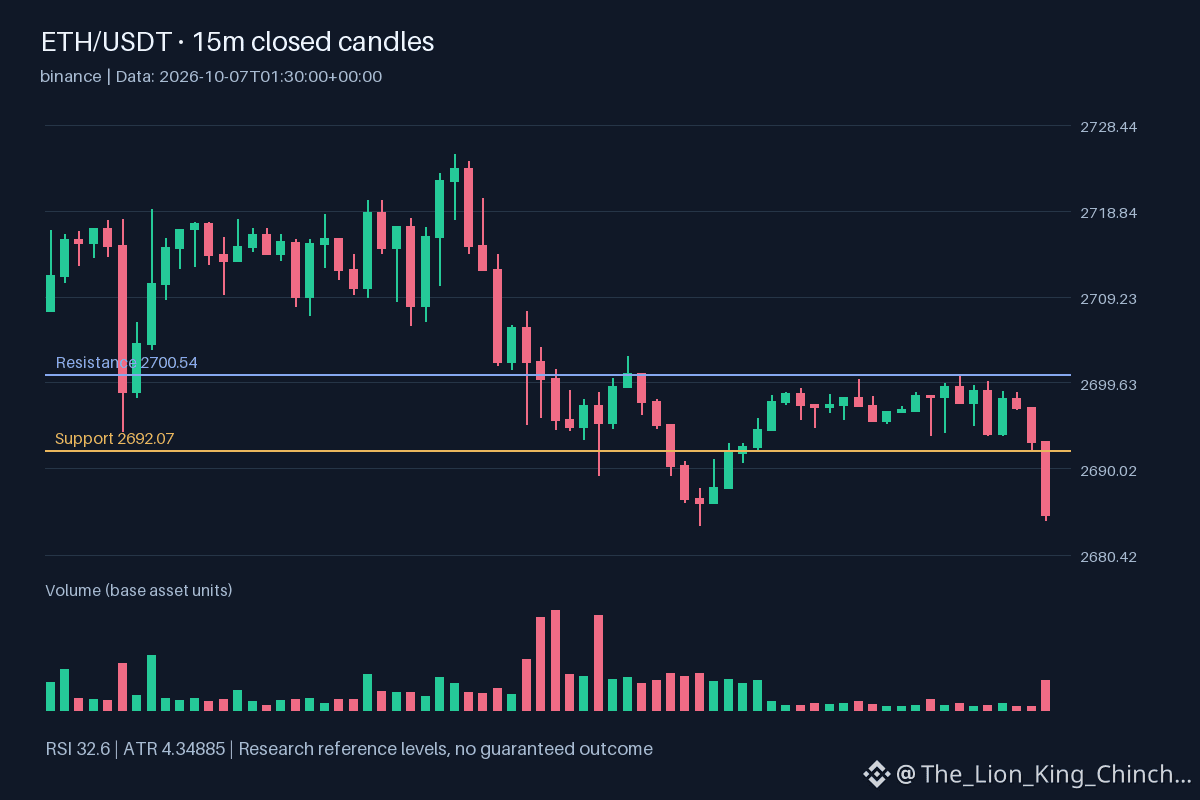
Observe that $ETH trades below support with volume above baseline. This setup invites a look at spot turnover. Think of the market as a narrow hallway. When many people try to pass through at once, the stream slows down. Thick liquidity acts like a wide door. It absorbs orders without dramatic price jumps.
Limit orders provide depth. They sit at specific prices and wait. Market orders demand immediate execution. If the book is thin, a single large market order can sweep through several levels. This widens the spread. The price changes quickly, but no new information necessarily arrived. The move reflects demand for execution, not a shift in value.
This distinction matters for $ETH . The hourly direction is down. Volume stands above baseline. A steady decline with high activity suggests active selling. However, if spreads widen, the price line becomes less reliable. It may reflect liquidity gaps rather than true consensus. The RSI sits at 32.6489. The moving averages are at 2695.67 and 2699.1. These levels help trace the path but do not measure depth.
To reassess, watch the spread. If the bid ask gap grows during high volume, suspect thin liquidity. Compare the price to the volume profile. If price falls but spreads remain tight, the move has stronger conviction. If spreads widen, interpret the move with caution. This check separates structural weakness from simple liquidity friction. It helps avoid reacting to noise. The goal is to understand why the price moved, not just that it moved. Always treat these metrics as context, not commandments.
Probabilistic market research, not a recommendation or guaranteed return.
What would you check before trusting a smooth-looking price move?
#ETH #CryptoEducation #CryptoLearning
Observe that $ETH trades below support with volume above baseline. This setup invites a look at spot turnover. Think of the market as a narrow hallway. When many people try to pass through at once, the stream slows down. Thick liquidity acts like a wide door. It absorbs orders without dramatic price jumps.
Limit orders provide depth. They sit at specific prices and wait. Market orders demand immediate execution. If the book is thin, a single large market order can sweep through several levels. This widens the spread. The price changes quickly, but no new information necessarily arrived. The move reflects demand for execution, not a shift in value.
This distinction matters for $ETH . The hourly direction is down. Volume stands above baseline. A steady decline with high activity suggests active selling. However, if spreads widen, the price line becomes less reliable. It may reflect liquidity gaps rather than true consensus. The RSI sits at 32.6489. The moving averages are at 2695.67 and 2699.1. These levels help trace the path but do not measure depth.
To reassess, watch the spread. If the bid ask gap grows during high volume, suspect thin liquidity. Compare the price to the volume profile. If price falls but spreads remain tight, the move has stronger conviction. If spreads widen, interpret the move with caution. This check separates structural weakness from simple liquidity friction. It helps avoid reacting to noise. The goal is to understand why the price moved, not just that it moved. Always treat these metrics as context, not commandments.
Probabilistic market research, not a recommendation or guaranteed return.
What would you check before trusting a smooth-looking price move?
#ETH #CryptoEducation #CryptoLearning