👀 TODAY: Bad jobs news just became great news for stocks, and the market reaction was immediate and broad.
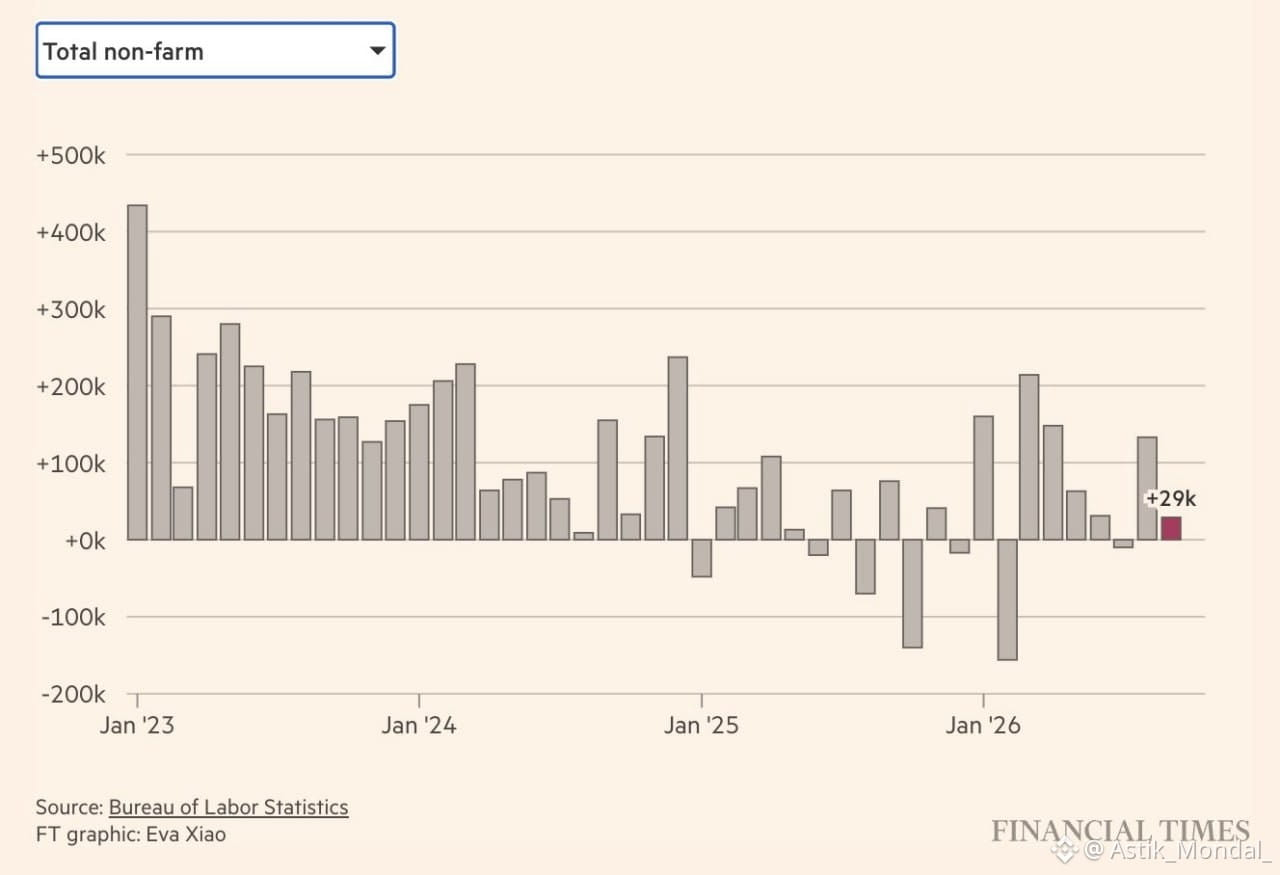
The US added just 29,000 jobs in September, badly missing the 90,000 economists expected, and down sharply from a downwardly revised 133,000 in August. July's number got revised all the way down to negative 10,000. Unemployment ticked up to 4.2%.
The market's response was swift: the S&P 500 rose about 1%, the Dow gained 385 points, the Nasdaq climbed 1.4%, led by chip stocks. Gold and Bitcoin rallied too, while oil tumbled more than 3%, a full risk-on sweep across asset classes.
Here's the mechanism driving it. This was the weakest positive jobs print of the year, and it landed right as investors were bracing for another Fed rate hike this month. The weak data instantly flipped that calculus: odds of an October hike collapsed from roughly 69% a week ago down to just 20-22%.
Fed officials have been explicit that they weigh the unemployment rate from the household survey more heavily than the raw payroll number when setting policy, and a 4.2% unemployment rate, even if still historically low, is exactly the kind of softening that argues for standing pat.
One nuance worth flagging: part of the unemployment uptick reflects more people entering the labor force, not just layoffs, a detail that keeps this from reading as a clean recession signal.
For now, Wall Street's math is simple: weaker hiring data lowers the odds of tighter money, and in this market, that's still the only headline that matters.
#JobsReport #Fed #StockMarket #Economy #InterestRates
The US added just 29,000 jobs in September, badly missing the 90,000 economists expected, and down sharply from a downwardly revised 133,000 in August. July's number got revised all the way down to negative 10,000. Unemployment ticked up to 4.2%.
The market's response was swift: the S&P 500 rose about 1%, the Dow gained 385 points, the Nasdaq climbed 1.4%, led by chip stocks. Gold and Bitcoin rallied too, while oil tumbled more than 3%, a full risk-on sweep across asset classes.
Here's the mechanism driving it. This was the weakest positive jobs print of the year, and it landed right as investors were bracing for another Fed rate hike this month. The weak data instantly flipped that calculus: odds of an October hike collapsed from roughly 69% a week ago down to just 20-22%.
Fed officials have been explicit that they weigh the unemployment rate from the household survey more heavily than the raw payroll number when setting policy, and a 4.2% unemployment rate, even if still historically low, is exactly the kind of softening that argues for standing pat.
One nuance worth flagging: part of the unemployment uptick reflects more people entering the labor force, not just layoffs, a detail that keeps this from reading as a clean recession signal.
For now, Wall Street's math is simple: weaker hiring data lowers the odds of tighter money, and in this market, that's still the only headline that matters.
#JobsReport #Fed #StockMarket #Economy #InterestRates