
#chainlinklaunchesccip2withenterpriseverification
🔗 Chainlink CCIP 2.0 Goes Live: More Control Over Cross-Chain Transfers
Moving tokenized assets between blockchains also means deciding who can approve each transfer and which rules must follow it.
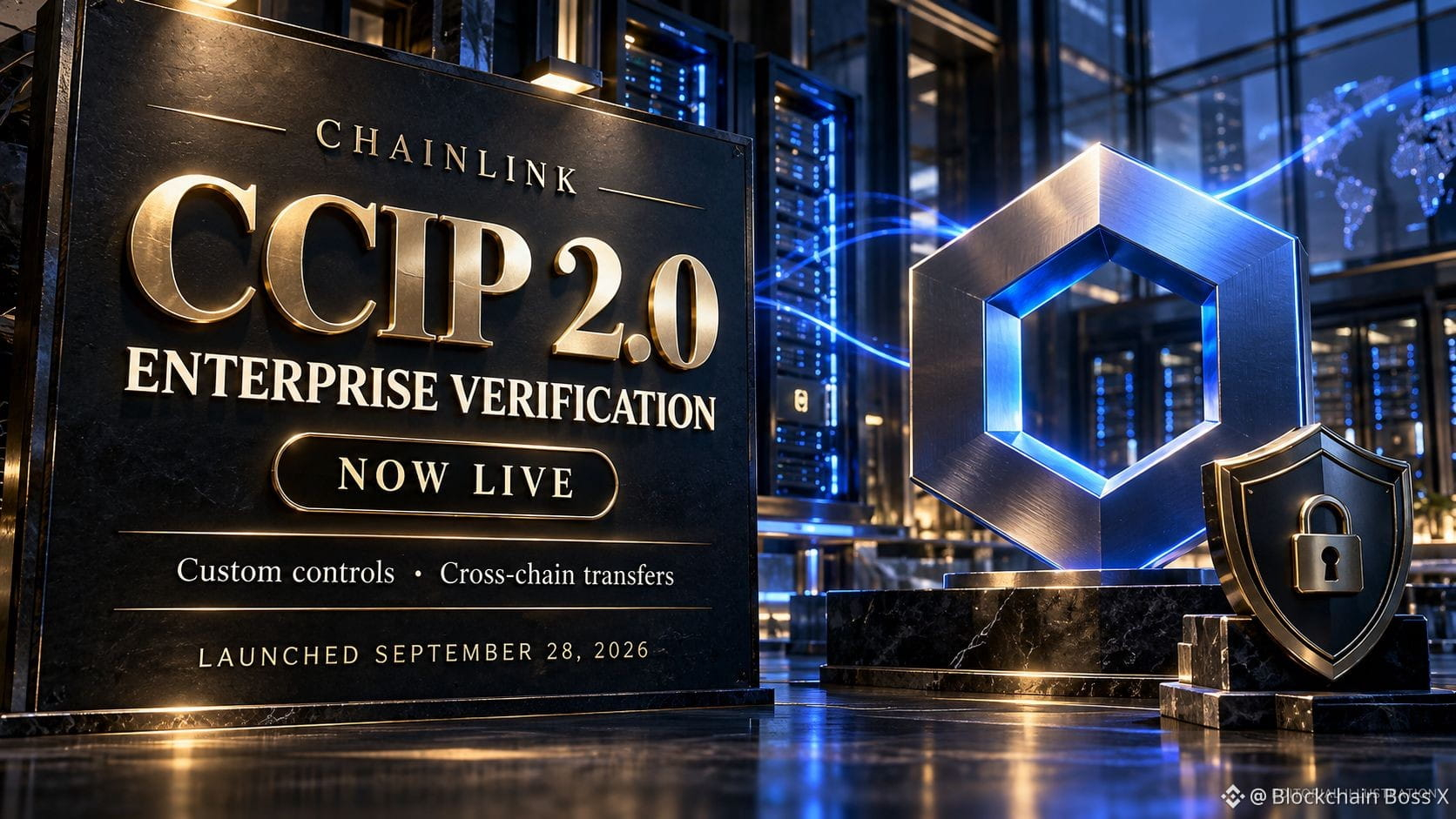
Chainlink launched CCIP 2.0 on September 28, 2026, introducing additional verification and policy controls for institutions and asset issuers.
The key addition is Cross-Chain Verifiers (CCVs). Organizations can operate their own or use third-party providers, adding required checks on top of Chainlink’s default verification.
The upgrade also supports configurable compliance checks, approval workflows and transaction limits, alongside options for faster execution or waiting for full source-chain finality.
My take: For tokenized funds and other regulated assets, distribution becomes useful when institutions can preserve their approval processes across networks. These controls could reduce integration work and help issuers expand to additional markets.
The next test is sustained production use: actual transfers, repeat institutional activity and evidence that policies work consistently across chains. Additional verifiers also introduce operational dependencies, making availability and clear responsibility worth watching.
For LINK, I would assess service usage and fee economics separately from the launch announcement. A stronger product offering still needs measurable adoption to support a lasting market narrative.
Which would convince you most: more institutional integrations or sustained growth in actual cross-chain activity? 👇
#ChainlinkLaunchesCCIP2WithEnterpriseVerification #Chainlink #Tokenization
$NMR $CRV $HBAR
🔗 Chainlink CCIP 2.0 Goes Live: More Control Over Cross-Chain Transfers
Moving tokenized assets between blockchains also means deciding who can approve each transfer and which rules must follow it.
Chainlink launched CCIP 2.0 on September 28, 2026, introducing additional verification and policy controls for institutions and asset issuers.
The key addition is Cross-Chain Verifiers (CCVs). Organizations can operate their own or use third-party providers, adding required checks on top of Chainlink’s default verification.
The upgrade also supports configurable compliance checks, approval workflows and transaction limits, alongside options for faster execution or waiting for full source-chain finality.
My take: For tokenized funds and other regulated assets, distribution becomes useful when institutions can preserve their approval processes across networks. These controls could reduce integration work and help issuers expand to additional markets.
The next test is sustained production use: actual transfers, repeat institutional activity and evidence that policies work consistently across chains. Additional verifiers also introduce operational dependencies, making availability and clear responsibility worth watching.
For LINK, I would assess service usage and fee economics separately from the launch announcement. A stronger product offering still needs measurable adoption to support a lasting market narrative.
Which would convince you most: more institutional integrations or sustained growth in actual cross-chain activity? 👇
#ChainlinkLaunchesCCIP2WithEnterpriseVerification #Chainlink #Tokenization
$NMR $CRV $HBAR