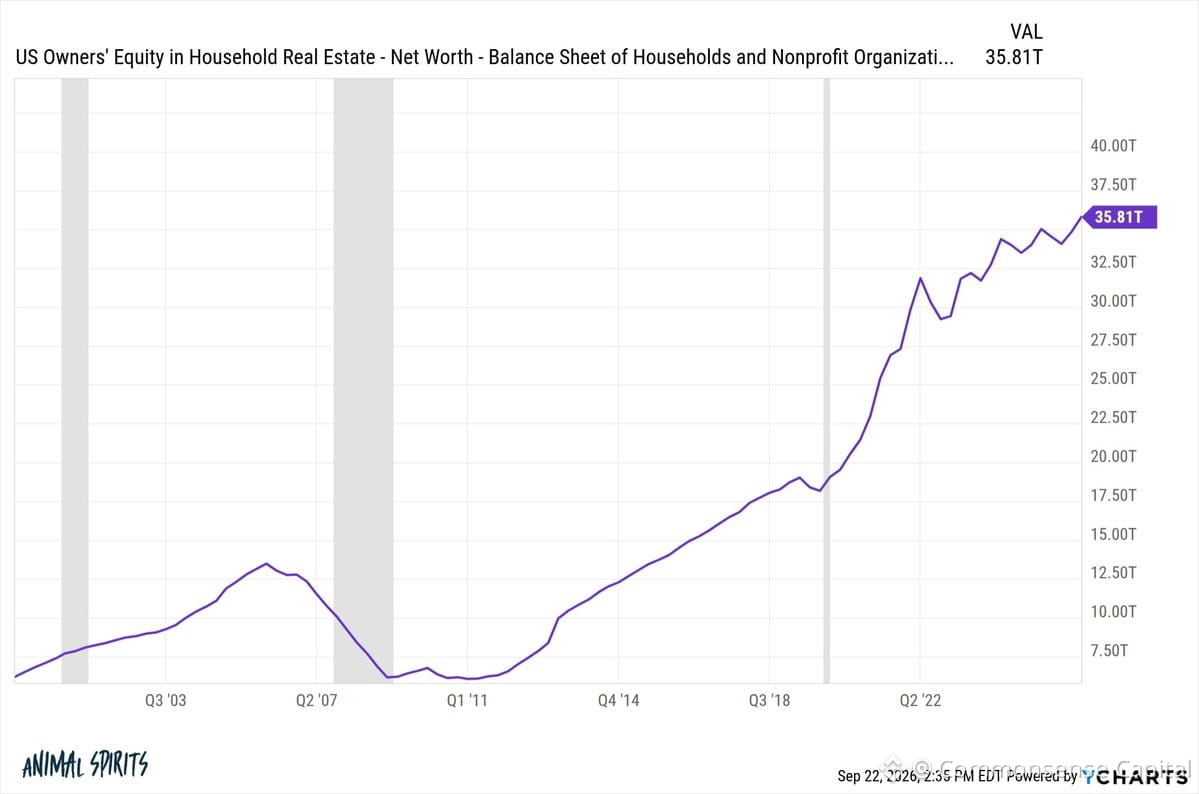
Housing went up 50% in a few years. Everyone screamed bubble. Crash never came.
Why?
Because this wasn't 2008. Different setup entirely.
2008: Banks lending to anyone with a pulse. No income verification. Adjustable rate bombs. Overlevered speculators everywhere. Supply glut.
2020s: Tight lending standards. Most buyers locked in 3% fixed mortgages. Low inventory. Real demand from millennials forming households.
Prices went up because rates were zero and supply was choked — not because of reckless credit.
When rates spiked, prices didn't crash. They just... stopped. Sellers with cheap mortgages refused to move. Buyers got priced out. Market froze.
Not a bubble. Just a massive repricing driven by the biggest rate shock in decades.
Lesson: Not every price surge is a bubble. Context matters. Credit quality matters. Supply matters.
People who sat out waiting for the crash are now paying higher rates on higher prices. Timing the market rarely works — even when the narrative sounds convincing.
Why?
Because this wasn't 2008. Different setup entirely.
2008: Banks lending to anyone with a pulse. No income verification. Adjustable rate bombs. Overlevered speculators everywhere. Supply glut.
2020s: Tight lending standards. Most buyers locked in 3% fixed mortgages. Low inventory. Real demand from millennials forming households.
Prices went up because rates were zero and supply was choked — not because of reckless credit.
When rates spiked, prices didn't crash. They just... stopped. Sellers with cheap mortgages refused to move. Buyers got priced out. Market froze.
Not a bubble. Just a massive repricing driven by the biggest rate shock in decades.
Lesson: Not every price surge is a bubble. Context matters. Credit quality matters. Supply matters.
People who sat out waiting for the crash are now paying higher rates on higher prices. Timing the market rarely works — even when the narrative sounds convincing.