
YASH DHALIWAL 31_加密 143
1.7k Publications

YASH DHALIWAL 31_加密 143
PEPE 🐸 HOLDER
Trade fréquemment
1.1 an(s)
536 Suivis
8.9K+ Abonnés
5.3K+ J’aime
Publications
Tous
Citations
Vidéos
Direct
PINNED
go


Ahmed Ali Nizamani
·
--
50 + 730 = 🎁🎁🎁🎁✨

go

DK短线复刻
·
--
关注回复领取红包🎁🎁

ho

Ahli Hidaya Doka hy Sab Kuch
·
--
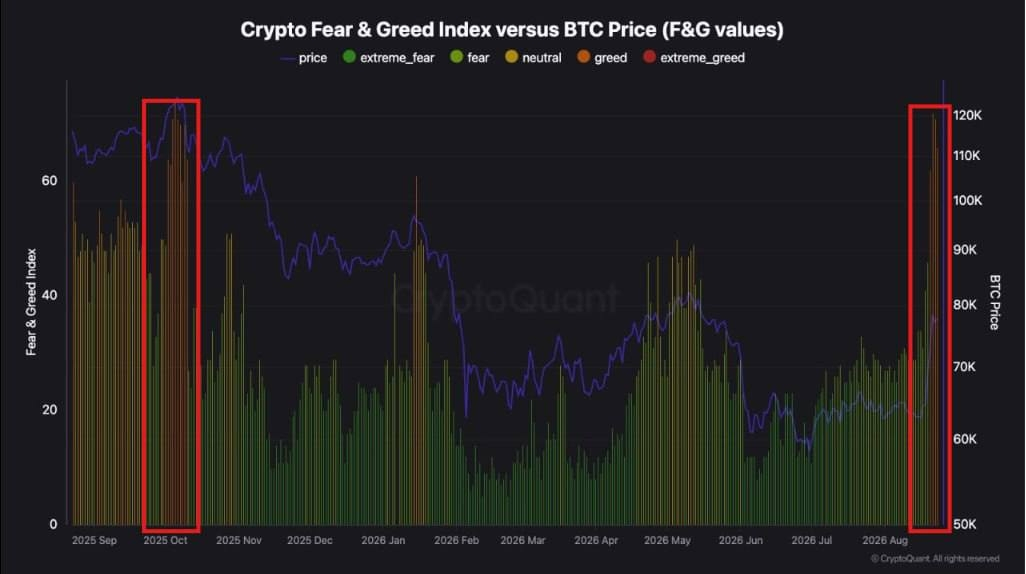
Haussier🚨 Bitcoin Market Update: Maximum Greed is Back, But Are Smart Money Players Cashing Out? 📈👀
The crypto market has officially shifted back into the zone of maximum greed! Based on the latest CryptoQuant data, market sentiment has exploded, surpassing the previous peaks seen in April–May and hitting levels comparable to October 2025.
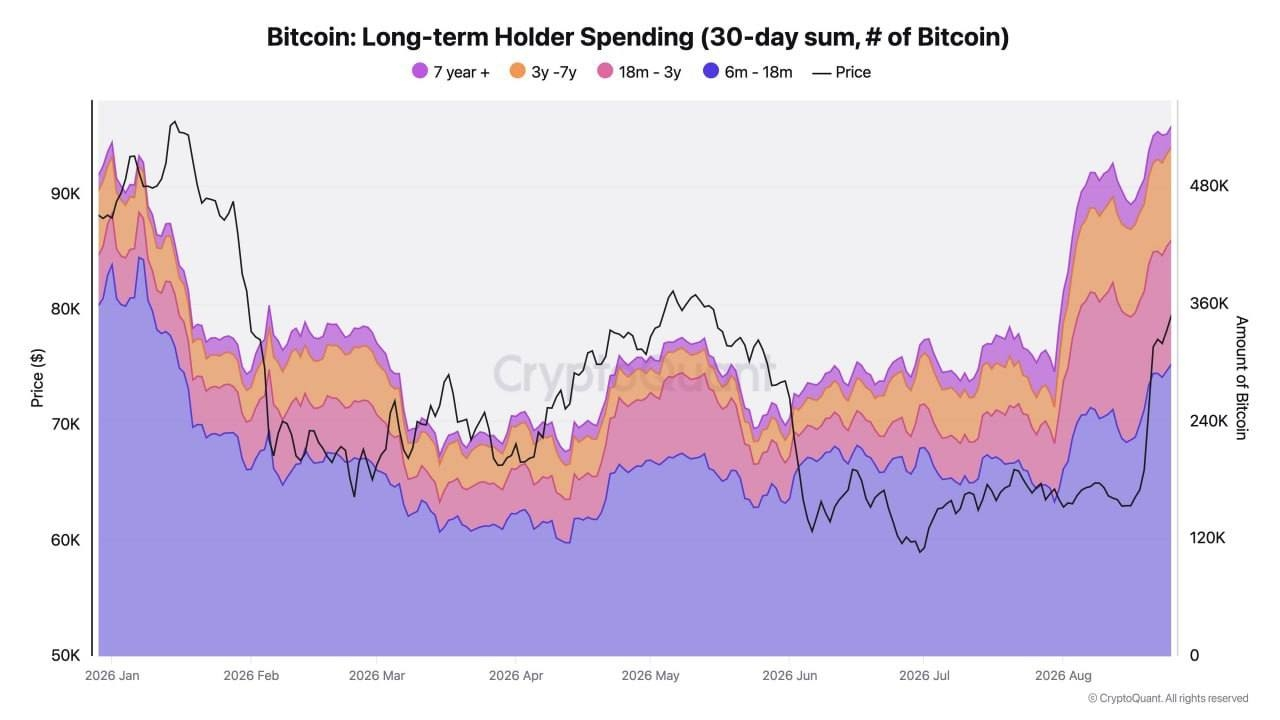
However, while retail and sentiment indicators are flashing bright green, a deeper look under the hood reveals a critical shift from Long-Term Holders (LTHs):
Massive LTH Spending: Long-term holders are aggressively cashing out or moving their coins, registering a massive spike in 30-day spending volumes across cohorts (from 6 months up to 7+ years).
Exchange Inflows: A heavy volume of Bitcoin is being deposited onto centralized exchanges (CEXs) as prices push higher into the current range—pointing toward profit-taking behavior from veteran market participants.
What does this mean for spot traders?
When greed hits extreme levels and LTHs start offloading coins to exchanges, it's a classic signal to stay sharp. Volatility is bound to kick up a notch. Are you booking profits incrementally or holding strong for higher targets? Let’s discuss in the comments! 👇
#Bitcoin #BTC #CryptoTrading #BinanceSquare #MarketSentiment #CryptoQuant$BTC $USDC
#dyor
The crypto market has officially shifted back into the zone of maximum greed! Based on the latest CryptoQuant data, market sentiment has exploded, surpassing the previous peaks seen in April–May and hitting levels comparable to October 2025.
However, while retail and sentiment indicators are flashing bright green, a deeper look under the hood reveals a critical shift from Long-Term Holders (LTHs):
Massive LTH Spending: Long-term holders are aggressively cashing out or moving their coins, registering a massive spike in 30-day spending volumes across cohorts (from 6 months up to 7+ years).
Exchange Inflows: A heavy volume of Bitcoin is being deposited onto centralized exchanges (CEXs) as prices push higher into the current range—pointing toward profit-taking behavior from veteran market participants.
What does this mean for spot traders?
When greed hits extreme levels and LTHs start offloading coins to exchanges, it's a classic signal to stay sharp. Volatility is bound to kick up a notch. Are you booking profits incrementally or holding strong for higher targets? Let’s discuss in the comments! 👇
#Bitcoin #BTC #CryptoTrading #BinanceSquare #MarketSentiment #CryptoQuant$BTC $USDC
#dyor
go

@Elena神话MUA
parle[Direct] 🎙️ 神话MUA空投继续,BNB你持有吗?💥🎉🌺
2.5k auditeurs
go

MARYAM 加密 143
·
--
🎂 Birthday Special Binance Red Packet! 🎁✨
Celebrating this special day with our amazing community! Grab your free crypto reward now:
💐🌸💮🏵️🌹🥀🌺🌻🌼🌷🪻🌱🌲🌳🌴
💬 Comment Below: Happy birthday
⏳ Limited supply—first come, first served. Don't miss out! 🚀#Binance #REDPECKET
Celebrating this special day with our amazing community! Grab your free crypto reward now:
💐🌸💮🏵️🌹🥀🌺🌻🌼🌷🪻🌱🌲🌳🌴
💬 Comment Below: Happy birthday
⏳ Limited supply—first come, first served. Don't miss out! 🚀#Binance #REDPECKET



🎙️ welcome everyone 😁🥸👽👾🌩️🌪️🌪️🌪️❄️❄️🌬️🌊🌲🪵🌿🌱🍃🪴🌵🍃🪴🌵🍁
Fin
02 h 40 min 01 sec
545
ESPUSDT
Perp
Limit/Long
3
#dusk $DUSK @Dusk
A small thing I notice in markets: a few seconds can feel like nothing, until money is waiting on them.
That made me rethink what “efficient” really means for a blockchain.
The Dusk whitepaper doesn’t treat efficiency as simply processing more transactions. Its design connects low-latency communication, consensus, finality, privacy, and financial requirements.
The interesting part is the connection.
Dusk’s SA consensus is designed around transaction finality within seconds, while Kadcast aims to move messages efficiently through the network.
For financial markets, that could matter because timing isn’t just convenience. It affects coordination, execution, and how confidently participants can act.
But I think there’s a harder question underneath.
Does faster settlement actually create an advantage if institutions still struggle with privacy, compliance, or integration?
That’s where Dusk gets interesting to me. Moonlight and Phoenix approach transactions differently, combining transparent and privacy-preserving capabilities rather than treat$ing efficiency as the whole solution.
Maybe the real advantage isn’t speed alone. It’s reducing the friction between speed, privacy, and accountability.
And I’m still wondering how much of that advantage becomes visible only when real financial workflows start depending on it.
A small thing I notice in markets: a few seconds can feel like nothing, until money is waiting on them.
That made me rethink what “efficient” really means for a blockchain.
The Dusk whitepaper doesn’t treat efficiency as simply processing more transactions. Its design connects low-latency communication, consensus, finality, privacy, and financial requirements.
The interesting part is the connection.
Dusk’s SA consensus is designed around transaction finality within seconds, while Kadcast aims to move messages efficiently through the network.
For financial markets, that could matter because timing isn’t just convenience. It affects coordination, execution, and how confidently participants can act.
But I think there’s a harder question underneath.
Does faster settlement actually create an advantage if institutions still struggle with privacy, compliance, or integration?
That’s where Dusk gets interesting to me. Moonlight and Phoenix approach transactions differently, combining transparent and privacy-preserving capabilities rather than treat$ing efficiency as the whole solution.
Maybe the real advantage isn’t speed alone. It’s reducing the friction between speed, privacy, and accountability.
And I’m still wondering how much of that advantage becomes visible only when real financial workflows start depending on it.
Trade sur 30 j $DUSK 336.8 USDT
#dusk $DUSK @Dusk A funny thing about sending a message is how quickly we stop thinking about it. You press send, the screen changes, and your mind moves on.
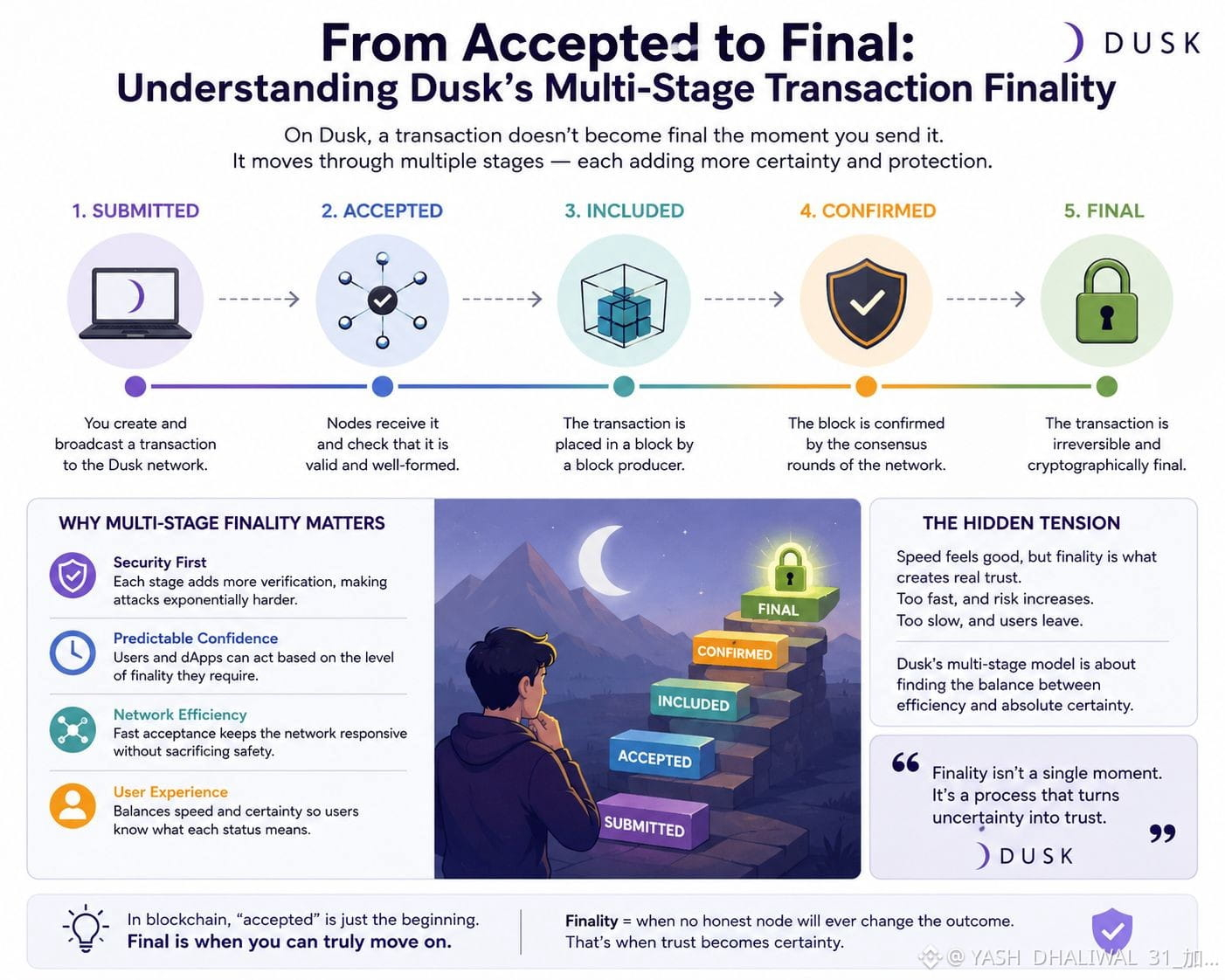
Blockchains are less forgiving. “Accepted” does not always mean “final.”
That distinction is what caught my attention with Dusk. A transaction can move through stages before it reaches the point where the network considers it truly final.
At first, that sounds like unnecessary complexity. But maybe the opposite is true.
There is a hidden question here: when should a user actually trust that something is done?
The interesting part is that finality is not just a technical word. It shapes user expectations, application design, and even how quickly people are willing to act.
If accepted transactions can still be waiting for stronger confirmation, then the gap between “I sent it” and “it is final” becomes meaningful.
Most users probably never notice that gap when everything works smoothly. They notice it when timing matters.
That makes multi-stage finality less about adding steps and more about managing uncertainty.
I’m still curious whether users will understand these stages naturally, or whether interfaces will hide them completely.
Because eventually, the real measure of finality may not be when the protocol says “done,” but when people genuinely feel safe moving on.
Blockchains are less forgiving. “Accepted” does not always mean “final.”
That distinction is what caught my attention with Dusk. A transaction can move through stages before it reaches the point where the network considers it truly final.
At first, that sounds like unnecessary complexity. But maybe the opposite is true.
There is a hidden question here: when should a user actually trust that something is done?
The interesting part is that finality is not just a technical word. It shapes user expectations, application design, and even how quickly people are willing to act.
If accepted transactions can still be waiting for stronger confirmation, then the gap between “I sent it” and “it is final” becomes meaningful.
Most users probably never notice that gap when everything works smoothly. They notice it when timing matters.
That makes multi-stage finality less about adding steps and more about managing uncertainty.
I’m still curious whether users will understand these stages naturally, or whether interfaces will hide them completely.
Because eventually, the real measure of finality may not be when the protocol says “done,” but when people genuinely feel safe moving on.
Long $DUSK 11.6 USDT
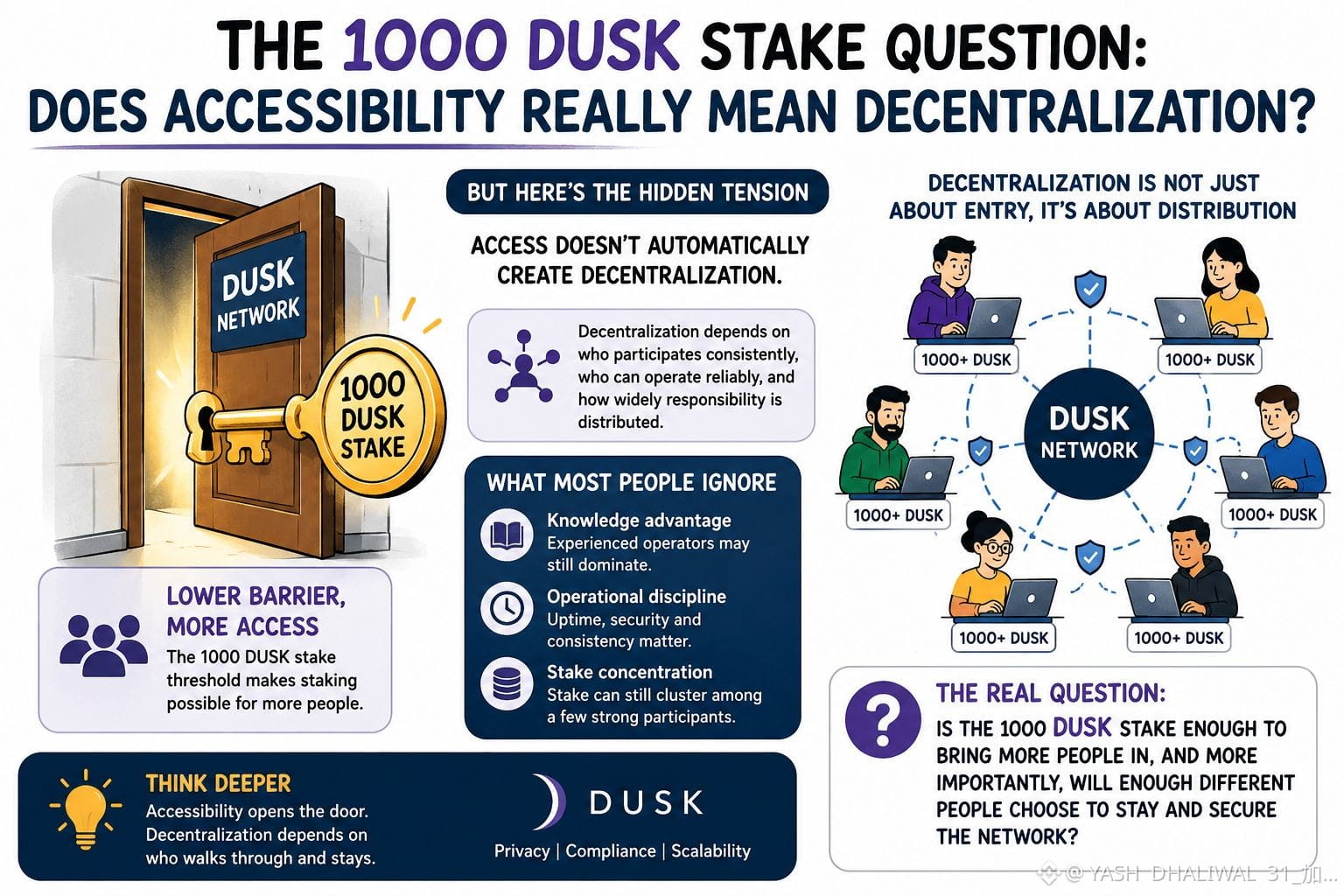
#dusk $DUSK @Dusk A key on a door looks small, but it decides who can enter. That’s what I keep thinking about with the 1,000 DUSK stake threshold.
On paper, lowering the barrier feels like a clear step toward accessibility. More people can participate in Dusk without needing a huge amount of capital. But accessibility and decentralization aren’t automatically the same thing.
The uncomfortable part is what happens after people get access. If staking becomes easier, does participation actually spread across many independent users, or does stake still concentrate among the same few participants who have better knowledge, uptime, and operational discipline?
That matters for @dusk because decentralization isn’t just about how low the entry door is. It’s also about who keeps showing up, who can operate reliably, and how widely responsibility is distributed.
Maybe the real question behind 1,000 $DUSK isn’t “Can more people stake?” It’s whether enough different people actually choose to do it.
#dusk $DUSK
On paper, lowering the barrier feels like a clear step toward accessibility. More people can participate in Dusk without needing a huge amount of capital. But accessibility and decentralization aren’t automatically the same thing.
The uncomfortable part is what happens after people get access. If staking becomes easier, does participation actually spread across many independent users, or does stake still concentrate among the same few participants who have better knowledge, uptime, and operational discipline?
That matters for @dusk because decentralization isn’t just about how low the entry door is. It’s also about who keeps showing up, who can operate reliably, and how widely responsibility is distributed.
Maybe the real question behind 1,000 $DUSK isn’t “Can more people stake?” It’s whether enough different people actually choose to do it.
#dusk $DUSK
Kadcast: The Quiet Infrastructure Behind Dusk’s Efficiency
Ever watched traffic move through a city when every car seems to take the same road? The problem isn’t always the number of cars. Sometimes it’s how the roads are connected.
That made me look differently at @Dusk’s Kadcast. It sits underneath the more visible parts of $DUSK , helping messages move between nodes through a structured network overlay rather than simple random gossip.
The interesting tension is efficiency versus resilience. More organized message routing can reduce unnecessary network traffic and make communication more predictable. But networking is rarely that simple. A structured system still has to remain reliable as participants join, leave, or conditions change.
That’s why Kadcast is easy to overlook. People notice privacy, transactions and consensus. Few think about the infrastructure quietly carrying information between nodes.
For me, the real question isn’t whether efficiency matters. It clearly does. The harder question is whether that efficiency can remain dependable as the network evolves.
Maybe that balance is one of the more interesting parts of #dusk — the infrastructure you rarely notice may matter more than the features you do.
@Dusk #dusk $DUSK
Ever watched traffic move through a city when every car seems to take the same road? The problem isn’t always the number of cars. Sometimes it’s how the roads are connected.
That made me look differently at @Dusk’s Kadcast. It sits underneath the more visible parts of $DUSK , helping messages move between nodes through a structured network overlay rather than simple random gossip.
The interesting tension is efficiency versus resilience. More organized message routing can reduce unnecessary network traffic and make communication more predictable. But networking is rarely that simple. A structured system still has to remain reliable as participants join, leave, or conditions change.
That’s why Kadcast is easy to overlook. People notice privacy, transactions and consensus. Few think about the infrastructure quietly carrying information between nodes.
For me, the real question isn’t whether efficiency matters. It clearly does. The harder question is whether that efficiency can remain dependable as the network evolves.
Maybe that balance is one of the more interesting parts of #dusk — the infrastructure you rarely notice may matter more than the features you do.
@Dusk #dusk $DUSK
A small thing I notice in everyday life is how often we share information without thinking about who actually needs to see it. Then someone asks one extra question, and suddenly privacy feels less like secrecy and more like control.
That is what makes me think about Dusk. The interesting question isn't whether privacy and regulation can coexist. It is whether we can design systems where compliance doesn't automatically mean exposing everything.
There is a hidden tension here: regulators need accountability, while users and businesses need boundaries. If every verification requires opening the entire record, privacy becomes the price of being legitimate.
Dusk makes this tension worth exploring because the real challenge may not be technical privacy, but deciding what should be revealed, to whom, and under what conditions. Getting that balance wrong could make either side uncomfortable.
I don't think the answer is simply “more privacy” or “more regulation.” Maybe the better question is whether we can prove enough without revealing everything. That feels like the harder problem—and probably the more important one for dusk.
@Dusk $DUSK #dusk
That is what makes me think about Dusk. The interesting question isn't whether privacy and regulation can coexist. It is whether we can design systems where compliance doesn't automatically mean exposing everything.
There is a hidden tension here: regulators need accountability, while users and businesses need boundaries. If every verification requires opening the entire record, privacy becomes the price of being legitimate.
Dusk makes this tension worth exploring because the real challenge may not be technical privacy, but deciding what should be revealed, to whom, and under what conditions. Getting that balance wrong could make either side uncomfortable.
I don't think the answer is simply “more privacy” or “more regulation.” Maybe the better question is whether we can prove enough without revealing everything. That feels like the harder problem—and probably the more important one for dusk.
@Dusk $DUSK #dusk
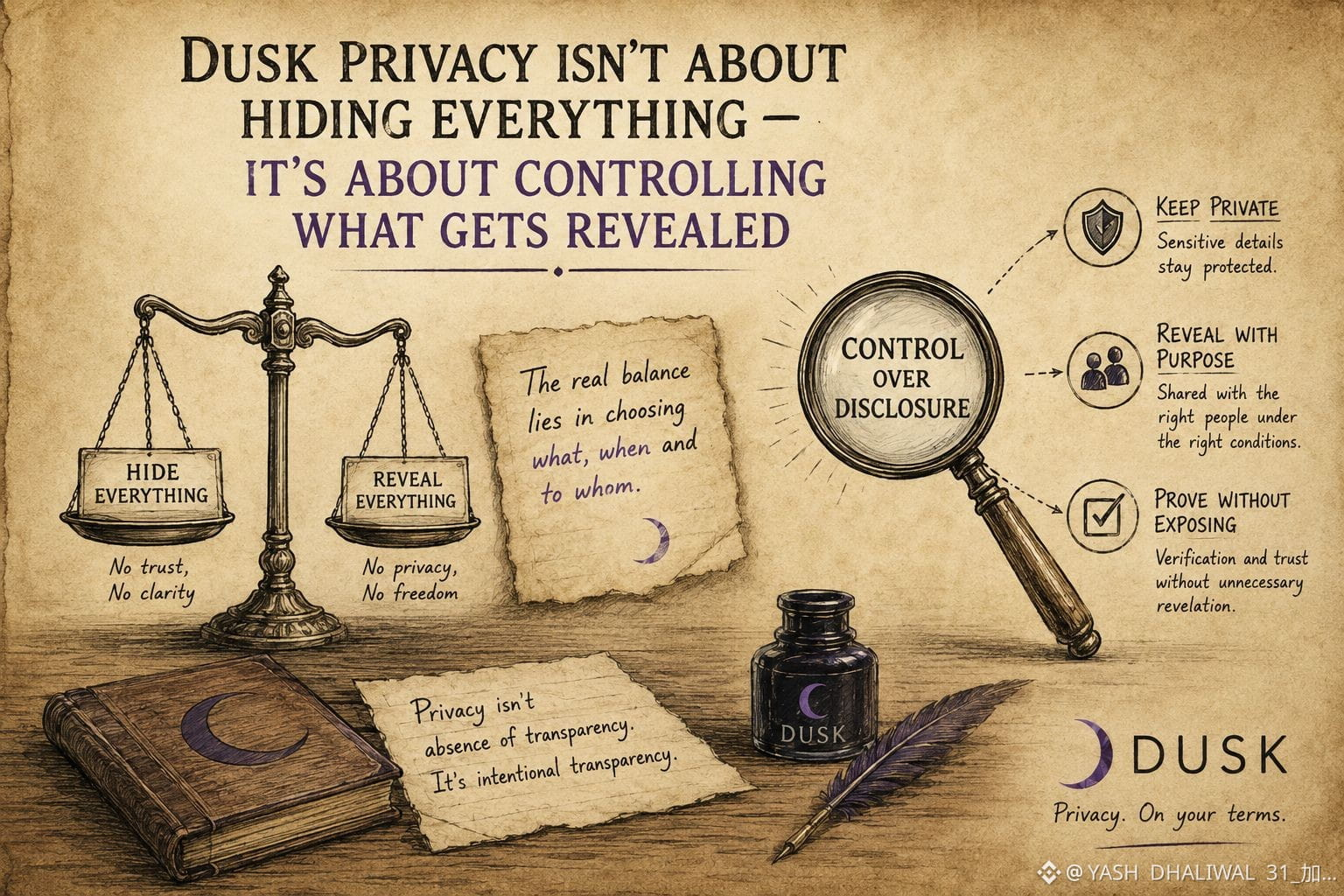
I noticed something today: even in ordinary conversations, we don’t reveal everything. We choose what to explain, what to keep private, and sometimes what can wait until the right moment.
That made me think about Dusk differently. Privacy doesn’t necessarily mean making every piece of information invisible. The more interesting idea is deciding which information should be revealed, to whom, and under what circumstances.
That creates a difficult balance. Too much transparency can expose sensitive details unnecessarily. Too much privacy can make verification and accountability harder. The real challenge sits somewhere between those extremes.
What I find easy to overlook is that disclosure itself has a cost. Once information is public, you can’t really take it back. For financial and real-world assets, that matters more than people sometimes admit.
So perhaps the bigger question for Dusk isn’t whether everything can be hidden. It’s whether users can have meaningful control over what becomes visible without sacrificing the trust others need.
That feels like a much harder problem—and probably a more important one—than simply calling something “private.”
@Dusk #dusk $DUSK
That made me think about Dusk differently. Privacy doesn’t necessarily mean making every piece of information invisible. The more interesting idea is deciding which information should be revealed, to whom, and under what circumstances.
That creates a difficult balance. Too much transparency can expose sensitive details unnecessarily. Too much privacy can make verification and accountability harder. The real challenge sits somewhere between those extremes.
What I find easy to overlook is that disclosure itself has a cost. Once information is public, you can’t really take it back. For financial and real-world assets, that matters more than people sometimes admit.
So perhaps the bigger question for Dusk isn’t whether everything can be hidden. It’s whether users can have meaningful control over what becomes visible without sacrificing the trust others need.
That feels like a much harder problem—and probably a more important one—than simply calling something “private.”
@Dusk #dusk $DUSK
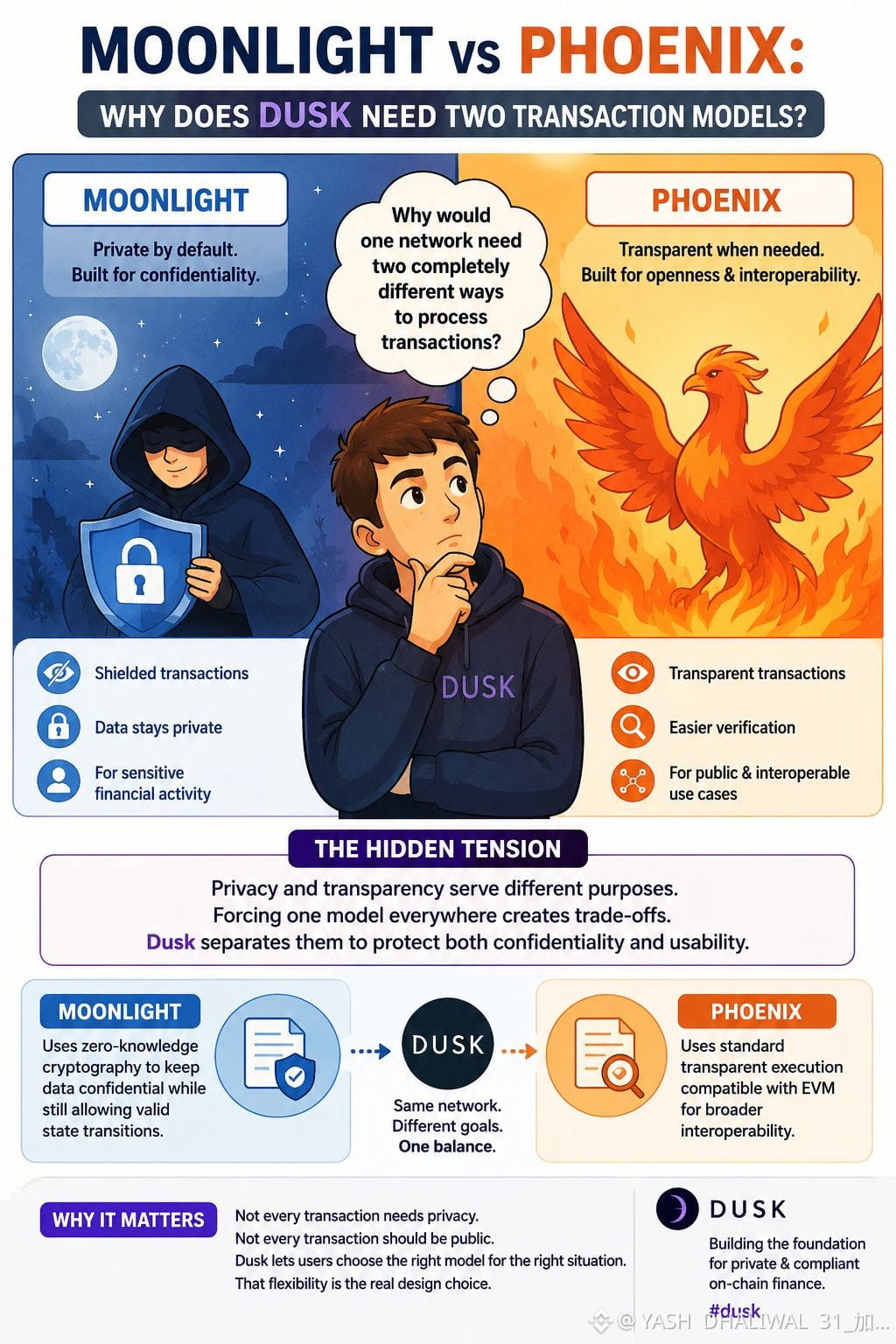
A cupboard with two drawers can look unnecessary until you realise you keep different things in each one. That’s how I’ve started thinking about Dusk’s Moonlight and Phoenix models.
Moonlight is the public, account-based side: balances and transfers are visible. Phoenix takes a different route, using shielded notes and zero-knowledge proofs so transaction details can remain private while the network still verifies that the rules were followed.
At first, having two models sounds like extra complexity. But that may actually be the point. Not every financial transaction needs the same level of visibility. Forcing everything into a transparent model exposes information that may be sensitive; forcing everything into a private model can make ordinary monitoring and integration harder.
Dusk seems to be accepting that these needs are genuinely different rather than pretending one design solves both. @Dusk $DUSK gives the network a way to support both public and shielded transfers on the same settlement layer.
The uncomfortable question is whether users will understand when to use which model. Flexibility is useful—but only if the complexity doesn’t become the new problem. #dusk
Moonlight is the public, account-based side: balances and transfers are visible. Phoenix takes a different route, using shielded notes and zero-knowledge proofs so transaction details can remain private while the network still verifies that the rules were followed.
At first, having two models sounds like extra complexity. But that may actually be the point. Not every financial transaction needs the same level of visibility. Forcing everything into a transparent model exposes information that may be sensitive; forcing everything into a private model can make ordinary monitoring and integration harder.
Dusk seems to be accepting that these needs are genuinely different rather than pretending one design solves both. @Dusk $DUSK gives the network a way to support both public and shielded transfers on the same settlement layer.
The uncomfortable question is whether users will understand when to use which model. Flexibility is useful—but only if the complexity doesn’t become the new problem. #dusk
Connectez-vous pour découvrir plus de contenu