
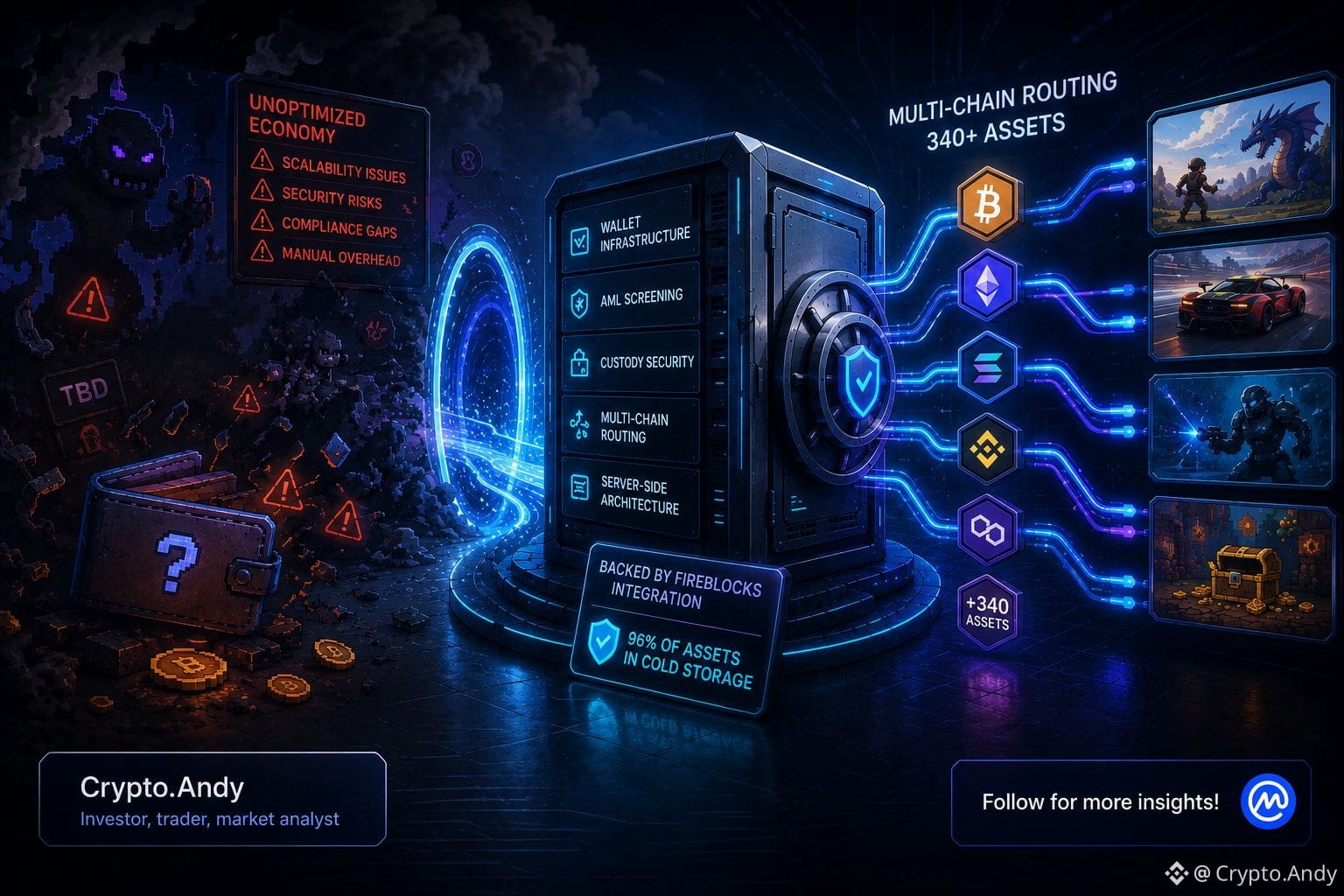
Invisible Plumbing: How Top Web3 Games Scale Without Building Banks Blockchain gaming averaged 4.66 million daily active wallets in late 2025 - 25% of all Web3 activity. If $BTC pushes toward $100,000 in 2026, surging user volume could stress-test every unoptimized game economy on the market. Behind every transacting player sits a wallet - an infrastructure decision most studios discover far too late, usually leaving it in design docs as a single line: "TBD" Yet a functional game economy converts a studio into a de facto financial service provider responsible for asset security, multi-chain routing, and compliance. Studios that scale keep engineers focused on gameplay, while financial plumbing runs on external infrastructure. An enterprise solution could bridge this gap by offloading AML screening and custody risks without ruining player UX. Looking at optimal frameworks, WhiteBIT Wallet-as-a-Service could offer precisely this kind of server-side architecture. https://institutional.whitebit.com/crypto-wallets-for-business?utm_source=coinmarketcap&utm_medium=waas_andy&utm_campaign=post Backed by Fireblocks integration and 96% of assets in cold storage, it could provide multi-chain routing across 340+ assets out of the box - keeping resources dedicated strictly to core game mechanics and user retention. The winning strategy for the next cycle isn't building a bank inside a game studio - it could be choosing infrastructure that makes financial plumbing invisible from day one. Disclaimer: This is not financial or investment advice. Do your own research before making any decisions. Use at your own risk. #BTC Price Analysis# #Bitcoin Price Prediction: What is Bitcoins next move?#

Publier
Avertissement : ce contenu inclut des opinions de tiers. Il ne constitue pas un conseil. Binance Ai peut être utilisée, sans garantie de résultat. Consultez les CG.