The more I learned about @TermMax , the easier it became to understand when I started thinking about situations that could actually happen in real life.
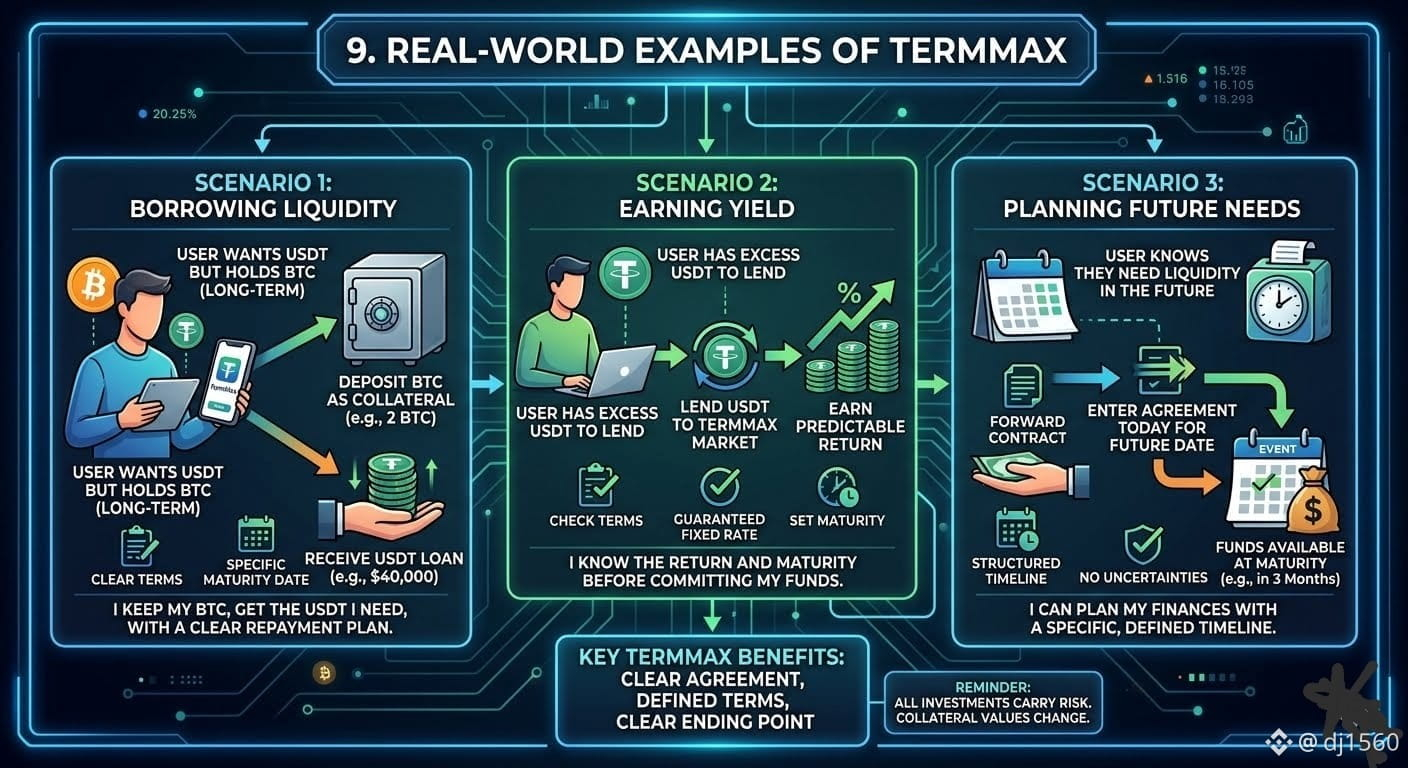
Let’s say I’m holding some BTC, and I don’t want to sell it. Maybe I think the price could go higher, or I simply want to keep my BTC for the long term. But at the same time, I need some USDT.
Instead of selling my BTC just to get that USDT, I could use the BTC as collateral and borrow against it through a TermMax market.
What I like about this idea is that the situation is pretty straightforward. I still have my collateral, I get access to the liquidity I need, and the loan comes with clear terms and a specific date when it ends.
Now, let’s look at it from the other side.
Suppose I have some USDT that I don't need right now. Rather than letting it sit unused, I might want to lend it and earn a return. I can look at the available TermMax market, check the terms, and decide whether the return and maturity date make sense for me.
That gives me something important: a clear idea of what I'm getting into before I commit my money.
For example, imagine I know that I’ll need money three months from now. With a fixed-term market, I can choose an agreement that has a specific maturity date instead of dealing with an uncertain timeline.
Of course, there is still risk. Crypto prices don't sit still, and the value of collateral can change quickly. If the collateral falls too much, the borrowing position can become risky. So having a fixed maturity doesn't mean the entire investment is risk-free.
What it does give me is structure.
I know what I am putting up, what I am getting in return, what I need to repay, and when the agreement is supposed to finish.
After looking at these examples, I started to see TermMax in a much simpler way. It's not just about borrowing or lending crypto. It's about giving both sides a clear agreement with defined terms and a clear ending point.
And honestly, that's what makes the idea interesting to me.
#termmax #DeFi
Let’s say I’m holding some BTC, and I don’t want to sell it. Maybe I think the price could go higher, or I simply want to keep my BTC for the long term. But at the same time, I need some USDT.
Instead of selling my BTC just to get that USDT, I could use the BTC as collateral and borrow against it through a TermMax market.
What I like about this idea is that the situation is pretty straightforward. I still have my collateral, I get access to the liquidity I need, and the loan comes with clear terms and a specific date when it ends.
Now, let’s look at it from the other side.
Suppose I have some USDT that I don't need right now. Rather than letting it sit unused, I might want to lend it and earn a return. I can look at the available TermMax market, check the terms, and decide whether the return and maturity date make sense for me.
That gives me something important: a clear idea of what I'm getting into before I commit my money.
For example, imagine I know that I’ll need money three months from now. With a fixed-term market, I can choose an agreement that has a specific maturity date instead of dealing with an uncertain timeline.
Of course, there is still risk. Crypto prices don't sit still, and the value of collateral can change quickly. If the collateral falls too much, the borrowing position can become risky. So having a fixed maturity doesn't mean the entire investment is risk-free.
What it does give me is structure.
I know what I am putting up, what I am getting in return, what I need to repay, and when the agreement is supposed to finish.
After looking at these examples, I started to see TermMax in a much simpler way. It's not just about borrowing or lending crypto. It's about giving both sides a clear agreement with defined terms and a clear ending point.
And honestly, that's what makes the idea interesting to me.
#termmax #DeFi