
#macroanalysis
macroanalysis
254,539 vues
1,676 mentions
Populaire
Récents

·
--
Cette semaine, ce qui peut vraiment changer la donne, ce sont les données ; le prix n’est que le résultat.
Le marché chiffre une hausse des taux à 64%, et le rendement du Trésor américain à 10 ans est à 4,97%. Ces deux chiffres ne bougent pas : tout rebond doit être escompté.
Je ne devine pas le sens des données ; me tromper une fois, ça suffit à me rendre mal pendant un demi-mois. Attendez simplement et observez la première réaction. Un scénario baissier qui ne baisse pas, c’est un vrai plancher ; une annonce positive qui ne monte pas, c’est un vrai plafond. Ces deux phrases valent plus que n’importe quelle prédiction.
BTC est actuellement à 77 309 $ (+0,6 %). Si la peur reste, à 63, la zone suivante, 73 444 $, est ma première ligne de défense. Si 81 175 $ n’est pas franchi, ce sera encore une phase de range.
Avant la publication des données, vous allez d’abord réduire votre position, ou carrément tenter votre chance sur le sens ?
$SOL #MacroAnalysis #FedWatch
Cette semaine, ce qui peut vraiment changer la donne, ce sont les données ; le prix n’est que le résultat.
Le marché chiffre une hausse des taux à 64%, et le rendement du Trésor américain à 10 ans est à 4,97%. Ces deux chiffres ne bougent pas : tout rebond doit être escompté.
Je ne devine pas le sens des données ; me tromper une fois, ça suffit à me rendre mal pendant un demi-mois. Attendez simplement et observez la première réaction. Un scénario baissier qui ne baisse pas, c’est un vrai plancher ; une annonce positive qui ne monte pas, c’est un vrai plafond. Ces deux phrases valent plus que n’importe quelle prédiction.
BTC est actuellement à 77 309 $ (+0,6 %). Si la peur reste, à 63, la zone suivante, 73 444 $, est ma première ligne de défense. Si 81 175 $ n’est pas franchi, ce sera encore une phase de range.
Avant la publication des données, vous allez d’abord réduire votre position, ou carrément tenter votre chance sur le sens ?
$SOL #MacroAnalysis #FedWatch
Le marché chiffre une hausse des taux à 64%, et le rendement du Trésor américain à 10 ans est à 4,97%. Ces deux chiffres ne bougent pas : tout rebond doit être escompté.
Je ne devine pas le sens des données ; me tromper une fois, ça suffit à me rendre mal pendant un demi-mois. Attendez simplement et observez la première réaction. Un scénario baissier qui ne baisse pas, c’est un vrai plancher ; une annonce positive qui ne monte pas, c’est un vrai plafond. Ces deux phrases valent plus que n’importe quelle prédiction.
BTC est actuellement à 77 309 $ (+0,6 %). Si la peur reste, à 63, la zone suivante, 73 444 $, est ma première ligne de défense. Si 81 175 $ n’est pas franchi, ce sera encore une phase de range.
Avant la publication des données, vous allez d’abord réduire votre position, ou carrément tenter votre chance sur le sens ?
$SOL #MacroAnalysis #FedWatch

1
1
206
·
--
📊 1. Tendances Macro & Infrastructures de Marché
$BITCOIN oin’s $81,000 Jalons : $BITCOIN a établi avec succès un nouveau plus haut historique proche de 81 272 $, et la communauté débat intensément de savoir s’il pourra maintenir ses zones de support au-dessus de 77 000–78 000 $ ou s’il fera face à une correction brutale. [1, 2]
Rotation de la liquidité : À la suite des récents enseignements du fondateur de Binance, CZ, une discussion massive se prépare autour de la rotation du « argent chaud » directement vers des actifs crypto après une période prolongée centrée sur l’intelligence artificielle. [1]
Jalons réglementaires : Les spéculations autour de la loi CLARITY Act 2026 et de la mise en œuvre de cadres structurels comme les directives MiCA entièrement opérationnelles de l’UE suscitent de vifs débats concernant la conformité future et la sécurité $ALT.US #coin. [1, 2, 3]
#HousePressesSenateOnCLARITYAct
#MacroAnalysis
📊 1. Tendances Macro & Infrastructures de Marché
$BITCOIN oin’s $81,000 Jalons : $BITCOIN a établi avec succès un nouveau plus haut historique proche de 81 272 $, et la communauté débat intensément de savoir s’il pourra maintenir ses zones de support au-dessus de 77 000–78 000 $ ou s’il fera face à une correction brutale. [1, 2]
Rotation de la liquidité : À la suite des récents enseignements du fondateur de Binance, CZ, une discussion massive se prépare autour de la rotation du « argent chaud » directement vers des actifs crypto après une période prolongée centrée sur l’intelligence artificielle. [1]
Jalons réglementaires : Les spéculations autour de la loi CLARITY Act 2026 et de la mise en œuvre de cadres structurels comme les directives MiCA entièrement opérationnelles de l’UE suscitent de vifs débats concernant la conformité future et la sécurité $ALT.US #coin. [1, 2, 3]
#HousePressesSenateOnCLARITYAct
#MacroAnalysis
$BITCOIN oin’s $81,000 Jalons : $BITCOIN a établi avec succès un nouveau plus haut historique proche de 81 272 $, et la communauté débat intensément de savoir s’il pourra maintenir ses zones de support au-dessus de 77 000–78 000 $ ou s’il fera face à une correction brutale. [1, 2]
Rotation de la liquidité : À la suite des récents enseignements du fondateur de Binance, CZ, une discussion massive se prépare autour de la rotation du « argent chaud » directement vers des actifs crypto après une période prolongée centrée sur l’intelligence artificielle. [1]
Jalons réglementaires : Les spéculations autour de la loi CLARITY Act 2026 et de la mise en œuvre de cadres structurels comme les directives MiCA entièrement opérationnelles de l’UE suscitent de vifs débats concernant la conformité future et la sécurité $ALT.US #coin. [1, 2, 3]
#HousePressesSenateOnCLARITYAct
#MacroAnalysis
69
·
--
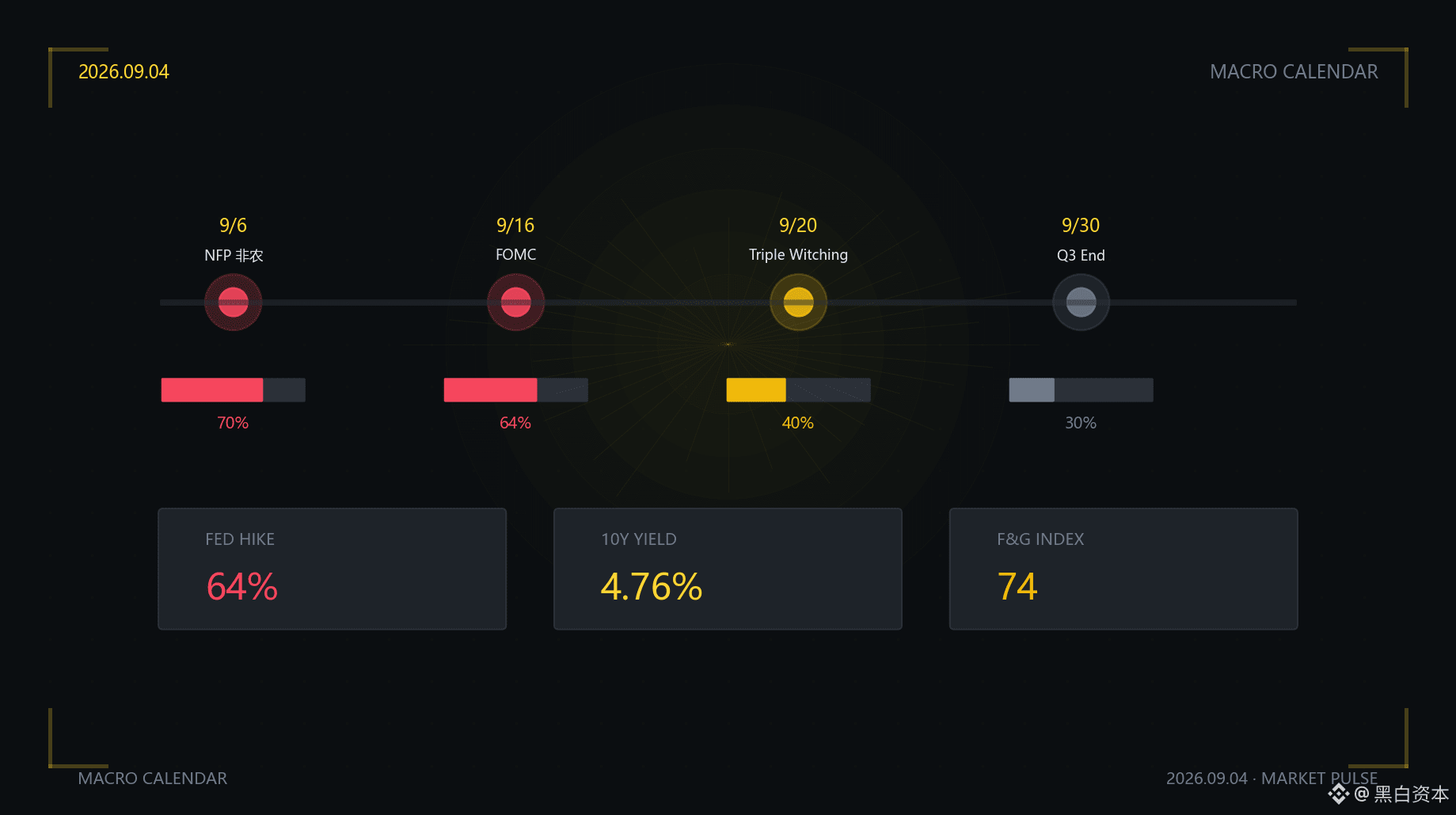
Calendrier macro | Événements clés de la semaine
Variables clés
Emploi non agricole de septembre (vendredi)
Réunion FOMC du 16/9
Probabilité de hausse des taux 64%
Rendement à 10 ans 4,76 %
Stratégie
Réduire les positions avant l’événement, évaluer après
Ne pas parier sur la direction des données
Emploi non agricole supérieur aux attentes → volatilité accrue
Emploi non agricole inférieur aux attentes → reprise de l’appétit pour le risque
$SOL #MacroAnalysis #FedWatch
Calendrier macro | Événements clés de la semaine
Variables clés
Emploi non agricole de septembre (vendredi)
Réunion FOMC du 16/9
Probabilité de hausse des taux 64%
Rendement à 10 ans 4,76 %
Stratégie
Réduire les positions avant l’événement, évaluer après
Ne pas parier sur la direction des données
Emploi non agricole supérieur aux attentes → volatilité accrue
Emploi non agricole inférieur aux attentes → reprise de l’appétit pour le risque
$SOL #MacroAnalysis #FedWatch
Variables clés
Emploi non agricole de septembre (vendredi)
Réunion FOMC du 16/9
Probabilité de hausse des taux 64%
Rendement à 10 ans 4,76 %
Stratégie
Réduire les positions avant l’événement, évaluer après
Ne pas parier sur la direction des données
Emploi non agricole supérieur aux attentes → volatilité accrue
Emploi non agricole inférieur aux attentes → reprise de l’appétit pour le risque
$SOL #MacroAnalysis #FedWatch
1
186

·
--
🚨 CHUTE DES ACTIONS ASIATIQUES ALORS QUE LA DÉSENDETTEMENT DES INSTITUTIONS RECONFIGURE LA LIQUIDITÉ MACRO $BTC LIQUIDITÉ 🔻
📉 La contagion du « risk-off » institutionnel se propage dans les marchés mondiaux, tandis que les actions asiatiques subissent une forte pression vendeuse. Le KOSPI a chuté de 3,99% en parallèle avec une baisse de 2,85% du Nikkei, sous l’effet de distributions importantes au sein de grands acteurs des semi-conducteurs comme SK Hynix et Samsung Electronics.
🔍 Les « smart money » réévaluent activement le risque mondial, provoquant une volatilité structurelle sur les flux d’ordres entre marchés. Lorsque la liquidité macro se contracte lors des séances d’actions traditionnelles, la structure du marché crypto fait fréquemment l’objet de balayages ciblés afin de tester les blocs de demande sous-jacents.
💬 Pensez-vous que ce balayage de liquidité des actions macro déclenchera une décote plus profonde pour $BTC , ou bien les acheteurs absorberont-ils les retombées ? 👇
⚠️ Ceci n’est pas un conseil financier. Gérez toujours votre risque. 🛡️
🏷️ #BTC #MacroAnalysis #MarketStructure #Liquidity
🎯 🦈
🚨 CHUTE DES ACTIONS ASIATIQUES ALORS QUE LA DÉSENDETTEMENT DES INSTITUTIONS RECONFIGURE LA LIQUIDITÉ MACRO $BTC LIQUIDITÉ 🔻
📉 La contagion du « risk-off » institutionnel se propage dans les marchés mondiaux, tandis que les actions asiatiques subissent une forte pression vendeuse. Le KOSPI a chuté de 3,99% en parallèle avec une baisse de 2,85% du Nikkei, sous l’effet de distributions importantes au sein de grands acteurs des semi-conducteurs comme SK Hynix et Samsung Electronics.
🔍 Les « smart money » réévaluent activement le risque mondial, provoquant une volatilité structurelle sur les flux d’ordres entre marchés. Lorsque la liquidité macro se contracte lors des séances d’actions traditionnelles, la structure du marché crypto fait fréquemment l’objet de balayages ciblés afin de tester les blocs de demande sous-jacents.
💬 Pensez-vous que ce balayage de liquidité des actions macro déclenchera une décote plus profonde pour $BTC , ou bien les acheteurs absorberont-ils les retombées ? 👇
⚠️ Ceci n’est pas un conseil financier. Gérez toujours votre risque. 🛡️
🏷️ #BTC #MacroAnalysis #MarketStructure #Liquidity
🎯 🦈
📉 La contagion du « risk-off » institutionnel se propage dans les marchés mondiaux, tandis que les actions asiatiques subissent une forte pression vendeuse. Le KOSPI a chuté de 3,99% en parallèle avec une baisse de 2,85% du Nikkei, sous l’effet de distributions importantes au sein de grands acteurs des semi-conducteurs comme SK Hynix et Samsung Electronics.
🔍 Les « smart money » réévaluent activement le risque mondial, provoquant une volatilité structurelle sur les flux d’ordres entre marchés. Lorsque la liquidité macro se contracte lors des séances d’actions traditionnelles, la structure du marché crypto fait fréquemment l’objet de balayages ciblés afin de tester les blocs de demande sous-jacents.
💬 Pensez-vous que ce balayage de liquidité des actions macro déclenchera une décote plus profonde pour $BTC , ou bien les acheteurs absorberont-ils les retombées ? 👇
⚠️ Ceci n’est pas un conseil financier. Gérez toujours votre risque. 🛡️
🏷️ #BTC #MacroAnalysis #MarketStructure #Liquidity
🎯 🦈
11

·
--
🚨 DÉCLENCHEMENT D’UN FRACTAL BAISSIER HISTORIQUE ALORS QUE LE PM MODI MET EN GARDE SUR LA LIQUIDITÉ DU $GOLD ! 📉
Quand les gros titres macro s’alignent avec des événements structurels de liquidité, le flux d’ordres institutionnels change rapidement. L’intervention précédente a précédé une phase de distribution brutale de 16 % sur 50 jours, éliminant méthodiquement les blocs d’ordres des particuliers. 📉
En réduisant souvent la demande au comptant, on invite la “smart money” à exécuter des balayages de liquidité vers des séries de remises plus basses. Si ce fractal historique se répète, les acheteurs institutionnels resteront probablement patients jusqu’à ce qu’un support structurel profond soit à nouveau testé. 🔍 📊
💬 Pensez-vous que ce catalyseur macro va déclencher une nouvelle étape à la baisse, ou bien que le support absorbera la vague de ventes ? 👇
⚠️ Ceci n’est pas un conseil financier. Gérez toujours votre risque. 🛡️
🏷️ #GOLD #PAXG #MacroAnalysis #LiquiditySweep
🎯 🦈
🚨 DÉCLENCHEMENT D’UN FRACTAL BAISSIER HISTORIQUE ALORS QUE LE PM MODI MET EN GARDE SUR LA LIQUIDITÉ DU $GOLD ! 📉
Quand les gros titres macro s’alignent avec des événements structurels de liquidité, le flux d’ordres institutionnels change rapidement. L’intervention précédente a précédé une phase de distribution brutale de 16 % sur 50 jours, éliminant méthodiquement les blocs d’ordres des particuliers. 📉
En réduisant souvent la demande au comptant, on invite la “smart money” à exécuter des balayages de liquidité vers des séries de remises plus basses. Si ce fractal historique se répète, les acheteurs institutionnels resteront probablement patients jusqu’à ce qu’un support structurel profond soit à nouveau testé. 🔍 📊
💬 Pensez-vous que ce catalyseur macro va déclencher une nouvelle étape à la baisse, ou bien que le support absorbera la vague de ventes ? 👇
⚠️ Ceci n’est pas un conseil financier. Gérez toujours votre risque. 🛡️
🏷️ #GOLD #PAXG #MacroAnalysis #LiquiditySweep
🎯 🦈
Quand les gros titres macro s’alignent avec des événements structurels de liquidité, le flux d’ordres institutionnels change rapidement. L’intervention précédente a précédé une phase de distribution brutale de 16 % sur 50 jours, éliminant méthodiquement les blocs d’ordres des particuliers. 📉
En réduisant souvent la demande au comptant, on invite la “smart money” à exécuter des balayages de liquidité vers des séries de remises plus basses. Si ce fractal historique se répète, les acheteurs institutionnels resteront probablement patients jusqu’à ce qu’un support structurel profond soit à nouveau testé. 🔍 📊
💬 Pensez-vous que ce catalyseur macro va déclencher une nouvelle étape à la baisse, ou bien que le support absorbera la vague de ventes ? 👇
⚠️ Ceci n’est pas un conseil financier. Gérez toujours votre risque. 🛡️
🏷️ #GOLD #PAXG #MacroAnalysis #LiquiditySweep
🎯 🦈


152

PRESSURE DE DÉGAGEMENT DE LIQUIDITÉ (MACRO) : $SPX WEAKENS AS YIELD SPIKES THREATEN KEY STRUCTURAL PIVOT ! 🚨 📉
La hausse des rendements obligataires mondiaux et le baril de Brent qui dépasse 92 $ entraînent un réajustement brutal des valorisations institutionnelles sur l’ensemble des actifs de risque mondiaux. 📊 Les contrats à terme sur les taux d’intérêt intègrent désormais une probabilité de 66 % d’une hausse des taux de la Fed ce mois de septembre, ce qui pèse sur les actifs porteurs d’élan tandis que les « gros » se tournent vers la défensive.
Du point de vue de la structure institutionnelle, la phase d’expansion macro reste techniquement intacte uniquement tant que le pivot critique des 7500 est défendu. 🔍 Toutefois, de nettes divergences baissières non confirmées sur le RSI et le MACD indiquent une absorption de la dynamique à proximité des plus hauts, augmentant la probabilité d’une phase de consolidation structurelle prolongée. ⚡
💬 Anticipez-vous un balayage de liquidité sous un support macro clé, ou pensez-vous que les acheteurs vont intervenir aux niveaux actuels ? 👇
⚠️ Ceci ne constitue pas un conseil financier. Gérez toujours votre risque. 🛡️
🏷️ #SPX #MacroAnalysis #MarketStructure #Liquidity
🎯 🦈
PRESSURE DE DÉGAGEMENT DE LIQUIDITÉ (MACRO) : $SPX WEAKENS AS YIELD SPIKES THREATEN KEY STRUCTURAL PIVOT ! 🚨 📉
La hausse des rendements obligataires mondiaux et le baril de Brent qui dépasse 92 $ entraînent un réajustement brutal des valorisations institutionnelles sur l’ensemble des actifs de risque mondiaux. 📊 Les contrats à terme sur les taux d’intérêt intègrent désormais une probabilité de 66 % d’une hausse des taux de la Fed ce mois de septembre, ce qui pèse sur les actifs porteurs d’élan tandis que les « gros » se tournent vers la défensive.
Du point de vue de la structure institutionnelle, la phase d’expansion macro reste techniquement intacte uniquement tant que le pivot critique des 7500 est défendu. 🔍 Toutefois, de nettes divergences baissières non confirmées sur le RSI et le MACD indiquent une absorption de la dynamique à proximité des plus hauts, augmentant la probabilité d’une phase de consolidation structurelle prolongée. ⚡
💬 Anticipez-vous un balayage de liquidité sous un support macro clé, ou pensez-vous que les acheteurs vont intervenir aux niveaux actuels ? 👇
⚠️ Ceci ne constitue pas un conseil financier. Gérez toujours votre risque. 🛡️
🏷️ #SPX #MacroAnalysis #MarketStructure #Liquidity
🎯 🦈
La hausse des rendements obligataires mondiaux et le baril de Brent qui dépasse 92 $ entraînent un réajustement brutal des valorisations institutionnelles sur l’ensemble des actifs de risque mondiaux. 📊 Les contrats à terme sur les taux d’intérêt intègrent désormais une probabilité de 66 % d’une hausse des taux de la Fed ce mois de septembre, ce qui pèse sur les actifs porteurs d’élan tandis que les « gros » se tournent vers la défensive.
Du point de vue de la structure institutionnelle, la phase d’expansion macro reste techniquement intacte uniquement tant que le pivot critique des 7500 est défendu. 🔍 Toutefois, de nettes divergences baissières non confirmées sur le RSI et le MACD indiquent une absorption de la dynamique à proximité des plus hauts, augmentant la probabilité d’une phase de consolidation structurelle prolongée. ⚡
💬 Anticipez-vous un balayage de liquidité sous un support macro clé, ou pensez-vous que les acheteurs vont intervenir aux niveaux actuels ? 👇
⚠️ Ceci ne constitue pas un conseil financier. Gérez toujours votre risque. 🛡️
🏷️ #SPX #MacroAnalysis #MarketStructure #Liquidity
🎯 🦈
75

🚨 LES BUREAUX INSTITUTIONNELS PASSENT À LA PRUDENCE TACTIQUE À L’APPROCHE DE LA VOLATILITÉ MACRO DE SEPTEMBRE $BTC ⚠️
Les desks de trading institutionnels signalent un changement vers une prudence tactique, en se préparant à une turbulence sectorielle accrue au cours des prochaines semaines. 🦈 Avec des catalyseurs liés à la décision des taux de la Fed, une volatilité saisonnière de septembre et une accumulation d’émissions de crédit d’entreprise, le flux d’ordres suggère que “l’argent intelligent” réduit une exposition unidirectionnelle. 📊
Plutôt que de se préparer à un effondrement immédiat à l’échelle d’un indice, la structure de marché indique une alternance de mouvements de prix heurtés et des “chasses à la liquidité” à l’intérieur de plages clés. 💡 Se couvrir contre l’exposition et se concentrer sur des configurations market-neutral reste l’approche optimale jusqu’à ce que des positionnements directionnels clairs reprennent sur les principaux paires. 💬 Comment ajustez-vous votre portefeuille pour traverser cette prochaine fenêtre de volatilité macro ? 👇
⚠️ Ceci ne constitue pas un conseil financier. Gérez toujours votre risque. 🛡️
🏷️ #BTC #MacroAnalysis #MarketStructure #Crypto
🛡️ 👁️
🚨 LES BUREAUX INSTITUTIONNELS PASSENT À LA PRUDENCE TACTIQUE À L’APPROCHE DE LA VOLATILITÉ MACRO DE SEPTEMBRE $BTC ⚠️
Les desks de trading institutionnels signalent un changement vers une prudence tactique, en se préparant à une turbulence sectorielle accrue au cours des prochaines semaines. 🦈 Avec des catalyseurs liés à la décision des taux de la Fed, une volatilité saisonnière de septembre et une accumulation d’émissions de crédit d’entreprise, le flux d’ordres suggère que “l’argent intelligent” réduit une exposition unidirectionnelle. 📊
Plutôt que de se préparer à un effondrement immédiat à l’échelle d’un indice, la structure de marché indique une alternance de mouvements de prix heurtés et des “chasses à la liquidité” à l’intérieur de plages clés. 💡 Se couvrir contre l’exposition et se concentrer sur des configurations market-neutral reste l’approche optimale jusqu’à ce que des positionnements directionnels clairs reprennent sur les principaux paires. 💬 Comment ajustez-vous votre portefeuille pour traverser cette prochaine fenêtre de volatilité macro ? 👇
⚠️ Ceci ne constitue pas un conseil financier. Gérez toujours votre risque. 🛡️
🏷️ #BTC #MacroAnalysis #MarketStructure #Crypto
🛡️ 👁️
Les desks de trading institutionnels signalent un changement vers une prudence tactique, en se préparant à une turbulence sectorielle accrue au cours des prochaines semaines. 🦈 Avec des catalyseurs liés à la décision des taux de la Fed, une volatilité saisonnière de septembre et une accumulation d’émissions de crédit d’entreprise, le flux d’ordres suggère que “l’argent intelligent” réduit une exposition unidirectionnelle. 📊
Plutôt que de se préparer à un effondrement immédiat à l’échelle d’un indice, la structure de marché indique une alternance de mouvements de prix heurtés et des “chasses à la liquidité” à l’intérieur de plages clés. 💡 Se couvrir contre l’exposition et se concentrer sur des configurations market-neutral reste l’approche optimale jusqu’à ce que des positionnements directionnels clairs reprennent sur les principaux paires. 💬 Comment ajustez-vous votre portefeuille pour traverser cette prochaine fenêtre de volatilité macro ? 👇
⚠️ Ceci ne constitue pas un conseil financier. Gérez toujours votre risque. 🛡️
🏷️ #BTC #MacroAnalysis #MarketStructure #Crypto
🛡️ 👁️
11

·
--
🚨 FRIC TIONS GÉOPOLITIQUES DANS LE DÉTROIT D’HORMUZ MODIFIENT LES RISQUES DE LIQUIDITÉ MACRO MONDIALE POUR $BTC 📊
Le volume de transport à travers le détroit d’Hormuz a légèrement augmenté pour atteindre 10 navires, mais il reste nettement inférieur à sa moyenne mobile sur 10 jours de 15 navires, dans un contexte de tensions régionales persistantes. 📊 Pendant ce temps, le détroit de Mandeb a vu le trafic se contracter à 19 navires, signalant une friction durable dans les chaînes d’approvisionnement au niveau des principaux goulets d’étranglement énergétiques. 🔍
Les desks institutionnels observent de près ces points de passage maritimes, car la volatilité de l’énergie influence directement la liquidité macro mondiale et le positionnement des actifs à risque. 📌 Lorsque les canaux de transport clés se resserrent, l’argent « intelligent » réajuste son exposition structurelle au risque bien avant que les marchés traditionnels n’intègrent le changement. 🌊
💬 Comment couvrez-vous la structure de votre portefeuille face à ces risques émergents de goulets d’étranglement énergétiques au niveau macro ? 👇
⚠️ Ceci ne constitue pas un conseil financier. Gérez toujours votre risque. 🛡️
🏷️ #BTC #MacroAnalysis #OrderFlow #Liquidity #Crypto
🎯 🦈
🚨 FRIC TIONS GÉOPOLITIQUES DANS LE DÉTROIT D’HORMUZ MODIFIENT LES RISQUES DE LIQUIDITÉ MACRO MONDIALE POUR $BTC 📊
Le volume de transport à travers le détroit d’Hormuz a légèrement augmenté pour atteindre 10 navires, mais il reste nettement inférieur à sa moyenne mobile sur 10 jours de 15 navires, dans un contexte de tensions régionales persistantes. 📊 Pendant ce temps, le détroit de Mandeb a vu le trafic se contracter à 19 navires, signalant une friction durable dans les chaînes d’approvisionnement au niveau des principaux goulets d’étranglement énergétiques. 🔍
Les desks institutionnels observent de près ces points de passage maritimes, car la volatilité de l’énergie influence directement la liquidité macro mondiale et le positionnement des actifs à risque. 📌 Lorsque les canaux de transport clés se resserrent, l’argent « intelligent » réajuste son exposition structurelle au risque bien avant que les marchés traditionnels n’intègrent le changement. 🌊
💬 Comment couvrez-vous la structure de votre portefeuille face à ces risques émergents de goulets d’étranglement énergétiques au niveau macro ? 👇
⚠️ Ceci ne constitue pas un conseil financier. Gérez toujours votre risque. 🛡️
🏷️ #BTC #MacroAnalysis #OrderFlow #Liquidity #Crypto
🎯 🦈
Le volume de transport à travers le détroit d’Hormuz a légèrement augmenté pour atteindre 10 navires, mais il reste nettement inférieur à sa moyenne mobile sur 10 jours de 15 navires, dans un contexte de tensions régionales persistantes. 📊 Pendant ce temps, le détroit de Mandeb a vu le trafic se contracter à 19 navires, signalant une friction durable dans les chaînes d’approvisionnement au niveau des principaux goulets d’étranglement énergétiques. 🔍
Les desks institutionnels observent de près ces points de passage maritimes, car la volatilité de l’énergie influence directement la liquidité macro mondiale et le positionnement des actifs à risque. 📌 Lorsque les canaux de transport clés se resserrent, l’argent « intelligent » réajuste son exposition structurelle au risque bien avant que les marchés traditionnels n’intègrent le changement. 🌊
💬 Comment couvrez-vous la structure de votre portefeuille face à ces risques émergents de goulets d’étranglement énergétiques au niveau macro ? 👇
⚠️ Ceci ne constitue pas un conseil financier. Gérez toujours votre risque. 🛡️
🏷️ #BTC #MacroAnalysis #OrderFlow #Liquidity #Crypto
🎯 🦈
8
·
--
MORGAN STANLEY SIGNALE UNE ROTATION DES SECTEURS MACRO ALORS QUE LE $NDX PURGE DES POSITIONS SURCHARGÉES 🦈 📊
Le capital institutionnel effectue une rotation structurelle en sortant d’un positionnement tech surchargé plutôt que d’annoncer un sommet macro. 📊 Les fonds réallouent activement vers des inefficacités de croissance de haute qualité et vers des blocs d’ordres de semi-conducteurs réévalués, avec une forte visibilité sur les bénéfices.
La hausse des rendements à long terme reflète l’augmentation des dépenses d’infrastructure dans les centres de données et les réseaux électriques. 💡 « L’argent intelligent » continue d’équilibrer les opportunités de croissance et les coûts de financement du capital pendant que la réévaluation structurelle se poursuit. 💬 Pensez-vous que les actifs à risque vont trouver un équilibre ici, ou qu’ils vont d’abord balayer des poches de liquidité plus bas ? 👇
⚠️ Ceci n’est pas un conseil financier. Gérez toujours votre risque. 🛡️
🏷️ #NDX #MacroAnalysis #MarketStructure #Liquidity
🦈 👁️
MORGAN STANLEY SIGNALE UNE ROTATION DES SECTEURS MACRO ALORS QUE LE $NDX PURGE DES POSITIONS SURCHARGÉES 🦈 📊
Le capital institutionnel effectue une rotation structurelle en sortant d’un positionnement tech surchargé plutôt que d’annoncer un sommet macro. 📊 Les fonds réallouent activement vers des inefficacités de croissance de haute qualité et vers des blocs d’ordres de semi-conducteurs réévalués, avec une forte visibilité sur les bénéfices.
La hausse des rendements à long terme reflète l’augmentation des dépenses d’infrastructure dans les centres de données et les réseaux électriques. 💡 « L’argent intelligent » continue d’équilibrer les opportunités de croissance et les coûts de financement du capital pendant que la réévaluation structurelle se poursuit. 💬 Pensez-vous que les actifs à risque vont trouver un équilibre ici, ou qu’ils vont d’abord balayer des poches de liquidité plus bas ? 👇
⚠️ Ceci n’est pas un conseil financier. Gérez toujours votre risque. 🛡️
🏷️ #NDX #MacroAnalysis #MarketStructure #Liquidity
🦈 👁️
Le capital institutionnel effectue une rotation structurelle en sortant d’un positionnement tech surchargé plutôt que d’annoncer un sommet macro. 📊 Les fonds réallouent activement vers des inefficacités de croissance de haute qualité et vers des blocs d’ordres de semi-conducteurs réévalués, avec une forte visibilité sur les bénéfices.
La hausse des rendements à long terme reflète l’augmentation des dépenses d’infrastructure dans les centres de données et les réseaux électriques. 💡 « L’argent intelligent » continue d’équilibrer les opportunités de croissance et les coûts de financement du capital pendant que la réévaluation structurelle se poursuit. 💬 Pensez-vous que les actifs à risque vont trouver un équilibre ici, ou qu’ils vont d’abord balayer des poches de liquidité plus bas ? 👇
⚠️ Ceci n’est pas un conseil financier. Gérez toujours votre risque. 🛡️
🏷️ #NDX #MacroAnalysis #MarketStructure #Liquidity
🦈 👁️
5
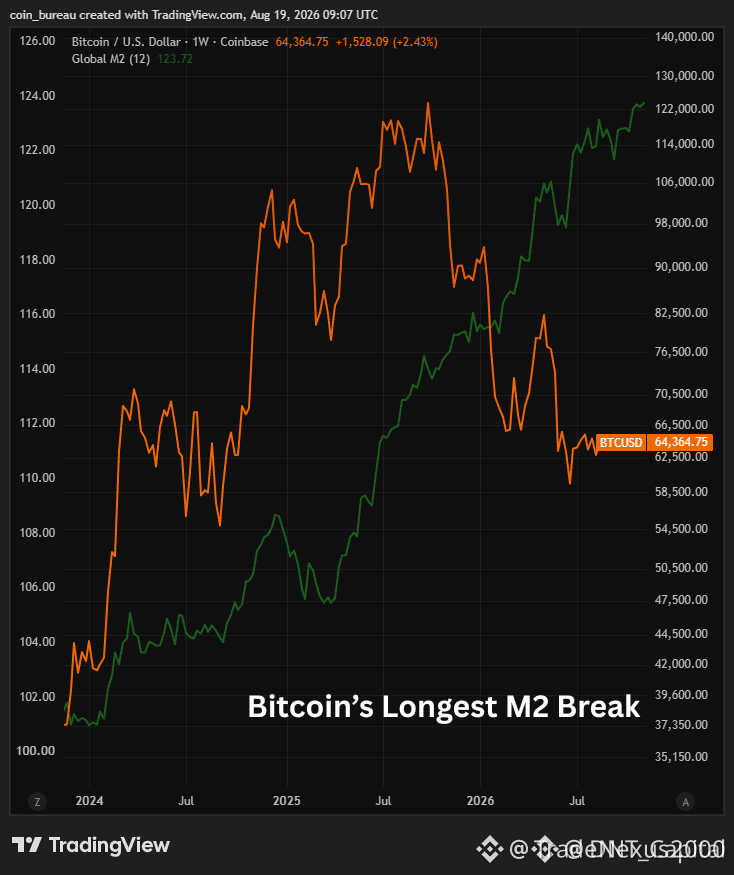
🚨 $BTC DÉCOUPLAGE DE L’OFFRE MONÉTAIRE GLOBALE M2 LORSQUE LA LIQUIDITÉ DES INSTITUTIONS SE REORIENTE ! 📊
M2 mondial en expansion de 7 à 8 % YoY vers des sommets records, tandis que $BTC accuse un retard, révélant une divergence structurelle des flux de capitaux macro. Les « smart money » se garent actuellement des liquidités d’expansion sur des rendements réels et des valeurs refuges traditionnelles plutôt que de racheter directement des actifs numériques risqués. 🔍
Les cycles historiques montrent que la liquidité macro finit par revenir vers les actifs à plus haut bêta une fois que les rendements réels se stabilisent. 💡 Cet écart structurel comprimé prépare soit un rallye de rattrapage violent pour combler l’inefficience du marché, soit une réévaluation institutionnelle plus profonde. 🌊
💬 Pensez-vous que la liquidité mondiale va violemment revenir vers $BTC bientôt, ou que le capital macro change de destination ? 👇
⚠️ Ceci n’est pas un conseil financier. Gérez toujours votre risque. 🛡️
🏷️ #BTC #MacroAnalysis #MarketStructure #Liquidity
🎯 🦈
🚨 $BTC DÉCOUPLAGE DE L’OFFRE MONÉTAIRE GLOBALE M2 LORSQUE LA LIQUIDITÉ DES INSTITUTIONS SE REORIENTE ! 📊
M2 mondial en expansion de 7 à 8 % YoY vers des sommets records, tandis que $BTC accuse un retard, révélant une divergence structurelle des flux de capitaux macro. Les « smart money » se garent actuellement des liquidités d’expansion sur des rendements réels et des valeurs refuges traditionnelles plutôt que de racheter directement des actifs numériques risqués. 🔍
Les cycles historiques montrent que la liquidité macro finit par revenir vers les actifs à plus haut bêta une fois que les rendements réels se stabilisent. 💡 Cet écart structurel comprimé prépare soit un rallye de rattrapage violent pour combler l’inefficience du marché, soit une réévaluation institutionnelle plus profonde. 🌊
💬 Pensez-vous que la liquidité mondiale va violemment revenir vers $BTC bientôt, ou que le capital macro change de destination ? 👇
⚠️ Ceci n’est pas un conseil financier. Gérez toujours votre risque. 🛡️
🏷️ #BTC #MacroAnalysis #MarketStructure #Liquidity
🎯 🦈
M2 mondial en expansion de 7 à 8 % YoY vers des sommets records, tandis que $BTC accuse un retard, révélant une divergence structurelle des flux de capitaux macro. Les « smart money » se garent actuellement des liquidités d’expansion sur des rendements réels et des valeurs refuges traditionnelles plutôt que de racheter directement des actifs numériques risqués. 🔍
Les cycles historiques montrent que la liquidité macro finit par revenir vers les actifs à plus haut bêta une fois que les rendements réels se stabilisent. 💡 Cet écart structurel comprimé prépare soit un rallye de rattrapage violent pour combler l’inefficience du marché, soit une réévaluation institutionnelle plus profonde. 🌊
💬 Pensez-vous que la liquidité mondiale va violemment revenir vers $BTC bientôt, ou que le capital macro change de destination ? 👇
⚠️ Ceci n’est pas un conseil financier. Gérez toujours votre risque. 🛡️
🏷️ #BTC #MacroAnalysis #MarketStructure #Liquidity
🎯 🦈
8

·
--
Le cycle de la réduction de moitié (« halving ») et le cycle de la liquidité macro divergent — et la plupart des traders ne l’ont pas remarqué.
Pendant des années, le cycle de « halving » de Bitcoin sur quatre ans a été étroitement corrélé aux expansions de liquidité mondiale. Les hausses (« bull runs ») coïncidaient avec l’assouplissement de la Fed. Les marchés baissiers (« bear markets ») correspondaient aux hausses de taux. Les cycles se renforçaient mutuellement, rendant la stratégie — a posteriori — évidente.
Mais quelque chose a changé. $BTC se comporte de plus en plus comme un actif macro — sensible aux rendements réels, à la force du dollar et à la dynamique du bilan des banques centrales — plutôt que comme une simple histoire de choc d’offre. Le prochain récit porté par le halving pourrait ne pas se dérouler selon le calendrier si la liquidité macro se resserre précisément au moment où le choc d’offre survient.
Cela crée un contexte plus nuancé pour $ETH et $SOL. Tous deux dépendent moins de calendriers d’offre fixes et davantage de la demande du réseau : combustion des frais (« fee burn »), rendements du staking et activité des développeurs. Si des vents contraires macro compriment le cycle du BTC, des chaînes générant des frais pourraient quand même bénéficier de vents favorables liés à une adoption organique — indépendamment des dynamiques des mineurs.
À retenir : cessez de trader un seul cycle. Comprenez quelle devise/quel actif est piloté par quelle horloge — puis ajustez la taille en conséquence. Assimiler l’ensemble des cryptos au récit du halving, c’est la façon dont la plupart des gens se trompent sur le timing.
Faites le travail. Séparez les signaux.
$BTC $ETH $SOL
#Bitcoin #CryptoMarkets #MacroAnalysis #HalvingCycle #CryptoStrategy
Le cycle de la réduction de moitié (« halving ») et le cycle de la liquidité macro divergent — et la plupart des traders ne l’ont pas remarqué.
Pendant des années, le cycle de « halving » de Bitcoin sur quatre ans a été étroitement corrélé aux expansions de liquidité mondiale. Les hausses (« bull runs ») coïncidaient avec l’assouplissement de la Fed. Les marchés baissiers (« bear markets ») correspondaient aux hausses de taux. Les cycles se renforçaient mutuellement, rendant la stratégie — a posteriori — évidente.
Mais quelque chose a changé. $BTC se comporte de plus en plus comme un actif macro — sensible aux rendements réels, à la force du dollar et à la dynamique du bilan des banques centrales — plutôt que comme une simple histoire de choc d’offre. Le prochain récit porté par le halving pourrait ne pas se dérouler selon le calendrier si la liquidité macro se resserre précisément au moment où le choc d’offre survient.
Cela crée un contexte plus nuancé pour $ETH et $SOL . Tous deux dépendent moins de calendriers d’offre fixes et davantage de la demande du réseau : combustion des frais (« fee burn »), rendements du staking et activité des développeurs. Si des vents contraires macro compriment le cycle du BTC, des chaînes générant des frais pourraient quand même bénéficier de vents favorables liés à une adoption organique — indépendamment des dynamiques des mineurs.
À retenir : cessez de trader un seul cycle. Comprenez quelle devise/quel actif est piloté par quelle horloge — puis ajustez la taille en conséquence. Assimiler l’ensemble des cryptos au récit du halving, c’est la façon dont la plupart des gens se trompent sur le timing.
Faites le travail. Séparez les signaux.
$BTC $ETH $SOL
#Bitcoin #CryptoMarkets #MacroAnalysis #HalvingCycle #CryptoStrategy
Pendant des années, le cycle de « halving » de Bitcoin sur quatre ans a été étroitement corrélé aux expansions de liquidité mondiale. Les hausses (« bull runs ») coïncidaient avec l’assouplissement de la Fed. Les marchés baissiers (« bear markets ») correspondaient aux hausses de taux. Les cycles se renforçaient mutuellement, rendant la stratégie — a posteriori — évidente.
Mais quelque chose a changé. $BTC se comporte de plus en plus comme un actif macro — sensible aux rendements réels, à la force du dollar et à la dynamique du bilan des banques centrales — plutôt que comme une simple histoire de choc d’offre. Le prochain récit porté par le halving pourrait ne pas se dérouler selon le calendrier si la liquidité macro se resserre précisément au moment où le choc d’offre survient.
Cela crée un contexte plus nuancé pour $ETH et $SOL . Tous deux dépendent moins de calendriers d’offre fixes et davantage de la demande du réseau : combustion des frais (« fee burn »), rendements du staking et activité des développeurs. Si des vents contraires macro compriment le cycle du BTC, des chaînes générant des frais pourraient quand même bénéficier de vents favorables liés à une adoption organique — indépendamment des dynamiques des mineurs.
À retenir : cessez de trader un seul cycle. Comprenez quelle devise/quel actif est piloté par quelle horloge — puis ajustez la taille en conséquence. Assimiler l’ensemble des cryptos au récit du halving, c’est la façon dont la plupart des gens se trompent sur le timing.
Faites le travail. Séparez les signaux.
$BTC $ETH $SOL
#Bitcoin #CryptoMarkets #MacroAnalysis #HalvingCycle #CryptoStrategy
77
·
--
🚨 IMPASSE DIPLOMATIQUE IRAN-USA : ÉTINCELLES DE VOLATILITÉ MACRO ET COUVERTURE SUR $BTC ! 💥
Les canaux diplomatiques US-Iran suspendus et les risques d’escalade autour du détroit d’Ormuz déclenchent des réajustements de couverture (re-hedging) au sein des portefeuilles institutionnels sur les bureaux à l’échelle mondiale. L’argent intelligent utilise généralement ces points de friction macro pour dénicher de la liquidité sur des actifs à fort bêta avant d’établir une orientation directionnelle claire. 🌊
Alors que les marchés de l’énergie absorbent la friction initiale, les pools de liquidité institutionnels recalibrent les paramètres de risque structurels pour $BTC . Gardez un œil affûté sur l’absorption des flux d’ordres près des principaux blocs de demande pendant que la volatilité macro se déploie. 📊
💬 Est-ce que vous anticipez cette volatilité macro en plaçant des offres sur des zones de demande clés, ou attendez-vous une confirmation structurelle ? 👇
⚠️ Ceci n’est pas un conseil financier. Gérez toujours votre risque. 🛡️
🏷️ #BTC #MacroAnalysis #MarketStructure #Crypto
🎯 🦈
🚨 IMPASSE DIPLOMATIQUE IRAN-USA : ÉTINCELLES DE VOLATILITÉ MACRO ET COUVERTURE SUR $BTC ! 💥
Les canaux diplomatiques US-Iran suspendus et les risques d’escalade autour du détroit d’Ormuz déclenchent des réajustements de couverture (re-hedging) au sein des portefeuilles institutionnels sur les bureaux à l’échelle mondiale. L’argent intelligent utilise généralement ces points de friction macro pour dénicher de la liquidité sur des actifs à fort bêta avant d’établir une orientation directionnelle claire. 🌊
Alors que les marchés de l’énergie absorbent la friction initiale, les pools de liquidité institutionnels recalibrent les paramètres de risque structurels pour $BTC . Gardez un œil affûté sur l’absorption des flux d’ordres près des principaux blocs de demande pendant que la volatilité macro se déploie. 📊
💬 Est-ce que vous anticipez cette volatilité macro en plaçant des offres sur des zones de demande clés, ou attendez-vous une confirmation structurelle ? 👇
⚠️ Ceci n’est pas un conseil financier. Gérez toujours votre risque. 🛡️
🏷️ #BTC #MacroAnalysis #MarketStructure #Crypto
🎯 🦈
Les canaux diplomatiques US-Iran suspendus et les risques d’escalade autour du détroit d’Ormuz déclenchent des réajustements de couverture (re-hedging) au sein des portefeuilles institutionnels sur les bureaux à l’échelle mondiale. L’argent intelligent utilise généralement ces points de friction macro pour dénicher de la liquidité sur des actifs à fort bêta avant d’établir une orientation directionnelle claire. 🌊
Alors que les marchés de l’énergie absorbent la friction initiale, les pools de liquidité institutionnels recalibrent les paramètres de risque structurels pour $BTC . Gardez un œil affûté sur l’absorption des flux d’ordres près des principaux blocs de demande pendant que la volatilité macro se déploie. 📊
💬 Est-ce que vous anticipez cette volatilité macro en plaçant des offres sur des zones de demande clés, ou attendez-vous une confirmation structurelle ? 👇
⚠️ Ceci n’est pas un conseil financier. Gérez toujours votre risque. 🛡️
🏷️ #BTC #MacroAnalysis #MarketStructure #Crypto
🎯 🦈
9

·
--
#CMESeptemberHikeOddsFallTo30.6% 📊 La probabilité d’une hausse du taux de la Fed en septembre est tombée à 30,6 % !
D’après le CME FedWatch, les traders estiment que la probabilité d’une hausse de 25 points de base, à 3,75 %-4,00 %, n’est que de 30,6 %. C’est une chute brutale par rapport à 52,2 % la semaine précédente. La probabilité de maintenir le taux à 3,50 %-3,75 % a augmenté jusqu’à 69,4 %.
Goldman Sachs a qualifié cette hausse d’« extrêmement improbable », en notant que le prix du marché reste « trop faucon ».
Pour le marché des cryptos, c’est un signal positif : la pause de la Fed réduit la pression sur les actifs à risque et pourrait soutenir $BTC .
🔥 À ton avis, le taux sera relevé en 2026 ou verra-t-on un assouplissement ? Écris dans les commentaires ! 👇
👉 Abonne-toi aux analyses macro et aux signaux !
#FOMC #MacroAnalysis #Trade 👇
{future}(BTCUSDT)
{spot}(BNBUSDT)
{spot}(XRPUSDT)
#CMESeptemberHikeOddsFallTo30.6% 📊 La probabilité d’une hausse du taux de la Fed en septembre est tombée à 30,6 % !
D’après le CME FedWatch, les traders estiment que la probabilité d’une hausse de 25 points de base, à 3,75 %-4,00 %, n’est que de 30,6 %. C’est une chute brutale par rapport à 52,2 % la semaine précédente. La probabilité de maintenir le taux à 3,50 %-3,75 % a augmenté jusqu’à 69,4 %.
Goldman Sachs a qualifié cette hausse d’« extrêmement improbable », en notant que le prix du marché reste « trop faucon ».
Pour le marché des cryptos, c’est un signal positif : la pause de la Fed réduit la pression sur les actifs à risque et pourrait soutenir $BTC .
🔥 À ton avis, le taux sera relevé en 2026 ou verra-t-on un assouplissement ? Écris dans les commentaires ! 👇
👉 Abonne-toi aux analyses macro et aux signaux !
#FOMC #MacroAnalysis #Trade 👇
D’après le CME FedWatch, les traders estiment que la probabilité d’une hausse de 25 points de base, à 3,75 %-4,00 %, n’est que de 30,6 %. C’est une chute brutale par rapport à 52,2 % la semaine précédente. La probabilité de maintenir le taux à 3,50 %-3,75 % a augmenté jusqu’à 69,4 %.
Goldman Sachs a qualifié cette hausse d’« extrêmement improbable », en notant que le prix du marché reste « trop faucon ».
Pour le marché des cryptos, c’est un signal positif : la pause de la Fed réduit la pression sur les actifs à risque et pourrait soutenir $BTC .
🔥 À ton avis, le taux sera relevé en 2026 ou verra-t-on un assouplissement ? Écris dans les commentaires ! 👇
👉 Abonne-toi aux analyses macro et aux signaux !
#FOMC #MacroAnalysis #Trade 👇
263

·
--
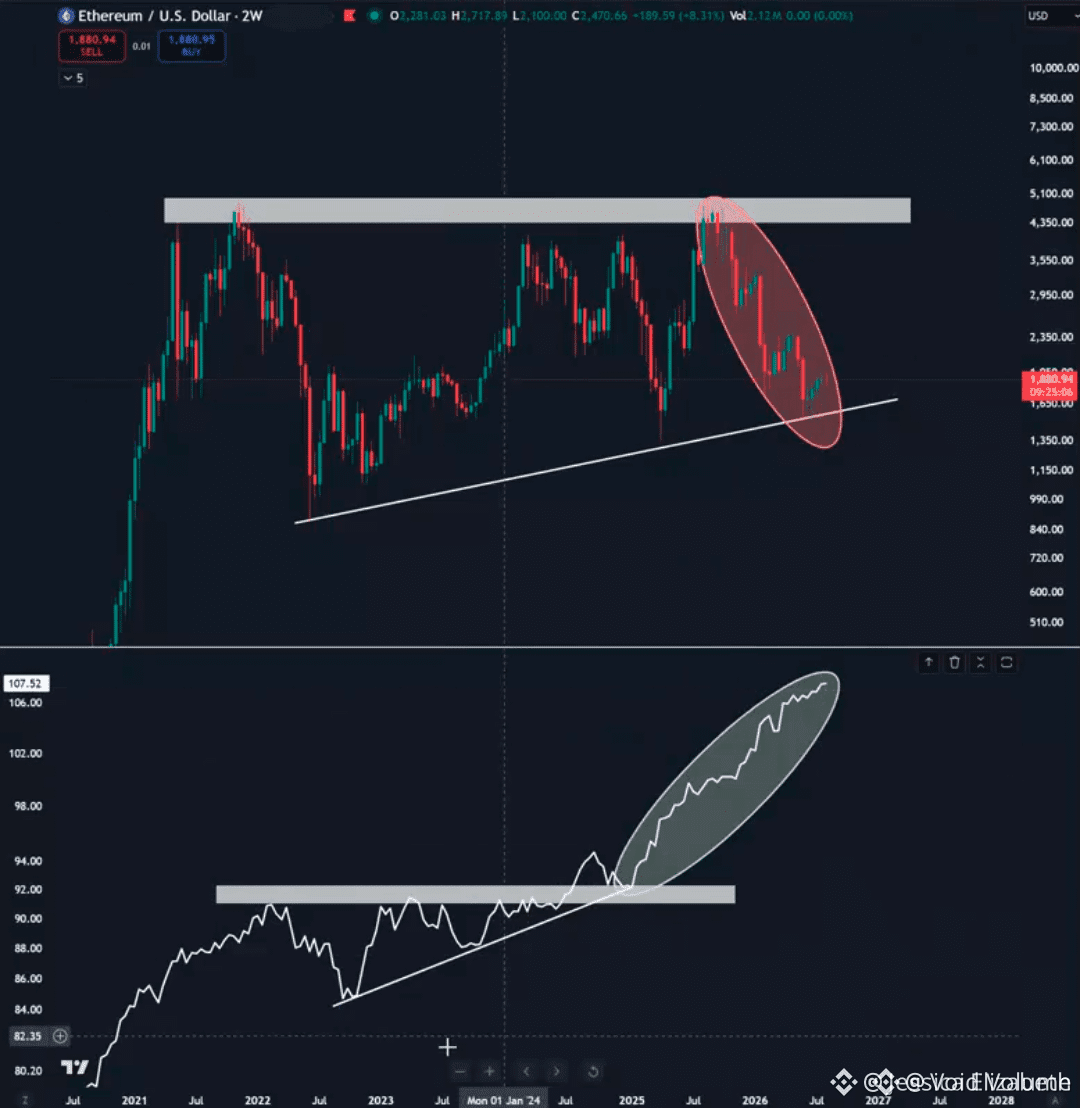
🦈 $ETH 'S GLOBAL M2 CORRELATION FLAGS $12,000 UPSIDE 💥
Objectif : 12,000 🚀
L’offre mondiale de M2 est la marée invisible qui soulève chaque actif à risque, et l’ETH a historiquement évolué avec une corrélation directe à cette expansion monétaire. 📊 La divergence actuelle entre le prix de l’ETH et la courbe de liquidité est l’un des écarts les plus larges de ce cycle — et historiquement, cet écart se comble plutôt vers le haut.
Lorsque les bilans institutionnels s’étendent, le flux de capitaux finit inévitablement par se répercuter sur les actifs numériques. 🔍 Les modèles de régression sur les deux derniers cycles de liquidité placent la zone de rattrapage de l’ETH bien au-dessus de $12,000, ce qui représente un potentiel haussier significatif par rapport aux niveaux actuels.
💬 Suivez-vous les publications de l’expansion de M2 pour chronométrer vos entrées sur ETH ? 👇
⚠️ Ceci n’est pas un conseil financier. Gérez toujours votre risque. 🛡️
🏷️ #ETH #M2Liquidity #MacroAnalysis #Crypto
🦈 💎
🦈 $ETH 'S GLOBAL M2 CORRELATION FLAGS $12,000 UPSIDE 💥
Objectif : 12,000 🚀
L’offre mondiale de M2 est la marée invisible qui soulève chaque actif à risque, et l’ETH a historiquement évolué avec une corrélation directe à cette expansion monétaire. 📊 La divergence actuelle entre le prix de l’ETH et la courbe de liquidité est l’un des écarts les plus larges de ce cycle — et historiquement, cet écart se comble plutôt vers le haut.
Lorsque les bilans institutionnels s’étendent, le flux de capitaux finit inévitablement par se répercuter sur les actifs numériques. 🔍 Les modèles de régression sur les deux derniers cycles de liquidité placent la zone de rattrapage de l’ETH bien au-dessus de $12,000, ce qui représente un potentiel haussier significatif par rapport aux niveaux actuels.
💬 Suivez-vous les publications de l’expansion de M2 pour chronométrer vos entrées sur ETH ? 👇
⚠️ Ceci n’est pas un conseil financier. Gérez toujours votre risque. 🛡️
🏷️ #ETH #M2Liquidity #MacroAnalysis #Crypto
🦈 💎
Objectif : 12,000 🚀
L’offre mondiale de M2 est la marée invisible qui soulève chaque actif à risque, et l’ETH a historiquement évolué avec une corrélation directe à cette expansion monétaire. 📊 La divergence actuelle entre le prix de l’ETH et la courbe de liquidité est l’un des écarts les plus larges de ce cycle — et historiquement, cet écart se comble plutôt vers le haut.
Lorsque les bilans institutionnels s’étendent, le flux de capitaux finit inévitablement par se répercuter sur les actifs numériques. 🔍 Les modèles de régression sur les deux derniers cycles de liquidité placent la zone de rattrapage de l’ETH bien au-dessus de $12,000, ce qui représente un potentiel haussier significatif par rapport aux niveaux actuels.
💬 Suivez-vous les publications de l’expansion de M2 pour chronométrer vos entrées sur ETH ? 👇
⚠️ Ceci n’est pas un conseil financier. Gérez toujours votre risque. 🛡️
🏷️ #ETH #M2Liquidity #MacroAnalysis #Crypto
🦈 💎
27
·
--
Le Bitcoin suivait autrefois le macro. Désormais, le macro commence à suivre le Bitcoin.
Pendant des années, les critiques ont balayé $BTC en le réduisant à un simple actif à risque de plus — un proxy à effet de levier pour le Nasdaq, évoluant de concert avec les anticipations de taux et les minutes de la Fed. Ce récit s’effrite discrètement.
Regardez les cycles récents : le Bitcoin enregistre des plus bas plus élevés pendant des périodes où les actions stagnent ou reculent. L’accumulation institutionnelle se fait désormais via des véhicules ETF qui fonctionnent selon un calendrier de liquidité différent de celui des marchés traditionnels. L’offre détenue à long terme continue de se contracter, même lorsque le prix spot se consolide — un schéma qui, historiquement, précède une réévaluation durable, plutôt que de la distribution.
Que se passe-t-il quand le Bitcoin se découple ? Les flux de capitaux se restructurent. $ETH profite à mesure que l’accès institutionnel au DeFi et aux actifs tokenisés s’approfondit. $BNB progresse grâce à une demande native des plateformes d’échange qui l’isole des variations du sentiment macro — une dynamique portée par l’utilité, et non par la spéculation.
La corrélation macro n’a jamais été une loi — c’était un artefact de liquidité d’un marché naissant. À mesure que la crypto construit ses propres courbes de rendement, ses propres rails de règlement et ses propres moteurs de demande institutionnelle, la corrélation se relâche.
Les actifs qui survivent à cette transition sont ceux dont l’utilité dans le monde réel ancre la demande, indépendamment du sentiment “risk-on”. C’est là que se cache l’alpha de la prochaine décennie.
#Bitcoin #CryptoMarkets #MacroAnalysis #CycleAnalysis #BinanceSquare
Le Bitcoin suivait autrefois le macro. Désormais, le macro commence à suivre le Bitcoin.
Pendant des années, les critiques ont balayé $BTC en le réduisant à un simple actif à risque de plus — un proxy à effet de levier pour le Nasdaq, évoluant de concert avec les anticipations de taux et les minutes de la Fed. Ce récit s’effrite discrètement.
Regardez les cycles récents : le Bitcoin enregistre des plus bas plus élevés pendant des périodes où les actions stagnent ou reculent. L’accumulation institutionnelle se fait désormais via des véhicules ETF qui fonctionnent selon un calendrier de liquidité différent de celui des marchés traditionnels. L’offre détenue à long terme continue de se contracter, même lorsque le prix spot se consolide — un schéma qui, historiquement, précède une réévaluation durable, plutôt que de la distribution.
Que se passe-t-il quand le Bitcoin se découple ? Les flux de capitaux se restructurent. $ETH profite à mesure que l’accès institutionnel au DeFi et aux actifs tokenisés s’approfondit. $BNB progresse grâce à une demande native des plateformes d’échange qui l’isole des variations du sentiment macro — une dynamique portée par l’utilité, et non par la spéculation.
La corrélation macro n’a jamais été une loi — c’était un artefact de liquidité d’un marché naissant. À mesure que la crypto construit ses propres courbes de rendement, ses propres rails de règlement et ses propres moteurs de demande institutionnelle, la corrélation se relâche.
Les actifs qui survivent à cette transition sont ceux dont l’utilité dans le monde réel ancre la demande, indépendamment du sentiment “risk-on”. C’est là que se cache l’alpha de la prochaine décennie.
#Bitcoin #CryptoMarkets #MacroAnalysis #CycleAnalysis #BinanceSquare
Pendant des années, les critiques ont balayé $BTC en le réduisant à un simple actif à risque de plus — un proxy à effet de levier pour le Nasdaq, évoluant de concert avec les anticipations de taux et les minutes de la Fed. Ce récit s’effrite discrètement.
Regardez les cycles récents : le Bitcoin enregistre des plus bas plus élevés pendant des périodes où les actions stagnent ou reculent. L’accumulation institutionnelle se fait désormais via des véhicules ETF qui fonctionnent selon un calendrier de liquidité différent de celui des marchés traditionnels. L’offre détenue à long terme continue de se contracter, même lorsque le prix spot se consolide — un schéma qui, historiquement, précède une réévaluation durable, plutôt que de la distribution.
Que se passe-t-il quand le Bitcoin se découple ? Les flux de capitaux se restructurent. $ETH profite à mesure que l’accès institutionnel au DeFi et aux actifs tokenisés s’approfondit. $BNB progresse grâce à une demande native des plateformes d’échange qui l’isole des variations du sentiment macro — une dynamique portée par l’utilité, et non par la spéculation.
La corrélation macro n’a jamais été une loi — c’était un artefact de liquidité d’un marché naissant. À mesure que la crypto construit ses propres courbes de rendement, ses propres rails de règlement et ses propres moteurs de demande institutionnelle, la corrélation se relâche.
Les actifs qui survivent à cette transition sont ceux dont l’utilité dans le monde réel ancre la demande, indépendamment du sentiment “risk-on”. C’est là que se cache l’alpha de la prochaine décennie.
#Bitcoin #CryptoMarkets #MacroAnalysis #CycleAnalysis #BinanceSquare
29

·
--
Vérifié

Article
⚠️ Analyse Avancée XAUUSD : Bruit Géopolitique, Corrélation Pétrolière, et Le Retour de l'InflationL'Or ( $XAU ) montre actuellement une anomalie fascinante qui sépare la pensée des détaillants de l'exécution institutionnelle. Alors que la logique classique dicte que "les pourparlers de paix signifient un Or plus bas," les mécanismes réels du marché sont actuellement guidés par une relation inter-marchés beaucoup plus profonde entre le Pétrole Brut, l'Inflation, et le prochain mouvement de la Réserve Fédérale.
Voici la mise à jour macro sur pourquoi le marché défie les attentes de base des détaillants :
📌 La connexion Pétrole & Inflation : Pourquoi l'Or est en train de monter
Les récents titres concernant les négociations US-Iran vont au-delà de la géopolitique de surface ; ils impactent directement le corridor énergétique mondial.
⚠️ Analyse Avancée XAUUSD : Bruit Géopolitique, Corrélation Pétrolière, et Le Retour de l'Inflation
L'Or ( $XAU ) montre actuellement une anomalie fascinante qui sépare la pensée des détaillants de l'exécution institutionnelle. Alors que la logique classique dicte que "les pourparlers de paix signifient un Or plus bas," les mécanismes réels du marché sont actuellement guidés par une relation inter-marchés beaucoup plus profonde entre le Pétrole Brut, l'Inflation, et le prochain mouvement de la Réserve Fédérale.
Voici la mise à jour macro sur pourquoi le marché défie les attentes de base des détaillants :
📌 La connexion Pétrole & Inflation : Pourquoi l'Or est en train de monter
Les récents titres concernant les négociations US-Iran vont au-delà de la géopolitique de surface ; ils impactent directement le corridor énergétique mondial.
Voici la mise à jour macro sur pourquoi le marché défie les attentes de base des détaillants :
📌 La connexion Pétrole & Inflation : Pourquoi l'Or est en train de monter
Les récents titres concernant les négociations US-Iran vont au-delà de la géopolitique de surface ; ils impactent directement le corridor énergétique mondial.
1
202

·
--
Baissier
🚨 LE PÉTROLE ANNIHILE LES GAINS — LA LIQUIDITÉ RETOURNE-T-ELLE VERS LES ACTIFS RISQUÉS ? 🛢️📉🚀
Le pétrole brut a effacé ses gains précédents, un mouvement qui pourrait apaiser les inquiétudes inflationnistes et réorienter le sentiment macro vers les actifs risqués.
Pourquoi c'est important 👇
✅ Des prix du pétrole plus bas = moins de pression inflationniste
✅ Moins de chances qu'une politique agressive de banque centrale
✅ Meilleure perspective de liquidité
✅ Appétit renforcé pour le Bitcoin et les altcoins
✅ Le sentiment à risque pourrait revenir plus vite que prévu
La macro dirige les marchés. Si les prix de l'énergie continuent de baisser, la crypto pourrait être l'un des plus grands bénéficiaires.
👀 Surveillance de $BTC et du marché plus large des altcoins de près.
#Bitcoin #Crypto #BTC #Altcoins #MacroAnalysis $BTC
{future}(BTCUSDT)
$ETH
{future}(ETHUSDT)
🚨 LE PÉTROLE ANNIHILE LES GAINS — LA LIQUIDITÉ RETOURNE-T-ELLE VERS LES ACTIFS RISQUÉS ? 🛢️📉🚀
Le pétrole brut a effacé ses gains précédents, un mouvement qui pourrait apaiser les inquiétudes inflationnistes et réorienter le sentiment macro vers les actifs risqués.
Pourquoi c'est important 👇
✅ Des prix du pétrole plus bas = moins de pression inflationniste
✅ Moins de chances qu'une politique agressive de banque centrale
✅ Meilleure perspective de liquidité
✅ Appétit renforcé pour le Bitcoin et les altcoins
✅ Le sentiment à risque pourrait revenir plus vite que prévu
La macro dirige les marchés. Si les prix de l'énergie continuent de baisser, la crypto pourrait être l'un des plus grands bénéficiaires.
👀 Surveillance de $BTC et du marché plus large des altcoins de près.
#Bitcoin #Crypto #BTC #Altcoins #MacroAnalysis $BTC
$ETH
Le pétrole brut a effacé ses gains précédents, un mouvement qui pourrait apaiser les inquiétudes inflationnistes et réorienter le sentiment macro vers les actifs risqués.
Pourquoi c'est important 👇
✅ Des prix du pétrole plus bas = moins de pression inflationniste
✅ Moins de chances qu'une politique agressive de banque centrale
✅ Meilleure perspective de liquidité
✅ Appétit renforcé pour le Bitcoin et les altcoins
✅ Le sentiment à risque pourrait revenir plus vite que prévu
La macro dirige les marchés. Si les prix de l'énergie continuent de baisser, la crypto pourrait être l'un des plus grands bénéficiaires.
👀 Surveillance de $BTC et du marché plus large des altcoins de près.
#Bitcoin #Crypto #BTC #Altcoins #MacroAnalysis $BTC
$ETH
1
22

·
--
DÉSÉSCALADE GÉOPOLITIQUE AU MOYEN-ORIENT : LE SIGNAL D’UN CHANGEMENT DANS LA LIQUIDITÉ DES MARCHÉS MONDIAUX ⚡
La normalisation rapportée entre les États-Unis et l’Iran suggère une réduction significative des primes de risque régionales. Avec la levée potentielle des sanctions et la stabilisation du détroit d’Ormuz, il est probable que l’on observe un déplacement des flux de capitaux, des valeurs refuges vers des instruments plus axés sur le risque.
Les chaînes d’approvisionnement énergétiques et les marchés mondiaux des matières premières s’adaptent à ce nouvel équilibre. Surveillez comment $BTC et $XAU réagissent à cette bascule macro, tandis que la liquidité institutionnelle se réoriente en réponse à la baisse des tensions géopolitiques. Comment vous attendez-vous à ce que ce changement impacte la répartition de votre portefeuille actuel ?
Ce n’est pas un conseil financier. Gérez toujours votre risque.
#BTC #XAU #MacroAnalysis #MarketStructure #Geopolitics
⚡
DÉSÉSCALADE GÉOPOLITIQUE AU MOYEN-ORIENT : LE SIGNAL D’UN CHANGEMENT DANS LA LIQUIDITÉ DES MARCHÉS MONDIAUX ⚡
La normalisation rapportée entre les États-Unis et l’Iran suggère une réduction significative des primes de risque régionales. Avec la levée potentielle des sanctions et la stabilisation du détroit d’Ormuz, il est probable que l’on observe un déplacement des flux de capitaux, des valeurs refuges vers des instruments plus axés sur le risque.
Les chaînes d’approvisionnement énergétiques et les marchés mondiaux des matières premières s’adaptent à ce nouvel équilibre. Surveillez comment $BTC et $XAU réagissent à cette bascule macro, tandis que la liquidité institutionnelle se réoriente en réponse à la baisse des tensions géopolitiques. Comment vous attendez-vous à ce que ce changement impacte la répartition de votre portefeuille actuel ?
Ce n’est pas un conseil financier. Gérez toujours votre risque.
#BTC #XAU #MacroAnalysis #MarketStructure #Geopolitics
⚡
La normalisation rapportée entre les États-Unis et l’Iran suggère une réduction significative des primes de risque régionales. Avec la levée potentielle des sanctions et la stabilisation du détroit d’Ormuz, il est probable que l’on observe un déplacement des flux de capitaux, des valeurs refuges vers des instruments plus axés sur le risque.
Les chaînes d’approvisionnement énergétiques et les marchés mondiaux des matières premières s’adaptent à ce nouvel équilibre. Surveillez comment $BTC et $XAU réagissent à cette bascule macro, tandis que la liquidité institutionnelle se réoriente en réponse à la baisse des tensions géopolitiques. Comment vous attendez-vous à ce que ce changement impacte la répartition de votre portefeuille actuel ?
Ce n’est pas un conseil financier. Gérez toujours votre risque.
#BTC #XAU #MacroAnalysis #MarketStructure #Geopolitics
⚡
48

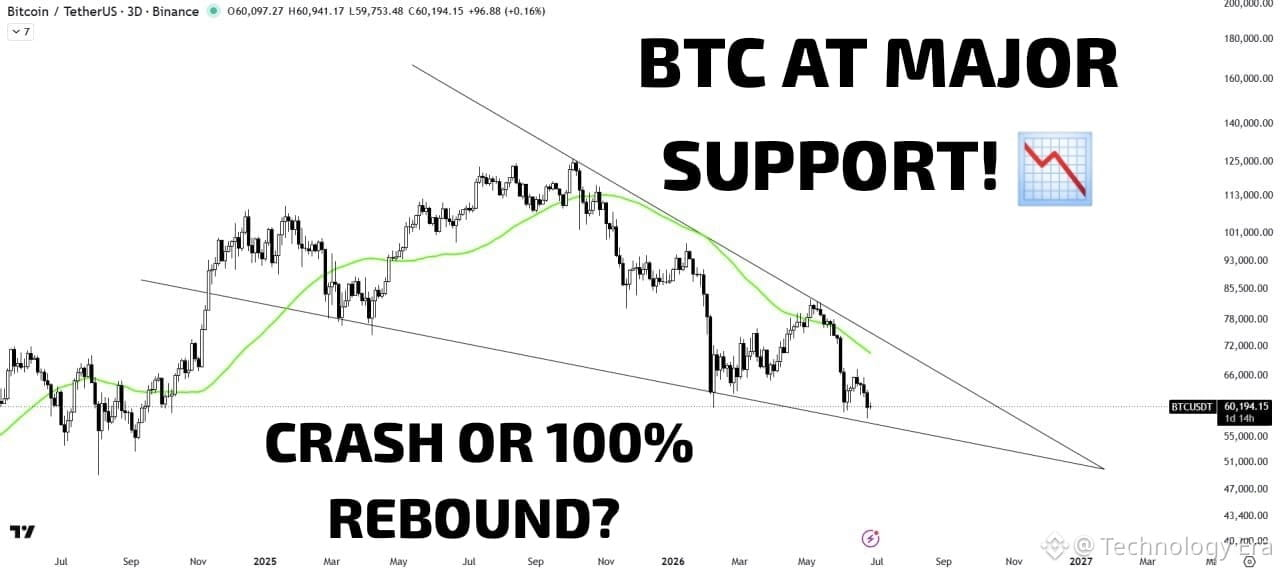
🚨 $BTC Grosse formation de biseau macro : moment décisif ! 📉 Ou 🚀?
Le Bitcoin se resserre à l’intérieur d’un gigantesque biseau baissier multi-mois sur le graphique macro en 3 jours. Pour l’instant, il s’échange autour de 60 194 $ et se trouve directement sur la ligne de support inférieure, celle qui peut faire ou défaire la situation.
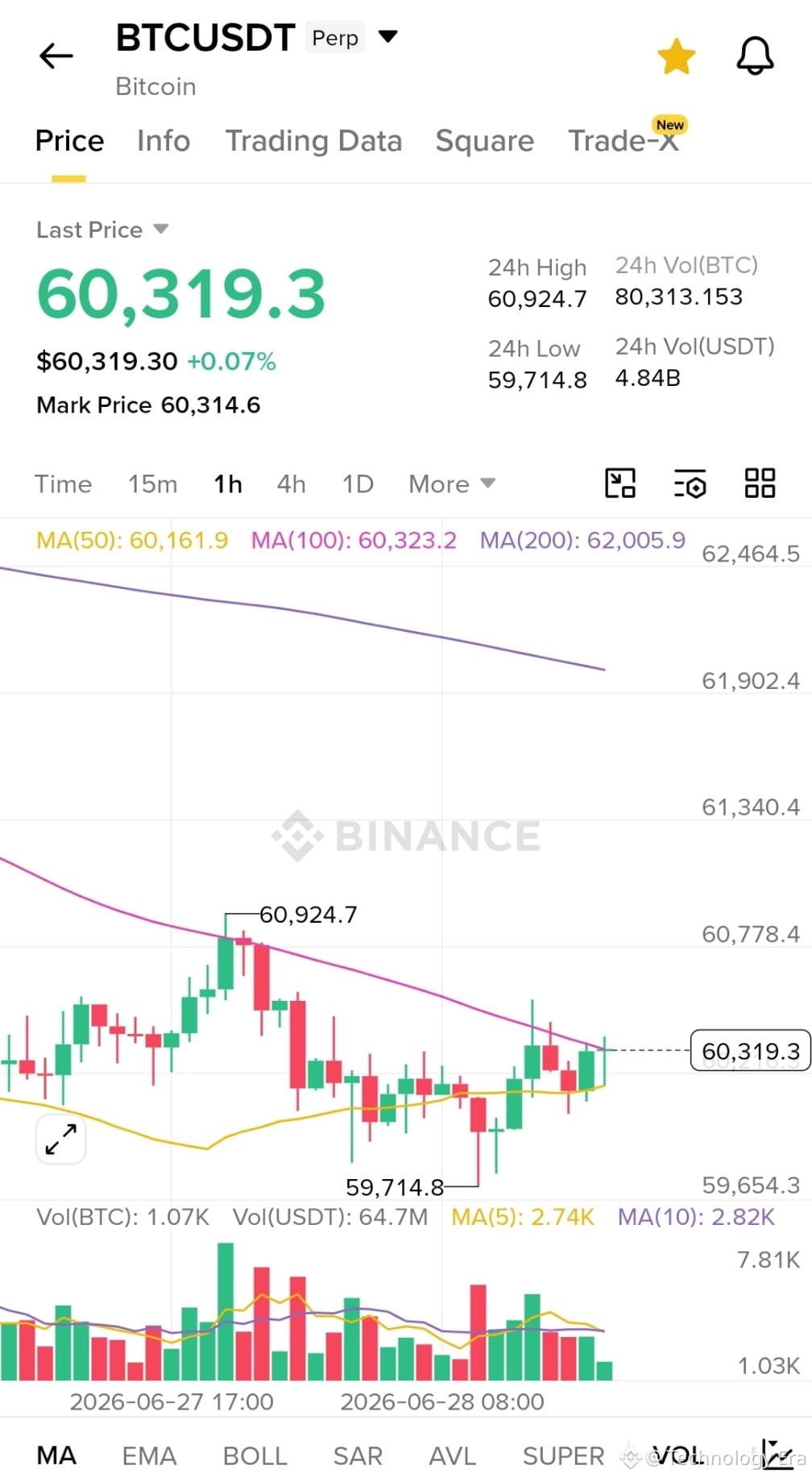
Sur le graphique plus court en 1 heure, le prix se débat de façon serrée avec les moyennes mobiles immédiates, oscillant autour de 60 319 $. Cette compression extrême signifie qu’un mouvement structurel puissant est imminent, juste au coin de la rue !
📊 La formule du biseau macro :
Compression du support macro + Consolidation à court terme = Rupture à haute vélocité
🎯 Niveaux macro clés à surveiller
1. Le plancher de support ultime : la ligne de tendance du bas de la formation de biseau macro s’aligne autour de 58 000 $ - 60 000 $. Si ce plancher cède, une correction plus profonde est envisageable.
2. L’obstacle de résistance : pour déclencher un retournement de tendance massif, le Bitcoin doit franchir proprement la ligne de tendance descendante au-dessus, actuellement située bien au-dessus de 66 000 $.
3. Ma stratégie : le marché met à l’épreuve la patience des acheteurs comme des vendeurs ici. Comme nous nous trouvons exactement sur un support macro majeur, vendre à découvert à ce niveau comporte un risque élevé de se faire piéger. Je surveille de près les clôtures des bougies quotidiennes et en 3 jours pour repérer une structure de rebond confirmée avant de planifier toute configuration de swing agressive.
Préservez votre capital et restez discipliné dans cette zone de compression extrême !
💬 Quel est votre objectif ? Le support du biseau macro va-t-il déclencher une énorme reprise jusqu’à la ligne de tendance supérieure, ou va-t-on casser en dessous de 59K ensuite ? Votez ci-dessous ! 👇
Avertissement : Ceci est uniquement à des fins éducatives. Faites toujours vos propres recherches (DYOR) avant de passer un trade.
📸 Source de l’image : Binance & TradingView
#TechnicalAnalysisn #MacroAnalysis
#KioxiaADRFallsOver14% #ModernaRisesOver12% #FINMAAcceleratesAIForCryptoOversight
$BTC
{future}(BTCUSDT)
🚨 $BTC Grosse formation de biseau macro : moment décisif ! 📉 Ou 🚀?
Le Bitcoin se resserre à l’intérieur d’un gigantesque biseau baissier multi-mois sur le graphique macro en 3 jours. Pour l’instant, il s’échange autour de 60 194 $ et se trouve directement sur la ligne de support inférieure, celle qui peut faire ou défaire la situation.
Sur le graphique plus court en 1 heure, le prix se débat de façon serrée avec les moyennes mobiles immédiates, oscillant autour de 60 319 $. Cette compression extrême signifie qu’un mouvement structurel puissant est imminent, juste au coin de la rue !
📊 La formule du biseau macro :
Compression du support macro + Consolidation à court terme = Rupture à haute vélocité
🎯 Niveaux macro clés à surveiller
1. Le plancher de support ultime : la ligne de tendance du bas de la formation de biseau macro s’aligne autour de 58 000 $ - 60 000 $. Si ce plancher cède, une correction plus profonde est envisageable.
2. L’obstacle de résistance : pour déclencher un retournement de tendance massif, le Bitcoin doit franchir proprement la ligne de tendance descendante au-dessus, actuellement située bien au-dessus de 66 000 $.
3. Ma stratégie : le marché met à l’épreuve la patience des acheteurs comme des vendeurs ici. Comme nous nous trouvons exactement sur un support macro majeur, vendre à découvert à ce niveau comporte un risque élevé de se faire piéger. Je surveille de près les clôtures des bougies quotidiennes et en 3 jours pour repérer une structure de rebond confirmée avant de planifier toute configuration de swing agressive.
Préservez votre capital et restez discipliné dans cette zone de compression extrême !
💬 Quel est votre objectif ? Le support du biseau macro va-t-il déclencher une énorme reprise jusqu’à la ligne de tendance supérieure, ou va-t-on casser en dessous de 59K ensuite ? Votez ci-dessous ! 👇
Avertissement : Ceci est uniquement à des fins éducatives. Faites toujours vos propres recherches (DYOR) avant de passer un trade.
📸 Source de l’image : Binance & TradingView
#TechnicalAnalysisn #MacroAnalysis
#KioxiaADRFallsOver14% #ModernaRisesOver12% #FINMAAcceleratesAIForCryptoOversight
$BTC
Le Bitcoin se resserre à l’intérieur d’un gigantesque biseau baissier multi-mois sur le graphique macro en 3 jours. Pour l’instant, il s’échange autour de 60 194 $ et se trouve directement sur la ligne de support inférieure, celle qui peut faire ou défaire la situation.
Sur le graphique plus court en 1 heure, le prix se débat de façon serrée avec les moyennes mobiles immédiates, oscillant autour de 60 319 $. Cette compression extrême signifie qu’un mouvement structurel puissant est imminent, juste au coin de la rue !
📊 La formule du biseau macro :
Compression du support macro + Consolidation à court terme = Rupture à haute vélocité
🎯 Niveaux macro clés à surveiller
1. Le plancher de support ultime : la ligne de tendance du bas de la formation de biseau macro s’aligne autour de 58 000 $ - 60 000 $. Si ce plancher cède, une correction plus profonde est envisageable.
2. L’obstacle de résistance : pour déclencher un retournement de tendance massif, le Bitcoin doit franchir proprement la ligne de tendance descendante au-dessus, actuellement située bien au-dessus de 66 000 $.
3. Ma stratégie : le marché met à l’épreuve la patience des acheteurs comme des vendeurs ici. Comme nous nous trouvons exactement sur un support macro majeur, vendre à découvert à ce niveau comporte un risque élevé de se faire piéger. Je surveille de près les clôtures des bougies quotidiennes et en 3 jours pour repérer une structure de rebond confirmée avant de planifier toute configuration de swing agressive.
Préservez votre capital et restez discipliné dans cette zone de compression extrême !
💬 Quel est votre objectif ? Le support du biseau macro va-t-il déclencher une énorme reprise jusqu’à la ligne de tendance supérieure, ou va-t-on casser en dessous de 59K ensuite ? Votez ci-dessous ! 👇
Avertissement : Ceci est uniquement à des fins éducatives. Faites toujours vos propres recherches (DYOR) avant de passer un trade.
📸 Source de l’image : Binance & TradingView
#TechnicalAnalysisn #MacroAnalysis
#KioxiaADRFallsOver14% #ModernaRisesOver12% #FINMAAcceleratesAIForCryptoOversight
$BTC
85
·
--
Les cycles de liquidité mondiale sont le moteur le plus sous-estimé des marchés haussiers de la crypto — et nous pourrions entrer dans une nouvelle phase d’expansion.
Les banques centrales gèrent collectivement des milliers de milliards d’actifs au bilan. Lorsque ce chiffre augmente, les actifs à risque gonflent. Lorsqu’il diminue, ils se dégonflent. La crypto, en tant que classe d’actifs à plus fort bêta, amplifie ces mouvements de 3 à 5 fois.
La configuration macro actuelle est en train de changer discrètement. La Fed a suspendu son programme de QT, la BCE assouplit à nouveau et la PBOC a repris des mesures de soutien ciblées. Historiquement, les 6 à 12 mois suivant un pivot coordonné de liquidité mondiale font partie des meilleures périodes pour $BTC et $ETH la performance.
Ce qui rend ce cycle différent : des véhicules d’allocation institutionnels existent désormais à grande échelle. Les ETF au comptant offrent aux investisseurs traditionnels un canal direct fiat-vers-crypto. Lorsque l’argent macro cherche des destinations « risk-on », il n’a plus à naviguer entre des portefeuilles et des seed phrases : il achète simplement l’ETF.
Pour le $BNB, l’implication est démultipliée. Son mécanisme natif de brûlage des frais et de staking transforme une hausse de l’activité on-chain — qui tend à suivre les entrées de liquidité — directement en compression de l’offre.
Surveillez l’évolution de la masse monétaire mondiale M2. Surveillez les taux de croissance des bilans des banques centrales. La crypto ne bouge pas dans le vide : elle évolue avec la liquidité mondiale, simplement plus vite et plus fort.
La marée macro pourrait être en train de tourner. Positionnez-vous en conséquence.
#Bitcoin #CryptoMarkets #MacroAnalysis #Altcoins #CryptoInvesting
Les cycles de liquidité mondiale sont le moteur le plus sous-estimé des marchés haussiers de la crypto — et nous pourrions entrer dans une nouvelle phase d’expansion.
Les banques centrales gèrent collectivement des milliers de milliards d’actifs au bilan. Lorsque ce chiffre augmente, les actifs à risque gonflent. Lorsqu’il diminue, ils se dégonflent. La crypto, en tant que classe d’actifs à plus fort bêta, amplifie ces mouvements de 3 à 5 fois.
La configuration macro actuelle est en train de changer discrètement. La Fed a suspendu son programme de QT, la BCE assouplit à nouveau et la PBOC a repris des mesures de soutien ciblées. Historiquement, les 6 à 12 mois suivant un pivot coordonné de liquidité mondiale font partie des meilleures périodes pour $BTC et $ETH la performance.
Ce qui rend ce cycle différent : des véhicules d’allocation institutionnels existent désormais à grande échelle. Les ETF au comptant offrent aux investisseurs traditionnels un canal direct fiat-vers-crypto. Lorsque l’argent macro cherche des destinations « risk-on », il n’a plus à naviguer entre des portefeuilles et des seed phrases : il achète simplement l’ETF.
Pour le $BNB , l’implication est démultipliée. Son mécanisme natif de brûlage des frais et de staking transforme une hausse de l’activité on-chain — qui tend à suivre les entrées de liquidité — directement en compression de l’offre.
Surveillez l’évolution de la masse monétaire mondiale M2. Surveillez les taux de croissance des bilans des banques centrales. La crypto ne bouge pas dans le vide : elle évolue avec la liquidité mondiale, simplement plus vite et plus fort.
La marée macro pourrait être en train de tourner. Positionnez-vous en conséquence.
#Bitcoin #CryptoMarkets #MacroAnalysis #Altcoins #CryptoInvesting
Les banques centrales gèrent collectivement des milliers de milliards d’actifs au bilan. Lorsque ce chiffre augmente, les actifs à risque gonflent. Lorsqu’il diminue, ils se dégonflent. La crypto, en tant que classe d’actifs à plus fort bêta, amplifie ces mouvements de 3 à 5 fois.
La configuration macro actuelle est en train de changer discrètement. La Fed a suspendu son programme de QT, la BCE assouplit à nouveau et la PBOC a repris des mesures de soutien ciblées. Historiquement, les 6 à 12 mois suivant un pivot coordonné de liquidité mondiale font partie des meilleures périodes pour $BTC et $ETH la performance.
Ce qui rend ce cycle différent : des véhicules d’allocation institutionnels existent désormais à grande échelle. Les ETF au comptant offrent aux investisseurs traditionnels un canal direct fiat-vers-crypto. Lorsque l’argent macro cherche des destinations « risk-on », il n’a plus à naviguer entre des portefeuilles et des seed phrases : il achète simplement l’ETF.
Pour le $BNB , l’implication est démultipliée. Son mécanisme natif de brûlage des frais et de staking transforme une hausse de l’activité on-chain — qui tend à suivre les entrées de liquidité — directement en compression de l’offre.
Surveillez l’évolution de la masse monétaire mondiale M2. Surveillez les taux de croissance des bilans des banques centrales. La crypto ne bouge pas dans le vide : elle évolue avec la liquidité mondiale, simplement plus vite et plus fort.
La marée macro pourrait être en train de tourner. Positionnez-vous en conséquence.
#Bitcoin #CryptoMarkets #MacroAnalysis #Altcoins #CryptoInvesting
40
Connectez-vous pour découvrir plus de contenu
Rejoignez la communauté mondiale des adeptes de cryptomonnaies sur Binance Square
⚡️ Suviez les dernières informations importantes sur les cryptomonnaies.
💬 Jugé digne de confiance par la plus grande plateforme d’échange de cryptomonnaies au monde.
👍 Découvrez les connaissances que partagent les créateurs vérifiés.
Adresse e-mail/Nº de téléphone
Sujets d’actualité
1
#AnthropicCEOCallsForAISlowdown
61,631 vues
826 mentions
2
#BitcoinThirdSingleBlockReorgInFourWeeks
1,062 vues
80 mentions
3
#BitcoinDropsToIntradayLow$76367
0 vues
0 mentions
4
#LSKSurgesOver515%In24Hours
1,199 vues
54 mentions
5
#ClarityActLawIn2026OddsRiseTo30%
0 vues
0 mentions
6
#KoreaCryptoTaxDelayPetitionMeetsReviewThreshold
0 vues
0 mentions
7
#EURequiresWalletMakersReportFlawsIn24Hours
75 vues
23 mentions
8
#ZcashNU7VoteEndsSeptember14
758 vues
39 mentions
9
#AnthropicChoosesNasdaqForPotentialIPO
30,302 vues
352 mentions
10
#SECReceivesGrayscaleLitecoinTrustETFFiling
192,362 vues
2,117 mentions