

#digitalassets
digitalassets
3.7M vues
17,624 mentions
Populaire
Récents
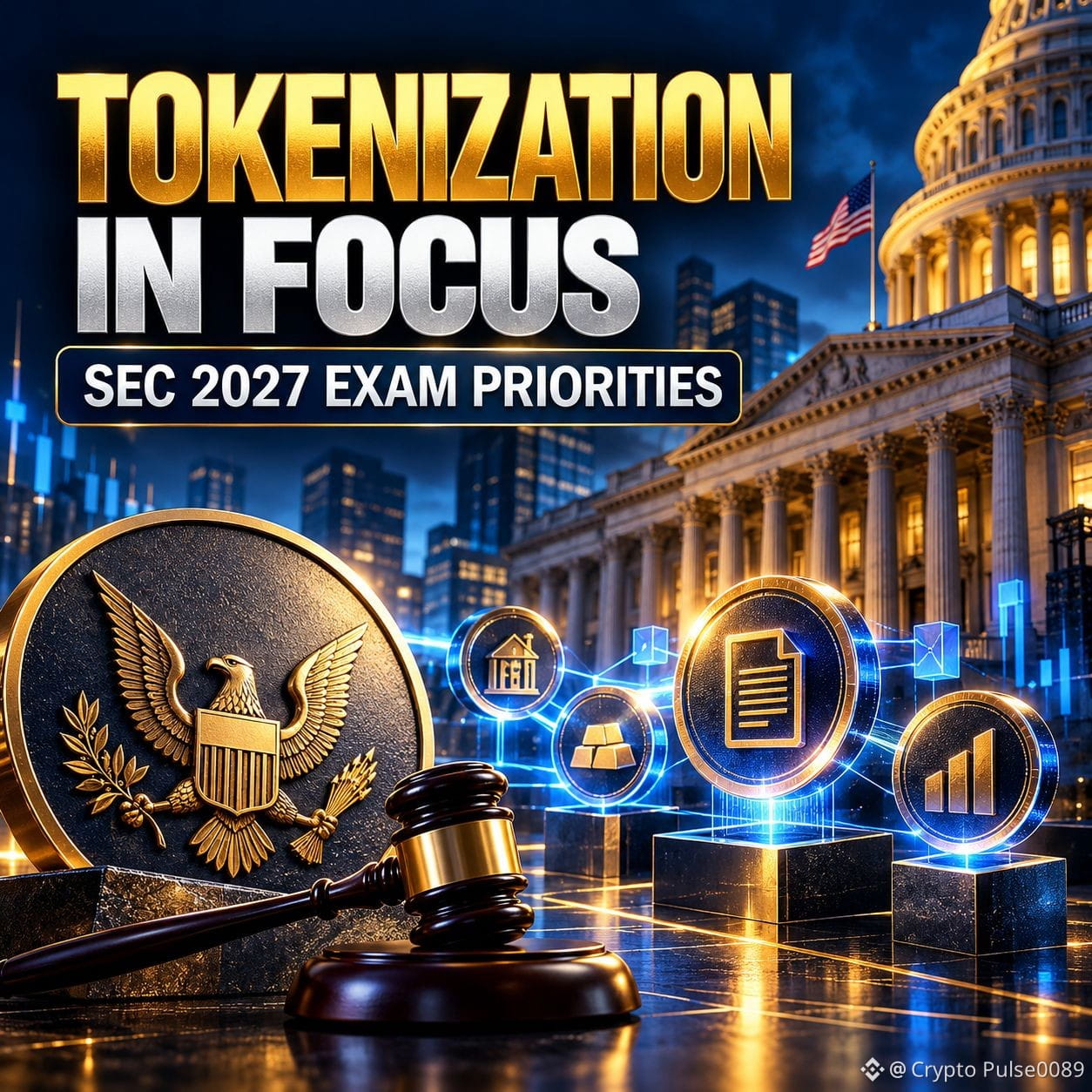
🚨 TOKENIZATION: WALL STREET’S NEXT BIG CRYPTO NARRATIVE?
The US SEC has included tokenization among its FY 2027 examination priorities, highlighting the growing importance of blockchain-based financial infrastructure.
🔹 Why it matters: Tokenization can represent traditional assets as digital tokens on a blockchain.
🔹 What to watch: Regulatory clarity, institutional adoption, investor protection, and real-world use cases.
🔹 Coins to watch: $BTC and $ETH for broader market sentiment — but regulatory attention alone does not guarantee a price increase.
💬 Do you believe tokenization will be a major driver of crypto adoption, or will regulation slow its growth?
#CryptoNews #Tokenization #BTC #ETH #DigitalAssets
⚠️ This is for educational purposes only, not financial advice (NFA). Always do your own research (DYOR).
$ERA $OSMO
{spot}(ERAUSDT)
{spot}(OSMOUSDT)
{spot}(BTCUSDT)
🚨 TOKENIZATION: WALL STREET’S NEXT BIG CRYPTO NARRATIVE?
The US SEC has included tokenization among its FY 2027 examination priorities, highlighting the growing importance of blockchain-based financial infrastructure.
🔹 Why it matters: Tokenization can represent traditional assets as digital tokens on a blockchain.
🔹 What to watch: Regulatory clarity, institutional adoption, investor protection, and real-world use cases.
🔹 Coins to watch: $BTC and $ETH for broader market sentiment — but regulatory attention alone does not guarantee a price increase.
💬 Do you believe tokenization will be a major driver of crypto adoption, or will regulation slow its growth?
#CryptoNews #Tokenization #BTC #ETH #DigitalAssets
⚠️ This is for educational purposes only, not financial advice (NFA). Always do your own research (DYOR).
$ERA $OSMO
The US SEC has included tokenization among its FY 2027 examination priorities, highlighting the growing importance of blockchain-based financial infrastructure.
🔹 Why it matters: Tokenization can represent traditional assets as digital tokens on a blockchain.
🔹 What to watch: Regulatory clarity, institutional adoption, investor protection, and real-world use cases.
🔹 Coins to watch: $BTC and $ETH for broader market sentiment — but regulatory attention alone does not guarantee a price increase.
💬 Do you believe tokenization will be a major driver of crypto adoption, or will regulation slow its growth?
#CryptoNews #Tokenization #BTC #ETH #DigitalAssets
⚠️ This is for educational purposes only, not financial advice (NFA). Always do your own research (DYOR).
$ERA $OSMO
35

·
--
🇯🇵 Japan Puts Cybersecurity in Focus as Data Leaks Grow
Japan’s Prime Minister Sanae Takaichi is set to lead a cybersecurity meeting as rising cyberattacks trigger large-scale data leaks.
In my view, this is a reminder that cybersecurity is no longer just an IT issue. It’s a national security priority.
For the crypto industry, the message is even more important. Exchanges, wallets, and blockchain platforms handle valuable digital assets, making security a constant challenge.
Even the strongest technology can face risks if access controls, private keys, or user data are not properly protected.
As digital adoption grows, trust will depend not only on innovation but also on how well platforms protect users.
My takeaway: Security isn't an optional feature in the digital economy. It's the foundation everything else depends on.
$DOOD $BULLA $ARIA
#Cybersecurity #CryptoSecurity #blockchain #CryptoNews #DigitalAssets
🇯🇵 Japan Puts Cybersecurity in Focus as Data Leaks Grow
Japan’s Prime Minister Sanae Takaichi is set to lead a cybersecurity meeting as rising cyberattacks trigger large-scale data leaks.
In my view, this is a reminder that cybersecurity is no longer just an IT issue. It’s a national security priority.
For the crypto industry, the message is even more important. Exchanges, wallets, and blockchain platforms handle valuable digital assets, making security a constant challenge.
Even the strongest technology can face risks if access controls, private keys, or user data are not properly protected.
As digital adoption grows, trust will depend not only on innovation but also on how well platforms protect users.
My takeaway: Security isn't an optional feature in the digital economy. It's the foundation everything else depends on.
$DOOD $BULLA $ARIA
#Cybersecurity #CryptoSecurity #blockchain #CryptoNews #DigitalAssets
Japan’s Prime Minister Sanae Takaichi is set to lead a cybersecurity meeting as rising cyberattacks trigger large-scale data leaks.
In my view, this is a reminder that cybersecurity is no longer just an IT issue. It’s a national security priority.
For the crypto industry, the message is even more important. Exchanges, wallets, and blockchain platforms handle valuable digital assets, making security a constant challenge.
Even the strongest technology can face risks if access controls, private keys, or user data are not properly protected.
As digital adoption grows, trust will depend not only on innovation but also on how well platforms protect users.
My takeaway: Security isn't an optional feature in the digital economy. It's the foundation everything else depends on.
$DOOD $BULLA $ARIA
#Cybersecurity #CryptoSecurity #blockchain #CryptoNews #DigitalAssets


516

·
--
The U.S. risks losing crypto businesses—not just a policy debate. 😬
Apex Group CEO Peter Hughes warns that the failure of the U.S. Clarity Act will push digital asset businesses toward faster-moving jurisdictions in Asia and the Middle East.
That’s what jumps out at me: a stalled rulebook can become someone else’s competitive edge. 🌏
If you were building a crypto business, would regulatory speed be enough to make you relocate?
#CryptoRegulation #DigitalAssets
The U.S. risks losing crypto businesses—not just a policy debate. 😬
Apex Group CEO Peter Hughes warns that the failure of the U.S. Clarity Act will push digital asset businesses toward faster-moving jurisdictions in Asia and the Middle East.
That’s what jumps out at me: a stalled rulebook can become someone else’s competitive edge. 🌏
If you were building a crypto business, would regulatory speed be enough to make you relocate?
#CryptoRegulation #DigitalAssets
Apex Group CEO Peter Hughes warns that the failure of the U.S. Clarity Act will push digital asset businesses toward faster-moving jurisdictions in Asia and the Middle East.
That’s what jumps out at me: a stalled rulebook can become someone else’s competitive edge. 🌏
If you were building a crypto business, would regulatory speed be enough to make you relocate?
#CryptoRegulation #DigitalAssets

8

The Monetary Authority of Singapore announced on the 23rd that Bank Negara Malaysia and the Bank of Thailand have joined Project BLOOM. This tripartite initiative aims to advance cross-border digital currency settlements alongside partners like Mastercard, Visa, Ripple, and the World Bank Group.
This collaboration marks a key milestone for regional financial infrastructure, focusing on CBDC acceptance, system interoperability, and risk compliance. The integration of traditional payment giants and blockchain firms highlights a decisive shift toward institutional distributed ledger adoption.
Streamlining regional remittances and foreign exchange settlements establishes strong regulatory frameworks for cross-border capital flows across Southeast Asia.
For enterprise crypto networks like Ripple ($XRP), this pilot validates real-world utility in sovereign settlement rails, strengthening institutional adoption. #CBDC #CrossBorderPayments #DigitalAssets
The Monetary Authority of Singapore announced on the 23rd that Bank Negara Malaysia and the Bank of Thailand have joined Project BLOOM. This tripartite initiative aims to advance cross-border digital currency settlements alongside partners like Mastercard, Visa, Ripple, and the World Bank Group.
This collaboration marks a key milestone for regional financial infrastructure, focusing on CBDC acceptance, system interoperability, and risk compliance. The integration of traditional payment giants and blockchain firms highlights a decisive shift toward institutional distributed ledger adoption.
Streamlining regional remittances and foreign exchange settlements establishes strong regulatory frameworks for cross-border capital flows across Southeast Asia.
For enterprise crypto networks like Ripple ($XRP ), this pilot validates real-world utility in sovereign settlement rails, strengthening institutional adoption. #CBDC #CrossBorderPayments #DigitalAssets
This collaboration marks a key milestone for regional financial infrastructure, focusing on CBDC acceptance, system interoperability, and risk compliance. The integration of traditional payment giants and blockchain firms highlights a decisive shift toward institutional distributed ledger adoption.
Streamlining regional remittances and foreign exchange settlements establishes strong regulatory frameworks for cross-border capital flows across Southeast Asia.
For enterprise crypto networks like Ripple ($XRP ), this pilot validates real-world utility in sovereign settlement rails, strengthening institutional adoption. #CBDC #CrossBorderPayments #DigitalAssets
67

BCG: Dịch vụ lưu trữ số là trọng tâm chiến lược của ngân hàng
- Nghiên cứu mới từ BCG cho rằng việc kiểm soát lưu trữ (custody) sẽ là yếu tố then chốt trong kế hoạch phát triển dịch vụ tài sản số của các ngân hàng.
- Các yếu tố như công nghệ lưu trữ, lựa chọn hệ thống và cách tích hợp vào hệ thống ngân hàng sẽ quyết định thành công của dịch vụ.
- Ngân hàng cần đầu tư công nghệ và thiết lập quy trình an toàn để đáp ứng nhu cầu quản lý tài sản kỹ thuật số ngày càng tăng.
#BinanceSquare #CryptoNews #DigitalAssets #Banking
$btc $eth
#vlikevn Titanbot
Nguồn: NewsBTC
BCG: Dịch vụ lưu trữ số là trọng tâm chiến lược của ngân hàng
- Nghiên cứu mới từ BCG cho rằng việc kiểm soát lưu trữ (custody) sẽ là yếu tố then chốt trong kế hoạch phát triển dịch vụ tài sản số của các ngân hàng.
- Các yếu tố như công nghệ lưu trữ, lựa chọn hệ thống và cách tích hợp vào hệ thống ngân hàng sẽ quyết định thành công của dịch vụ.
- Ngân hàng cần đầu tư công nghệ và thiết lập quy trình an toàn để đáp ứng nhu cầu quản lý tài sản kỹ thuật số ngày càng tăng.
#BinanceSquare #CryptoNews #DigitalAssets #Banking
$btc $eth
#vlikevn Titanbot
Nguồn: NewsBTC
- Nghiên cứu mới từ BCG cho rằng việc kiểm soát lưu trữ (custody) sẽ là yếu tố then chốt trong kế hoạch phát triển dịch vụ tài sản số của các ngân hàng.
- Các yếu tố như công nghệ lưu trữ, lựa chọn hệ thống và cách tích hợp vào hệ thống ngân hàng sẽ quyết định thành công của dịch vụ.
- Ngân hàng cần đầu tư công nghệ và thiết lập quy trình an toàn để đáp ứng nhu cầu quản lý tài sản kỹ thuật số ngày càng tăng.
#BinanceSquare #CryptoNews #DigitalAssets #Banking
$btc $eth
#vlikevn Titanbot
Nguồn: NewsBTC
131

·
--
🔥 Why Is the Crypto Market Down 5.40% Today, October 23, 2026? BTC, ETH, and XRP Fall as Tech-Led Risk Aversion Spreads.
Crypto markets fell 5.40% on October 23, 2026.
Bitcoin, Ethereum, and XRP all traded lower as tech-led risk aversion swept through financial markets.
The broad decline dragged major digital assets down alongside traditional tech stocks. The selloff was highlighted in a report by Arnne Carragie, underscoring how quickly risk sentiment can shift across crypto and equities alike. Are you adding to your positions or sitting on the sidelines until the market stabilizes?
❓ What's your take — is this the start of a bigger move or just noise? Drop it below.
$BTC
$ETH
#CryptoMarkets #DigitalAssets #BlockchainAdoption
🔥 Why Is the Crypto Market Down 5.40% Today, October 23, 2026? BTC, ETH, and XRP Fall as Tech-Led Risk Aversion Spreads.
Crypto markets fell 5.40% on October 23, 2026.
Bitcoin, Ethereum, and XRP all traded lower as tech-led risk aversion swept through financial markets.
The broad decline dragged major digital assets down alongside traditional tech stocks. The selloff was highlighted in a report by Arnne Carragie, underscoring how quickly risk sentiment can shift across crypto and equities alike. Are you adding to your positions or sitting on the sidelines until the market stabilizes?
❓ What's your take — is this the start of a bigger move or just noise? Drop it below.
$BTC
$ETH
#CryptoMarkets #DigitalAssets #BlockchainAdoption
Crypto markets fell 5.40% on October 23, 2026.
Bitcoin, Ethereum, and XRP all traded lower as tech-led risk aversion swept through financial markets.
The broad decline dragged major digital assets down alongside traditional tech stocks. The selloff was highlighted in a report by Arnne Carragie, underscoring how quickly risk sentiment can shift across crypto and equities alike. Are you adding to your positions or sitting on the sidelines until the market stabilizes?
❓ What's your take — is this the start of a bigger move or just noise? Drop it below.
$BTC
$ETH
#CryptoMarkets #DigitalAssets #BlockchainAdoption
22
{spot}(BTCUSDT)
{spot}(ETHUSDT)
{spot}(STRKUSDT)
#SouthKoreaPushesFXLawRevisionToRegulateStablecoins
🚨 BREAKING 🇰🇷 SOUTH KOREA MOVES CLOSER TO NEW CRYPTO RULES!
South Korea’s top financial regulator says discussions on the Digital Asset Basic Actare in the final stages. 🇰🇷
⚡ Key Developments:
🔹 Exchange licensing rules are on the agenda.
🔹 Stablecoin issuance regulations are being developed.
🔹 The proposed framework aims to establish clearer rules for the digital asset industry.
🌏 Why it matters: South Korea’s regulatory decisions could shape how crypto exchanges and stablecoin issuers operate in one of Asia’s major digital asset markets.
⚠️ The bill is still under discussion and has not yet become law.
👀 Will South Korea’s new framework accelerate crypto adoption?
#SouthKoreaPushesFXLawRevisionToRegulateStablecoins #CryptoNews #Stablecoins #DigitalAssets
$BTC $ETH $STRK
#SouthKoreaPushesFXLawRevisionToRegulateStablecoins
🚨 BREAKING 🇰🇷 SOUTH KOREA MOVES CLOSER TO NEW CRYPTO RULES!
South Korea’s top financial regulator says discussions on the Digital Asset Basic Actare in the final stages. 🇰🇷
⚡ Key Developments:
🔹 Exchange licensing rules are on the agenda.
🔹 Stablecoin issuance regulations are being developed.
🔹 The proposed framework aims to establish clearer rules for the digital asset industry.
🌏 Why it matters: South Korea’s regulatory decisions could shape how crypto exchanges and stablecoin issuers operate in one of Asia’s major digital asset markets.
⚠️ The bill is still under discussion and has not yet become law.
👀 Will South Korea’s new framework accelerate crypto adoption?
#SouthKoreaPushesFXLawRevisionToRegulateStablecoins #CryptoNews #Stablecoins #DigitalAssets
$BTC $ETH $STRK
🚨 BREAKING 🇰🇷 SOUTH KOREA MOVES CLOSER TO NEW CRYPTO RULES!
South Korea’s top financial regulator says discussions on the Digital Asset Basic Actare in the final stages. 🇰🇷
⚡ Key Developments:
🔹 Exchange licensing rules are on the agenda.
🔹 Stablecoin issuance regulations are being developed.
🔹 The proposed framework aims to establish clearer rules for the digital asset industry.
🌏 Why it matters: South Korea’s regulatory decisions could shape how crypto exchanges and stablecoin issuers operate in one of Asia’s major digital asset markets.
⚠️ The bill is still under discussion and has not yet become law.
👀 Will South Korea’s new framework accelerate crypto adoption?
#SouthKoreaPushesFXLawRevisionToRegulateStablecoins #CryptoNews #Stablecoins #DigitalAssets
$BTC $ETH $STRK
1
209

·
--
#Tokenized Real-World Assets: Bringing Traditional Finance On-Chain
Tokenized real-world assets, often called RWAs, are bringing familiar financial products—such as government bonds, money-market funds, real estate, and private credit—onto blockchain networks. Instead of relying only on traditional account systems, ownership can be represented by digital tokens with potentially faster settlement, greater transparency, and around-the-clock transferability.
The appeal is straightforward: blockchain infrastructure could make high-quality financial assets easier to access, divide into smaller units, and use across digital-finance applications. For example, tokenized Treasury products have attracted attention as investors look for on-chain instruments linked to traditional yield sources.
But tokenization does not remove the underlying risks. The value of a tokenized asset still depends on the issuer, legal structure, custody of the underlying asset, market liquidity, and local regulations. Smart-contract and platform risks also matter, especially when tokens are used as collateral or moved across networks.
The key question is whether tokenization can improve access and efficiency without sacrificing investor protection. As more institutions test on-chain products, RWAs are becoming an important bridge between conventional markets and crypto infrastructure.
#RWA #Blockchain #DeFi #Crypto #TradFi #OnChainFinance #DigitalAssets
#Tokenized Real-World Assets: Bringing Traditional Finance On-Chain
Tokenized real-world assets, often called RWAs, are bringing familiar financial products—such as government bonds, money-market funds, real estate, and private credit—onto blockchain networks. Instead of relying only on traditional account systems, ownership can be represented by digital tokens with potentially faster settlement, greater transparency, and around-the-clock transferability.
The appeal is straightforward: blockchain infrastructure could make high-quality financial assets easier to access, divide into smaller units, and use across digital-finance applications. For example, tokenized Treasury products have attracted attention as investors look for on-chain instruments linked to traditional yield sources.
But tokenization does not remove the underlying risks. The value of a tokenized asset still depends on the issuer, legal structure, custody of the underlying asset, market liquidity, and local regulations. Smart-contract and platform risks also matter, especially when tokens are used as collateral or moved across networks.
The key question is whether tokenization can improve access and efficiency without sacrificing investor protection. As more institutions test on-chain products, RWAs are becoming an important bridge between conventional markets and crypto infrastructure.
#RWA #Blockchain #DeFi #Crypto #TradFi #OnChainFinance #DigitalAssets
Tokenized real-world assets, often called RWAs, are bringing familiar financial products—such as government bonds, money-market funds, real estate, and private credit—onto blockchain networks. Instead of relying only on traditional account systems, ownership can be represented by digital tokens with potentially faster settlement, greater transparency, and around-the-clock transferability.
The appeal is straightforward: blockchain infrastructure could make high-quality financial assets easier to access, divide into smaller units, and use across digital-finance applications. For example, tokenized Treasury products have attracted attention as investors look for on-chain instruments linked to traditional yield sources.
But tokenization does not remove the underlying risks. The value of a tokenized asset still depends on the issuer, legal structure, custody of the underlying asset, market liquidity, and local regulations. Smart-contract and platform risks also matter, especially when tokens are used as collateral or moved across networks.
The key question is whether tokenization can improve access and efficiency without sacrificing investor protection. As more institutions test on-chain products, RWAs are becoming an important bridge between conventional markets and crypto infrastructure.
#RWA #Blockchain #DeFi #Crypto #TradFi #OnChainFinance #DigitalAssets
58

·
--
Tokenization brings digital representations of traditional assets onto blockchain infrastructure.
Think stocks, bonds and other financial instruments.
The interesting part is how ownership and settlement could change.
#Tokenization #Blockchain #DigitalAssets #fintech
Tokenization brings digital representations of traditional assets onto blockchain infrastructure.
Think stocks, bonds and other financial instruments.
The interesting part is how ownership and settlement could change.
#Tokenization #Blockchain #DigitalAssets #fintech
Think stocks, bonds and other financial instruments.
The interesting part is how ownership and settlement could change.
#Tokenization #Blockchain #DigitalAssets #fintech
1
33

·
--
CRYPTO AT A CROSSROADS WHAT’S NEXT FOR THE DIGITAL ASSET MARKET?The cryptocurrency market is entering another critical phase as investors balance geopolitical tensions, U.S. monetary policy, institutional demand and growing regulatory adoption.
Bitcoin is currently trading around the $82K area, after recent volatility pushed the market sharply lower before buyers stepped back in. The key battle for Bitcoin now is whether it can hold the $80,000–$82,000 zone and regain momentum toward the $85,000–$87,000 area. Recent market analysis suggests Bitcoin has defended $80,000 multiple times while institutional flows remain an important catalyst.
U.S.–IRAN TENSIONS REMAIN A MAJOR MARKET DRIVER
Geopolitics has become one of the biggest short term risks for crypto. Reports of possible progress toward U.S.–Iran negotiations recently triggered a recovery in risk assets, while conflicting reports about the situation caused oil and Bitcoin to reverse quickly. This shows how sensitive crypto has become to geopolitical headlines.
For Bitcoin a genuine de-escalation could improve overall risk sentiment and potentially support crypto. However, a renewed escalation could push investors toward the U.S. dollar Treasury assets and other traditional safe-haven positions.
THE FED COULD BE THE NEXT BIG CATALYST
Monetary policy remains extremely important. A Reuters poll published on October 20 showed that economists overwhelmingly expect the Federal Reserve to hold rates at 3.75%–4.00% at the October 27–28 meeting while expectations for another rate increase in December remain strong.
For crypto, higher-for-longer interest rates can pressure risk assets by keeping liquidity tighter. On the other hand any future shift toward easier monetary policy could become a powerful tailwind for Bitcoin and the broader digital asset market.
₿ INSTITUTIONAL ADOPTION IS STILL GROWING
Despite short term price weakness institutional involvement in crypto continues to expand. U.S. spot Bitcoin and Ethereum ETFs have recently experienced significant outflows showing that institutional demand is not moving in a straight line.
At the same time, Switzerland has now approved its first spot Bitcoin ETF another sign that regulated access to Bitcoin is expanding globally.
STABLECOINS AND TOKENIZATION COULD DEFINE THE NEXT ERA
The future of crypto may extend far beyond Bitcoin speculation. Stablecoins, tokenized real world assets, blockchain based payments and institutional custody are becoming increasingly important parts of the digital finance ecosystem.
USDC, for example, has reached a major regulatory milestone in Europe under MiCA while tokenized Treasury products and institutional blockchain infrastructure continue to develop.
WHAT COULD HAPPEN NEXT?
The crypto market is currently sitting at the intersection of macro economics geopolitics regulation and institutional adoption.
If geopolitical tensions ease liquidity conditions improve and ETF demand returns, Bitcoin could regain bullish momentum and potentially challenge higher resistance levels.
But if inflation remains stubborn, the Fed stays hawkish ETF outflows continue or geopolitical tensions escalate crypto could remain volatile and face another correction.
The bigger picture is clear: Crypto is no longer moving in isolation.
Bitcoin is increasingly connected to interest rates global liquidity U.S. politics, institutional capital ETFs and geopolitical risk.
The next major crypto move may therefore not come from crypto alone it could come from the Fed Washington Wall Street or the global geopolitical landscape.
The future of crypto remains highly uncertain, but one thing is becoming increasingly clear digital assets are becoming a permanent part of the global financial system.
#Bitcoin #Crypto #Blockchain #CryptoNews #DigitalAssets
CRYPTO AT A CROSSROADS WHAT’S NEXT FOR THE DIGITAL ASSET MARKET?
The cryptocurrency market is entering another critical phase as investors balance geopolitical tensions, U.S. monetary policy, institutional demand and growing regulatory adoption.
Bitcoin is currently trading around the $82K area, after recent volatility pushed the market sharply lower before buyers stepped back in. The key battle for Bitcoin now is whether it can hold the $80,000–$82,000 zone and regain momentum toward the $85,000–$87,000 area. Recent market analysis suggests Bitcoin has defended $80,000 multiple times while institutional flows remain an important catalyst.
U.S.–IRAN TENSIONS REMAIN A MAJOR MARKET DRIVER
Geopolitics has become one of the biggest short term risks for crypto. Reports of possible progress toward U.S.–Iran negotiations recently triggered a recovery in risk assets, while conflicting reports about the situation caused oil and Bitcoin to reverse quickly. This shows how sensitive crypto has become to geopolitical headlines.
For Bitcoin a genuine de-escalation could improve overall risk sentiment and potentially support crypto. However, a renewed escalation could push investors toward the U.S. dollar Treasury assets and other traditional safe-haven positions.
THE FED COULD BE THE NEXT BIG CATALYST
Monetary policy remains extremely important. A Reuters poll published on October 20 showed that economists overwhelmingly expect the Federal Reserve to hold rates at 3.75%–4.00% at the October 27–28 meeting while expectations for another rate increase in December remain strong.
For crypto, higher-for-longer interest rates can pressure risk assets by keeping liquidity tighter. On the other hand any future shift toward easier monetary policy could become a powerful tailwind for Bitcoin and the broader digital asset market.
₿ INSTITUTIONAL ADOPTION IS STILL GROWING
Despite short term price weakness institutional involvement in crypto continues to expand. U.S. spot Bitcoin and Ethereum ETFs have recently experienced significant outflows showing that institutional demand is not moving in a straight line.
At the same time, Switzerland has now approved its first spot Bitcoin ETF another sign that regulated access to Bitcoin is expanding globally.
STABLECOINS AND TOKENIZATION COULD DEFINE THE NEXT ERA
The future of crypto may extend far beyond Bitcoin speculation. Stablecoins, tokenized real world assets, blockchain based payments and institutional custody are becoming increasingly important parts of the digital finance ecosystem.
USDC, for example, has reached a major regulatory milestone in Europe under MiCA while tokenized Treasury products and institutional blockchain infrastructure continue to develop.
WHAT COULD HAPPEN NEXT?
The crypto market is currently sitting at the intersection of macro economics geopolitics regulation and institutional adoption.
If geopolitical tensions ease liquidity conditions improve and ETF demand returns, Bitcoin could regain bullish momentum and potentially challenge higher resistance levels.
But if inflation remains stubborn, the Fed stays hawkish ETF outflows continue or geopolitical tensions escalate crypto could remain volatile and face another correction.
The bigger picture is clear: Crypto is no longer moving in isolation.
Bitcoin is increasingly connected to interest rates global liquidity U.S. politics, institutional capital ETFs and geopolitical risk.
The next major crypto move may therefore not come from crypto alone it could come from the Fed Washington Wall Street or the global geopolitical landscape.
The future of crypto remains highly uncertain, but one thing is becoming increasingly clear digital assets are becoming a permanent part of the global financial system.
#Bitcoin #Crypto #Blockchain #CryptoNews #DigitalAssets
Bitcoin is currently trading around the $82K area, after recent volatility pushed the market sharply lower before buyers stepped back in. The key battle for Bitcoin now is whether it can hold the $80,000–$82,000 zone and regain momentum toward the $85,000–$87,000 area. Recent market analysis suggests Bitcoin has defended $80,000 multiple times while institutional flows remain an important catalyst.
U.S.–IRAN TENSIONS REMAIN A MAJOR MARKET DRIVER
Geopolitics has become one of the biggest short term risks for crypto. Reports of possible progress toward U.S.–Iran negotiations recently triggered a recovery in risk assets, while conflicting reports about the situation caused oil and Bitcoin to reverse quickly. This shows how sensitive crypto has become to geopolitical headlines.
For Bitcoin a genuine de-escalation could improve overall risk sentiment and potentially support crypto. However, a renewed escalation could push investors toward the U.S. dollar Treasury assets and other traditional safe-haven positions.
THE FED COULD BE THE NEXT BIG CATALYST
Monetary policy remains extremely important. A Reuters poll published on October 20 showed that economists overwhelmingly expect the Federal Reserve to hold rates at 3.75%–4.00% at the October 27–28 meeting while expectations for another rate increase in December remain strong.
For crypto, higher-for-longer interest rates can pressure risk assets by keeping liquidity tighter. On the other hand any future shift toward easier monetary policy could become a powerful tailwind for Bitcoin and the broader digital asset market.
₿ INSTITUTIONAL ADOPTION IS STILL GROWING
Despite short term price weakness institutional involvement in crypto continues to expand. U.S. spot Bitcoin and Ethereum ETFs have recently experienced significant outflows showing that institutional demand is not moving in a straight line.
At the same time, Switzerland has now approved its first spot Bitcoin ETF another sign that regulated access to Bitcoin is expanding globally.
STABLECOINS AND TOKENIZATION COULD DEFINE THE NEXT ERA
The future of crypto may extend far beyond Bitcoin speculation. Stablecoins, tokenized real world assets, blockchain based payments and institutional custody are becoming increasingly important parts of the digital finance ecosystem.
USDC, for example, has reached a major regulatory milestone in Europe under MiCA while tokenized Treasury products and institutional blockchain infrastructure continue to develop.
WHAT COULD HAPPEN NEXT?
The crypto market is currently sitting at the intersection of macro economics geopolitics regulation and institutional adoption.
If geopolitical tensions ease liquidity conditions improve and ETF demand returns, Bitcoin could regain bullish momentum and potentially challenge higher resistance levels.
But if inflation remains stubborn, the Fed stays hawkish ETF outflows continue or geopolitical tensions escalate crypto could remain volatile and face another correction.
The bigger picture is clear: Crypto is no longer moving in isolation.
Bitcoin is increasingly connected to interest rates global liquidity U.S. politics, institutional capital ETFs and geopolitical risk.
The next major crypto move may therefore not come from crypto alone it could come from the Fed Washington Wall Street or the global geopolitical landscape.
The future of crypto remains highly uncertain, but one thing is becoming increasingly clear digital assets are becoming a permanent part of the global financial system.
#Bitcoin #Crypto #Blockchain #CryptoNews #DigitalAssets
1
73

·
--
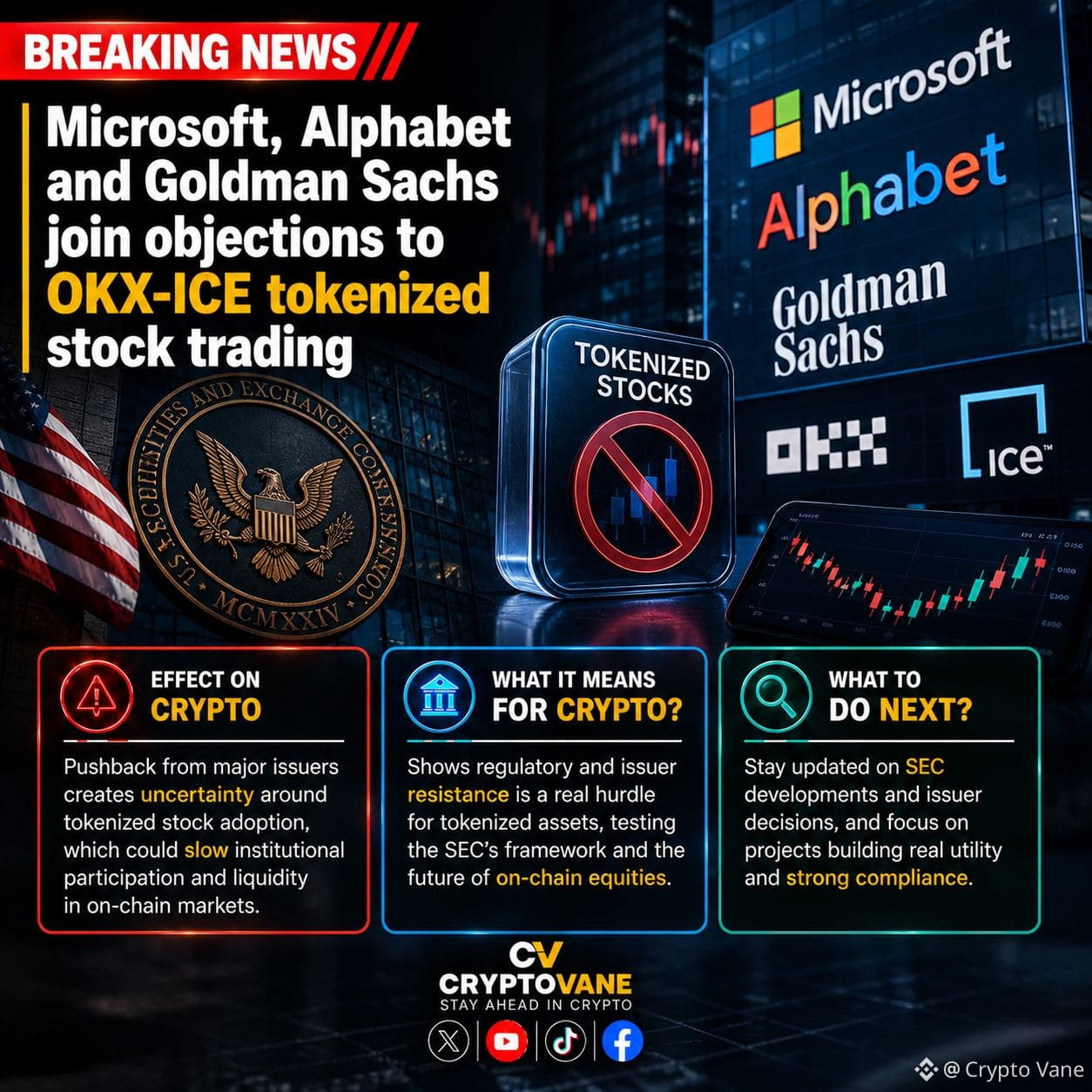
$MSFT , $GOOGL & $GS Push Back Against Tokenized Stock Trading
Major companies are challenging OKX-ICE’s planned tokenized stock platform, bringing disclosed issuer objections to 16. The dispute highlights growing regulatory uncertainty around blockchain-based equities, 24/7 trading, and the future of tokenized financial markets.
#Tokenization #CryptoNews #blockchain #Microsoft #DigitalAssets
{stock_us}(MSFT.US)
{stock_us}(GOOGL.US)
{stock_us}(GS.US)
$MSFT , $GOOGL & $GS Push Back Against Tokenized Stock Trading
Major companies are challenging OKX-ICE’s planned tokenized stock platform, bringing disclosed issuer objections to 16. The dispute highlights growing regulatory uncertainty around blockchain-based equities, 24/7 trading, and the future of tokenized financial markets.
#Tokenization #CryptoNews #blockchain #Microsoft #DigitalAssets
Major companies are challenging OKX-ICE’s planned tokenized stock platform, bringing disclosed issuer objections to 16. The dispute highlights growing regulatory uncertainty around blockchain-based equities, 24/7 trading, and the future of tokenized financial markets.
#Tokenization #CryptoNews #blockchain #Microsoft #DigitalAssets
335


·
--
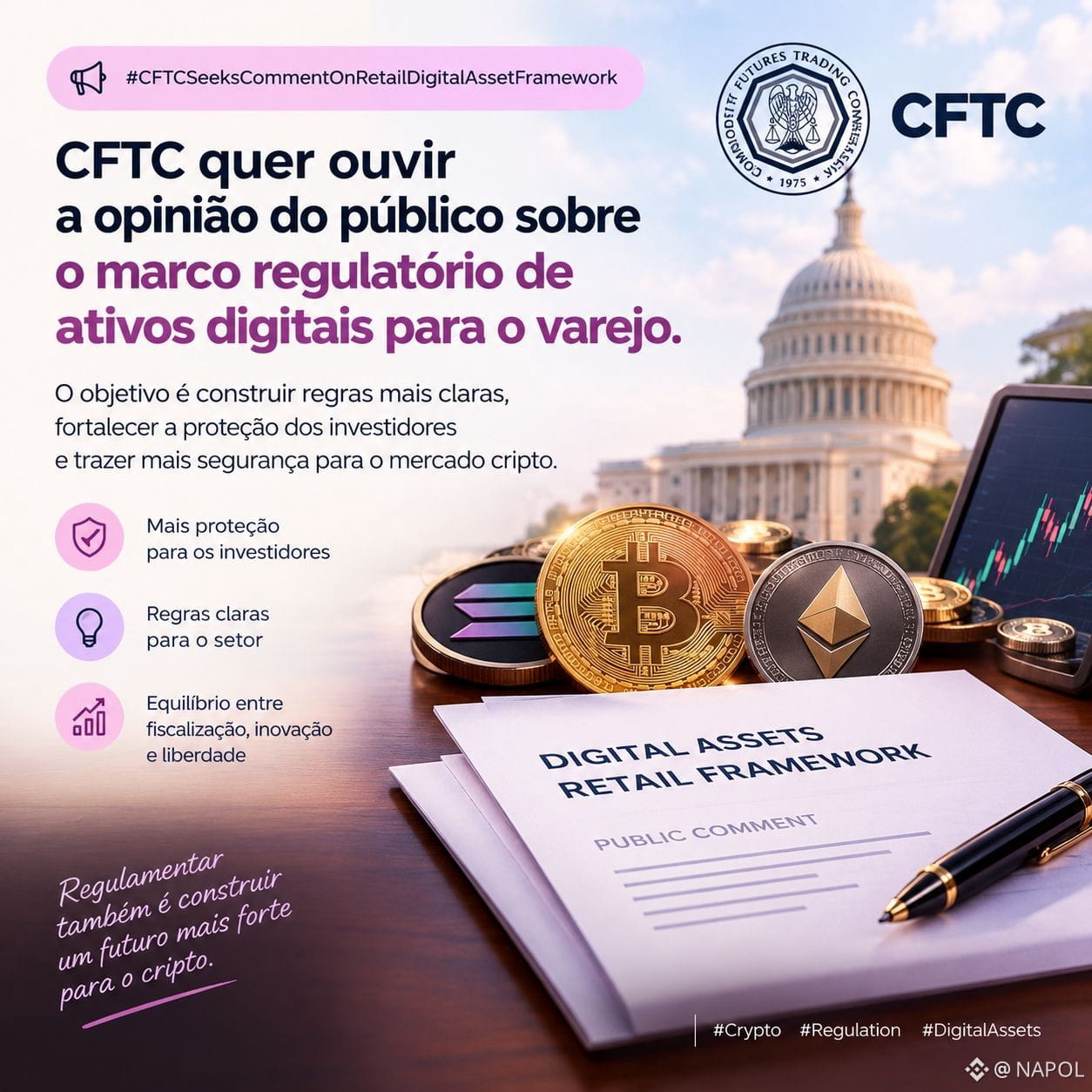
#CFTCSeeksCommentOnRetailDigitalAssetFramework
📢
A CFTC está abrindo espaço para discutir como deve funcionar a estrutura regulatória dos ativos digitais para investidores de varejo. ⚖️
Na minha visão, esse debate é importante para definir regras mais claras, fortalecer a proteção dos investidores e dar mais segurança ao mercado cripto.
O desafio é encontrar o equilíbrio entre fiscalização, inovação e liberdade para desenvolver novas soluções. Regulamentar não precisa significar limitar o crescimento, mas criar condições para que o setor evolua com mais transparência e confiança. 🚀
$IOST $GNS $CVX
#CFTC #Regulation #DigitalAssets
#CFTCSeeksCommentOnRetailDigitalAssetFramework
📢
A CFTC está abrindo espaço para discutir como deve funcionar a estrutura regulatória dos ativos digitais para investidores de varejo. ⚖️
Na minha visão, esse debate é importante para definir regras mais claras, fortalecer a proteção dos investidores e dar mais segurança ao mercado cripto.
O desafio é encontrar o equilíbrio entre fiscalização, inovação e liberdade para desenvolver novas soluções. Regulamentar não precisa significar limitar o crescimento, mas criar condições para que o setor evolua com mais transparência e confiança. 🚀
$IOST $GNS $CVX
#CFTC #Regulation #DigitalAssets
📢
A CFTC está abrindo espaço para discutir como deve funcionar a estrutura regulatória dos ativos digitais para investidores de varejo. ⚖️
Na minha visão, esse debate é importante para definir regras mais claras, fortalecer a proteção dos investidores e dar mais segurança ao mercado cripto.
O desafio é encontrar o equilíbrio entre fiscalização, inovação e liberdade para desenvolver novas soluções. Regulamentar não precisa significar limitar o crescimento, mas criar condições para que o setor evolua com mais transparência e confiança. 🚀
$IOST $GNS $CVX
#CFTC #Regulation #DigitalAssets
2
364
·
--
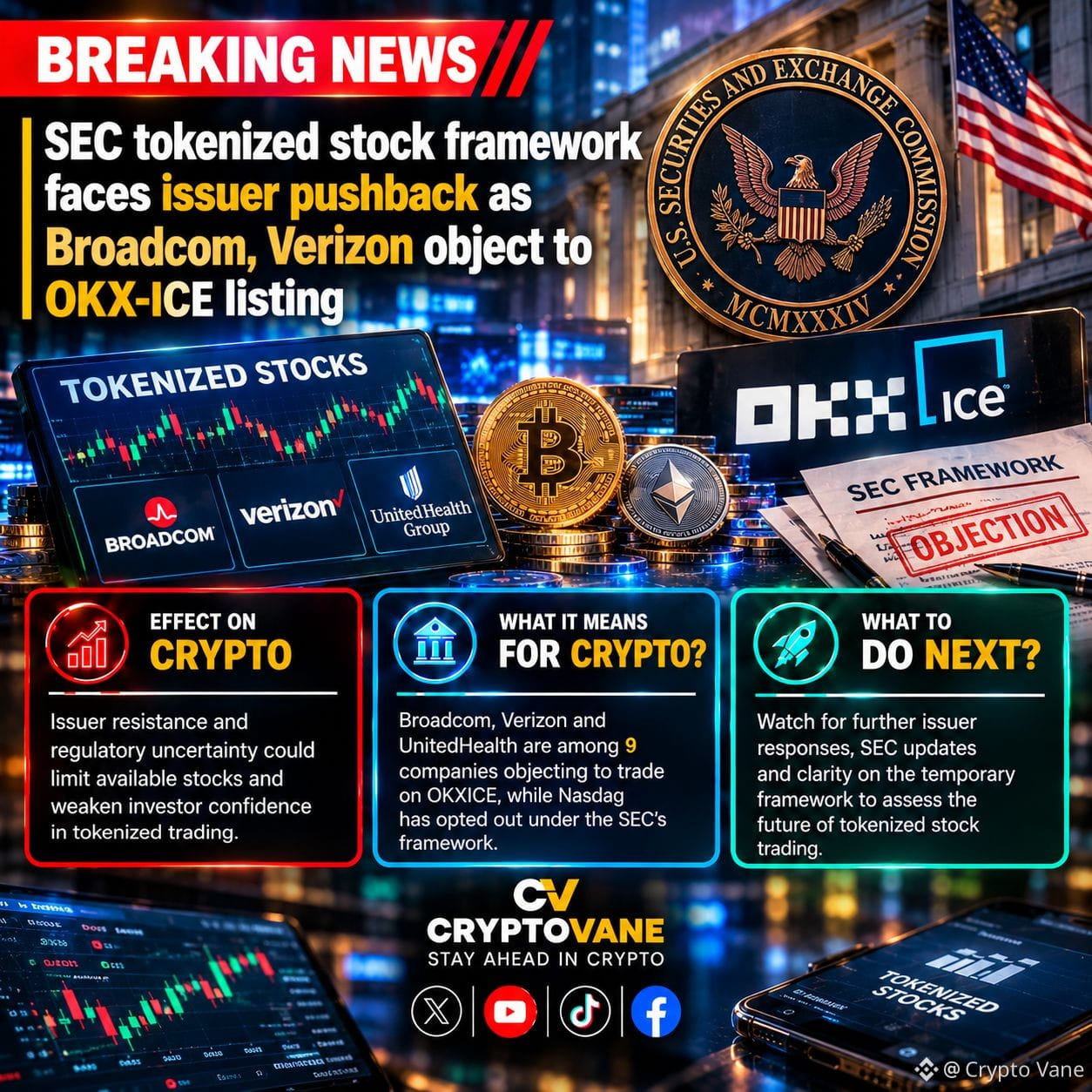
SEC Tokenized Stock Plan Faces Major Pushback From Broadcom, Verizon & Nasdaq
The SEC’s proposed tokenized-stock framework is facing growing resistance as major companies challenge plans for blockchain-based share trading. Regulatory uncertainty and issuer opposition could reshape the future of tokenized stocks and institutional crypto adoption.
#CryptoNews #Tokenization #blockchain #broadcom #DigitalAssets
{stock_us}(AVGO.US)
{stock_us}(VZ.US)
{stock_us}(UNH.US)
SEC Tokenized Stock Plan Faces Major Pushback From Broadcom, Verizon & Nasdaq
The SEC’s proposed tokenized-stock framework is facing growing resistance as major companies challenge plans for blockchain-based share trading. Regulatory uncertainty and issuer opposition could reshape the future of tokenized stocks and institutional crypto adoption.
#CryptoNews #Tokenization #blockchain #broadcom #DigitalAssets
The SEC’s proposed tokenized-stock framework is facing growing resistance as major companies challenge plans for blockchain-based share trading. Regulatory uncertainty and issuer opposition could reshape the future of tokenized stocks and institutional crypto adoption.
#CryptoNews #Tokenization #blockchain #broadcom #DigitalAssets
VZUS+0,44%
UNHUS+0,16%
AVGOUS-0,21%
476
·
--
Vérifié
🔥 Sberbank Gets Green Light to Offer Bitcoin Trading to 110 Million Retail Clients.
Russia's largest bank just got permission to sell Bitcoin to over 100 million customers. Sberbank has received regulatory approval to buy and sell digital assets in Russia.
The state-backed lender plans to offer Bitcoin trading to its 110 million retail clients. This marks a major shift for traditional banking in Russia and opens a new channel for crypto traders.
Bitcoin was up 0.53% while Ethereum dipped 0.52% following the news. Would you trade Bitcoin directly through your bank if given the option?
❓ What's your take — is this the start of a bigger move or just noise? Drop it below.
$BTC
$ETH
#CryptoMarkets #DigitalAssets #BlockchainAdoption
🔥 Sberbank Gets Green Light to Offer Bitcoin Trading to 110 Million Retail Clients.
Russia's largest bank just got permission to sell Bitcoin to over 100 million customers. Sberbank has received regulatory approval to buy and sell digital assets in Russia.
The state-backed lender plans to offer Bitcoin trading to its 110 million retail clients. This marks a major shift for traditional banking in Russia and opens a new channel for crypto traders.
Bitcoin was up 0.53% while Ethereum dipped 0.52% following the news. Would you trade Bitcoin directly through your bank if given the option?
❓ What's your take — is this the start of a bigger move or just noise? Drop it below.
$BTC
$ETH
#CryptoMarkets #DigitalAssets #BlockchainAdoption
Russia's largest bank just got permission to sell Bitcoin to over 100 million customers. Sberbank has received regulatory approval to buy and sell digital assets in Russia.
The state-backed lender plans to offer Bitcoin trading to its 110 million retail clients. This marks a major shift for traditional banking in Russia and opens a new channel for crypto traders.
Bitcoin was up 0.53% while Ethereum dipped 0.52% following the news. Would you trade Bitcoin directly through your bank if given the option?
❓ What's your take — is this the start of a bigger move or just noise? Drop it below.
$BTC
$ETH
#CryptoMarkets #DigitalAssets #BlockchainAdoption
18

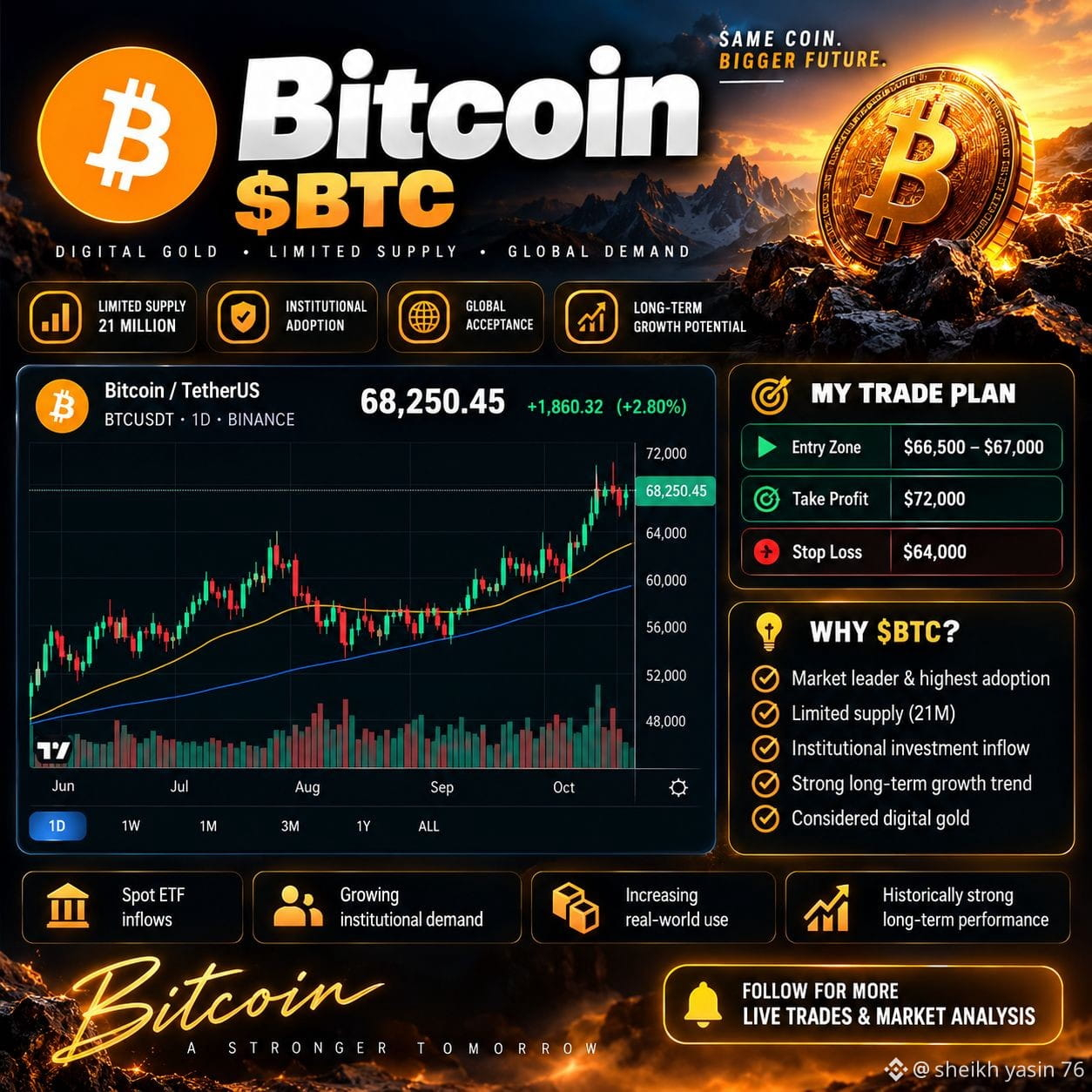
₿ BITCOIN ($BTC ): Could It Remain a Leading Digital Asset?
Bitcoin is a decentralized, peer-to-peer monetary network with a maximum supply of 21 million BTC. Its scarcity and global recognition are major reasons people pay attention to it.
🔍 Why do traders follow $BTC ?
Limited supply: Bitcoin has a fixed maximum supply of 21 million coins.
Global network: It enables peer-to-peer value transfers without a central bank controlling the network.
Market influence: Bitcoin is widely followed and often influences sentiment across the broader crypto market.
🚀 What could shape Bitcoin’s future?
Greater adoption, institutional participation, regulation, macroeconomic conditions, and investor demand could influence Bitcoin's long-term role. However, its price can still fall sharply, even when adoption grows.
📊 My takeaway: Understand Bitcoin's fundamentals, market cycles, and risk before making a decision.
💬 Do you see $BTC primarily as digital gold, a payment network, or both?
#BitcoinDunyamiz #btc70k #CryptoResearch #DigitalAssets #blockchain
₿ BITCOIN ($BTC ): Could It Remain a Leading Digital Asset?
Bitcoin is a decentralized, peer-to-peer monetary network with a maximum supply of 21 million BTC. Its scarcity and global recognition are major reasons people pay attention to it.
🔍 Why do traders follow $BTC ?
Limited supply: Bitcoin has a fixed maximum supply of 21 million coins.
Global network: It enables peer-to-peer value transfers without a central bank controlling the network.
Market influence: Bitcoin is widely followed and often influences sentiment across the broader crypto market.
🚀 What could shape Bitcoin’s future?
Greater adoption, institutional participation, regulation, macroeconomic conditions, and investor demand could influence Bitcoin's long-term role. However, its price can still fall sharply, even when adoption grows.
📊 My takeaway: Understand Bitcoin's fundamentals, market cycles, and risk before making a decision.
💬 Do you see $BTC primarily as digital gold, a payment network, or both?
#BitcoinDunyamiz #btc70k #CryptoResearch #DigitalAssets #blockchain
Bitcoin is a decentralized, peer-to-peer monetary network with a maximum supply of 21 million BTC. Its scarcity and global recognition are major reasons people pay attention to it.
🔍 Why do traders follow $BTC ?
Limited supply: Bitcoin has a fixed maximum supply of 21 million coins.
Global network: It enables peer-to-peer value transfers without a central bank controlling the network.
Market influence: Bitcoin is widely followed and often influences sentiment across the broader crypto market.
🚀 What could shape Bitcoin’s future?
Greater adoption, institutional participation, regulation, macroeconomic conditions, and investor demand could influence Bitcoin's long-term role. However, its price can still fall sharply, even when adoption grows.
📊 My takeaway: Understand Bitcoin's fundamentals, market cycles, and risk before making a decision.
💬 Do you see $BTC primarily as digital gold, a payment network, or both?
#BitcoinDunyamiz #btc70k #CryptoResearch #DigitalAssets #blockchain
68
🌍 XRP: CRYPTO AND CROSS-BORDER PAYMENTS
$XRP is a digital asset associated with the XRP Ledger, a blockchain designed to support efficient transactions.
💡 What should beginners understand?
🔹 XRP can be transferred on the XRP Ledger.
🔹 The network supports payment-related use cases.
🔹 XRP’s market price can change rapidly.
Don’t buy a cryptocurrency just because it is trending. Understand its purpose, token economics, and risks first.
Do you think payment-focused cryptocurrencies have a future? 💬
#XRP #XRPL #CryptoEducation #DigitalAssets #BinanceSquare
🌍 XRP: CRYPTO AND CROSS-BORDER PAYMENTS
$XRP is a digital asset associated with the XRP Ledger, a blockchain designed to support efficient transactions.
💡 What should beginners understand?
🔹 XRP can be transferred on the XRP Ledger.
🔹 The network supports payment-related use cases.
🔹 XRP’s market price can change rapidly.
Don’t buy a cryptocurrency just because it is trending. Understand its purpose, token economics, and risks first.
Do you think payment-focused cryptocurrencies have a future? 💬
#XRP #XRPL #CryptoEducation #DigitalAssets #BinanceSquare
$XRP is a digital asset associated with the XRP Ledger, a blockchain designed to support efficient transactions.
💡 What should beginners understand?
🔹 XRP can be transferred on the XRP Ledger.
🔹 The network supports payment-related use cases.
🔹 XRP’s market price can change rapidly.
Don’t buy a cryptocurrency just because it is trending. Understand its purpose, token economics, and risks first.
Do you think payment-focused cryptocurrencies have a future? 💬
#XRP #XRPL #CryptoEducation #DigitalAssets #BinanceSquare
1
97

·
--
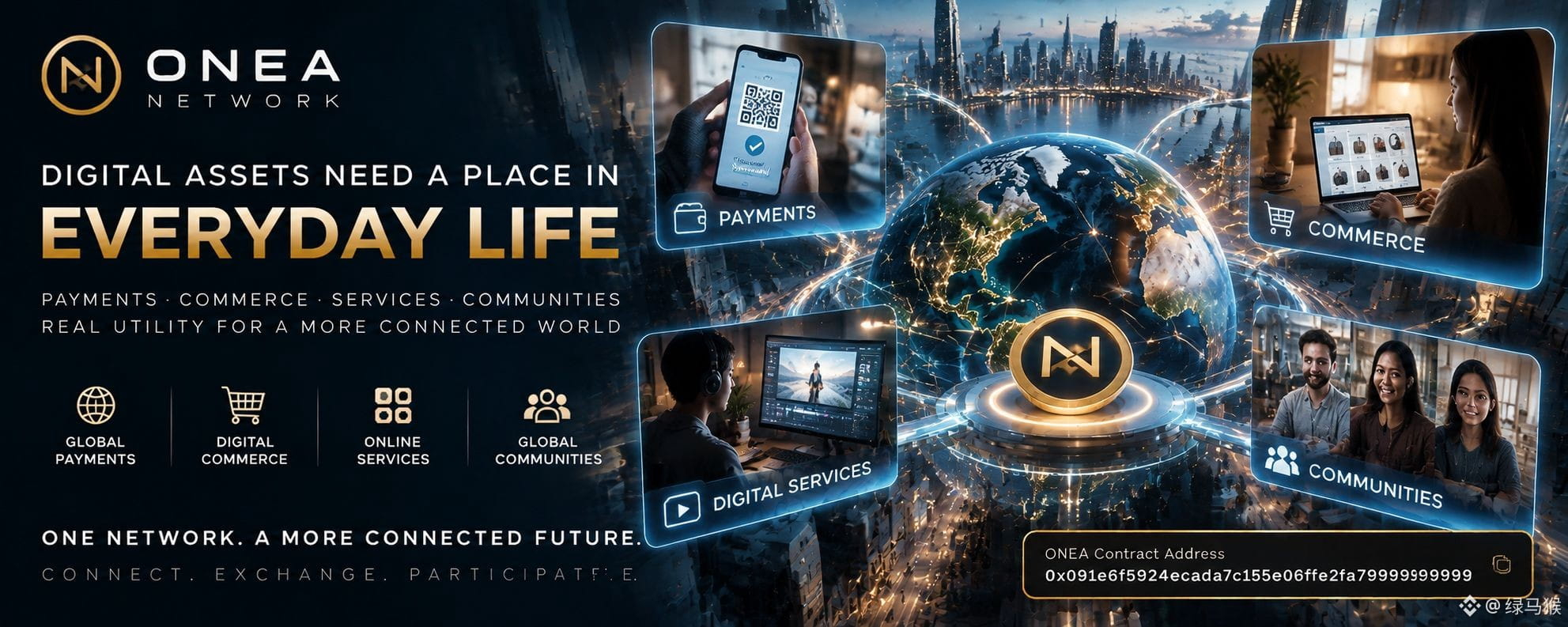
🌐 ONEA NETWORK——数字资产需要真正融入日常生活。
多年来,关于数字资产的讨论,大多集中在价格、交易和市场周期上。
但还有一个值得思考的问题:
当数字资产不再局限于交易市场,它还能为日常生活带来什么?
想象一下,支付数字服务费用、支持自己喜欢的创作者、参与线上社区,或者与不同国家的人进行价值交换。
这些场景各不相同,却有一个共同需求:让价值能够更加简单地转移和使用。
🚀 从持有走向使用
数字资产的长期发展,不仅取决于市场需求,也取决于实际用途。
人们能否方便地使用它们?
数字服务能否有效地接入?
交易流程能否更加简单?
不同的数字体验能否彼此连接?
这些问题没有自动的答案。真正的普及需要可靠的基础设施、安全保障、实用的应用场景以及良好的用户体验。
🔗 ONEA 希望探索什么?
ONEA Network 正在探索一个连接支付、数字资产、服务、商业与社区的数字生态。
更大的目标,是让数字价值能够进入更多不同的使用场景,而不是仅仅存在于钱包或者价格图表之中。
这是一个长期愿景。真正的用户采用,需要依靠实际建设和真实效用来实现。
🌍 数字资产的下一阶段,也许不只取决于人们持有什么,更取决于人们真正能够用它做什么。
ONEA NETWORK
连接、交换、参与。
#ONEA #ONEANetwork #Web3 #DigitalAssets
🌐 ONEA NETWORK——数字资产需要真正融入日常生活。
多年来,关于数字资产的讨论,大多集中在价格、交易和市场周期上。
但还有一个值得思考的问题:
当数字资产不再局限于交易市场,它还能为日常生活带来什么?
想象一下,支付数字服务费用、支持自己喜欢的创作者、参与线上社区,或者与不同国家的人进行价值交换。
这些场景各不相同,却有一个共同需求:让价值能够更加简单地转移和使用。
🚀 从持有走向使用
数字资产的长期发展,不仅取决于市场需求,也取决于实际用途。
人们能否方便地使用它们?
数字服务能否有效地接入?
交易流程能否更加简单?
不同的数字体验能否彼此连接?
这些问题没有自动的答案。真正的普及需要可靠的基础设施、安全保障、实用的应用场景以及良好的用户体验。
🔗 ONEA 希望探索什么?
ONEA Network 正在探索一个连接支付、数字资产、服务、商业与社区的数字生态。
更大的目标,是让数字价值能够进入更多不同的使用场景,而不是仅仅存在于钱包或者价格图表之中。
这是一个长期愿景。真正的用户采用,需要依靠实际建设和真实效用来实现。
🌍 数字资产的下一阶段,也许不只取决于人们持有什么,更取决于人们真正能够用它做什么。
ONEA NETWORK
连接、交换、参与。
#ONEA #ONEANetwork #Web3 #DigitalAssets
多年来,关于数字资产的讨论,大多集中在价格、交易和市场周期上。
但还有一个值得思考的问题:
当数字资产不再局限于交易市场,它还能为日常生活带来什么?
想象一下,支付数字服务费用、支持自己喜欢的创作者、参与线上社区,或者与不同国家的人进行价值交换。
这些场景各不相同,却有一个共同需求:让价值能够更加简单地转移和使用。
🚀 从持有走向使用
数字资产的长期发展,不仅取决于市场需求,也取决于实际用途。
人们能否方便地使用它们?
数字服务能否有效地接入?
交易流程能否更加简单?
不同的数字体验能否彼此连接?
这些问题没有自动的答案。真正的普及需要可靠的基础设施、安全保障、实用的应用场景以及良好的用户体验。
🔗 ONEA 希望探索什么?
ONEA Network 正在探索一个连接支付、数字资产、服务、商业与社区的数字生态。
更大的目标,是让数字价值能够进入更多不同的使用场景,而不是仅仅存在于钱包或者价格图表之中。
这是一个长期愿景。真正的用户采用,需要依靠实际建设和真实效用来实现。
🌍 数字资产的下一阶段,也许不只取决于人们持有什么,更取决于人们真正能够用它做什么。
ONEA NETWORK
连接、交换、参与。
#ONEA #ONEANetwork #Web3 #DigitalAssets
1
1
36
·
--
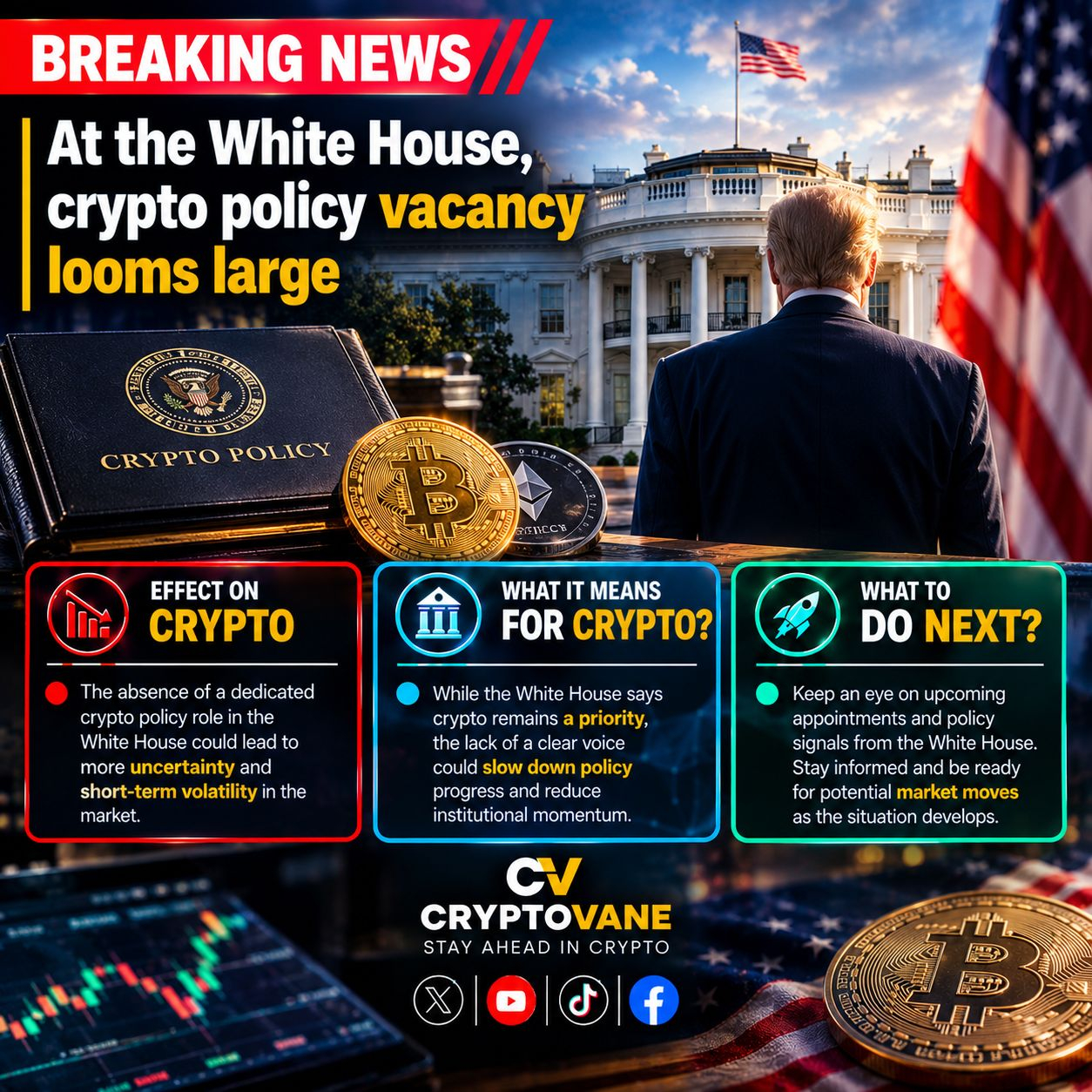
White House Crypto Policy Gap Raises Questions Over America’s Digital Asset Future
The departure of crypto adviser Patrick Witt leaves a key digital asset policy role vacant at the White House. Despite assurances that crypto remains a priority, uncertainty over future leadership could influence U.S. regulation, institutional confidence, and the broader cryptocurrency market.
#CryptoNews #CryptoRegulation #bitcoin #DigitalAssets #Blockchain
{spot}(BTCUSDT)
{spot}(ETHUSDT)
{spot}(USDCUSDT)
White House Crypto Policy Gap Raises Questions Over America’s Digital Asset Future
The departure of crypto adviser Patrick Witt leaves a key digital asset policy role vacant at the White House. Despite assurances that crypto remains a priority, uncertainty over future leadership could influence U.S. regulation, institutional confidence, and the broader cryptocurrency market.
#CryptoNews #CryptoRegulation #bitcoin #DigitalAssets #Blockchain
The departure of crypto adviser Patrick Witt leaves a key digital asset policy role vacant at the White House. Despite assurances that crypto remains a priority, uncertainty over future leadership could influence U.S. regulation, institutional confidence, and the broader cryptocurrency market.
#CryptoNews #CryptoRegulation #bitcoin #DigitalAssets #Blockchain
86

Most traders still think only tiny tax havens experiment with digital assets, yet Brazil, the world’s 9th-largest economy, is quietly wiring them into its entire banking backbone.
You know that sick feeling of watching another cycle pass while you sit in cash, terrified of another rug or buying the top again. Institutional money is already moving, and sitting this one out feels worse than any drawdown I’ve taken.
I watched Japan’s 2017 licensing turn crypto from a casino into plumbing, and Brazil is running the same play at G20 scale. Their banks can now settle remittances and payments with digital assets, slashing the 3-5% fees that used to bleed workers sending money home. $BTC is already acting as a hedge against the inflation Brazilians have lived through for decades, while $ETH contracts are powering local experiments that look exactly like Ethereum’s 2016-2017 DeFi seeds. $USDT volumes inside the country keep climbing because people finally trust the rails.
This is how the next wave of capital actually arrives, not through another memecoin pump. The countries that built the pipes first always captured the liquidity first.
Where do you think this kind of real-world integration puts us in the next cycle?
#Bitcoin #CryptoAdoption #DigitalAssets
Most traders still think only tiny tax havens experiment with digital assets, yet Brazil, the world’s 9th-largest economy, is quietly wiring them into its entire banking backbone.
You know that sick feeling of watching another cycle pass while you sit in cash, terrified of another rug or buying the top again. Institutional money is already moving, and sitting this one out feels worse than any drawdown I’ve taken.
I watched Japan’s 2017 licensing turn crypto from a casino into plumbing, and Brazil is running the same play at G20 scale. Their banks can now settle remittances and payments with digital assets, slashing the 3-5% fees that used to bleed workers sending money home. $BTC is already acting as a hedge against the inflation Brazilians have lived through for decades, while $ETH contracts are powering local experiments that look exactly like Ethereum’s 2016-2017 DeFi seeds. $USDT volumes inside the country keep climbing because people finally trust the rails.
This is how the next wave of capital actually arrives, not through another memecoin pump. The countries that built the pipes first always captured the liquidity first.
Where do you think this kind of real-world integration puts us in the next cycle?
#Bitcoin #CryptoAdoption #DigitalAssets
You know that sick feeling of watching another cycle pass while you sit in cash, terrified of another rug or buying the top again. Institutional money is already moving, and sitting this one out feels worse than any drawdown I’ve taken.
I watched Japan’s 2017 licensing turn crypto from a casino into plumbing, and Brazil is running the same play at G20 scale. Their banks can now settle remittances and payments with digital assets, slashing the 3-5% fees that used to bleed workers sending money home. $BTC is already acting as a hedge against the inflation Brazilians have lived through for decades, while $ETH contracts are powering local experiments that look exactly like Ethereum’s 2016-2017 DeFi seeds. $USDT volumes inside the country keep climbing because people finally trust the rails.
This is how the next wave of capital actually arrives, not through another memecoin pump. The countries that built the pipes first always captured the liquidity first.
Where do you think this kind of real-world integration puts us in the next cycle?
#Bitcoin #CryptoAdoption #DigitalAssets
7

·
--
Haussier
Partiellement vrai
$INJ is taking the conversation on institutional crypto to global stage!
As one of the biggest events in the Korea Blockchain Week series, hosted by @Injective , it gathered the top speakers from the finance and tech industry such as the Federal Reserve, LG, Coinbase and more.
Take a moment now to reflect on that.
It's becoming common for traditional finance and crypto to come together to chat about ways in which digital assets can be incorporated into the next generation of financial markets.
That's just where Injective is going to expand.
Whether via real world assets tokenization, onchain trading, or financial infrastructure and partnerships with existing institutions, Injective is making more avenues for established institutions to explore what blockchain has to offer.
These conversations are important since adoption is more than technology. It requires teamwork, trust and the proper infrastructure to bridge the gap between traditional markets and on-chain opportunities.
That's yet another testament to the fact that the future of digital assets is a global conversation as these institutions gather at Korea Blockchain Week.
The work continues. Increasing number of institutions, builders, and onchain activity.
And $INJ is there in the middle. 🥷
#injective #INJ #blockchain #Tokenization #DigitalAssets
$INJ is taking the conversation on institutional crypto to global stage!
As one of the biggest events in the Korea Blockchain Week series, hosted by @Injective , it gathered the top speakers from the finance and tech industry such as the Federal Reserve, LG, Coinbase and more.
Take a moment now to reflect on that.
It's becoming common for traditional finance and crypto to come together to chat about ways in which digital assets can be incorporated into the next generation of financial markets.
That's just where Injective is going to expand.
Whether via real world assets tokenization, onchain trading, or financial infrastructure and partnerships with existing institutions, Injective is making more avenues for established institutions to explore what blockchain has to offer.
These conversations are important since adoption is more than technology. It requires teamwork, trust and the proper infrastructure to bridge the gap between traditional markets and on-chain opportunities.
That's yet another testament to the fact that the future of digital assets is a global conversation as these institutions gather at Korea Blockchain Week.
The work continues. Increasing number of institutions, builders, and onchain activity.
And $INJ is there in the middle. 🥷
#injective #INJ #blockchain #Tokenization #DigitalAssets
As one of the biggest events in the Korea Blockchain Week series, hosted by @Injective , it gathered the top speakers from the finance and tech industry such as the Federal Reserve, LG, Coinbase and more.
Take a moment now to reflect on that.
It's becoming common for traditional finance and crypto to come together to chat about ways in which digital assets can be incorporated into the next generation of financial markets.
That's just where Injective is going to expand.
Whether via real world assets tokenization, onchain trading, or financial infrastructure and partnerships with existing institutions, Injective is making more avenues for established institutions to explore what blockchain has to offer.
These conversations are important since adoption is more than technology. It requires teamwork, trust and the proper infrastructure to bridge the gap between traditional markets and on-chain opportunities.
That's yet another testament to the fact that the future of digital assets is a global conversation as these institutions gather at Korea Blockchain Week.
The work continues. Increasing number of institutions, builders, and onchain activity.
And $INJ is there in the middle. 🥷
#injective #INJ #blockchain #Tokenization #DigitalAssets

2
391
Connectez-vous pour découvrir plus de contenu
Rejoignez la communauté mondiale des adeptes de cryptomonnaies sur Binance Square
⚡️ Suviez les dernières informations importantes sur les cryptomonnaies.
💬 Jugé digne de confiance par la plus grande plateforme d’échange de cryptomonnaies au monde.
👍 Découvrez les connaissances que partagent les créateurs vérifiés.
Adresse e-mail/Nº de téléphone
Sujets d’actualité
1
#BinancePick
3.4M vues
165,995 mentions
2
#EarningsSeason
5.5M vues
27,034 mentions
3
#StrategySkipsBitcoinPurchasesSpends$205MOnSTRCBuybacks
1,130 vues
39 mentions
4
#BitmineAdds10452ETH
13,725 vues
307 mentions
5
#SouthKoreaConsidersEducationTaxOnCryptoExchanges
11,023 vues
271 mentions
6
#OCCUrgesCommunityBanksToEnterStablecoinPayments
9,994 vues
168 mentions
7
#RippleWinsFullApprovalAsNationalTrustBank
8,733 vues
177 mentions
8
#AkashSelectsSolanaAsMigrationTarget
6,723 vues
91 mentions
9
#OndoToOpenSubscriptionsForOpenAIPreIPOTokenizedNotes
410 vues
19 mentions
10
#AnthropicTTMRevenueGrewAbout1200%
62,683 vues
615 mentions