

#binance
binance
542M vues
1.4M mentions
Populaire
Récents

·
--
Haussier
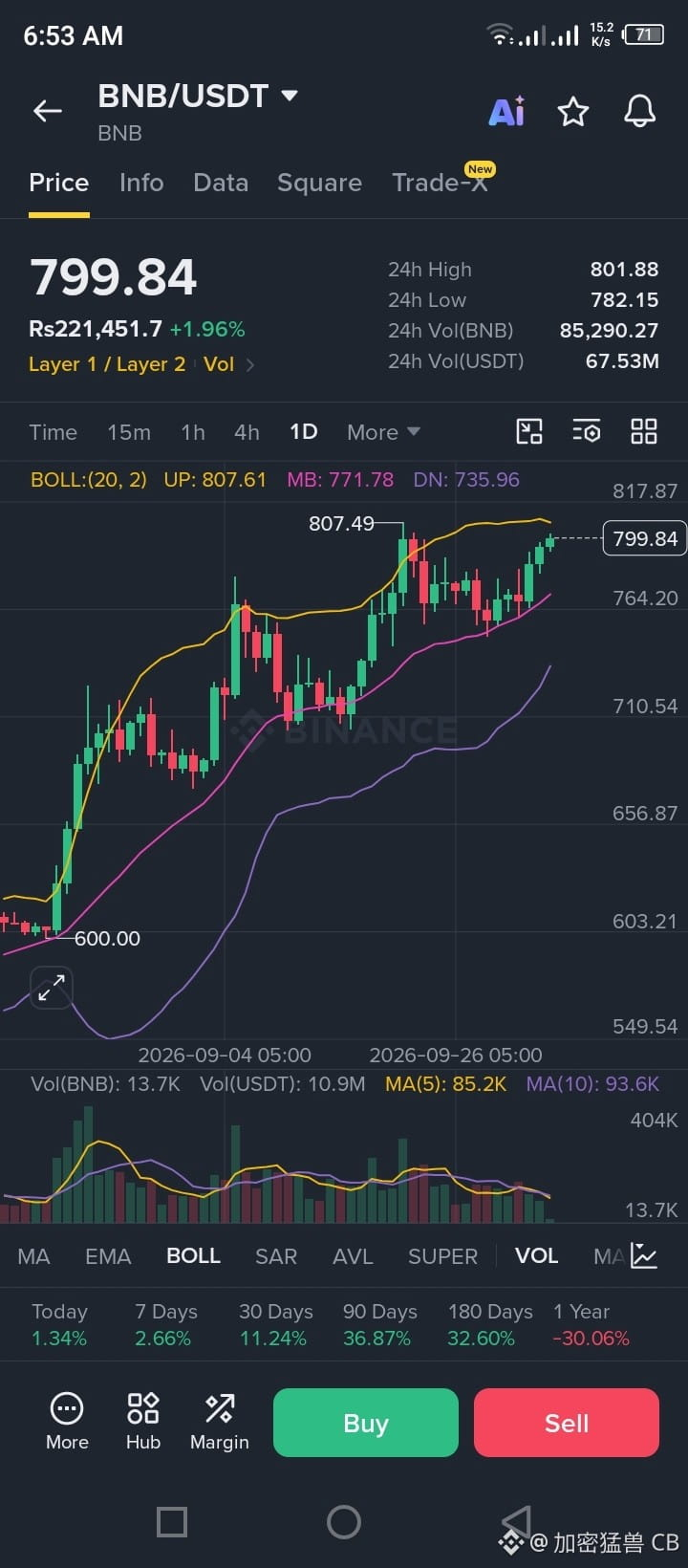
🚀 $BNB BULLISH SETUP! 🔥
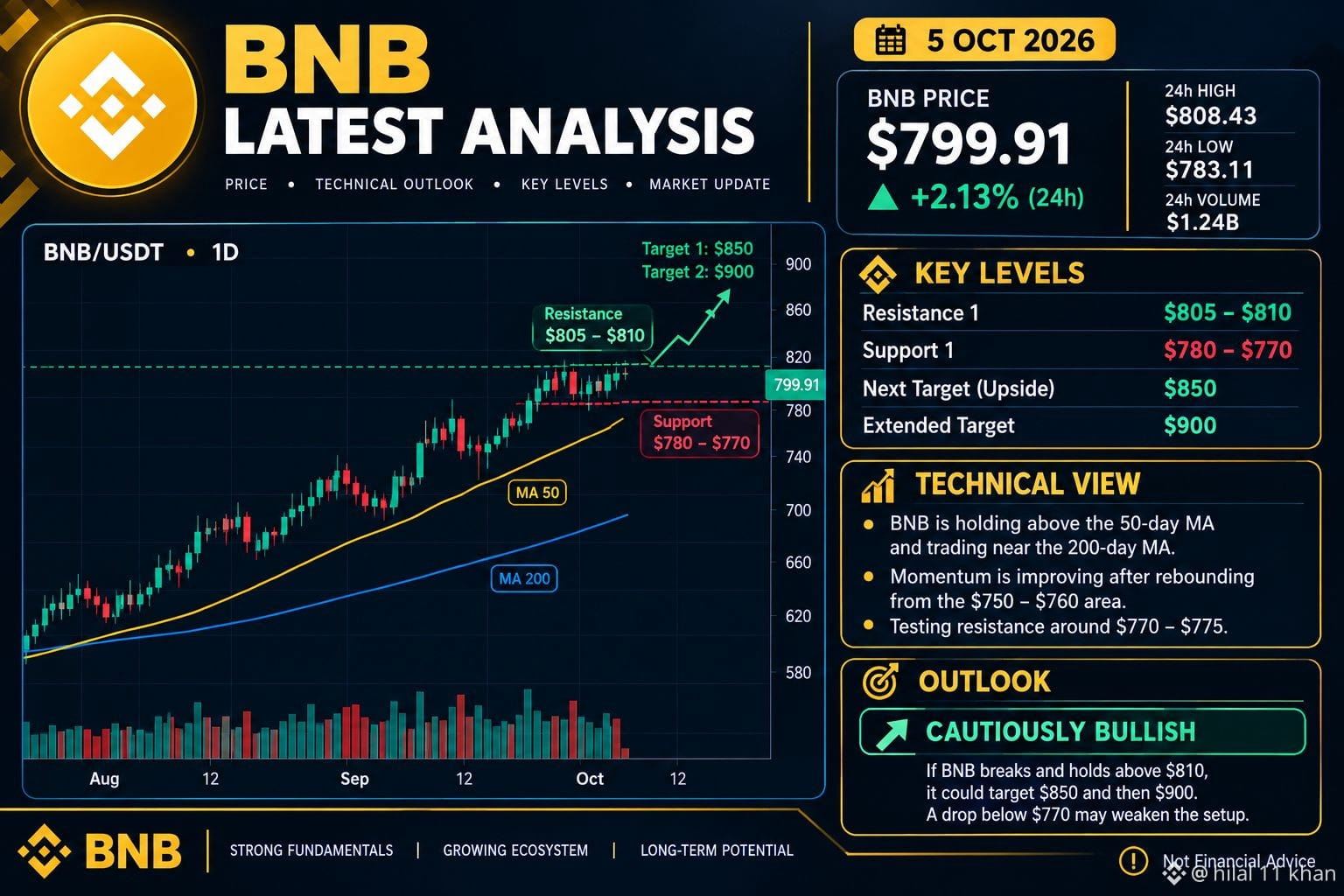
$BNB is holding strong around $800 and pushing toward the recent high at $807.50.
📈 Break above $807–$810 could open the door for the next leg higher.
🎯 Key upside area: $820 → $840 → $860
If $807–$810 rejects, watch the $780–$785 support zone.
Trade with a plan and manage your risk. DYOR. 🚀
#BNB #BNBUSDT #Crypto #Altcoins #Binance
🚀 $BNB BULLISH SETUP! 🔥
$BNB is holding strong around $800 and pushing toward the recent high at $807.50.
📈 Break above $807–$810 could open the door for the next leg higher.
🎯 Key upside area: $820 → $840 → $860
If $807–$810 rejects, watch the $780–$785 support zone.
Trade with a plan and manage your risk. DYOR. 🚀
#BNB #BNBUSDT #Crypto #Altcoins #Binance
$BNB is holding strong around $800 and pushing toward the recent high at $807.50.
📈 Break above $807–$810 could open the door for the next leg higher.
🎯 Key upside area: $820 → $840 → $860
If $807–$810 rejects, watch the $780–$785 support zone.
Trade with a plan and manage your risk. DYOR. 🚀
#BNB #BNBUSDT #Crypto #Altcoins #Binance
1
105

·
--
$BNB
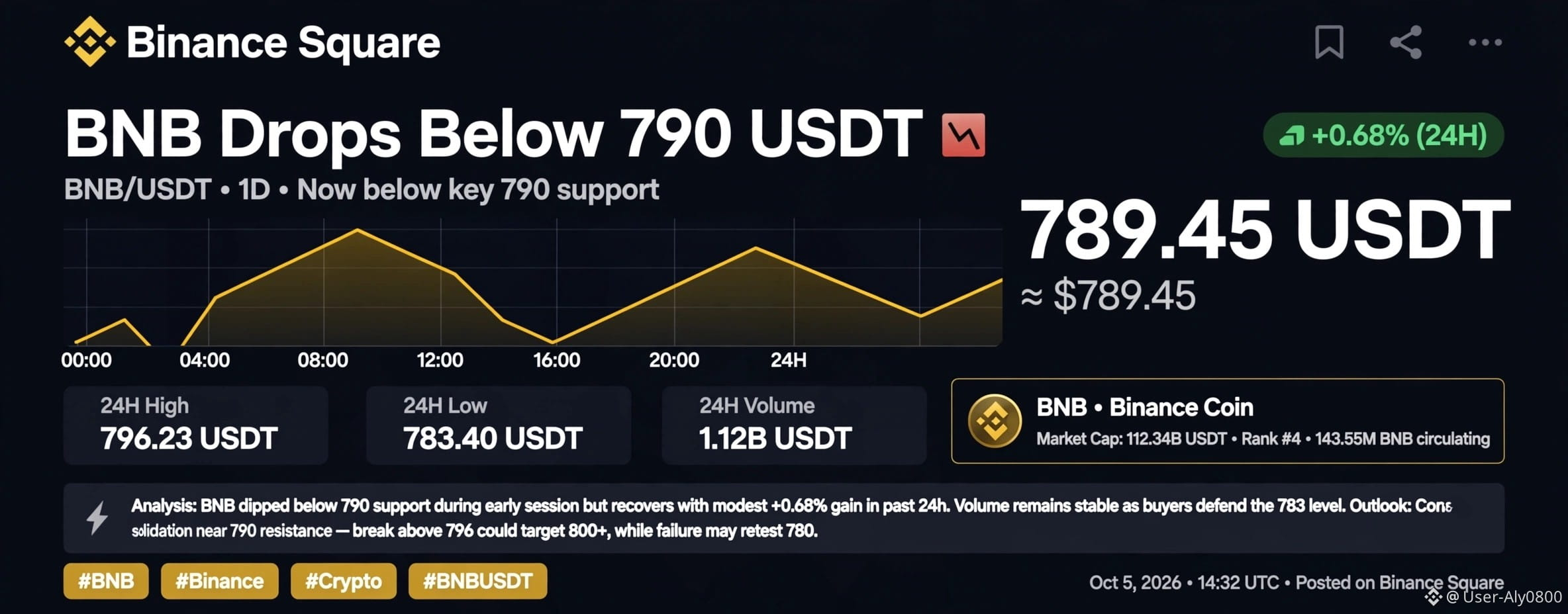
Drops Below 790 USDT — Momentum Cooling, But Still Positive BNB is showing signs of fatigue at the top.
Current Update:
$BNB is now trading at approximately $790.86, having dipped below the psychological support level of $790, with a slight increase of +0.68% over the past 24 hours.
This is down from an intraday high of $809.99 / $796.23. 24-Hour Statistics: - High: $796.23 / $809.99 - Low: $783.40 / $784.40 - Change: +0.68% (decreased from +2.5% yesterday) - Market Capitalization: approximately $101.9 billion - $105 billion | Rank #4 Current Situation.
BNB remains in a bullish daily structure — 3.3% above the EMA20 and 23.4% above the SMA200. However, there is short-term cooling.
Daily close was below $800 — breakout at $780.64 has not yet been converted to support - 1-hour RSI is at 48 (neutral)
and 15-minute RSI is at 40.9 with a bearish MACD indicating short-term sell pressure - Price is close to the upper Bollinger band at $799 — this suggests a typical exhaustion zone
PancakeSwap fees decreased by 25% daily, indicating a cooling in BNB Chain activity September saw an increase of +11% ($691 to $768),
with August showing an increase of +18%. These two strong months suggest that a pullback is healthy. Key Levels:
Support: $783 → $771.78 (Supertrend) → $764 Resistance: $796 → $800 → all-time high of $1,376.5 (October 13, 2025) Upcoming Developments.
The 37th BNB burn is approaching, and the Pasteur Upgrade has reached 98% adoption — fundamentals remain positive.
Consider whether to buy the dip or wait for a retest at $750.
{spot}(BNBUSDT)
#bnb $BNB #Binance #crypto
$BNB
Drops Below 790 USDT — Momentum Cooling, But Still Positive BNB is showing signs of fatigue at the top.
Current Update:
$BNB is now trading at approximately $790.86, having dipped below the psychological support level of $790, with a slight increase of +0.68% over the past 24 hours.
This is down from an intraday high of $809.99 / $796.23. 24-Hour Statistics: - High: $796.23 / $809.99 - Low: $783.40 / $784.40 - Change: +0.68% (decreased from +2.5% yesterday) - Market Capitalization: approximately $101.9 billion - $105 billion | Rank #4 Current Situation.
BNB remains in a bullish daily structure — 3.3% above the EMA20 and 23.4% above the SMA200. However, there is short-term cooling.
Daily close was below $800 — breakout at $780.64 has not yet been converted to support - 1-hour RSI is at 48 (neutral)
and 15-minute RSI is at 40.9 with a bearish MACD indicating short-term sell pressure - Price is close to the upper Bollinger band at $799 — this suggests a typical exhaustion zone
PancakeSwap fees decreased by 25% daily, indicating a cooling in BNB Chain activity September saw an increase of +11% ($691 to $768),
with August showing an increase of +18%. These two strong months suggest that a pullback is healthy. Key Levels:
Support: $783 → $771.78 (Supertrend) → $764 Resistance: $796 → $800 → all-time high of $1,376.5 (October 13, 2025) Upcoming Developments.
The 37th BNB burn is approaching, and the Pasteur Upgrade has reached 98% adoption — fundamentals remain positive.
Consider whether to buy the dip or wait for a retest at $750.
#bnb $BNB #Binance #crypto
Drops Below 790 USDT — Momentum Cooling, But Still Positive BNB is showing signs of fatigue at the top.
Current Update:
$BNB is now trading at approximately $790.86, having dipped below the psychological support level of $790, with a slight increase of +0.68% over the past 24 hours.
This is down from an intraday high of $809.99 / $796.23. 24-Hour Statistics: - High: $796.23 / $809.99 - Low: $783.40 / $784.40 - Change: +0.68% (decreased from +2.5% yesterday) - Market Capitalization: approximately $101.9 billion - $105 billion | Rank #4 Current Situation.
BNB remains in a bullish daily structure — 3.3% above the EMA20 and 23.4% above the SMA200. However, there is short-term cooling.
Daily close was below $800 — breakout at $780.64 has not yet been converted to support - 1-hour RSI is at 48 (neutral)
and 15-minute RSI is at 40.9 with a bearish MACD indicating short-term sell pressure - Price is close to the upper Bollinger band at $799 — this suggests a typical exhaustion zone
PancakeSwap fees decreased by 25% daily, indicating a cooling in BNB Chain activity September saw an increase of +11% ($691 to $768),
with August showing an increase of +18%. These two strong months suggest that a pullback is healthy. Key Levels:
Support: $783 → $771.78 (Supertrend) → $764 Resistance: $796 → $800 → all-time high of $1,376.5 (October 13, 2025) Upcoming Developments.
The 37th BNB burn is approaching, and the Pasteur Upgrade has reached 98% adoption — fundamentals remain positive.
Consider whether to buy the dip or wait for a retest at $750.
#bnb $BNB #Binance #crypto
86

If Binance Intelligence is just another AI chatbot, I’m not interested.
What I actually want is something that can look at my Binance account and tell me:
“You keep losing money for the same reason.”
Show me which setups I lose most on.
Where I overtrade.
When I use too much leverage.
Which mistakes keep repeating.
I recently shared my real 365-day result: -$1,964.
An AI that helps me understand why that happened would be far more valuable than another tool predicting the next coin.
That’s what I hope Binance Intelligence becomes.
What would you want it to do?
#BinanceIntelligence #Binance
If Binance Intelligence is just another AI chatbot, I’m not interested.
What I actually want is something that can look at my Binance account and tell me:
“You keep losing money for the same reason.”
Show me which setups I lose most on.
Where I overtrade.
When I use too much leverage.
Which mistakes keep repeating.
I recently shared my real 365-day result: -$1,964.
An AI that helps me understand why that happened would be far more valuable than another tool predicting the next coin.
That’s what I hope Binance Intelligence becomes.
What would you want it to do?
#BinanceIntelligence #Binance
What I actually want is something that can look at my Binance account and tell me:
“You keep losing money for the same reason.”
Show me which setups I lose most on.
Where I overtrade.
When I use too much leverage.
Which mistakes keep repeating.
I recently shared my real 365-day result: -$1,964.
An AI that helps me understand why that happened would be far more valuable than another tool predicting the next coin.
That’s what I hope Binance Intelligence becomes.
What would you want it to do?
#BinanceIntelligence #Binance
78

·
--
Haussier
$BNB finally made its move. 🌙 📈
BNB is now facing a key resistance line, and this is where things get interesting. 🟡Price is testing a level that has previously held it back. ^```^
& this breakout is looking interesting. BNB is showing strong momentum around this key level, and if the breakout holds, there’s a good possibility of another 7–14% move higher from here. The key now is whether #bnb can turn this resistance into solid support and build enough momentum for the next leg up.
No need to rush the next move — let’s see how BNB handles the breakout. 👀🔥
#Binance #BNB金鏟子 #UpdateAlert
$BNB finally made its move. 🌙 📈
BNB is now facing a key resistance line, and this is where things get interesting. 🟡Price is testing a level that has previously held it back. ^```^
& this breakout is looking interesting. BNB is showing strong momentum around this key level, and if the breakout holds, there’s a good possibility of another 7–14% move higher from here. The key now is whether #bnb can turn this resistance into solid support and build enough momentum for the next leg up.
No need to rush the next move — let’s see how BNB handles the breakout. 👀🔥
#Binance #BNB金鏟子 #UpdateAlert
BNB is now facing a key resistance line, and this is where things get interesting. 🟡Price is testing a level that has previously held it back. ^```^
& this breakout is looking interesting. BNB is showing strong momentum around this key level, and if the breakout holds, there’s a good possibility of another 7–14% move higher from here. The key now is whether #bnb can turn this resistance into solid support and build enough momentum for the next leg up.
No need to rush the next move — let’s see how BNB handles the breakout. 👀🔥
#Binance #BNB金鏟子 #UpdateAlert
1
119

·
--
BNB JUST TESTED $808 — but the $800 breakout is not confirmed yet.$BNB traded as high as $808.43 over the past 24 hours before pulling back to about $788.96 at 05:24 UTC on Oct. 5. Binance data shows BNB still up 0.33% in 24H, with roughly $1.5B trading volume and a $105.1B market cap.
Another catalyst is approaching: BNB’s 37th quarterly Auto-Burn is expected this quarter, although the exact date and amount have not been officially confirmed. The previous burn permanently removed 1,615,827.795 $BNB worth about $931.7M at the time.
INTERPRETATION: $800–$808 is now the immediate battleground.
🟢 Bull: BNB reclaims $800 and holds above $808.
🔴 Bear: Continued rejection could bring lower support back into focus.
$BNB
#bnb #Binance
{spot}(BNBUSDT)
BNB JUST TESTED $808 — but the $800 breakout is not confirmed yet.
$BNB traded as high as $808.43 over the past 24 hours before pulling back to about $788.96 at 05:24 UTC on Oct. 5. Binance data shows BNB still up 0.33% in 24H, with roughly $1.5B trading volume and a $105.1B market cap.
Another catalyst is approaching: BNB’s 37th quarterly Auto-Burn is expected this quarter, although the exact date and amount have not been officially confirmed. The previous burn permanently removed 1,615,827.795 $BNB worth about $931.7M at the time.
INTERPRETATION: $800–$808 is now the immediate battleground.
🟢 Bull: BNB reclaims $800 and holds above $808.
🔴 Bear: Continued rejection could bring lower support back into focus.
$BNB
#bnb #Binance
Another catalyst is approaching: BNB’s 37th quarterly Auto-Burn is expected this quarter, although the exact date and amount have not been officially confirmed. The previous burn permanently removed 1,615,827.795 $BNB worth about $931.7M at the time.
INTERPRETATION: $800–$808 is now the immediate battleground.
🟢 Bull: BNB reclaims $800 and holds above $808.
🔴 Bear: Continued rejection could bring lower support back into focus.
$BNB
#bnb #Binance
38

·
--
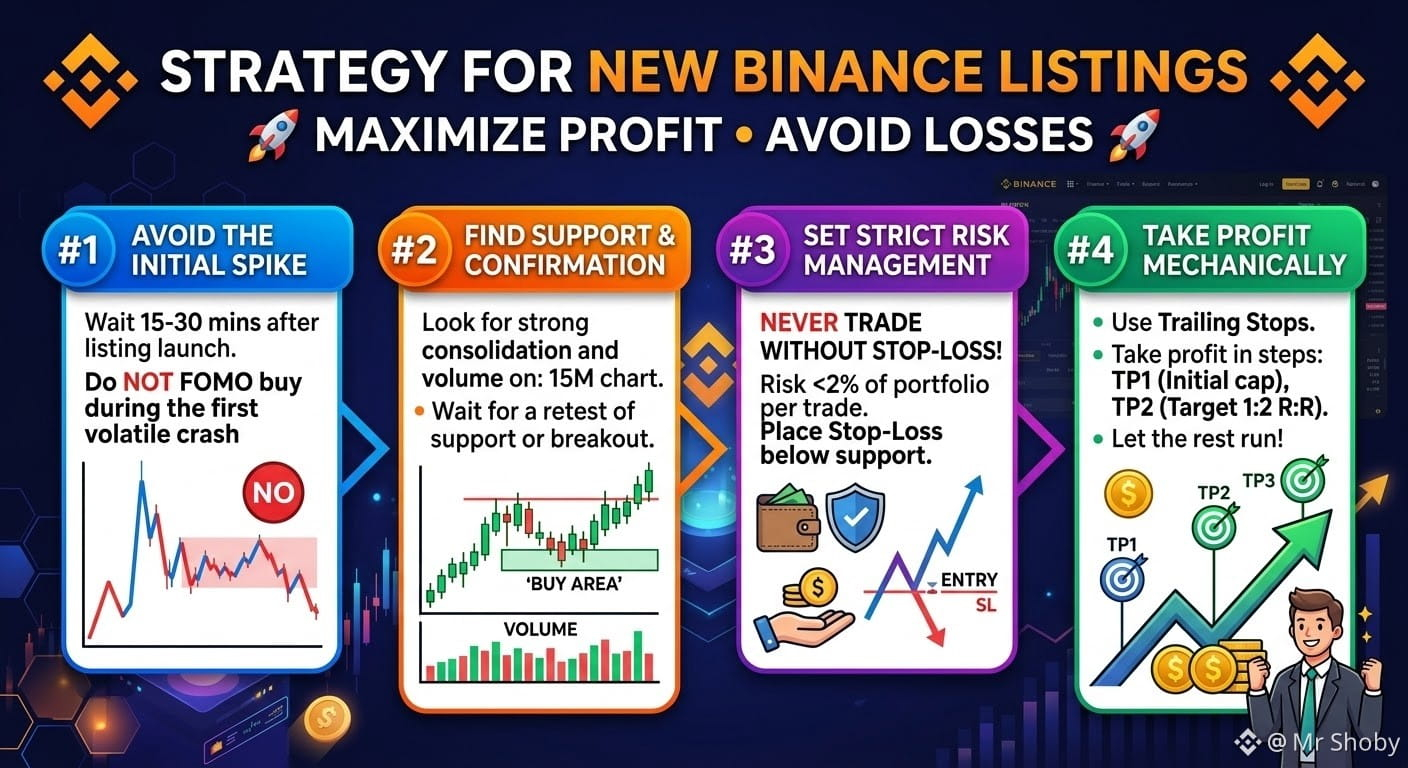
🚨 HOW TO TRADE NEW BINANCE LISTINGS (PROFIT STRATEGY + RISK CONTROL) 🚨
New token listings bring massive volatility and opportunity, but jumping in blindly is the fastest way to lose capital amount and steps to crashing. Here is the exact blueprint to capture gains while protecting your wallet balance 👇
---
⚡ 1. THE 15-MINUTE RULE/WATCH 1ST 15 MINUTES & ANALYSE MARKET (AVOID THE TRAP)
• Never market-buy in the first 15 minutes of listing.
• Early investors and trading bots dump high, creating a sharp drop.
• Patience pays: Let the chart settle to find its initial support zone.
📈 2. SAFE ENTRY STRATEGY
• Wait for a consolidation structure on the 15M/1H chart.
• Look for a retest of the lowest support or a high-volume breakout above the launch peak.
• Accumulate in parts—never enter with 100% of your planned position at once.
🛡️ 3. AVOID HEAVY LOSSES (RISK RULES)
• Set a Stop-Loss (SL) immediately 3%–5% below the entry/support zone.
• Risk maximum 1% to 2% of your account per trade.
• Use Trailing Stop-Loss as the price pumps to lock in profits automatically.
🎯 4. PROFIT-TAKING PLAN
• TP 1: Take out your initial capital once price reaches +20% to +30%.
• TP 2: Sell 50% of remaining coins at resistance.
• Let the rest run with SL moved to entry (Risk-Free Trade).
---
💡 Pro Tip: High potential always comes with high risk. Never trade on FOMO (Fear Of Missing Out). Stick to the setup!
What’s your strategy when a new coin lists? Let me know below! 👇(In Comment Section)
#Binance #CryptoTrading #RiskManagement
$HYPE $AERO
🚨 HOW TO TRADE NEW BINANCE LISTINGS (PROFIT STRATEGY + RISK CONTROL) 🚨
New token listings bring massive volatility and opportunity, but jumping in blindly is the fastest way to lose capital amount and steps to crashing. Here is the exact blueprint to capture gains while protecting your wallet balance 👇
---
⚡ 1. THE 15-MINUTE RULE/WATCH 1ST 15 MINUTES & ANALYSE MARKET (AVOID THE TRAP)
• Never market-buy in the first 15 minutes of listing.
• Early investors and trading bots dump high, creating a sharp drop.
• Patience pays: Let the chart settle to find its initial support zone.
📈 2. SAFE ENTRY STRATEGY
• Wait for a consolidation structure on the 15M/1H chart.
• Look for a retest of the lowest support or a high-volume breakout above the launch peak.
• Accumulate in parts—never enter with 100% of your planned position at once.
🛡️ 3. AVOID HEAVY LOSSES (RISK RULES)
• Set a Stop-Loss (SL) immediately 3%–5% below the entry/support zone.
• Risk maximum 1% to 2% of your account per trade.
• Use Trailing Stop-Loss as the price pumps to lock in profits automatically.
🎯 4. PROFIT-TAKING PLAN
• TP 1: Take out your initial capital once price reaches +20% to +30%.
• TP 2: Sell 50% of remaining coins at resistance.
• Let the rest run with SL moved to entry (Risk-Free Trade).
---
💡 Pro Tip: High potential always comes with high risk. Never trade on FOMO (Fear Of Missing Out). Stick to the setup!
What’s your strategy when a new coin lists? Let me know below! 👇(In Comment Section)
#Binance #CryptoTrading #RiskManagement
$HYPE $AERO
New token listings bring massive volatility and opportunity, but jumping in blindly is the fastest way to lose capital amount and steps to crashing. Here is the exact blueprint to capture gains while protecting your wallet balance 👇
---
⚡ 1. THE 15-MINUTE RULE/WATCH 1ST 15 MINUTES & ANALYSE MARKET (AVOID THE TRAP)
• Never market-buy in the first 15 minutes of listing.
• Early investors and trading bots dump high, creating a sharp drop.
• Patience pays: Let the chart settle to find its initial support zone.
📈 2. SAFE ENTRY STRATEGY
• Wait for a consolidation structure on the 15M/1H chart.
• Look for a retest of the lowest support or a high-volume breakout above the launch peak.
• Accumulate in parts—never enter with 100% of your planned position at once.
🛡️ 3. AVOID HEAVY LOSSES (RISK RULES)
• Set a Stop-Loss (SL) immediately 3%–5% below the entry/support zone.
• Risk maximum 1% to 2% of your account per trade.
• Use Trailing Stop-Loss as the price pumps to lock in profits automatically.
🎯 4. PROFIT-TAKING PLAN
• TP 1: Take out your initial capital once price reaches +20% to +30%.
• TP 2: Sell 50% of remaining coins at resistance.
• Let the rest run with SL moved to entry (Risk-Free Trade).
---
💡 Pro Tip: High potential always comes with high risk. Never trade on FOMO (Fear Of Missing Out). Stick to the setup!
What’s your strategy when a new coin lists? Let me know below! 👇(In Comment Section)
#Binance #CryptoTrading #RiskManagement
$HYPE $AERO
107



·
--
Haussier
#Binance
Binance tightens Brazil crypto transfers from Nov. 1
Binance has announced new checks for cross-border crypto transfers involving Brazilian users from Nov. 1, requiring transaction purposes and counterparty information before some deposits and withdrawals can be processed.
Binance said the changes follow Resolution BCB No. 521/2025, which brought international virtual-asset transfers into Brazil’s foreign exchange framework and created new reporting obligations for crypto service providers.
The requirements cover individuals and companies using Binance in Brazil when crypto moves between a Brazilian resident and a non-resident. Sending assets to a user’s own account on an overseas exchange counts as an international transfer under the rule. Transfers between two Brazilian residents are not affected.
Binance users must explain why crypto is moving abroad
From Nov. 1, Brazilian users making international crypto transfers through Binance will need to provide the purpose of the transaction and identify the type of counterparty receiving or sending the assets.
Binance explained that users may need to provide up to three pieces of information. The first is the purpose of the transfer. The second identifies the counterparty as an individual, company, bank, exchange, investment fund, nonprofit or another category. Corporate accounts must state whether the other company belongs to the same economic group.
Purpose codes come from classifications set by Brazil’s central bank. Examples include transfers between a person’s own accounts, payments for goods, IT services, business services, donations and international travel. Binance said the category chosen must match the real reason for the transaction because the information is reported to the regulator
The number of available categories depends on transaction size. Transfers worth $50,000 or less, or the equivalent in another currency, use a simplified list of 10 purposes. Transactions above $50,000 require users to choose from the full list of 96 classifications.#Write2Earn #bnb $BNB
{spot}(BNBUSDT)
#Binance
Binance tightens Brazil crypto transfers from Nov. 1
Binance has announced new checks for cross-border crypto transfers involving Brazilian users from Nov. 1, requiring transaction purposes and counterparty information before some deposits and withdrawals can be processed.
Binance said the changes follow Resolution BCB No. 521/2025, which brought international virtual-asset transfers into Brazil’s foreign exchange framework and created new reporting obligations for crypto service providers.
The requirements cover individuals and companies using Binance in Brazil when crypto moves between a Brazilian resident and a non-resident. Sending assets to a user’s own account on an overseas exchange counts as an international transfer under the rule. Transfers between two Brazilian residents are not affected.
Binance users must explain why crypto is moving abroad
From Nov. 1, Brazilian users making international crypto transfers through Binance will need to provide the purpose of the transaction and identify the type of counterparty receiving or sending the assets.
Binance explained that users may need to provide up to three pieces of information. The first is the purpose of the transfer. The second identifies the counterparty as an individual, company, bank, exchange, investment fund, nonprofit or another category. Corporate accounts must state whether the other company belongs to the same economic group.
Purpose codes come from classifications set by Brazil’s central bank. Examples include transfers between a person’s own accounts, payments for goods, IT services, business services, donations and international travel. Binance said the category chosen must match the real reason for the transaction because the information is reported to the regulator
The number of available categories depends on transaction size. Transfers worth $50,000 or less, or the equivalent in another currency, use a simplified list of 10 purposes. Transactions above $50,000 require users to choose from the full list of 96 classifications.#Write2Earn #bnb $BNB
Binance tightens Brazil crypto transfers from Nov. 1
Binance has announced new checks for cross-border crypto transfers involving Brazilian users from Nov. 1, requiring transaction purposes and counterparty information before some deposits and withdrawals can be processed.
Binance said the changes follow Resolution BCB No. 521/2025, which brought international virtual-asset transfers into Brazil’s foreign exchange framework and created new reporting obligations for crypto service providers.
The requirements cover individuals and companies using Binance in Brazil when crypto moves between a Brazilian resident and a non-resident. Sending assets to a user’s own account on an overseas exchange counts as an international transfer under the rule. Transfers between two Brazilian residents are not affected.
Binance users must explain why crypto is moving abroad
From Nov. 1, Brazilian users making international crypto transfers through Binance will need to provide the purpose of the transaction and identify the type of counterparty receiving or sending the assets.
Binance explained that users may need to provide up to three pieces of information. The first is the purpose of the transfer. The second identifies the counterparty as an individual, company, bank, exchange, investment fund, nonprofit or another category. Corporate accounts must state whether the other company belongs to the same economic group.
Purpose codes come from classifications set by Brazil’s central bank. Examples include transfers between a person’s own accounts, payments for goods, IT services, business services, donations and international travel. Binance said the category chosen must match the real reason for the transaction because the information is reported to the regulator
The number of available categories depends on transaction size. Transfers worth $50,000 or less, or the equivalent in another currency, use a simplified list of 10 purposes. Transactions above $50,000 require users to choose from the full list of 96 classifications.#Write2Earn #bnb $BNB

1
2

·
--
Haussier
🔥 $BNB Market Watch — October 5, 2026
1.$BNB : ~$800.38 — holding near the $800 psychological level.
2.24H Move: +2.1% — short-term momentum remains positive.
3.Trading Activity:~$1.3B in 24H volume, showing strong market participation.
4. Market Structure:$BNB has continued higher after recovering from the recent $760–$780 area.
5.Key Levels:$800 is the immediate level to watch; a sustained move above it could strengthen momentum.
6.Catalyst: BNB Chain continues expanding its ecosystem, including tokenized assets and infrastructure upgrades.
7. Outlook: Short-term bias remains cautiously bullish, but rejection around $800 could trigger a pullback.
8.Trader Question: Can BNB hold above $800 and build the next move higher?
{future}(BNBUSDT)
#bnb #Binance #BinanceSquareFamily #crypto
🔥 $BNB Market Watch — October 5, 2026
1.$BNB : ~$800.38 — holding near the $800 psychological level.
2.24H Move: +2.1% — short-term momentum remains positive.
3.Trading Activity:~$1.3B in 24H volume, showing strong market participation.
4. Market Structure:$BNB has continued higher after recovering from the recent $760–$780 area.
5.Key Levels:$800 is the immediate level to watch; a sustained move above it could strengthen momentum.
6.Catalyst: BNB Chain continues expanding its ecosystem, including tokenized assets and infrastructure upgrades.
7. Outlook: Short-term bias remains cautiously bullish, but rejection around $800 could trigger a pullback.
8.Trader Question: Can BNB hold above $800 and build the next move higher?
#bnb #Binance #BinanceSquareFamily #crypto
1.$BNB : ~$800.38 — holding near the $800 psychological level.
2.24H Move: +2.1% — short-term momentum remains positive.
3.Trading Activity:~$1.3B in 24H volume, showing strong market participation.
4. Market Structure:$BNB has continued higher after recovering from the recent $760–$780 area.
5.Key Levels:$800 is the immediate level to watch; a sustained move above it could strengthen momentum.
6.Catalyst: BNB Chain continues expanding its ecosystem, including tokenized assets and infrastructure upgrades.
7. Outlook: Short-term bias remains cautiously bullish, but rejection around $800 could trigger a pullback.
8.Trader Question: Can BNB hold above $800 and build the next move higher?
#bnb #Binance #BinanceSquareFamily #crypto
1
98

·
--
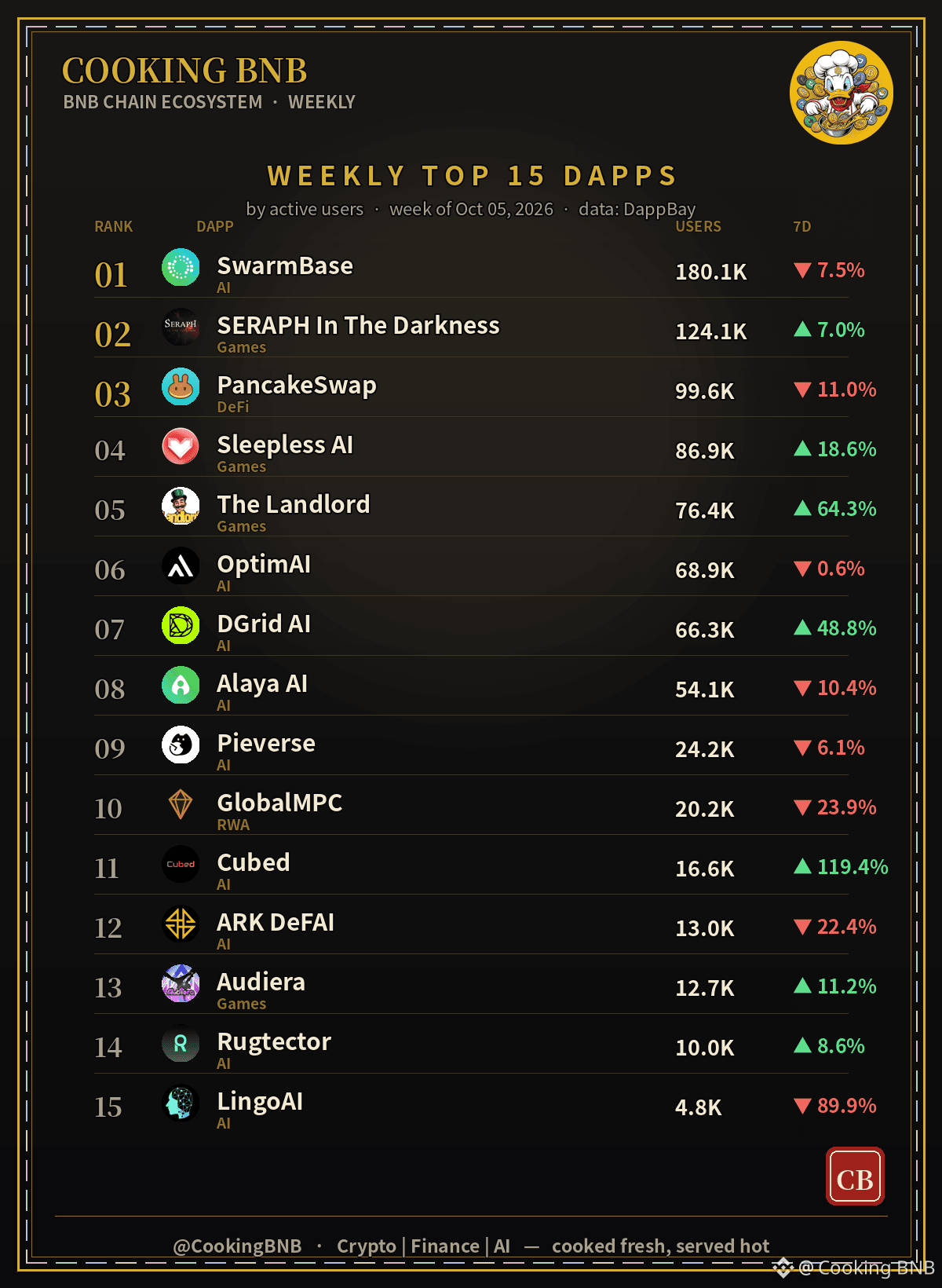
🏆 🟡 BNB CHAIN WEEKLY — Top 15 dApps
Ranked by active users · week of Oct 05 · data: DappBay (official BNB Chain portal)
📈 Hottest: Cubed +119.4% (AI)
📉 Cooling off: LingoAI -89.9% (AI)
👑 Podium: SwarmBase, SERAPH In The Darkness, PancakeSwap
🧭 Category mix: 9 AI · 4 Games · 1 DeFi · 1 RWA
👥 Combined active users: 857.8K
Full ranking on the board ☝️ Explore every dApp on DappBay.
🍜 The BNB kitchen never closes.
#CookingBNB #Crypto #Bitcoin #BTC #Binance
🏆 🟡 BNB CHAIN WEEKLY — Top 15 dApps
Ranked by active users · week of Oct 05 · data: DappBay (official BNB Chain portal)
📈 Hottest: Cubed +119.4% (AI)
📉 Cooling off: LingoAI -89.9% (AI)
👑 Podium: SwarmBase, SERAPH In The Darkness, PancakeSwap
🧭 Category mix: 9 AI · 4 Games · 1 DeFi · 1 RWA
👥 Combined active users: 857.8K
Full ranking on the board ☝️ Explore every dApp on DappBay.
🍜 The BNB kitchen never closes.
#CookingBNB #Crypto #Bitcoin #BTC #Binance
Ranked by active users · week of Oct 05 · data: DappBay (official BNB Chain portal)
📈 Hottest: Cubed +119.4% (AI)
📉 Cooling off: LingoAI -89.9% (AI)
👑 Podium: SwarmBase, SERAPH In The Darkness, PancakeSwap
🧭 Category mix: 9 AI · 4 Games · 1 DeFi · 1 RWA
👥 Combined active users: 857.8K
Full ranking on the board ☝️ Explore every dApp on DappBay.
🍜 The BNB kitchen never closes.
#CookingBNB #Crypto #Bitcoin #BTC #Binance
22

📰 Binance Expands in India with Crypto-as-a-Service and Regulatory Compliance
Binance is currently targeting major growth in India, aiming to onboard a significant portion of its next billion users under official Financial Intelligence Unit (FIU-IND) compliance.
💡 Key Updates in India
• Crypto-as-a-Service (CaaS): Binance initiated early access pilot demos for licensed regional banks and brokerages to integrate seamless digital asset trading.
• Legal & Regulatory Status: Operations remain fully legal in India under strict FIU-IND registration guidelines, requiring mandatory PAN-verified KYC for individual users.
• Strategic Vision: APAC Head SB Seker confirmed strong intentions to scale institutional and retail presence as Indian regulatory frameworks become increasingly clear and collaborative
#Binance
📰 Binance Expands in India with Crypto-as-a-Service and Regulatory Compliance
Binance is currently targeting major growth in India, aiming to onboard a significant portion of its next billion users under official Financial Intelligence Unit (FIU-IND) compliance.
💡 Key Updates in India
• Crypto-as-a-Service (CaaS): Binance initiated early access pilot demos for licensed regional banks and brokerages to integrate seamless digital asset trading.
• Legal & Regulatory Status: Operations remain fully legal in India under strict FIU-IND registration guidelines, requiring mandatory PAN-verified KYC for individual users.
• Strategic Vision: APAC Head SB Seker confirmed strong intentions to scale institutional and retail presence as Indian regulatory frameworks become increasingly clear and collaborative
#Binance
Binance is currently targeting major growth in India, aiming to onboard a significant portion of its next billion users under official Financial Intelligence Unit (FIU-IND) compliance.
💡 Key Updates in India
• Crypto-as-a-Service (CaaS): Binance initiated early access pilot demos for licensed regional banks and brokerages to integrate seamless digital asset trading.
• Legal & Regulatory Status: Operations remain fully legal in India under strict FIU-IND registration guidelines, requiring mandatory PAN-verified KYC for individual users.
• Strategic Vision: APAC Head SB Seker confirmed strong intentions to scale institutional and retail presence as Indian regulatory frameworks become increasingly clear and collaborative
#Binance
63
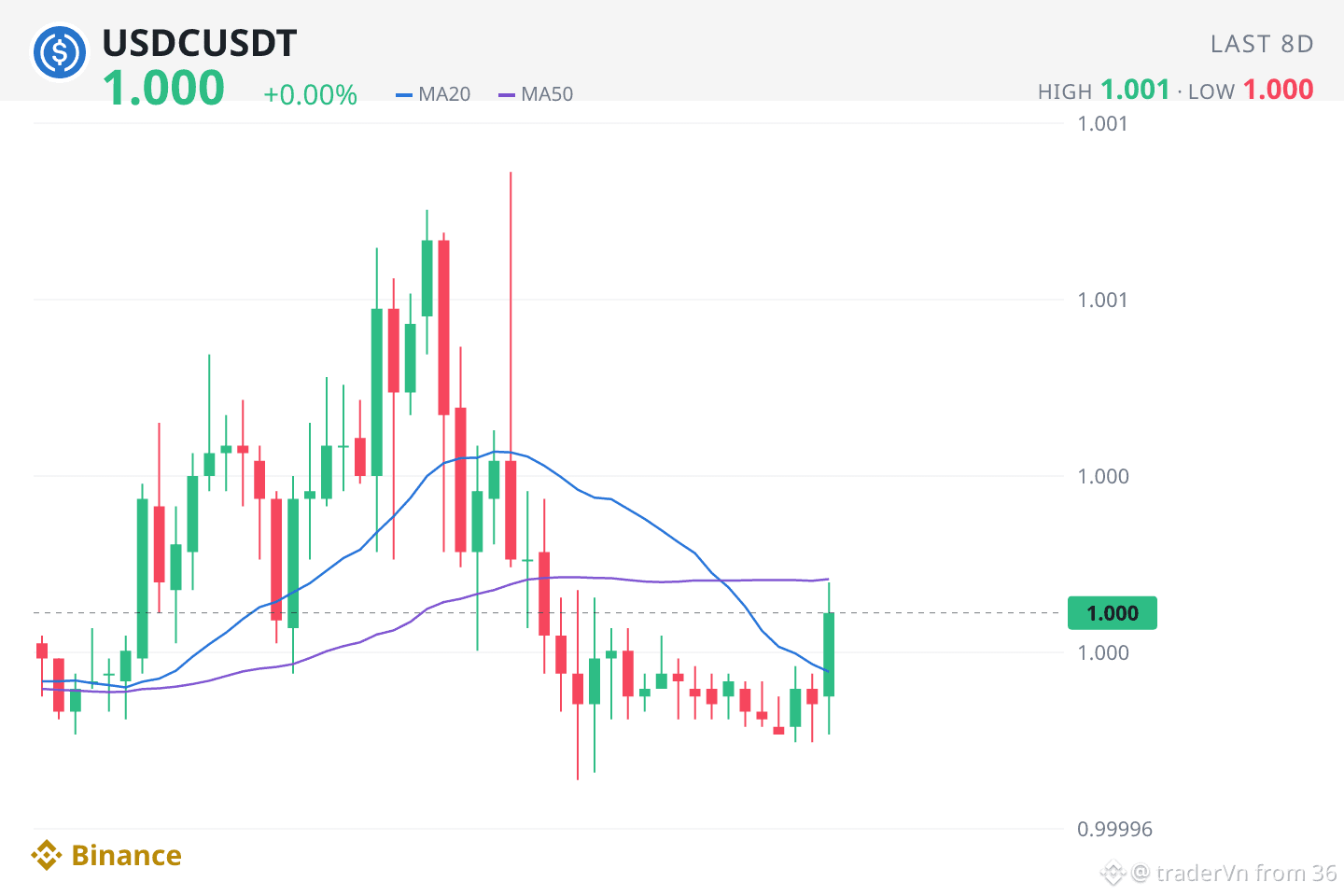
📢 PROACTIVE SECURITY QUIZ UNLOCKS USDC REWARDS
$USDC $GTC $NIL
USDC is at 1.0003 USDT · +0.01% over 24h · Vol 1133M
🏷️ Event type: Quiz · published by Binance on 05/10/2026
The quiz format encourages community engagement while highlighting Binance's focus on proactive security. By tying USDC rewards to knowledge checks, the platform reinforces best practices without exerting significant pressure on market dynamics.
📈 Live market data — TRENDING UP
• USDC 1.00025 · 0.01% · Vol 1133M
• GTC · 66.5% · Vol 23M
• NIL · 18.8% · Vol 7M
• FET · 17.7% · Vol 43M
Learn-and-earn pays a fixed amount per person regardless of capital, so it barely moves price — it just adds a lot of small holders.
#USDC #Binance
Source: https://www.binance.com/vi/support/announcement/41e531ead6b44b35aca9e6821b37baf3
For reference only, not financial advice (DYOR).
📢 PROACTIVE SECURITY QUIZ UNLOCKS USDC REWARDS
$USDC $GTC $NIL
USDC is at 1.0003 USDT · +0.01% over 24h · Vol 1133M
🏷️ Event type: Quiz · published by Binance on 05/10/2026
The quiz format encourages community engagement while highlighting Binance's focus on proactive security. By tying USDC rewards to knowledge checks, the platform reinforces best practices without exerting significant pressure on market dynamics.
📈 Live market data — TRENDING UP
• USDC 1.00025 · 0.01% · Vol 1133M
• GTC · 66.5% · Vol 23M
• NIL · 18.8% · Vol 7M
• FET · 17.7% · Vol 43M
Learn-and-earn pays a fixed amount per person regardless of capital, so it barely moves price — it just adds a lot of small holders.
#USDC #Binance
Source: https://www.binance.com/vi/support/announcement/41e531ead6b44b35aca9e6821b37baf3
For reference only, not financial advice (DYOR).
$USDC $GTC $NIL
USDC is at 1.0003 USDT · +0.01% over 24h · Vol 1133M
🏷️ Event type: Quiz · published by Binance on 05/10/2026
The quiz format encourages community engagement while highlighting Binance's focus on proactive security. By tying USDC rewards to knowledge checks, the platform reinforces best practices without exerting significant pressure on market dynamics.
📈 Live market data — TRENDING UP
• USDC 1.00025 · 0.01% · Vol 1133M
• GTC · 66.5% · Vol 23M
• NIL · 18.8% · Vol 7M
• FET · 17.7% · Vol 43M
Learn-and-earn pays a fixed amount per person regardless of capital, so it barely moves price — it just adds a lot of small holders.
#USDC #Binance
Source: https://www.binance.com/vi/support/announcement/41e531ead6b44b35aca9e6821b37baf3
For reference only, not financial advice (DYOR).
109

·
--
Haussier
CTA
🚨 $BNB TRADERS, WAKE UP! 🚨
🔥 BREAKOUT INCOMING?
$BNB is getting ready for a serious move. If resistance cracks, momentum could explode. 💥
🎯 LONG before breakout?
⚡ CHASE the breakout?
🩸 SHORT the rejection?
👇 CALL IT NOW:
🟢 LONG | 🔴 SHORT | 🟡 WAIT
Don’t watch the move. Trade your setup. 🚀
#bnb #BNBUSDT #cryptotrading #Binance
{spot}(BNBUSDT)
CTA
🚨 $BNB TRADERS, WAKE UP! 🚨
🔥 BREAKOUT INCOMING?
$BNB is getting ready for a serious move. If resistance cracks, momentum could explode. 💥
🎯 LONG before breakout?
⚡ CHASE the breakout?
🩸 SHORT the rejection?
👇 CALL IT NOW:
🟢 LONG | 🔴 SHORT | 🟡 WAIT
Don’t watch the move. Trade your setup. 🚀
#bnb #BNBUSDT #cryptotrading #Binance
🚨 $BNB TRADERS, WAKE UP! 🚨
🔥 BREAKOUT INCOMING?
$BNB is getting ready for a serious move. If resistance cracks, momentum could explode. 💥
🎯 LONG before breakout?
⚡ CHASE the breakout?
🩸 SHORT the rejection?
👇 CALL IT NOW:
🟢 LONG | 🔴 SHORT | 🟡 WAIT
Don’t watch the move. Trade your setup. 🚀
#bnb #BNBUSDT #cryptotrading #Binance
15

🚨 Binance Daily Update — 5 Oct 2026
$Binance continues to roll out new trading products, rewards, and platform updates. Today, traders should pay special attention to the scheduled Futures contract settlements and current October Earn opportunities.
📌 Stay updated, manage risk, and always check Binance’s official announcements before trading.
#Binance #cryptouniverseofficial #BitcoinDunyamiz #BinanceSquareFamily
🚨 Binance Daily Update — 5 Oct 2026
$Binance continues to roll out new trading products, rewards, and platform updates. Today, traders should pay special attention to the scheduled Futures contract settlements and current October Earn opportunities.
📌 Stay updated, manage risk, and always check Binance’s official announcements before trading.
#Binance #cryptouniverseofficial #BitcoinDunyamiz #BinanceSquareFamily
$Binance continues to roll out new trading products, rewards, and platform updates. Today, traders should pay special attention to the scheduled Futures contract settlements and current October Earn opportunities.
📌 Stay updated, manage risk, and always check Binance’s official announcements before trading.
#Binance #cryptouniverseofficial #BitcoinDunyamiz #BinanceSquareFamily
73

🚀 $BNB
{spot}(BNBUSDT)
Market Update: Holding strong around the $795 range with steady volume building up! As the ecosystem continues to dominate tokenized stocks and real-world assets on-chain, momentum looks solid. What are your targets for BNB this month? 📊🔥 #BNB #Binance #CryptoTrading
🚀 $BNB
Market Update: Holding strong around the $795 range with steady volume building up! As the ecosystem continues to dominate tokenized stocks and real-world assets on-chain, momentum looks solid. What are your targets for BNB this month? 📊🔥 #BNB #Binance #CryptoTrading
Market Update: Holding strong around the $795 range with steady volume building up! As the ecosystem continues to dominate tokenized stocks and real-world assets on-chain, momentum looks solid. What are your targets for BNB this month? 📊🔥 #BNB #Binance #CryptoTrading
2
32

·
--
$BNB BREAKS ABOVE $790 🚀
$BNB has pushed above the $790 level, gaining more than 3% in the last 24 hours.
The move puts $BNB back in the spotlight as the broader crypto market continues to recover.
Can BNB hold above $800 next? 👀
#BNB #Binance #crypto #CryptoNewss
$BNB BREAKS ABOVE $790 🚀
$BNB has pushed above the $790 level, gaining more than 3% in the last 24 hours.
The move puts $BNB back in the spotlight as the broader crypto market continues to recover.
Can BNB hold above $800 next? 👀
#BNB #Binance #crypto #CryptoNewss
$BNB has pushed above the $790 level, gaining more than 3% in the last 24 hours.
The move puts $BNB back in the spotlight as the broader crypto market continues to recover.
Can BNB hold above $800 next? 👀
#BNB #Binance #crypto #CryptoNewss
79

·
--
Haussier
$BNB IS QUIETLY BECOMING INTERESTING AGAIN
BNB doesn't always get the loudest headlines, but that's exactly why I keep watching it. When capital starts rotating back into major exchange-linked ecosystems, BNB can move quickly. The question is whether buyers can turn attention into sustained momentum.
Flow: BNB remains closely tied to Binance activity.
Momentum: Watch volume for confirmation.
Setup: A clean breakout could attract fresh buyers.
Risk: Weak volume makes breakouts easier to fade.
I’m not interested in chasing the first green candle. Give me confirmation, then I’ll pay attention.
Would you trade BNB on a confirmed breakout?
#bnb #Binance #cryptotrading #altcoins
$BNB IS QUIETLY BECOMING INTERESTING AGAIN
BNB doesn't always get the loudest headlines, but that's exactly why I keep watching it. When capital starts rotating back into major exchange-linked ecosystems, BNB can move quickly. The question is whether buyers can turn attention into sustained momentum.
Flow: BNB remains closely tied to Binance activity.
Momentum: Watch volume for confirmation.
Setup: A clean breakout could attract fresh buyers.
Risk: Weak volume makes breakouts easier to fade.
I’m not interested in chasing the first green candle. Give me confirmation, then I’ll pay attention.
Would you trade BNB on a confirmed breakout?
#bnb #Binance #cryptotrading #altcoins
BNB doesn't always get the loudest headlines, but that's exactly why I keep watching it. When capital starts rotating back into major exchange-linked ecosystems, BNB can move quickly. The question is whether buyers can turn attention into sustained momentum.
Flow: BNB remains closely tied to Binance activity.
Momentum: Watch volume for confirmation.
Setup: A clean breakout could attract fresh buyers.
Risk: Weak volume makes breakouts easier to fade.
I’m not interested in chasing the first green candle. Give me confirmation, then I’ll pay attention.
Would you trade BNB on a confirmed breakout?
#bnb #Binance #cryptotrading #altcoins
42


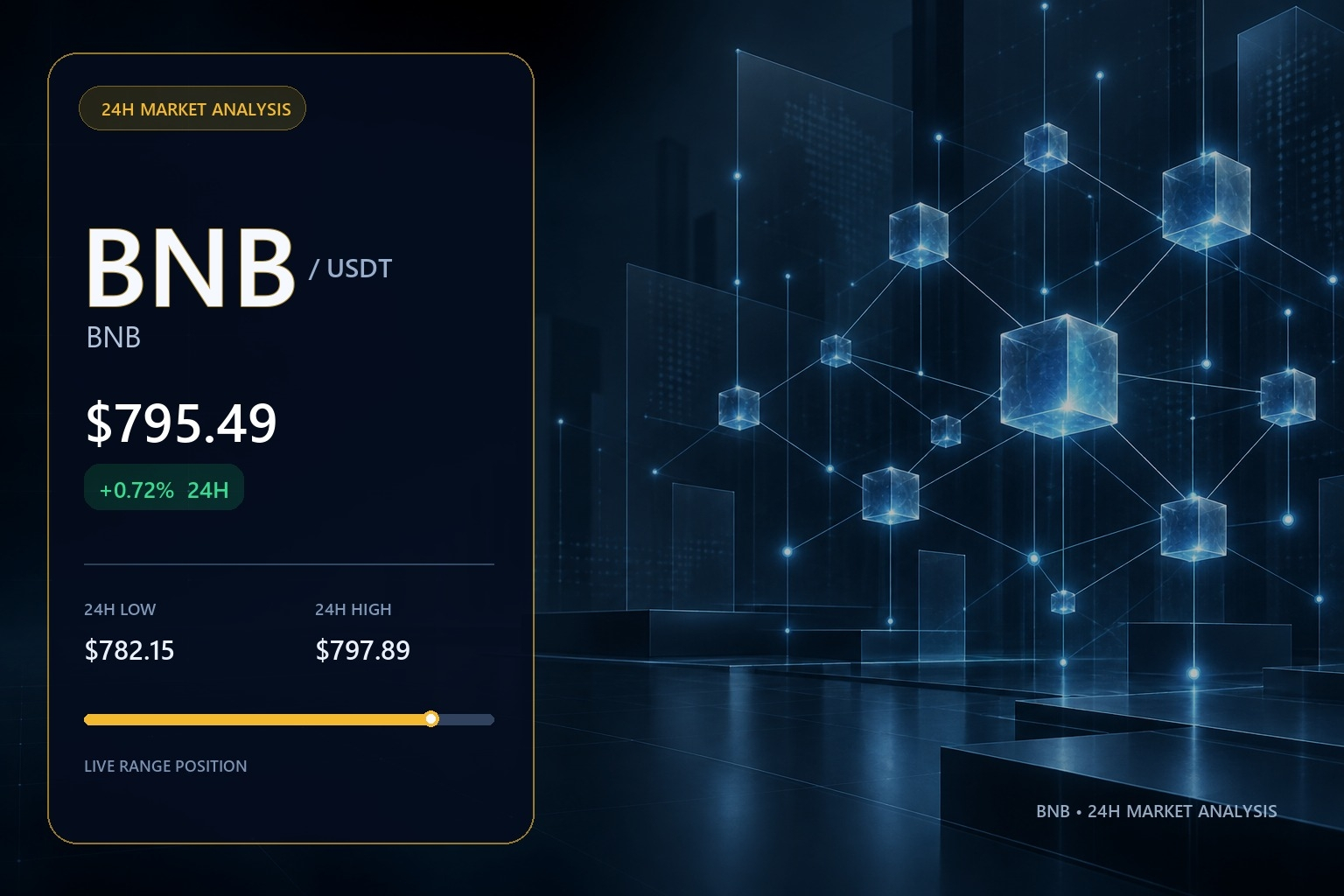
bnb is punching at 795.49 dollars right now and bulls are not done yet. 0.718 percent green on the day. range is tight between 782.15 and 797.89 dollars. volume is speaking volumes. setup time. long entry at 795.49, stop loss 771.63, target 835.26. short entry at 795.49, stop loss 819.35, target 755.72. watch the 797.89 resistance break. not a prediction, not financial advice, dyor. $BNB #Write2Earn #CryptoTrading #BNB #Binance
bnb is punching at 795.49 dollars right now and bulls are not done yet. 0.718 percent green on the day. range is tight between 782.15 and 797.89 dollars. volume is speaking volumes. setup time. long entry at 795.49, stop loss 771.63, target 835.26. short entry at 795.49, stop loss 819.35, target 755.72. watch the 797.89 resistance break. not a prediction, not financial advice, dyor. $BNB #Write2Earn #CryptoTrading #BNB #Binance
12

Connectez-vous pour découvrir plus de contenu
Rejoignez la communauté mondiale des adeptes de cryptomonnaies sur Binance Square
⚡️ Suviez les dernières informations importantes sur les cryptomonnaies.
💬 Jugé digne de confiance par la plus grande plateforme d’échange de cryptomonnaies au monde.
👍 Découvrez les connaissances que partagent les créateurs vérifiés.
Adresse e-mail/Nº de téléphone
Sujets d’actualité
1
#DriftHackVictimsBeginClaims
11,560 vues
190 mentions
2
#SolanaTokenizedStockVolumeTops$4.4BInSeptember
1,915 vues
29 mentions
3
#BitcoinSpotETFsDraw$6.34BInflowsInQ3
10,040 vues
142 mentions
4
#EthereumValidatorExitQueueJumps392%
179,468 vues
1,372 mentions
5
#IMFApprovesElSalvador$138MWithBitcoinWaiver
16,494 vues
91 mentions
6
#SECHaltsCryptoETFReviewsAmidFundingLapse
311,967 vues
2,175 mentions
7
#ZcashETFPostsFirstWeeklyOutflow$93.6M
102,611 vues
267 mentions
8
#GreekPoliceBustCryptoScamRingArrest17
429,618 vues
2,767 mentions
9
#BitcoinRejectedAt$87K
236,422 vues
336 mentions
10
#FedOctoberRateHikeOddsFallTo17%
446,015 vues
2,881 mentions