Binance Square

vanar

8.8M vues
170,177 mentions
ZainAli655
·
--
While timelines are arguing about price… Vanar is shipping usage. Most people think nothing’s happening right now. But I checked the latest @Vanar mainnet stats and the activity tells a different story. • 193M+ total transactions. • 28.6M+ wallet addresses interacting. • Hundreds of active tokens deployed. • Millions of blocks confirmed. That’s not speculation. That’s usage. What stands out is this: even during slow market conditions, #vanar is still seeing real engagement. Builders are deploying. Users are interacting. The chain isn’t waiting for hype cycles to move. Vanar’s focus on on-chain data and programmable logic gives it a practical edge. It’s positioning itself as infrastructure that apps can actually build on, not just another TPS headline. Now the real question: Is this early ecosystem formation… or are we underestimating what’s quietly growing here? Growth gets attention. Retention builds dominance. Quiet growth is usually how real ecosystems start. $VANRY
While timelines are arguing about price… Vanar is shipping usage.
Most people think nothing’s happening right now. But I checked the latest @Vanarchain mainnet stats and the activity tells a different story.
• 193M+ total transactions.
• 28.6M+ wallet addresses interacting.
• Hundreds of active tokens deployed.
• Millions of blocks confirmed.
That’s not speculation. That’s usage.
What stands out is this: even during slow market conditions, #vanar is still seeing real engagement. Builders are deploying. Users are interacting. The chain isn’t waiting for hype cycles to move.
Vanar’s focus on on-chain data and programmable logic gives it a practical edge. It’s positioning itself as infrastructure that apps can actually build on, not just another TPS headline.
Now the real question:
Is this early ecosystem formation…
or are we underestimating what’s quietly growing here?
Growth gets attention.
Retention builds dominance.
Quiet growth is usually how real ecosystems start.
$VANRY
A
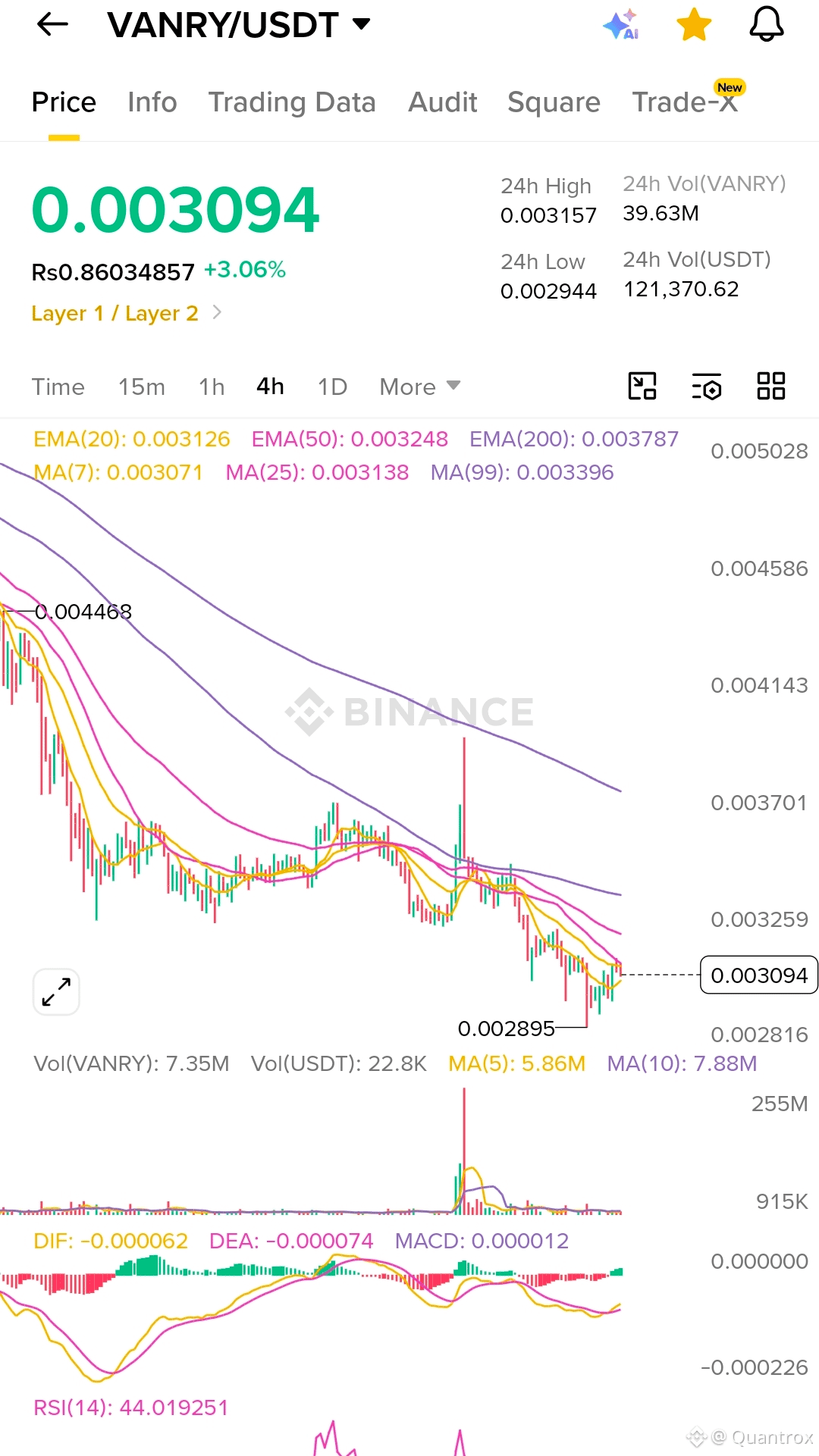
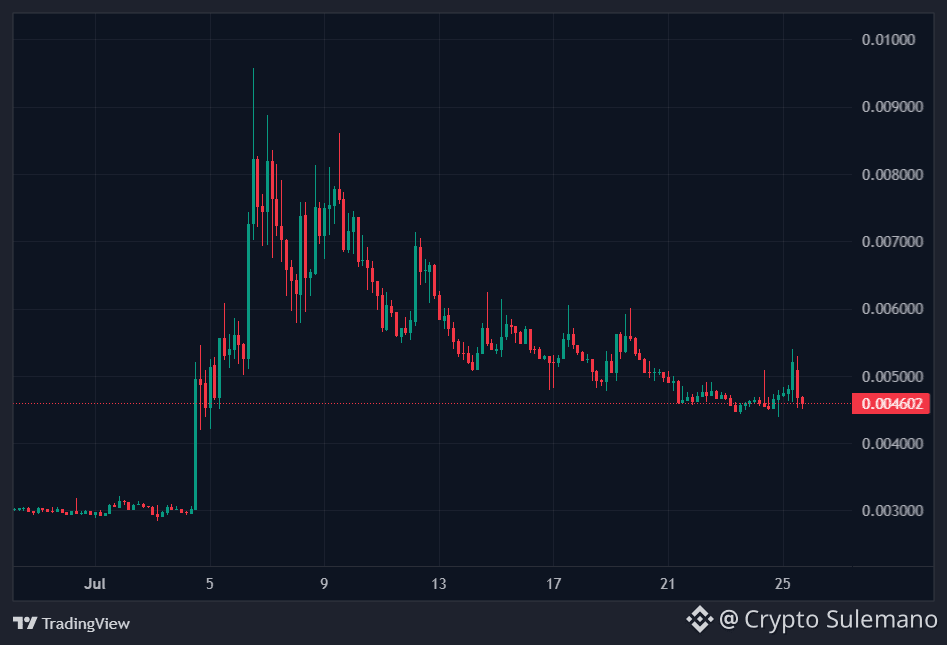
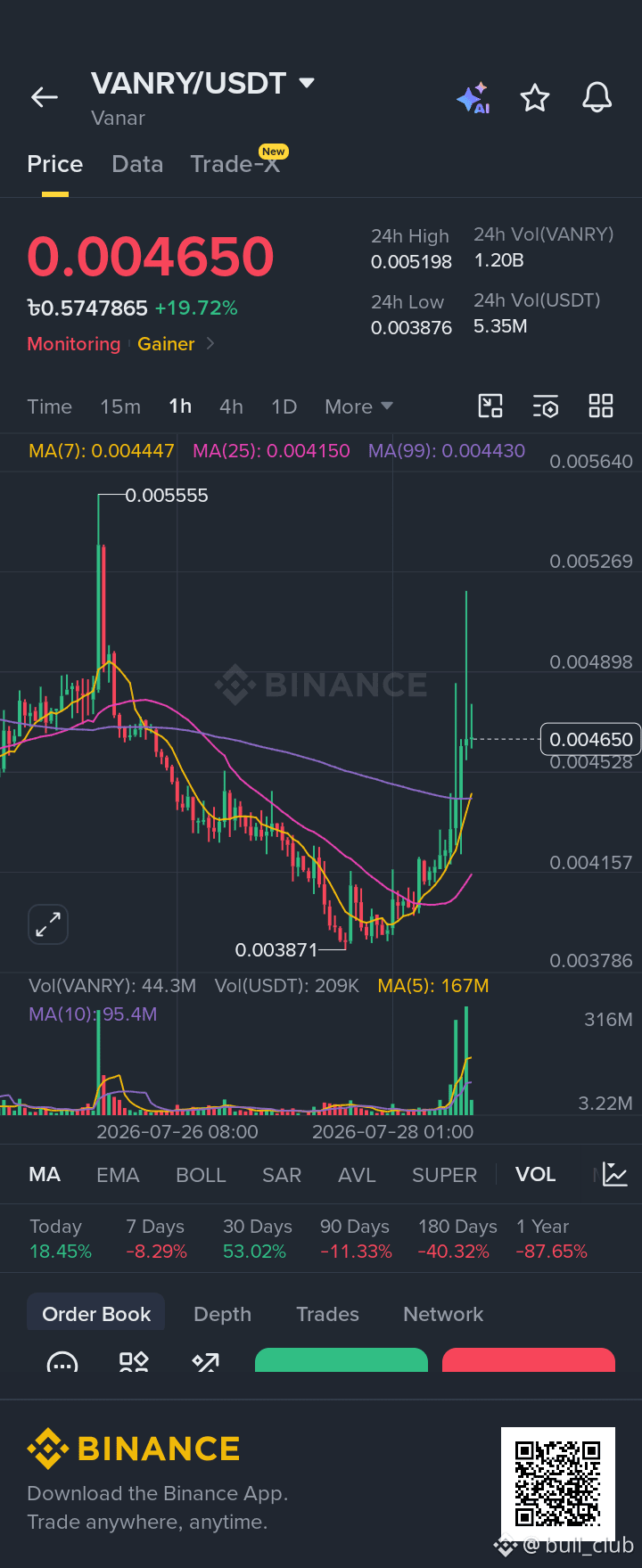
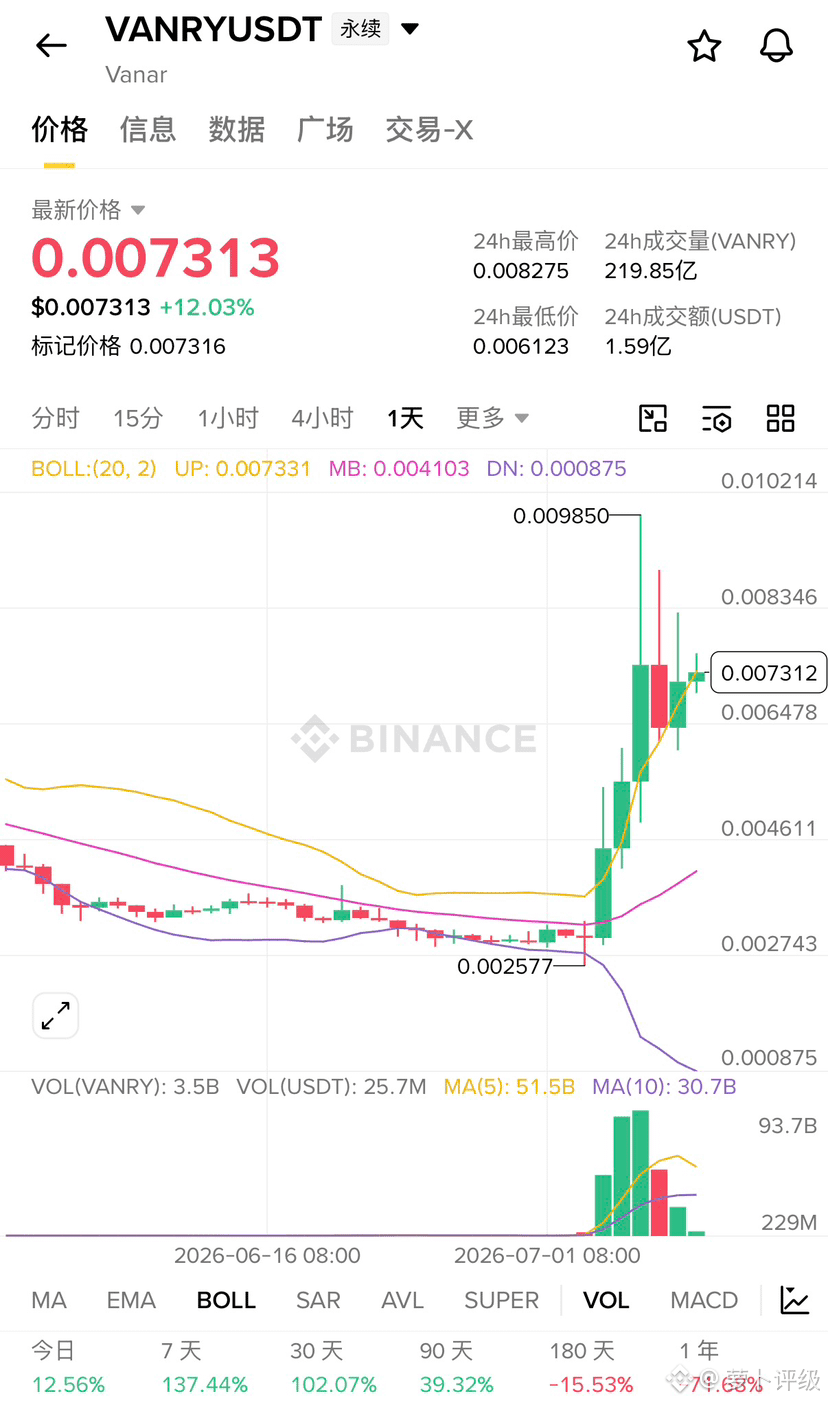
VANRY/USDT
Prix
0,0063443
When Web3 Grows Up: How Vanar Is Quietly Building a Blockchain the Real World Can Actually UseFor years, blockchain has lived in two worlds at once. In one world, it has been fast, experimental, and exciting, filled with developers pushing boundaries and communities forming around digital assets. In the other world, it has struggled to feel practical for everyday people who simply want technology that works without friction. Vanar was created at the intersection of these two realities, with a simple but powerful ambition: to make blockchain make sense beyond the crypto circle and into daily life. Vanar is a Layer 1 blockchain, but that description alone does not explain why it matters. Many networks claim speed, scalability, and innovation. What makes Vanar different is the mindset behind it. From the beginning, it was shaped around real-world adoption rather than technical experimentation for its own sake. The team behind Vanar comes from industries that understand mainstream audiences, including gaming, entertainment, and global brand partnerships. They are not approaching blockchain as a niche playground. They are approaching it as infrastructure for the next wave of digital interaction. The vision is bold yet grounded. Vanar is focused on welcoming the next three billion users into Web3. That number is not about hype. It reflects a belief that blockchain will only reach its true potential when it becomes invisible in the user experience. Most people do not want to think about wallets, gas fees, or complex interfaces. They want smooth digital services, engaging entertainment, secure ownership of assets, and meaningful online experiences. Vanar’s design philosophy revolves around reducing complexity while preserving the core benefits of decentralization. At the heart of this ecosystem is a network of products that stretch across industries people already understand. Gaming is one of the strongest pillars. The gaming industry has always been at the front of digital innovation, and it offers a natural bridge into blockchain-based ownership and economies. Through initiatives like the Virtua Metaverse and the VGN games network, Vanar connects players, creators, and digital assets in a way that feels familiar yet forward-looking. Instead of presenting blockchain as a separate technical layer, it becomes a quiet engine behind immersive worlds and interactive experiences. The Virtua Metaverse represents more than a virtual space. It reflects a larger shift in how brands and communities connect. In these environments, users are not passive observers. They can participate, own digital collectibles, attend events, and build identity within a persistent digital setting. For brands and entertainment companies, this creates a new form of engagement that goes beyond traditional advertising. It allows them to build long-term relationships with audiences in environments where digital ownership is real and verifiable. The VGN games network extends this idea further by focusing on scalable gaming infrastructure. It aims to provide developers with tools to create blockchain-powered games without overwhelming them with technical barriers. If developers can integrate digital ownership and token-based systems easily, the user experience improves. When the experience improves, adoption becomes natural rather than forced. This is where Vanar’s strategy becomes clear. It is not just about launching a chain. It is about building an ecosystem that supports creators, players, and businesses at the same time. Artificial intelligence is another dimension within Vanar’s broader vision. AI and blockchain are often discussed together, but practical integration remains rare. Vanar explores how decentralized systems can support AI-driven environments in gaming, digital worlds, and brand applications. This combination has the potential to create smarter digital spaces that adapt to users while maintaining transparency and trust in how data and assets are managed. It signals an understanding that the future of digital interaction will not be shaped by one technology alone, but by the convergence of several. Sustainability and eco-focused initiatives also play a role in the ecosystem. As public awareness around environmental impact grows, blockchain networks are increasingly expected to consider energy efficiency and responsible design. Vanar’s approach reflects this shift. It acknowledges that long-term success requires balance between performance and environmental responsibility. By positioning itself within conversations about sustainable digital growth, the network aligns with broader global priorities rather than operating in isolation. The VANRY token powers the entire ecosystem. It is used for transactions, participation, and value exchange across Vanar’s products. But its purpose extends beyond simple utility. A token becomes meaningful when it connects real activity within an ecosystem. In Vanar’s case, that activity spans gaming, virtual environments, and brand interactions. The token becomes a bridge between users and the infrastructure that supports their experiences. Its value is tied to how effectively the ecosystem grows and how deeply users engage with its platforms. From a market perspective, Vanar enters an environment where investors and builders are increasingly selective. The early years of blockchain were filled with rapid launches and short-lived projects. Today, there is greater emphasis on real utility, strategic partnerships, and sustainable growth. Vanar’s background in gaming and entertainment provides a competitive advantage in this context. These industries understand audience behavior, content creation, and global scaling. When those insights are applied to blockchain infrastructure, the result feels more grounded and commercially aware. There is also a cultural element to consider. Blockchain adoption is not just a technical challenge. It is a trust challenge. Mainstream users must feel confident that the platforms they engage with are stable, secure, and designed with long-term vision. By aligning itself with recognizable industries and focusing on user-friendly applications, Vanar works to reduce the psychological barrier that has slowed broader Web3 adoption. In the larger story of digital transformation, Vanar represents a shift from experimentation to application. It reflects a belief that blockchain must evolve from being a headline technology into a background system that quietly enhances digital life. The future of Web3 will not be defined solely by transaction speeds or token launches. It will be defined by whether ordinary people find value in using it without even realizing they are interacting with blockchain at all. As the ecosystem develops, its progress will be measured not just by technical milestones but by how effectively it connects with real communities. If gaming worlds feel more immersive, if brands build deeper digital relationships, if creators can monetize fairly and transparently, then the infrastructure behind those experiences has succeeded. Vanar is positioning itself to be that infrastructure. In a market filled with noise, bold claims, and rapid cycles, there is something compelling about a project that focuses on practical growth. Vanar’s story is not about short-term excitement. It is about steady expansion into industries that already shape global culture. By merging blockchain with gaming, metaverse environments, AI, sustainability, and brand solutions, it attempts to build a foundation that feels relevant beyond crypto headlines. The journey toward onboarding billions into Web3 will not happen overnight. It will require technology that feels seamless, partnerships that feel authentic, and ecosystems that create real reasons to participate. Vanar’s approach suggests that it understands this reality. Instead of chasing attention, it is building a structure designed to support lasting adoption. In the end, the real test for any blockchain is simple. Does it make digital life better, easier, and more meaningful for the people using it. Vanar’s ambition is to answer that question with action rather than slogans. If it succeeds, it may not just be another Layer 1 network. It may become part of the quiet infrastructure that helps Web3 grow up and step confidently into the real world. @Vanar #vanar $VANRY {spot}(VANRYUSDT)

When Web3 Grows Up: How Vanar Is Quietly Building a Blockchain the Real World Can Actually Use

For years, blockchain has lived in two worlds at once. In one world, it has been fast, experimental, and exciting, filled with developers pushing boundaries and communities forming around digital assets. In the other world, it has struggled to feel practical for everyday people who simply want technology that works without friction. Vanar was created at the intersection of these two realities, with a simple but powerful ambition: to make blockchain make sense beyond the crypto circle and into daily life.

Vanar is a Layer 1 blockchain, but that description alone does not explain why it matters. Many networks claim speed, scalability, and innovation. What makes Vanar different is the mindset behind it. From the beginning, it was shaped around real-world adoption rather than technical experimentation for its own sake. The team behind Vanar comes from industries that understand mainstream audiences, including gaming, entertainment, and global brand partnerships. They are not approaching blockchain as a niche playground. They are approaching it as infrastructure for the next wave of digital interaction.

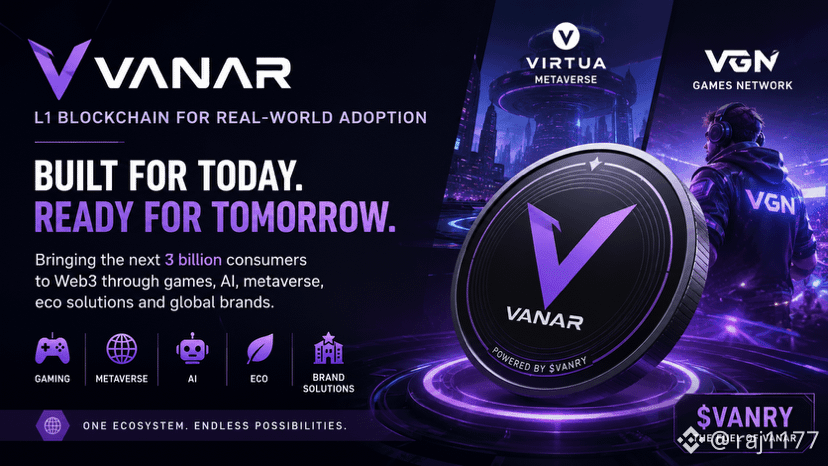
The vision is bold yet grounded. Vanar is focused on welcoming the next three billion users into Web3. That number is not about hype. It reflects a belief that blockchain will only reach its true potential when it becomes invisible in the user experience. Most people do not want to think about wallets, gas fees, or complex interfaces. They want smooth digital services, engaging entertainment, secure ownership of assets, and meaningful online experiences. Vanar’s design philosophy revolves around reducing complexity while preserving the core benefits of decentralization.

At the heart of this ecosystem is a network of products that stretch across industries people already understand. Gaming is one of the strongest pillars. The gaming industry has always been at the front of digital innovation, and it offers a natural bridge into blockchain-based ownership and economies. Through initiatives like the Virtua Metaverse and the VGN games network, Vanar connects players, creators, and digital assets in a way that feels familiar yet forward-looking. Instead of presenting blockchain as a separate technical layer, it becomes a quiet engine behind immersive worlds and interactive experiences.

The Virtua Metaverse represents more than a virtual space. It reflects a larger shift in how brands and communities connect. In these environments, users are not passive observers. They can participate, own digital collectibles, attend events, and build identity within a persistent digital setting. For brands and entertainment companies, this creates a new form of engagement that goes beyond traditional advertising. It allows them to build long-term relationships with audiences in environments where digital ownership is real and verifiable.

The VGN games network extends this idea further by focusing on scalable gaming infrastructure. It aims to provide developers with tools to create blockchain-powered games without overwhelming them with technical barriers. If developers can integrate digital ownership and token-based systems easily, the user experience improves. When the experience improves, adoption becomes natural rather than forced. This is where Vanar’s strategy becomes clear. It is not just about launching a chain. It is about building an ecosystem that supports creators, players, and businesses at the same time.

Artificial intelligence is another dimension within Vanar’s broader vision. AI and blockchain are often discussed together, but practical integration remains rare. Vanar explores how decentralized systems can support AI-driven environments in gaming, digital worlds, and brand applications. This combination has the potential to create smarter digital spaces that adapt to users while maintaining transparency and trust in how data and assets are managed. It signals an understanding that the future of digital interaction will not be shaped by one technology alone, but by the convergence of several.

Sustainability and eco-focused initiatives also play a role in the ecosystem. As public awareness around environmental impact grows, blockchain networks are increasingly expected to consider energy efficiency and responsible design. Vanar’s approach reflects this shift. It acknowledges that long-term success requires balance between performance and environmental responsibility. By positioning itself within conversations about sustainable digital growth, the network aligns with broader global priorities rather than operating in isolation.

The VANRY token powers the entire ecosystem. It is used for transactions, participation, and value exchange across Vanar’s products. But its purpose extends beyond simple utility. A token becomes meaningful when it connects real activity within an ecosystem. In Vanar’s case, that activity spans gaming, virtual environments, and brand interactions. The token becomes a bridge between users and the infrastructure that supports their experiences. Its value is tied to how effectively the ecosystem grows and how deeply users engage with its platforms.

From a market perspective, Vanar enters an environment where investors and builders are increasingly selective. The early years of blockchain were filled with rapid launches and short-lived projects. Today, there is greater emphasis on real utility, strategic partnerships, and sustainable growth. Vanar’s background in gaming and entertainment provides a competitive advantage in this context. These industries understand audience behavior, content creation, and global scaling. When those insights are applied to blockchain infrastructure, the result feels more grounded and commercially aware.

There is also a cultural element to consider. Blockchain adoption is not just a technical challenge. It is a trust challenge. Mainstream users must feel confident that the platforms they engage with are stable, secure, and designed with long-term vision. By aligning itself with recognizable industries and focusing on user-friendly applications, Vanar works to reduce the psychological barrier that has slowed broader Web3 adoption.

In the larger story of digital transformation, Vanar represents a shift from experimentation to application. It reflects a belief that blockchain must evolve from being a headline technology into a background system that quietly enhances digital life. The future of Web3 will not be defined solely by transaction speeds or token launches. It will be defined by whether ordinary people find value in using it without even realizing they are interacting with blockchain at all.

As the ecosystem develops, its progress will be measured not just by technical milestones but by how effectively it connects with real communities. If gaming worlds feel more immersive, if brands build deeper digital relationships, if creators can monetize fairly and transparently, then the infrastructure behind those experiences has succeeded. Vanar is positioning itself to be that infrastructure.

In a market filled with noise, bold claims, and rapid cycles, there is something compelling about a project that focuses on practical growth. Vanar’s story is not about short-term excitement. It is about steady expansion into industries that already shape global culture. By merging blockchain with gaming, metaverse environments, AI, sustainability, and brand solutions, it attempts to build a foundation that feels relevant beyond crypto headlines.

The journey toward onboarding billions into Web3 will not happen overnight. It will require technology that feels seamless, partnerships that feel authentic, and ecosystems that create real reasons to participate. Vanar’s approach suggests that it understands this reality. Instead of chasing attention, it is building a structure designed to support lasting adoption.

In the end, the real test for any blockchain is simple. Does it make digital life better, easier, and more meaningful for the people using it. Vanar’s ambition is to answer that question with action rather than slogans. If it succeeds, it may not just be another Layer 1 network. It may become part of the quiet infrastructure that helps Web3 grow up and step confidently into the real world.

@Vanarchain #vanar $VANRY
Bitcoin Burns Energy, Vanar Builds GreenDid you know it takes about 1,000 kWh to mine a single Bitcoin? That's enough to power a house for a month. Now imagine all that energy disappearing into endless calculations, leaving nothing behind but heat and waste. Crypto gave us speed, profits, and innovation, but it also left us with a heavy footprint. We celebrate gains, we compare TPS, we argue decentralization. Yet how often we pause and feel the weight of the energy behind every transactions? That is where Vanar @Vanar changes the story. Most Layer 1s stop at the trilemma of speed, security, and decentralization. Vanar's approach goes further: to build without burning, to innovate without draining, to grow without guilt. That's approach isn't just talk, here's how Vanar @Vanar turns it into real commitments 👇: 👉 Green Chain Initiatives Vanar runs on Google Cloud's green infrastructure, offsetting carbon emissions and prioritizing renewable energy. Every transaction carries the feeling of being lighter, cleaner, and more responsible. Blockchain can grow without leaving scars on the planet. 👉 Hybrid Consensus Model Vanar blends Delegated Proof Stake (dPoS), Proof of Authority (PoA), and Proof of Reputation (PoR). This avoids the wasteful competition of Proof of Work (PoW), where miners burn electricity solving endless calculations that are discarded. Instead, validators are chosen, identities are verified, and reputation is rewarded. The result is a system that feels balance. Secure, scalable, and efficient without unnecessary waste. 👉 Real-Time Energy tracking Vanar makes energy use visible. By integrating with Google Cloud's monitoring tools and exposing metrics through its explorer and APIs, the chain shows exactly how much energy validators consume. It is not just a promise, it is proof you can see. 👉 Validator Partnerships Vanar partners with enterprises to prove sustainability in action. BCW Group runs a validator node on Google Cloud's recycled energy data centers, showing that blockchain infrastructure can scale responsibly. This is more than technical, it is a statement that growth and responsibility can walk together. 👉 AI-Native, Eco-Native Vanar is designed with sustainability at its core since day one, alongside its AI-native foundation. Unlike chains that retrofit green fixes later, Vanar begins green from inception. This dual approach sets a new standard: a chain that is not only fast and secure, but also responsible by design. If Vanar can prove blockchain can be fast, secure, decentralized, and green, shouldn't sustainability be recognized as the fourth standard? #vanar $VANRY {future}(VANRYUSDT)

Bitcoin Burns Energy, Vanar Builds Green

Did you know it takes about 1,000 kWh to mine a single Bitcoin? That's enough to power a house for a month.

Now imagine all that energy disappearing into endless calculations, leaving nothing behind but heat and waste. Crypto gave us speed, profits, and innovation, but it also left us with a heavy footprint. We celebrate gains, we compare TPS, we argue decentralization. Yet how often we pause and feel the weight of the energy behind every transactions?

That is where Vanar @Vanarchain changes the story.

Most Layer 1s stop at the trilemma of speed, security, and decentralization. Vanar's approach goes further: to build without burning, to innovate without draining, to grow without guilt.

That's approach isn't just talk, here's how Vanar @Vanarchain turns it into real commitments 👇:
👉 Green Chain Initiatives
Vanar runs on Google Cloud's green infrastructure, offsetting carbon emissions and prioritizing renewable energy. Every transaction carries the feeling of being lighter, cleaner, and more responsible. Blockchain can grow without leaving scars on the planet.

👉 Hybrid Consensus Model
Vanar blends Delegated Proof Stake (dPoS), Proof of Authority (PoA), and Proof of Reputation (PoR). This avoids the wasteful competition of Proof of Work (PoW), where miners burn electricity solving endless calculations that are discarded. Instead, validators are chosen, identities are verified, and reputation is rewarded. The result is a system that feels balance. Secure, scalable, and efficient without unnecessary waste.

👉 Real-Time Energy tracking
Vanar makes energy use visible. By integrating with Google Cloud's monitoring tools and exposing metrics through its explorer and APIs, the chain shows exactly how much energy validators consume. It is not just a promise, it is proof you can see.

👉 Validator Partnerships
Vanar partners with enterprises to prove sustainability in action. BCW Group runs a validator node on Google Cloud's recycled energy data centers, showing that blockchain infrastructure can scale responsibly. This is more than technical, it is a statement that growth and responsibility can walk together.

👉 AI-Native, Eco-Native
Vanar is designed with sustainability at its core since day one, alongside its AI-native foundation. Unlike chains that retrofit green fixes later, Vanar begins green from inception. This dual approach sets a new standard: a chain that is not only fast and secure, but also responsible by design.

If Vanar can prove blockchain can be fast, secure, decentralized, and green, shouldn't sustainability be recognized as the fourth standard?

#vanar $VANRY
Why Vanar's transaction finality is a game changerThe first time I sent something on #vanar , I didn’t notice the finality. That sounds strange, but it’s true. I clicked send, waited a moment, and moved on. No second guessing. No quiet checking a few seconds later to see if it would reverse, stall, or hang in that awkward “almost done” state And I think that’s the point. On most chains I’ve used, finality is this invisible tension. Even after confirmation, part of your brain stays alert. Especially when the network gets busy. You learn to wait. You learn not to trust the first signal. On @Vanar , that hesitation started fading. Not immediately. Trust builds slowly. But over time, I stopped hovering over the explorer The system feels decisive. Once it’s done, it’s done. This changes behavior in small ways. You interact more freely. You stop planning around uncertainty. The chain becomes less of a place you negotiate with, and more of a place you use. Of course, nothing is absolute. Every network has limits. Congestion can happen. Validators can change. Assumptions can break under stress. And adoption brings its own pressure. A system that feels fast and final with fewer users might feel different when millions arrive at once. I’ve seen this pattern before on other ecosystems. Early smoothness doesn’t always survive scale. Still, there’s something important here. isn’t just a technical milestone. It’s psychological. When you stop thinking about whether something worked, you start thinking about what you actually wanted to do in the first place. $VANRY I’m not sure if Vanar has solved that permanently.

Why Vanar's transaction finality is a game changer

The first time I sent something on #vanar , I didn’t notice the finality.
That sounds strange, but it’s true. I clicked send, waited a moment, and moved on. No second guessing. No quiet checking a few seconds later to see if it would reverse, stall, or hang in that awkward “almost done” state
And I think that’s the point.
On most chains I’ve used, finality is this invisible tension. Even after confirmation, part of your brain stays alert. Especially when the network gets busy. You learn to wait. You learn not to trust the first signal.
On @Vanarchain , that hesitation started fading. Not immediately. Trust builds slowly. But over time, I stopped hovering over the explorer
The system feels decisive. Once it’s done, it’s done.
This changes behavior in small ways. You interact more freely. You stop planning around uncertainty. The chain becomes less of a place you negotiate with, and more of a place you use.
Of course, nothing is absolute. Every network has limits. Congestion can happen. Validators can change. Assumptions can break under stress.
And adoption brings its own pressure. A system that feels fast and final with fewer users might feel different when millions arrive at once.
I’ve seen this pattern before on other ecosystems. Early smoothness doesn’t always survive scale.
Still, there’s something important here.
isn’t just a technical milestone. It’s psychological.
When you stop thinking about whether something worked, you start thinking about what you actually wanted to do in the first place.
$VANRY I’m not sure if Vanar has solved that permanently.
I’m Watching Vanar Build the Bridge to the Next 3 BillionI’ve been spending time looking into Vanar, and the more I read about it, the more I try to break it down in simple terms for myself. At the end of the day, Vanar is a Layer 1 blockchain, but I’m not thinking about it as just another chain. I’m looking at it as a team trying to solve a very real problem: how do we make Web3 feel normal for everyday people? When I’m reading about Vanar, I’m noticing something different in the way they talk about adoption. They’re not only speaking to developers or traders. They’re talking about the next three billion consumers. And when I hear that, I’m asking myself, what does that actually mean? It means they’re not building for the small crypto crowd. They’re building for people who use apps every day but don’t care how blockchains work. I’m thinking about my friends who play mobile games or use streaming apps. They don’t want to manage private keys. They don’t want to calculate gas fees. They don’t want to switch networks. They just want things to work. When I look at Vanar, I’m seeing a team that understands that. I’m also paying attention to the team’s background. They have experience working with games, entertainment, and brands. That matters to me. I’m not just looking at technical whitepapers; I’m looking at whether the team understands how consumers behave. If you’ve worked in gaming or entertainment, you already know that users expect speed, smooth design, and zero friction. I’m thinking that experience shapes how they build. When I imagine real-world adoption, I’m picturing someone opening an app and not even realizing blockchain is involved. I’m seeing payments happen in the background. I’m seeing digital items being owned without the user having to study crypto Twitter. That’s the kind of world Vanar seems to be aiming for. As I’m researching, I’m asking myself: what does “designed from the ground up” really mean? To me, it means they didn’t just copy an existing model and add marketing on top. I’m thinking they started with the question, “How do we make this usable for normal people?” and then built the technology around that goal. I’m watching how they position themselves. They talk about bringing the next three billion consumers to Web3. That’s not a small ambition. I’m not taking that lightly. I’m thinking about how many users are already in gaming ecosystems, entertainment platforms, and brand communities. If even a fraction of those users start interacting with blockchain-powered features without friction, that’s massive. I’m also being realistic. I’m not assuming adoption just happens because someone says it will. I’m watching to see if the products feel simple. I’m watching if developers can build without unnecessary complexity. I’m watching if users can onboard without confusion. For me, real adoption isn’t about hype cycles. It’s about whether people stay. When I look at the bigger picture, I’m seeing Vanar trying to bridge Web2 and Web3. I’m imagining brands launching experiences on-chain without scaring their audiences away. I’m picturing games that use blockchain under the hood but feel like regular games to the player. That’s where I think the real opportunity is. I’m also thinking about timing. Web3 has been around for years, but it still feels niche. I’m asking myself why. A big reason is friction. If Vanar is serious about removing that friction, then I’m interested in watching how they execute. At the end of the day, I’m not just reading headlines. I’m observing behavior. I’m looking at whether builders choose the network. I’m watching whether users stay once they arrive. I’m paying attention to whether the technology fades into the background instead of demanding attention. Right now, I’m not making bold predictions. I’m doing something simpler. I’m watching. I’m learning. I’m thinking about how adoption really happens in the real world. And when I look at Vanar through that lens, I see a project that isn’t trying to impress only crypto insiders. I see a team trying to make Web3 make sense for everyone else. If bringing the next three billion consumers on-chain is the goal, then usability isn’t optional. It’s everything. And that’s what I’m watching Vanar try to build. @Vanar $VANRY #vanar

I’m Watching Vanar Build the Bridge to the Next 3 Billion

I’ve been spending time looking into Vanar, and the more I read about it, the more I try to break it down in simple terms for myself. At the end of the day, Vanar is a Layer 1 blockchain, but I’m not thinking about it as just another chain. I’m looking at it as a team trying to solve a very real problem: how do we make Web3 feel normal for everyday people?
When I’m reading about Vanar, I’m noticing something different in the way they talk about adoption. They’re not only speaking to developers or traders. They’re talking about the next three billion consumers. And when I hear that, I’m asking myself, what does that actually mean? It means they’re not building for the small crypto crowd. They’re building for people who use apps every day but don’t care how blockchains work.

I’m thinking about my friends who play mobile games or use streaming apps. They don’t want to manage private keys. They don’t want to calculate gas fees. They don’t want to switch networks. They just want things to work. When I look at Vanar, I’m seeing a team that understands that.
I’m also paying attention to the team’s background. They have experience working with games, entertainment, and brands. That matters to me. I’m not just looking at technical whitepapers; I’m looking at whether the team understands how consumers behave. If you’ve worked in gaming or entertainment, you already know that users expect speed, smooth design, and zero friction. I’m thinking that experience shapes how they build.
When I imagine real-world adoption, I’m picturing someone opening an app and not even realizing blockchain is involved. I’m seeing payments happen in the background. I’m seeing digital items being owned without the user having to study crypto Twitter. That’s the kind of world Vanar seems to be aiming for.
As I’m researching, I’m asking myself: what does “designed from the ground up” really mean? To me, it means they didn’t just copy an existing model and add marketing on top. I’m thinking they started with the question, “How do we make this usable for normal people?” and then built the technology around that goal.
I’m watching how they position themselves. They talk about bringing the next three billion consumers to Web3. That’s not a small ambition. I’m not taking that lightly. I’m thinking about how many users are already in gaming ecosystems, entertainment platforms, and brand communities. If even a fraction of those users start interacting with blockchain-powered features without friction, that’s massive.
I’m also being realistic. I’m not assuming adoption just happens because someone says it will. I’m watching to see if the products feel simple. I’m watching if developers can build without unnecessary complexity. I’m watching if users can onboard without confusion. For me, real adoption isn’t about hype cycles. It’s about whether people stay.
When I look at the bigger picture, I’m seeing Vanar trying to bridge Web2 and Web3. I’m imagining brands launching experiences on-chain without scaring their audiences away. I’m picturing games that use blockchain under the hood but feel like regular games to the player. That’s where I think the real opportunity is.
I’m also thinking about timing. Web3 has been around for years, but it still feels niche. I’m asking myself why. A big reason is friction. If Vanar is serious about removing that friction, then I’m interested in watching how they execute.
At the end of the day, I’m not just reading headlines. I’m observing behavior. I’m looking at whether builders choose the network. I’m watching whether users stay once they arrive. I’m paying attention to whether the technology fades into the background instead of demanding attention.
Right now, I’m not making bold predictions. I’m doing something simpler. I’m watching. I’m learning. I’m thinking about how adoption really happens in the real world. And when I look at Vanar through that lens, I see a project that isn’t trying to impress only crypto insiders. I see a team trying to make Web3 make sense for everyone else.
If bringing the next three billion consumers on-chain is the goal, then usability isn’t optional. It’s everything. And that’s what I’m watching Vanar try to build.
@Vanarchain $VANRY #vanar
Shipping Without Fear: How Vanar Makes Blockchain Operational AgainVanar :Where Shipping Becomes Predictable Again Vanar Chain is not trying to win the narrative cycle. It is trying to win something harder: operational trust. In crypto, most conversations still orbit novelty new primitives, new abstractions, new token models. But production infrastructure is not judged by how exciting it sounds. It is judged by how quietly it performs under stress. Shipping should not feel like risk management. On many chains, updates require defensive assumptions. You buffer gas. You overestimate fees. You redesign flows because congestion changes economics overnight. Execution becomes a volatility hedge rather than a product decision. Vanar approaches this differently. Builders start with stable fee expectations. They operate inside predictable cost bands. Congestion variance is absorbed at the infrastructure layer, not pushed onto developers. Execution happens under cost certainty. The result is clarity: Forecastable deployment costs Cleaner release cycles More reliable automation Enterprise-ready budgeting Vanar doesn’t remove blockchain complexity. It contains it. EVM Compatibility as Risk Containment Ethereum Foundation helped mature an ecosystem that survived congestion spikes, MEV pressure, security incidents, and multi-year adversarial testing. The EVM became an industrial standard not because it was perfect, but because it endured. Vanar’s EVM compatibility is not a growth shortcut. It is an operational decision. If something works on Ethereum, and it behaves the same way on Vanar, that reduces unknowns. Deterministic execution semantics, familiar gas accounting logic, predictable opcode behavior, and toolchain continuity these are hygiene mechanisms. They reduce surprise. In distributed systems, surprise is expensive. Compatibility narrows the surface area of failure interpretation. Audited contracts deploy without semantic drift. Wallet integrations behave predictably. Observability tooling transfers cleanly. Builders do not need to relearn execution logic under pressure. Adoption follows operational confidence, not narrative momentum. Upgrades Without Drama Crypto markets treat upgrades like product launches. Infrastructure treats them like surgical procedures. Rollback paths. Failure simulations. Validator coordination. Documented edge cases. Mature systems default to backward compatibility and deprecation cycles rather than abrupt changes. When execution semantics are standardized, consensus engineering can focus on stability, liveness, and predictable block production instead of reinventing the runtime. The absence of drama is the metric. Real Time Consumer Execution: The Absence of a Retry Button Vanar’s philosophy becomes most visible in real-time environments like the Virtua metaverse experience. In live drops and branded events, users do not wait patiently for confirmation. If a UI invites doubt, behavior adapts. Double taps. Inventory toggles. Relogs. Screenshots “just in case.” The most dangerous button in real-time systems is “Retry.” Vanar’s approach is subtle but important. If a claim is accepted, it commits once. If it is not accepted, the UI does not push uncertainty onto the user. The system absorbs the wobble. The user experiences a single, predictable flow. Equip once. Claim once. Move on. Deterministic finality alone is not enough. The human window between resolution and recognition must be tight. If ambiguity persists, users socially arbitrate settlement. And social arbitration spreads faster than technical explanations. Vanar minimizes that gap. Continuity Over Calendars Even scheduled events reveal the philosophy. A brand drop may officially end at midnight, but persistent worlds do not shut off in unison. Sessions overlap. Inventory resolves. State continues closing cleanly underneath the surface. The calendar flips. The chain does not. That continuity is not hype. It is hygiene. Conclusion Vanar’s positioning is not about being louder. It is about being predictable. EVM compatibility reduces execution risk. Stable fee mechanics reduce budgeting uncertainty. Operational discipline reduces ambiguity during stress. Success will not look viral. It will look uneventful. Contracts deploy without drama. Upgrades land without incident. Congestion bends but does not break flow. In infrastructure, that is not boring. That is maturity. $VANRY #vanar @Vanar

Shipping Without Fear: How Vanar Makes Blockchain Operational Again

Vanar :Where Shipping Becomes Predictable Again
Vanar Chain is not trying to win the narrative cycle. It is trying to win something harder: operational trust.
In crypto, most conversations still orbit novelty new primitives, new abstractions, new token models. But production infrastructure is not judged by how exciting it sounds. It is judged by how quietly it performs under stress.
Shipping should not feel like risk management.
On many chains, updates require defensive assumptions. You buffer gas. You overestimate fees. You redesign flows because congestion changes economics overnight. Execution becomes a volatility hedge rather than a product decision.
Vanar approaches this differently. Builders start with stable fee expectations. They operate inside predictable cost bands. Congestion variance is absorbed at the infrastructure layer, not pushed onto developers. Execution happens under cost certainty.
The result is clarity:
Forecastable deployment costs
Cleaner release cycles
More reliable automation
Enterprise-ready budgeting
Vanar doesn’t remove blockchain complexity. It contains it.
EVM Compatibility as Risk Containment
Ethereum Foundation helped mature an ecosystem that survived congestion spikes, MEV pressure, security incidents, and multi-year adversarial testing. The EVM became an industrial standard not because it was perfect, but because it endured.
Vanar’s EVM compatibility is not a growth shortcut. It is an operational decision.
If something works on Ethereum, and it behaves the same way on Vanar, that reduces unknowns. Deterministic execution semantics, familiar gas accounting logic, predictable opcode behavior, and toolchain continuity these are hygiene mechanisms. They reduce surprise.
In distributed systems, surprise is expensive.
Compatibility narrows the surface area of failure interpretation. Audited contracts deploy without semantic drift. Wallet integrations behave predictably. Observability tooling transfers cleanly. Builders do not need to relearn execution logic under pressure.
Adoption follows operational confidence, not narrative momentum.
Upgrades Without Drama
Crypto markets treat upgrades like product launches. Infrastructure treats them like surgical procedures.
Rollback paths.
Failure simulations.
Validator coordination.
Documented edge cases.
Mature systems default to backward compatibility and deprecation cycles rather than abrupt changes. When execution semantics are standardized, consensus engineering can focus on stability, liveness, and predictable block production instead of reinventing the runtime.
The absence of drama is the metric.
Real Time Consumer Execution: The Absence of a Retry Button
Vanar’s philosophy becomes most visible in real-time environments like the Virtua metaverse experience.
In live drops and branded events, users do not wait patiently for confirmation. If a UI invites doubt, behavior adapts. Double taps. Inventory toggles. Relogs. Screenshots “just in case.”
The most dangerous button in real-time systems is “Retry.”
Vanar’s approach is subtle but important. If a claim is accepted, it commits once. If it is not accepted, the UI does not push uncertainty onto the user. The system absorbs the wobble. The user experiences a single, predictable flow.
Equip once.
Claim once.
Move on.
Deterministic finality alone is not enough. The human window between resolution and recognition must be tight. If ambiguity persists, users socially arbitrate settlement. And social arbitration spreads faster than technical explanations.
Vanar minimizes that gap.
Continuity Over Calendars
Even scheduled events reveal the philosophy. A brand drop may officially end at midnight, but persistent worlds do not shut off in unison. Sessions overlap. Inventory resolves. State continues closing cleanly underneath the surface.
The calendar flips. The chain does not.
That continuity is not hype. It is hygiene.
Conclusion
Vanar’s positioning is not about being louder. It is about being predictable.
EVM compatibility reduces execution risk. Stable fee mechanics reduce budgeting uncertainty. Operational discipline reduces ambiguity during stress.
Success will not look viral.
It will look uneventful.
Contracts deploy without drama.
Upgrades land without incident.
Congestion bends but does not break flow.
In infrastructure, that is not boring. That is maturity.
$VANRY #vanar @Vanar
kaifffkhan:
This isn’t about scaling louder its about removing surprise from execution vanar real product is predictability and thats what actually compounds.
VANAR CHAIN : POWERING THE FUTURE OF MULTICHAIN SCALABILITYThe blockchain industry is entering a new era—one defined by multichain ecosystems, seamless interoperability, and user-friendly decentralized applications. As more developers and users explore Web3, the demand for scalable, fast, and developer-centric networks continues to rise. At the center of this evolution stands Vanar Chain, a next-generation blockchain designed to make building, scaling, and deploying decentralized applications (dApps) easier than ever. Vanar Chain’s mission is simple yet powerful: to remove the technical barriers that slow innovation while creating an ecosystem where developers, creators, and communities can thrive. With its seamless EVM compatibility, high-throughput design, and strong focus on user experience, Vanar Chain is positioning itself as a key player in shaping the future of multichain scalability. Understanding Multichain Scalability Before diving deeper into Vanar Chain, it’s important to understand why multichain scalability matters. In the early days of blockchain, most networks operated in isolation. Each chain had its own rules, tools, and limitations. As adoption increased, these single-chain systems began to face congestion, high fees, and slow transaction times. Multichain scalability aims to solve these challenges by allowing multiple blockchains to coexist and interact. Instead of relying on a single network to handle all activity, workloads can be distributed across chains, improving speed, efficiency, and reliability. This approach also encourages innovation, as developers can choose the best environment for their specific use case. Vanar Chain embraces this multichain future by building infrastructure that connects easily with existing ecosystems while offering a high-performance environment of its own. Seamless EVM Compatibility: A Game Changer One of Vanar Chain’s most attractive features is its seamless Ethereum Virtual Machine (EVM) compatibility. This means developers who are already familiar with Ethereum-based tools and smart contracts can migrate or deploy their projects on Vanar Chain with minimal effort. Why is this so important? * Developers don’t need to learn an entirely new programming language. * Popular tools such as wallets, frameworks, and libraries work smoothly. * Existing dApps can expand to Vanar Chain without major redevelopment. By lowering the technical entry barrier, Vanar Chain opens the door for thousands of developers to explore new possibilities. This ease of integration accelerates ecosystem growth and ensures a steady flow of innovative projects. High-Throughput Design for Real-World Performance Scalability is not just about handling more users—it’s about maintaining performance even during peak demand. Vanar Chain’s high-throughput architecture is designed to process a large number of transactions quickly and efficiently. This has several real-world benefits: * Faster confirmation times for users * Lower transaction fees compared to congested networks * Smoother experiences for gaming, DeFi, and NFT platforms Whether it’s a microtransaction in a game or a complex DeFi operation, Vanar Chain ensures that performance remains consistent. This reliability is essential for onboarding mainstream users who expect blockchain applications to feel as smooth as traditional apps. Building dApps Made Simple For many developers, complexity is the biggest obstacle in Web3 development. Vanar Chain tackles this issue by offering a developer-friendly environment that emphasizes simplicity, flexibility, and robust tooling. Key advantages include: * Clear documentation and developer resources * Compatibility with familiar development frameworks * Support for a wide range of dApp categories From decentralized finance platforms and NFT marketplaces to gaming and social applications, Vanar Chain provides a solid foundation for diverse use cases. Developers can focus on building great products instead of wrestling with infrastructure challenges. Powering Innovation with $VANRY At the heart of the Vanar ecosystem lies its native token, $VANRY. More than just a digital asset, $VANRY plays a central role in network operations, incentives, and governance. $VANRY is used for: * Paying transaction fees * Staking and securing the network * Participating in governance decisions * Incentivizing developers and community contributors This multi-utility design ensures that $VANRY is deeply integrated into the ecosystem. As more dApps launch and user activity increases, the demand for $vanry naturally grows, reinforcing the network’s long-term sustainability. Community-Driven Growth A strong community is the backbone of any successful blockchain project. Vanar Chain places significant emphasis on fostering an engaged, supportive, and creative community. Through hackathons, developer grants, and community initiatives, Vanar Chain encourages participation from builders and enthusiasts alike. This inclusive approach not only drives innovation but also creates a sense of ownership among users. When a community feels invested, they contribute ideas, provide feedback, and help spread awareness—creating a positive feedback loop that accelerates adoption. Interoperability and the Multichain Vision Vanar Chain is not trying to replace other blockchains—it aims to complement them. By supporting interoperability and multichain connectivity, Vanar Chain enables assets and data to move freely across ecosystems. This vision aligns with the broader direction of Web3, where users interact with multiple blockchains seamlessly without needing to understand the underlying complexity. Vanar Chain’s role is to make this experience smooth, secure, and accessible. Looking Ahead The future of blockchain is multichain, scalable, and user-focused. Vanar Chain is building toward this future by combining technical excellence with a strong emphasis on usability and community. With seamless EVM compatibility, high-throughput performance, and the growing utility of $VANRY, Vanar Chain is well-positioned to become a major hub for next-generation dApps. As more developers and users discover the ecosystem, the network’s impact will only continue to expand. The journey has just begun—but the momentum is real. Vanar Chain is not just another blockchain; it’s a platform designed to power innovation, empower creators, and connect communities in the decentralized world. Let’s go, Vanar. The future of multichain scalability is being built today. 🚀

VANAR CHAIN : POWERING THE FUTURE OF MULTICHAIN SCALABILITY

The blockchain industry is entering a new era—one defined by multichain ecosystems, seamless interoperability, and user-friendly decentralized applications. As more developers and users explore Web3, the demand for scalable, fast, and developer-centric networks continues to rise. At the center of this evolution stands Vanar Chain, a next-generation blockchain designed to make building, scaling, and deploying decentralized applications (dApps) easier than ever.
Vanar Chain’s mission is simple yet powerful: to remove the technical barriers that slow innovation while creating an ecosystem where developers, creators, and communities can thrive. With its seamless EVM compatibility, high-throughput design, and strong focus on user experience, Vanar Chain is positioning itself as a key player in shaping the future of multichain scalability.
Understanding Multichain Scalability
Before diving deeper into Vanar Chain, it’s important to understand why multichain scalability matters. In the early days of blockchain, most networks operated in isolation. Each chain had its own rules, tools, and limitations. As adoption increased, these single-chain systems began to face congestion, high fees, and slow transaction times.
Multichain scalability aims to solve these challenges by allowing multiple blockchains to coexist and interact. Instead of relying on a single network to handle all activity, workloads can be distributed across chains, improving speed, efficiency, and reliability. This approach also encourages innovation, as developers can choose the best environment for their specific use case.
Vanar Chain embraces this multichain future by building infrastructure that connects easily with existing ecosystems while offering a high-performance environment of its own.
Seamless EVM Compatibility: A Game Changer
One of Vanar Chain’s most attractive features is its seamless Ethereum Virtual Machine (EVM) compatibility. This means developers who are already familiar with Ethereum-based tools and smart contracts can migrate or deploy their projects on Vanar Chain with minimal effort.
Why is this so important?
* Developers don’t need to learn an entirely new programming language.
* Popular tools such as wallets, frameworks, and libraries work smoothly.
* Existing dApps can expand to Vanar Chain without major redevelopment.
By lowering the technical entry barrier, Vanar Chain opens the door for thousands of developers to explore new possibilities. This ease of integration accelerates ecosystem growth and ensures a steady flow of innovative projects.
High-Throughput Design for Real-World Performance
Scalability is not just about handling more users—it’s about maintaining performance even during peak demand. Vanar Chain’s high-throughput architecture is designed to process a large number of transactions quickly and efficiently.
This has several real-world benefits:
* Faster confirmation times for users
* Lower transaction fees compared to congested networks
* Smoother experiences for gaming, DeFi, and NFT platforms
Whether it’s a microtransaction in a game or a complex DeFi operation, Vanar Chain ensures that performance remains consistent. This reliability is essential for onboarding mainstream users who expect blockchain applications to feel as smooth as traditional apps.
Building dApps Made Simple
For many developers, complexity is the biggest obstacle in Web3 development. Vanar Chain tackles this issue by offering a developer-friendly environment that emphasizes simplicity, flexibility, and robust tooling.
Key advantages include:
* Clear documentation and developer resources
* Compatibility with familiar development frameworks
* Support for a wide range of dApp categories
From decentralized finance platforms and NFT marketplaces to gaming and social applications, Vanar Chain provides a solid foundation for diverse use cases. Developers can focus on building great products instead of wrestling with infrastructure challenges.
Powering Innovation with $VANRY
At the heart of the Vanar ecosystem lies its native token, $VANRY . More than just a digital asset, $VANRY plays a central role in network operations, incentives, and governance.
$VANRY is used for:
* Paying transaction fees
* Staking and securing the network
* Participating in governance decisions
* Incentivizing developers and community contributors
This multi-utility design ensures that $VANRY is deeply integrated into the ecosystem. As more dApps launch and user activity increases, the demand for $vanry naturally grows, reinforcing the network’s long-term sustainability.
Community-Driven Growth
A strong community is the backbone of any successful blockchain project. Vanar Chain places significant emphasis on fostering an engaged, supportive, and creative community.
Through hackathons, developer grants, and community initiatives, Vanar Chain encourages participation from builders and enthusiasts alike. This inclusive approach not only drives innovation but also creates a sense of ownership among users.
When a community feels invested, they contribute ideas, provide feedback, and help spread awareness—creating a positive feedback loop that accelerates adoption.
Interoperability and the Multichain Vision
Vanar Chain is not trying to replace other blockchains—it aims to complement them. By supporting interoperability and multichain connectivity, Vanar Chain enables assets and data to move freely across ecosystems.
This vision aligns with the broader direction of Web3, where users interact with multiple blockchains seamlessly without needing to understand the underlying complexity. Vanar Chain’s role is to make this experience smooth, secure, and accessible.
Looking Ahead
The future of blockchain is multichain, scalable, and user-focused. Vanar Chain is building toward this future by combining technical excellence with a strong emphasis on usability and community.
With seamless EVM compatibility, high-throughput performance, and the growing utility of $VANRY , Vanar Chain is well-positioned to become a major hub for next-generation dApps. As more developers and users discover the ecosystem, the network’s impact will only continue to expand.
The journey has just begun—but the momentum is real. Vanar Chain is not just another blockchain; it’s a platform designed to power innovation, empower creators, and connect communities in the decentralized world.
Let’s go, Vanar. The future of multichain scalability is being built today. 🚀
Vanar Chain: Pioneering the Intelligent Blockchain Era in 2026In early 2026, @Vanar continues to stand out as a true AI-native Layer 1, with its full stack now live and evolving. The January 19 AI integration launch brought the modular architecture to life: fast, low-cost base chain for seamless transactions, Neutron enabling persistent semantic memory (recently integrated into tools like OpenClaw for cross-session agent context), and Kayon providing verifiable, explainable on-chain reasoning. Core products like myNeutron and Kayon shifting to sustainable subscription models drive consistent $VANRY utility through real usage—gas fees, staking, access to advanced features, and growing on-chain activity. This isn't hype; it's measured execution toward what AI economies demand: reliable intelligence, compliant PayFi rails for agentic payments, and tokenized real-world assets. Partnerships (like Worldpay for advancing agent payments) and cross-chain efforts expand reach while keeping Vanar as the intelligent settlement hub. Watching this thoughtful progression—from live demos to practical adoption—feels genuinely motivating for anyone who believes in blockchain evolving beyond programmability into true adaptability and real-world impact. $VANRY #vanar #ALTCOİNS Disclaimer: This is not financial advice, investment recommendation, or a solicitation to buy/sell any asset. Cryptocurrencies are highly volatile and carry significant risk of loss. Always conduct your own research (DYOR), evaluate your personal financial situation, and only invest what you can afford to lose—entirely at your own risk.

Vanar Chain: Pioneering the Intelligent Blockchain Era in 2026

In early 2026, @Vanarchain continues to stand out as a true AI-native Layer 1, with its full stack now live and evolving. The January 19 AI integration launch brought the modular architecture to life: fast, low-cost base chain for seamless transactions, Neutron enabling persistent semantic memory (recently integrated into tools like OpenClaw for cross-session agent context), and Kayon providing verifiable, explainable on-chain reasoning. Core products like myNeutron and Kayon shifting to sustainable subscription models drive consistent $VANRY utility through real usage—gas fees, staking, access to advanced features, and growing on-chain activity.
This isn't hype; it's measured execution toward what AI economies demand: reliable intelligence, compliant PayFi rails for agentic payments, and tokenized real-world assets. Partnerships (like Worldpay for advancing agent payments) and cross-chain efforts expand reach while keeping Vanar as the intelligent settlement hub. Watching this thoughtful progression—from live demos to practical adoption—feels genuinely motivating for anyone who believes in blockchain evolving beyond programmability into true adaptability and real-world impact.
$VANRY #vanar #ALTCOİNS
Disclaimer: This is not financial advice, investment recommendation, or a solicitation to buy/sell any asset. Cryptocurrencies are highly volatile and carry significant risk of loss. Always conduct your own research (DYOR), evaluate your personal financial situation, and only invest what you can afford to lose—entirely at your own risk.
Vanar Chain Isn’t Chasing TPS. It’s Building an AI Control Layer for Web3Most people still think blockchains are just ledgers. They execute transactions, settle value, and move tokens around. Vanar Chain is pushing toward something else entirely. It’s trying to become a control layer, where software can remember, reason, and adapt over time. That difference isn’t loud, but it’s foundational. One of the most important recent shifts is how @Vanar is tightening the link between AI functionality and real on-chain activity. The AI stack Neutron for semantic data and Kayon for reasoning isn’t just live anymore. It’s becoming part of how the network is actually used. Advanced features are now increasingly gated behind VANRY-denominated usage and subscriptions. That matters more than it sounds. Instead of depending only on gas fees or speculative demand, Vanar is tying token demand directly to AI queries, reasoning calls, and higher-level data access. That creates recurring usage pressure, something most Layer 1s never quite manage to pull off. Another development that’s easy to overlook is how $VANRY handles persistent on-chain memory. With Neutron, large datasets aren’t just referenced by hashes. They’re compressed into AI-readable structures that stay queryable over time. That gives applications memory. Actual memory. Once Kayon sits on top of that, logic stops being static. Applications can reason over prior states instead of treating every transaction like it exists in isolation. Context carries forward. Decisions can adapt. That’s a real architectural shift. You can already see where this leads. AI agents that remember previous outcomes. PayFi systems that adjust limits based on historical behavior. Compliance logic that evolves gradually instead of breaking every time rules change. These are things traditional blockchains struggle with, because they were built to execute rules, not understand them. What makes this moment important is timing. These tools aren’t theoretical anymore. They’re live, and early experiments are already happening on mainnet. The network itself has processed hundreds of millions of transactions and produced millions of blocks, which tells you the chain isn’t idle while this stack is being layered in. This is the phase where infrastructure quietly decides whether it becomes real or stays experimental. From a market perspective, #vanar is still early. It’s trading in the low-cent range with modest but consistent daily volume. Liquidity isn’t deep, and volatility is very real. That’s the risk side, and it shouldn’t be ignored. Short-term price action can stay messy longer than people expect while usage is still scaling. What’s different now is that progress is measurable. Tools are live. Economics are attached. Builders aren’t just reading documentation anymore they’re actively experimenting with how to design applications around reasoning instead of rigid logic. If you compare Vanar to other chains, the contrast is clear. Ethereum is optimized for settlement. Solana is optimized for throughput. Vanar is optimizing for intelligence and control the layer where software understands context and decides when and why to act. That’s a harder problem to solve. Adoption won’t be instant. Tooling still needs polish, and developers need time to adjust to a different mental model. But this stage matters. This is the point where a project either stays theoretical or slowly turns into infrastructure. If you’re building AI agents, adaptive PayFi systems, or applications that need memory and context, this stack is clearly designed with you in mind. Vanar isn’t competing to process the most transactions. It’s competing to define how intelligent software behaves on-chain. Right now, it feels like it’s choosing the long game. Quietly. Intentionally. And without rushing to sell the story before the system is ready.

Vanar Chain Isn’t Chasing TPS. It’s Building an AI Control Layer for Web3

Most people still think blockchains are just ledgers. They execute transactions, settle value, and move tokens around. Vanar Chain is pushing toward something else entirely. It’s trying to become a control layer, where software can remember, reason, and adapt over time. That difference isn’t loud, but it’s foundational.
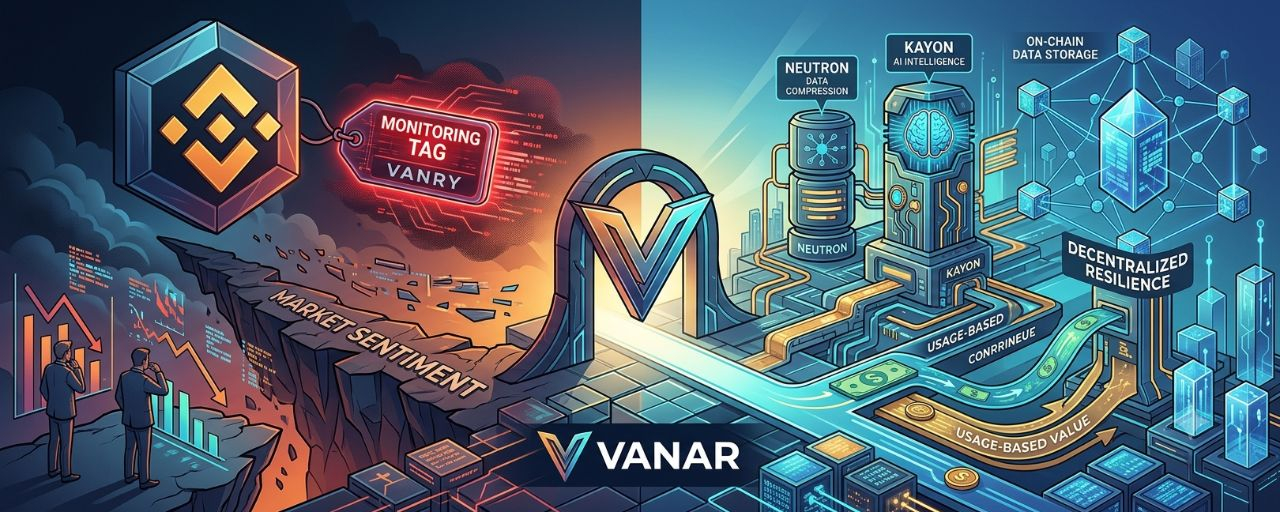
One of the most important recent shifts is how @Vanarchain is tightening the link between AI functionality and real on-chain activity. The AI stack Neutron for semantic data and Kayon for reasoning isn’t just live anymore. It’s becoming part of how the network is actually used.
Advanced features are now increasingly gated behind VANRY-denominated usage and subscriptions. That matters more than it sounds. Instead of depending only on gas fees or speculative demand, Vanar is tying token demand directly to AI queries, reasoning calls, and higher-level data access. That creates recurring usage pressure, something most Layer 1s never quite manage to pull off.
Another development that’s easy to overlook is how $VANRY handles persistent on-chain memory. With Neutron, large datasets aren’t just referenced by hashes. They’re compressed into AI-readable structures that stay queryable over time.
That gives applications memory.
Actual memory.
Once Kayon sits on top of that, logic stops being static. Applications can reason over prior states instead of treating every transaction like it exists in isolation. Context carries forward. Decisions can adapt.
That’s a real architectural shift.
You can already see where this leads. AI agents that remember previous outcomes. PayFi systems that adjust limits based on historical behavior. Compliance logic that evolves gradually instead of breaking every time rules change. These are things traditional blockchains struggle with, because they were built to execute rules, not understand them.
What makes this moment important is timing. These tools aren’t theoretical anymore. They’re live, and early experiments are already happening on mainnet. The network itself has processed hundreds of millions of transactions and produced millions of blocks, which tells you the chain isn’t idle while this stack is being layered in.
This is the phase where infrastructure quietly decides whether it becomes real or stays experimental.
From a market perspective, #vanar is still early. It’s trading in the low-cent range with modest but consistent daily volume. Liquidity isn’t deep, and volatility is very real. That’s the risk side, and it shouldn’t be ignored. Short-term price action can stay messy longer than people expect while usage is still scaling.
What’s different now is that progress is measurable. Tools are live. Economics are attached. Builders aren’t just reading documentation anymore they’re actively experimenting with how to design applications around reasoning instead of rigid logic.
If you compare Vanar to other chains, the contrast is clear. Ethereum is optimized for settlement. Solana is optimized for throughput. Vanar is optimizing for intelligence and control the layer where software understands context and decides when and why to act.
That’s a harder problem to solve. Adoption won’t be instant. Tooling still needs polish, and developers need time to adjust to a different mental model. But this stage matters. This is the point where a project either stays theoretical or slowly turns into infrastructure.
If you’re building AI agents, adaptive PayFi systems, or applications that need memory and context, this stack is clearly designed with you in mind.
Vanar isn’t competing to process the most transactions.
It’s competing to define how intelligent software behaves on-chain.
Right now, it feels like it’s choosing the long game.
Quietly. Intentionally. And without rushing to sell the story before the system is ready.
Most chains teach builders to hedge against volatility. Vanar Chain is doing the opposite. The real innovation isn’t speed it’s behavioral certainty. When fees are predictable and state finality feels invisible, users stop panic tapping. No retry culture. No “clip it just in case.” No social arbitration of settlement. Just deterministic execution contained at the infrastructure layer. That changes everything for live environments like Virtua and cross title VGN progression. Shipping becomes operational, not defensive. Budgets become forecastable. UX becomes trustless and frictionless. Vanar isn’t removing blockchain complexity. It’s absorbing it so builders can focus on product, not survival. $VANRY @Vanar #vanar
Most chains teach builders to hedge against volatility. Vanar Chain is doing the opposite.

The real innovation isn’t speed it’s behavioral certainty.

When fees are predictable and state finality feels invisible, users stop panic tapping. No retry culture. No “clip it just in case.” No social arbitration of settlement. Just deterministic execution contained at the infrastructure layer.

That changes everything for live environments like Virtua and cross title VGN progression.

Shipping becomes operational, not defensive.
Budgets become forecastable.
UX becomes trustless and frictionless.

Vanar isn’t removing blockchain complexity.
It’s absorbing it so builders can focus on product, not survival.

$VANRY @Vanarchain #vanar
Mr_Green个:
This is no longer a "Cute side chain", it’s becoming a new story in the AI world.
The $VANRY Explosion: Why @Vanar is the King of L1 in 2026! 🚀🔥The future of L1 is here with @Vanar 🌐 As a carbon-neutral blockchain, #Vanar is revolutionizing Entertainment and #RWA by merging speed with sustainability. 🚀 VANRY is the heart of this ecosystem, powering seamless transactions and massive enterprise adoption. With its high scalability and low fees, @Vanar is outshining competitors in the 2026 bull run. Don't miss the VANRY accumulation phase before the next big pump! Join the movement and witness the power of #vanar today!!!!!!!! 💎🔥🚀💹🔝✨ $VANRY {spot}(VANRYUSDT)

The $VANRY Explosion: Why @Vanar is the King of L1 in 2026! 🚀🔥

The future of L1 is here with @Vanarchain 🌐 As a carbon-neutral blockchain, #Vanar is revolutionizing Entertainment and #RWA by merging speed with sustainability. 🚀 VANRY is the heart of this ecosystem, powering seamless transactions and massive enterprise adoption. With its high scalability and low fees, @Vanarchain is outshining competitors in the 2026 bull run. Don't miss the VANRY accumulation phase before the next big pump! Join the movement and witness the power of #vanar today!!!!!!!! 💎🔥🚀💹🔝✨
$VANRY
#vanar $VANRY Exploring the future of real-world blockchain utility with @Vanar 🚀 Vanar Chain is building a powerful ecosystem focused on real adoption, digital ownership, and seamless Web3 experiences. From entertainment to enterprise solutions, the vision behind $VANRY is about scalable infrastructure and user-friendly innovation. I’m excited to see how #Vanar continues to bridge Web2 and Web3 while empowering creators and brands worldwide. 🌍🔥
#vanar $VANRY

Exploring the future of real-world blockchain utility with @Vanarchain 🚀
Vanar Chain is building a powerful ecosystem focused on real adoption, digital ownership, and seamless Web3 experiences. From entertainment to enterprise solutions, the vision behind $VANRY is about scalable infrastructure and user-friendly innovation.
I’m excited to see how #Vanar continues to bridge Web2 and Web3 while empowering creators and brands worldwide. 🌍🔥
Vanar Chain A Human-Friendly Guide to the Next Big Web3 BlockchainIn an age where blockchain technology promises to transform industries, Vanar Chain stands out because it’s not just another crypto project — it’s designed with real people and real use cases in mind. Unlike many chains that focus only on trading tokens or DeFi, Vanar aims to make blockchain technology something people actually use every day in gaming, entertainment, AI, and digital experiences. 🚀 What Is Vanar Chain? Vanar Chain is a Layer-1 blockchain — meaning it’s its own fundamental network, not a layer built on another blockchain. It has been purpose-built to support fast, low-cost transactions and intelligent applications, especially in areas like: Gaming Metaverse experiences Artificial Intelligence-driven apps Brand and enterprise digital tools It was born from the evolution of a previous project (originally called Virtua) and rebranded to Vanar Chain, with its native token now known as VANRY. 🧠 Why Vanar Is Different Most blockchains treat data as something separate — stored off-chain, slow to access, and often expensive to recall. Vanar changes that. It’s built with AI-native capabilities, meaning it can reason with data on the blockchain itself rather than depending on slow external servers. This allows smart contracts and apps to work with rich information right on the chain — giving developers and users new kinds of power and flexibility. Vanar also includes technology like Neutron (AI-powered data compression) and Kayon (an on-chain reasoning engine), which reduce storage costs and make complex interactions easier and cheaper. 💸 The Role of $VANRY The native token of the Vanar ecosystem is $VANRY, and it isn’t just a symbol — it’s the backbone of the network. It’s used for: Gas fees (to pay for transactions) Staking and network security Governance (future decisions about the chain) Paying for AI services and premium features In many cases, using certain products or features on Vanar will burn a portion of $VANRY or redirect it for staking rewards — creating a real, utility-driven demand for the token over time. 🎮 What You Can Do on Vanar Chain Vanar isn’t just about theory — it is already powering real products and experiences: 🌍 Virtua Metaverse A digital world powered by Vanar where users can explore, play, own digital assets, and interact with things like in-world items and games. 🕹 VGN Games Network Tools and infrastructure that let game developers build Web3 native games — with things like tokenized items and immersive player rewards. 🤝 Brand & Enterprise Tools Vanar also provides blockchain solutions for companies, including ways to engage customers through digital collectibles, loyalty tokens, and secure identity systems — all without needing deep crypto expertise. This makes Vanar attractive not just for gamers and developers but also for mainstream businesses looking to innovate with blockchain. ⚙️ Built for Real Users One of the biggest challenges in blockchain adoption is ease of use. Vanar addresses this by: Fast block times and low fees, so users don’t feel punished for interacting with apps. Developer friendly tools, because making apps easier to build means more real applications in the hands of users. AI integration, which makes both development and daily usage more intelligent and intuitive. This user-centric approach helps remove barriers that usually keep everyday people from using blockchain technology. 📈 Beyond Games — Big Future Potential Vanar’s roadmap and mainstream integrations show it isn’t just another niche blockchain: AI products (like myNeutron) are being monetized in real-world models with subscription features that tie back into $VANRY demand. Persistent memory and data logic mean apps can store meaningful content directly on-chain without outside servers. Real events and ecosystem growth are happening, showing traction from both developers and users. All of this suggests Vanar could become a hub not just for gaming, but for enterprise Web3 solutions, data-intensive applications, and smarter decentralized services. In Plain Terms Vanar Chain is not built for blockchain purists — it’s built for everyday use. Its technology tries to solve real problems: Making apps feel fast and cheap Letting developers build without huge learning curves Embedding AI on the blockchain itself Giving businesses a way to enter Web3 without confusion And it does this while using its native $VANRY token as both fuel and economic backbone of the network. @Vanar #vanar

Vanar Chain A Human-Friendly Guide to the Next Big Web3 Blockchain

In an age where blockchain technology promises to transform industries, Vanar Chain stands out because it’s not just another crypto project — it’s designed with real people and real use cases in mind. Unlike many chains that focus only on trading tokens or DeFi, Vanar aims to make blockchain technology something people actually use every day in gaming, entertainment, AI, and digital experiences.

🚀 What Is Vanar Chain?

Vanar Chain is a Layer-1 blockchain — meaning it’s its own fundamental network, not a layer built on another blockchain. It has been purpose-built to support fast, low-cost transactions and intelligent applications, especially in areas like:

Gaming
Metaverse experiences
Artificial Intelligence-driven apps
Brand and enterprise digital tools

It was born from the evolution of a previous project (originally called Virtua) and rebranded to Vanar Chain, with its native token now known as VANRY.

🧠 Why Vanar Is Different

Most blockchains treat data as something separate — stored off-chain, slow to access, and often expensive to recall. Vanar changes that.

It’s built with AI-native capabilities, meaning it can reason with data on the blockchain itself rather than depending on slow external servers. This allows smart contracts and apps to work with rich information right on the chain — giving developers and users new kinds of power and flexibility.

Vanar also includes technology like Neutron (AI-powered data compression) and Kayon (an on-chain reasoning engine), which reduce storage costs and make complex interactions easier and cheaper.

💸 The Role of $VANRY

The native token of the Vanar ecosystem is $VANRY , and it isn’t just a symbol — it’s the backbone of the network. It’s used for:

Gas fees (to pay for transactions)
Staking and network security
Governance (future decisions about the chain)
Paying for AI services and premium features

In many cases, using certain products or features on Vanar will burn a portion of $VANRY or redirect it for staking rewards — creating a real, utility-driven demand for the token over time.

🎮 What You Can Do on Vanar Chain

Vanar isn’t just about theory — it is already powering real products and experiences:

🌍 Virtua Metaverse

A digital world powered by Vanar where users can explore, play, own digital assets, and interact with things like in-world items and games.

🕹 VGN Games Network

Tools and infrastructure that let game developers build Web3 native games — with things like tokenized items and immersive player rewards.

🤝 Brand & Enterprise Tools

Vanar also provides blockchain solutions for companies, including ways to engage customers through digital collectibles, loyalty tokens, and secure identity systems — all without needing deep crypto expertise.

This makes Vanar attractive not just for gamers and developers but also for mainstream businesses looking to innovate with blockchain.

⚙️ Built for Real Users

One of the biggest challenges in blockchain adoption is ease of use. Vanar addresses this by:

Fast block times and low fees, so users don’t feel punished for interacting with apps.
Developer friendly tools, because making apps easier to build means more real applications in the hands of users.
AI integration, which makes both development and daily usage more intelligent and intuitive.

This user-centric approach helps remove barriers that usually keep everyday people from using blockchain technology.

📈 Beyond Games — Big Future Potential

Vanar’s roadmap and mainstream integrations show it isn’t just another niche blockchain:

AI products (like myNeutron) are being monetized in real-world models with subscription features that tie back into $VANRY demand.
Persistent memory and data logic mean apps can store meaningful content directly on-chain without outside servers.
Real events and ecosystem growth are happening, showing traction from both developers and users.

All of this suggests Vanar could become a hub not just for gaming, but for enterprise Web3 solutions, data-intensive applications, and smarter decentralized services.

In Plain Terms

Vanar Chain is not built for blockchain purists — it’s built for everyday use. Its technology tries to solve real problems:

Making apps feel fast and cheap
Letting developers build without huge learning curves
Embedding AI on the blockchain itself
Giving businesses a way to enter Web3 without confusion

And it does this while using its native $VANRY token as both fuel and economic backbone of the network.

@Vanarchain #vanar
🏗️ The Foundation of Vanar (VANRY)Vanar isn't just another generic blockchain; it’s a Layer 1 ecosystem specifically engineered for the big leagues: Entertainment, Gaming, and AI. Here are a few pillars that make it stand out for long-term holders: Mainnet Transition: Moving from a token (TVK) to its own dedicated L1 blockchain (VANRY) was a massive technical leap that opened the door for massive scalability. ⛓️ Enterprise Adoption: Unlike many "ghost chains," Vanar is focused on bringing massive Web2 brands into Web3. Think about the infrastructure needed for a global film studio or a major gaming house to launch NFTs or micro-transactions. 🎬 Eco-Friendly Efficiency: In a world where ESG (Environmental, Social, and Governance) matters to big corporations, Vanar positions itself as a green, high-speed solution. 🌿 To make this post sound like it's coming from a seasoned pro, we should focus on one specific angle first. Which of these sounds most "bullish" to you for a long-term play? The "Big Tech" Angle: Focusing on their high-profile partnerships (like Google Cloud and NVIDIA) and how they bridge the gap between Silicon Valley and Crypto. 🤖 The "Underestimated L1" Angle: Focusing on the tech stack and the transition from Virtua to Vanar, arguing that the market hasn't fully priced in the utility of a dedicated entertainment chain yet. 📈 The "Gaming & Metaverse" Angle: Focusing on the explosion of digital ownership and why Vanar is the best "home" for the next generation of AAA Web3 games. 🎮 Which angle would you like to lead with? @Vanar #vanar $VANRY {future}(VANRYUSDT)

🏗️ The Foundation of Vanar (VANRY)

Vanar isn't just another generic blockchain; it’s a Layer 1 ecosystem specifically engineered for the big leagues: Entertainment, Gaming, and AI.
Here are a few pillars that make it stand out for long-term holders:
Mainnet Transition: Moving from a token (TVK) to its own dedicated L1 blockchain (VANRY) was a massive technical leap that opened the door for massive scalability. ⛓️
Enterprise Adoption: Unlike many "ghost chains," Vanar is focused on bringing massive Web2 brands into Web3. Think about the infrastructure needed for a global film studio or a major gaming house to launch NFTs or micro-transactions. 🎬
Eco-Friendly Efficiency: In a world where ESG (Environmental, Social, and Governance) matters to big corporations, Vanar positions itself as a green, high-speed solution. 🌿
To make this post sound like it's coming from a seasoned pro, we should focus on one specific angle first. Which of these sounds most "bullish" to you for a long-term play?
The "Big Tech" Angle: Focusing on their high-profile partnerships (like Google Cloud and NVIDIA) and how they bridge the gap between Silicon Valley and Crypto. 🤖
The "Underestimated L1" Angle: Focusing on the tech stack and the transition from Virtua to Vanar, arguing that the market hasn't fully priced in the utility of a dedicated entertainment chain yet. 📈
The "Gaming & Metaverse" Angle: Focusing on the explosion of digital ownership and why Vanar is the best "home" for the next generation of AAA Web3 games. 🎮
Which angle would you like to lead with?
@Vanarchain #vanar $VANRY
Vanar Chain (VANRY)A Deep Research Article on the Blockchain Designed for Real-World AdoptionVanar is one of those projects that makes a lot more sense the deeper you dig. On the surface, it’s “just another Layer 1,” but when you zoom out and look at the team’s background, the product stack, and the direction they’re pushing toward, it becomes clear that Vanar isn’t trying to win the same game most L1s are playing. Vanar Chain is a purpose-built Layer 1 blockchain designed specifically for real-world adoption. Not DeFi yield farming. Not meme coin mania. Not endless technical one-upmanship. The stated goal is simple but ambitious: build infrastructure that can onboard the next 3 billion users into Web3. The team didn’t start from a whitepaper-first crypto ideology. They came from gaming, entertainment, immersive tech, and brand partnerships — industries where user experience matters more than decentralization theory debates. The project evolved from Virtua, which was originally focused on NFTs, gaming assets, and metaverse experiences. In 2023, the team transitioned from operating on external chains to launching their own Layer 1, rebranding the token from TVK to VANRY through a 1:1 swap. That pivot wasn’t cosmetic. It was a structural shift: instead of being an application dependent on other chains, Vanar became the base infrastructure layer powering its ecosystem. Technically, Vanar focuses on what mainstream-facing applications actually need: extremely low transaction fees, near-instant finality, scalability for high user throughput, and sustainability. According to the project documentation, transaction costs are designed to be fractions of a cent — low enough to make microtransactions viable in gaming and consumer apps. That’s critical. If you want in-game purchases, digital collectibles, or loyalty systems to function seamlessly, users cannot be paying dollars in gas fees or waiting minutes for confirmation. Speed is another priority. Gaming and metaverse environments require near real-time feedback loops. Slow settlement destroys immersion. Vanar’s architecture is built to deliver rapid confirmation times while maintaining network integrity. From an engineering perspective, that’s not revolutionary in isolation — several modern L1s promise similar metrics — but Vanar’s difference lies in its product integration. Unlike many chains that launch and then hope developers build on top of them, Vanar comes with a vertically integrated ecosystem already in motion. The Virtua Metaverse acts as a flagship immersive environment where digital ownership and interaction are native. The Vanar Games Network (VGN) provides infrastructure for blockchain-enabled games, including asset minting, tokenized economies, and potentially play-to-earn or ownership-driven mechanics. These aren’t hypothetical roadmap items — they stem from a team that has already shipped entertainment products before entering the L1 race. AI is another layer of the thesis. The project positions itself as AI-native, integrating AI tools and data infrastructure into the chain’s broader ecosystem. The idea isn’t just to run smart contracts but to enable AI-enhanced applications, automation, and data compression within the network stack. If executed well, this could differentiate Vanar from chains that treat AI as a marketing add-on rather than protocol-level strategy. Then there’s the enterprise and brand angle. This is where Vanar feels meaningfully different. Traditional brands don’t care about decentralization maximalism. They care about loyalty systems, user engagement, digital collectibles, and revenue channels. Vanar offers toolkits aimed at helping brands launch tokenized campaigns, digital goods, and loyalty ecosystems without requiring deep blockchain expertise. That focus on UX abstraction and business utility is arguably one of the more practical approaches in Web3 right now. The VANRY token sits at the center of this ecosystem. It functions as the native gas token of the chain and plays a role in staking and network participation. The total supply is 2.4 billion tokens, with a large portion already in circulation. Listings across multiple exchanges provide liquidity, but like most mid-cap crypto assets, price action has been volatile. It reached highs in early 2024 and has since followed broader market cycles. From an investor’s standpoint, this volatility is normal — but it reinforces that Vanar is still in its growth and proving phase. One aspect that stands out is the attempt to connect real ecosystem revenue back to the token. Community discussions and documentation reference buybacks and utility loops tied to actual product usage. That matters. Many tokens rely purely on speculative demand. If Vanar can create sustainable revenue from gaming, AI services, and brand integrations that feeds back into token economics, it moves closer to a functioning digital economy rather than a narrative-driven asset. Of course, the risks are real. The Layer 1 space is saturated. Competing chains like Avalanche, Polygon, Immutable, and others also target gaming and enterprise adoption. Execution will determine everything. Shipping compelling products is hard. Attracting millions of users is harder. Maintaining developer interest while competing for attention in a noisy market requires consistent innovation and marketing muscle. There’s also the adoption gap problem. Crypto projects often underestimate how difficult it is to convert Web2 users into Web3 participants. Wallet friction, onboarding complexity, regulatory uncertainty, and general public skepticism remain barriers. Vanar’s emphasis on UX abstraction and brand partnerships is designed to mitigate that, but it remains a massive undertaking. Still, what makes Vanar interesting isn’t just the tech specs. It’s the strategic alignment. Instead of chasing short-term hype cycles, the team appears to be building a full-stack ecosystem: infrastructure, applications, gaming networks, AI services, and brand tools. That vertical integration increases control but also increases responsibility. If the ecosystem grows, Vanar benefits directly. If it stalls, there’s no one else to blame. From a long-term perspective, Vanar represents a bet that the future of blockchain adoption won’t be driven by DeFi degens or speculative traders — it will be driven by entertainment, gaming, AI-enhanced applications, and enterprise-grade digital ownership systems. If that thesis proves correct, chains optimized for real-world UX rather than pure crypto-native experimentation could have a meaningful edge. Whether Vanar becomes a dominant infrastructure layer or remains a niche ecosystem depends on execution over the next few years. The fundamentals suggest serious intent: experienced founders, a clear product strategy, live ecosystem components, and a token model that at least attempts to tie usage to value. For anyone watching the evolution of Web3 beyond speculation, Vanar is worth paying attention to. It’s not promising overnight revolution. It’s trying to build rails that everyday users might not even realize are blockchain-powered. And if the next wave of adoption comes quietly through games, brands, and AI-driven platforms rather than trading dashboards, Vanar may be positioned closer to that future than many realize. @Vanar #vanar $VANRY {spot}(VANRYUSDT)

Vanar Chain (VANRY)A Deep Research Article on the Blockchain Designed for Real-World Adoption

Vanar is one of those projects that makes a lot more sense the deeper you dig. On the surface, it’s “just another Layer 1,” but when you zoom out and look at the team’s background, the product stack, and the direction they’re pushing toward, it becomes clear that Vanar isn’t trying to win the same game most L1s are playing.

Vanar Chain is a purpose-built Layer 1 blockchain designed specifically for real-world adoption. Not DeFi yield farming. Not meme coin mania. Not endless technical one-upmanship. The stated goal is simple but ambitious: build infrastructure that can onboard the next 3 billion users into Web3. The team didn’t start from a whitepaper-first crypto ideology. They came from gaming, entertainment, immersive tech, and brand partnerships — industries where user experience matters more than decentralization theory debates.

The project evolved from Virtua, which was originally focused on NFTs, gaming assets, and metaverse experiences. In 2023, the team transitioned from operating on external chains to launching their own Layer 1, rebranding the token from TVK to VANRY through a 1:1 swap. That pivot wasn’t cosmetic. It was a structural shift: instead of being an application dependent on other chains, Vanar became the base infrastructure layer powering its ecosystem.

Technically, Vanar focuses on what mainstream-facing applications actually need: extremely low transaction fees, near-instant finality, scalability for high user throughput, and sustainability. According to the project documentation, transaction costs are designed to be fractions of a cent — low enough to make microtransactions viable in gaming and consumer apps. That’s critical. If you want in-game purchases, digital collectibles, or loyalty systems to function seamlessly, users cannot be paying dollars in gas fees or waiting minutes for confirmation.

Speed is another priority. Gaming and metaverse environments require near real-time feedback loops. Slow settlement destroys immersion. Vanar’s architecture is built to deliver rapid confirmation times while maintaining network integrity. From an engineering perspective, that’s not revolutionary in isolation — several modern L1s promise similar metrics — but Vanar’s difference lies in its product integration.

Unlike many chains that launch and then hope developers build on top of them, Vanar comes with a vertically integrated ecosystem already in motion. The Virtua Metaverse acts as a flagship immersive environment where digital ownership and interaction are native. The Vanar Games Network (VGN) provides infrastructure for blockchain-enabled games, including asset minting, tokenized economies, and potentially play-to-earn or ownership-driven mechanics. These aren’t hypothetical roadmap items — they stem from a team that has already shipped entertainment products before entering the L1 race.

AI is another layer of the thesis. The project positions itself as AI-native, integrating AI tools and data infrastructure into the chain’s broader ecosystem. The idea isn’t just to run smart contracts but to enable AI-enhanced applications, automation, and data compression within the network stack. If executed well, this could differentiate Vanar from chains that treat AI as a marketing add-on rather than protocol-level strategy.

Then there’s the enterprise and brand angle. This is where Vanar feels meaningfully different. Traditional brands don’t care about decentralization maximalism. They care about loyalty systems, user engagement, digital collectibles, and revenue channels. Vanar offers toolkits aimed at helping brands launch tokenized campaigns, digital goods, and loyalty ecosystems without requiring deep blockchain expertise. That focus on UX abstraction and business utility is arguably one of the more practical approaches in Web3 right now.

The VANRY token sits at the center of this ecosystem. It functions as the native gas token of the chain and plays a role in staking and network participation. The total supply is 2.4 billion tokens, with a large portion already in circulation. Listings across multiple exchanges provide liquidity, but like most mid-cap crypto assets, price action has been volatile. It reached highs in early 2024 and has since followed broader market cycles. From an investor’s standpoint, this volatility is normal — but it reinforces that Vanar is still in its growth and proving phase.

One aspect that stands out is the attempt to connect real ecosystem revenue back to the token. Community discussions and documentation reference buybacks and utility loops tied to actual product usage. That matters. Many tokens rely purely on speculative demand. If Vanar can create sustainable revenue from gaming, AI services, and brand integrations that feeds back into token economics, it moves closer to a functioning digital economy rather than a narrative-driven asset.

Of course, the risks are real. The Layer 1 space is saturated. Competing chains like Avalanche, Polygon, Immutable, and others also target gaming and enterprise adoption. Execution will determine everything. Shipping compelling products is hard. Attracting millions of users is harder. Maintaining developer interest while competing for attention in a noisy market requires consistent innovation and marketing muscle.

There’s also the adoption gap problem. Crypto projects often underestimate how difficult it is to convert Web2 users into Web3 participants. Wallet friction, onboarding complexity, regulatory uncertainty, and general public skepticism remain barriers. Vanar’s emphasis on UX abstraction and brand partnerships is designed to mitigate that, but it remains a massive undertaking.

Still, what makes Vanar interesting isn’t just the tech specs. It’s the strategic alignment. Instead of chasing short-term hype cycles, the team appears to be building a full-stack ecosystem: infrastructure, applications, gaming networks, AI services, and brand tools. That vertical integration increases control but also increases responsibility. If the ecosystem grows, Vanar benefits directly. If it stalls, there’s no one else to blame.

From a long-term perspective, Vanar represents a bet that the future of blockchain adoption won’t be driven by DeFi degens or speculative traders — it will be driven by entertainment, gaming, AI-enhanced applications, and enterprise-grade digital ownership systems. If that thesis proves correct, chains optimized for real-world UX rather than pure crypto-native experimentation could have a meaningful edge.

Whether Vanar becomes a dominant infrastructure layer or remains a niche ecosystem depends on execution over the next few years. The fundamentals suggest serious intent: experienced founders, a clear product strategy, live ecosystem components, and a token model that at least attempts to tie usage to value.

For anyone watching the evolution of Web3 beyond speculation, Vanar is worth paying attention to. It’s not promising overnight revolution. It’s trying to build rails that everyday users might not even realize are blockchain-powered. And if the next wave of adoption comes quietly through games, brands, and AI-driven platforms rather than trading dashboards, Vanar may be positioned closer to that future than many realize.

@Vanarchain #vanar $VANRY
Vanar Chain is quietly positioning itself as one of the more practical and utility-driven players in Web3. While many blockchains focus on a single niche, Vanar is building an ecosystem designed to support multiple high-growth sectors — especially gaming, AI-powered applications, and immersive digital experiences. What makes Vanar stand out is its emphasis on infrastructure that is ready for real-world use. Fast transactions, scalable architecture, and developer-friendly tools give builders the flexibility to create applications that feel smooth and responsive, even under heavy demand. This is critical for gaming and AI projects, where performance and reliability directly impact user experience. The steady progress behind the scenes suggests a long-term vision rather than short-term hype. If development continues at this pace, $VANRY could benefit from increasing network activity as more builders choose Vanar for their projects. With strong fundamentals and expanding use cases, Vanar Chain may be one of those platforms that surprises the broader market through consistent delivery and real adoption. #vanar
Vanar Chain is quietly positioning itself as one of the more practical and utility-driven players in Web3. While many blockchains focus on a single niche, Vanar is building an ecosystem designed to support multiple high-growth sectors — especially gaming, AI-powered applications, and immersive digital experiences.

What makes Vanar stand out is its emphasis on infrastructure that is ready for real-world use. Fast transactions, scalable architecture, and developer-friendly tools give builders the flexibility to create applications that feel smooth and responsive, even under heavy demand. This is critical for gaming and AI projects, where performance and reliability directly impact user experience.

The steady progress behind the scenes suggests a long-term vision rather than short-term hype. If development continues at this pace, $VANRY could benefit from increasing network activity as more builders choose Vanar for their projects. With strong fundamentals and expanding use cases, Vanar Chain may be one of those platforms that surprises the broader market through consistent delivery and real adoption.
#vanar
Vanar and the Subtle Transition from Technical Possibility to Emotional Reliability@Vanar When I first encountered Vanar, the impression did not come from a single feature or a bold claim, but from a certain quiet consistency in how it approached its role. It did not appear to be trying to convince anyone that it was revolutionary. Instead, it felt like a system that had accepted a more difficult responsibility not to impress observers, but to remain dependable for participants. This distinction may seem small at first, but over time it becomes one of the defining differences between systems that briefly attract attention and those that gradually integrate into everyday behavior. The broader environment Vanar exists within has spent years refining what is technically possible. Faster processing, lower costs, and increasingly complex designs became the primary areas of focus. These advancements were meaningful in isolation, but they did not automatically translate into sustained engagement from ordinary users. Many people entered these environments once, explored briefly, and then quietly left. The systems were capable, but capability alone did not create attachment. What was missing was not performance, but reassurance. Vanar appears to have recognized that adoption is shaped less by technical ceilings and more by emotional thresholds. People do not decide to stay because a system is theoretically superior. They stay because it feels stable. Stability is not just the absence of failure. It is the presence of predictability. It allows users to act without hesitation, to return without anxiety, and to gradually develop familiarity without feeling that every interaction carries risk. This emotional dimension is often overlooked because it cannot be easily measured, yet it determines whether a system becomes part of someone’s routine or remains an occasional experiment. One of the more revealing aspects of Vanar’s direction is its apparent focus on continuity rather than initiation. Many systems concentrate heavily on attracting first-time users, treating onboarding as the primary milestone. But attracting someone once is far easier than ensuring they return. The real challenge begins after the initial interaction, when curiosity fades and routine either forms or dissolves. Vanar’s approach suggests an understanding that retention is not created through novelty, but through consistency. The system must behave in a way that reinforces confidence over time. This leads to a quieter but more demanding form of design discipline. Instead of emphasizing what the system can do, the emphasis shifts toward how it behaves under ordinary conditions. It must respond predictably. It must recover gracefully from disruptions. It must avoid placing unnecessary cognitive burden on the user. These qualities rarely attract immediate praise because they are most noticeable only when absent. Yet they form the foundation upon which long-term participation depends. There is also an important psychological element in how users relate to systems that involve ownership or value. When people feel that a mistake could result in permanent loss, their willingness to explore diminishes. Exploration requires a sense of safety. Vanar seems to be oriented toward reducing this sense of fragility, not by removing responsibility entirely, but by creating an environment where users are not immediately confronted with its full weight. This allows trust to develop gradually. Trust, once established, becomes self-reinforcing. Users who feel secure are more likely to engage more deeply. This gradual progression mirrors how people adopt any new technology. They begin cautiously. They test the boundaries. They observe whether the system behaves consistently. Over time, their confidence grows not because they understand every detail, but because the system has demonstrated reliability. Vanar’s direction appears aligned with this natural progression. It does not assume that users will immediately understand or care about the underlying mechanics. It assumes that understanding will emerge organically, as a byproduct of repeated positive experiences. At the same time, this approach introduces its own challenges. Systems designed around invisibility must maintain a higher standard of operational integrity. When the system recedes into the background, users begin to treat it as a given. They no longer monitor it closely. This increases the importance of resilience. Any disruption can feel more significant because it interrupts an established sense of normalcy. Vanar’s long-term relevance will depend heavily on its ability to maintain this invisible reliability. Another aspect worth considering is the pace at which meaningful adoption occurs. There is often an expectation that successful systems will demonstrate rapid expansion. But systems built around behavioral integration rarely grow in dramatic bursts. Their growth is cumulative. Each returning user reinforces the system’s stability. Each uninterrupted interaction strengthens trust. This type of growth is less visible in the short term, but it tends to be more durable because it is rooted in habit rather than novelty. Vanar’s positioning also reflects a shift away from treating infrastructure as a destination. Instead, it treats infrastructure as a supporting layer that enables experiences to exist without drawing attention to itself. This perspective aligns more closely with how successful consumer technologies have historically evolved. People do not form relationships with infrastructure. They form relationships with experiences. Infrastructure succeeds when it allows those experiences to unfold naturally. There is a certain humility in this approach. It does not rely on constant visibility or dramatic differentiation. Instead, it focuses on fulfilling its role consistently, allowing its presence to be felt through reliability rather than promotion. This may limit its ability to capture immediate attention, but it strengthens its potential to remain relevant over longer periods. Having observed multiple phases of technological evolution, there is often a recognizable pattern when systems begin to prioritize emotional reliability over technical demonstration. They become less concerned with proving their superiority and more concerned with ensuring their dependability. This shift does not guarantee success, but it reflects a deeper alignment with how people actually behave. People gravitate toward systems that reduce uncertainty. They remain with systems that quietly respect their expectations. Vanar, in its current form, appears to be navigating this transition carefully. It is not attempting to redefine behavior overnight. Instead, it is positioning itself as a stable environment where behavior can evolve naturally. Its relevance will ultimately be determined not by how loudly it announces its presence, but by how quietly it supports repeated use. Systems that achieve this balance rarely dominate attention in their early stages, but they often become difficult to replace once they have integrated into everyday routines. What stands out most is not a promise of transformation, but a commitment to continuity. Vanar seems less interested in accelerating change and more interested in stabilizing it. This restraint suggests an understanding that adoption is not driven by possibility alone, but by comfort. People do not remain where they feel uncertain. They remain where they feel at ease. @Vanar #vanar $VANRY {future}(VANRYUSDT)

Vanar and the Subtle Transition from Technical Possibility to Emotional Reliability

@Vanarchain When I first encountered Vanar, the impression did not come from a single feature or a bold claim, but from a certain quiet consistency in how it approached its role. It did not appear to be trying to convince anyone that it was revolutionary. Instead, it felt like a system that had accepted a more difficult responsibility not to impress observers, but to remain dependable for participants. This distinction may seem small at first, but over time it becomes one of the defining differences between systems that briefly attract attention and those that gradually integrate into everyday behavior.

The broader environment Vanar exists within has spent years refining what is technically possible. Faster processing, lower costs, and increasingly complex designs became the primary areas of focus. These advancements were meaningful in isolation, but they did not automatically translate into sustained engagement from ordinary users. Many people entered these environments once, explored briefly, and then quietly left. The systems were capable, but capability alone did not create attachment. What was missing was not performance, but reassurance.

Vanar appears to have recognized that adoption is shaped less by technical ceilings and more by emotional thresholds. People do not decide to stay because a system is theoretically superior. They stay because it feels stable. Stability is not just the absence of failure. It is the presence of predictability. It allows users to act without hesitation, to return without anxiety, and to gradually develop familiarity without feeling that every interaction carries risk. This emotional dimension is often overlooked because it cannot be easily measured, yet it determines whether a system becomes part of someone’s routine or remains an occasional experiment.

One of the more revealing aspects of Vanar’s direction is its apparent focus on continuity rather than initiation. Many systems concentrate heavily on attracting first-time users, treating onboarding as the primary milestone. But attracting someone once is far easier than ensuring they return. The real challenge begins after the initial interaction, when curiosity fades and routine either forms or dissolves. Vanar’s approach suggests an understanding that retention is not created through novelty, but through consistency. The system must behave in a way that reinforces confidence over time.

This leads to a quieter but more demanding form of design discipline. Instead of emphasizing what the system can do, the emphasis shifts toward how it behaves under ordinary conditions. It must respond predictably. It must recover gracefully from disruptions. It must avoid placing unnecessary cognitive burden on the user. These qualities rarely attract immediate praise because they are most noticeable only when absent. Yet they form the foundation upon which long-term participation depends.

There is also an important psychological element in how users relate to systems that involve ownership or value. When people feel that a mistake could result in permanent loss, their willingness to explore diminishes. Exploration requires a sense of safety. Vanar seems to be oriented toward reducing this sense of fragility, not by removing responsibility entirely, but by creating an environment where users are not immediately confronted with its full weight. This allows trust to develop gradually. Trust, once established, becomes self-reinforcing. Users who feel secure are more likely to engage more deeply.

This gradual progression mirrors how people adopt any new technology. They begin cautiously. They test the boundaries. They observe whether the system behaves consistently. Over time, their confidence grows not because they understand every detail, but because the system has demonstrated reliability. Vanar’s direction appears aligned with this natural progression. It does not assume that users will immediately understand or care about the underlying mechanics. It assumes that understanding will emerge organically, as a byproduct of repeated positive experiences.

At the same time, this approach introduces its own challenges. Systems designed around invisibility must maintain a higher standard of operational integrity. When the system recedes into the background, users begin to treat it as a given. They no longer monitor it closely. This increases the importance of resilience. Any disruption can feel more significant because it interrupts an established sense of normalcy. Vanar’s long-term relevance will depend heavily on its ability to maintain this invisible reliability.

Another aspect worth considering is the pace at which meaningful adoption occurs. There is often an expectation that successful systems will demonstrate rapid expansion. But systems built around behavioral integration rarely grow in dramatic bursts. Their growth is cumulative. Each returning user reinforces the system’s stability. Each uninterrupted interaction strengthens trust. This type of growth is less visible in the short term, but it tends to be more durable because it is rooted in habit rather than novelty.

Vanar’s positioning also reflects a shift away from treating infrastructure as a destination. Instead, it treats infrastructure as a supporting layer that enables experiences to exist without drawing attention to itself. This perspective aligns more closely with how successful consumer technologies have historically evolved. People do not form relationships with infrastructure. They form relationships with experiences. Infrastructure succeeds when it allows those experiences to unfold naturally.

There is a certain humility in this approach. It does not rely on constant visibility or dramatic differentiation. Instead, it focuses on fulfilling its role consistently, allowing its presence to be felt through reliability rather than promotion. This may limit its ability to capture immediate attention, but it strengthens its potential to remain relevant over longer periods.

Having observed multiple phases of technological evolution, there is often a recognizable pattern when systems begin to prioritize emotional reliability over technical demonstration. They become less concerned with proving their superiority and more concerned with ensuring their dependability. This shift does not guarantee success, but it reflects a deeper alignment with how people actually behave. People gravitate toward systems that reduce uncertainty. They remain with systems that quietly respect their expectations.

Vanar, in its current form, appears to be navigating this transition carefully. It is not attempting to redefine behavior overnight. Instead, it is positioning itself as a stable environment where behavior can evolve naturally. Its relevance will ultimately be determined not by how loudly it announces its presence, but by how quietly it supports repeated use. Systems that achieve this balance rarely dominate attention in their early stages, but they often become difficult to replace once they have integrated into everyday routines.

What stands out most is not a promise of transformation, but a commitment to continuity. Vanar seems less interested in accelerating change and more interested in stabilizing it. This restraint suggests an understanding that adoption is not driven by possibility alone, but by comfort. People do not remain where they feel uncertain. They remain where they feel at ease.

@Vanarchain #vanar $VANRY
VANAR's Cross-Chain Vision: Connecting Isolated Blockchain IslandsI'll admit something: for years, I thought cross-chain interoperability was one of those problems the crypto world obsessed over while regular users couldn't care less. I was wrong. Here's what changed my mind. A friend wanted to use an NFT they owned on Ethereum in a game built on Polygon. Sounds simple, right? It wasn't. The hoops they had to jump through—bridging, wrapping, praying nothing got lost in translation—it was absurd. That's when it clicked: we've built dozens of brilliant blockchains, each one an isolated island with its own rules, currencies, and ecosystems. And we're asking users to become expert navigators just to move between them. VANAR saw this mess coming. While other projects raced to build the fastest chain or the cheapest transactions, VANAR asked a different question: what if blockchains could actually talk to each other—seamlessly, securely, without users even noticing? The Island Problem Think of today's blockchain landscape like the early internet—before HTTP standardized everything. You had CompuServe, AOL, Prodigy, all running their own systems. Imagine if sending an email from AOL to CompuServe required a special translator service, fees at every hop, and a real chance your message would just vanish. Ridiculous, right? That's where we are with blockchains in 2026. Each chain optimizes for something different. Ethereum prioritizes security and decentralization. Solana chases speed. BSC wants low costs. They're all valid choices—but they shouldn't be mutually exclusive choices. Your assets shouldn't be imprisoned by the chain they happened to be minted on. VANAR's Architecture: Built Different What struck me about VANAR's approach is how they're engineering interoperability into their foundation rather than duct-taping it on later. Their architecture treats cross-chain functionality like plumbing in a house—essential infrastructure you never think about because it just works. The technical implementation involves validator networks that can verify transactions across multiple chains simultaneously. (Yes, that's complex—but that complexity is their job to handle, not yours.) From a user perspective? You interact with assets from different chains as naturally as you'd use apps from different developers on your phone. Their bridge technology focuses on three things that actually matter: security (no more bridge hacks draining millions), speed (cross-chain transactions that don't take hours), and cost-efficiency (because paying $50 in fees to move $100 is broken). VANRY token holders participate in validation, creating economic incentives for the network to stay honest and responsive. Why This Actually Matters Look, I'm skeptical of grand visions. The crypto space loves promising everything while delivering little. But interoperability isn't a luxury feature—it's existential. Without it, we're asking developers to choose one ecosystem and ignore all others. We're asking users to manage assets across incompatible platforms. We're fragmenting liquidity, communities, and innovation. VANAR's betting that the future isn't one blockchain to rule them all. It's all blockchains working together. Gaming assets that move between metaverses. DeFi protocols that access liquidity anywhere. NFTs that have utility everywhere. Not someday—now. The VANRY token becomes the connective tissue in this vision—paying for cross-chain transactions, incentivizing validators who maintain bridges, and giving holders governance over which new chains get integrated. The Real Test Here's what I'm watching: can VANAR make interoperability so seamless that it becomes invisible? Can they build bridges secure enough that users trust them? Can they scale this vision beyond just a few partner chains? Because if they can—if blockchain islands actually become a connected archipelago—then we might finally have the infrastructure that makes decentralized technology accessible to people who don't care about the technology itself. And that's when adoption really begins. $VANRY #vanar @Vanar

VANAR's Cross-Chain Vision: Connecting Isolated Blockchain Islands

I'll admit something: for years, I thought cross-chain interoperability was one of those problems the crypto world obsessed over while regular users couldn't care less.

I was wrong.

Here's what changed my mind. A friend wanted to use an NFT they owned on Ethereum in a game built on Polygon. Sounds simple, right? It wasn't. The hoops they had to jump through—bridging, wrapping, praying nothing got lost in translation—it was absurd. That's when it clicked: we've built dozens of brilliant blockchains, each one an isolated island with its own rules, currencies, and ecosystems. And we're asking users to become expert navigators just to move between them.

VANAR saw this mess coming. While other projects raced to build the fastest chain or the cheapest transactions, VANAR asked a different question: what if blockchains could actually talk to each other—seamlessly, securely, without users even noticing?

The Island Problem

Think of today's blockchain landscape like the early internet—before HTTP standardized everything. You had CompuServe, AOL, Prodigy, all running their own systems. Imagine if sending an email from AOL to CompuServe required a special translator service, fees at every hop, and a real chance your message would just vanish. Ridiculous, right? That's where we are with blockchains in 2026.

Each chain optimizes for something different. Ethereum prioritizes security and decentralization. Solana chases speed. BSC wants low costs. They're all valid choices—but they shouldn't be mutually exclusive choices. Your assets shouldn't be imprisoned by the chain they happened to be minted on.

VANAR's Architecture: Built Different

What struck me about VANAR's approach is how they're engineering interoperability into their foundation rather than duct-taping it on later. Their architecture treats cross-chain functionality like plumbing in a house—essential infrastructure you never think about because it just works.

The technical implementation involves validator networks that can verify transactions across multiple chains simultaneously. (Yes, that's complex—but that complexity is their job to handle, not yours.) From a user perspective? You interact with assets from different chains as naturally as you'd use apps from different developers on your phone.

Their bridge technology focuses on three things that actually matter: security (no more bridge hacks draining millions), speed (cross-chain transactions that don't take hours), and cost-efficiency (because paying $50 in fees to move $100 is broken). VANRY token holders participate in validation, creating economic incentives for the network to stay honest and responsive.

Why This Actually Matters

Look, I'm skeptical of grand visions. The crypto space loves promising everything while delivering little. But interoperability isn't a luxury feature—it's existential. Without it, we're asking developers to choose one ecosystem and ignore all others. We're asking users to manage assets across incompatible platforms. We're fragmenting liquidity, communities, and innovation.

VANAR's betting that the future isn't one blockchain to rule them all. It's all blockchains working together. Gaming assets that move between metaverses. DeFi protocols that access liquidity anywhere. NFTs that have utility everywhere. Not someday—now.

The VANRY token becomes the connective tissue in this vision—paying for cross-chain transactions, incentivizing validators who maintain bridges, and giving holders governance over which new chains get integrated.

The Real Test

Here's what I'm watching: can VANAR make interoperability so seamless that it becomes invisible? Can they build bridges secure enough that users trust them? Can they scale this vision beyond just a few partner chains?

Because if they can—if blockchain islands actually become a connected archipelago—then we might finally have the infrastructure that makes decentralized technology accessible to people who don't care about the technology itself.

And that's when adoption really begins.

$VANRY

#vanar
@Vanar
Fomotrack:
VANAR saw this mess coming. While other projects raced to build the fastest chain or the cheapest transactions, VANAR asked a different question: what if blockchains
@Vanar And $VANRY #vanar #VANRY $VANRY The Vanar (VANAR) currency is a digital project aimed at supporting the world of gaming and the metaverse by providing solutions based on blockchain technology. The currency seeks to facilitate the creation of digital assets like NFTs and to offer fast transactions with low fees, making it suitable for developers and users within gaming platforms. The Vanar project also focuses on building an integrated system that connects entertainment with modern technologies, along with increasing community support and partnerships that help expand it in the future. @Vanar #vanar $VANRY
@Vanarchain And $VANRY

#vanar #VANRY

$VANRY
The Vanar (VANAR) currency is a digital project aimed at supporting the world of gaming and the metaverse by providing solutions based on blockchain technology. The currency seeks to facilitate the creation of digital assets like NFTs and to offer fast transactions with low fees, making it suitable for developers and users within gaming platforms. The Vanar project also focuses on building an integrated system that connects entertainment with modern technologies, along with increasing community support and partnerships that help expand it in the future.

@Vanarchain #vanar $VANRY
$VANRY is just getting started. Rebrand complete. Strong accumulation. Higher lows forming. Volume building quietly. This is how 10x charts are born. 👀📈 Vanar isn’t just another L1 — it’s positioning itself at the intersection of AI + on-chain memory + real utility. Market cap still small. Narrative strong. Structure bullish. If momentum continues and we get ecosystem catalysts… $VANRY won’t stay at these levels for long. 10x potential? Absolutely on the table. 🚀 Not financial advice. Manage risk. #vanary #VanarChain @Vanar #vanar
$VANRY is just getting started.

Rebrand complete.

Strong accumulation.

Higher lows forming.

Volume building quietly.

This is how 10x charts are born. 👀📈

Vanar isn’t just another L1 — it’s positioning itself at the intersection of AI + on-chain memory + real utility.

Market cap still small.

Narrative strong.

Structure bullish.

If momentum continues and we get ecosystem catalysts…

$VANRY won’t stay at these levels for long.

10x potential?

Absolutely on the table. 🚀

Not financial advice. Manage risk.

#vanary #VanarChain @Vanarchain #vanar
Connectez-vous pour découvrir d’autres contenus
Découvrez les dernières actus sur les cryptos
⚡️ Prenez part aux dernières discussions sur les cryptos
💬 Interagissez avec vos créateurs préféré(e)s
👍 Profitez du contenu qui vous intéresse
Adresse e-mail/Nº de téléphone