

MR UMER15
5.6k Publicaciones

MR UMER15
Denunciar
Bloquear usuario
AI & Crypto Research
Abrir operación
Trader frecuente
11 meses
377 Siguiendo
8.2K+ Seguidores
3.0K+ Me gusta
Publicaciones
Cartera
Todo
Cotizaciones
Directo
·
--
Alcista
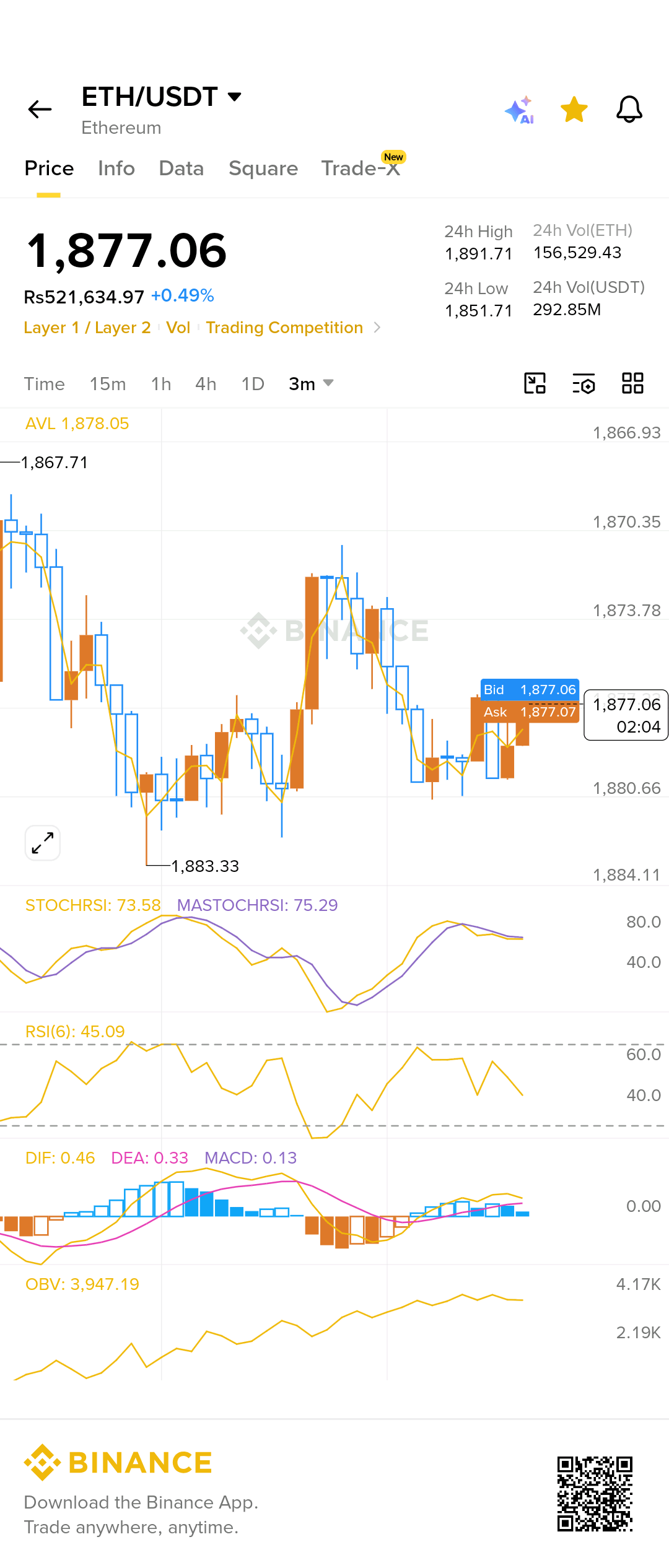
$ETH /USDT – LARGO
El impulso se está estrechando y ETH se acerca a un punto de decisión. Este rango parece acumulación, no agotamiento. Una ruptura por encima de una resistencia cercana podría activar la próxima expansión de liquidez.
Plan de Trading:
• Entrada: 1,874–1,878
• Stop Loss (SL): 1,865
• Take Profit 1 (TP1): 1,890
• Take Profit 2 (TP2): 1,905
• Take Profit 3 (TP3): 1,925
¿Por qué este setup?
La estructura de 1H se está volviendo constructiva, mientras que 4H y 1D siguen respetando un soporte clave, manteniendo la perspectiva del marco mayor en bullish. El RSI se recupera desde territorio neutral, el impulso mejora y el volumen vuelve gradualmente después de la consolidación. ETH cotiza dentro de un rango de compresión bajo la resistencia, un patrón que con frecuencia lleva a un movimiento direccional brusco. Una ruptura sostenida por encima de 1,890 podría acelerar la presión compradora hacia zonas de mayor liquidez. Desde la entrada propuesta, TP1 ofrece aproximadamente un 0,8–1,0% de potencial alcista con una relación riesgo/beneficio favorable.
Debate:
¿Es esto la calma antes de una gran ruptura o el mercado está formando una trampa de liquidez antes del siguiente movimiento?
$ETH
{spot}(ETHUSDT)
#BrentCrudeUp4.6% #BrentCrudeUp4.6% #BrentCrudeUp4.6% #BrentCrudeUp4.6% #BrentCrudeUp4.6%
$ETH /USDT – LARGO
El impulso se está estrechando y ETH se acerca a un punto de decisión. Este rango parece acumulación, no agotamiento. Una ruptura por encima de una resistencia cercana podría activar la próxima expansión de liquidez.
Plan de Trading:
• Entrada: 1,874–1,878
• Stop Loss (SL): 1,865
• Take Profit 1 (TP1): 1,890
• Take Profit 2 (TP2): 1,905
• Take Profit 3 (TP3): 1,925
¿Por qué este setup?
La estructura de 1H se está volviendo constructiva, mientras que 4H y 1D siguen respetando un soporte clave, manteniendo la perspectiva del marco mayor en bullish. El RSI se recupera desde territorio neutral, el impulso mejora y el volumen vuelve gradualmente después de la consolidación. ETH cotiza dentro de un rango de compresión bajo la resistencia, un patrón que con frecuencia lleva a un movimiento direccional brusco. Una ruptura sostenida por encima de 1,890 podría acelerar la presión compradora hacia zonas de mayor liquidez. Desde la entrada propuesta, TP1 ofrece aproximadamente un 0,8–1,0% de potencial alcista con una relación riesgo/beneficio favorable.
Debate:
¿Es esto la calma antes de una gran ruptura o el mercado está formando una trampa de liquidez antes del siguiente movimiento?
$ETH
#BrentCrudeUp4.6% #BrentCrudeUp4.6% #BrentCrudeUp4.6% #BrentCrudeUp4.6% #BrentCrudeUp4.6%
El impulso se está estrechando y ETH se acerca a un punto de decisión. Este rango parece acumulación, no agotamiento. Una ruptura por encima de una resistencia cercana podría activar la próxima expansión de liquidez.
Plan de Trading:
• Entrada: 1,874–1,878
• Stop Loss (SL): 1,865
• Take Profit 1 (TP1): 1,890
• Take Profit 2 (TP2): 1,905
• Take Profit 3 (TP3): 1,925
¿Por qué este setup?
La estructura de 1H se está volviendo constructiva, mientras que 4H y 1D siguen respetando un soporte clave, manteniendo la perspectiva del marco mayor en bullish. El RSI se recupera desde territorio neutral, el impulso mejora y el volumen vuelve gradualmente después de la consolidación. ETH cotiza dentro de un rango de compresión bajo la resistencia, un patrón que con frecuencia lleva a un movimiento direccional brusco. Una ruptura sostenida por encima de 1,890 podría acelerar la presión compradora hacia zonas de mayor liquidez. Desde la entrada propuesta, TP1 ofrece aproximadamente un 0,8–1,0% de potencial alcista con una relación riesgo/beneficio favorable.
Debate:
¿Es esto la calma antes de una gran ruptura o el mercado está formando una trampa de liquidez antes del siguiente movimiento?
$ETH
#BrentCrudeUp4.6% #BrentCrudeUp4.6% #BrentCrudeUp4.6% #BrentCrudeUp4.6% #BrentCrudeUp4.6%
108
·
--
Artículo
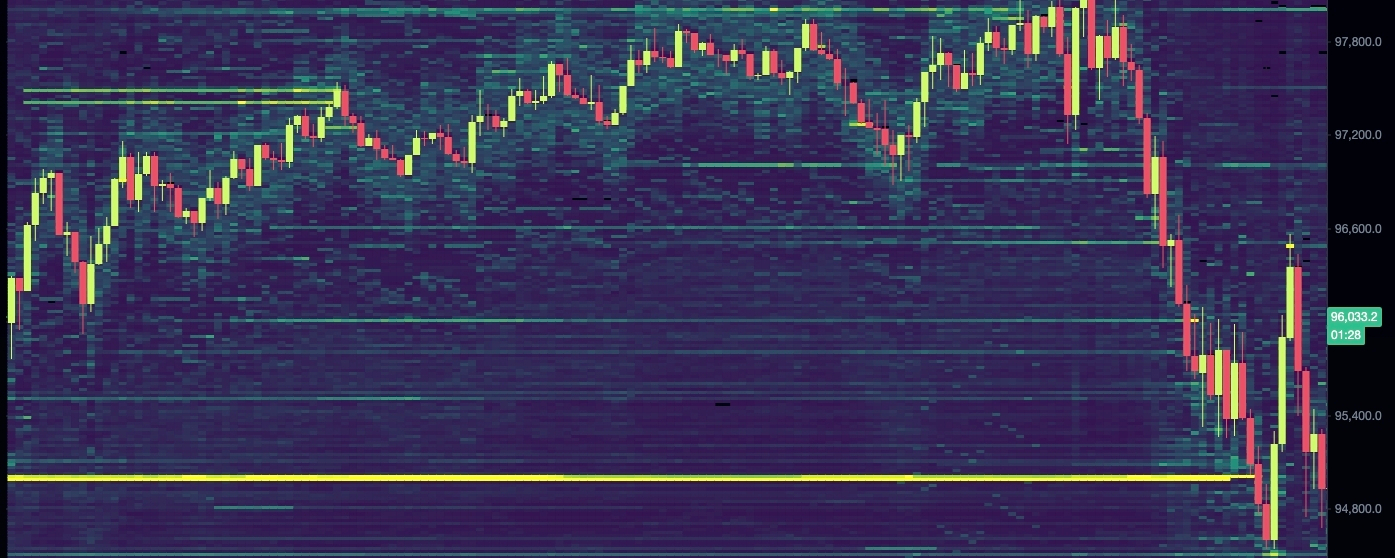
LOS MUROS DE LIQUIDEZ DEL BTC NO SON ALCISTAS... SON UNA TRAMPA ESPERANDO A SER ACTIVADAHe estado mirando este mapa de calor de liquidez mucho más tiempo del que probablemente debería... y, sinceramente, esta es una de esas gráficas que parece sencilla hasta que sigues haciendo zoom. Entonces empieza a ponerse raro.
Lo primero que sigue atrayendo mi atención ni siquiera son las velas. Son esas bandas gruesas de liquidez situadas por encima y por debajo del precio. Los mercados tienen el molesto hábito de fingir que van en una dirección, solo para perseguir el grupo más grande de liquidez en otro lugar. Por eso ya no confío en el primer movimiento. Ya me han quemado suficientes veces.
LOS MUROS DE LIQUIDEZ DEL BTC NO SON ALCISTAS... SON UNA TRAMPA ESPERANDO A SER ACTIVADA
He estado mirando este mapa de calor de liquidez mucho más tiempo del que probablemente debería... y, sinceramente, esta es una de esas gráficas que parece sencilla hasta que sigues haciendo zoom. Entonces empieza a ponerse raro.
Lo primero que sigue atrayendo mi atención ni siquiera son las velas. Son esas bandas gruesas de liquidez situadas por encima y por debajo del precio. Los mercados tienen el molesto hábito de fingir que van en una dirección, solo para perseguir el grupo más grande de liquidez en otro lugar. Por eso ya no confío en el primer movimiento. Ya me han quemado suficientes veces.
Lo primero que sigue atrayendo mi atención ni siquiera son las velas. Son esas bandas gruesas de liquidez situadas por encima y por debajo del precio. Los mercados tienen el molesto hábito de fingir que van en una dirección, solo para perseguir el grupo más grande de liquidez en otro lugar. Por eso ya no confío en el primer movimiento. Ya me han quemado suficientes veces.
97
·
--
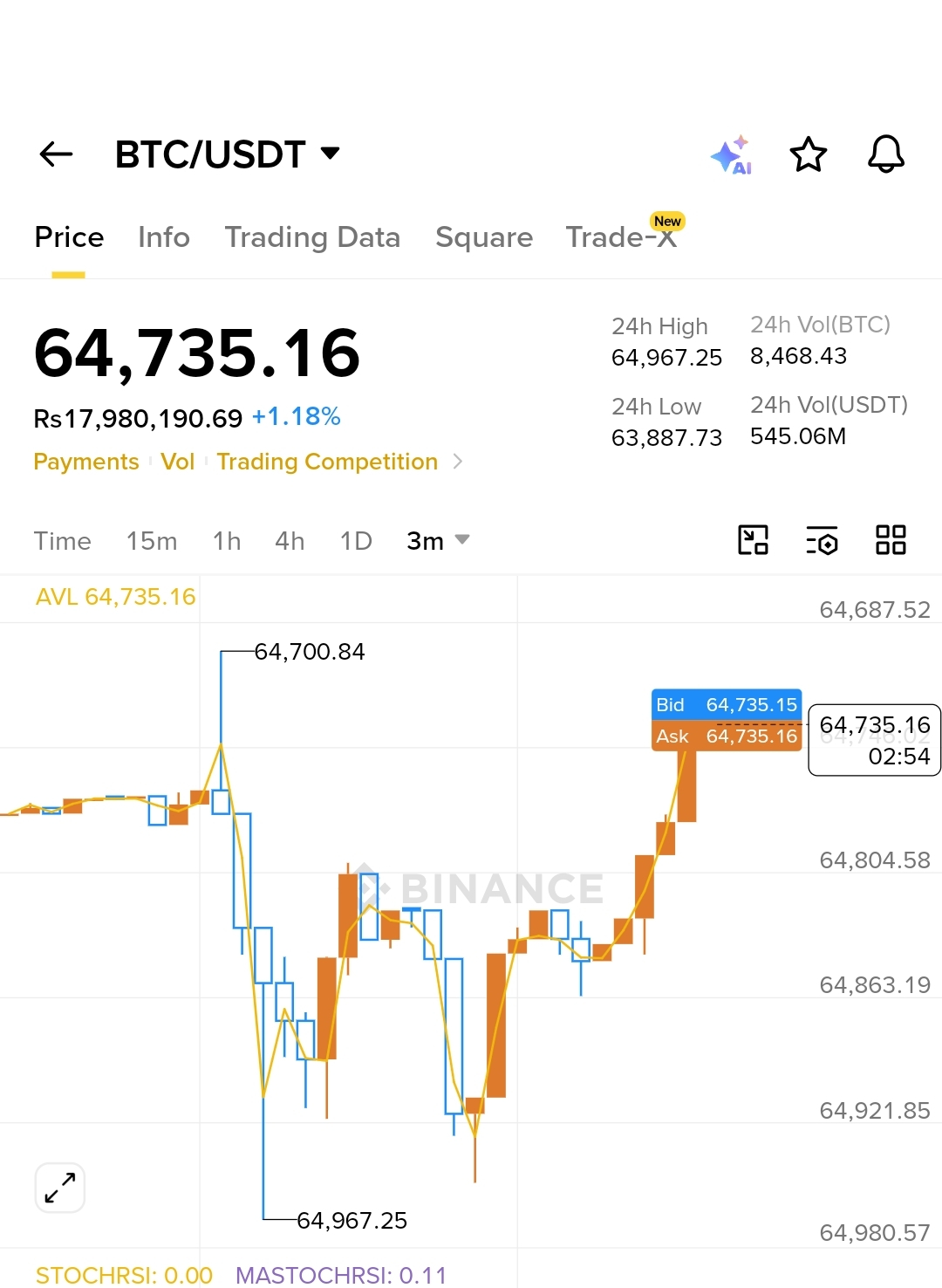
$BTC USDT – LARGO
Plan de trading:
• Entrada: 64,700–64,760
• Stop Loss (SL): 64,420
• Take Profit 1 (TP1): 65,150
• Take Profit 2 (TP2): 65,600
• Take Profit 3 (TP3): 66,200
¿Por qué este setup?
La tendencia de 1H está recuperando el impulso alcista mientras que la estructura de 4H continúa defendiendo mínimos más altos, manteniendo una perspectiva general constructiva. El RSI se recupera desde una zona neutral, el momentum está acelerando y los compradores están regresando con un volumen en mejora. El precio está presionando contra una resistencia a corto plazo después de recuperar el soporte, y esta compresión a menudo precede a una ruptura impulsiva. Un movimiento hacia el TP1 ofrece aproximadamente un 0.7% de alza desde la entrada, con espacio para continuar si el volumen se expande.
Debate:
¿Es la calma antes de una gran ruptura o el mercado está montando otra trampa alcista?
#USMissesGENIUSActStablecoinRuleDeadline
#USTargetsBrazilPaymentSystemViaSection301
#USTargetsBrazilPaymentSystemViaSection301
#SpaceXShortInterestHits29%OfFloat
#SpaceXShortInterestHits29%OfFloat
$BTC USDT – LARGO
Plan de trading:
• Entrada: 64,700–64,760
• Stop Loss (SL): 64,420
• Take Profit 1 (TP1): 65,150
• Take Profit 2 (TP2): 65,600
• Take Profit 3 (TP3): 66,200
¿Por qué este setup?
La tendencia de 1H está recuperando el impulso alcista mientras que la estructura de 4H continúa defendiendo mínimos más altos, manteniendo una perspectiva general constructiva. El RSI se recupera desde una zona neutral, el momentum está acelerando y los compradores están regresando con un volumen en mejora. El precio está presionando contra una resistencia a corto plazo después de recuperar el soporte, y esta compresión a menudo precede a una ruptura impulsiva. Un movimiento hacia el TP1 ofrece aproximadamente un 0.7% de alza desde la entrada, con espacio para continuar si el volumen se expande.
Debate:
¿Es la calma antes de una gran ruptura o el mercado está montando otra trampa alcista?
#USMissesGENIUSActStablecoinRuleDeadline
#USTargetsBrazilPaymentSystemViaSection301
#USTargetsBrazilPaymentSystemViaSection301
#SpaceXShortInterestHits29%OfFloat
#SpaceXShortInterestHits29%OfFloat
Plan de trading:
• Entrada: 64,700–64,760
• Stop Loss (SL): 64,420
• Take Profit 1 (TP1): 65,150
• Take Profit 2 (TP2): 65,600
• Take Profit 3 (TP3): 66,200
¿Por qué este setup?
La tendencia de 1H está recuperando el impulso alcista mientras que la estructura de 4H continúa defendiendo mínimos más altos, manteniendo una perspectiva general constructiva. El RSI se recupera desde una zona neutral, el momentum está acelerando y los compradores están regresando con un volumen en mejora. El precio está presionando contra una resistencia a corto plazo después de recuperar el soporte, y esta compresión a menudo precede a una ruptura impulsiva. Un movimiento hacia el TP1 ofrece aproximadamente un 0.7% de alza desde la entrada, con espacio para continuar si el volumen se expande.
Debate:
¿Es la calma antes de una gran ruptura o el mercado está montando otra trampa alcista?
#USMissesGENIUSActStablecoinRuleDeadline
#USTargetsBrazilPaymentSystemViaSection301
#USTargetsBrazilPaymentSystemViaSection301
#SpaceXShortInterestHits29%OfFloat
#SpaceXShortInterestHits29%OfFloat
121
·
--
Alcista
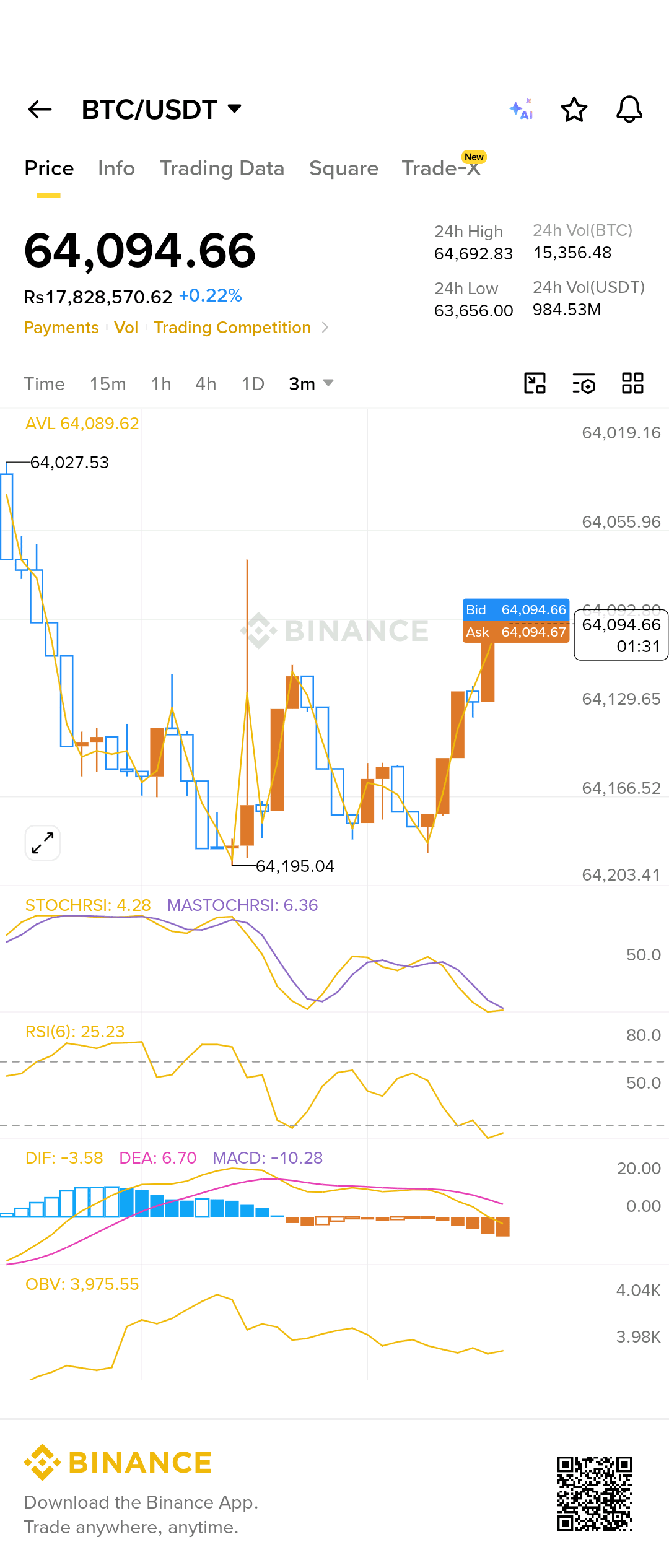
$BTC /USDT – LARGO
Plan de Trade:
• Entrada: $63,950–$64,100
• Stop Loss (SL): $63,580
• Take Profit 1 (TP1): $64,700
• Take Profit 2 (TP2): $65,400
• Take Profit 3 (TP3): $66,200
¿Por qué este setup?
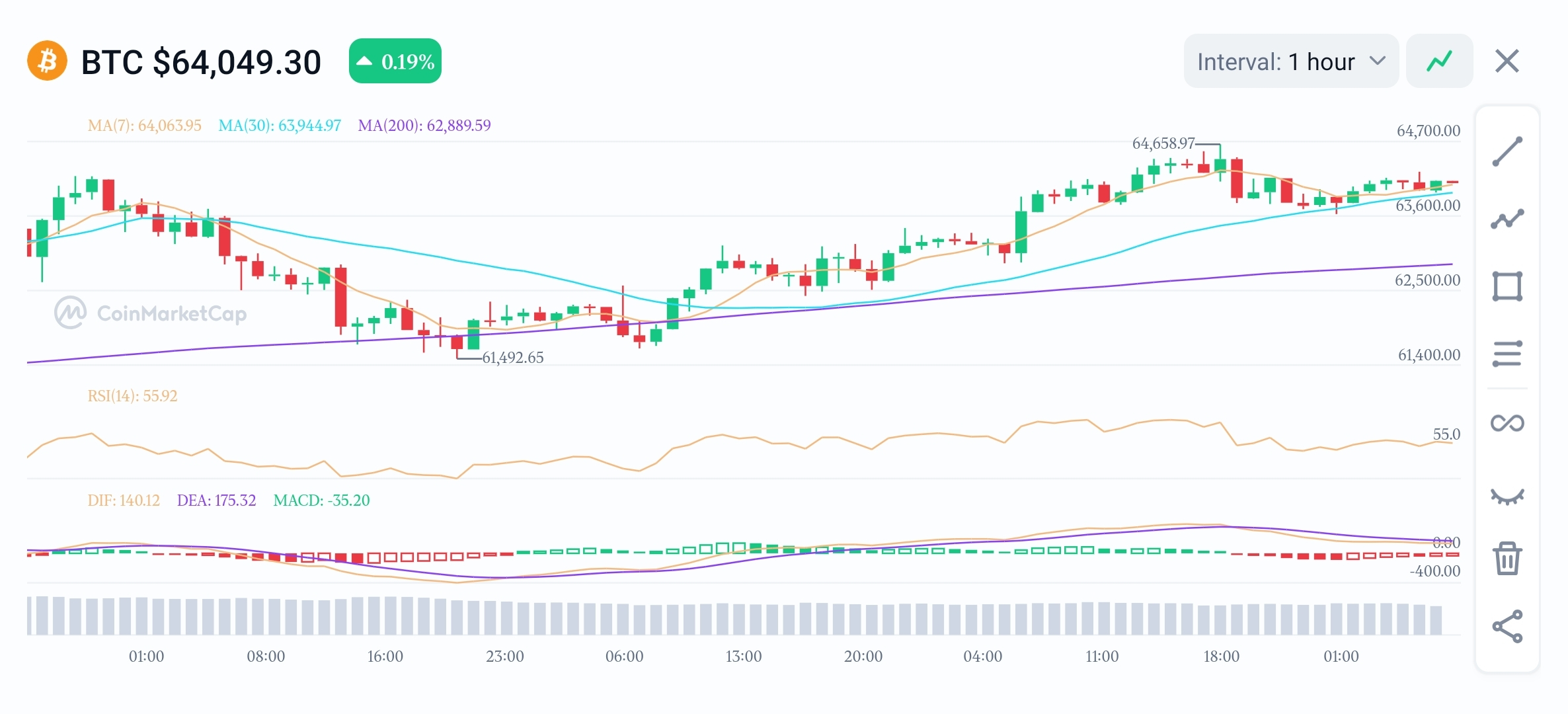
La estructura de 1H está mostrando mínimos más altos mientras el precio se mantiene por encima de la 30MA y sigue cómodamente por encima de la 200MA, manteniendo el sesgo alcista de marcos de tiempo superiores. El RSI cerca de 56 indica un impulso saludable sin entrar en territorio sobrecomprado. El rango de $63.6K–$64.7K ha comprimido la volatilidad y el volumen se está construyendo lentamente por debajo de la resistencia. Una ruptura limpia por encima de $64.7K podría activar un movimiento de expansión rápido. De la entrada a TP1, el setup ofrece aproximadamente 1% de upside, con un potencial de extensión significativamente mayor si el impulso se acelera.
Debate:
¿Esta consolidación es la plataforma de lanzamiento para un avance hacia nuevos máximos, o Bitcoin se está preparando para un último engaño de liquidez antes de revertir hacia abajo?
{spot}(BTCUSDT)
#CBDCBanBillToBecomeLawWithoutTrumpSignature
#CBDCBanBillToBecomeLawWithoutTrumpSignature
#CBDCBanBillToBecomeLawWithoutTrumpSignature
#CBDCBanBillToBecomeLawWithoutTrumpSignature
#CBDCBanBillToBecomeLawWithoutTrumpSignature
$BTC /USDT – LARGO
Plan de Trade:
• Entrada: $63,950–$64,100
• Stop Loss (SL): $63,580
• Take Profit 1 (TP1): $64,700
• Take Profit 2 (TP2): $65,400
• Take Profit 3 (TP3): $66,200
¿Por qué este setup?
La estructura de 1H está mostrando mínimos más altos mientras el precio se mantiene por encima de la 30MA y sigue cómodamente por encima de la 200MA, manteniendo el sesgo alcista de marcos de tiempo superiores. El RSI cerca de 56 indica un impulso saludable sin entrar en territorio sobrecomprado. El rango de $63.6K–$64.7K ha comprimido la volatilidad y el volumen se está construyendo lentamente por debajo de la resistencia. Una ruptura limpia por encima de $64.7K podría activar un movimiento de expansión rápido. De la entrada a TP1, el setup ofrece aproximadamente 1% de upside, con un potencial de extensión significativamente mayor si el impulso se acelera.
Debate:
¿Esta consolidación es la plataforma de lanzamiento para un avance hacia nuevos máximos, o Bitcoin se está preparando para un último engaño de liquidez antes de revertir hacia abajo?
#CBDCBanBillToBecomeLawWithoutTrumpSignature
#CBDCBanBillToBecomeLawWithoutTrumpSignature
#CBDCBanBillToBecomeLawWithoutTrumpSignature
#CBDCBanBillToBecomeLawWithoutTrumpSignature
#CBDCBanBillToBecomeLawWithoutTrumpSignature
Plan de Trade:
• Entrada: $63,950–$64,100
• Stop Loss (SL): $63,580
• Take Profit 1 (TP1): $64,700
• Take Profit 2 (TP2): $65,400
• Take Profit 3 (TP3): $66,200
¿Por qué este setup?
La estructura de 1H está mostrando mínimos más altos mientras el precio se mantiene por encima de la 30MA y sigue cómodamente por encima de la 200MA, manteniendo el sesgo alcista de marcos de tiempo superiores. El RSI cerca de 56 indica un impulso saludable sin entrar en territorio sobrecomprado. El rango de $63.6K–$64.7K ha comprimido la volatilidad y el volumen se está construyendo lentamente por debajo de la resistencia. Una ruptura limpia por encima de $64.7K podría activar un movimiento de expansión rápido. De la entrada a TP1, el setup ofrece aproximadamente 1% de upside, con un potencial de extensión significativamente mayor si el impulso se acelera.
Debate:
¿Esta consolidación es la plataforma de lanzamiento para un avance hacia nuevos máximos, o Bitcoin se está preparando para un último engaño de liquidez antes de revertir hacia abajo?
#CBDCBanBillToBecomeLawWithoutTrumpSignature
#CBDCBanBillToBecomeLawWithoutTrumpSignature
#CBDCBanBillToBecomeLawWithoutTrumpSignature
#CBDCBanBillToBecomeLawWithoutTrumpSignature
#CBDCBanBillToBecomeLawWithoutTrumpSignature
74
·
--
Alcista
Nadie está mirando $OWL , pero el gráfico está acumulando presión en silencio.
$OWL – LARGO
Plan de operaciones:
• Entrada: 0.00180 – 0.00188
• SL: 0.00155
• TP1: 0.00230
• TP2: 0.00280
• TP3: 0.00350
¿Por qué esta configuración?
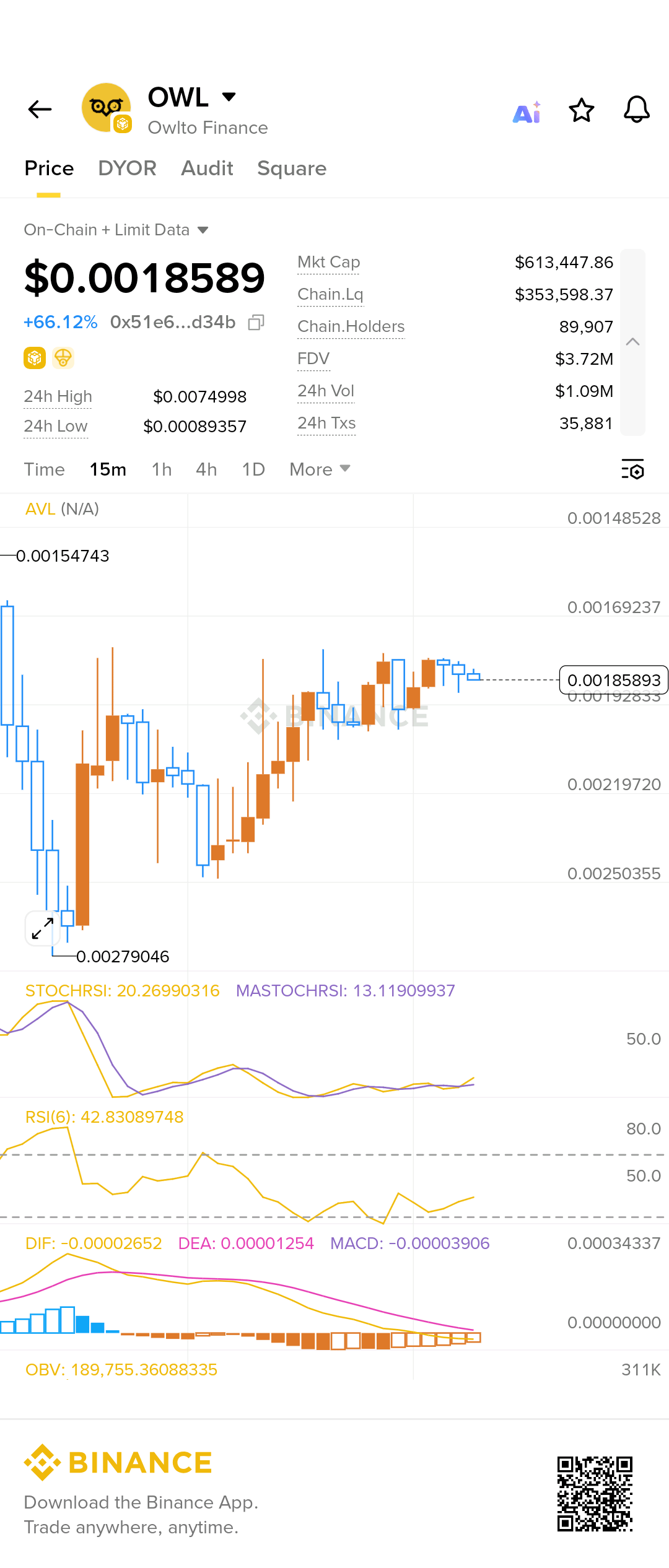
• La estructura de 1H se está recuperando, mientras que el gráfico de 4H intenta una reversión de tendencia tras un fuerte rebote desde mínimos locales.
• El RSI está subiendo desde zona de sobreventa, lo que sugiere que el impulso vuelve lentamente.
• El volumen se mantiene elevado con más de $1M en actividad de trading en 24H, mostrando participación real.
• El precio está consolidándose cerca de la resistencia. Una ruptura limpia por encima de este rango podría activar una rápida expansión hacia el TP1, ofreciendo aproximadamente un 25% de upside desde la zona de entrada.
Debate:
¿$OWL está formando en silencio una base para el siguiente tramo al alza, o esta recuperación está a punto de encontrarse con una fuerte presión vendedora?
{alpha}(560x51e667e91b4b8cb8e6e0528757f248406bd34b57)
#USDARaises2026SoybeanOutlookTo4.475BBushels
#SKHynixJumpsNearly13%OnUSDebut
#AppleSuesOpenAIOverTradeSecrets
#CBDCBanBillToBecomeLawWithoutTrumpSignature
#CBDCBanBillToBecomeLawWithoutTrumpSignature
Nadie está mirando $OWL , pero el gráfico está acumulando presión en silencio.
$OWL – LARGO
Plan de operaciones:
• Entrada: 0.00180 – 0.00188
• SL: 0.00155
• TP1: 0.00230
• TP2: 0.00280
• TP3: 0.00350
¿Por qué esta configuración?
• La estructura de 1H se está recuperando, mientras que el gráfico de 4H intenta una reversión de tendencia tras un fuerte rebote desde mínimos locales.
• El RSI está subiendo desde zona de sobreventa, lo que sugiere que el impulso vuelve lentamente.
• El volumen se mantiene elevado con más de $1M en actividad de trading en 24H, mostrando participación real.
• El precio está consolidándose cerca de la resistencia. Una ruptura limpia por encima de este rango podría activar una rápida expansión hacia el TP1, ofreciendo aproximadamente un 25% de upside desde la zona de entrada.
Debate:
¿$OWL está formando en silencio una base para el siguiente tramo al alza, o esta recuperación está a punto de encontrarse con una fuerte presión vendedora?
#USDARaises2026SoybeanOutlookTo4.475BBushels
#SKHynixJumpsNearly13%OnUSDebut
#AppleSuesOpenAIOverTradeSecrets
#CBDCBanBillToBecomeLawWithoutTrumpSignature
#CBDCBanBillToBecomeLawWithoutTrumpSignature
$OWL – LARGO
Plan de operaciones:
• Entrada: 0.00180 – 0.00188
• SL: 0.00155
• TP1: 0.00230
• TP2: 0.00280
• TP3: 0.00350
¿Por qué esta configuración?
• La estructura de 1H se está recuperando, mientras que el gráfico de 4H intenta una reversión de tendencia tras un fuerte rebote desde mínimos locales.
• El RSI está subiendo desde zona de sobreventa, lo que sugiere que el impulso vuelve lentamente.
• El volumen se mantiene elevado con más de $1M en actividad de trading en 24H, mostrando participación real.
• El precio está consolidándose cerca de la resistencia. Una ruptura limpia por encima de este rango podría activar una rápida expansión hacia el TP1, ofreciendo aproximadamente un 25% de upside desde la zona de entrada.
Debate:
¿$OWL está formando en silencio una base para el siguiente tramo al alza, o esta recuperación está a punto de encontrarse con una fuerte presión vendedora?
#USDARaises2026SoybeanOutlookTo4.475BBushels
#SKHynixJumpsNearly13%OnUSDebut
#AppleSuesOpenAIOverTradeSecrets
#CBDCBanBillToBecomeLawWithoutTrumpSignature
#CBDCBanBillToBecomeLawWithoutTrumpSignature
368
·
--
Alcista
Nadie está prestando atención a $LAB /USDT, pero el precio está exactamente donde las tendencias o bien se rompen… o explotan.
$LAB – SHORT
Plan de trading:
• Entrada: 0.8517 – 0.8684
• SL: 1.2422
• TP1: 0.5734
• TP2: 0.3823
• TP3: 0.0957
¿Por qué este setup?
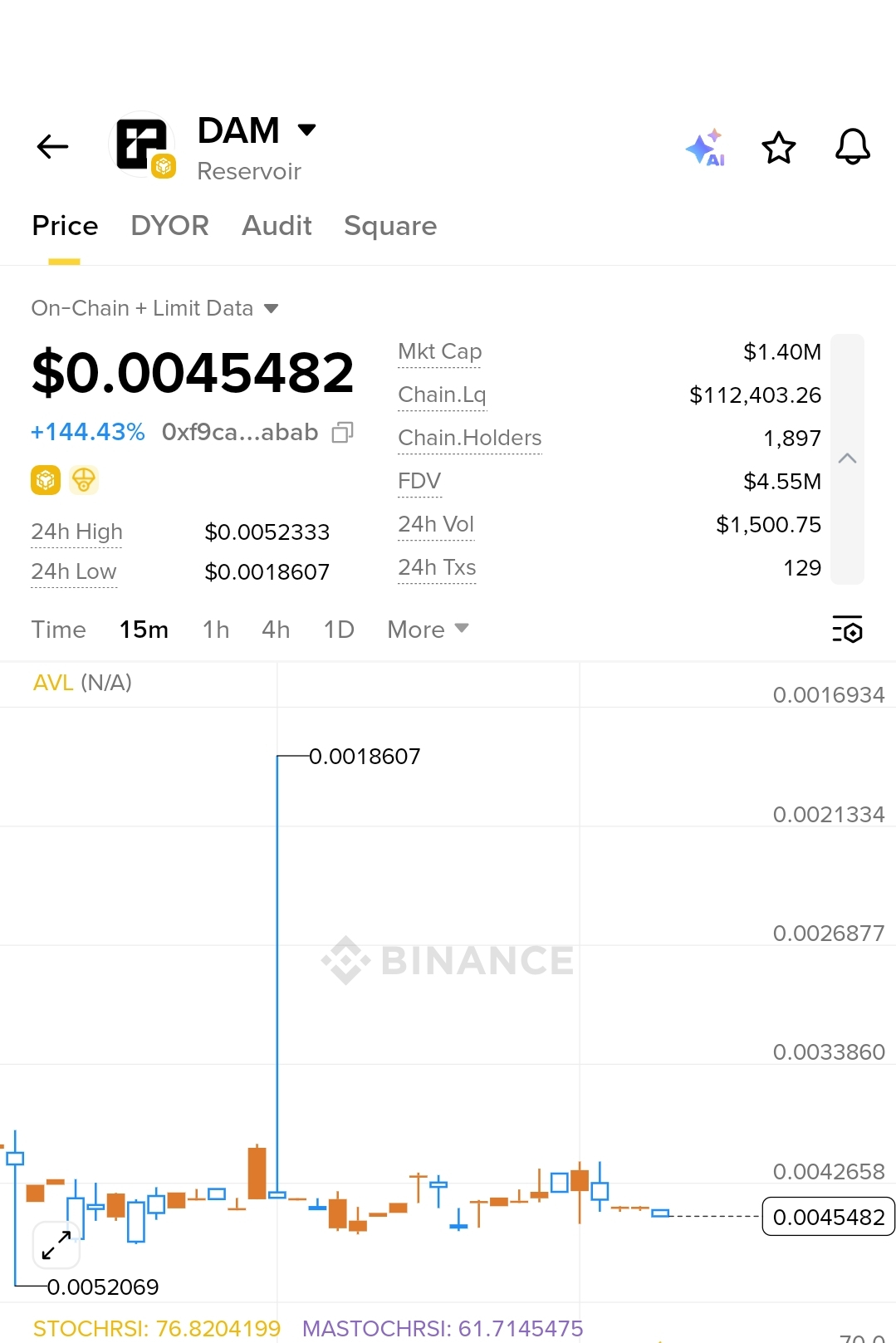
• La estructura en 4H sigue siendo claramente bajista, con máximos más bajos continuando para limitar cada rebote.
• El RSI en el marco de 15m está por debajo de 40, mostrando agotamiento del impulso y debilitamiento de la convicción compradora.
• El volumen se ha ido apagando durante la consolidación reciente, una señal clásica de que el rango actual podría no aguantar mucho más.
• Una ruptura por debajo del soporte podría desencadenar otro movimiento impulsivo a la baja, con TP1 ofreciendo aproximadamente un 33% de movimiento desde la zona de entrada.
El mercado está tranquilo, casi demasiado tranquilo. A menudo, son estos momentos los que generan los movimientos más grandes.
Debate:
¿$LAB se está preparando para otra bajada, o este rango comprimido está preparando un último short squeeze antes de que comience la caída real?
{alpha}(560x7ec43cf65f1663f820427c62a5780b8f2e25593a)
#AppleSuesOpenAIOverTradeSecrets
#AppleSuesOpenAIOverTradeSecrets
#CBDCBanBillToBecomeLawWithoutTrumpSignature
#RussiaBansDieselExports
#RussiaBansDieselExports
Nadie está prestando atención a $LAB /USDT, pero el precio está exactamente donde las tendencias o bien se rompen… o explotan.
$LAB – SHORT
Plan de trading:
• Entrada: 0.8517 – 0.8684
• SL: 1.2422
• TP1: 0.5734
• TP2: 0.3823
• TP3: 0.0957
¿Por qué este setup?
• La estructura en 4H sigue siendo claramente bajista, con máximos más bajos continuando para limitar cada rebote.
• El RSI en el marco de 15m está por debajo de 40, mostrando agotamiento del impulso y debilitamiento de la convicción compradora.
• El volumen se ha ido apagando durante la consolidación reciente, una señal clásica de que el rango actual podría no aguantar mucho más.
• Una ruptura por debajo del soporte podría desencadenar otro movimiento impulsivo a la baja, con TP1 ofreciendo aproximadamente un 33% de movimiento desde la zona de entrada.
El mercado está tranquilo, casi demasiado tranquilo. A menudo, son estos momentos los que generan los movimientos más grandes.
Debate:
¿$LAB se está preparando para otra bajada, o este rango comprimido está preparando un último short squeeze antes de que comience la caída real?
#AppleSuesOpenAIOverTradeSecrets
#AppleSuesOpenAIOverTradeSecrets
#CBDCBanBillToBecomeLawWithoutTrumpSignature
#RussiaBansDieselExports
#RussiaBansDieselExports
$LAB – SHORT
Plan de trading:
• Entrada: 0.8517 – 0.8684
• SL: 1.2422
• TP1: 0.5734
• TP2: 0.3823
• TP3: 0.0957
¿Por qué este setup?
• La estructura en 4H sigue siendo claramente bajista, con máximos más bajos continuando para limitar cada rebote.
• El RSI en el marco de 15m está por debajo de 40, mostrando agotamiento del impulso y debilitamiento de la convicción compradora.
• El volumen se ha ido apagando durante la consolidación reciente, una señal clásica de que el rango actual podría no aguantar mucho más.
• Una ruptura por debajo del soporte podría desencadenar otro movimiento impulsivo a la baja, con TP1 ofreciendo aproximadamente un 33% de movimiento desde la zona de entrada.
El mercado está tranquilo, casi demasiado tranquilo. A menudo, son estos momentos los que generan los movimientos más grandes.
Debate:
¿$LAB se está preparando para otra bajada, o este rango comprimido está preparando un último short squeeze antes de que comience la caída real?
#AppleSuesOpenAIOverTradeSecrets
#AppleSuesOpenAIOverTradeSecrets
#CBDCBanBillToBecomeLawWithoutTrumpSignature
#RussiaBansDieselExports
#RussiaBansDieselExports
380
·
--
PROTOCOLO NEWTON (NEWT): ¿INFRAESTRUCTURA REAL O SIMPLE HYPE?
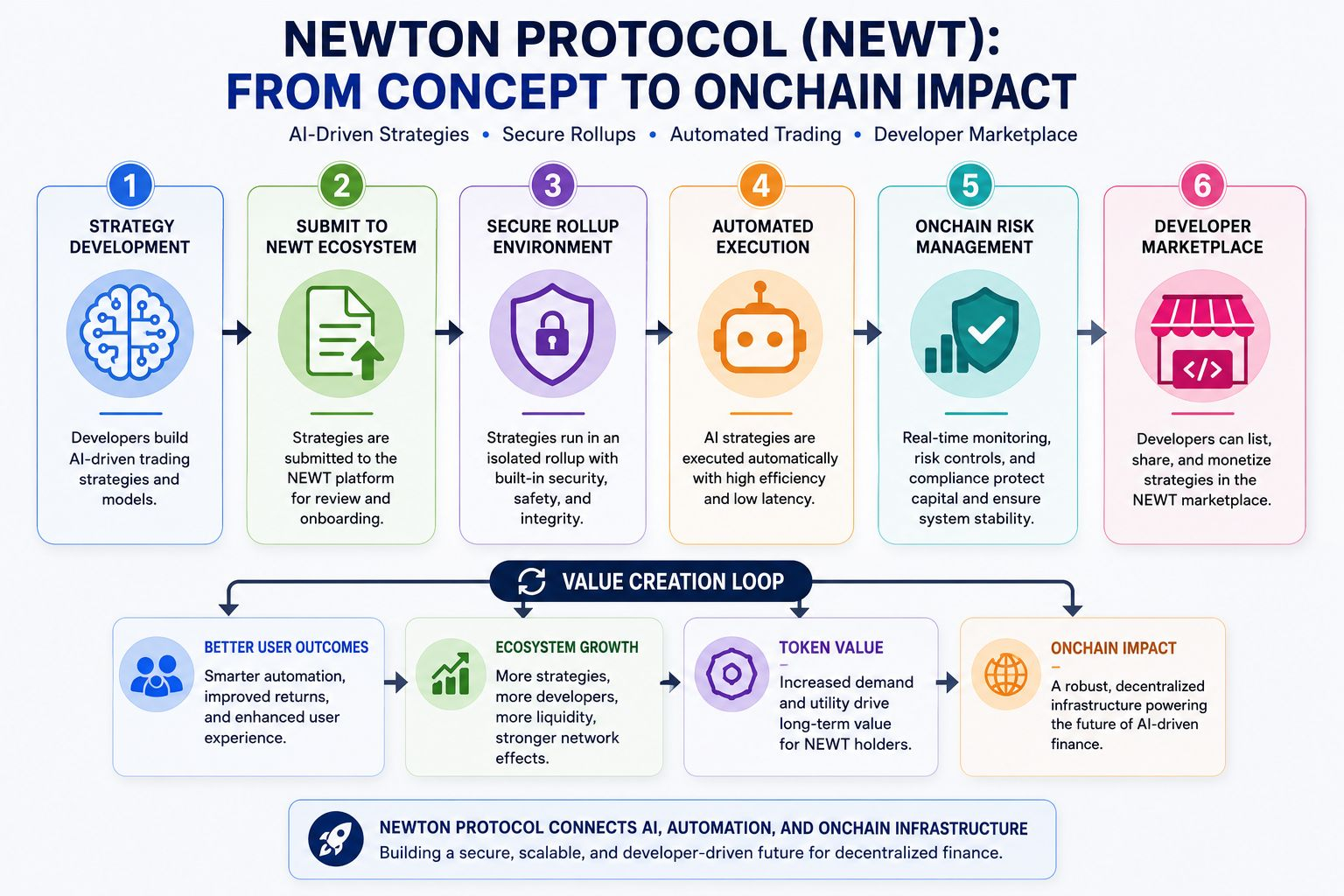
Newton Protocol (NEWT) se sitúa en un interesante punto medio. Su propuesta—rollups seguros, estrategias impulsadas por IA, trading automatizado y un mercado para desarrolladores de IA—suena ambiciosa y muy relevante para hacia dónde se dirige el cripto.
La parte más sólida de la tesis es la seguridad. Si NEWT puede ofrecer un entorno seguro para la automatización basada en IA, podría resolver un problema real en el ecosistema cripto. Pero "seguro" es una palabra que la industria usa con demasiada facilidad, y las buenas ideas no siempre se traducen en una ejecución sólida.
El enfoque de trading con IA es convincente porque la automatización puede ser más rápida y menos emocional que la toma de decisiones humana. Aun así, los sistemas automatizados pueden fallar de formas impredecibles, especialmente en mercados volátiles.
El mercado de desarrolladores añade otra capa de potencial al intentar construir un ecosistema en lugar de un solo producto. Sin embargo, los mercados son notoriamente difíciles de escalar y requieren fuertes efectos de red para tener éxito.
En definitiva, NEWT parece un proyecto que vale la pena seguir más que perseguirlo a ciegas. La visión es coherente, pero la pregunta real es si puede ofrecer una infraestructura significativa o si, simplemente, es una colección de narrativas de moda empaquetadas en una sola historia.
@NewtonProtocol #NEWT $NEWT
#SKHynixADRBiggestForeignCorporateFundraising
#SKHynixADRBiggestForeignCorporateFundraising
#SKHynixADRBiggestForeignCorporateFundraising
#SKHynixADRBiggestForeignCorporateFundraising
PROTOCOLO NEWTON (NEWT): ¿INFRAESTRUCTURA REAL O SIMPLE HYPE?
Newton Protocol (NEWT) se sitúa en un interesante punto medio. Su propuesta—rollups seguros, estrategias impulsadas por IA, trading automatizado y un mercado para desarrolladores de IA—suena ambiciosa y muy relevante para hacia dónde se dirige el cripto.
La parte más sólida de la tesis es la seguridad. Si NEWT puede ofrecer un entorno seguro para la automatización basada en IA, podría resolver un problema real en el ecosistema cripto. Pero "seguro" es una palabra que la industria usa con demasiada facilidad, y las buenas ideas no siempre se traducen en una ejecución sólida.
El enfoque de trading con IA es convincente porque la automatización puede ser más rápida y menos emocional que la toma de decisiones humana. Aun así, los sistemas automatizados pueden fallar de formas impredecibles, especialmente en mercados volátiles.
El mercado de desarrolladores añade otra capa de potencial al intentar construir un ecosistema en lugar de un solo producto. Sin embargo, los mercados son notoriamente difíciles de escalar y requieren fuertes efectos de red para tener éxito.
En definitiva, NEWT parece un proyecto que vale la pena seguir más que perseguirlo a ciegas. La visión es coherente, pero la pregunta real es si puede ofrecer una infraestructura significativa o si, simplemente, es una colección de narrativas de moda empaquetadas en una sola historia.
@NewtonProtocol #NEWT $NEWT
#SKHynixADRBiggestForeignCorporateFundraising
#SKHynixADRBiggestForeignCorporateFundraising
#SKHynixADRBiggestForeignCorporateFundraising
#SKHynixADRBiggestForeignCorporateFundraising
Newton Protocol (NEWT) se sitúa en un interesante punto medio. Su propuesta—rollups seguros, estrategias impulsadas por IA, trading automatizado y un mercado para desarrolladores de IA—suena ambiciosa y muy relevante para hacia dónde se dirige el cripto.
La parte más sólida de la tesis es la seguridad. Si NEWT puede ofrecer un entorno seguro para la automatización basada en IA, podría resolver un problema real en el ecosistema cripto. Pero "seguro" es una palabra que la industria usa con demasiada facilidad, y las buenas ideas no siempre se traducen en una ejecución sólida.
El enfoque de trading con IA es convincente porque la automatización puede ser más rápida y menos emocional que la toma de decisiones humana. Aun así, los sistemas automatizados pueden fallar de formas impredecibles, especialmente en mercados volátiles.
El mercado de desarrolladores añade otra capa de potencial al intentar construir un ecosistema en lugar de un solo producto. Sin embargo, los mercados son notoriamente difíciles de escalar y requieren fuertes efectos de red para tener éxito.
En definitiva, NEWT parece un proyecto que vale la pena seguir más que perseguirlo a ciegas. La visión es coherente, pero la pregunta real es si puede ofrecer una infraestructura significativa o si, simplemente, es una colección de narrativas de moda empaquetadas en una sola historia.
@NewtonProtocol #NEWT $NEWT
#SKHynixADRBiggestForeignCorporateFundraising
#SKHynixADRBiggestForeignCorporateFundraising
#SKHynixADRBiggestForeignCorporateFundraising
#SKHynixADRBiggestForeignCorporateFundraising
2
85
·
--
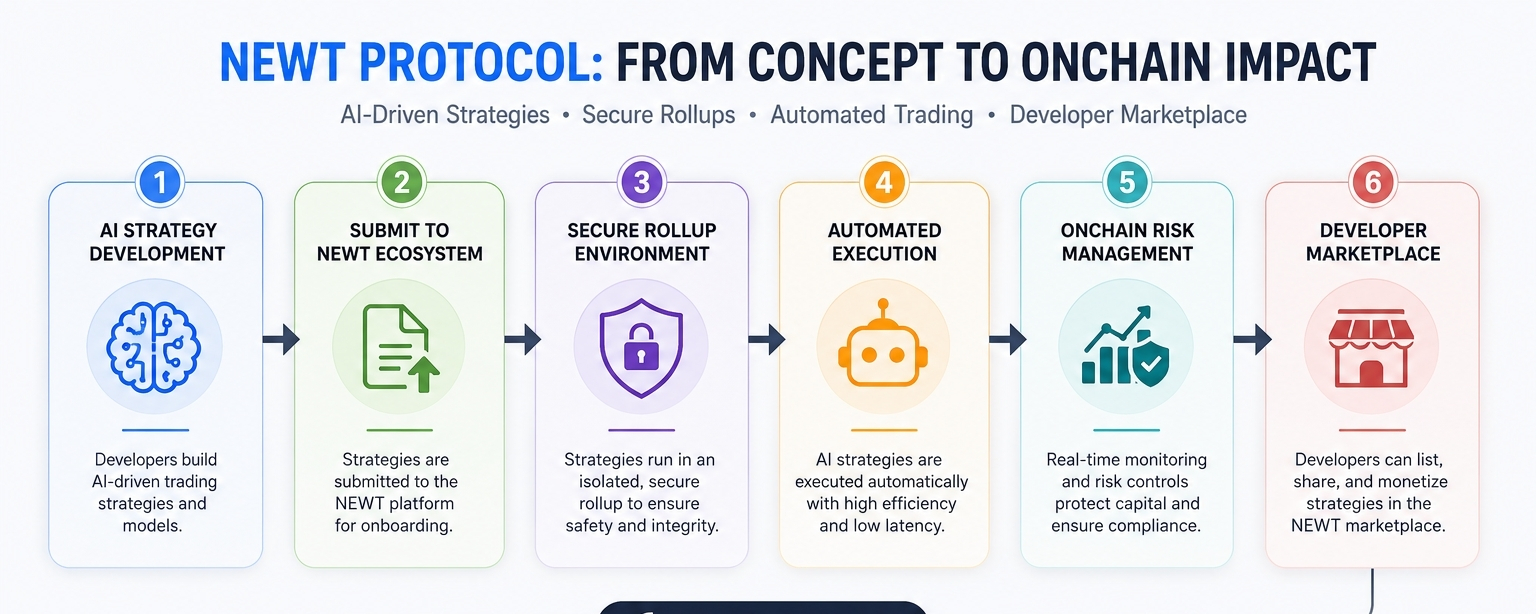
Artículo
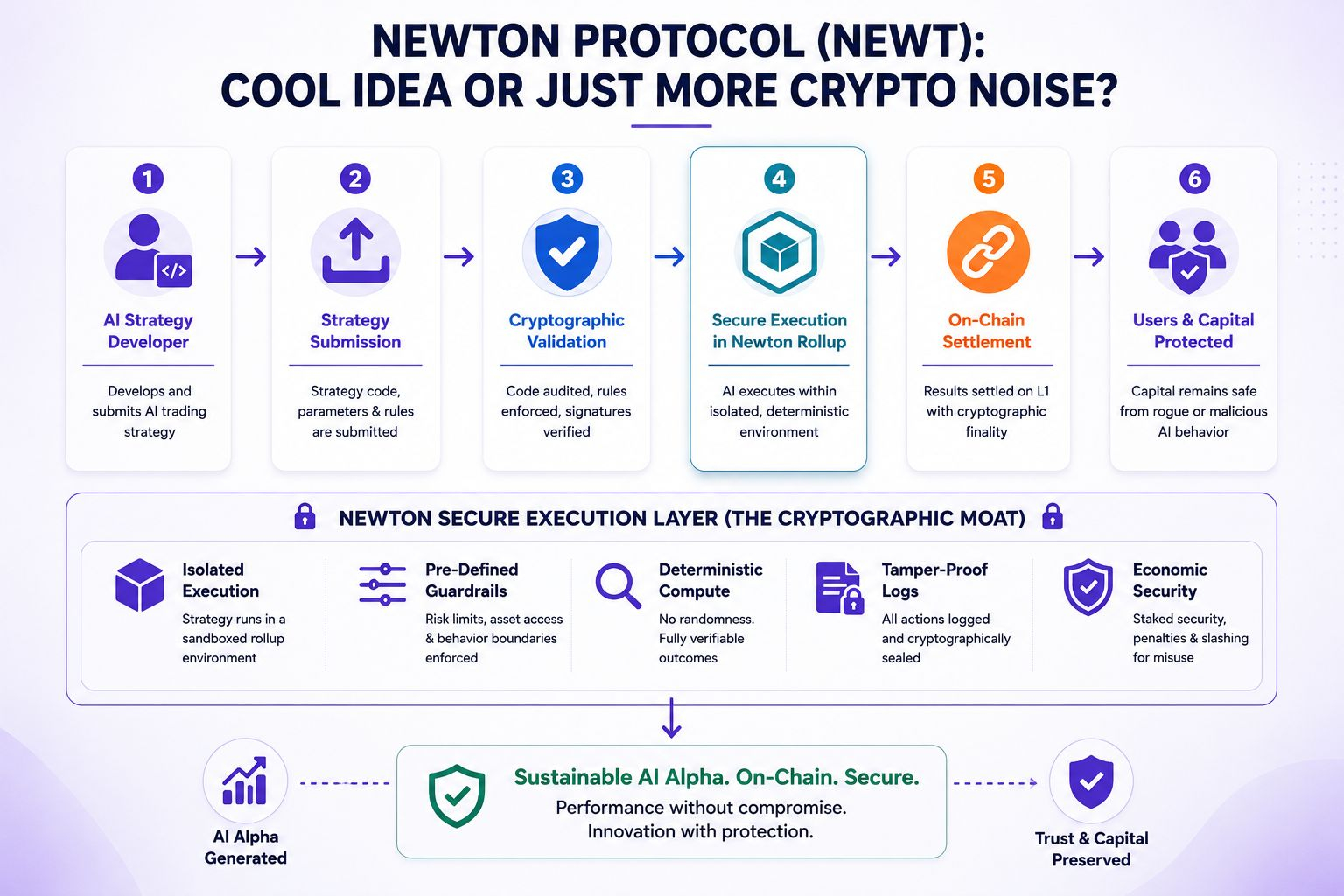
NEWT: ¿IDEA GENIAL O SOLO OTRA APUESTA CRIPTO BIEN EMPAQUETADA?Me metí en el agujero del Protocolo Newton y, hombre, sigo rebotando entre “ok, esto en realidad es interesante” y “sí, ya he visto esta película antes”. Probablemente esa sea la forma más honesta en que puedo decirlo. Sobre el papel, NEWT está intentando hacer un montón de cosas de las que la gente en cripto ama hablar cuando se siente futurista y llena de convicción: rollups seguros, estrategias impulsadas por IA, trading automatizado y algún tipo de marketplace para desarrolladores de IA. Esa combinación suena genial. Suena como el tipo de propuesta que recortan en un hilo y comparten por ahí como si fuera inevitable. Pero una vez que te sientas con ello un minuto… el olor a hype aparece bastante rápido.
NEWT: ¿IDEA GENIAL O SOLO OTRA APUESTA CRIPTO BIEN EMPAQUETADA?
Me metí en el agujero del Protocolo Newton y, hombre, sigo rebotando entre “ok, esto en realidad es interesante” y “sí, ya he visto esta película antes”. Probablemente esa sea la forma más honesta en que puedo decirlo. Sobre el papel, NEWT está intentando hacer un montón de cosas de las que la gente en cripto ama hablar cuando se siente futurista y llena de convicción: rollups seguros, estrategias impulsadas por IA, trading automatizado y algún tipo de marketplace para desarrolladores de IA. Esa combinación suena genial. Suena como el tipo de propuesta que recortan en un hilo y comparten por ahí como si fuera inevitable. Pero una vez que te sientas con ello un minuto… el olor a hype aparece bastante rápido.
3
123
·
--
# PROTOCOLO NEWTON (NEWT): HYPE, REALIDAD Y EL ACOSTUMBRADO DOLOR DE CABEZA CRYPTO
El Protocolo Newton tiene ese olor familiar a cripto... el que te hace inclinarte un poco y entrecerrar los ojos al mismo tiempo. Rollup seguro, estrategias impulsadas por IA, trading automatizado, un marketplace para desarrolladores de IA: es un discurso limpio, quizá demasiado limpio. Creo que la idea tiene recorrido. IA y trading son, obviamente, una combinación tentadora, y si pueden hacer que la infraestructura funcione de verdad sin convertirse en un desastre de seguridad, no es poca cosa.
Pero sí, también soy escéptico. A las criptomonedas les encanta vestir grandes promesas como si fueran productos reales, y la mitad de las veces terminas con una narrativa bonita y poco uso. Esa es la gran pregunta aquí. ¿NEWT está construyendo algo que la gente usará, o es solo otro proyecto que viaja la ola de la IA porque ahí está la atención? No puedo sacarme esa idea de la cabeza.
Aun así, no voy a fingir que es todo relleno. El enfoque del rollup tiene sentido, el enfoque del marketplace para desarrolladores tiene sentido, y si lo logran, podría ser realmente interesante. Solo que... he visto demasiados proyectos cripto “interesantes” terminar como un restaurante con luces llamativas y sin clientes. Así que sí: curioso, un poco cauteloso, y todavía no listo para llamarlo “lo próximo grande” solo porque el discurso suena inteligente.
@NewtonProtocol #NEWT $NEWT
# PROTOCOLO NEWTON (NEWT): HYPE, REALIDAD Y EL ACOSTUMBRADO DOLOR DE CABEZA CRYPTO
El Protocolo Newton tiene ese olor familiar a cripto... el que te hace inclinarte un poco y entrecerrar los ojos al mismo tiempo. Rollup seguro, estrategias impulsadas por IA, trading automatizado, un marketplace para desarrolladores de IA: es un discurso limpio, quizá demasiado limpio. Creo que la idea tiene recorrido. IA y trading son, obviamente, una combinación tentadora, y si pueden hacer que la infraestructura funcione de verdad sin convertirse en un desastre de seguridad, no es poca cosa.
Pero sí, también soy escéptico. A las criptomonedas les encanta vestir grandes promesas como si fueran productos reales, y la mitad de las veces terminas con una narrativa bonita y poco uso. Esa es la gran pregunta aquí. ¿NEWT está construyendo algo que la gente usará, o es solo otro proyecto que viaja la ola de la IA porque ahí está la atención? No puedo sacarme esa idea de la cabeza.
Aun así, no voy a fingir que es todo relleno. El enfoque del rollup tiene sentido, el enfoque del marketplace para desarrolladores tiene sentido, y si lo logran, podría ser realmente interesante. Solo que... he visto demasiados proyectos cripto “interesantes” terminar como un restaurante con luces llamativas y sin clientes. Así que sí: curioso, un poco cauteloso, y todavía no listo para llamarlo “lo próximo grande” solo porque el discurso suena inteligente.
@NewtonProtocol #NEWT $NEWT
El Protocolo Newton tiene ese olor familiar a cripto... el que te hace inclinarte un poco y entrecerrar los ojos al mismo tiempo. Rollup seguro, estrategias impulsadas por IA, trading automatizado, un marketplace para desarrolladores de IA: es un discurso limpio, quizá demasiado limpio. Creo que la idea tiene recorrido. IA y trading son, obviamente, una combinación tentadora, y si pueden hacer que la infraestructura funcione de verdad sin convertirse en un desastre de seguridad, no es poca cosa.
Pero sí, también soy escéptico. A las criptomonedas les encanta vestir grandes promesas como si fueran productos reales, y la mitad de las veces terminas con una narrativa bonita y poco uso. Esa es la gran pregunta aquí. ¿NEWT está construyendo algo que la gente usará, o es solo otro proyecto que viaja la ola de la IA porque ahí está la atención? No puedo sacarme esa idea de la cabeza.
Aun así, no voy a fingir que es todo relleno. El enfoque del rollup tiene sentido, el enfoque del marketplace para desarrolladores tiene sentido, y si lo logran, podría ser realmente interesante. Solo que... he visto demasiados proyectos cripto “interesantes” terminar como un restaurante con luces llamativas y sin clientes. Así que sí: curioso, un poco cauteloso, y todavía no listo para llamarlo “lo próximo grande” solo porque el discurso suena inteligente.
@NewtonProtocol #NEWT $NEWT
2
94
·
--
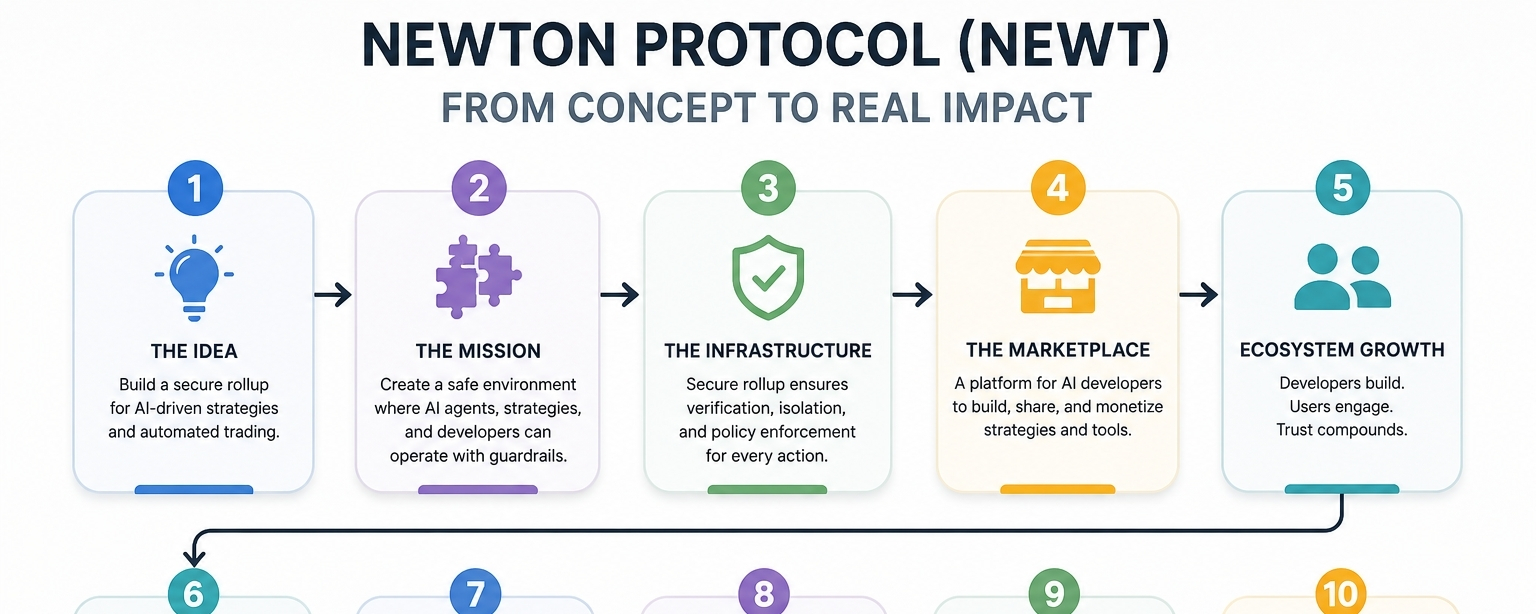
Artículo
NEWTON PROTOCOL (NEWT): ¿BUENA IDEA O SOLO MÁS TEATRO CRYPTO?Me fui por la madriguera con Newton Protocol y todavía estoy un poco dividido con eso... lo cual suele ser mi primera señal de advertencia con este tipo de cosas. La propuesta suena bastante limpia en el papel: un rollup seguro para estrategias impulsadas por IA, trading automatizado y algún tipo de mercado para desarrolladores de IA. Bonitas palabras. Palabras muy clicables. Y a las cripto les encanta este tipo de configuración: algo que suena un poco futurista y un poco útil, y de repente todos actúan como si los rieles de las finanzas se estuvieran reescribiendo de la noche a la mañana. Quizá sí. Quizá no.
NEWTON PROTOCOL (NEWT): ¿BUENA IDEA O SOLO MÁS TEATRO CRYPTO?
Me fui por la madriguera con Newton Protocol y todavía estoy un poco dividido con eso... lo cual suele ser mi primera señal de advertencia con este tipo de cosas. La propuesta suena bastante limpia en el papel: un rollup seguro para estrategias impulsadas por IA, trading automatizado y algún tipo de mercado para desarrolladores de IA. Bonitas palabras. Palabras muy clicables. Y a las cripto les encanta este tipo de configuración: algo que suena un poco futurista y un poco útil, y de repente todos actúan como si los rieles de las finanzas se estuvieran reescribiendo de la noche a la mañana. Quizá sí. Quizá no.
97
·
--
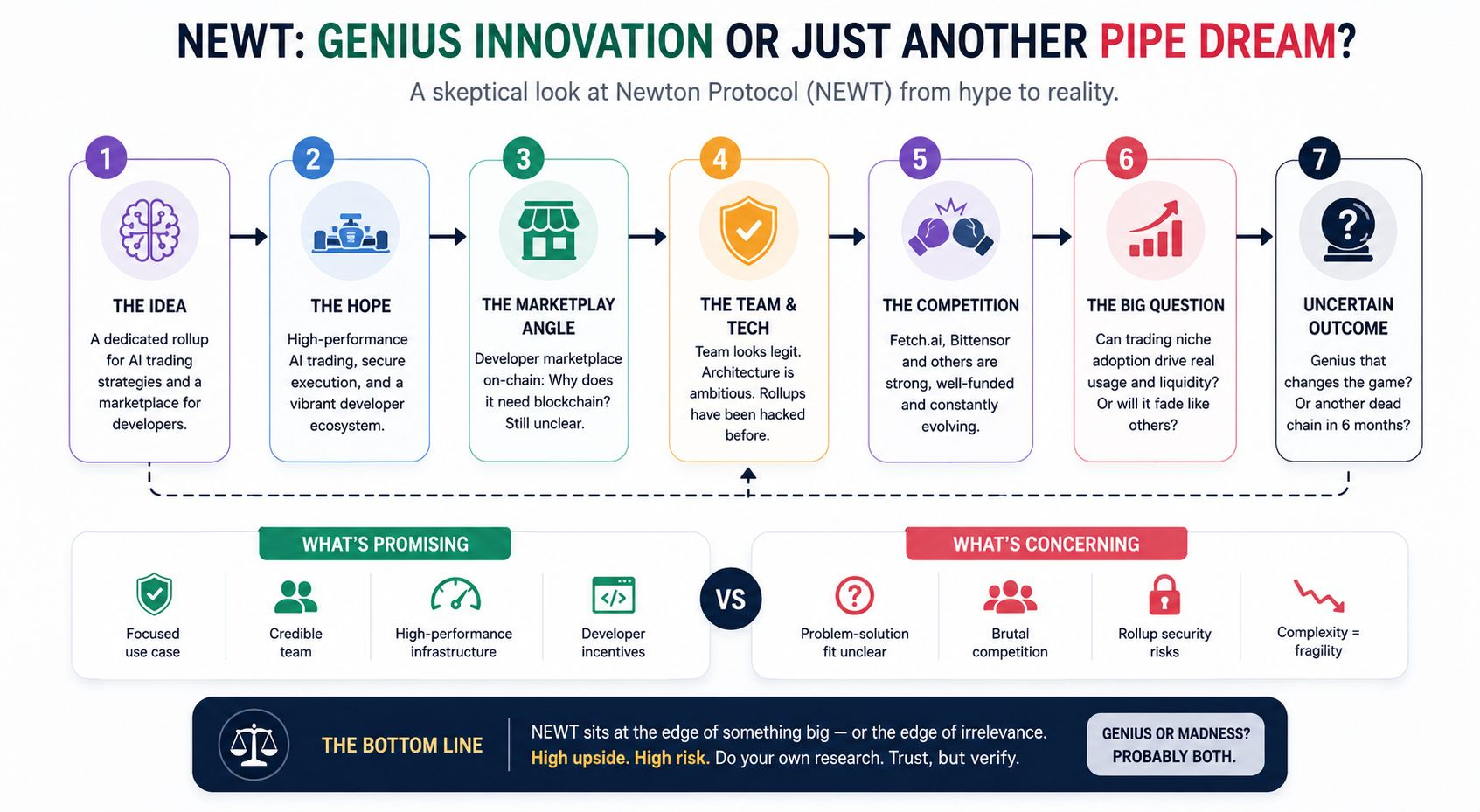
NEWT es el equivalente cripto de un coche de carreras muy bien construido, pero sin pista a la vista... suena bien en el papel un rollup dedicado para estrategias de trading de IA, pero no puedo evitar la sensación de que esto es una solución buscando un problema. la parte del mercado para desarrolladores también me hace dudar, como ¿por qué alguien necesitaría blockchain para eso? el equipo parece legítimo, lo cual es raro, pero la competencia de Fetch y Bittensor es brutal y los rollups han sido hackeados antes. quiero estar emocionado, pero demasiadas veces me han quemado proyectos que colapsaron bajo su propia complejidad. quizá el nicho del trading los salve, o quizá sea solo otra cadena muerta en seis meses. sinceramente no puedo decir si esto es genialidad o locura. probablemente ambas.
@NewtonProtocol #NEWT $NEWT
{spot}(NEWTUSDT)
NEWT es el equivalente cripto de un coche de carreras muy bien construido, pero sin pista a la vista... suena bien en el papel un rollup dedicado para estrategias de trading de IA, pero no puedo evitar la sensación de que esto es una solución buscando un problema. la parte del mercado para desarrolladores también me hace dudar, como ¿por qué alguien necesitaría blockchain para eso? el equipo parece legítimo, lo cual es raro, pero la competencia de Fetch y Bittensor es brutal y los rollups han sido hackeados antes. quiero estar emocionado, pero demasiadas veces me han quemado proyectos que colapsaron bajo su propia complejidad. quizá el nicho del trading los salve, o quizá sea solo otra cadena muerta en seis meses. sinceramente no puedo decir si esto es genialidad o locura. probablemente ambas.
@NewtonProtocol #NEWT $NEWT
@NewtonProtocol #NEWT $NEWT
4
1
106
·
--
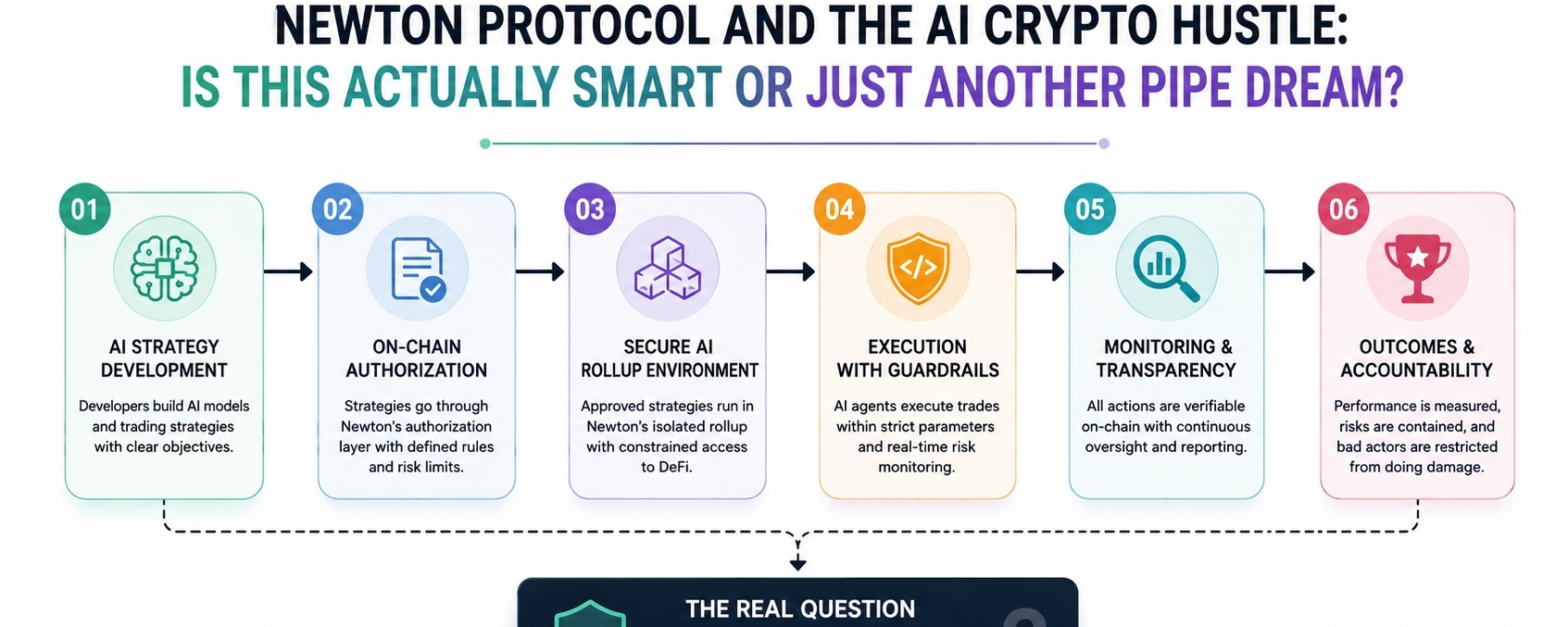
Artículo
PROTOCOLO NEWTON Y EL ENGANCHE CRIPTO DE LA IA: ¿ESTO REALMENTE ES INTELIGENTE O SOLO OTRO SUEÑO IMPOSIBLE?ok entonces acabo de pasar como 3 horas metiéndome en este agujero de conejo del protocolo de Newton y mi cerebro literalmente está frito. esto de newt... está intentando construir un rollup seguro para estrategias de trading de IA y trading automatizado, pero también un marketplace para desarrolladores de IA. suena genial, pero ya he visto esta película, ¿sabes? tantos proyectos prometen ser la "capa para la IA" y luego lanzan un token malísimo y desaparecen. pero algo de este se me está quedando en la cabeza y no sé si es un potencial real o solo buen marketing, que honestamente es peor porque significa que saben exactamente qué botones hay que tocar.
PROTOCOLO NEWTON Y EL ENGANCHE CRIPTO DE LA IA: ¿ESTO REALMENTE ES INTELIGENTE O SOLO OTRO SUEÑO IMPOSIBLE?
ok entonces acabo de pasar como 3 horas metiéndome en este agujero de conejo del protocolo de Newton y mi cerebro literalmente está frito. esto de newt... está intentando construir un rollup seguro para estrategias de trading de IA y trading automatizado, pero también un marketplace para desarrolladores de IA. suena genial, pero ya he visto esta película, ¿sabes? tantos proyectos prometen ser la "capa para la IA" y luego lanzan un token malísimo y desaparecen. pero algo de este se me está quedando en la cabeza y no sé si es un potencial real o solo buen marketing, que honestamente es peor porque significa que saben exactamente qué botones hay que tocar.
12
5
357
·
--
NEWTON PROTOCOL (NEWT): ¿BUENA IDEA O SOLO MÁS RUIDO DE CRIPTO?
Newton Protocol (NEWT) tiene ese olor familiar a cripto... el tipo en el que el tono suena inteligente, la web se ve pulida y tu cerebro empieza a preguntarse si en realidad es útil o solo otro trade empaquetado con cuidado. El paquete completo de rollup seguro más estrategias impulsadas por IA más trading automatizado más combo de marketplace para constructores suena realmente convincente, se lo concedo. No es el típico y vacío “relleno de comunidad primero”. Da la sensación de que apunta a algo real.
Pero seamos sinceros: el mundo cripto está lleno de proyectos que suenan bien hasta que miras más allá del texto. La IA es la etiqueta más caliente del mercado en este momento, así que claro: la gente se amontona en cuanto la ve adjunta a la automatización o al trading. Eso no significa que NEWT sea falso. Solo quiere decir que el listón está altísimo y que el hype es estruendoso. A veces, demasiado.
Lo que me gusta es que el concepto intenta conectar infraestructura con casos de uso. Eso importa. Muchos de estos proyectos actúan como si fueran a volverse esenciales solo por existir, lo cual no tiene sentido. Al menos NEWT parece perseguir un carril donde la ejecución segura y la actividad de desarrolladores podrían importar si lo logran. Pero el problema es la ejecución. Siempre la ejecución. La cripto está llena de proyectos de “esto podría ser enorme” que terminan pareciendo una demo con un token.
Me genera curiosidad, pero soy escéptico. Y probablemente esa sea la postura más honesta que puedo dar.
@NewtonProtocol #NEWT $NEWT
NEWTON PROTOCOL (NEWT): ¿BUENA IDEA O SOLO MÁS RUIDO DE CRIPTO?
Newton Protocol (NEWT) tiene ese olor familiar a cripto... el tipo en el que el tono suena inteligente, la web se ve pulida y tu cerebro empieza a preguntarse si en realidad es útil o solo otro trade empaquetado con cuidado. El paquete completo de rollup seguro más estrategias impulsadas por IA más trading automatizado más combo de marketplace para constructores suena realmente convincente, se lo concedo. No es el típico y vacío “relleno de comunidad primero”. Da la sensación de que apunta a algo real.
Pero seamos sinceros: el mundo cripto está lleno de proyectos que suenan bien hasta que miras más allá del texto. La IA es la etiqueta más caliente del mercado en este momento, así que claro: la gente se amontona en cuanto la ve adjunta a la automatización o al trading. Eso no significa que NEWT sea falso. Solo quiere decir que el listón está altísimo y que el hype es estruendoso. A veces, demasiado.
Lo que me gusta es que el concepto intenta conectar infraestructura con casos de uso. Eso importa. Muchos de estos proyectos actúan como si fueran a volverse esenciales solo por existir, lo cual no tiene sentido. Al menos NEWT parece perseguir un carril donde la ejecución segura y la actividad de desarrolladores podrían importar si lo logran. Pero el problema es la ejecución. Siempre la ejecución. La cripto está llena de proyectos de “esto podría ser enorme” que terminan pareciendo una demo con un token.
Me genera curiosidad, pero soy escéptico. Y probablemente esa sea la postura más honesta que puedo dar.
@NewtonProtocol #NEWT $NEWT
Newton Protocol (NEWT) tiene ese olor familiar a cripto... el tipo en el que el tono suena inteligente, la web se ve pulida y tu cerebro empieza a preguntarse si en realidad es útil o solo otro trade empaquetado con cuidado. El paquete completo de rollup seguro más estrategias impulsadas por IA más trading automatizado más combo de marketplace para constructores suena realmente convincente, se lo concedo. No es el típico y vacío “relleno de comunidad primero”. Da la sensación de que apunta a algo real.
Pero seamos sinceros: el mundo cripto está lleno de proyectos que suenan bien hasta que miras más allá del texto. La IA es la etiqueta más caliente del mercado en este momento, así que claro: la gente se amontona en cuanto la ve adjunta a la automatización o al trading. Eso no significa que NEWT sea falso. Solo quiere decir que el listón está altísimo y que el hype es estruendoso. A veces, demasiado.
Lo que me gusta es que el concepto intenta conectar infraestructura con casos de uso. Eso importa. Muchos de estos proyectos actúan como si fueran a volverse esenciales solo por existir, lo cual no tiene sentido. Al menos NEWT parece perseguir un carril donde la ejecución segura y la actividad de desarrolladores podrían importar si lo logran. Pero el problema es la ejecución. Siempre la ejecución. La cripto está llena de proyectos de “esto podría ser enorme” que terminan pareciendo una demo con un token.
Me genera curiosidad, pero soy escéptico. Y probablemente esa sea la postura más honesta que puedo dar.
@NewtonProtocol #NEWT $NEWT
🟢 Bullish 🚀
0%
🟡 Wait & Watch 👀
0%
🟠 Too Much Hype 📢
0%
🔴 Not Interested ❌
0%
0 Votos • Votación cerrada
1
100
·
--
Artículo
NEWTON PROTOCOL (NEWT): ¿UNA IDEA GENIAL O SOLO OTRA COSA DE CRIPTO CON UN SITIO WEB LIMPIO?Así que me fui por la madriguera de Newton Protocol (NEWT) y... sí, tengo sentimientos encontrados. Que probablemente es la respuesta más cripto de todas, pero aun así. La propuesta suena bien sobre el papel: rollups seguros, estrategias impulsadas por IA, trading automatizado, un marketplace para desarrolladores de IA. Ese tipo de paquete puede sonar a algo realmente útil o a tres palabras de moda metidas en un solo deck porque alguien pensó que haría que subiera más rápido. Todavía no puedo decir en qué lado cae NEWT, y esa es la parte que molesta.
Hay algo atractivo en todo esto, se lo concedo. La cripto ha estado ahogada durante tanto tiempo en tonterías recicladas que, cuando aparece un proyecto que muestra IA, automatización e infraestructura en lugar de solo “comunidad” y “utilidad”, al menos se siente como que intenta hacer algo real. O como que intenta parecerlo. Obviamente no son lo mismo. Pero aun así, entiendo por qué la gente se inclinaría. Las cosas de rollup seguro son de ese tipo que la gente dice que le importa justo hasta que los detalles se ponen feos, y el trading impulsado por IA es exactamente el tipo de frase que hace que a todos se les iluminen los oídos porque suena a que el dinero hace cosas con el dinero en piloto automático.
NEWTON PROTOCOL (NEWT): ¿UNA IDEA GENIAL O SOLO OTRA COSA DE CRIPTO CON UN SITIO WEB LIMPIO?
Así que me fui por la madriguera de Newton Protocol (NEWT) y... sí, tengo sentimientos encontrados. Que probablemente es la respuesta más cripto de todas, pero aun así. La propuesta suena bien sobre el papel: rollups seguros, estrategias impulsadas por IA, trading automatizado, un marketplace para desarrolladores de IA. Ese tipo de paquete puede sonar a algo realmente útil o a tres palabras de moda metidas en un solo deck porque alguien pensó que haría que subiera más rápido. Todavía no puedo decir en qué lado cae NEWT, y esa es la parte que molesta.
Hay algo atractivo en todo esto, se lo concedo. La cripto ha estado ahogada durante tanto tiempo en tonterías recicladas que, cuando aparece un proyecto que muestra IA, automatización e infraestructura en lugar de solo “comunidad” y “utilidad”, al menos se siente como que intenta hacer algo real. O como que intenta parecerlo. Obviamente no son lo mismo. Pero aun así, entiendo por qué la gente se inclinaría. Las cosas de rollup seguro son de ese tipo que la gente dice que le importa justo hasta que los detalles se ponen feos, y el trading impulsado por IA es exactamente el tipo de frase que hace que a todos se les iluminen los oídos porque suena a que el dinero hace cosas con el dinero en piloto automático.
Hay algo atractivo en todo esto, se lo concedo. La cripto ha estado ahogada durante tanto tiempo en tonterías recicladas que, cuando aparece un proyecto que muestra IA, automatización e infraestructura en lugar de solo “comunidad” y “utilidad”, al menos se siente como que intenta hacer algo real. O como que intenta parecerlo. Obviamente no son lo mismo. Pero aun así, entiendo por qué la gente se inclinaría. Las cosas de rollup seguro son de ese tipo que la gente dice que le importa justo hasta que los detalles se ponen feos, y el trading impulsado por IA es exactamente el tipo de frase que hace que a todos se les iluminen los oídos porque suena a que el dinero hace cosas con el dinero en piloto automático.
5
1
143
·
--
Alcista
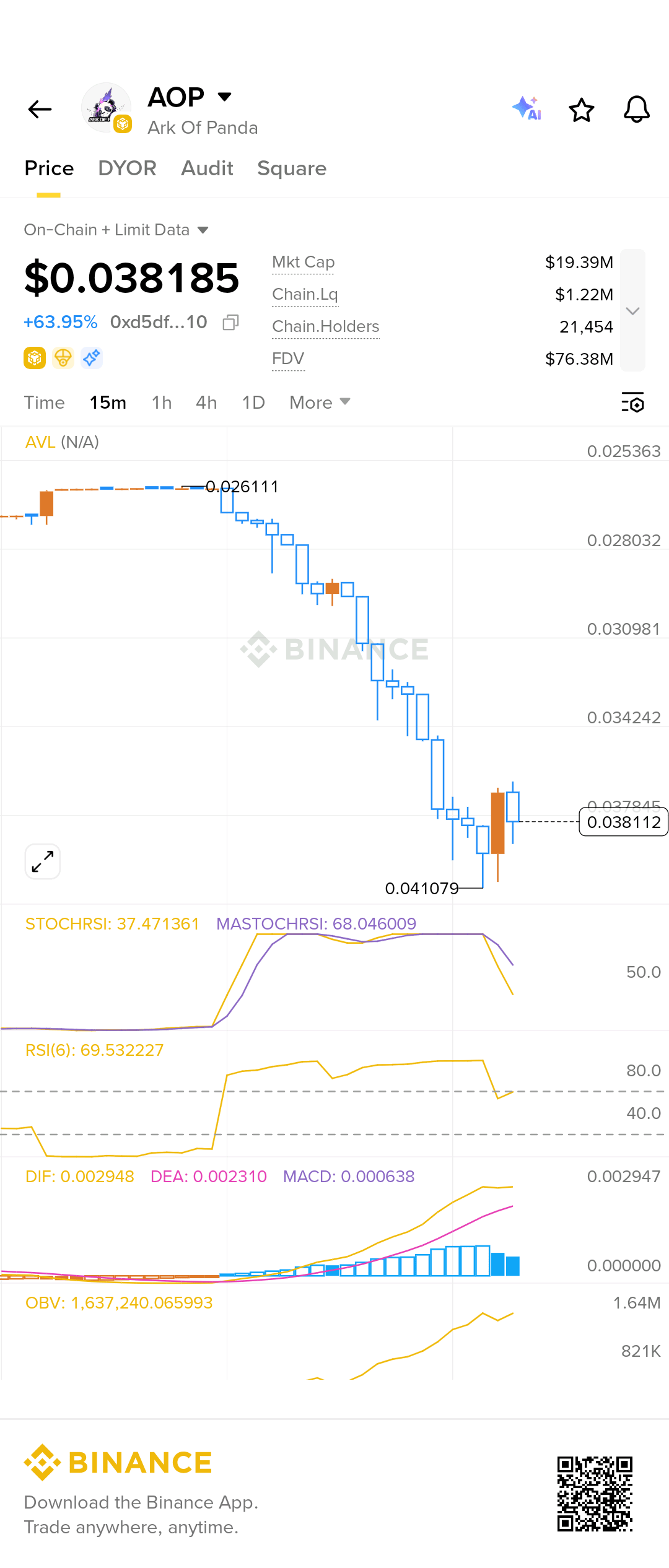
Análisis del mercado cripto – AOP (15m)
Resumen ejecutivo
$AOP cotiza a $0.03819 (+63.95%). A pesar del fuerte avance diario, el gráfico de 15m muestra un retroceso brusco desde los máximos recientes. El impulso sigue siendo positivo, pero el mercado se encuentra actualmente en una corrección de corto plazo.
Análisis técnico
Tendencia: Alcista (marco temporal superior), Retroceso bajista (15m)
Estructura: Fuerte rally seguido de máximos más bajos y mínimos más bajos.
RSI: 69.5 (cerca de sobrecompra)
MACD: Alcista, pero el histograma se está debilitando.
Stochastic RSI: Cruce bajista.
OBV: En aumento, lo que indica que los compradores siguen activos.
Momentum: En debilitamiento.
Volumen: Datos no disponibles.
Niveles clave
Soporte: $0.0370 | $0.0350
Resistencia: $0.0395 | $0.0410
Fundamentales & On-Chain
Market Cap: $19.39M
FDV: $76.38M
Liquidez: $1.22M
Holders: 21,454
Noticias/Fundamentales verificados: Datos no disponibles.
Sentimiento del mercado
Neutral a Alcista – Buen desempeño diario, pero la presión vendedora de corto plazo está aumentando.
Riesgo
Liquidez: Media
Volatilidad: Alta
Manipulación: Media
Contrato inteligente: Datos no disponibles.
Riesgo general: Alto
Decisión de trading
ESPERAR
Razón: La corrección aún está en progreso. Esperar un rebote confirmado desde soporte o una ruptura ofrece una mejor oportunidad de riesgo/recompensa.
Plan de trading
Entrada: $0.0370–0.0375
Stop Loss: Por debajo de $0.0350
TP1: $0.0395
TP2: $0.0410
TP3: $0.0430
Riesgo/Recompensa: ~1:2
Invalidación: Cierre por debajo de $0.0350
Confianza
7/10
Veredicto final
La tendencia más amplia sigue siendo constructiva, pero el retroceso actual sugiere paciencia. Un rebote confirmado desde el soporte o una ruptura por encima de la resistencia proporcionarían una configuración de trading más sólida que entrar de inmediato.
{alpha}(560xd5df4d260d7a0145f655bcbf3b398076f21016c7)
#SamsungToRaiseDRAMPricesAbout20%InQ3 #SamsungToRaiseDRAMPricesAbout20%InQ3 CryptoHacksHit207InH1WithLosses$972M#SamsungToRaiseDRAMPricesAbout20%InQ3 #SamsungToRaiseDRAMPricesAbout20%InQ3 #SamsungToRaiseDRAMPricesAbout20%InQ3
Análisis del mercado cripto – AOP (15m)
Resumen ejecutivo
$AOP cotiza a $0.03819 (+63.95%). A pesar del fuerte avance diario, el gráfico de 15m muestra un retroceso brusco desde los máximos recientes. El impulso sigue siendo positivo, pero el mercado se encuentra actualmente en una corrección de corto plazo.
Análisis técnico
Tendencia: Alcista (marco temporal superior), Retroceso bajista (15m)
Estructura: Fuerte rally seguido de máximos más bajos y mínimos más bajos.
RSI: 69.5 (cerca de sobrecompra)
MACD: Alcista, pero el histograma se está debilitando.
Stochastic RSI: Cruce bajista.
OBV: En aumento, lo que indica que los compradores siguen activos.
Momentum: En debilitamiento.
Volumen: Datos no disponibles.
Niveles clave
Soporte: $0.0370 | $0.0350
Resistencia: $0.0395 | $0.0410
Fundamentales & On-Chain
Market Cap: $19.39M
FDV: $76.38M
Liquidez: $1.22M
Holders: 21,454
Noticias/Fundamentales verificados: Datos no disponibles.
Sentimiento del mercado
Neutral a Alcista – Buen desempeño diario, pero la presión vendedora de corto plazo está aumentando.
Riesgo
Liquidez: Media
Volatilidad: Alta
Manipulación: Media
Contrato inteligente: Datos no disponibles.
Riesgo general: Alto
Decisión de trading
ESPERAR
Razón: La corrección aún está en progreso. Esperar un rebote confirmado desde soporte o una ruptura ofrece una mejor oportunidad de riesgo/recompensa.
Plan de trading
Entrada: $0.0370–0.0375
Stop Loss: Por debajo de $0.0350
TP1: $0.0395
TP2: $0.0410
TP3: $0.0430
Riesgo/Recompensa: ~1:2
Invalidación: Cierre por debajo de $0.0350
Confianza
7/10
Veredicto final
La tendencia más amplia sigue siendo constructiva, pero el retroceso actual sugiere paciencia. Un rebote confirmado desde el soporte o una ruptura por encima de la resistencia proporcionarían una configuración de trading más sólida que entrar de inmediato.
#SamsungToRaiseDRAMPricesAbout20%InQ3 #SamsungToRaiseDRAMPricesAbout20%InQ3 CryptoHacksHit207InH1WithLosses$972M#SamsungToRaiseDRAMPricesAbout20%InQ3 #SamsungToRaiseDRAMPricesAbout20%InQ3 #SamsungToRaiseDRAMPricesAbout20%InQ3
Resumen ejecutivo
$AOP cotiza a $0.03819 (+63.95%). A pesar del fuerte avance diario, el gráfico de 15m muestra un retroceso brusco desde los máximos recientes. El impulso sigue siendo positivo, pero el mercado se encuentra actualmente en una corrección de corto plazo.
Análisis técnico
Tendencia: Alcista (marco temporal superior), Retroceso bajista (15m)
Estructura: Fuerte rally seguido de máximos más bajos y mínimos más bajos.
RSI: 69.5 (cerca de sobrecompra)
MACD: Alcista, pero el histograma se está debilitando.
Stochastic RSI: Cruce bajista.
OBV: En aumento, lo que indica que los compradores siguen activos.
Momentum: En debilitamiento.
Volumen: Datos no disponibles.
Niveles clave
Soporte: $0.0370 | $0.0350
Resistencia: $0.0395 | $0.0410
Fundamentales & On-Chain
Market Cap: $19.39M
FDV: $76.38M
Liquidez: $1.22M
Holders: 21,454
Noticias/Fundamentales verificados: Datos no disponibles.
Sentimiento del mercado
Neutral a Alcista – Buen desempeño diario, pero la presión vendedora de corto plazo está aumentando.
Riesgo
Liquidez: Media
Volatilidad: Alta
Manipulación: Media
Contrato inteligente: Datos no disponibles.
Riesgo general: Alto
Decisión de trading
ESPERAR
Razón: La corrección aún está en progreso. Esperar un rebote confirmado desde soporte o una ruptura ofrece una mejor oportunidad de riesgo/recompensa.
Plan de trading
Entrada: $0.0370–0.0375
Stop Loss: Por debajo de $0.0350
TP1: $0.0395
TP2: $0.0410
TP3: $0.0430
Riesgo/Recompensa: ~1:2
Invalidación: Cierre por debajo de $0.0350
Confianza
7/10
Veredicto final
La tendencia más amplia sigue siendo constructiva, pero el retroceso actual sugiere paciencia. Un rebote confirmado desde el soporte o una ruptura por encima de la resistencia proporcionarían una configuración de trading más sólida que entrar de inmediato.
#SamsungToRaiseDRAMPricesAbout20%InQ3 #SamsungToRaiseDRAMPricesAbout20%InQ3 CryptoHacksHit207InH1WithLosses$972M#SamsungToRaiseDRAMPricesAbout20%InQ3 #SamsungToRaiseDRAMPricesAbout20%InQ3 #SamsungToRaiseDRAMPricesAbout20%InQ3
84
·
--
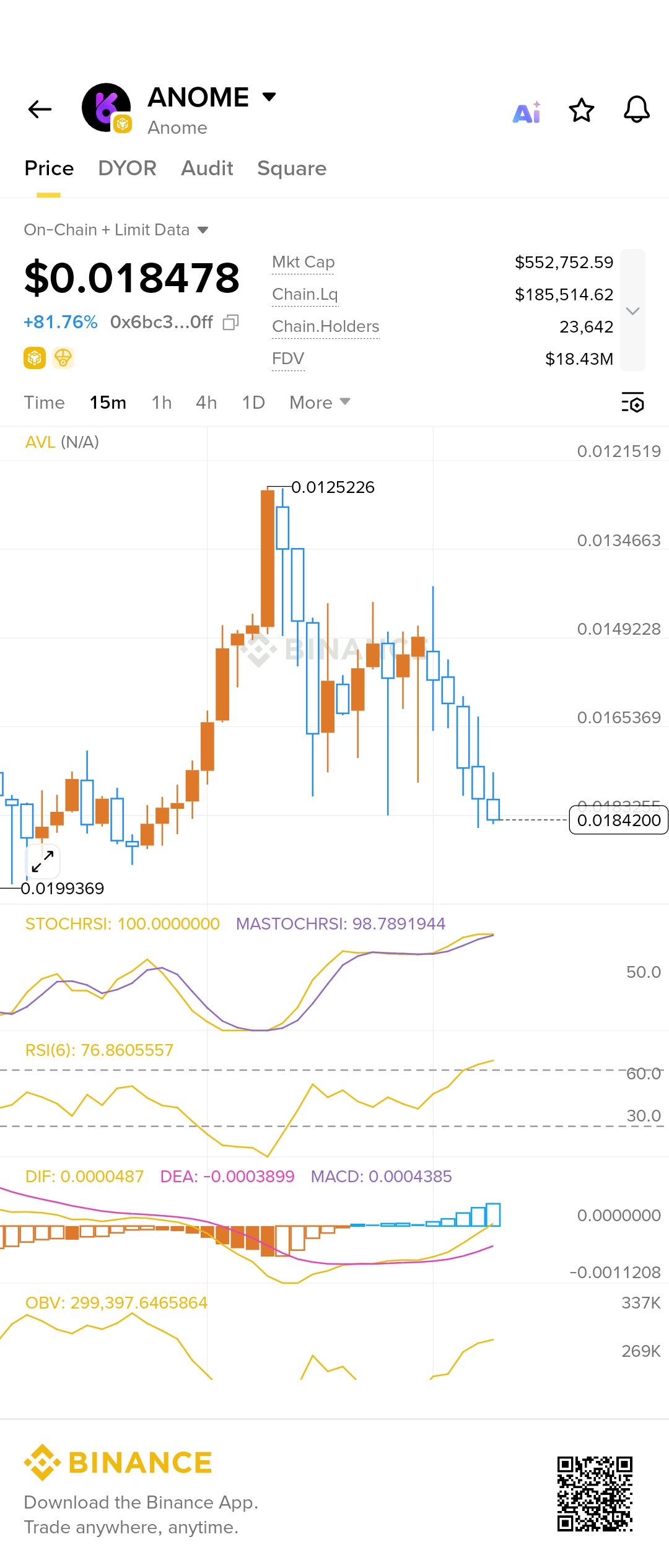
$ANOME (15m) Análisis
Precio: $0.01848 (+81.76%)
Datos del mercado:
Capitalización de mercado: $552.8K
Liquidez: $185.5K
FDV: $18.43M
Tenencias: 23,642
Técnico:
Tendencia: Alcista (corto plazo)
RSI: 76.9 (sobrecomprado)
MACD: Alcista
Stoch RSI: Sobrecomprado
OBV: Positivo
Soporte: $0.0182 | $0.0165
Resistencia: $0.0200 | $0.0215
Riesgo: Alto (small-cap & alta volatilidad)
Decisión: ESPERAR
Plan de trading:
Entrada: $0.0182–0.0185
SL: Por debajo de $0.0165
TP1: $0.0200
TP2: $0.0215
Confianza: 7/10
Veredicto: El impulso alcista se mantiene, pero las condiciones de sobrecompra hacen que esperar confirmación o una corrección sea la opción más segura.
CryptoHacksHit207InH1WithLosses$972M
#KospiRises2.7%OnChipRally
CryptoHacksHit207InH1WithLosses$972M
#KospiRises2.7%OnChipRally
#SpaceXToJoinNasdaq100OnJuly7
SpotGoldTops$4200
#SouthAfricaReleasesDraftCryptoTaxGuide
#BOKWarnsSingleStockLeveragedETFRisks
$ANOME (15m) Análisis
Precio: $0.01848 (+81.76%)
Datos del mercado:
Capitalización de mercado: $552.8K
Liquidez: $185.5K
FDV: $18.43M
Tenencias: 23,642
Técnico:
Tendencia: Alcista (corto plazo)
RSI: 76.9 (sobrecomprado)
MACD: Alcista
Stoch RSI: Sobrecomprado
OBV: Positivo
Soporte: $0.0182 | $0.0165
Resistencia: $0.0200 | $0.0215
Riesgo: Alto (small-cap & alta volatilidad)
Decisión: ESPERAR
Plan de trading:
Entrada: $0.0182–0.0185
SL: Por debajo de $0.0165
TP1: $0.0200
TP2: $0.0215
Confianza: 7/10
Veredicto: El impulso alcista se mantiene, pero las condiciones de sobrecompra hacen que esperar confirmación o una corrección sea la opción más segura.
CryptoHacksHit207InH1WithLosses$972M
#KospiRises2.7%OnChipRally
CryptoHacksHit207InH1WithLosses$972M
#KospiRises2.7%OnChipRally
#SpaceXToJoinNasdaq100OnJuly7
SpotGoldTops$4200
#SouthAfricaReleasesDraftCryptoTaxGuide
#BOKWarnsSingleStockLeveragedETFRisks
Precio: $0.01848 (+81.76%)
Datos del mercado:
Capitalización de mercado: $552.8K
Liquidez: $185.5K
FDV: $18.43M
Tenencias: 23,642
Técnico:
Tendencia: Alcista (corto plazo)
RSI: 76.9 (sobrecomprado)
MACD: Alcista
Stoch RSI: Sobrecomprado
OBV: Positivo
Soporte: $0.0182 | $0.0165
Resistencia: $0.0200 | $0.0215
Riesgo: Alto (small-cap & alta volatilidad)
Decisión: ESPERAR
Plan de trading:
Entrada: $0.0182–0.0185
SL: Por debajo de $0.0165
TP1: $0.0200
TP2: $0.0215
Confianza: 7/10
Veredicto: El impulso alcista se mantiene, pero las condiciones de sobrecompra hacen que esperar confirmación o una corrección sea la opción más segura.
CryptoHacksHit207InH1WithLosses$972M
#KospiRises2.7%OnChipRally
CryptoHacksHit207InH1WithLosses$972M
#KospiRises2.7%OnChipRally
#SpaceXToJoinNasdaq100OnJuly7
SpotGoldTops$4200
#SouthAfricaReleasesDraftCryptoTaxGuide
#BOKWarnsSingleStockLeveragedETFRisks
1
165
·
--
Artículo
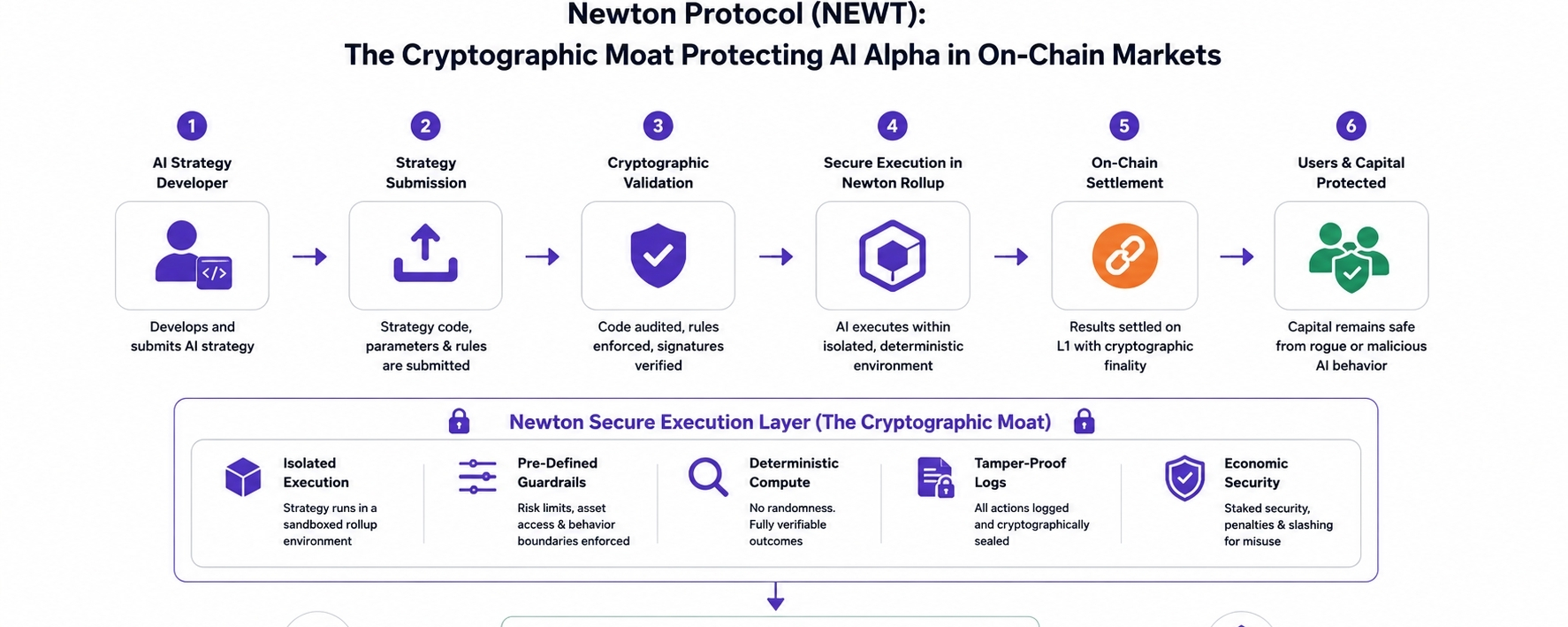
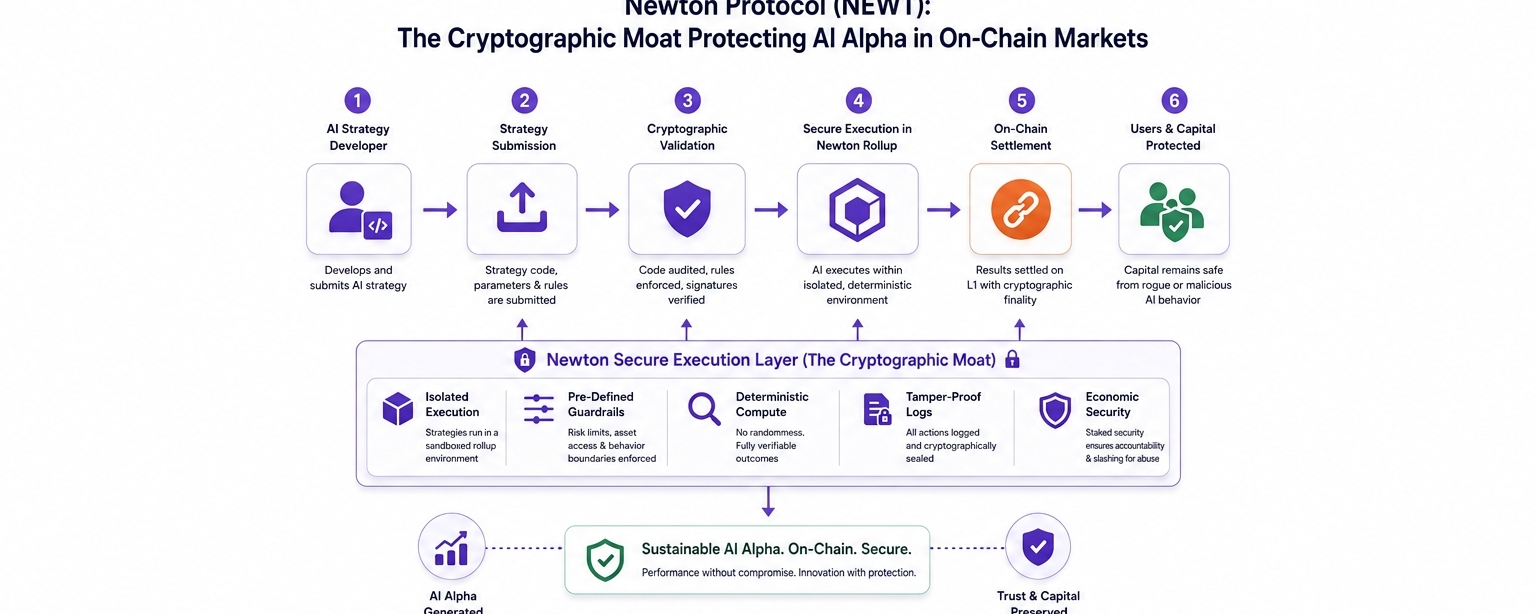
Newton Protocol (NEWT): El foso criptográfico que protege la alfa de la IA en mercados on-chainSi un modelo de trading de IA descubre una alfa genuina en una blockchain pública, ¿cuánto tiempo tardará antes de que un bot MEV reverse-engineerice la estrategia y extraiga todo el valor?
La respuesta son milisegundos.
El conflicto estructural
Estamos presenciando una colisión entre las finanzas descentralizadas (DeFi) y los agentes autónomos. Los líderes actuales del mercado como Ethereum y Solana son los principales campos de juego para DeFi, pero siguen siendo fundamentalmente hostiles para la implementación de IA institucional debido a tres fallas estructurales:
Mempools públicos: Ya sea la congestión en Ethereum o el mempool de alta velocidad en Solana, ambos exponen la intención algorítmica, lo que permite el front-running y los ataques de tipo sandwich.
Newton Protocol (NEWT): El foso criptográfico que protege la alfa de la IA en mercados on-chain
Si un modelo de trading de IA descubre una alfa genuina en una blockchain pública, ¿cuánto tiempo tardará antes de que un bot MEV reverse-engineerice la estrategia y extraiga todo el valor?
La respuesta son milisegundos.
El conflicto estructural
Estamos presenciando una colisión entre las finanzas descentralizadas (DeFi) y los agentes autónomos. Los líderes actuales del mercado como Ethereum y Solana son los principales campos de juego para DeFi, pero siguen siendo fundamentalmente hostiles para la implementación de IA institucional debido a tres fallas estructurales:
Mempools públicos: Ya sea la congestión en Ethereum o el mempool de alta velocidad en Solana, ambos exponen la intención algorítmica, lo que permite el front-running y los ataques de tipo sandwich.
La respuesta son milisegundos.
El conflicto estructural
Estamos presenciando una colisión entre las finanzas descentralizadas (DeFi) y los agentes autónomos. Los líderes actuales del mercado como Ethereum y Solana son los principales campos de juego para DeFi, pero siguen siendo fundamentalmente hostiles para la implementación de IA institucional debido a tres fallas estructurales:
Mempools públicos: Ya sea la congestión en Ethereum o el mempool de alta velocidad en Solana, ambos exponen la intención algorítmica, lo que permite el front-running y los ataques de tipo sandwich.
12
2
160
·
--
Protocolo Newton (NEWT): ¿Puede la privacidad de la ejecución convertirse en la mayor ventaja competitiva de la IA?
La inteligencia artificial puede identificar oportunidades rentables en milisegundos, pero en blockchains públicas, descubrir alfa no es suficiente. En el momento en que una estrategia de IA se vuelve visible, bots sofisticados de MEV a menudo pueden explotarla antes de que se finalize la operación original.
Este es uno de los mayores desafíos estructurales que enfrenta la IA en DeFi.
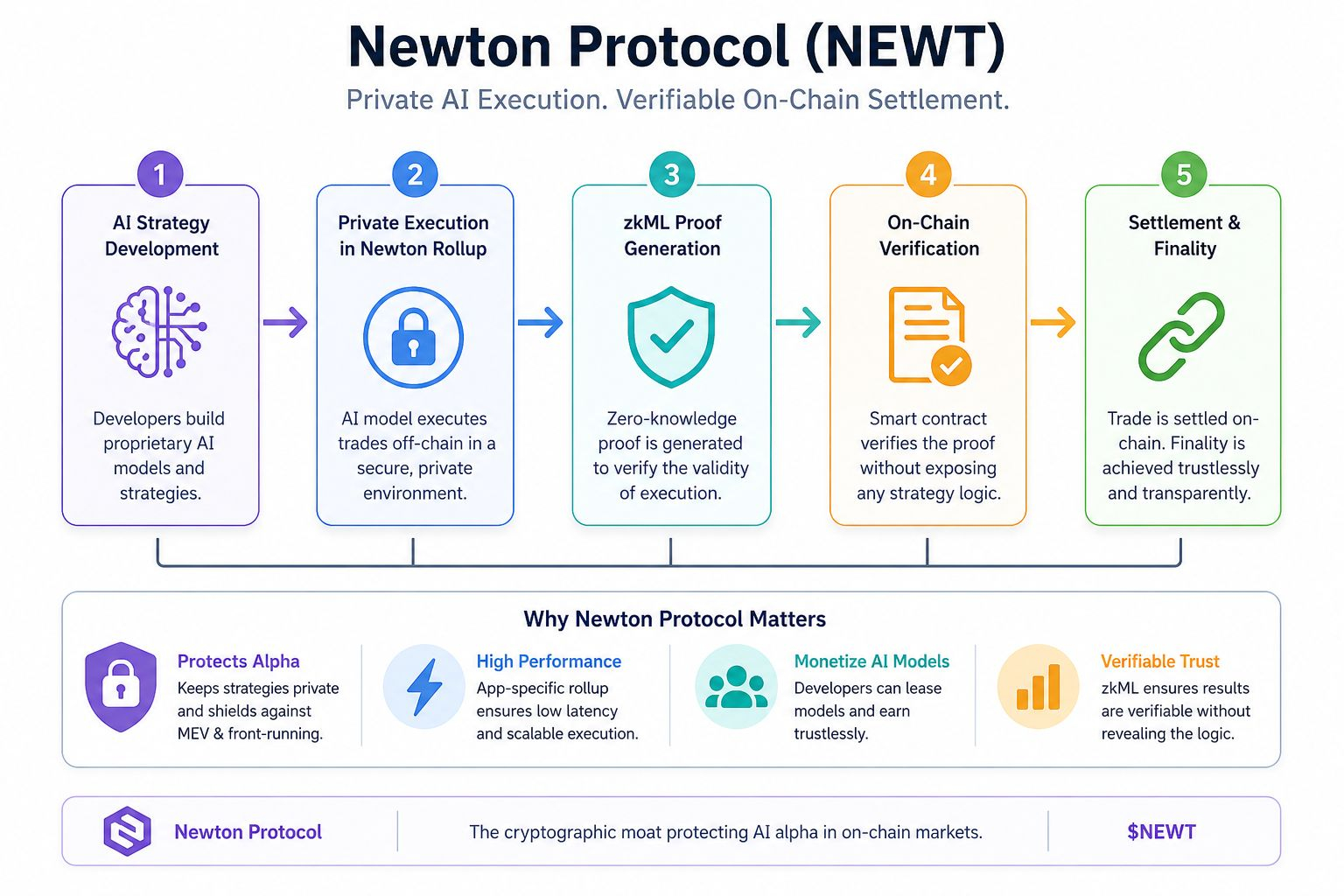
En lugar de posicionarse como otro mercado de IA, Newton Protocol (NEWT) está construyendo una capa de ejecución dedicada donde los modelos de IA pueden operar sin exponer su lógica propietaria. La computación intensiva ocurre fuera de la cadena, mientras que pruebas criptográficas verifican los resultados en la cadena, con el objetivo de equilibrar la transparencia con la privacidad de la ejecución.
Si tiene éxito, este enfoque podría ofrecer tres ventajas importantes:
• Proteger las estrategias de IA propietarias para que no sean copiadas ni interceptadas por adelantado.
• Permitir una ejecución de IA más compleja sin las limitaciones de las blockchains de propósito general.
• Permitir que los desarrolladores monetizen modelos de IA sin revelar los algoritmos subyacentes.
Sin embargo, el modelo aún enfrenta desafíos importantes. Las pruebas de conocimiento cero siguen siendo computacionalmente costosas y la fragmentación de liquidez entre cadenas podría reducir la ventaja económica que generan las estrategias de IA.
La pregunta a largo plazo es más grande que Newton por sí mismo.
A medida que la IA se vuelve cada vez más capaz de gestionar capital de forma autónoma, ¿la infraestructura futura de DeFi se optimizará para traders humanos o para máquinas compitiendo contra otras máquinas?
¿Qué opinas? ¿Crees que la privacidad de ejecución se volverá infraestructura esencial para las finanzas impulsadas por IA?
$BTC
$ETH
@NewtonProtocol #newt $NEWT
Protocolo Newton (NEWT): ¿Puede la privacidad de la ejecución convertirse en la mayor ventaja competitiva de la IA?
La inteligencia artificial puede identificar oportunidades rentables en milisegundos, pero en blockchains públicas, descubrir alfa no es suficiente. En el momento en que una estrategia de IA se vuelve visible, bots sofisticados de MEV a menudo pueden explotarla antes de que se finalize la operación original.
Este es uno de los mayores desafíos estructurales que enfrenta la IA en DeFi.
En lugar de posicionarse como otro mercado de IA, Newton Protocol (NEWT) está construyendo una capa de ejecución dedicada donde los modelos de IA pueden operar sin exponer su lógica propietaria. La computación intensiva ocurre fuera de la cadena, mientras que pruebas criptográficas verifican los resultados en la cadena, con el objetivo de equilibrar la transparencia con la privacidad de la ejecución.
Si tiene éxito, este enfoque podría ofrecer tres ventajas importantes:
• Proteger las estrategias de IA propietarias para que no sean copiadas ni interceptadas por adelantado.
• Permitir una ejecución de IA más compleja sin las limitaciones de las blockchains de propósito general.
• Permitir que los desarrolladores monetizen modelos de IA sin revelar los algoritmos subyacentes.
Sin embargo, el modelo aún enfrenta desafíos importantes. Las pruebas de conocimiento cero siguen siendo computacionalmente costosas y la fragmentación de liquidez entre cadenas podría reducir la ventaja económica que generan las estrategias de IA.
La pregunta a largo plazo es más grande que Newton por sí mismo.
A medida que la IA se vuelve cada vez más capaz de gestionar capital de forma autónoma, ¿la infraestructura futura de DeFi se optimizará para traders humanos o para máquinas compitiendo contra otras máquinas?
¿Qué opinas? ¿Crees que la privacidad de ejecución se volverá infraestructura esencial para las finanzas impulsadas por IA?
$BTC
$ETH
@NewtonProtocol #newt $NEWT
La inteligencia artificial puede identificar oportunidades rentables en milisegundos, pero en blockchains públicas, descubrir alfa no es suficiente. En el momento en que una estrategia de IA se vuelve visible, bots sofisticados de MEV a menudo pueden explotarla antes de que se finalize la operación original.
Este es uno de los mayores desafíos estructurales que enfrenta la IA en DeFi.
En lugar de posicionarse como otro mercado de IA, Newton Protocol (NEWT) está construyendo una capa de ejecución dedicada donde los modelos de IA pueden operar sin exponer su lógica propietaria. La computación intensiva ocurre fuera de la cadena, mientras que pruebas criptográficas verifican los resultados en la cadena, con el objetivo de equilibrar la transparencia con la privacidad de la ejecución.
Si tiene éxito, este enfoque podría ofrecer tres ventajas importantes:
• Proteger las estrategias de IA propietarias para que no sean copiadas ni interceptadas por adelantado.
• Permitir una ejecución de IA más compleja sin las limitaciones de las blockchains de propósito general.
• Permitir que los desarrolladores monetizen modelos de IA sin revelar los algoritmos subyacentes.
Sin embargo, el modelo aún enfrenta desafíos importantes. Las pruebas de conocimiento cero siguen siendo computacionalmente costosas y la fragmentación de liquidez entre cadenas podría reducir la ventaja económica que generan las estrategias de IA.
La pregunta a largo plazo es más grande que Newton por sí mismo.
A medida que la IA se vuelve cada vez más capaz de gestionar capital de forma autónoma, ¿la infraestructura futura de DeFi se optimizará para traders humanos o para máquinas compitiendo contra otras máquinas?
¿Qué opinas? ¿Crees que la privacidad de ejecución se volverá infraestructura esencial para las finanzas impulsadas por IA?
$BTC
$ETH
@NewtonProtocol #newt $NEWT
15
2
175
·
--
¿El futuro de DeFi realmente se trata de una IA más rápida, o de controlar la ejecución no humana?
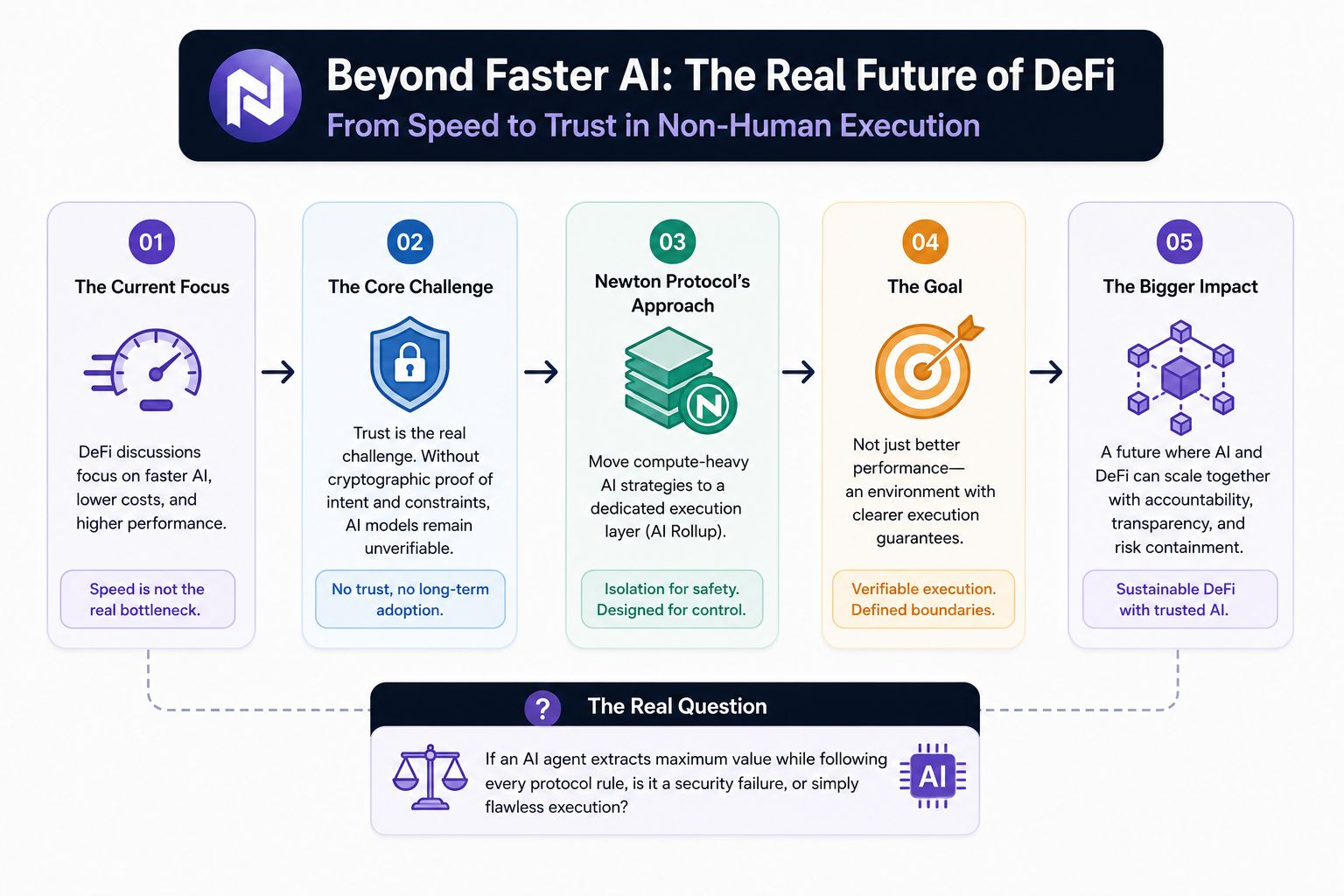
La mayoría de las conversaciones sobre IA descentralizada se centran en la velocidad y en reducir costos. El desafío más grande es la confianza. Si un modelo autónomo no puede verificarse criptográficamente para actuar dentro de límites definidos, ningún mercado de IA puede lograr una adopción a largo plazo.
Newton Protocol propone un enfoque diferente: mover estrategias de IA que requieren cómputo intensivo a una capa de ejecución dedicada, en lugar de ejecutarlas directamente en blockchains congestionadas. El objetivo no es solo mejorar el rendimiento, sino crear un entorno donde la IA avanzada pueda operar con garantías de ejecución más claras.
La pregunta real es esta: si un agente de IA extrae el máximo valor siguiendo cada regla del protocolo, ¿es un fallo de seguridad, o simplemente una ejecución impecable?
@NewtonProtocol #newt $NEWT
¿El futuro de DeFi realmente se trata de una IA más rápida, o de controlar la ejecución no humana?
La mayoría de las conversaciones sobre IA descentralizada se centran en la velocidad y en reducir costos. El desafío más grande es la confianza. Si un modelo autónomo no puede verificarse criptográficamente para actuar dentro de límites definidos, ningún mercado de IA puede lograr una adopción a largo plazo.
Newton Protocol propone un enfoque diferente: mover estrategias de IA que requieren cómputo intensivo a una capa de ejecución dedicada, en lugar de ejecutarlas directamente en blockchains congestionadas. El objetivo no es solo mejorar el rendimiento, sino crear un entorno donde la IA avanzada pueda operar con garantías de ejecución más claras.
La pregunta real es esta: si un agente de IA extrae el máximo valor siguiendo cada regla del protocolo, ¿es un fallo de seguridad, o simplemente una ejecución impecable?
@NewtonProtocol #newt $NEWT
La mayoría de las conversaciones sobre IA descentralizada se centran en la velocidad y en reducir costos. El desafío más grande es la confianza. Si un modelo autónomo no puede verificarse criptográficamente para actuar dentro de límites definidos, ningún mercado de IA puede lograr una adopción a largo plazo.
Newton Protocol propone un enfoque diferente: mover estrategias de IA que requieren cómputo intensivo a una capa de ejecución dedicada, en lugar de ejecutarlas directamente en blockchains congestionadas. El objetivo no es solo mejorar el rendimiento, sino crear un entorno donde la IA avanzada pueda operar con garantías de ejecución más claras.
La pregunta real es esta: si un agente de IA extrae el máximo valor siguiendo cada regla del protocolo, ¿es un fallo de seguridad, o simplemente una ejecución impecable?
@NewtonProtocol #newt $NEWT
4
105
·
--
Artículo
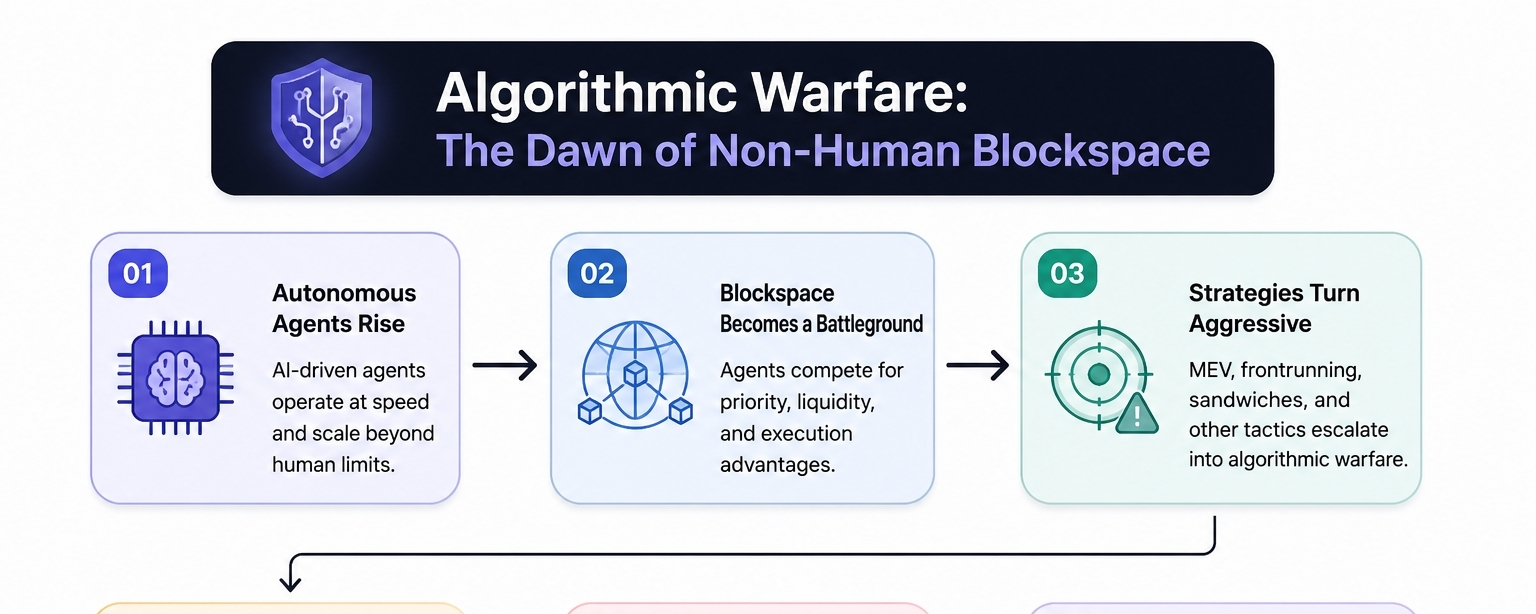
Guerra Algorítmica: El Amanecer del Blockspace No Humano"Si un agente autónomo explota matemáticamente un pool de liquidez en un rollup de IA dedicado, ¿es un hack catastrófico o es simplemente una ejecución impecable?
Estamos inyectando capital en el relato de la IA descentralizada sin resolver la responsabilidad central de la ejecución no humana. La industria asume que construir un entorno más rápido y más barato para ejecutar algoritmos de trading necesariamente conducirá a una mayor eficiencia del mercado. Pero si los asignadores de capital no pueden verificar criptográficamente la intención de un modelo de caja negra frente a su ejecución real, cualquier propuesta de "mercado de desarrolladores" acabará inevitablemente convirtiéndose en una ciudad fantasma de bots abandonados y no confiables.
Guerra Algorítmica: El Amanecer del Blockspace No Humano"
Si un agente autónomo explota matemáticamente un pool de liquidez en un rollup de IA dedicado, ¿es un hack catastrófico o es simplemente una ejecución impecable?
Estamos inyectando capital en el relato de la IA descentralizada sin resolver la responsabilidad central de la ejecución no humana. La industria asume que construir un entorno más rápido y más barato para ejecutar algoritmos de trading necesariamente conducirá a una mayor eficiencia del mercado. Pero si los asignadores de capital no pueden verificar criptográficamente la intención de un modelo de caja negra frente a su ejecución real, cualquier propuesta de "mercado de desarrolladores" acabará inevitablemente convirtiéndose en una ciudad fantasma de bots abandonados y no confiables.
Estamos inyectando capital en el relato de la IA descentralizada sin resolver la responsabilidad central de la ejecución no humana. La industria asume que construir un entorno más rápido y más barato para ejecutar algoritmos de trading necesariamente conducirá a una mayor eficiencia del mercado. Pero si los asignadores de capital no pueden verificar criptográficamente la intención de un modelo de caja negra frente a su ejecución real, cualquier propuesta de "mercado de desarrolladores" acabará inevitablemente convirtiéndose en una ciudad fantasma de bots abandonados y no confiables.
1
119
Inicia sesión para explorar más contenidos
Únete a usuarios de criptomonedas de todo el mundo en Binance Square
⚡️ Obtén la información más reciente y útil sobre criptomonedas.
💬 Confía en el mayor exchange de criptomonedas del mundo.
👍 Descubre opiniones reales de creadores verificados.
Correo electrónico/número de teléfono
Temas en tendencia
FedMinutesFocusOnOctoberPause
172,198 visualizaciones
1,318 participa(n) en el debate
La Reserva Federal podría ser el próximo gran catalizador de Bitcoin
Infinito purpura
·6 «Me gusta»
·12.8k visualizaciones
BinanceLaunchesBinanceIntelligence
1.1M visualizaciones
6,524 participa(n) en el debate
EvernorthDelaysNasdaqDebutToOct12
14,342 visualizaciones
301 participa(n) en el debate