

东京小姐
4.7k Publicaciones

东京小姐
Denunciar
Bloquear usuario
绿色就是目标 🗼🔥
Abrir operación
Trader frecuente
5 años
312 Siguiendo
22.5K+ Seguidores
12.8K+ Me gusta
Publicaciones
Cartera
Todo
Cotizaciones
Vídeos
Directo
·
--
Alcista
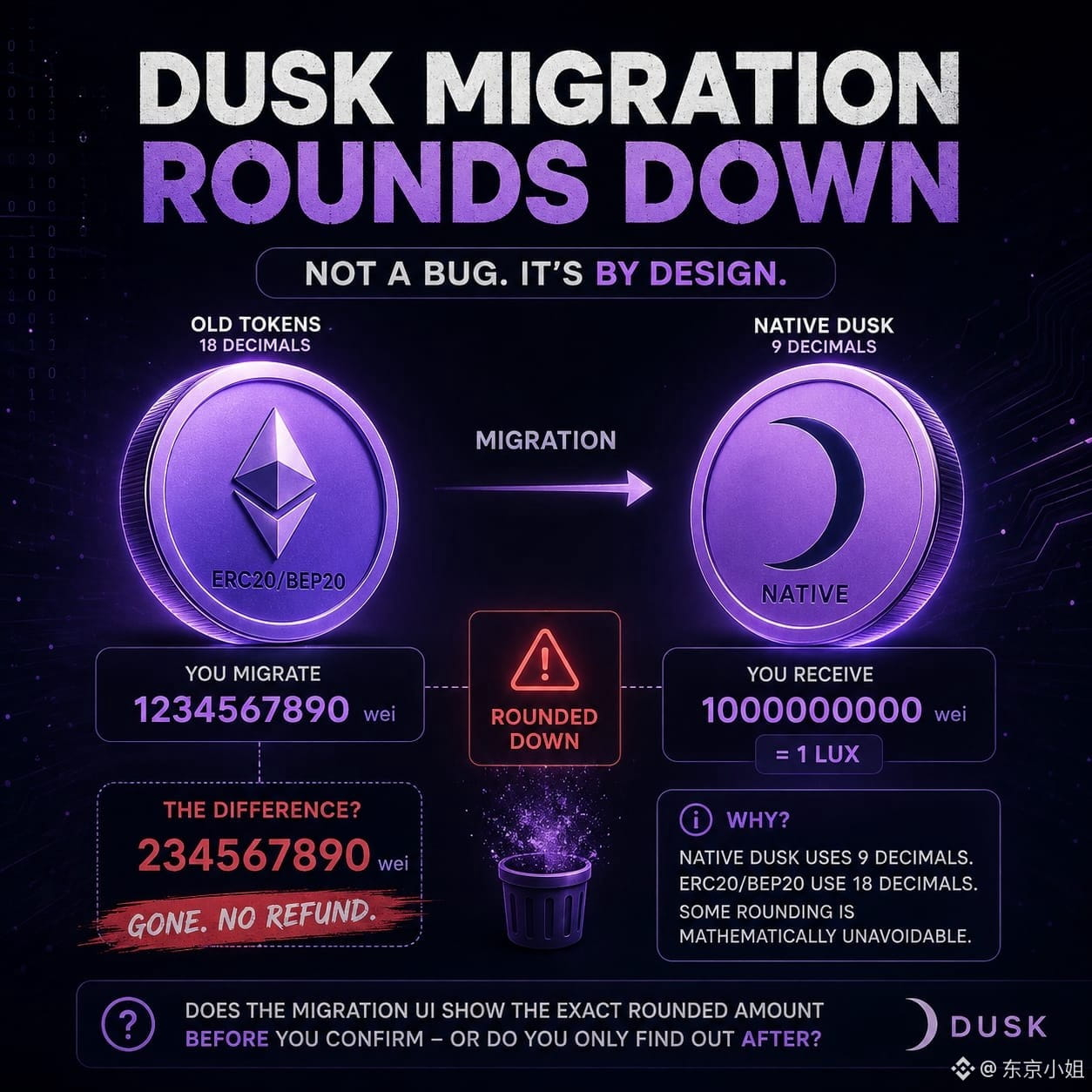
la guía de migración de docs.dusk.network tiene un detalle de redondeo enterrado en la sección de preguntas frecuentes que yo no había visto mencionado en ningún otro lugar. si migras una cantidad de dusk en erc20 o bep20 que no sea un múltiplo exacto de 1 lux, el contrato simplemente lo redondea hacia abajo; y tuve que ejecutar su propio ejemplo dos veces en mi cabeza antes de que realmente encajara: migrar 1234567890 wei de dusk, y redondea exactamente a 1000000000 wei, un lux limpio, sin crédito parcial para el resto.
así que el remanente no se reembolsa, no se pone en cola para un recargo posterior: simplemente se pierde de lo que recibes en el lado nativo. ese es un costo real incorporado en las mecánicas de la migración en sí, no un fallo, porque el dusk nativo usa 9 decimales y erc20/bep20 usa 18, así que algún redondeo es matemáticamente inevitable en alguna parte de la conversión.
para la mayoría de las personas que migran un saldo normal de una billetera, probablemente son fracciones de un céntimo y de verdad no importa. pero nadie que migra por primera vez espera que "redondear hacia abajo y perder la diferencia" sea el comportamiento predeterminado en una red construida alrededor de una precisión de liquidación determinista.
¿la interfaz de migración muestra realmente a las personas la cantidad exacta redondeada antes de que confirmen, o solo se enteran después? 🧐
#dusk $DUSK @Dusk_Foundation
la guía de migración de docs.dusk.network tiene un detalle de redondeo enterrado en la sección de preguntas frecuentes que yo no había visto mencionado en ningún otro lugar. si migras una cantidad de dusk en erc20 o bep20 que no sea un múltiplo exacto de 1 lux, el contrato simplemente lo redondea hacia abajo; y tuve que ejecutar su propio ejemplo dos veces en mi cabeza antes de que realmente encajara: migrar 1234567890 wei de dusk, y redondea exactamente a 1000000000 wei, un lux limpio, sin crédito parcial para el resto.
así que el remanente no se reembolsa, no se pone en cola para un recargo posterior: simplemente se pierde de lo que recibes en el lado nativo. ese es un costo real incorporado en las mecánicas de la migración en sí, no un fallo, porque el dusk nativo usa 9 decimales y erc20/bep20 usa 18, así que algún redondeo es matemáticamente inevitable en alguna parte de la conversión.
para la mayoría de las personas que migran un saldo normal de una billetera, probablemente son fracciones de un céntimo y de verdad no importa. pero nadie que migra por primera vez espera que "redondear hacia abajo y perder la diferencia" sea el comportamiento predeterminado en una red construida alrededor de una precisión de liquidación determinista.
¿la interfaz de migración muestra realmente a las personas la cantidad exacta redondeada antes de que confirmen, o solo se enteran después? 🧐
#dusk $DUSK @Dusk
así que el remanente no se reembolsa, no se pone en cola para un recargo posterior: simplemente se pierde de lo que recibes en el lado nativo. ese es un costo real incorporado en las mecánicas de la migración en sí, no un fallo, porque el dusk nativo usa 9 decimales y erc20/bep20 usa 18, así que algún redondeo es matemáticamente inevitable en alguna parte de la conversión.
para la mayoría de las personas que migran un saldo normal de una billetera, probablemente son fracciones de un céntimo y de verdad no importa. pero nadie que migra por primera vez espera que "redondear hacia abajo y perder la diferencia" sea el comportamiento predeterminado en una red construida alrededor de una precisión de liquidación determinista.
¿la interfaz de migración muestra realmente a las personas la cantidad exacta redondeada antes de que confirmen, o solo se enteran después? 🧐
#dusk $DUSK @Dusk
1
184
·
--
@Dusk_Foundation
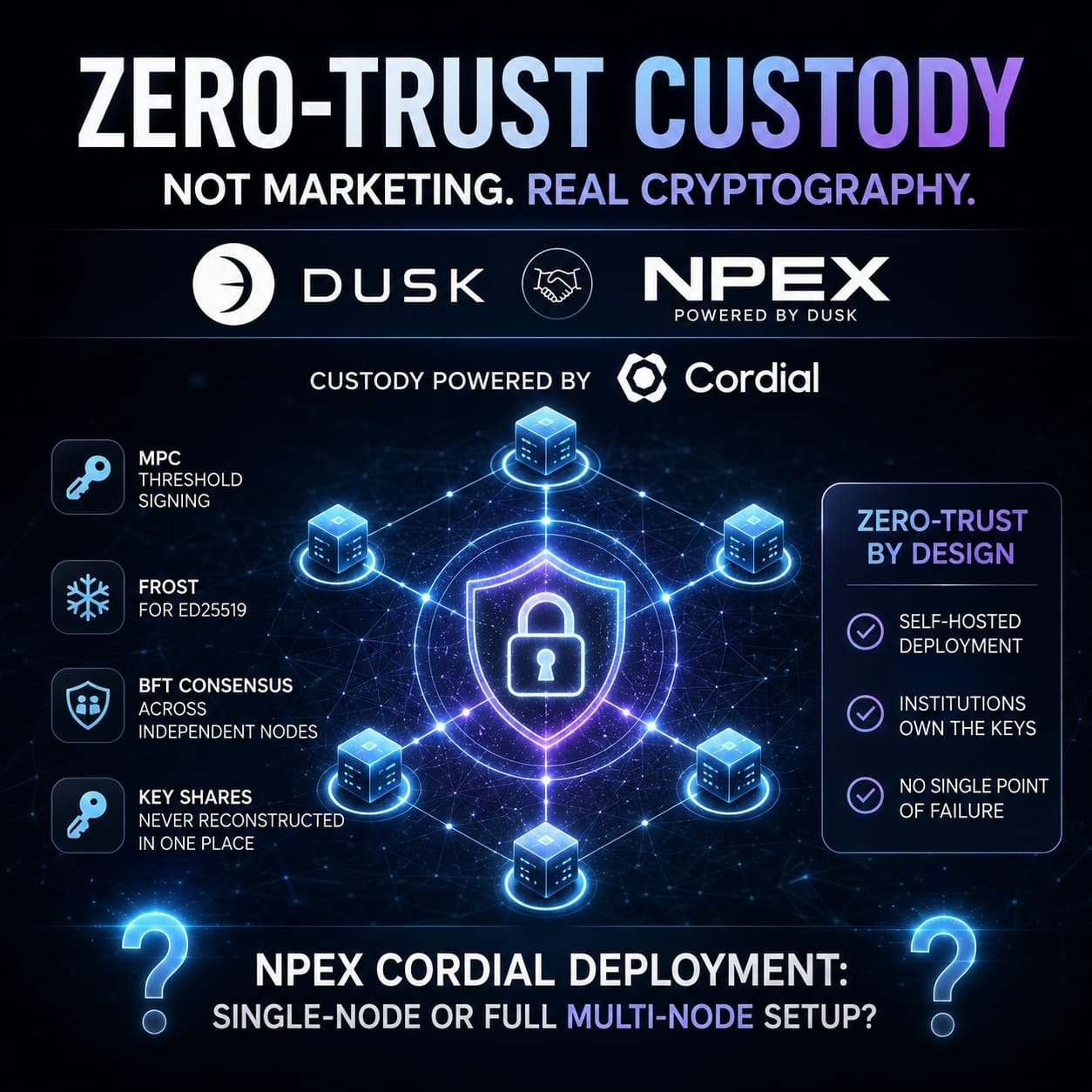
a fui a comprobar exactamente lo que significa "custodia zero-trust" en el anuncio dusk-cordial-npex, ya que normalmente ese término implica una arquitectura criptográfica específica, y pensé que el comunicado de prensa probablemente lo estaba usando de forma laxa para "autoalojado en lugar de un saas de terceros." me equivoqué, y sinceramente casi escribí todo este post a partir de esa suposición incorrecta antes de revisar las propias doc técnicas de cordial; — su producto de tesorería realmente usa firmas umbral mpc, frost para ed25519, una capa de consenso bft sobre nodos independientes, participaciones de clave que nunca se reconstruyen en un solo lugar. esa es criptografía real de confianza distribuida, no marketing disfrazado.
así que que npex elija un despliegue autoalojado y que además tenga una arquitectura genuinamente zero-trust en realidad no entran en conflicto de la manera en que yo asumí al principio: el planteamiento completo de cordial es permitir que las instituciones ejecuten esa arquitectura ellas mismas en lugar de confiar en la nube de un proveedor de saas.
lo que aún no sé es si npex está ejecutando la configuración bft multi-nodo completa o algo más cercano a un despliegue de un solo nodo, ya que la documentación de cordial menciona que ambas opciones están disponibles técnicamente. no son igual de "zero-trust" en la práctica incluso sobre el mismo software subyacente.
¿alguien sabe si el despliegue real de cordial en npex es de un solo nodo o una configuración genuina multi-nodo con umbrales? 🧐
#dusk $DUSK
@Dusk
a fui a comprobar exactamente lo que significa "custodia zero-trust" en el anuncio dusk-cordial-npex, ya que normalmente ese término implica una arquitectura criptográfica específica, y pensé que el comunicado de prensa probablemente lo estaba usando de forma laxa para "autoalojado en lugar de un saas de terceros." me equivoqué, y sinceramente casi escribí todo este post a partir de esa suposición incorrecta antes de revisar las propias doc técnicas de cordial; — su producto de tesorería realmente usa firmas umbral mpc, frost para ed25519, una capa de consenso bft sobre nodos independientes, participaciones de clave que nunca se reconstruyen en un solo lugar. esa es criptografía real de confianza distribuida, no marketing disfrazado.
así que que npex elija un despliegue autoalojado y que además tenga una arquitectura genuinamente zero-trust en realidad no entran en conflicto de la manera en que yo asumí al principio: el planteamiento completo de cordial es permitir que las instituciones ejecuten esa arquitectura ellas mismas en lugar de confiar en la nube de un proveedor de saas.
lo que aún no sé es si npex está ejecutando la configuración bft multi-nodo completa o algo más cercano a un despliegue de un solo nodo, ya que la documentación de cordial menciona que ambas opciones están disponibles técnicamente. no son igual de "zero-trust" en la práctica incluso sobre el mismo software subyacente.
¿alguien sabe si el despliegue real de cordial en npex es de un solo nodo o una configuración genuina multi-nodo con umbrales? 🧐
#dusk $DUSK
a fui a comprobar exactamente lo que significa "custodia zero-trust" en el anuncio dusk-cordial-npex, ya que normalmente ese término implica una arquitectura criptográfica específica, y pensé que el comunicado de prensa probablemente lo estaba usando de forma laxa para "autoalojado en lugar de un saas de terceros." me equivoqué, y sinceramente casi escribí todo este post a partir de esa suposición incorrecta antes de revisar las propias doc técnicas de cordial; — su producto de tesorería realmente usa firmas umbral mpc, frost para ed25519, una capa de consenso bft sobre nodos independientes, participaciones de clave que nunca se reconstruyen en un solo lugar. esa es criptografía real de confianza distribuida, no marketing disfrazado.
así que que npex elija un despliegue autoalojado y que además tenga una arquitectura genuinamente zero-trust en realidad no entran en conflicto de la manera en que yo asumí al principio: el planteamiento completo de cordial es permitir que las instituciones ejecuten esa arquitectura ellas mismas en lugar de confiar en la nube de un proveedor de saas.
lo que aún no sé es si npex está ejecutando la configuración bft multi-nodo completa o algo más cercano a un despliegue de un solo nodo, ya que la documentación de cordial menciona que ambas opciones están disponibles técnicamente. no son igual de "zero-trust" en la práctica incluso sobre el mismo software subyacente.
¿alguien sabe si el despliegue real de cordial en npex es de un solo nodo o una configuración genuina multi-nodo con umbrales? 🧐
#dusk $DUSK
1
2
114
·
--
Alcista
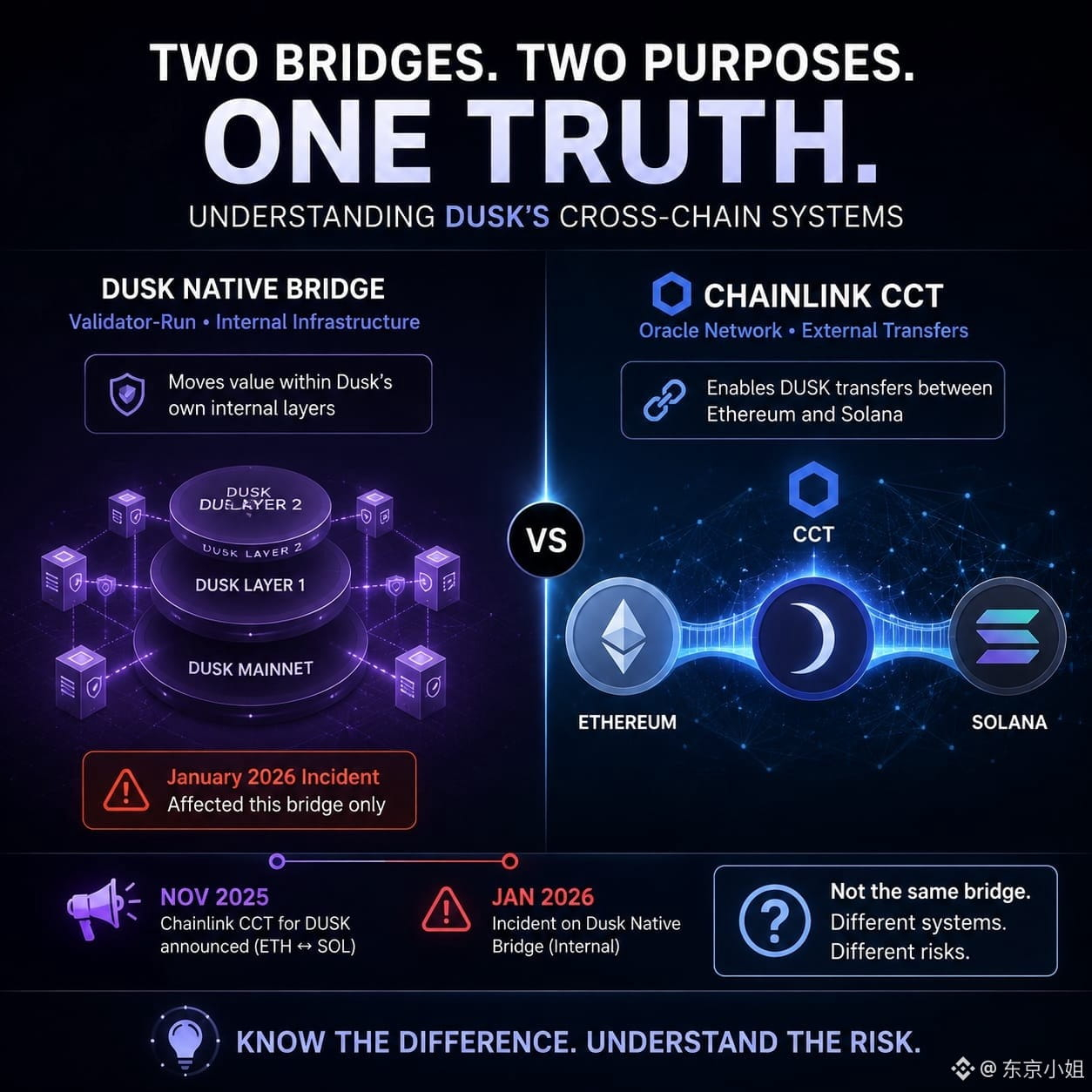
El estándar de CCT de Chainlink para mover Dusk entre Ethereum y Solana se anunció en noviembre de 2025, meses antes del incidente del puente de enero que ya sabemos que ocurrió en la otra vía de entrecruzamiento de Dusk. Fui a comprobar si estos en realidad son el mismo puente con dos nombres distintos; honestamente, a medias esperaba que resultaran ser lo mismo con una marca diferente, pero no lo son. La página de arquitectura de Dusk describe un puente nativo separado operado por validadores que mueve valor entre las capas internas propias de Dusk, mientras que el CCT de Chainlink se ejecuta en la red descentralizada de oráculos de Chainlink para transferencias externas de ETH a Solana. Dos sistemas realmente distintos.
Así que el incidente de enero, que afectó específicamente al puente nativo, no habría tocado en absoluto la vía de Chainlink, según lo diferente que es su arquitectura. De hecho, eso es tranquilizador de una manera que no esperaba al entrar.
Pero aquí está lo que aún no me cuadra: nadie explicó esta distinción en ningún lugar cuando salió el aviso del incidente. Si eres alguien que solo sabe "Dusk tuvo un problema de puente en enero", no hay nada que te señale hacia "que solo afectó a uno de dos sistemas de puente separados", y la carga de averiguar eso recayó por completo en contrastar dos anuncios que no están relacionados entre sí.
¿Hay una sola página en algún lugar que mapee realmente qué hace cada puente para Dusk, o confirmar esto requiere unir comunicados de prensa separados, como hice yo? 🧐
#dusk $DUSK @Dusk_Foundation
El estándar de CCT de Chainlink para mover Dusk entre Ethereum y Solana se anunció en noviembre de 2025, meses antes del incidente del puente de enero que ya sabemos que ocurrió en la otra vía de entrecruzamiento de Dusk. Fui a comprobar si estos en realidad son el mismo puente con dos nombres distintos; honestamente, a medias esperaba que resultaran ser lo mismo con una marca diferente, pero no lo son. La página de arquitectura de Dusk describe un puente nativo separado operado por validadores que mueve valor entre las capas internas propias de Dusk, mientras que el CCT de Chainlink se ejecuta en la red descentralizada de oráculos de Chainlink para transferencias externas de ETH a Solana. Dos sistemas realmente distintos.
Así que el incidente de enero, que afectó específicamente al puente nativo, no habría tocado en absoluto la vía de Chainlink, según lo diferente que es su arquitectura. De hecho, eso es tranquilizador de una manera que no esperaba al entrar.
Pero aquí está lo que aún no me cuadra: nadie explicó esta distinción en ningún lugar cuando salió el aviso del incidente. Si eres alguien que solo sabe "Dusk tuvo un problema de puente en enero", no hay nada que te señale hacia "que solo afectó a uno de dos sistemas de puente separados", y la carga de averiguar eso recayó por completo en contrastar dos anuncios que no están relacionados entre sí.
¿Hay una sola página en algún lugar que mapee realmente qué hace cada puente para Dusk, o confirmar esto requiere unir comunicados de prensa separados, como hice yo? 🧐
#dusk $DUSK @Dusk
Así que el incidente de enero, que afectó específicamente al puente nativo, no habría tocado en absoluto la vía de Chainlink, según lo diferente que es su arquitectura. De hecho, eso es tranquilizador de una manera que no esperaba al entrar.
Pero aquí está lo que aún no me cuadra: nadie explicó esta distinción en ningún lugar cuando salió el aviso del incidente. Si eres alguien que solo sabe "Dusk tuvo un problema de puente en enero", no hay nada que te señale hacia "que solo afectó a uno de dos sistemas de puente separados", y la carga de averiguar eso recayó por completo en contrastar dos anuncios que no están relacionados entre sí.
¿Hay una sola página en algún lugar que mapee realmente qué hace cada puente para Dusk, o confirmar esto requiere unir comunicados de prensa separados, como hice yo? 🧐
#dusk $DUSK @Dusk
1
131
·
--
Alcista
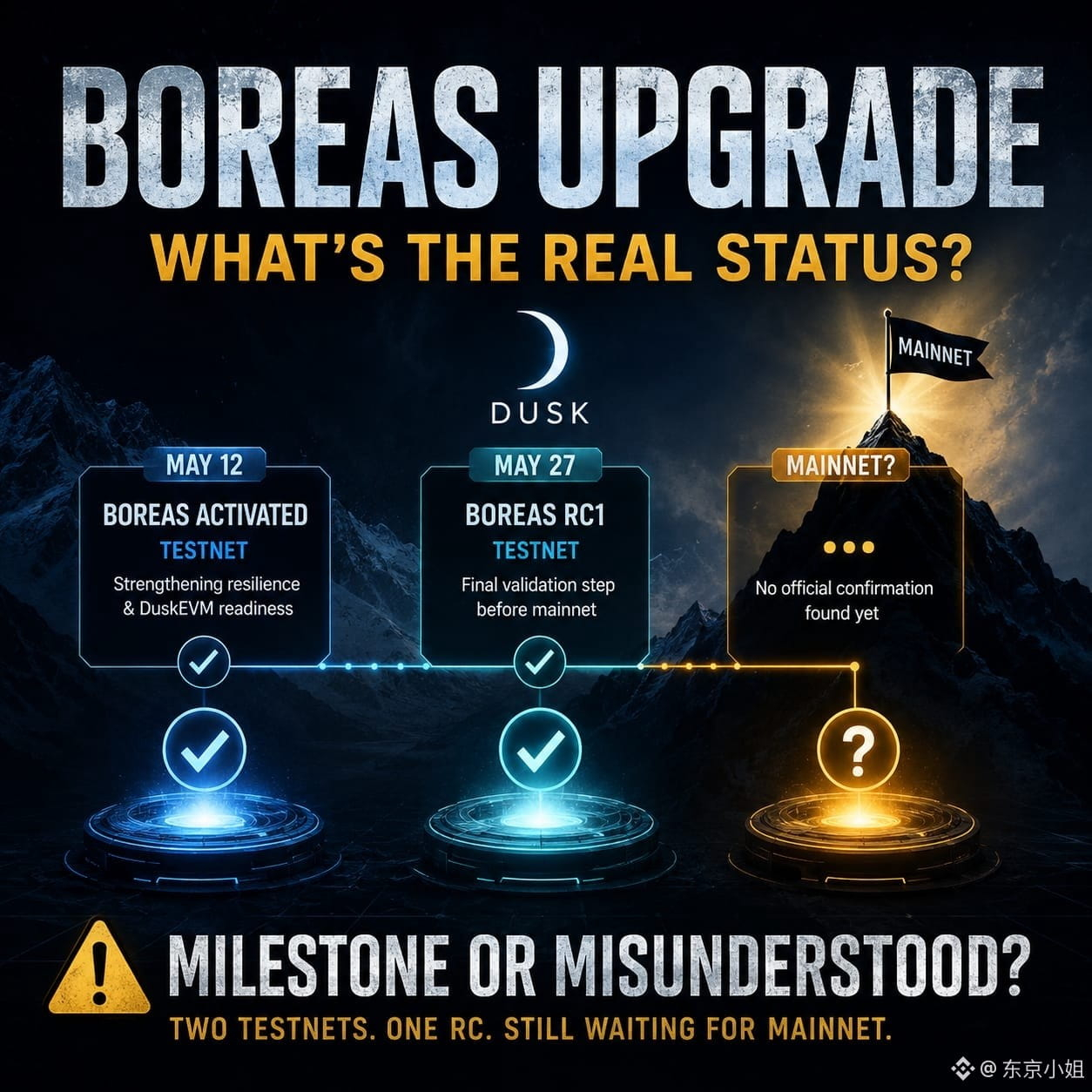
Fui a comprobar si Boreas llegó realmente a mainnet, ya que ha estado rondando como un gran hito. Lo que encontré en su lugar fueron dos eventos distintos de testnet con el mismo nombre, separados por dos semanas. Honestamente, casi me detuve en la fecha del 12 de mayo, asumiendo que esa era toda la historia. Dusk activó Boreas en el testnet el 12 de mayo, presentado como el fortalecimiento de la resiliencia y la preparación para Duskevm. Luego, el 27 de mayo, se lanzó un "boreas release candidate 1", también en testnet, y explícitamente se llamó el paso final de validación antes de mainnet.
Así que la activación del 12 de mayo no fue realmente la línea de meta; fue una fase anterior, y hay un segundo punto de control después de ella que yo no había visto mencionado en ningún lado hasta que fui a buscar específicamente. Aún no puedo encontrar un anuncio que confirme que Boreas haya llegado a mainnet después de ese release candidate.
Es una forma normal de plantear un hard fork: testnet, luego RC y después mainnet; no hay nada malo con el proceso en sí. Solo creo que mucha cobertura trata "boreas activated" como un único evento limpio cuando en realidad son al menos dos etapas en testnet, y posiblemente aún no ha superado la última.
¿Boreas ya se ha puesto en marcha en mainnet desde el 27 de mayo, o ese release candidate sigue siendo el paso confirmado más reciente? 🧐
#dusk $DUSK @Dusk_Foundation
Fui a comprobar si Boreas llegó realmente a mainnet, ya que ha estado rondando como un gran hito. Lo que encontré en su lugar fueron dos eventos distintos de testnet con el mismo nombre, separados por dos semanas. Honestamente, casi me detuve en la fecha del 12 de mayo, asumiendo que esa era toda la historia. Dusk activó Boreas en el testnet el 12 de mayo, presentado como el fortalecimiento de la resiliencia y la preparación para Duskevm. Luego, el 27 de mayo, se lanzó un "boreas release candidate 1", también en testnet, y explícitamente se llamó el paso final de validación antes de mainnet.
Así que la activación del 12 de mayo no fue realmente la línea de meta; fue una fase anterior, y hay un segundo punto de control después de ella que yo no había visto mencionado en ningún lado hasta que fui a buscar específicamente. Aún no puedo encontrar un anuncio que confirme que Boreas haya llegado a mainnet después de ese release candidate.
Es una forma normal de plantear un hard fork: testnet, luego RC y después mainnet; no hay nada malo con el proceso en sí. Solo creo que mucha cobertura trata "boreas activated" como un único evento limpio cuando en realidad son al menos dos etapas en testnet, y posiblemente aún no ha superado la última.
¿Boreas ya se ha puesto en marcha en mainnet desde el 27 de mayo, o ese release candidate sigue siendo el paso confirmado más reciente? 🧐
#dusk $DUSK @Dusk
Así que la activación del 12 de mayo no fue realmente la línea de meta; fue una fase anterior, y hay un segundo punto de control después de ella que yo no había visto mencionado en ningún lado hasta que fui a buscar específicamente. Aún no puedo encontrar un anuncio que confirme que Boreas haya llegado a mainnet después de ese release candidate.
Es una forma normal de plantear un hard fork: testnet, luego RC y después mainnet; no hay nada malo con el proceso en sí. Solo creo que mucha cobertura trata "boreas activated" como un único evento limpio cuando en realidad son al menos dos etapas en testnet, y posiblemente aún no ha superado la última.
¿Boreas ya se ha puesto en marcha en mainnet desde el 27 de mayo, o ese release candidate sigue siendo el paso confirmado más reciente? 🧐
#dusk $DUSK @Dusk
3
120
·
--
Alcista
@Dusk_Foundation
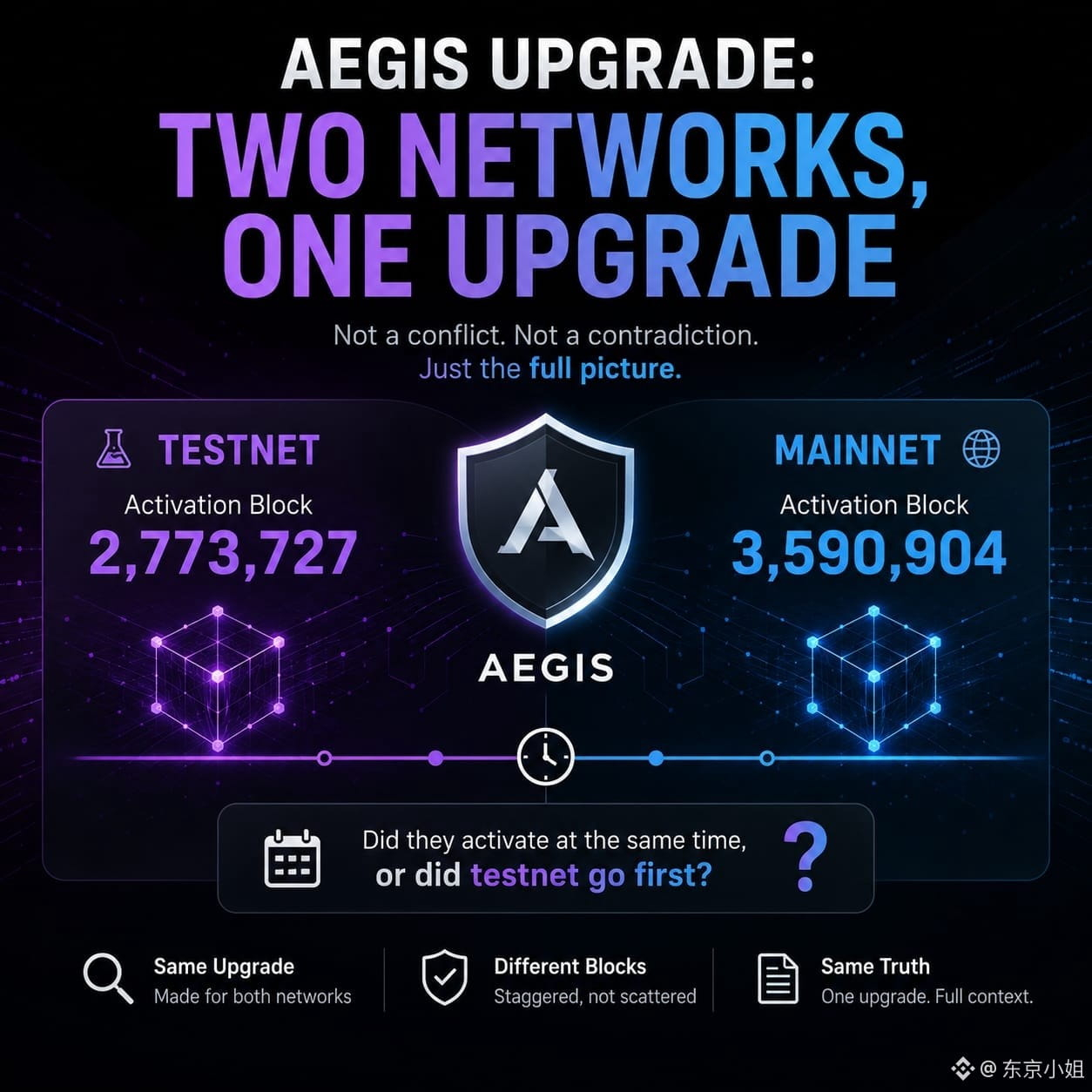
Fui a comprobar exactamente a qué tocó la actualización de Aegis, ya que el 3 de marzo se cita como un hito importante, pero diferentes fuentes lo describen de forma distinta: una dice que es obligatorio para todos los operadores de nodos y otra lo llama un paso previo solo para testnet. Resulta que ambas cosas son solo versiones incompletas de lo mismo, y sinceramente casi me quedé en “una de estas cosas está mal” antes de profundizar en el repositorio real de GitHub de Dusk. En sus notas de lanzamiento de Rusk aparecen alturas de activación separadas para Aegis en mainnet y en testnet: 3.590.904 y 2.773.727, lo que confirma que llegó a ambas redes, solo que no en el mismo número de bloque.
Así que en realidad no hubo un conflicto de alcance: hubo un vacío de cobertura. Nadie que lo cubriera en la prensa lo redactó como “mainnet y testnet, aquí están ambas alturas de activación”. Más bien, cada quien tomó una red y lo presentó como si esa fuera toda la historia.
Es una forma bastante normal de desplegar un hard fork: hacer que testnet se desplace ligeramente de forma diferente respecto a mainnet. Esa parte, por sí sola, no es inusual ni preocupante. Solo me parece importante notar cómo un despliegue realmente sencillo de dos redes se convirtió en dos narrativas competidoras e incompletas cuando pasó por una cobertura secundaria.
¿Alguien sabe si esas dos alturas de activación coincidieron en el tiempo real (en “wall-clock”), o si testnet se activó antes que mainnet? 🧐
#dusk $DUSK
@Dusk
Fui a comprobar exactamente a qué tocó la actualización de Aegis, ya que el 3 de marzo se cita como un hito importante, pero diferentes fuentes lo describen de forma distinta: una dice que es obligatorio para todos los operadores de nodos y otra lo llama un paso previo solo para testnet. Resulta que ambas cosas son solo versiones incompletas de lo mismo, y sinceramente casi me quedé en “una de estas cosas está mal” antes de profundizar en el repositorio real de GitHub de Dusk. En sus notas de lanzamiento de Rusk aparecen alturas de activación separadas para Aegis en mainnet y en testnet: 3.590.904 y 2.773.727, lo que confirma que llegó a ambas redes, solo que no en el mismo número de bloque.
Así que en realidad no hubo un conflicto de alcance: hubo un vacío de cobertura. Nadie que lo cubriera en la prensa lo redactó como “mainnet y testnet, aquí están ambas alturas de activación”. Más bien, cada quien tomó una red y lo presentó como si esa fuera toda la historia.
Es una forma bastante normal de desplegar un hard fork: hacer que testnet se desplace ligeramente de forma diferente respecto a mainnet. Esa parte, por sí sola, no es inusual ni preocupante. Solo me parece importante notar cómo un despliegue realmente sencillo de dos redes se convirtió en dos narrativas competidoras e incompletas cuando pasó por una cobertura secundaria.
¿Alguien sabe si esas dos alturas de activación coincidieron en el tiempo real (en “wall-clock”), o si testnet se activó antes que mainnet? 🧐
#dusk $DUSK
Fui a comprobar exactamente a qué tocó la actualización de Aegis, ya que el 3 de marzo se cita como un hito importante, pero diferentes fuentes lo describen de forma distinta: una dice que es obligatorio para todos los operadores de nodos y otra lo llama un paso previo solo para testnet. Resulta que ambas cosas son solo versiones incompletas de lo mismo, y sinceramente casi me quedé en “una de estas cosas está mal” antes de profundizar en el repositorio real de GitHub de Dusk. En sus notas de lanzamiento de Rusk aparecen alturas de activación separadas para Aegis en mainnet y en testnet: 3.590.904 y 2.773.727, lo que confirma que llegó a ambas redes, solo que no en el mismo número de bloque.
Así que en realidad no hubo un conflicto de alcance: hubo un vacío de cobertura. Nadie que lo cubriera en la prensa lo redactó como “mainnet y testnet, aquí están ambas alturas de activación”. Más bien, cada quien tomó una red y lo presentó como si esa fuera toda la historia.
Es una forma bastante normal de desplegar un hard fork: hacer que testnet se desplace ligeramente de forma diferente respecto a mainnet. Esa parte, por sí sola, no es inusual ni preocupante. Solo me parece importante notar cómo un despliegue realmente sencillo de dos redes se convirtió en dos narrativas competidoras e incompletas cuando pasó por una cobertura secundaria.
¿Alguien sabe si esas dos alturas de activación coincidieron en el tiempo real (en “wall-clock”), o si testnet se activó antes que mainnet? 🧐
#dusk $DUSK
1
4
205
·
--
Alcista
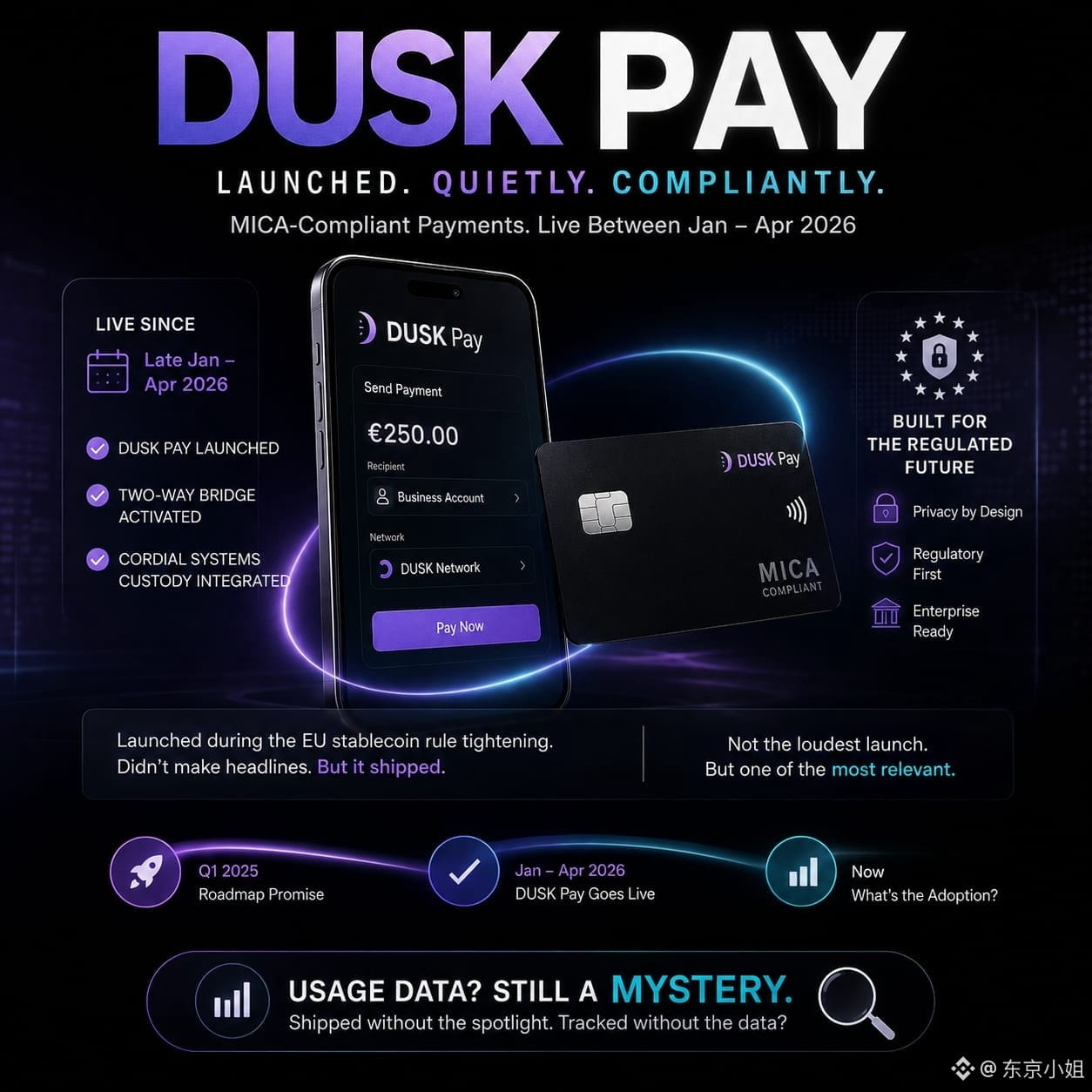
Fui a buscar si Dusk Pay realmente se lanzó, ya que se mencionaba en la hoja de ruta de enero de 2025 como un entregable de Q1 y luego pareció desaparecer de la mayoría de los informes de 2026 que estaba leyendo. Resulta que simplemente no estaba buscando en el lugar correcto: en realidad, casi llegué a la conclusión de que ni siquiera se había enviado antes de encontrar una pieza de seguimiento del desarrollo de mayo de 2026 que afirmaba de manera directa que Dusk Pay se lanzó en algún momento entre finales de enero y abril de este año, junto con la activación del puente bidireccional y la integración de la custodia de los sistemas Cordial.
Así que sí se lanzó, pero no con el tipo de cobertura de titulares que tuvieron DuskeVM o la asociación con NPEX. Ese es, en realidad, el punto: un producto de pagos compatible con MICA que aterrizó durante el tramo exacto en el que las normas de stablecoins de la UE se estaban ajustando apenas se registró en ningún sitio, mientras que los anuncios de arquitectura más llamativos se recogieron en todas partes.
No creo necesariamente que sea algo malo: un lanzamiento en silencio no es lo mismo que fallar al lanzar. Pero para un producto tan relevante en materia de regulación, la brecha de cobertura entre los titulares de «DuskeVM está en vivo» y el silencio de «Dusk Pay está en vivo» dice más sobre las prioridades de los medios cripto que sobre la ejecución de Dusk.
¿Hay datos de uso reales sobre Dusk Pay desde su lanzamiento, o se envió sin que nadie siguiera la adopción? 🧐
#dusk $DUSK @Dusk_Foundation
Fui a buscar si Dusk Pay realmente se lanzó, ya que se mencionaba en la hoja de ruta de enero de 2025 como un entregable de Q1 y luego pareció desaparecer de la mayoría de los informes de 2026 que estaba leyendo. Resulta que simplemente no estaba buscando en el lugar correcto: en realidad, casi llegué a la conclusión de que ni siquiera se había enviado antes de encontrar una pieza de seguimiento del desarrollo de mayo de 2026 que afirmaba de manera directa que Dusk Pay se lanzó en algún momento entre finales de enero y abril de este año, junto con la activación del puente bidireccional y la integración de la custodia de los sistemas Cordial.
Así que sí se lanzó, pero no con el tipo de cobertura de titulares que tuvieron DuskeVM o la asociación con NPEX. Ese es, en realidad, el punto: un producto de pagos compatible con MICA que aterrizó durante el tramo exacto en el que las normas de stablecoins de la UE se estaban ajustando apenas se registró en ningún sitio, mientras que los anuncios de arquitectura más llamativos se recogieron en todas partes.
No creo necesariamente que sea algo malo: un lanzamiento en silencio no es lo mismo que fallar al lanzar. Pero para un producto tan relevante en materia de regulación, la brecha de cobertura entre los titulares de «DuskeVM está en vivo» y el silencio de «Dusk Pay está en vivo» dice más sobre las prioridades de los medios cripto que sobre la ejecución de Dusk.
¿Hay datos de uso reales sobre Dusk Pay desde su lanzamiento, o se envió sin que nadie siguiera la adopción? 🧐
#dusk $DUSK @Dusk
Así que sí se lanzó, pero no con el tipo de cobertura de titulares que tuvieron DuskeVM o la asociación con NPEX. Ese es, en realidad, el punto: un producto de pagos compatible con MICA que aterrizó durante el tramo exacto en el que las normas de stablecoins de la UE se estaban ajustando apenas se registró en ningún sitio, mientras que los anuncios de arquitectura más llamativos se recogieron en todas partes.
No creo necesariamente que sea algo malo: un lanzamiento en silencio no es lo mismo que fallar al lanzar. Pero para un producto tan relevante en materia de regulación, la brecha de cobertura entre los titulares de «DuskeVM está en vivo» y el silencio de «Dusk Pay está en vivo» dice más sobre las prioridades de los medios cripto que sobre la ejecución de Dusk.
¿Hay datos de uso reales sobre Dusk Pay desde su lanzamiento, o se envió sin que nadie siguiera la adopción? 🧐
#dusk $DUSK @Dusk
2
102
·
--
Alcista
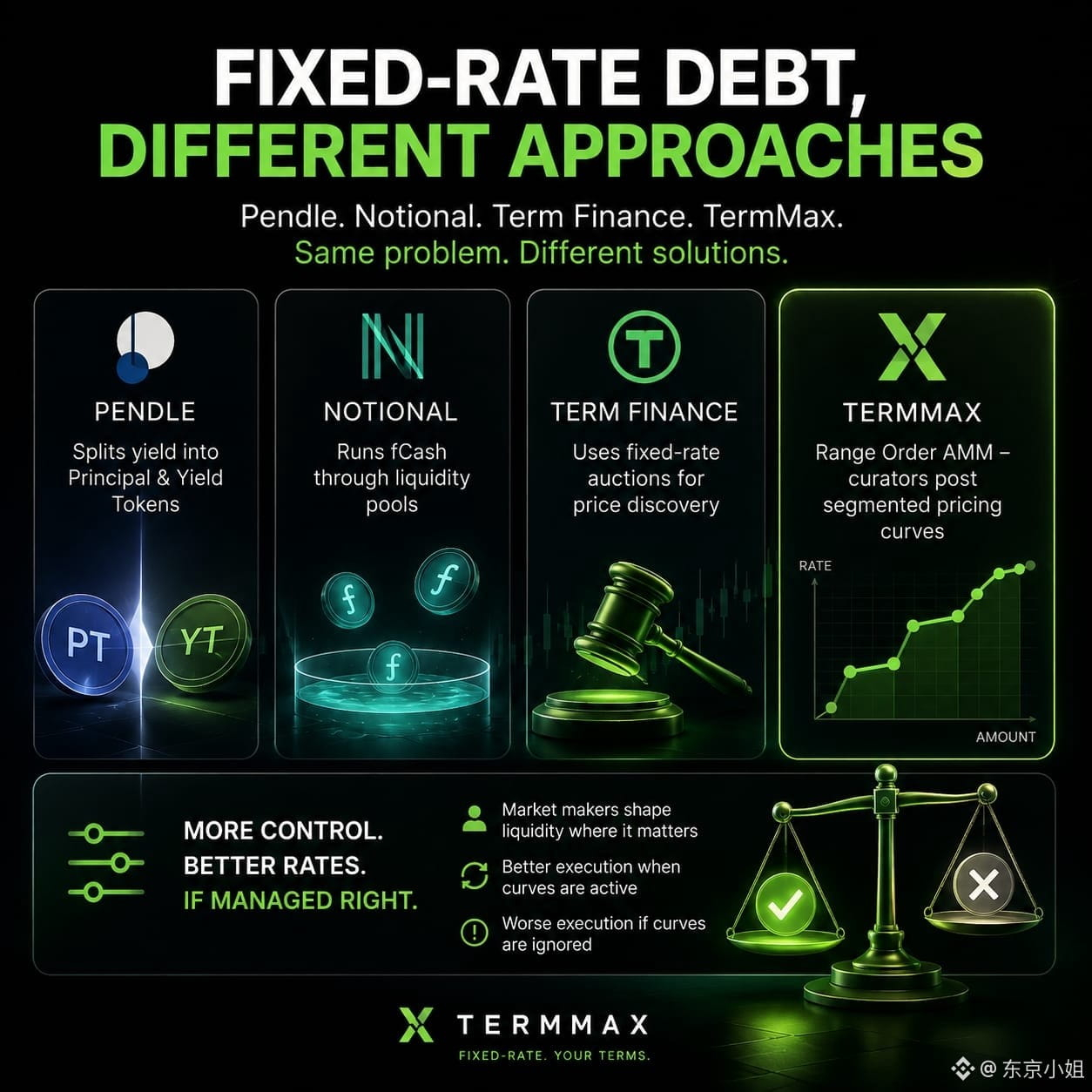
termmax's niche es la deuda tokenizada de tipo fijo, y no está realmente sola ahí: pendle, notional y term finance están girando alrededor del mismo problema desde ángulos distintos. pendle separa los activos que generan rendimiento en tokens de principal y de rendimiento. notional hace pasar fcash a través de pools de liquidez. la solución propia de termmax es el range order amm: curadores publican curvas de precios segmentadas con las que prestatarios y prestamistas matchean directamente.
volví una y otra vez sobre por qué ese enfoque en particular frente a un modelo de subasta o una separación pura de rendimiento, y creo que se reduce al control: un creador de range orders puede dar forma exacta a dónde se sitúa la liquidez en la curva, en lugar de simplemente aceptar un precio de clearing. eso es más “en las manos” para los market makers, lo cual tiene dos caras: mejores tasas cuando alguien está gestionando la curva bien, peores si nadie se molesta en actualizarla conforme cambian las condiciones.
no he ejecutado realmente el mismo tamaño de operación a la par entre pendle y termmax para comparar la ejecución real, así que esta es una lectura estructural, no una respaldada por backtesting 📐
#termmax @termmax
termmax's niche es la deuda tokenizada de tipo fijo, y no está realmente sola ahí: pendle, notional y term finance están girando alrededor del mismo problema desde ángulos distintos. pendle separa los activos que generan rendimiento en tokens de principal y de rendimiento. notional hace pasar fcash a través de pools de liquidez. la solución propia de termmax es el range order amm: curadores publican curvas de precios segmentadas con las que prestatarios y prestamistas matchean directamente.
volví una y otra vez sobre por qué ese enfoque en particular frente a un modelo de subasta o una separación pura de rendimiento, y creo que se reduce al control: un creador de range orders puede dar forma exacta a dónde se sitúa la liquidez en la curva, en lugar de simplemente aceptar un precio de clearing. eso es más “en las manos” para los market makers, lo cual tiene dos caras: mejores tasas cuando alguien está gestionando la curva bien, peores si nadie se molesta en actualizarla conforme cambian las condiciones.
no he ejecutado realmente el mismo tamaño de operación a la par entre pendle y termmax para comparar la ejecución real, así que esta es una lectura estructural, no una respaldada por backtesting 📐
#termmax @TermMax
volví una y otra vez sobre por qué ese enfoque en particular frente a un modelo de subasta o una separación pura de rendimiento, y creo que se reduce al control: un creador de range orders puede dar forma exacta a dónde se sitúa la liquidez en la curva, en lugar de simplemente aceptar un precio de clearing. eso es más “en las manos” para los market makers, lo cual tiene dos caras: mejores tasas cuando alguien está gestionando la curva bien, peores si nadie se molesta en actualizarla conforme cambian las condiciones.
no he ejecutado realmente el mismo tamaño de operación a la par entre pendle y termmax para comparar la ejecución real, así que esta es una lectura estructural, no una respaldada por backtesting 📐
#termmax @TermMax
2
4
186
·
--
Alcista
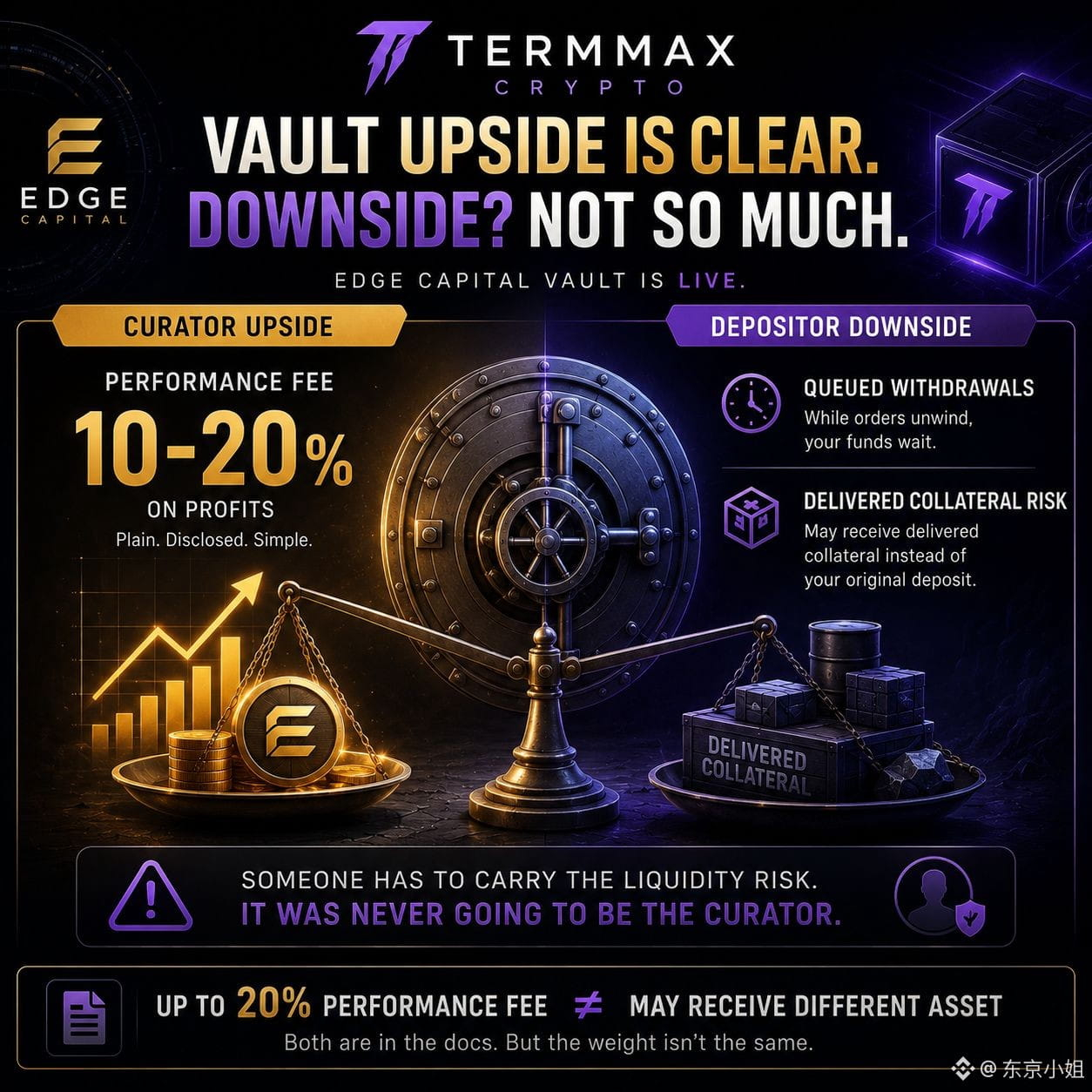
la bóveda de edge capital ya está en funcionamiento ahora mismo, y este es exactamente el tipo de configuración donde aparece la brecha de divulgación. los curadores cobran una comisión de rendimiento del 10 al 20 por ciento sobre cualquier ganancia que genere su bóveda, tal cual en la documentación de la mecánica de la bóveda, de forma explícita y declarada. lo que no llega a esa misma claridad —en realidad, casi ni aparece— es a qué están realmente expuestos los depositantes si una bóveda así atraviesa un periodo difícil: retiros en cola mientras las órdenes se deshacen, o peor aún, terminar manteniendo un colateral entregado en lugar del token de deuda que originalmente depositaron, si el mercado pasa por la entrega física.
así que el beneficio del curador es un porcentaje limpio y divulgado. la desventaja del depositante es su posición en la cola y posiblemente un activo distinto al que depositó. no estoy diciendo que sea un escándalo: alguien tiene que asumir el riesgo de liquidez en una bóveda gestionada activamente, y nunca iba a ser la persona que la dirige. solo creo que "hasta 20% de comisión de rendimiento" y "puede recibir colateral entregado en lugar de su depósito" no se leen como simétricos cuando están en el mismo documento, con un párrafo entre medio.
de verdad no sé si esto es un intercambio justo por una gestión profesional o simplemente cómo termina saliendo cada estructura de bóveda, sea en defi o no 🤷
#termmax @termmax
la bóveda de edge capital ya está en funcionamiento ahora mismo, y este es exactamente el tipo de configuración donde aparece la brecha de divulgación. los curadores cobran una comisión de rendimiento del 10 al 20 por ciento sobre cualquier ganancia que genere su bóveda, tal cual en la documentación de la mecánica de la bóveda, de forma explícita y declarada. lo que no llega a esa misma claridad —en realidad, casi ni aparece— es a qué están realmente expuestos los depositantes si una bóveda así atraviesa un periodo difícil: retiros en cola mientras las órdenes se deshacen, o peor aún, terminar manteniendo un colateral entregado en lugar del token de deuda que originalmente depositaron, si el mercado pasa por la entrega física.
así que el beneficio del curador es un porcentaje limpio y divulgado. la desventaja del depositante es su posición en la cola y posiblemente un activo distinto al que depositó. no estoy diciendo que sea un escándalo: alguien tiene que asumir el riesgo de liquidez en una bóveda gestionada activamente, y nunca iba a ser la persona que la dirige. solo creo que "hasta 20% de comisión de rendimiento" y "puede recibir colateral entregado en lugar de su depósito" no se leen como simétricos cuando están en el mismo documento, con un párrafo entre medio.
de verdad no sé si esto es un intercambio justo por una gestión profesional o simplemente cómo termina saliendo cada estructura de bóveda, sea en defi o no 🤷
#termmax @TermMax
así que el beneficio del curador es un porcentaje limpio y divulgado. la desventaja del depositante es su posición en la cola y posiblemente un activo distinto al que depositó. no estoy diciendo que sea un escándalo: alguien tiene que asumir el riesgo de liquidez en una bóveda gestionada activamente, y nunca iba a ser la persona que la dirige. solo creo que "hasta 20% de comisión de rendimiento" y "puede recibir colateral entregado en lugar de su depósito" no se leen como simétricos cuando están en el mismo documento, con un párrafo entre medio.
de verdad no sé si esto es un intercambio justo por una gestión profesional o simplemente cómo termina saliendo cada estructura de bóveda, sea en defi o no 🤷
#termmax @TermMax
1
156
·
--
Alcista
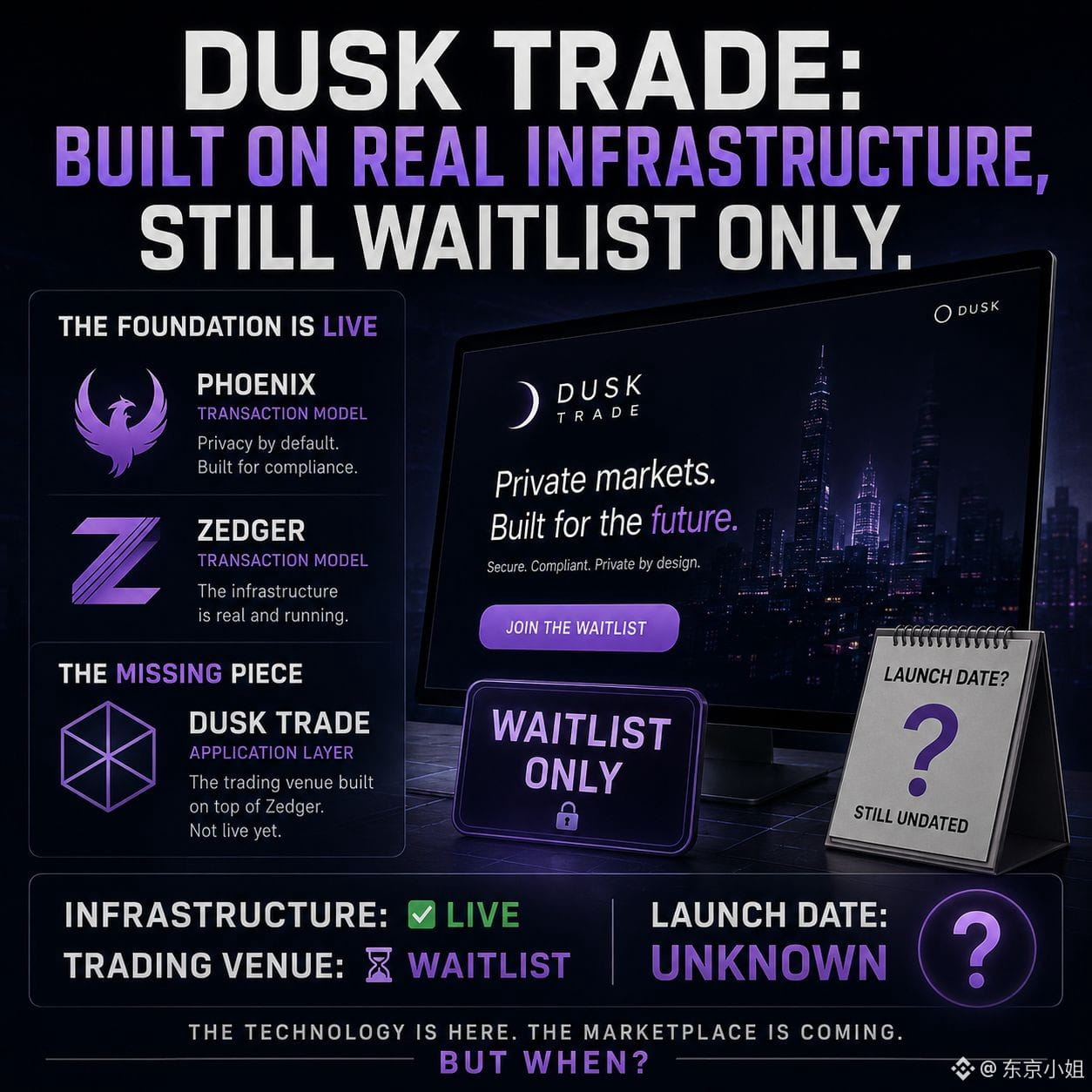
Fui a comprobar a Zedger, ya que todavía hay gente que lo cita como infraestructura en vivo, y en realidad sigue siéndolo: la documentación actual de Dusk enumera a Phoenix y a Zedger como los dos modelos de transacción disponibles en este momento, así que mi primera suposición de que se había desvanecido en silencio era incorrecta.
Lo que sí es cierto es que Dusk Trade, la capa de aplicación pensada para funcionar encima de eso y ofrecer a los usuarios un lugar real donde comerciar activos tokenizados. Comprobé trade.dusk.network directamente y sigue siendo solo lista de espera: “Únete a la lista de espera” es la llamada a la acción completa en la página ahora mismo.
Ese es un hueco diferente al que pensé al principio, y honestamente más concreto: la fase final de la hoja de ruta posterior al mainnet prometía “full zedger”, emisión de activos totalmente operativa, compensación y liquidación, planteado como parte de la visión de Dusk para 2025. El modelo de transacción subyacente existe, pero el lugar de trading construido sobre él todavía está en prelanzamiento, sin un calendario visible en la propia página de lista de espera.
¿Alguien sabe si Dusk Trade tiene una fecha de lanzamiento real asociada en alguna parte, o sigue en una fase de lista de espera sin fecha? 🧐
#dusk $DUSK @Dusk_Foundation
Fui a comprobar a Zedger, ya que todavía hay gente que lo cita como infraestructura en vivo, y en realidad sigue siéndolo: la documentación actual de Dusk enumera a Phoenix y a Zedger como los dos modelos de transacción disponibles en este momento, así que mi primera suposición de que se había desvanecido en silencio era incorrecta.
Lo que sí es cierto es que Dusk Trade, la capa de aplicación pensada para funcionar encima de eso y ofrecer a los usuarios un lugar real donde comerciar activos tokenizados. Comprobé trade.dusk.network directamente y sigue siendo solo lista de espera: “Únete a la lista de espera” es la llamada a la acción completa en la página ahora mismo.
Ese es un hueco diferente al que pensé al principio, y honestamente más concreto: la fase final de la hoja de ruta posterior al mainnet prometía “full zedger”, emisión de activos totalmente operativa, compensación y liquidación, planteado como parte de la visión de Dusk para 2025. El modelo de transacción subyacente existe, pero el lugar de trading construido sobre él todavía está en prelanzamiento, sin un calendario visible en la propia página de lista de espera.
¿Alguien sabe si Dusk Trade tiene una fecha de lanzamiento real asociada en alguna parte, o sigue en una fase de lista de espera sin fecha? 🧐
#dusk $DUSK @Dusk
Lo que sí es cierto es que Dusk Trade, la capa de aplicación pensada para funcionar encima de eso y ofrecer a los usuarios un lugar real donde comerciar activos tokenizados. Comprobé trade.dusk.network directamente y sigue siendo solo lista de espera: “Únete a la lista de espera” es la llamada a la acción completa en la página ahora mismo.
Ese es un hueco diferente al que pensé al principio, y honestamente más concreto: la fase final de la hoja de ruta posterior al mainnet prometía “full zedger”, emisión de activos totalmente operativa, compensación y liquidación, planteado como parte de la visión de Dusk para 2025. El modelo de transacción subyacente existe, pero el lugar de trading construido sobre él todavía está en prelanzamiento, sin un calendario visible en la propia página de lista de espera.
¿Alguien sabe si Dusk Trade tiene una fecha de lanzamiento real asociada en alguna parte, o sigue en una fase de lista de espera sin fecha? 🧐
#dusk $DUSK @Dusk
1
112
·
--
Alcista
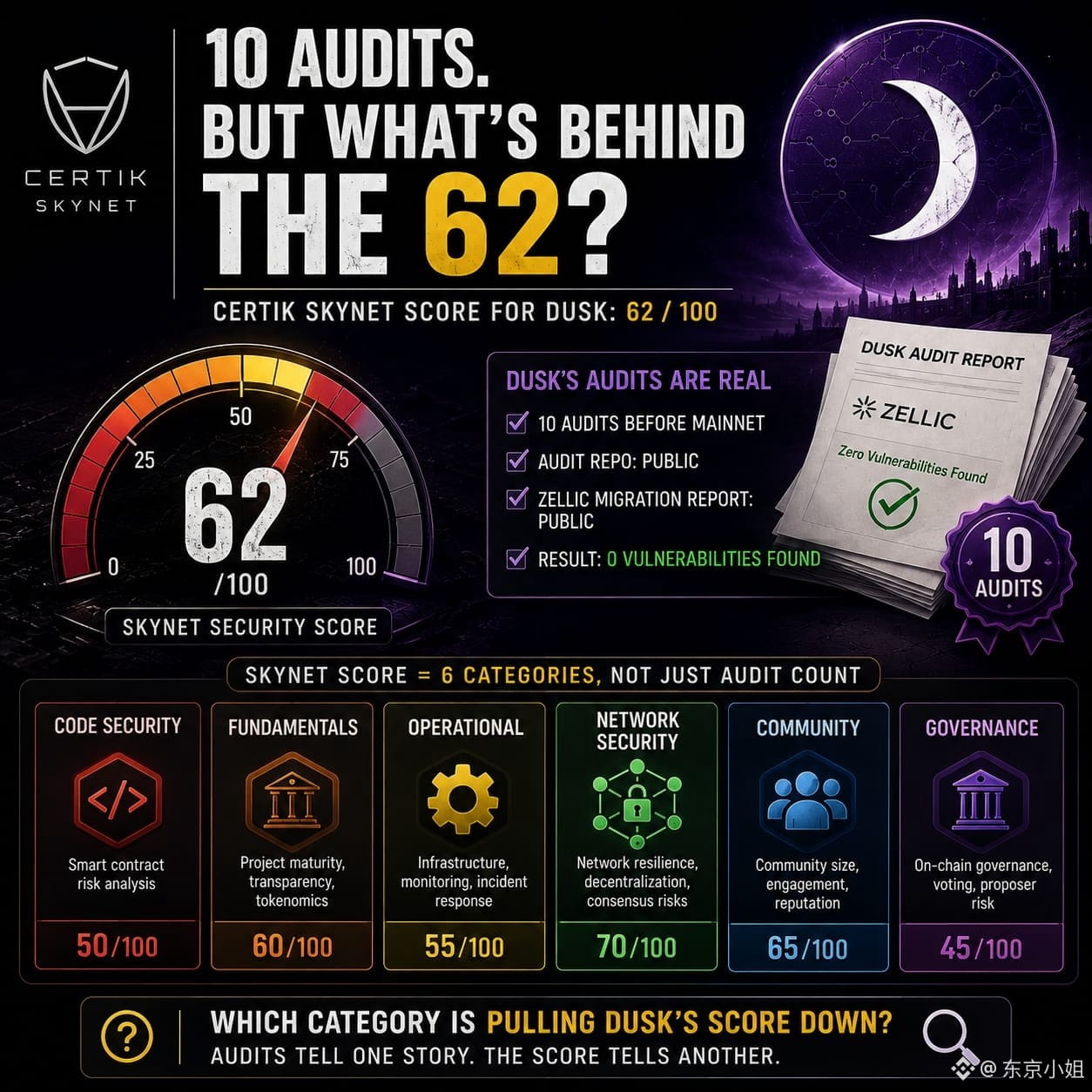
Fui a verificar la puntuación de seguridad de terceros de Dusk, ya que lo promocionan con bastante fuerza: "diez auditorías antes del mainnet". Y la puntuación Skynet de Certik para Dusk se sitúa en 62 sobre 100. Entré esperando que ese número siguiera, más o menos, el conteo de auditorías. En realidad, tuve que detenerme y volver a leer la página de metodología de Certik porque asumí que una puntuación de seguridad sería básicamente solo un recuento de auditorías; no lo es: está compuesta por seis categorías distintas combinadas.
Las auditorías en sí son reales: el repositorio de auditorías de Dusk y el informe del contrato de migración de Zellic son públicos, y no se encontraron vulnerabilidades allí. Así que no es que las auditorías individuales estén en duda. Lo que ocurre es que un conjunto de informes de auditoría impecables y una única puntuación compuesta de confianza responden a preguntas diferentes, y el copy de marketing tiende a tratar ambas cosas como intercambiables cuando en realidad no lo son.
Para ser justo, no tengo un punto de referencia claro para saber cómo se ve una "buena" puntuación de Skynet para un L1 en la etapa en la que está Dusk, así que no puedo decir que 62 sea malo; solo que no se explica de forma obvia únicamente con el historial de auditorías.
¿Alguien sabe cuál de las seis categorías de Skynet está reduciendo específicamente ese número para Dusk? 🧐
#dusk $DUSK @Dusk_Foundation
{future}(DUSKUSDT)
Fui a verificar la puntuación de seguridad de terceros de Dusk, ya que lo promocionan con bastante fuerza: "diez auditorías antes del mainnet". Y la puntuación Skynet de Certik para Dusk se sitúa en 62 sobre 100. Entré esperando que ese número siguiera, más o menos, el conteo de auditorías. En realidad, tuve que detenerme y volver a leer la página de metodología de Certik porque asumí que una puntuación de seguridad sería básicamente solo un recuento de auditorías; no lo es: está compuesta por seis categorías distintas combinadas.
Las auditorías en sí son reales: el repositorio de auditorías de Dusk y el informe del contrato de migración de Zellic son públicos, y no se encontraron vulnerabilidades allí. Así que no es que las auditorías individuales estén en duda. Lo que ocurre es que un conjunto de informes de auditoría impecables y una única puntuación compuesta de confianza responden a preguntas diferentes, y el copy de marketing tiende a tratar ambas cosas como intercambiables cuando en realidad no lo son.
Para ser justo, no tengo un punto de referencia claro para saber cómo se ve una "buena" puntuación de Skynet para un L1 en la etapa en la que está Dusk, así que no puedo decir que 62 sea malo; solo que no se explica de forma obvia únicamente con el historial de auditorías.
¿Alguien sabe cuál de las seis categorías de Skynet está reduciendo específicamente ese número para Dusk? 🧐
#dusk $DUSK @Dusk
Las auditorías en sí son reales: el repositorio de auditorías de Dusk y el informe del contrato de migración de Zellic son públicos, y no se encontraron vulnerabilidades allí. Así que no es que las auditorías individuales estén en duda. Lo que ocurre es que un conjunto de informes de auditoría impecables y una única puntuación compuesta de confianza responden a preguntas diferentes, y el copy de marketing tiende a tratar ambas cosas como intercambiables cuando en realidad no lo son.
Para ser justo, no tengo un punto de referencia claro para saber cómo se ve una "buena" puntuación de Skynet para un L1 en la etapa en la que está Dusk, así que no puedo decir que 62 sea malo; solo que no se explica de forma obvia únicamente con el historial de auditorías.
¿Alguien sabe cuál de las seis categorías de Skynet está reduciendo específicamente ese número para Dusk? 🧐
#dusk $DUSK @Dusk
1
1
122
·
--
Alcista
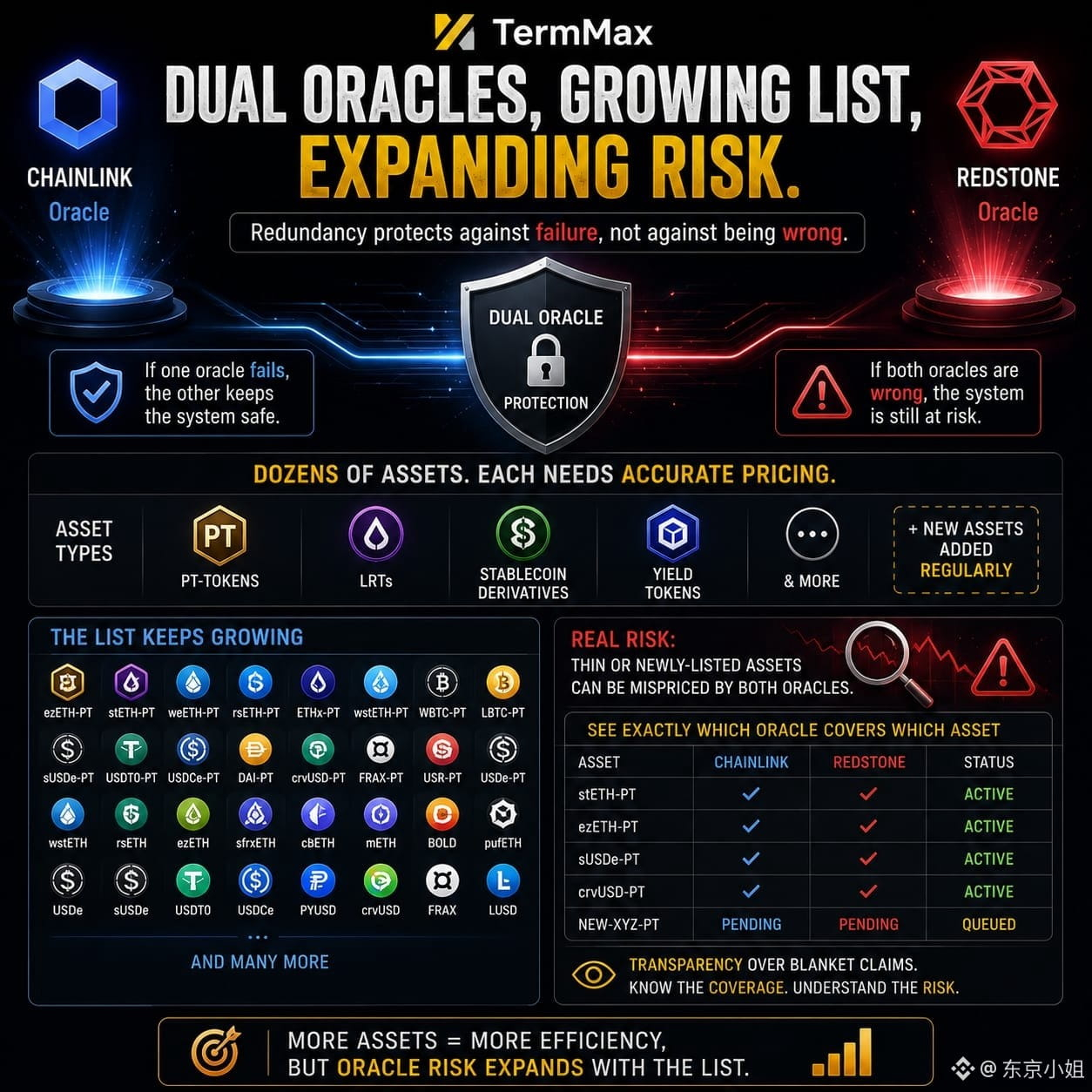
termmax ejecuta oráculos duales, chainlink y redstone, y los documentos lo presentan como una protección contra que falle un solo feed. bien. pero revisé la lista real de activos de oráculo en sus docs y ahora son docenas de pt-tokens individuales, lrts y derivados de stablecoin, cada uno de los cuales necesita su propio feed de precios configurado correctamente, y además se van agregando nuevos con bastante regularidad.
eso — en realidad, el riesgo real no es el diseño de doble oráculo en sí, sino que la redundancia te protege si un feed se cae, no si ambos feeds simplemente están equivocados al mismo tiempo sobre un activo nuevo y recientemente listado. más tipos de colateral es bueno para la eficiencia de capital, lo entiendo. solo significa que la sección de riesgo del oráculo no es estática: se está ampliando cada vez que se habilita un nuevo activo.
lo que en realidad me resolvería la duda es ver qué proveedor específico cubre qué activo específico publicado en algún lugar, en vez de solo "chainlink y redstone" como una línea única que cubre todo 🔍
#termmax @termmax
termmax ejecuta oráculos duales, chainlink y redstone, y los documentos lo presentan como una protección contra que falle un solo feed. bien. pero revisé la lista real de activos de oráculo en sus docs y ahora son docenas de pt-tokens individuales, lrts y derivados de stablecoin, cada uno de los cuales necesita su propio feed de precios configurado correctamente, y además se van agregando nuevos con bastante regularidad.
eso — en realidad, el riesgo real no es el diseño de doble oráculo en sí, sino que la redundancia te protege si un feed se cae, no si ambos feeds simplemente están equivocados al mismo tiempo sobre un activo nuevo y recientemente listado. más tipos de colateral es bueno para la eficiencia de capital, lo entiendo. solo significa que la sección de riesgo del oráculo no es estática: se está ampliando cada vez que se habilita un nuevo activo.
lo que en realidad me resolvería la duda es ver qué proveedor específico cubre qué activo específico publicado en algún lugar, en vez de solo "chainlink y redstone" como una línea única que cubre todo 🔍
#termmax @TermMax
eso — en realidad, el riesgo real no es el diseño de doble oráculo en sí, sino que la redundancia te protege si un feed se cae, no si ambos feeds simplemente están equivocados al mismo tiempo sobre un activo nuevo y recientemente listado. más tipos de colateral es bueno para la eficiencia de capital, lo entiendo. solo significa que la sección de riesgo del oráculo no es estática: se está ampliando cada vez que se habilita un nuevo activo.
lo que en realidad me resolvería la duda es ver qué proveedor específico cubre qué activo específico publicado en algún lugar, en vez de solo "chainlink y redstone" como una línea única que cubre todo 🔍
#termmax @TermMax
110
·
--
Alcista
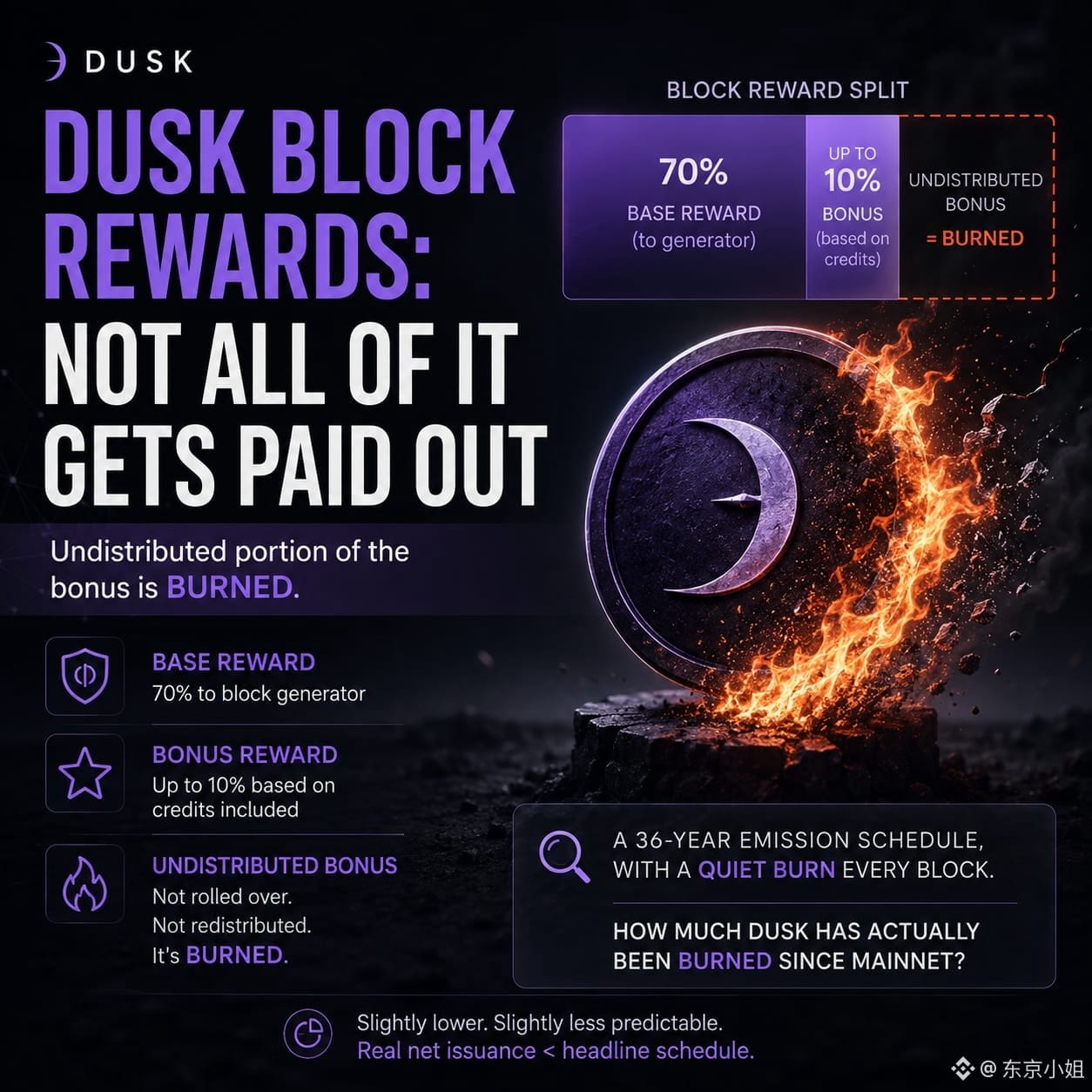
Fui a ver cómo realmente se reparten las recompensas del bloque de Dusk, y hay una mecánica de quema ahí dentro que no había notado antes. Los generadores de bloques obtienen un 70% base, más hasta otro 10% dependiendo de cuántos créditos se incluyan en el certificado. Pero la parte de ese 10% adicional que no se distribuye no se transfiere ni se redistribuye: simplemente se quema, y tuve que releer esa línea una segunda vez porque asumí que "no distribuido" significaba que se arrastraba al siguiente bloque dentro de la reserva.
Así que, a diferencia de la mayoría de cadenas PoS donde todo el fondo de recompensas se paga independientemente de la calidad de la participación, Dusk es silenciosamente deflacionario en el margen en cada bloque, dependiendo de qué tan completo esté el certificado del generador. Una cadena con un cronograma de emisión de 36 años basado en halving también está quemando cantidades pequeñas al otro lado según la calidad de la ejecución, y no he visto eso planteado como un factor real de oferta neta en ningún sitio.
Es un porcentaje pequeño por bloque; no estoy diciendo que cambie la curva de oferta de forma dramática. Pero un "cronograma de emisión de 36 años" implica una curva aditiva y predecible, y esta mecánica de quema significa que la emisión neta real es ligeramente menor y un poco menos predecible de lo que sugiere el calendario principal.
¿Alguien lleva el registro de cuánto de Dusk se ha quemado de esta manera desde mainnet, o ese dato no se publica en ningún lado? 🧐#dusk $DUSK @Dusk_Foundation
Fui a ver cómo realmente se reparten las recompensas del bloque de Dusk, y hay una mecánica de quema ahí dentro que no había notado antes. Los generadores de bloques obtienen un 70% base, más hasta otro 10% dependiendo de cuántos créditos se incluyan en el certificado. Pero la parte de ese 10% adicional que no se distribuye no se transfiere ni se redistribuye: simplemente se quema, y tuve que releer esa línea una segunda vez porque asumí que "no distribuido" significaba que se arrastraba al siguiente bloque dentro de la reserva.
Así que, a diferencia de la mayoría de cadenas PoS donde todo el fondo de recompensas se paga independientemente de la calidad de la participación, Dusk es silenciosamente deflacionario en el margen en cada bloque, dependiendo de qué tan completo esté el certificado del generador. Una cadena con un cronograma de emisión de 36 años basado en halving también está quemando cantidades pequeñas al otro lado según la calidad de la ejecución, y no he visto eso planteado como un factor real de oferta neta en ningún sitio.
Es un porcentaje pequeño por bloque; no estoy diciendo que cambie la curva de oferta de forma dramática. Pero un "cronograma de emisión de 36 años" implica una curva aditiva y predecible, y esta mecánica de quema significa que la emisión neta real es ligeramente menor y un poco menos predecible de lo que sugiere el calendario principal.
¿Alguien lleva el registro de cuánto de Dusk se ha quemado de esta manera desde mainnet, o ese dato no se publica en ningún lado? 🧐#dusk $DUSK @Dusk
Así que, a diferencia de la mayoría de cadenas PoS donde todo el fondo de recompensas se paga independientemente de la calidad de la participación, Dusk es silenciosamente deflacionario en el margen en cada bloque, dependiendo de qué tan completo esté el certificado del generador. Una cadena con un cronograma de emisión de 36 años basado en halving también está quemando cantidades pequeñas al otro lado según la calidad de la ejecución, y no he visto eso planteado como un factor real de oferta neta en ningún sitio.
Es un porcentaje pequeño por bloque; no estoy diciendo que cambie la curva de oferta de forma dramática. Pero un "cronograma de emisión de 36 años" implica una curva aditiva y predecible, y esta mecánica de quema significa que la emisión neta real es ligeramente menor y un poco menos predecible de lo que sugiere el calendario principal.
¿Alguien lleva el registro de cuánto de Dusk se ha quemado de esta manera desde mainnet, o ese dato no se publica en ningún lado? 🧐#dusk $DUSK @Dusk
1
1
102
·
--
Alcista
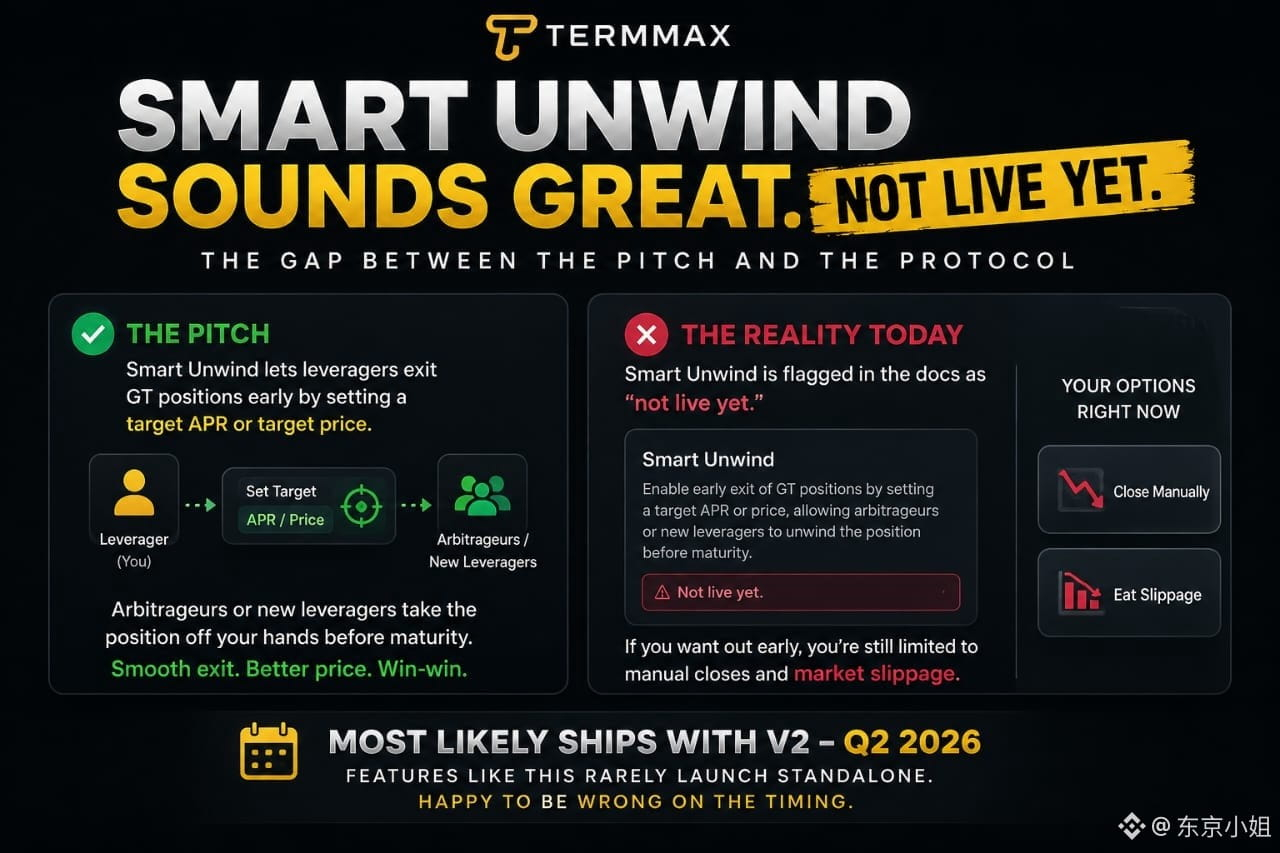
hay una función de termmax de la que hablan como si ya estuviera funcionando, y no es — smart unwind. se presenta como la forma en que los que tienen apalancamiento pueden salir de posiciones en gt de manera anticipada configurando una apr objetivo o un precio objetivo, permitiendo que los arbitrajistas o nuevos usuarios con apalancamiento se queden con la posición por ti antes del vencimiento. suena genial sobre el papel. la página de documentación real para eso, aunque, tiene una sola línea en la parte inferior marcándolo como "aún no está en vivo".
así que ahora mismo, si estás apalancado y quieres salir antes, te quedas con las mismas opciones que existían antes de que se anunciara esta función: cerrar manualmente, comiéndote toda la desviación por deslizamiento (slippage) que te dé el mercado. entiendo por qué lo están promocionando con anticipación: los equipos hacen esto para generar expectación para la v2. aun así, hay una brecha real entre lo que el mensaje sugiere que puedes hacer hoy y lo que los contratos realmente te permiten hacer hoy.
mi lectura real: esto se lanza junto con el resto del despliegue de la v2 de q2 2026, no antes y no mucho después — funciones como esta rara vez se lanzan por separado. puedo estar equivocado con el timing, pero ahí es donde lo pondría 🎯
#termmax @termmax
hay una función de termmax de la que hablan como si ya estuviera funcionando, y no es — smart unwind. se presenta como la forma en que los que tienen apalancamiento pueden salir de posiciones en gt de manera anticipada configurando una apr objetivo o un precio objetivo, permitiendo que los arbitrajistas o nuevos usuarios con apalancamiento se queden con la posición por ti antes del vencimiento. suena genial sobre el papel. la página de documentación real para eso, aunque, tiene una sola línea en la parte inferior marcándolo como "aún no está en vivo".
así que ahora mismo, si estás apalancado y quieres salir antes, te quedas con las mismas opciones que existían antes de que se anunciara esta función: cerrar manualmente, comiéndote toda la desviación por deslizamiento (slippage) que te dé el mercado. entiendo por qué lo están promocionando con anticipación: los equipos hacen esto para generar expectación para la v2. aun así, hay una brecha real entre lo que el mensaje sugiere que puedes hacer hoy y lo que los contratos realmente te permiten hacer hoy.
mi lectura real: esto se lanza junto con el resto del despliegue de la v2 de q2 2026, no antes y no mucho después — funciones como esta rara vez se lanzan por separado. puedo estar equivocado con el timing, pero ahí es donde lo pondría 🎯
#termmax @TermMax
así que ahora mismo, si estás apalancado y quieres salir antes, te quedas con las mismas opciones que existían antes de que se anunciara esta función: cerrar manualmente, comiéndote toda la desviación por deslizamiento (slippage) que te dé el mercado. entiendo por qué lo están promocionando con anticipación: los equipos hacen esto para generar expectación para la v2. aun así, hay una brecha real entre lo que el mensaje sugiere que puedes hacer hoy y lo que los contratos realmente te permiten hacer hoy.
mi lectura real: esto se lanza junto con el resto del despliegue de la v2 de q2 2026, no antes y no mucho después — funciones como esta rara vez se lanzan por separado. puedo estar equivocado con el timing, pero ahí es donde lo pondría 🎯
#termmax @TermMax
2
1
131
·
--
Alcista
keyrock y el laboratorio con código fijo están ejecutando bóvedas en vivo ahora mismo, y hay un detalle sobre cómo termmax gestiona el capital ocioso del que no veo que nadie hable realmente: cualquier capital de órdenes de préstamo que aún no se haya prestado se enruta automáticamente hacia aave, morpho o venus, para que no esté simplemente ahí muerto. Es un movimiento de tesorería inteligente, honestamente.
Pero significa que todo el discurso de “tasa fija” descansa en silencio sobre protocolos de tasa variable durante el tiempo que el dinero está esperando emparejarse. No lo llamo un fallo; claramente es la mejor opción frente a dejar que el usdc no gane nada. Aun así, con dos curadores activos ejecutando estrategias ahora mismo, no puedo decir cuánto de su apy anunciado proviene de préstamos con tasa fija que realmente se emparejan versus esta capa de tasa variable haciendo el trabajo pesado en los días lentos 📊
Me pregunto si alguien alguna vez ha visto esa separación desglosada en algún lugar.
#termmax @termmax
keyrock y el laboratorio con código fijo están ejecutando bóvedas en vivo ahora mismo, y hay un detalle sobre cómo termmax gestiona el capital ocioso del que no veo que nadie hable realmente: cualquier capital de órdenes de préstamo que aún no se haya prestado se enruta automáticamente hacia aave, morpho o venus, para que no esté simplemente ahí muerto. Es un movimiento de tesorería inteligente, honestamente.
Pero significa que todo el discurso de “tasa fija” descansa en silencio sobre protocolos de tasa variable durante el tiempo que el dinero está esperando emparejarse. No lo llamo un fallo; claramente es la mejor opción frente a dejar que el usdc no gane nada. Aun así, con dos curadores activos ejecutando estrategias ahora mismo, no puedo decir cuánto de su apy anunciado proviene de préstamos con tasa fija que realmente se emparejan versus esta capa de tasa variable haciendo el trabajo pesado en los días lentos 📊
Me pregunto si alguien alguna vez ha visto esa separación desglosada en algún lugar.
#termmax @TermMax
Pero significa que todo el discurso de “tasa fija” descansa en silencio sobre protocolos de tasa variable durante el tiempo que el dinero está esperando emparejarse. No lo llamo un fallo; claramente es la mejor opción frente a dejar que el usdc no gane nada. Aun así, con dos curadores activos ejecutando estrategias ahora mismo, no puedo decir cuánto de su apy anunciado proviene de préstamos con tasa fija que realmente se emparejan versus esta capa de tasa variable haciendo el trabajo pesado en los días lentos 📊
Me pregunto si alguien alguna vez ha visto esa separación desglosada en algún lugar.
#termmax @TermMax

1
1
186
·
--
@Dusk_Foundation
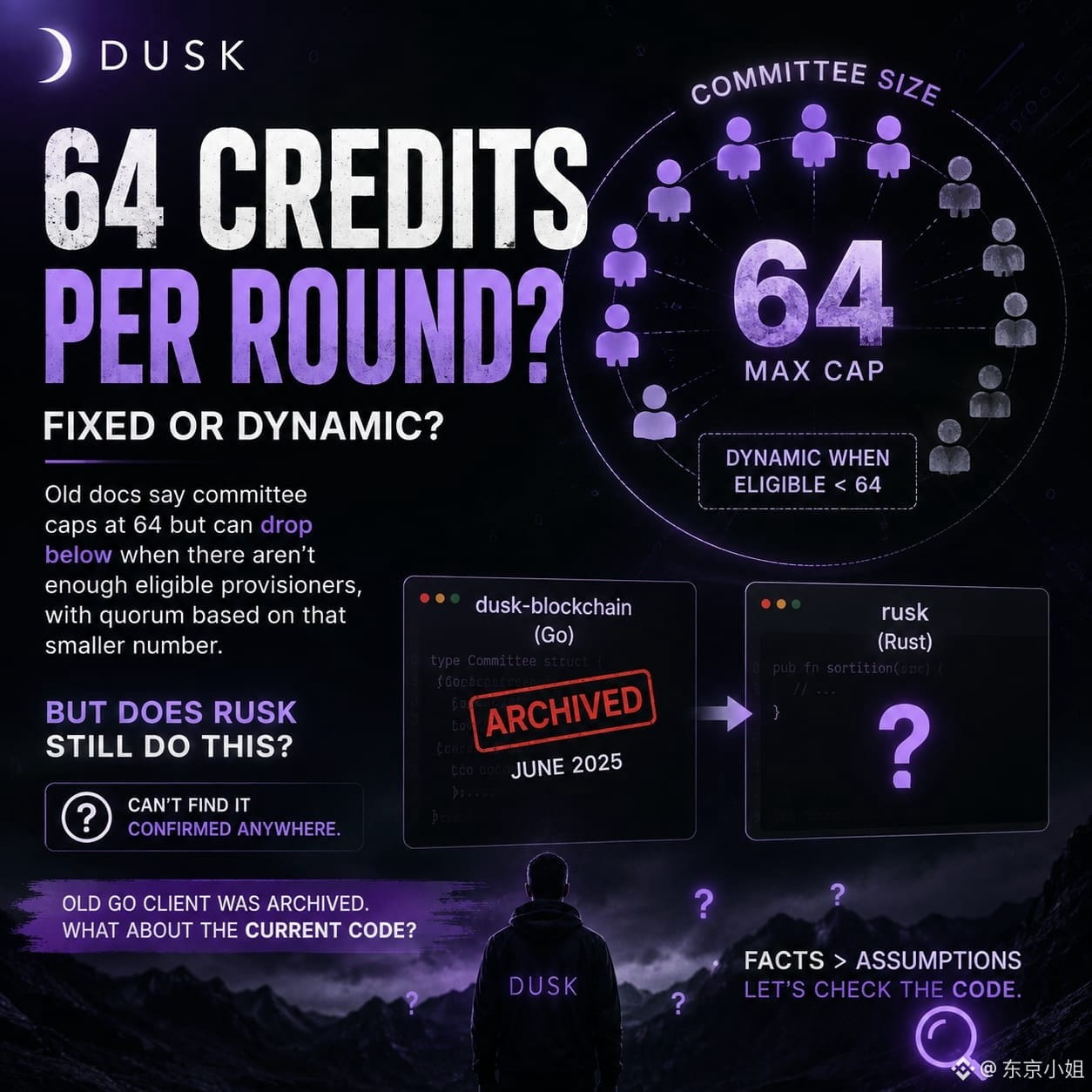
ii excavé para entender cómo funciona realmente el tamaño del comité de Dusk, ya que “64 créditos por ronda” se repite por todas partes como fijo. encontré un issue en GitHub que describe algo diferente: el tamaño del comité está limitado a 64, pero baja de ese valor cuando no hay suficientes provisioners elegibles, y el quórum se calcula a partir de ese número menor. excepto cuando fui a ver contra qué codebase se presentó ese issue: era dusk-blockchain, el cliente antiguo en Go, archivado por su propio equipo en junio de 2025.
por lo tanto, este era un comportamiento documentado en la implementación pre-mainnet, no necesariamente lo que se está ejecutando ahora; — en realidad, espera, debería ser más preciso: no es que necesariamente sea diferente ahora, es que sinceramente no puedo encontrar nada que lo confirme de ninguna manera. mainnet usa rusk, una reescritura completa en Rust, y no es algo que pudiera confirmar si esta lógica exacta de sortition se trasladó o se rediseñó en el camino.
eso es un vacío extrañamente específico para una red tan avanzada en documentación pública: el comportamiento histórico es real y rastreable, pero lo que yo he encontrado no confirma ni niega nada en el código actual en ejecución.
alguien realmente ha revisado el código actual de sortition en rusk para esto, o todos solo están repitiendo el comportamiento del cliente viejo de Go como si siguiera siendo cierto? 🧐
#dusk $DUSK
@Dusk
ii excavé para entender cómo funciona realmente el tamaño del comité de Dusk, ya que “64 créditos por ronda” se repite por todas partes como fijo. encontré un issue en GitHub que describe algo diferente: el tamaño del comité está limitado a 64, pero baja de ese valor cuando no hay suficientes provisioners elegibles, y el quórum se calcula a partir de ese número menor. excepto cuando fui a ver contra qué codebase se presentó ese issue: era dusk-blockchain, el cliente antiguo en Go, archivado por su propio equipo en junio de 2025.
por lo tanto, este era un comportamiento documentado en la implementación pre-mainnet, no necesariamente lo que se está ejecutando ahora; — en realidad, espera, debería ser más preciso: no es que necesariamente sea diferente ahora, es que sinceramente no puedo encontrar nada que lo confirme de ninguna manera. mainnet usa rusk, una reescritura completa en Rust, y no es algo que pudiera confirmar si esta lógica exacta de sortition se trasladó o se rediseñó en el camino.
eso es un vacío extrañamente específico para una red tan avanzada en documentación pública: el comportamiento histórico es real y rastreable, pero lo que yo he encontrado no confirma ni niega nada en el código actual en ejecución.
alguien realmente ha revisado el código actual de sortition en rusk para esto, o todos solo están repitiendo el comportamiento del cliente viejo de Go como si siguiera siendo cierto? 🧐
#dusk $DUSK
ii excavé para entender cómo funciona realmente el tamaño del comité de Dusk, ya que “64 créditos por ronda” se repite por todas partes como fijo. encontré un issue en GitHub que describe algo diferente: el tamaño del comité está limitado a 64, pero baja de ese valor cuando no hay suficientes provisioners elegibles, y el quórum se calcula a partir de ese número menor. excepto cuando fui a ver contra qué codebase se presentó ese issue: era dusk-blockchain, el cliente antiguo en Go, archivado por su propio equipo en junio de 2025.
por lo tanto, este era un comportamiento documentado en la implementación pre-mainnet, no necesariamente lo que se está ejecutando ahora; — en realidad, espera, debería ser más preciso: no es que necesariamente sea diferente ahora, es que sinceramente no puedo encontrar nada que lo confirme de ninguna manera. mainnet usa rusk, una reescritura completa en Rust, y no es algo que pudiera confirmar si esta lógica exacta de sortition se trasladó o se rediseñó en el camino.
eso es un vacío extrañamente específico para una red tan avanzada en documentación pública: el comportamiento histórico es real y rastreable, pero lo que yo he encontrado no confirma ni niega nada en el código actual en ejecución.
alguien realmente ha revisado el código actual de sortition en rusk para esto, o todos solo están repitiendo el comportamiento del cliente viejo de Go como si siguiera siendo cierto? 🧐
#dusk $DUSK
7
4
162
·
--
Alcista
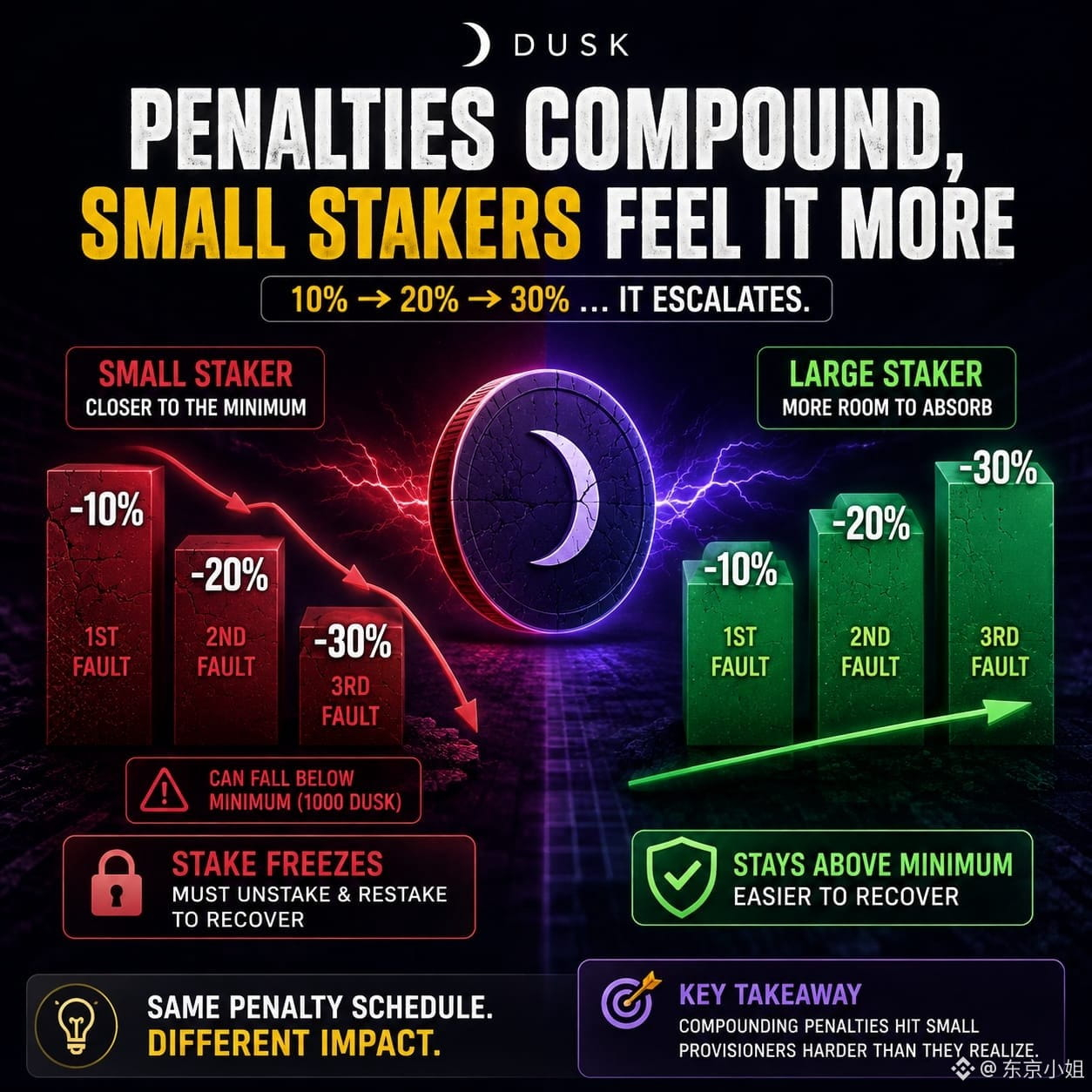
Estaba leyendo las actualizaciones de ingeniería de Dusk sobre la penalización y noté que los porcentajes en realidad se acumulan: primero, los costos de suspensión son el 10% de la participación; segundo, el 20%; luego, el 30%, subiendo cada vez. Eso no es plano: escala.
Lo que significa que un provisioner que esté cerca del mínimo de Dusk de 1000 tiene mucho menos margen para recuperarse que uno más grande. Dos o tres fallos consecutivos y un pequeño staker podrían quedar empujados completamente por debajo del mínimo; en ese punto, la documentación dice que la participación se congela y tiene que des-aturarse completamente y volverse a apostar para volver — no solo esperar una suspensión, sino un reinicio real.
Un provisioner grande que se come la misma secuencia 10-20-30% apenas lo nota en comparación con su participación total. Así que el mismo calendario de penalizaciones, diseñado para castigar el mal comportamiento por igual, termina golpeando más fuerte a los validadores pequeños. Volví atrás y releí los porcentajes dos veces, de hecho, porque seguía asumiendo que había leído mal "aumenta en 10%" como si fuera algún 10% repetido y plano.
¿Hay en algún lugar un colchón mínimo de participación recomendado para que los provisioners más pequeños no se vean empujados por accidente a ese ciclo de reinicio? 🧐
#dusk $DUSK @Dusk_Foundation
{spot}(DUSKUSDT)
Estaba leyendo las actualizaciones de ingeniería de Dusk sobre la penalización y noté que los porcentajes en realidad se acumulan: primero, los costos de suspensión son el 10% de la participación; segundo, el 20%; luego, el 30%, subiendo cada vez. Eso no es plano: escala.
Lo que significa que un provisioner que esté cerca del mínimo de Dusk de 1000 tiene mucho menos margen para recuperarse que uno más grande. Dos o tres fallos consecutivos y un pequeño staker podrían quedar empujados completamente por debajo del mínimo; en ese punto, la documentación dice que la participación se congela y tiene que des-aturarse completamente y volverse a apostar para volver — no solo esperar una suspensión, sino un reinicio real.
Un provisioner grande que se come la misma secuencia 10-20-30% apenas lo nota en comparación con su participación total. Así que el mismo calendario de penalizaciones, diseñado para castigar el mal comportamiento por igual, termina golpeando más fuerte a los validadores pequeños. Volví atrás y releí los porcentajes dos veces, de hecho, porque seguía asumiendo que había leído mal "aumenta en 10%" como si fuera algún 10% repetido y plano.
¿Hay en algún lugar un colchón mínimo de participación recomendado para que los provisioners más pequeños no se vean empujados por accidente a ese ciclo de reinicio? 🧐
#dusk $DUSK @Dusk
Lo que significa que un provisioner que esté cerca del mínimo de Dusk de 1000 tiene mucho menos margen para recuperarse que uno más grande. Dos o tres fallos consecutivos y un pequeño staker podrían quedar empujados completamente por debajo del mínimo; en ese punto, la documentación dice que la participación se congela y tiene que des-aturarse completamente y volverse a apostar para volver — no solo esperar una suspensión, sino un reinicio real.
Un provisioner grande que se come la misma secuencia 10-20-30% apenas lo nota en comparación con su participación total. Así que el mismo calendario de penalizaciones, diseñado para castigar el mal comportamiento por igual, termina golpeando más fuerte a los validadores pequeños. Volví atrás y releí los porcentajes dos veces, de hecho, porque seguía asumiendo que había leído mal "aumenta en 10%" como si fuera algún 10% repetido y plano.
¿Hay en algún lugar un colchón mínimo de participación recomendado para que los provisioners más pequeños no se vean empujados por accidente a ese ciclo de reinicio? 🧐
#dusk $DUSK @Dusk
1
2
152
·
--
@Dusk_Foundation
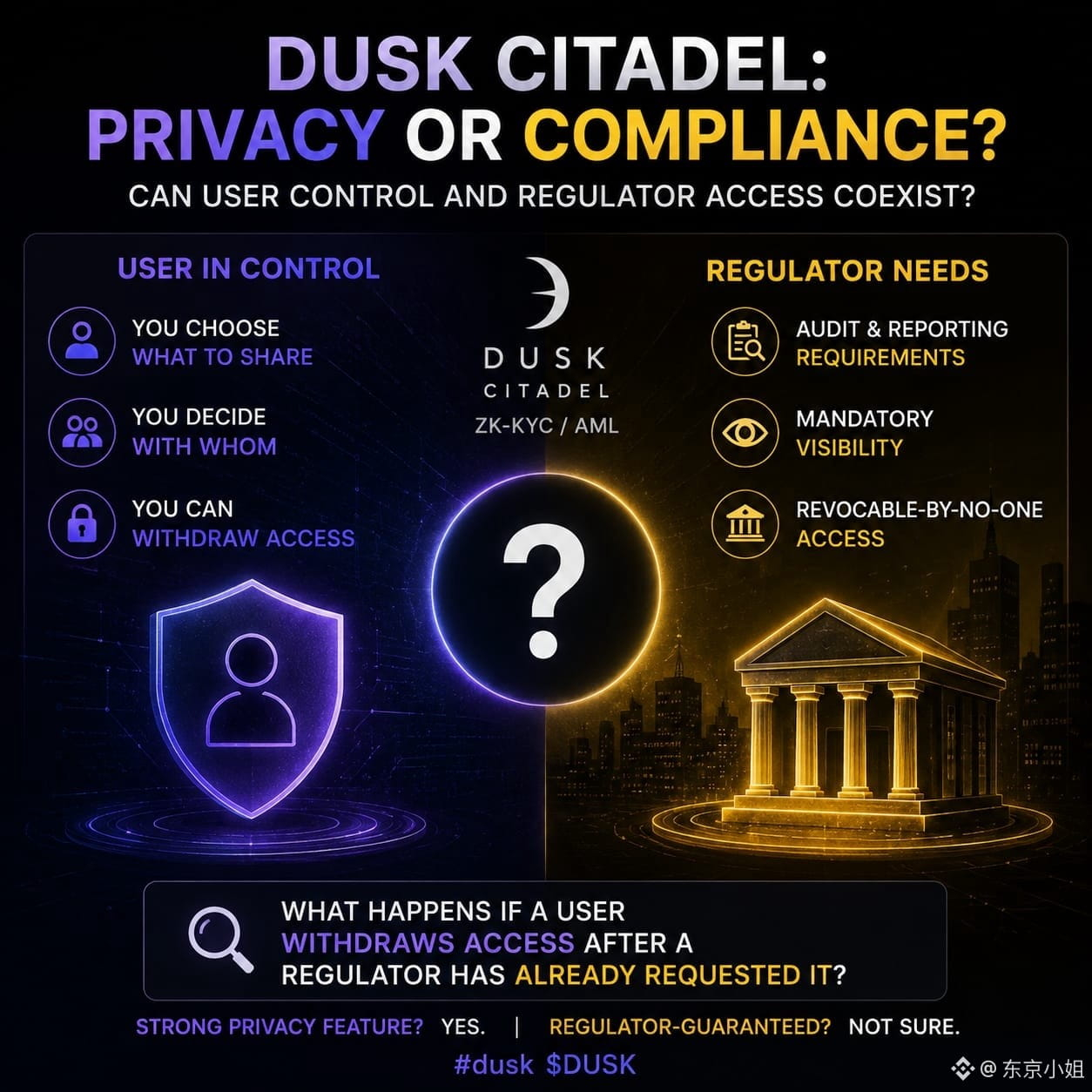
y volví a leer cómo funciona realmente la ciudadela del crepúsculo en vez de solo repetir el discurso de "privacidad más divulgación selectiva", y algo no encaja. La ciudadela describe al usuario como plenamente a cargo de sus datos: elige qué compartir, con quién, e incluso puede retirar el acceso a ellos más tarde. Ese sigue siendo el marco actual: en realidad, entré esperando que fuera una idea descartada de 2023, pero está ahí mismo en la hoja de ruta post-mainnet de dusk como la pieza viva de zk-kyc/aml.
pero, en general, los reguladores no quieren un acceso opcional. los requisitos de auditoría y reporte suelen implicar una visibilidad obligatoria, revocable por nadie, y no algo que el usuario consiente una vez y luego puede retirar más tarde. si la ciudadela da a los usuarios el poder de retirar la divulgación, no estoy seguro de cómo eso encaja con el planteamiento de "el regulador puede ver lo que necesita" que dusk usa en otros sitios; a menos que haya una capa de cumplimiento separada por debajo que yo no he encontrado todavía.
vale decir: los datos controlados por el usuario son una característica de privacidad realmente potente para dusk; no estoy criticando esa parte. solo no creo que "revocable por el usuario" y "garantizado por el regulador" puedan ser ciertas a la vez para la misma divulgación.
¿alguien ha visto documentación sobre qué pasa si un usuario de dusk retira el acceso después de que un regulador ya lo haya solicitado? 🧐
#dusk $DUSK
@Dusk
y volví a leer cómo funciona realmente la ciudadela del crepúsculo en vez de solo repetir el discurso de "privacidad más divulgación selectiva", y algo no encaja. La ciudadela describe al usuario como plenamente a cargo de sus datos: elige qué compartir, con quién, e incluso puede retirar el acceso a ellos más tarde. Ese sigue siendo el marco actual: en realidad, entré esperando que fuera una idea descartada de 2023, pero está ahí mismo en la hoja de ruta post-mainnet de dusk como la pieza viva de zk-kyc/aml.
pero, en general, los reguladores no quieren un acceso opcional. los requisitos de auditoría y reporte suelen implicar una visibilidad obligatoria, revocable por nadie, y no algo que el usuario consiente una vez y luego puede retirar más tarde. si la ciudadela da a los usuarios el poder de retirar la divulgación, no estoy seguro de cómo eso encaja con el planteamiento de "el regulador puede ver lo que necesita" que dusk usa en otros sitios; a menos que haya una capa de cumplimiento separada por debajo que yo no he encontrado todavía.
vale decir: los datos controlados por el usuario son una característica de privacidad realmente potente para dusk; no estoy criticando esa parte. solo no creo que "revocable por el usuario" y "garantizado por el regulador" puedan ser ciertas a la vez para la misma divulgación.
¿alguien ha visto documentación sobre qué pasa si un usuario de dusk retira el acceso después de que un regulador ya lo haya solicitado? 🧐
#dusk $DUSK
y volví a leer cómo funciona realmente la ciudadela del crepúsculo en vez de solo repetir el discurso de "privacidad más divulgación selectiva", y algo no encaja. La ciudadela describe al usuario como plenamente a cargo de sus datos: elige qué compartir, con quién, e incluso puede retirar el acceso a ellos más tarde. Ese sigue siendo el marco actual: en realidad, entré esperando que fuera una idea descartada de 2023, pero está ahí mismo en la hoja de ruta post-mainnet de dusk como la pieza viva de zk-kyc/aml.
pero, en general, los reguladores no quieren un acceso opcional. los requisitos de auditoría y reporte suelen implicar una visibilidad obligatoria, revocable por nadie, y no algo que el usuario consiente una vez y luego puede retirar más tarde. si la ciudadela da a los usuarios el poder de retirar la divulgación, no estoy seguro de cómo eso encaja con el planteamiento de "el regulador puede ver lo que necesita" que dusk usa en otros sitios; a menos que haya una capa de cumplimiento separada por debajo que yo no he encontrado todavía.
vale decir: los datos controlados por el usuario son una característica de privacidad realmente potente para dusk; no estoy criticando esa parte. solo no creo que "revocable por el usuario" y "garantizado por el regulador" puedan ser ciertas a la vez para la misma divulgación.
¿alguien ha visto documentación sobre qué pasa si un usuario de dusk retira el acceso después de que un regulador ya lo haya solicitado? 🧐
#dusk $DUSK
7
11
146
·
--
Alcista
Parcialmente cierto
@Dusk_Foundation
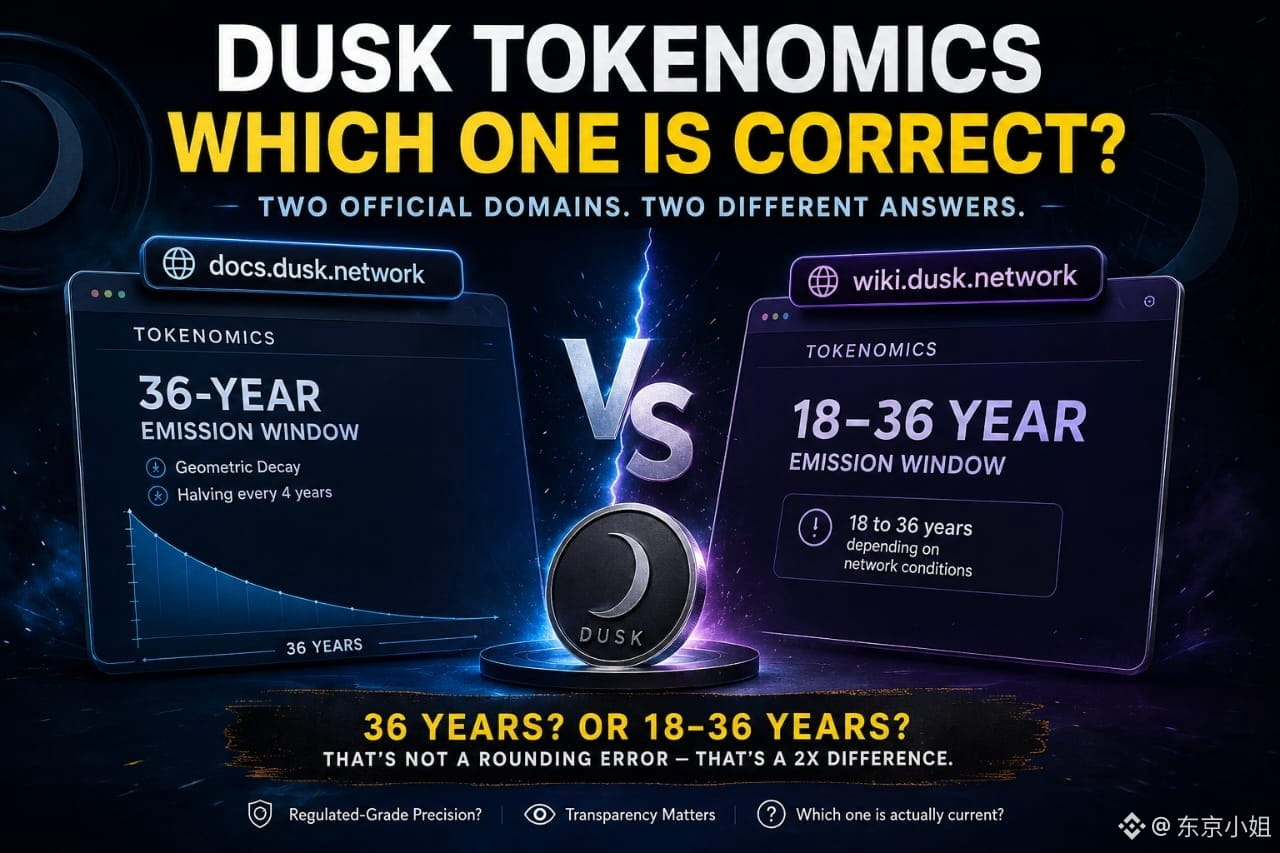
yo estaba verificando el cronograma de emisiones para otra cosa por completo y noté que dos de los propios dominios de dusk ni siquiera se ponen de acuerdo entre sí. docs.dusk.network — la página real de tokenomics — dice una ventana de emisión plana de 36 años, con decaimiento geométrico, reducción a la mitad cada 4 años, y de forma sencilla. wiki.dusk.network, que está en su propio subdominio, no en algún espejo de terceros al azar, dice algo más laxo: un rango de 18 a 36 años dependiendo de las condiciones de la red.
no es una diferencia de redondeo, es básicamente un margen de 2x sobre cuánto dura la cola de recompensas — y casi lo descarté como algo de una wiki de fans hasta que vi que literalmente está alojado bajo dusk.network, no en algún lugar externo.
entiendo que la variación del tiempo por bloque mueve un poco la longitud real del calendario, esa parte encaja. pero un documento llamado "tokenomics" que cita un número fijo mientras que una página en el dominio del propio equipo cita un rango no es un tema de redondeo: son dos respuestas distintas a "cuándo se detiene la emisión". para un proyecto construido con precisión de grado regulado, no es el tipo de brecha que esperaría entre dos páginas que ambos controlan.
¿alguien sabe cuál es la que está realmente vigente, o ambas están simplemente desactualizadas en direcciones distintas? 🧐
#dusk $DUSK
@Dusk
yo estaba verificando el cronograma de emisiones para otra cosa por completo y noté que dos de los propios dominios de dusk ni siquiera se ponen de acuerdo entre sí. docs.dusk.network — la página real de tokenomics — dice una ventana de emisión plana de 36 años, con decaimiento geométrico, reducción a la mitad cada 4 años, y de forma sencilla. wiki.dusk.network, que está en su propio subdominio, no en algún espejo de terceros al azar, dice algo más laxo: un rango de 18 a 36 años dependiendo de las condiciones de la red.
no es una diferencia de redondeo, es básicamente un margen de 2x sobre cuánto dura la cola de recompensas — y casi lo descarté como algo de una wiki de fans hasta que vi que literalmente está alojado bajo dusk.network, no en algún lugar externo.
entiendo que la variación del tiempo por bloque mueve un poco la longitud real del calendario, esa parte encaja. pero un documento llamado "tokenomics" que cita un número fijo mientras que una página en el dominio del propio equipo cita un rango no es un tema de redondeo: son dos respuestas distintas a "cuándo se detiene la emisión". para un proyecto construido con precisión de grado regulado, no es el tipo de brecha que esperaría entre dos páginas que ambos controlan.
¿alguien sabe cuál es la que está realmente vigente, o ambas están simplemente desactualizadas en direcciones distintas? 🧐
#dusk $DUSK
yo estaba verificando el cronograma de emisiones para otra cosa por completo y noté que dos de los propios dominios de dusk ni siquiera se ponen de acuerdo entre sí. docs.dusk.network — la página real de tokenomics — dice una ventana de emisión plana de 36 años, con decaimiento geométrico, reducción a la mitad cada 4 años, y de forma sencilla. wiki.dusk.network, que está en su propio subdominio, no en algún espejo de terceros al azar, dice algo más laxo: un rango de 18 a 36 años dependiendo de las condiciones de la red.
no es una diferencia de redondeo, es básicamente un margen de 2x sobre cuánto dura la cola de recompensas — y casi lo descarté como algo de una wiki de fans hasta que vi que literalmente está alojado bajo dusk.network, no en algún lugar externo.
entiendo que la variación del tiempo por bloque mueve un poco la longitud real del calendario, esa parte encaja. pero un documento llamado "tokenomics" que cita un número fijo mientras que una página en el dominio del propio equipo cita un rango no es un tema de redondeo: son dos respuestas distintas a "cuándo se detiene la emisión". para un proyecto construido con precisión de grado regulado, no es el tipo de brecha que esperaría entre dos páginas que ambos controlan.
¿alguien sabe cuál es la que está realmente vigente, o ambas están simplemente desactualizadas en direcciones distintas? 🧐
#dusk $DUSK
9
11
139
·
--
Alcista
{spot}(DUSKUSDT)
@Dusk_Foundation
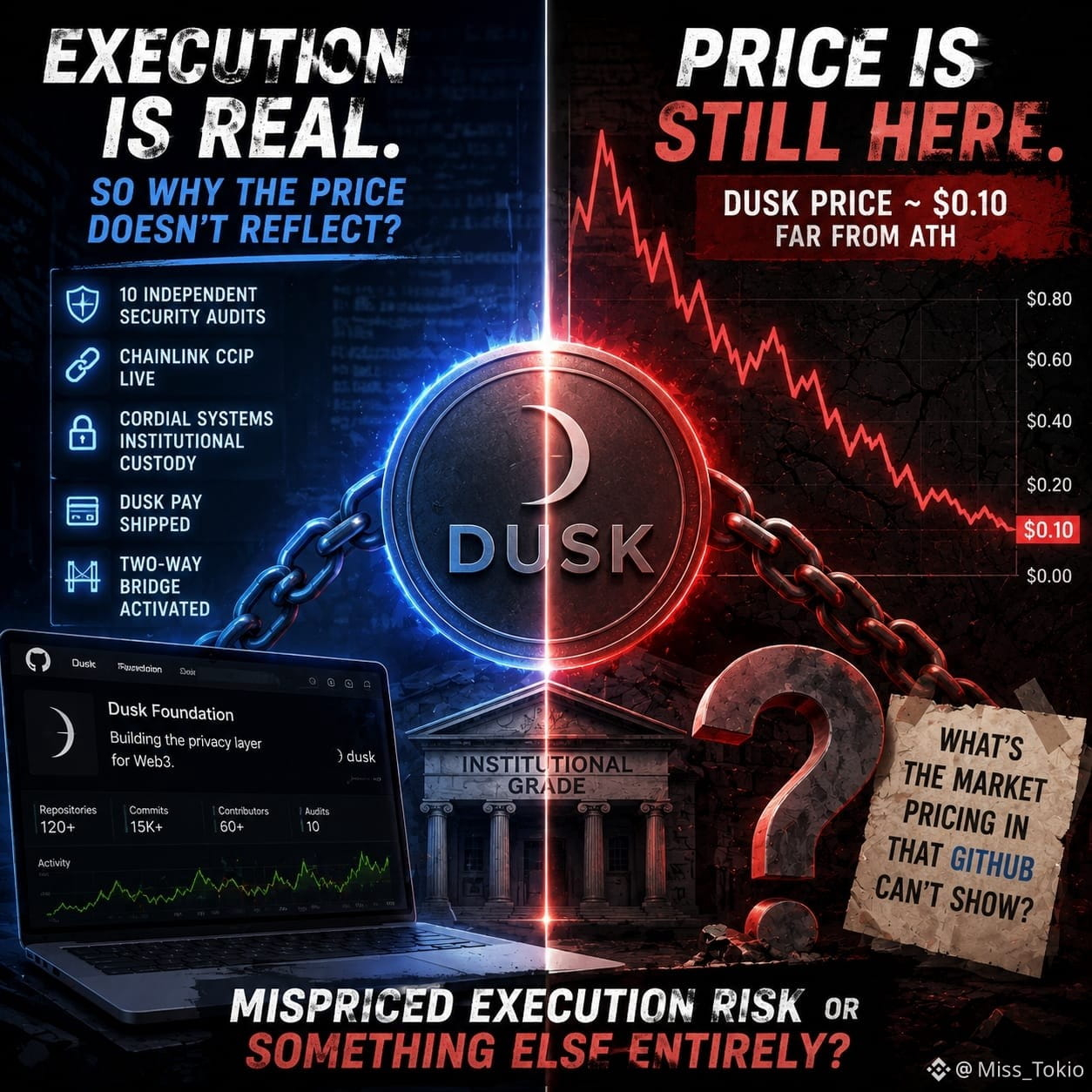
hoy me puse a ver el github de dusk junto con su gráfico de precios para comprobar si los números coincidían con la historia, y no — ni cerca. diez auditorías de seguridad independientes antes del mainnet, chainlink ccip en vivo, cordial systems integradas para custodia institucional, dusk pay enviado, activado el puente bidireccional. eso no es un trimestre tranquilo para ningún l1.
el precio está cerca de $0.10, muy lejos de su ath, como si no hubiera pasado nada.
entiendo que solo el recuento de commits no significa mucho — puedes inflar un repositorio con cambios de documentación y actualizaciones de dependencias y llamarlo actividad. pero diez auditorías y una integración de custodia en vivo no son cosmética: son cosas que tienen que funcionar de verdad antes de que las instituciones toquen la cadena. así que o el mercado está calculando mal el riesgo de ejecución que ya se retiró, o está poniendo precio a otra cosa completamente distinta que yo no estoy viendo desde el lado del desarrollo.
¿cuál es?, y si es lo segundo — ¿qué es exactamente lo que se está valorando y que ese github no puede mostrarme? 🧐
#dusk $DUSK
@Dusk
hoy me puse a ver el github de dusk junto con su gráfico de precios para comprobar si los números coincidían con la historia, y no — ni cerca. diez auditorías de seguridad independientes antes del mainnet, chainlink ccip en vivo, cordial systems integradas para custodia institucional, dusk pay enviado, activado el puente bidireccional. eso no es un trimestre tranquilo para ningún l1.
el precio está cerca de $0.10, muy lejos de su ath, como si no hubiera pasado nada.
entiendo que solo el recuento de commits no significa mucho — puedes inflar un repositorio con cambios de documentación y actualizaciones de dependencias y llamarlo actividad. pero diez auditorías y una integración de custodia en vivo no son cosmética: son cosas que tienen que funcionar de verdad antes de que las instituciones toquen la cadena. así que o el mercado está calculando mal el riesgo de ejecución que ya se retiró, o está poniendo precio a otra cosa completamente distinta que yo no estoy viendo desde el lado del desarrollo.
¿cuál es?, y si es lo segundo — ¿qué es exactamente lo que se está valorando y que ese github no puede mostrarme? 🧐
#dusk $DUSK
hoy me puse a ver el github de dusk junto con su gráfico de precios para comprobar si los números coincidían con la historia, y no — ni cerca. diez auditorías de seguridad independientes antes del mainnet, chainlink ccip en vivo, cordial systems integradas para custodia institucional, dusk pay enviado, activado el puente bidireccional. eso no es un trimestre tranquilo para ningún l1.
el precio está cerca de $0.10, muy lejos de su ath, como si no hubiera pasado nada.
entiendo que solo el recuento de commits no significa mucho — puedes inflar un repositorio con cambios de documentación y actualizaciones de dependencias y llamarlo actividad. pero diez auditorías y una integración de custodia en vivo no son cosmética: son cosas que tienen que funcionar de verdad antes de que las instituciones toquen la cadena. así que o el mercado está calculando mal el riesgo de ejecución que ya se retiró, o está poniendo precio a otra cosa completamente distinta que yo no estoy viendo desde el lado del desarrollo.
¿cuál es?, y si es lo segundo — ¿qué es exactamente lo que se está valorando y que ese github no puede mostrarme? 🧐
#dusk $DUSK
2
119
·
--
@babylonlabs_io
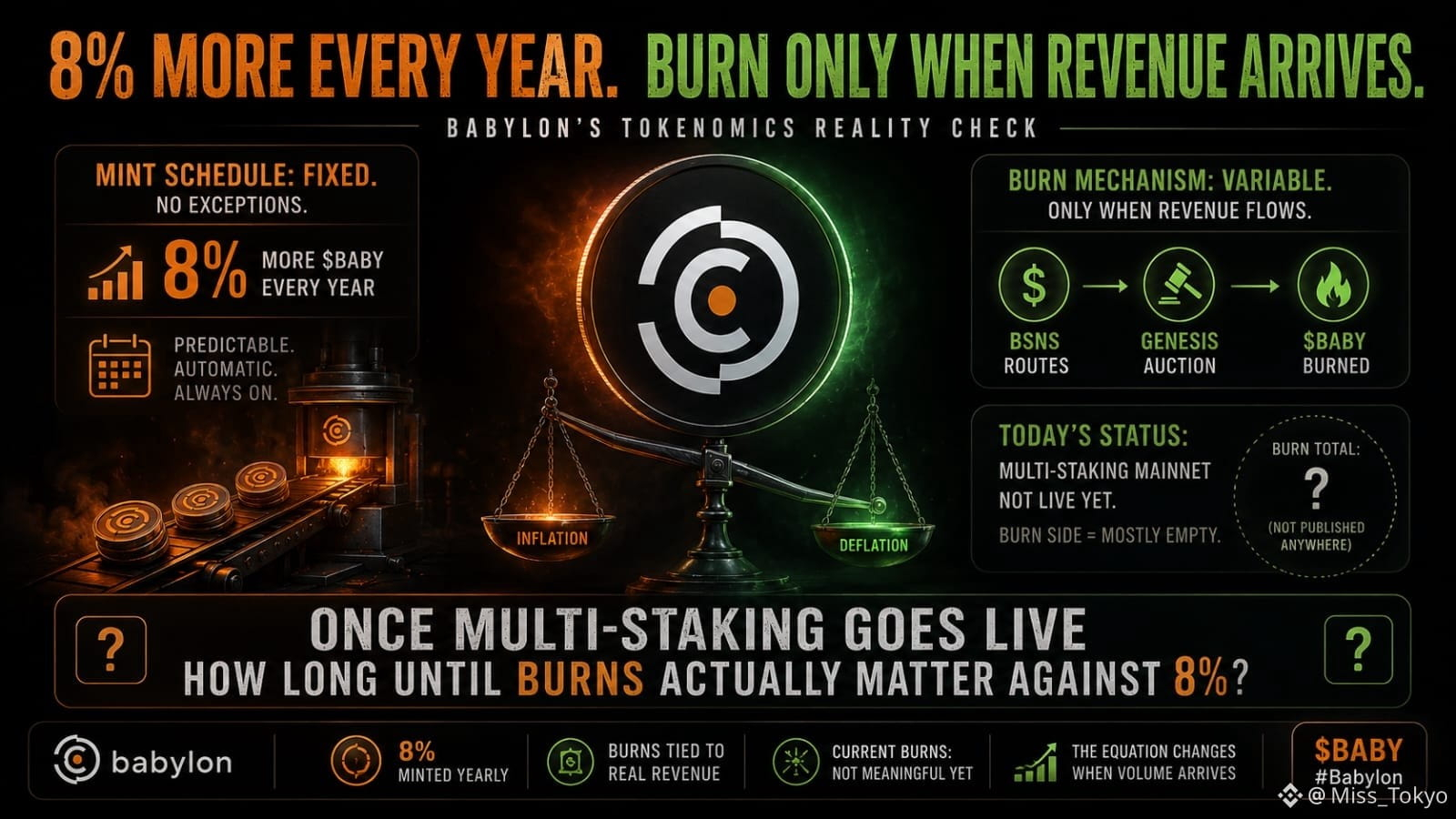
babylon acuña aproximadamente un 8% más de baby cada año en un calendario fijo, sin excepciones. el mecanismo construido para compensar eso no está en un calendario en absoluto: solo quema baby cuando bsns enruta recompensas reales de staking a través de la subasta de genesis, y el mainnet de multi-staking todavía no ha sido lanzado, así que ahora mismo esa parte del libro contable está mayormente vacía.
una subasta vinculada a ingresos reales es un mejor diseño que un objetivo arbitrario de quema, en teoría. pero ahora, "vinculada a ingresos reales" solo describe una fórmula que aún no tiene nada incorporado.\nbusqué un total de quema actual y no encontré ninguno publicado en ningún lugar, probablemente porque todavía no hay mucho, no porque alguien lo esté ocultando.
una vez que se envíen multi-staking ships y bsns empiecen a enrutar volumen real, ¿cuánto tiempo antes de que esa parte de la quema alcance lo suficiente como para importar de verdad frente al 8%? $BABY #baby 🔥
@BabylonLabs_io
babylon acuña aproximadamente un 8% más de baby cada año en un calendario fijo, sin excepciones. el mecanismo construido para compensar eso no está en un calendario en absoluto: solo quema baby cuando bsns enruta recompensas reales de staking a través de la subasta de genesis, y el mainnet de multi-staking todavía no ha sido lanzado, así que ahora mismo esa parte del libro contable está mayormente vacía.
una subasta vinculada a ingresos reales es un mejor diseño que un objetivo arbitrario de quema, en teoría. pero ahora, "vinculada a ingresos reales" solo describe una fórmula que aún no tiene nada incorporado.\nbusqué un total de quema actual y no encontré ninguno publicado en ningún lugar, probablemente porque todavía no hay mucho, no porque alguien lo esté ocultando.
una vez que se envíen multi-staking ships y bsns empiecen a enrutar volumen real, ¿cuánto tiempo antes de que esa parte de la quema alcance lo suficiente como para importar de verdad frente al 8%? $BABY #baby 🔥
babylon acuña aproximadamente un 8% más de baby cada año en un calendario fijo, sin excepciones. el mecanismo construido para compensar eso no está en un calendario en absoluto: solo quema baby cuando bsns enruta recompensas reales de staking a través de la subasta de genesis, y el mainnet de multi-staking todavía no ha sido lanzado, así que ahora mismo esa parte del libro contable está mayormente vacía.
una subasta vinculada a ingresos reales es un mejor diseño que un objetivo arbitrario de quema, en teoría. pero ahora, "vinculada a ingresos reales" solo describe una fórmula que aún no tiene nada incorporado.\nbusqué un total de quema actual y no encontré ninguno publicado en ningún lugar, probablemente porque todavía no hay mucho, no porque alguien lo esté ocultando.
una vez que se envíen multi-staking ships y bsns empiecen a enrutar volumen real, ¿cuánto tiempo antes de que esa parte de la quema alcance lo suficiente como para importar de verdad frente al 8%? $BABY #baby 🔥
6
2
181
Inicia sesión para explorar más contenidos
Únete a usuarios de criptomonedas de todo el mundo en Binance Square
⚡️ Obtén la información más reciente y útil sobre criptomonedas.
💬 Confía en el mayor exchange de criptomonedas del mundo.
👍 Descubre opiniones reales de creadores verificados.
Correo electrónico/número de teléfono
Temas en tendencia
BinancePick
3.1M visualizaciones
153,275 participa(n) en el debate
¡Únete a #TemporadaDeResultados: predice resultados en Binance Pick y comparte tu opinión en Binance Square!
Binance Square Official
·413 «Me gusta»
·343.4k visualizaciones
EarningsSeason
5.3M visualizaciones
26,062 participa(n) en el debate
AnthropicTTMRevenueGrewAbout1200%
35,426 visualizaciones
444 participa(n) en el debate