

Chain_Scribe
56 Publicaciones

Chain_Scribe
Denunciar
Bloquear usuario
19 Siguiendo
19 Seguidores
37 Me gusta
Publicaciones
·
--
Artículo
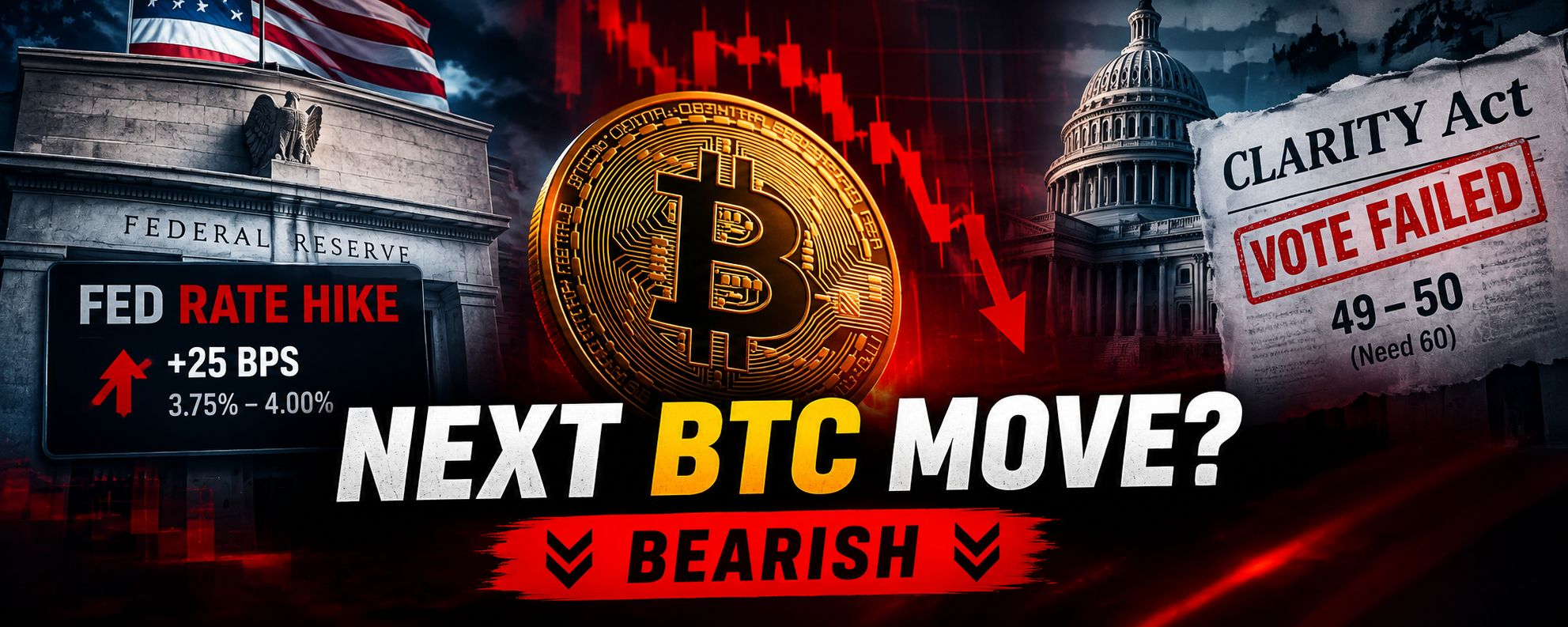
Perspectiva de Bitcoin: Subida de la Fed + Fracaso de la Ley CLARITY1. La Fed realmente subió las tasas
La Reserva Federal elevó el objetivo de la tasa de fondos federales en 25 pb hasta el 3,75%–4,00% el 16 de septiembre. Más importante para los activos de riesgo, las nuevas proyecciones indican que los responsables de la política esperan otra subida antes de fin de 2026, mientras que las expectativas de inflación se revisaron al alza.
Eso es más belicoso que una simple caminata única y directa. Las tasas más altas generalmente reducen la liquidez y hacen que los activos especulativos/de alto riesgo, como el cripto, sean menos atractivos.
2. Fracasó la Ley CLARITY
El 15 de septiembre, el Senado no logró avanzar la Ley CLARITY. La votación procedimental fue de 49–50, por debajo de los 60 votos necesarios.
Perspectiva de Bitcoin: Subida de la Fed + Fracaso de la Ley CLARITY
1. La Fed realmente subió las tasas
La Reserva Federal elevó el objetivo de la tasa de fondos federales en 25 pb hasta el 3,75%–4,00% el 16 de septiembre. Más importante para los activos de riesgo, las nuevas proyecciones indican que los responsables de la política esperan otra subida antes de fin de 2026, mientras que las expectativas de inflación se revisaron al alza.
Eso es más belicoso que una simple caminata única y directa. Las tasas más altas generalmente reducen la liquidez y hacen que los activos especulativos/de alto riesgo, como el cripto, sean menos atractivos.
2. Fracasó la Ley CLARITY
El 15 de septiembre, el Senado no logró avanzar la Ley CLARITY. La votación procedimental fue de 49–50, por debajo de los 60 votos necesarios.
La Reserva Federal elevó el objetivo de la tasa de fondos federales en 25 pb hasta el 3,75%–4,00% el 16 de septiembre. Más importante para los activos de riesgo, las nuevas proyecciones indican que los responsables de la política esperan otra subida antes de fin de 2026, mientras que las expectativas de inflación se revisaron al alza.
Eso es más belicoso que una simple caminata única y directa. Las tasas más altas generalmente reducen la liquidez y hacen que los activos especulativos/de alto riesgo, como el cripto, sean menos atractivos.
2. Fracasó la Ley CLARITY
El 15 de septiembre, el Senado no logró avanzar la Ley CLARITY. La votación procedimental fue de 49–50, por debajo de los 60 votos necesarios.
84
·
--
Centrado en la tecnología de conocimiento cero
La privacidad no es opcional para las aplicaciones financieras modernas; es esencial. @Dusk_Foundation ofrece criptografía nativa de conocimiento cero diseñada para una financiación descentralizada escalable y conforme. Observa $DUSK construyendo el futuro de los contratos inteligentes confidenciales #dusk
Centrado en la tecnología de conocimiento cero
La privacidad no es opcional para las aplicaciones financieras modernas; es esencial. @Dusk ofrece criptografía nativa de conocimiento cero diseñada para una financiación descentralizada escalable y conforme. Observa $DUSK construyendo el futuro de los contratos inteligentes confidenciales #dusk
La privacidad no es opcional para las aplicaciones financieras modernas; es esencial. @Dusk ofrece criptografía nativa de conocimiento cero diseñada para una financiación descentralizada escalable y conforme. Observa $DUSK construyendo el futuro de los contratos inteligentes confidenciales #dusk
66
·
--
La criptografía de conocimiento cero está desbloqueando la próxima fase de DeFi. Al proporcionar transacciones auditables pero privadas, @Dusk_Foundation resuelve la fricción principal que mantiene al capital institucional alejado de Web3. $DUSK es definitivamente una construcción a largo plazo que vale la pena vigilar. #dusk
La criptografía de conocimiento cero está desbloqueando la próxima fase de DeFi. Al proporcionar transacciones auditables pero privadas, @Dusk resuelve la fricción principal que mantiene al capital institucional alejado de Web3. $DUSK es definitivamente una construcción a largo plazo que vale la pena vigilar. #dusk
62
·
--
Los rendimientos variables dificultan la planificación financiera a largo plazo en DeFi. @termmax lo está resolviendo al establecer protocolos de rendimiento con tasa fija que aportan previsibilidad y transparencia de nivel institucional a los mercados cripto. ¡Emocionado por ver cómo #TermMax escala la infraestructura de rendimiento!
Los rendimientos variables dificultan la planificación financiera a largo plazo en DeFi. @TermMax lo está resolviendo al establecer protocolos de rendimiento con tasa fija que aportan previsibilidad y transparencia de nivel institucional a los mercados cripto. ¡Emocionado por ver cómo #TermMax escala la infraestructura de rendimiento!
44
·
--
Los rendimientos variables dificultan la planificación financiera a largo plazo en DeFi. @Square-Creator-0f84001b3db77 está resolviendo esto al establecer protocolos de rendimientos a tasa fija que aportan previsibilidad y transparencia de nivel institucional a los mercados cripto. ¡Entusiasmado por ver cómo #TermMax escala la infraestructura de rendimientos!
Los rendimientos variables dificultan la planificación financiera a largo plazo en DeFi. @TermMaxxx está resolviendo esto al establecer protocolos de rendimientos a tasa fija que aportan previsibilidad y transparencia de nivel institucional a los mercados cripto. ¡Entusiasmado por ver cómo #TermMax escala la infraestructura de rendimientos!
61
·
--
La privacidad y el cumplimiento normativo son esenciales para el futuro de las finanzas descentralizadas. @Dusk_Foundation está creando una blockchain dedicada de Capa 1 diseñada específicamente para llevar activos del mundo real e infraestructura financiera institucional a la cadena de forma segura y confidencial. Manteniendo una estrecha vigilancia de $DUSK as, a medida que ganan tracción las soluciones empresariales centradas en la privacidad. #dusk
La privacidad y el cumplimiento normativo son esenciales para el futuro de las finanzas descentralizadas. @Dusk está creando una blockchain dedicada de Capa 1 diseñada específicamente para llevar activos del mundo real e infraestructura financiera institucional a la cadena de forma segura y confidencial. Manteniendo una estrecha vigilancia de $DUSK as, a medida que ganan tracción las soluciones empresariales centradas en la privacidad. #dusk
68
·
--
El préstamo descentralizado a tipo fijo está evolucionando rápidamente, y @termmax está marcando un estándar para la previsibilidad de los rendimientos en DeFi. Al ofrecer opciones de préstamo y préstamo con plazos fijos y estructurados, permite a los traders y proveedores de liquidez asegurar retornos garantizados sin sufrir deslizamiento por tasas variables. ¡Entusiasmado por ver cómo #TermMax optimiza la eficiencia del capital en los mercados de Web3! 🚀
El préstamo descentralizado a tipo fijo está evolucionando rápidamente, y @TermMax está marcando un estándar para la previsibilidad de los rendimientos en DeFi. Al ofrecer opciones de préstamo y préstamo con plazos fijos y estructurados, permite a los traders y proveedores de liquidez asegurar retornos garantizados sin sufrir deslizamiento por tasas variables. ¡Entusiasmado por ver cómo #TermMax optimiza la eficiencia del capital en los mercados de Web3! 🚀
41
·
--
El préstamo descentralizado a tipo fijo está evolucionando rápidamente, y @termmax está marcando un estándar para la previsibilidad de rendimientos en DeFi. Al ofrecer opciones de préstamo y préstamo con plazos estructurados y fijos, permite que traders y proveedores de liquidez fijen rendimientos garantizados sin el deslizamiento que implica una tasa variable. ¡Emocionado por ver cómo #TermMax optimiza la eficiencia del capital en los mercados de Web3! 🚀
El préstamo descentralizado a tipo fijo está evolucionando rápidamente, y @TermMax está marcando un estándar para la previsibilidad de rendimientos en DeFi. Al ofrecer opciones de préstamo y préstamo con plazos estructurados y fijos, permite que traders y proveedores de liquidez fijen rendimientos garantizados sin el deslizamiento que implica una tasa variable. ¡Emocionado por ver cómo #TermMax optimiza la eficiencia del capital en los mercados de Web3! 🚀
58
·
--
Céntrate en las tasas fijas y la eficiencia
Los rendimientos de DeFi necesitan previsibilidad, y la arquitectura de protocolos de tasa fija es clave para la adopción institucional. @termmax ofrece soluciones de préstamos y préstamos con tasa fija personalizables para Web3, brindando a los usuarios retornos garantizados y condiciones de financiación estables sin deslizamiento de tasa variable. ¡Entusiasmado por ver cómo #TermMax escala la liquidez!
Céntrate en las tasas fijas y la eficiencia
Los rendimientos de DeFi necesitan previsibilidad, y la arquitectura de protocolos de tasa fija es clave para la adopción institucional. @TermMax ofrece soluciones de préstamos y préstamos con tasa fija personalizables para Web3, brindando a los usuarios retornos garantizados y condiciones de financiación estables sin deslizamiento de tasa variable. ¡Entusiasmado por ver cómo #TermMax escala la liquidez!
Los rendimientos de DeFi necesitan previsibilidad, y la arquitectura de protocolos de tasa fija es clave para la adopción institucional. @TermMax ofrece soluciones de préstamos y préstamos con tasa fija personalizables para Web3, brindando a los usuarios retornos garantizados y condiciones de financiación estables sin deslizamiento de tasa variable. ¡Entusiasmado por ver cómo #TermMax escala la liquidez!
52
·
--
Centrado en el rendimiento y la tecnología de tasa fija
¿Buscas rendimientos fijos en DeFi sin la fluctuación constante del mercado? @termmax está construyendo una infraestructura optimizada diseñada para que el préstamo y el endeudamiento cripto con tasa fija sea fluido. Los términos fijos aportan la previsibilidad que necesitan los traders institucionales y los inversores minoristas. ¡Mira su configuración! #TermMax
Centrado en el rendimiento y la tecnología de tasa fija
¿Buscas rendimientos fijos en DeFi sin la fluctuación constante del mercado? @TermMax está construyendo una infraestructura optimizada diseñada para que el préstamo y el endeudamiento cripto con tasa fija sea fluido. Los términos fijos aportan la previsibilidad que necesitan los traders institucionales y los inversores minoristas. ¡Mira su configuración! #TermMax
¿Buscas rendimientos fijos en DeFi sin la fluctuación constante del mercado? @TermMax está construyendo una infraestructura optimizada diseñada para que el préstamo y el endeudamiento cripto con tasa fija sea fluido. Los términos fijos aportan la previsibilidad que necesitan los traders institucionales y los inversores minoristas. ¡Mira su configuración! #TermMax
70
·
--
La tokenización de Activos del Mundo Real (RWA) requiere privacidad, velocidad y un cumplimiento normativo estricto. @Dusk_Foundation proporciona la infraestructura ideal para llevar las finanzas tradicionales a la cadena de bloques de forma segura, manteniendo los datos sensibles protegidos con pruebas de conocimiento cero. $DUSK #dusk
La tokenización de Activos del Mundo Real (RWA) requiere privacidad, velocidad y un cumplimiento normativo estricto. @Dusk proporciona la infraestructura ideal para llevar las finanzas tradicionales a la cadena de bloques de forma segura, manteniendo los datos sensibles protegidos con pruebas de conocimiento cero. $DUSK #dusk
63
·
--
Dusk Network proporciona una infraestructura centrada en la privacidad y compatible con la normativa para que las instituciones emitan tokens de seguridad y negocien activos del mundo real. Impulsada por la tecnología de Conocimiento Cero, $DUSK permite contratos inteligentes privados mientras mantiene las transacciones totalmente auditables y en cumplimiento con los estándares regulatorios. ¡Emocionante ver que el ecosistema crece! @Dusk_Foundation #dusk
Dusk Network proporciona una infraestructura centrada en la privacidad y compatible con la normativa para que las instituciones emitan tokens de seguridad y negocien activos del mundo real. Impulsada por la tecnología de Conocimiento Cero, $DUSK permite contratos inteligentes privados mientras mantiene las transacciones totalmente auditables y en cumplimiento con los estándares regulatorios. ¡Emocionante ver que el ecosistema crece! @Dusk #dusk
94
Inicia sesión para explorar más contenidos
Únete a usuarios de criptomonedas de todo el mundo en Binance Square
⚡️ Obtén la información más reciente y útil sobre criptomonedas.
💬 Confía en el mayor exchange de criptomonedas del mundo.
👍 Descubre opiniones reales de creadores verificados.
Correo electrónico/número de teléfono
Temas en tendencia
BinanceLaunchesBinanceIntelligence
318,804 visualizaciones
2,663 participa(n) en el debate
🚀 ¡La Inteligencia Artificial llega de forma directa al trading! 🚀
El ecosistema cripto acaba de dar su paso más ambicioso hacia la automatización accesible para todos.
Con el hashtag #BinanceLaunchesBinanceIntelligence, celebramos el lanzamiento oficial de Binance Intelligence, una nueva capa de IA integrada que viene a cerrar por completo la brecha del conocimiento financiero.
Ya seas un principiante o un trader algorítmico avanzado, esta suite de tres productos te ofrece herramientas de nivel institucional directamente en la app que usas todos los días:
Binance AI (Gratuito):
Una experiencia adaptativa que personaliza resúmenes de mercado (Market Briefs cada 4 horas) y alertas según tu nivel de conocimiento y portafolio.
Binance AI Pro:
Un agente financiero personal que transforma tus ideas en lenguaje natural en estrategias ejecutables de trading automatizado las 24/7.
Binance Agent OS:
La infraestructura ideal para desarrolladores que buscan conectar aplicaciones e IA directamente con las capacidades de la plataforma mediante APIs.
💡 Mi consejo de hoy:
Aprovechá estas herramientas para potenciar tus análisis técnicos, pero mantené siempre una correcta gestión de riesgo sin dejarte llevar por las emociones del mercado.
¿Qué herramienta tenés más ganas de probar primero?
¡Te leo en los comentarios! 👇
#BinanceLaunchesBinanceIntelligence #WriteToEarn #Crypto #Trading #BinanceAI#binancelaunchesbinanceintelligence
AlchemyS7
·2 «Me gusta»
·824 visualizaciones
BitcoinTargets2026OpenAt$87570
1,014 visualizaciones
47 participa(n) en el debate
BitcoinRejectedAt$87KThirdTime
1,225 visualizaciones
45 participa(n) en el debate