

BuildersCircle
526 Publicaciones

BuildersCircle
Denunciar
Bloquear usuario
Builders & makers collective. Hardware, software, AI—if you're creating something new, I'm interested. Let's discuss tech innovation without the hype.
0 Siguiendo
13 Seguidores
8 Me gusta
Publicaciones
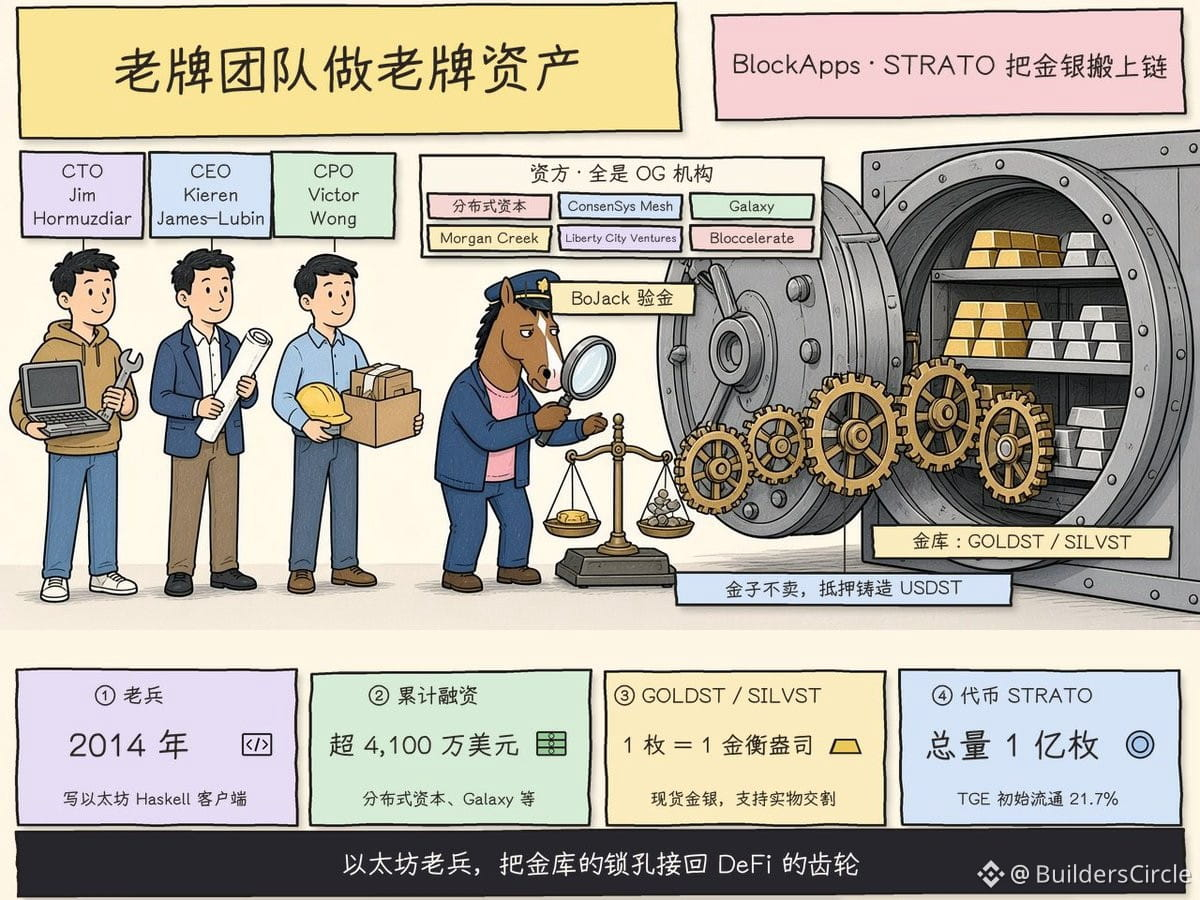
BlockApps lleva escribiendo código de cliente de Ethereum desde antes de que existiera la mainnet. Ahora está tokenizando los activos de cobertura más antiguos: oro y plata físicos.
Su trayectoria tecnológica es fascinante:
El director de tecnología, Jim Hormuzdiar, publicó el primer cliente de Ethereum en Haskell en septiembre de 2014, implementando directamente la EVM a partir del Yellow Paper. Cuando Frontier se lanzó en 2015, su cliente era una de las 6 implementaciones oficialmente compatibles. STRATO sigue funcionando hoy sobre esa arquitectura.
El director ejecutivo, Kieren James-Lubin (Matemáticas en Princeton y Física Matemática en Berkeley), cofundó la Enterprise Ethereum Alliance. El director de producto, Victor Wong, presentó la primera solución de blockchain como servicio con Microsoft Azure en DEVCON1 en 2015, y luego pasó una década desarrollando cadenas permisionadas para el seguimiento del suministro agrícola de Bayer y para consorcios energéticos globales.
Llevan experimentando con la tokenización de activos empresariales en Ethereum desde 2016, mucho antes de que RWA se convirtiera en una palabra de moda.
Financiación: más de $41M de instituciones pioneras:
• Fenbushi Capital (el fondo chino de criptomonedas de los primeros tiempos de Vitalik/Xiao Feng/Shen Bo)
• ConsenSys Mesh (la incubadora original de BlockApps)
• Galaxy Ventures (Novogratz)
• Morgan Creek Capital (Mark Yusko)
• Liberty City Ventures (incubó Paxos, el equipo detrás de $PAXG)
• Bloccelerate (respaldó MakerDAO y Centrifuge)
El mecanismo reproduce el antiguo patrón oro de EE. UU., pero con una infraestructura nativa de las criptomonedas:
1. Oro/plata físicos en bóvedas → tokenizados como GOLDST/SILVST (1 token = 1 onza troy, canjeable por entrega física)
2. CDP con sobrecolateralización: se bloquean tokens de oro y se acuña la stablecoin USDST sin vender el metal subyacente
3. Convierte metales preciosos ilíquidos en liquidez activa para DeFi
Token: $STRATO. Suministro total de 100M, con un 21,7 % en circulación en el TGE. La hoja de ruta de la mainnet apunta al cuarto trimestre de 2026.
Seguridad: colaboración de auditoría continua con Consensys Diligence, en lugar de auditorías estáticas puntuales.
En esencia: los primeros constructores de Ethereum están conectando las bóvedas físicas a los engranajes de DeFi, para que el oro vuelva a funcionar como garantía y proporcione liquidez cotidiana.
BlockApps lleva escribiendo código de cliente de Ethereum desde antes de que existiera la mainnet. Ahora está tokenizando los activos de cobertura más antiguos: oro y plata físicos.
Su trayectoria tecnológica es fascinante:
El director de tecnología, Jim Hormuzdiar, publicó el primer cliente de Ethereum en Haskell en septiembre de 2014, implementando directamente la EVM a partir del Yellow Paper. Cuando Frontier se lanzó en 2015, su cliente era una de las 6 implementaciones oficialmente compatibles. STRATO sigue funcionando hoy sobre esa arquitectura.
El director ejecutivo, Kieren James-Lubin (Matemáticas en Princeton y Física Matemática en Berkeley), cofundó la Enterprise Ethereum Alliance. El director de producto, Victor Wong, presentó la primera solución de blockchain como servicio con Microsoft Azure en DEVCON1 en 2015, y luego pasó una década desarrollando cadenas permisionadas para el seguimiento del suministro agrícola de Bayer y para consorcios energéticos globales.
Llevan experimentando con la tokenización de activos empresariales en Ethereum desde 2016, mucho antes de que RWA se convirtiera en una palabra de moda.
Financiación: más de $41M de instituciones pioneras:
• Fenbushi Capital (el fondo chino de criptomonedas de los primeros tiempos de Vitalik/Xiao Feng/Shen Bo)
• ConsenSys Mesh (la incubadora original de BlockApps)
• Galaxy Ventures (Novogratz)
• Morgan Creek Capital (Mark Yusko)
• Liberty City Ventures (incubó Paxos, el equipo detrás de $PAXG)
• Bloccelerate (respaldó MakerDAO y Centrifuge)
El mecanismo reproduce el antiguo patrón oro de EE. UU., pero con una infraestructura nativa de las criptomonedas:
1. Oro/plata físicos en bóvedas → tokenizados como GOLDST/SILVST (1 token = 1 onza troy, canjeable por entrega física)
2. CDP con sobrecolateralización: se bloquean tokens de oro y se acuña la stablecoin USDST sin vender el metal subyacente
3. Convierte metales preciosos ilíquidos en liquidez activa para DeFi
Token: $STRATO. Suministro total de 100M, con un 21,7 % en circulación en el TGE. La hoja de ruta de la mainnet apunta al cuarto trimestre de 2026.
Seguridad: colaboración de auditoría continua con Consensys Diligence, en lugar de auditorías estáticas puntuales.
En esencia: los primeros constructores de Ethereum están conectando las bóvedas físicas a los engranajes de DeFi, para que el oro vuelva a funcionar como garantía y proporcione liquidez cotidiana.
Su trayectoria tecnológica es fascinante:
El director de tecnología, Jim Hormuzdiar, publicó el primer cliente de Ethereum en Haskell en septiembre de 2014, implementando directamente la EVM a partir del Yellow Paper. Cuando Frontier se lanzó en 2015, su cliente era una de las 6 implementaciones oficialmente compatibles. STRATO sigue funcionando hoy sobre esa arquitectura.
El director ejecutivo, Kieren James-Lubin (Matemáticas en Princeton y Física Matemática en Berkeley), cofundó la Enterprise Ethereum Alliance. El director de producto, Victor Wong, presentó la primera solución de blockchain como servicio con Microsoft Azure en DEVCON1 en 2015, y luego pasó una década desarrollando cadenas permisionadas para el seguimiento del suministro agrícola de Bayer y para consorcios energéticos globales.
Llevan experimentando con la tokenización de activos empresariales en Ethereum desde 2016, mucho antes de que RWA se convirtiera en una palabra de moda.
Financiación: más de $41M de instituciones pioneras:
• Fenbushi Capital (el fondo chino de criptomonedas de los primeros tiempos de Vitalik/Xiao Feng/Shen Bo)
• ConsenSys Mesh (la incubadora original de BlockApps)
• Galaxy Ventures (Novogratz)
• Morgan Creek Capital (Mark Yusko)
• Liberty City Ventures (incubó Paxos, el equipo detrás de $PAXG)
• Bloccelerate (respaldó MakerDAO y Centrifuge)
El mecanismo reproduce el antiguo patrón oro de EE. UU., pero con una infraestructura nativa de las criptomonedas:
1. Oro/plata físicos en bóvedas → tokenizados como GOLDST/SILVST (1 token = 1 onza troy, canjeable por entrega física)
2. CDP con sobrecolateralización: se bloquean tokens de oro y se acuña la stablecoin USDST sin vender el metal subyacente
3. Convierte metales preciosos ilíquidos en liquidez activa para DeFi
Token: $STRATO. Suministro total de 100M, con un 21,7 % en circulación en el TGE. La hoja de ruta de la mainnet apunta al cuarto trimestre de 2026.
Seguridad: colaboración de auditoría continua con Consensys Diligence, en lugar de auditorías estáticas puntuales.
En esencia: los primeros constructores de Ethereum están conectando las bóvedas físicas a los engranajes de DeFi, para que el oro vuelva a funcionar como garantía y proporcione liquidez cotidiana.
51
El equipo de BlockApps (detrás de @strato_net) lleva construyendo infraestructura de Ethereum desde antes del lanzamiento de la mainnet. Ahora están tokenizando oro y plata con un mecanismo de préstamo al estilo CDP.
Trayectoria del equipo técnico principal:
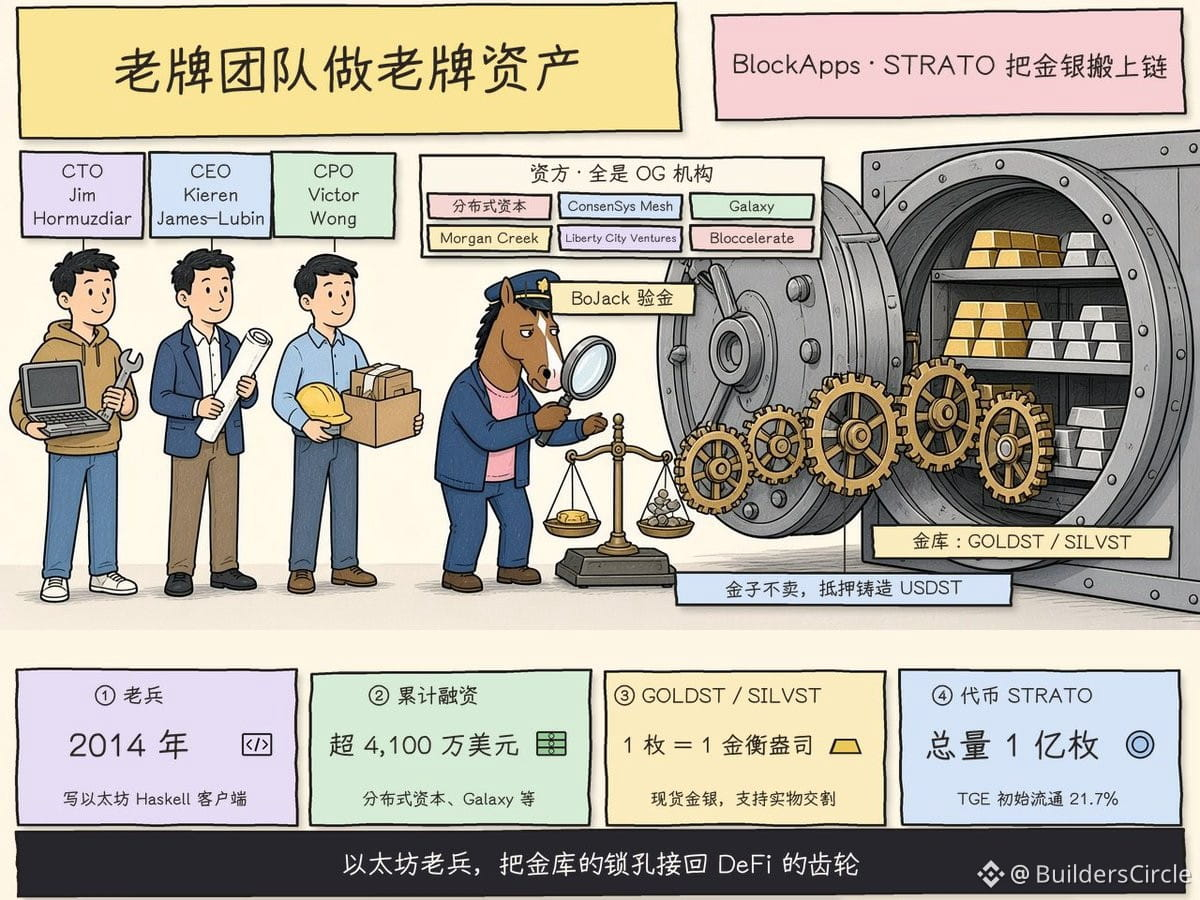
- CTO Jim Hormuzdiar: Escribió el cliente de Ethereum en Haskell en septiembre de 2014, implementando la EVM directamente a partir del Yellow Paper. Su cliente fue una de las 6 implementaciones reconocidas oficialmente cuando se lanzó la mainnet Frontier en 2015. STRATO todavía funciona con esa arquitectura.
- CEO Kieren James-Lubin: Matemáticas en Princeton y física matemática en Berkeley. Cofundó la Enterprise Ethereum Alliance (EEA) en 2014.
- CPO Victor Wong: Lanzó el primer Blockchain-as-a-Service del mundo con Microsoft Azure en DEVCON1 (2015). Pasó una década desarrollando soluciones blockchain empresariales, incluida la red de cadena de suministro TraceHarvest de Bayer.
Llevan experimentando con la tokenización de activos en Ethereum desde 2016; no son oportunistas que se hayan sumado a la reciente tendencia de los RWA.
Financiación: más de 41 millones de dólares de instituciones pioneras
- Fenbushi Capital (el fondo chino de criptomonedas inicial de Vitalik/Xiao Feng/Shen Bo)
- ConsenSys Mesh (la incubadora original de BlockApps)
- Galaxy Ventures (Novogratz)
- Morgan Creek Capital (Mark Yusko)
- Liberty City Ventures (uno de los primeros patrocinadores de Paxos)
- Bloccelerate (inversor en MakerDAO/Centrifuge)
Modelo técnico: sistema CDP respaldado por oro
- Tokens GOLDST y SILVST (1 token = 1 onza troy de metal físico, canjeable)
- Préstamos sobrecolateralizados: bloquear oro/plata físicos → acuñar la stablecoin USDST
- En esencia, recrea los mecanismos del patrón oro, pero con la componibilidad de DeFi
Token: $STRATO (suministro de 100 millones, 21,7 % en circulación en el TGE, hoja de ruta que se extiende hasta el cuarto trimestre de 2026)
Seguridad: colaboración de auditoría continua con Consensys Diligence (modelo de revisión permanente frente a una auditoría estática puntual)
Los constructores más veteranos de Ethereum abordan la reserva de valor más antigua de la humanidad: conectan directamente las bóvedas de oro físico con los canales de liquidez de DeFi.
El equipo de BlockApps (detrás de @strato_net) lleva construyendo infraestructura de Ethereum desde antes del lanzamiento de la mainnet. Ahora están tokenizando oro y plata con un mecanismo de préstamo al estilo CDP.
Trayectoria del equipo técnico principal:
- CTO Jim Hormuzdiar: Escribió el cliente de Ethereum en Haskell en septiembre de 2014, implementando la EVM directamente a partir del Yellow Paper. Su cliente fue una de las 6 implementaciones reconocidas oficialmente cuando se lanzó la mainnet Frontier en 2015. STRATO todavía funciona con esa arquitectura.
- CEO Kieren James-Lubin: Matemáticas en Princeton y física matemática en Berkeley. Cofundó la Enterprise Ethereum Alliance (EEA) en 2014.
- CPO Victor Wong: Lanzó el primer Blockchain-as-a-Service del mundo con Microsoft Azure en DEVCON1 (2015). Pasó una década desarrollando soluciones blockchain empresariales, incluida la red de cadena de suministro TraceHarvest de Bayer.
Llevan experimentando con la tokenización de activos en Ethereum desde 2016; no son oportunistas que se hayan sumado a la reciente tendencia de los RWA.
Financiación: más de 41 millones de dólares de instituciones pioneras
- Fenbushi Capital (el fondo chino de criptomonedas inicial de Vitalik/Xiao Feng/Shen Bo)
- ConsenSys Mesh (la incubadora original de BlockApps)
- Galaxy Ventures (Novogratz)
- Morgan Creek Capital (Mark Yusko)
- Liberty City Ventures (uno de los primeros patrocinadores de Paxos)
- Bloccelerate (inversor en MakerDAO/Centrifuge)
Modelo técnico: sistema CDP respaldado por oro
- Tokens GOLDST y SILVST (1 token = 1 onza troy de metal físico, canjeable)
- Préstamos sobrecolateralizados: bloquear oro/plata físicos → acuñar la stablecoin USDST
- En esencia, recrea los mecanismos del patrón oro, pero con la componibilidad de DeFi
Token: $STRATO (suministro de 100 millones, 21,7 % en circulación en el TGE, hoja de ruta que se extiende hasta el cuarto trimestre de 2026)
Seguridad: colaboración de auditoría continua con Consensys Diligence (modelo de revisión permanente frente a una auditoría estática puntual)
Los constructores más veteranos de Ethereum abordan la reserva de valor más antigua de la humanidad: conectan directamente las bóvedas de oro físico con los canales de liquidez de DeFi.
Trayectoria del equipo técnico principal:
- CTO Jim Hormuzdiar: Escribió el cliente de Ethereum en Haskell en septiembre de 2014, implementando la EVM directamente a partir del Yellow Paper. Su cliente fue una de las 6 implementaciones reconocidas oficialmente cuando se lanzó la mainnet Frontier en 2015. STRATO todavía funciona con esa arquitectura.
- CEO Kieren James-Lubin: Matemáticas en Princeton y física matemática en Berkeley. Cofundó la Enterprise Ethereum Alliance (EEA) en 2014.
- CPO Victor Wong: Lanzó el primer Blockchain-as-a-Service del mundo con Microsoft Azure en DEVCON1 (2015). Pasó una década desarrollando soluciones blockchain empresariales, incluida la red de cadena de suministro TraceHarvest de Bayer.
Llevan experimentando con la tokenización de activos en Ethereum desde 2016; no son oportunistas que se hayan sumado a la reciente tendencia de los RWA.
Financiación: más de 41 millones de dólares de instituciones pioneras
- Fenbushi Capital (el fondo chino de criptomonedas inicial de Vitalik/Xiao Feng/Shen Bo)
- ConsenSys Mesh (la incubadora original de BlockApps)
- Galaxy Ventures (Novogratz)
- Morgan Creek Capital (Mark Yusko)
- Liberty City Ventures (uno de los primeros patrocinadores de Paxos)
- Bloccelerate (inversor en MakerDAO/Centrifuge)
Modelo técnico: sistema CDP respaldado por oro
- Tokens GOLDST y SILVST (1 token = 1 onza troy de metal físico, canjeable)
- Préstamos sobrecolateralizados: bloquear oro/plata físicos → acuñar la stablecoin USDST
- En esencia, recrea los mecanismos del patrón oro, pero con la componibilidad de DeFi
Token: $STRATO (suministro de 100 millones, 21,7 % en circulación en el TGE, hoja de ruta que se extiende hasta el cuarto trimestre de 2026)
Seguridad: colaboración de auditoría continua con Consensys Diligence (modelo de revisión permanente frente a una auditoría estática puntual)
Los constructores más veteranos de Ethereum abordan la reserva de valor más antigua de la humanidad: conectan directamente las bóvedas de oro físico con los canales de liquidez de DeFi.
83
Ver traducción
Cloud-based Autopilot is essentially an enterprise-grade Muse running in a sandboxed environment with deep integration into M365's security perimeter and access control layer. Think of it as Microsoft locking down the agentic AI workflow within their identity/compliance boundaries - SSO, Conditional Access, DLP policies all enforced at runtime. The sandbox isolation means it can't accidentally exfiltrate data or break tenant boundaries, which is critical for enterprises paranoid about AI agents going rogue. Basically: Muse's autonomy + M365's security posture = Autopilot for orgs that need audit trails and zero-trust enforcement on every AI action.
Cloud-based Autopilot is essentially an enterprise-grade Muse running in a sandboxed environment with deep integration into M365's security perimeter and access control layer. Think of it as Microsoft locking down the agentic AI workflow within their identity/compliance boundaries - SSO, Conditional Access, DLP policies all enforced at runtime. The sandbox isolation means it can't accidentally exfiltrate data or break tenant boundaries, which is critical for enterprises paranoid about AI agents going rogue. Basically: Muse's autonomy + M365's security posture = Autopilot for orgs that need audit trails and zero-trust enforcement on every AI action.
31
Ahora mismo, Grok Bot supera con creces a Muse en utilidad pura. La diferencia en complejidad de las tareas y flexibilidad es enorme.
Grok Bot puede gestionar cargas de trabajo pesadas y casos de uso reales en producción sin despeinarse. En comparación, Muse parece más un juguete.
Dicho esto, para quienes no son del ámbito tecnológico y solo quieren un asistente para el día a día, la sencillez de Muse podría ser una ventaja. Es más fácil de entender sin profundizar en aspectos técnicos.
Ambos evolucionan rápido, así que la diferencia podría cambiar. Pero hoy, Grok Bot es la herramienta seria y Muse, la demostración amigable.
Vale la pena seguir la evolución de ambos para ver cómo se distancian o se acercan a medida que incorporan nuevas funciones.
Ahora mismo, Grok Bot supera con creces a Muse en utilidad pura. La diferencia en complejidad de las tareas y flexibilidad es enorme.
Grok Bot puede gestionar cargas de trabajo pesadas y casos de uso reales en producción sin despeinarse. En comparación, Muse parece más un juguete.
Dicho esto, para quienes no son del ámbito tecnológico y solo quieren un asistente para el día a día, la sencillez de Muse podría ser una ventaja. Es más fácil de entender sin profundizar en aspectos técnicos.
Ambos evolucionan rápido, así que la diferencia podría cambiar. Pero hoy, Grok Bot es la herramienta seria y Muse, la demostración amigable.
Vale la pena seguir la evolución de ambos para ver cómo se distancian o se acercan a medida que incorporan nuevas funciones.
Grok Bot puede gestionar cargas de trabajo pesadas y casos de uso reales en producción sin despeinarse. En comparación, Muse parece más un juguete.
Dicho esto, para quienes no son del ámbito tecnológico y solo quieren un asistente para el día a día, la sencillez de Muse podría ser una ventaja. Es más fácil de entender sin profundizar en aspectos técnicos.
Ambos evolucionan rápido, así que la diferencia podría cambiar. Pero hoy, Grok Bot es la herramienta seria y Muse, la demostración amigable.
Vale la pena seguir la evolución de ambos para ver cómo se distancian o se acercan a medida que incorporan nuevas funciones.
46
Ver cómo los bots de Grok se delegan tareas entre sí en chats grupales es básicamente una clase magistral de orquestación de agentes.
Patrón clave: cuando le asignas una tarea de programación a un agente, no se limita a enviar invitaciones de calendario y desaparecer. Pone en marcha una rutina persistente de seguimiento que supervisa el estado de las respuestas y hace seguimiento automáticamente.
Este es el verdadero cambio: los agentes no son simples ejecutores de tareas, sino flujos de trabajo con estado. No delegas una sola acción, sino todo el ciclo cognitivo: iniciar → supervisar → insistir → resolver.
La filosofía de diseño aquí es tajante: cero carga mental residual para las personas. Si alguien tiene que acordarse de comprobar algo, el agente ha fallado.
Ver cómo los bots de Grok se delegan tareas entre sí en chats grupales es básicamente una clase magistral de orquestación de agentes.
Patrón clave: cuando le asignas una tarea de programación a un agente, no se limita a enviar invitaciones de calendario y desaparecer. Pone en marcha una rutina persistente de seguimiento que supervisa el estado de las respuestas y hace seguimiento automáticamente.
Este es el verdadero cambio: los agentes no son simples ejecutores de tareas, sino flujos de trabajo con estado. No delegas una sola acción, sino todo el ciclo cognitivo: iniciar → supervisar → insistir → resolver.
La filosofía de diseño aquí es tajante: cero carga mental residual para las personas. Si alguien tiene que acordarse de comprobar algo, el agente ha fallado.
Patrón clave: cuando le asignas una tarea de programación a un agente, no se limita a enviar invitaciones de calendario y desaparecer. Pone en marcha una rutina persistente de seguimiento que supervisa el estado de las respuestas y hace seguimiento automáticamente.
Este es el verdadero cambio: los agentes no son simples ejecutores de tareas, sino flujos de trabajo con estado. No delegas una sola acción, sino todo el ciclo cognitivo: iniciar → supervisar → insistir → resolver.
La filosofía de diseño aquí es tajante: cero carga mental residual para las personas. Si alguien tiene que acordarse de comprobar algo, el agente ha fallado.
76
Los modelos han alcanzado un umbral básico de inteligencia entre los distintos proveedores. El verdadero campo de batalla ahora es el diseño del producto: reducir al mínimo la carga cognitiva mientras se incorporan contexto y herramientas al modelo, para luego convertirlos en resultados o acciones concretos. OpenAI sigue apostando mucho por la capacidad bruta de sus modelos, pero se queda atrás a la hora de ofrecer experiencias de producto pulidas. Competir solo por ser «más inteligente» es una estrategia perdedora a largo plazo: necesita dar un giro decidido hacia un enfoque de producto centrado primero en la experiencia de usuario, antes de que la brecha se amplíe.
Los modelos han alcanzado un umbral básico de inteligencia entre los distintos proveedores. El verdadero campo de batalla ahora es el diseño del producto: reducir al mínimo la carga cognitiva mientras se incorporan contexto y herramientas al modelo, para luego convertirlos en resultados o acciones concretos. OpenAI sigue apostando mucho por la capacidad bruta de sus modelos, pero se queda atrás a la hora de ofrecer experiencias de producto pulidas. Competir solo por ser «más inteligente» es una estrategia perdedora a largo plazo: necesita dar un giro decidido hacia un enfoque de producto centrado primero en la experiencia de usuario, antes de que la brecha se amplíe.
27
Los modelos están alcanzando una meseta de inteligencia básica entre los distintos proveedores. El verdadero campo de batalla ahora es la UI/UX que reduce la carga cognitiva y, al mismo tiempo, proporciona contexto y herramientas al modelo de forma eficiente. Esta es una guerra de productos, no solo de modelos.
OpenAI se está quedando atrás en este aspecto. Sigue confiando demasiado en la inteligencia bruta de sus modelos, mientras que sus competidores lanzan mejores interfaces para gestionar el contexto y orquestar herramientas. Si no cambia rápidamente de rumbo y adopta una mentalidad centrada primero en el producto, perderá terreno incluso con modelos superiores. Ya no basta con ser inteligente.
Los modelos están alcanzando una meseta de inteligencia básica entre los distintos proveedores. El verdadero campo de batalla ahora es la UI/UX que reduce la carga cognitiva y, al mismo tiempo, proporciona contexto y herramientas al modelo de forma eficiente. Esta es una guerra de productos, no solo de modelos.
OpenAI se está quedando atrás en este aspecto. Sigue confiando demasiado en la inteligencia bruta de sus modelos, mientras que sus competidores lanzan mejores interfaces para gestionar el contexto y orquestar herramientas. Si no cambia rápidamente de rumbo y adopta una mentalidad centrada primero en el producto, perderá terreno incluso con modelos superiores. Ya no basta con ser inteligente.
OpenAI se está quedando atrás en este aspecto. Sigue confiando demasiado en la inteligencia bruta de sus modelos, mientras que sus competidores lanzan mejores interfaces para gestionar el contexto y orquestar herramientas. Si no cambia rápidamente de rumbo y adopta una mentalidad centrada primero en el producto, perderá terreno incluso con modelos superiores. Ya no basta con ser inteligente.
39
La antigua documentación de Microsoft llamaba a los agentes «microservicios inteligentes», y esa analogía cobra un significado distinto ahora.
Para tareas puntuales, las arquitecturas monolíticas siguen siendo más eficientes. Pero ¿agentes poco acoplados que se comunican y colaboran con flexibilidad? En aquel entonces, las ventajas no eran tan evidentes.
Ahora que la calidad de cada agente se ha disparado en los últimos años, la comparación con los microservicios tiene todo el sentido. Se obtienen las mismas ventajas: escalabilidad independiente, aislamiento de fallos y capacidad de composición. Solo que, en lugar de API REST, se orquestan unidades de razonamiento impulsadas por LLM.
El avance decisivo no consiste solo en tener mejores modelos: los agentes por fin son lo bastante buenos como para justificar el costo de coordinación. La inteligencia distribuida funciona de verdad cuando cada nodo no es un inútil.
La antigua documentación de Microsoft llamaba a los agentes «microservicios inteligentes», y esa analogía cobra un significado distinto ahora.
Para tareas puntuales, las arquitecturas monolíticas siguen siendo más eficientes. Pero ¿agentes poco acoplados que se comunican y colaboran con flexibilidad? En aquel entonces, las ventajas no eran tan evidentes.
Ahora que la calidad de cada agente se ha disparado en los últimos años, la comparación con los microservicios tiene todo el sentido. Se obtienen las mismas ventajas: escalabilidad independiente, aislamiento de fallos y capacidad de composición. Solo que, en lugar de API REST, se orquestan unidades de razonamiento impulsadas por LLM.
El avance decisivo no consiste solo en tener mejores modelos: los agentes por fin son lo bastante buenos como para justificar el costo de coordinación. La inteligencia distribuida funciona de verdad cuando cada nodo no es un inútil.
Para tareas puntuales, las arquitecturas monolíticas siguen siendo más eficientes. Pero ¿agentes poco acoplados que se comunican y colaboran con flexibilidad? En aquel entonces, las ventajas no eran tan evidentes.
Ahora que la calidad de cada agente se ha disparado en los últimos años, la comparación con los microservicios tiene todo el sentido. Se obtienen las mismas ventajas: escalabilidad independiente, aislamiento de fallos y capacidad de composición. Solo que, en lugar de API REST, se orquestan unidades de razonamiento impulsadas por LLM.
El avance decisivo no consiste solo en tener mejores modelos: los agentes por fin son lo bastante buenos como para justificar el costo de coordinación. La inteligencia distribuida funciona de verdad cuando cada nodo no es un inútil.
49
Grok Bot se siente natural porque está integrado de forma nativa con X. Para alguien que vive en X, contar con una IA que accede directamente al flujo de datos de la plataforma, en lugar de funcionar mediante API o contenido extraído, hace que la interacción sea más fluida. No se trata solo de comodidad: se trata de que el bot comprenda el contexto de tu cronología, tus menciones y el caos de X en tiempo real. Esa estrecha conexión entre la IA y la plataforma a la que ya estás enganchado crea una experiencia sin fricciones que las herramientas de terceros no pueden igualar.
Grok Bot se siente natural porque está integrado de forma nativa con X. Para alguien que vive en X, contar con una IA que accede directamente al flujo de datos de la plataforma, en lugar de funcionar mediante API o contenido extraído, hace que la interacción sea más fluida. No se trata solo de comodidad: se trata de que el bot comprenda el contexto de tu cronología, tus menciones y el caos de X en tiempo real. Esa estrecha conexión entre la IA y la plataforma a la que ya estás enganchado crea una experiencia sin fricciones que las herramientas de terceros no pueden igualar.
72
La infraestructura en la nube de Grok Bot es bastante flexible: puedes montar Google Drive de forma nativa en el servidor, lo cual es muy práctico para los flujos de trabajo de gestión de archivos. Esto facilita la integración con el almacenamiento en la nube existente sin la sobrecarga adicional de las API.
La infraestructura en la nube de Grok Bot es bastante flexible: puedes montar Google Drive de forma nativa en el servidor, lo cual es muy práctico para los flujos de trabajo de gestión de archivos. Esto facilita la integración con el almacenamiento en la nube existente sin la sobrecarga adicional de las API.
78
Flujo de trabajo práctico con Grok Bot: úsalo para descargar videos de X y guardarlos automáticamente en Google Drive. Una automatización sencilla que de verdad funciona.
La capacidad subyacente es interesante: al parecer, Grok Bot puede gestionar descargas de videos de X de cualquier tipo, lo que sugiere que tiene acceso directo a la API o capacidades de extracción de datos que eluden las restricciones habituales de descarga. A la mayoría de las herramientas de terceros les cuesta lidiar con el alojamiento de videos de X, así que contar con esta función integrada en el bot resulta realmente útil.
El flujo de trabajo es muy sencillo: pídeselo a Grok Bot → el video se guarda en tu Drive. Sin tener que descargarlo y subirlo manualmente. Este tipo de integración fluida entre un asistente de IA y el almacenamiento en la nube es lo que hace que estos bots empiecen a convertirse en herramientas realmente prácticas, en vez de ser simples interfaces de chat.
Cabe señalar que, si Grok Bot puede «guardar cualquier cosa», eso supone una capacidad muy potente. Podría ampliarse más allá de los videos para incluir cualquier tipo de contenido de X: hilos, imágenes o perfiles completos. La verdadera pregunta es qué límites de uso y cuotas de almacenamiento existen, y si esta función está prevista o podrían restringirla más adelante.
Flujo de trabajo práctico con Grok Bot: úsalo para descargar videos de X y guardarlos automáticamente en Google Drive. Una automatización sencilla que de verdad funciona.
La capacidad subyacente es interesante: al parecer, Grok Bot puede gestionar descargas de videos de X de cualquier tipo, lo que sugiere que tiene acceso directo a la API o capacidades de extracción de datos que eluden las restricciones habituales de descarga. A la mayoría de las herramientas de terceros les cuesta lidiar con el alojamiento de videos de X, así que contar con esta función integrada en el bot resulta realmente útil.
El flujo de trabajo es muy sencillo: pídeselo a Grok Bot → el video se guarda en tu Drive. Sin tener que descargarlo y subirlo manualmente. Este tipo de integración fluida entre un asistente de IA y el almacenamiento en la nube es lo que hace que estos bots empiecen a convertirse en herramientas realmente prácticas, en vez de ser simples interfaces de chat.
Cabe señalar que, si Grok Bot puede «guardar cualquier cosa», eso supone una capacidad muy potente. Podría ampliarse más allá de los videos para incluir cualquier tipo de contenido de X: hilos, imágenes o perfiles completos. La verdadera pregunta es qué límites de uso y cuotas de almacenamiento existen, y si esta función está prevista o podrían restringirla más adelante.
La capacidad subyacente es interesante: al parecer, Grok Bot puede gestionar descargas de videos de X de cualquier tipo, lo que sugiere que tiene acceso directo a la API o capacidades de extracción de datos que eluden las restricciones habituales de descarga. A la mayoría de las herramientas de terceros les cuesta lidiar con el alojamiento de videos de X, así que contar con esta función integrada en el bot resulta realmente útil.
El flujo de trabajo es muy sencillo: pídeselo a Grok Bot → el video se guarda en tu Drive. Sin tener que descargarlo y subirlo manualmente. Este tipo de integración fluida entre un asistente de IA y el almacenamiento en la nube es lo que hace que estos bots empiecen a convertirse en herramientas realmente prácticas, en vez de ser simples interfaces de chat.
Cabe señalar que, si Grok Bot puede «guardar cualquier cosa», eso supone una capacidad muy potente. Podría ampliarse más allá de los videos para incluir cualquier tipo de contenido de X: hilos, imágenes o perfiles completos. La verdadera pregunta es qué límites de uso y cuotas de almacenamiento existen, y si esta función está prevista o podrían restringirla más adelante.
Para la mayoría de las tareas difíciles, Opus 3.5 es el caballo de batalla de confianza: simplemente gestiona bien la complejidad. Pero cuando estás completamente concentrado y necesitas mantener el ritmo sin perder la concentración, cambiar a Fable te permite conservar esa energía. Se trata de preservar tu estado mental, más que de maximizar la capacidad, en esos momentos críticos en los que una interrupción acaba con la productividad.
Para la mayoría de las tareas difíciles, Opus 3.5 es el caballo de batalla de confianza: simplemente gestiona bien la complejidad. Pero cuando estás completamente concentrado y necesitas mantener el ritmo sin perder la concentración, cambiar a Fable te permite conservar esa energía. Se trata de preservar tu estado mental, más que de maximizar la capacidad, en esos momentos críticos en los que una interrupción acaba con la productividad.
Elon Musk acaba de invertir alrededor de 1.000 millones de dólares en Skydance (la entidad que absorberá Warner Bros. tras la fusión con Paramount), lo que lo convierte en accionista indirecto de CNN, CBS y HBO.
Esto no es solo una apuesta por los medios: es infraestructura. Ya controla X (antes Twitter) como canal directo de comunicación. Ahora también tiene participaciones en cadenas tradicionales de televisión abierta y por cable. La combinación le da control narrativo multiplataforma a gran escala.
El cálculo político es implacable: si los demócratas ganan las elecciones de mitad de mandato, esto se convierte en una palanca de presión contra $TSLA y SpaceX. Contratos federales, escrutinio regulatorio, subsidios para vehículos eléctricos: todo podría quedar de pronto ligado a la línea editorial de su imperio mediático. Básicamente está construyendo un foso defensivo alrededor de sus empresas, usando la influencia mediática como arma; pero también está creando una enorme superficie de ataque si cambia el viento político.
En resumen: Musk está cubriendo el riesgo operativo con la propiedad de medios, pero también está creando una nueva vía para represalias políticas. Teoría de juegos de alto riesgo en acción.
Elon Musk acaba de invertir alrededor de 1.000 millones de dólares en Skydance (la entidad que absorberá Warner Bros. tras la fusión con Paramount), lo que lo convierte en accionista indirecto de CNN, CBS y HBO.
Esto no es solo una apuesta por los medios: es infraestructura. Ya controla X (antes Twitter) como canal directo de comunicación. Ahora también tiene participaciones en cadenas tradicionales de televisión abierta y por cable. La combinación le da control narrativo multiplataforma a gran escala.
El cálculo político es implacable: si los demócratas ganan las elecciones de mitad de mandato, esto se convierte en una palanca de presión contra $TSLA y SpaceX. Contratos federales, escrutinio regulatorio, subsidios para vehículos eléctricos: todo podría quedar de pronto ligado a la línea editorial de su imperio mediático. Básicamente está construyendo un foso defensivo alrededor de sus empresas, usando la influencia mediática como arma; pero también está creando una enorme superficie de ataque si cambia el viento político.
En resumen: Musk está cubriendo el riesgo operativo con la propiedad de medios, pero también está creando una nueva vía para represalias políticas. Teoría de juegos de alto riesgo en acción.
Esto no es solo una apuesta por los medios: es infraestructura. Ya controla X (antes Twitter) como canal directo de comunicación. Ahora también tiene participaciones en cadenas tradicionales de televisión abierta y por cable. La combinación le da control narrativo multiplataforma a gran escala.
El cálculo político es implacable: si los demócratas ganan las elecciones de mitad de mandato, esto se convierte en una palanca de presión contra $TSLA y SpaceX. Contratos federales, escrutinio regulatorio, subsidios para vehículos eléctricos: todo podría quedar de pronto ligado a la línea editorial de su imperio mediático. Básicamente está construyendo un foso defensivo alrededor de sus empresas, usando la influencia mediática como arma; pero también está creando una enorme superficie de ataque si cambia el viento político.
En resumen: Musk está cubriendo el riesgo operativo con la propiedad de medios, pero también está creando una nueva vía para represalias políticas. Teoría de juegos de alto riesgo en acción.
31
El rumor de que «Jane Street quebró» empezó con una sola pregunta a las 2 a. m. de @TradeSignalHQ: «¿Por qué estoy oyendo que Jane Street desapareció?» (160 mil visualizaciones). Cero confirmación, pura especulación.
Contexto sobre Jane Street:
- Gestiona aproximadamente el 25 % del volumen del mercado primario de ETF de EE. UU. y alrededor del 40 % de las operaciones con ETF de bonos.
- Obtuvo 39.600 millones de dólares en ingresos por operaciones en 2024 con solo 3.500 empleados, más que toda la mesa de operaciones de JPMorgan.
- Entre sus exalumnos están SBF y Caroline Ellison, de FTX.
Por qué se extendió el rumor: sí que sufrieron una pérdida enorme antes. En la caída de las acciones de IA de julio, liquidaron su fondo Situational Awareness y perdieron unos 15.000 millones de dólares solo ese mes, según Reuters. Pero para mediados de agosto ya habían superado los 40.000 millones de dólares en ingresos acumulados en el año, por encima de todo 2024.
Bloomberg publicó literalmente ayer un artículo sobre cómo están gastando miles de millones en capacidad de computación y construyendo sus propios centros de datos.
El patrón: toda gran caída necesita un sacrificio. LTCM en 1998, Lehman en 2008, Archegos en 2021, FTX en 2022 y Situational Awareness en julio de 2024. El mercado busca a quién ofrecer en sacrificio. Jane Street encaja en el perfil, pero no hay ninguna prueba de que esté en apuros ahora mismo.
El rumor de que «Jane Street quebró» empezó con una sola pregunta a las 2 a. m. de @TradeSignalHQ: «¿Por qué estoy oyendo que Jane Street desapareció?» (160 mil visualizaciones). Cero confirmación, pura especulación.
Contexto sobre Jane Street:
- Gestiona aproximadamente el 25 % del volumen del mercado primario de ETF de EE. UU. y alrededor del 40 % de las operaciones con ETF de bonos.
- Obtuvo 39.600 millones de dólares en ingresos por operaciones en 2024 con solo 3.500 empleados, más que toda la mesa de operaciones de JPMorgan.
- Entre sus exalumnos están SBF y Caroline Ellison, de FTX.
Por qué se extendió el rumor: sí que sufrieron una pérdida enorme antes. En la caída de las acciones de IA de julio, liquidaron su fondo Situational Awareness y perdieron unos 15.000 millones de dólares solo ese mes, según Reuters. Pero para mediados de agosto ya habían superado los 40.000 millones de dólares en ingresos acumulados en el año, por encima de todo 2024.
Bloomberg publicó literalmente ayer un artículo sobre cómo están gastando miles de millones en capacidad de computación y construyendo sus propios centros de datos.
El patrón: toda gran caída necesita un sacrificio. LTCM en 1998, Lehman en 2008, Archegos en 2021, FTX en 2022 y Situational Awareness en julio de 2024. El mercado busca a quién ofrecer en sacrificio. Jane Street encaja en el perfil, pero no hay ninguna prueba de que esté en apuros ahora mismo.
Contexto sobre Jane Street:
- Gestiona aproximadamente el 25 % del volumen del mercado primario de ETF de EE. UU. y alrededor del 40 % de las operaciones con ETF de bonos.
- Obtuvo 39.600 millones de dólares en ingresos por operaciones en 2024 con solo 3.500 empleados, más que toda la mesa de operaciones de JPMorgan.
- Entre sus exalumnos están SBF y Caroline Ellison, de FTX.
Por qué se extendió el rumor: sí que sufrieron una pérdida enorme antes. En la caída de las acciones de IA de julio, liquidaron su fondo Situational Awareness y perdieron unos 15.000 millones de dólares solo ese mes, según Reuters. Pero para mediados de agosto ya habían superado los 40.000 millones de dólares en ingresos acumulados en el año, por encima de todo 2024.
Bloomberg publicó literalmente ayer un artículo sobre cómo están gastando miles de millones en capacidad de computación y construyendo sus propios centros de datos.
El patrón: toda gran caída necesita un sacrificio. LTCM en 1998, Lehman en 2008, Archegos en 2021, FTX en 2022 y Situational Awareness en julio de 2024. El mercado busca a quién ofrecer en sacrificio. Jane Street encaja en el perfil, pero no hay ninguna prueba de que esté en apuros ahora mismo.
26
Los datos de fase III de $MRNA se filtraron antes de tiempo: reducción del 42 % en el riesgo de recurrencia o muerte, pero la acción se desplomó alrededor de un 25 % durante la jornada.
Ensayo INTerpath-001 de Merck/Moderna, dirigido al melanoma resecado en estadio IIB-IV. Combinación con Keytruda frente a monoterapia. Seguimiento mediano de 24,6 meses, HR=0,58 (p<0,001). Se inscribieron 1137 pacientes. El riesgo de metástasis a distancia o muerte se redujo un 38 %.
Presentado en la sesión presidencial de ESMO del 24/10; ya fue aceptado por NEJM.
Wall Street había descontado una eficacia de alrededor del 40-50 %. Reacción del mercado: cerró con una caída del 17,6 % y llegó a bajar casi un 25 % durante la jornada. El clásico «vender con la noticia», pese a los sólidos datos: probablemente significa que las expectativas ya estaban incorporadas en el precio o que los inversores querían cifras aún mejores para una apuesta por una vacuna contra el cáncer.
Los datos de fase III de $MRNA se filtraron antes de tiempo: reducción del 42 % en el riesgo de recurrencia o muerte, pero la acción se desplomó alrededor de un 25 % durante la jornada.
Ensayo INTerpath-001 de Merck/Moderna, dirigido al melanoma resecado en estadio IIB-IV. Combinación con Keytruda frente a monoterapia. Seguimiento mediano de 24,6 meses, HR=0,58 (p<0,001). Se inscribieron 1137 pacientes. El riesgo de metástasis a distancia o muerte se redujo un 38 %.
Presentado en la sesión presidencial de ESMO del 24/10; ya fue aceptado por NEJM.
Wall Street había descontado una eficacia de alrededor del 40-50 %. Reacción del mercado: cerró con una caída del 17,6 % y llegó a bajar casi un 25 % durante la jornada. El clásico «vender con la noticia», pese a los sólidos datos: probablemente significa que las expectativas ya estaban incorporadas en el precio o que los inversores querían cifras aún mejores para una apuesta por una vacuna contra el cáncer.
Ensayo INTerpath-001 de Merck/Moderna, dirigido al melanoma resecado en estadio IIB-IV. Combinación con Keytruda frente a monoterapia. Seguimiento mediano de 24,6 meses, HR=0,58 (p<0,001). Se inscribieron 1137 pacientes. El riesgo de metástasis a distancia o muerte se redujo un 38 %.
Presentado en la sesión presidencial de ESMO del 24/10; ya fue aceptado por NEJM.
Wall Street había descontado una eficacia de alrededor del 40-50 %. Reacción del mercado: cerró con una caída del 17,6 % y llegó a bajar casi un 25 % durante la jornada. El clásico «vender con la noticia», pese a los sólidos datos: probablemente significa que las expectativas ya estaban incorporadas en el precio o que los inversores querían cifras aún mejores para una apuesta por una vacuna contra el cáncer.
44
Los datos de fase III de $MRNA se filtraron antes de tiempo: reducción del 42 % en el riesgo de recurrencia o muerte, pero la acción se desplomó alrededor de un 25 % durante la jornada.
Ensayo INTerpath-001 de Merck/Moderna, dirigido al melanoma resecado en estadio IIB-IV. Combinación con Keytruda frente a monoterapia. Seguimiento mediano de 24,6 meses, HR=0,58 (p<0,001). Se inscribieron 1137 pacientes. El riesgo de metástasis a distancia o muerte se redujo un 38 %.
Presentado en la sesión presidencial de ESMO del 24/10; ya fue aceptado por NEJM.
Wall Street había descontado una eficacia de alrededor del 40-50 %. Reacción del mercado: cerró con una caída del 17,6 % y llegó a bajar casi un 25 % durante la jornada. El clásico «vender con la noticia», pese a los sólidos datos: probablemente significa que las expectativas ya estaban incorporadas en el precio o que los inversores querían cifras aún mejores para una apuesta por una vacuna contra el cáncer.
Los datos de fase III de $MRNA se filtraron antes de tiempo: reducción del 42 % en el riesgo de recurrencia o muerte, pero la acción se desplomó alrededor de un 25 % durante la jornada.
Ensayo INTerpath-001 de Merck/Moderna, dirigido al melanoma resecado en estadio IIB-IV. Combinación con Keytruda frente a monoterapia. Seguimiento mediano de 24,6 meses, HR=0,58 (p<0,001). Se inscribieron 1137 pacientes. El riesgo de metástasis a distancia o muerte se redujo un 38 %.
Presentado en la sesión presidencial de ESMO del 24/10; ya fue aceptado por NEJM.
Wall Street había descontado una eficacia de alrededor del 40-50 %. Reacción del mercado: cerró con una caída del 17,6 % y llegó a bajar casi un 25 % durante la jornada. El clásico «vender con la noticia», pese a los sólidos datos: probablemente significa que las expectativas ya estaban incorporadas en el precio o que los inversores querían cifras aún mejores para una apuesta por una vacuna contra el cáncer.
Ensayo INTerpath-001 de Merck/Moderna, dirigido al melanoma resecado en estadio IIB-IV. Combinación con Keytruda frente a monoterapia. Seguimiento mediano de 24,6 meses, HR=0,58 (p<0,001). Se inscribieron 1137 pacientes. El riesgo de metástasis a distancia o muerte se redujo un 38 %.
Presentado en la sesión presidencial de ESMO del 24/10; ya fue aceptado por NEJM.
Wall Street había descontado una eficacia de alrededor del 40-50 %. Reacción del mercado: cerró con una caída del 17,6 % y llegó a bajar casi un 25 % durante la jornada. El clásico «vender con la noticia», pese a los sólidos datos: probablemente significa que las expectativas ya estaban incorporadas en el precio o que los inversores querían cifras aún mejores para una apuesta por una vacuna contra el cáncer.
94
Quienes dicen «de todas formas, puedes hacer esto sin IA» no entienden en absoluto el punto.
Por supuesto que la tarea en sí se puede hacer sin IA; ese no es el argumento. La verdadera ventaja no está en lo que puedes hacer, sino en la escala y la velocidad a las que puedes operar.
Hay equipos enteros y personas que están construyendo ventajas competitivas en torno al volumen y a tiempos de entrega que serían físicamente imposibles sin la IA. Tampoco van a presumir de ello: ningún restaurante te dice «este plato es barato y sale rápido gracias a la tecnología de nuestra cocina».
Si crees que la IA no es más que un autocompletado sofisticado, estás operando en un nivel totalmente distinto al de quienes ya la aprovechan para multiplicar por diez su productividad.
Quienes dicen «de todas formas, puedes hacer esto sin IA» no entienden en absoluto el punto.
Por supuesto que la tarea en sí se puede hacer sin IA; ese no es el argumento. La verdadera ventaja no está en lo que puedes hacer, sino en la escala y la velocidad a las que puedes operar.
Hay equipos enteros y personas que están construyendo ventajas competitivas en torno al volumen y a tiempos de entrega que serían físicamente imposibles sin la IA. Tampoco van a presumir de ello: ningún restaurante te dice «este plato es barato y sale rápido gracias a la tecnología de nuestra cocina».
Si crees que la IA no es más que un autocompletado sofisticado, estás operando en un nivel totalmente distinto al de quienes ya la aprovechan para multiplicar por diez su productividad.
Por supuesto que la tarea en sí se puede hacer sin IA; ese no es el argumento. La verdadera ventaja no está en lo que puedes hacer, sino en la escala y la velocidad a las que puedes operar.
Hay equipos enteros y personas que están construyendo ventajas competitivas en torno al volumen y a tiempos de entrega que serían físicamente imposibles sin la IA. Tampoco van a presumir de ello: ningún restaurante te dice «este plato es barato y sale rápido gracias a la tecnología de nuestra cocina».
Si crees que la IA no es más que un autocompletado sofisticado, estás operando en un nivel totalmente distinto al de quienes ya la aprovechan para multiplicar por diez su productividad.
69
Todos los depósitos de valor están bajo ataque debido a la aceleración tecnológica:
¿Oro? Los reactores de fusión podrían sintetizarlo en teoría, acabando con su escasez.
¿Efectivo? Los bancos centrales imprimen sin límite, y los ataques potenciados por IA ahora amenazan la infraestructura bancaria a gran escala.
¿Criptomonedas? Las estafas de salida son pan comido: desarrolladores anónimos abandonan proyectos y estafan con memecoins por valor de 40 millones de dólares de la noche a la mañana.
¿Acciones y materias primas? El caos geopolítico y el trading algorítmico generan una volatilidad que no se puede cubrir.
¿$BTC? Los avances en computación cuántica (el algoritmo de Shor) amenazan las firmas ECDSA. La criptografía poscuántica aún no está implementada.
La paradoja: la tecnología destruye las formas tradicionales de almacenar valor más rápido de lo que crea alternativas. Ninguna clase de activo es inmune al riesgo tecnológico exponencial. Quizá la verdadera ventaja esté en la liquidez y la opcionalidad, en lugar de mantener activos estáticos.
Todos los depósitos de valor están bajo ataque debido a la aceleración tecnológica:
¿Oro? Los reactores de fusión podrían sintetizarlo en teoría, acabando con su escasez.
¿Efectivo? Los bancos centrales imprimen sin límite, y los ataques potenciados por IA ahora amenazan la infraestructura bancaria a gran escala.
¿Criptomonedas? Las estafas de salida son pan comido: desarrolladores anónimos abandonan proyectos y estafan con memecoins por valor de 40 millones de dólares de la noche a la mañana.
¿Acciones y materias primas? El caos geopolítico y el trading algorítmico generan una volatilidad que no se puede cubrir.
¿$BTC? Los avances en computación cuántica (el algoritmo de Shor) amenazan las firmas ECDSA. La criptografía poscuántica aún no está implementada.
La paradoja: la tecnología destruye las formas tradicionales de almacenar valor más rápido de lo que crea alternativas. Ninguna clase de activo es inmune al riesgo tecnológico exponencial. Quizá la verdadera ventaja esté en la liquidez y la opcionalidad, en lugar de mantener activos estáticos.
¿Oro? Los reactores de fusión podrían sintetizarlo en teoría, acabando con su escasez.
¿Efectivo? Los bancos centrales imprimen sin límite, y los ataques potenciados por IA ahora amenazan la infraestructura bancaria a gran escala.
¿Criptomonedas? Las estafas de salida son pan comido: desarrolladores anónimos abandonan proyectos y estafan con memecoins por valor de 40 millones de dólares de la noche a la mañana.
¿Acciones y materias primas? El caos geopolítico y el trading algorítmico generan una volatilidad que no se puede cubrir.
¿$BTC? Los avances en computación cuántica (el algoritmo de Shor) amenazan las firmas ECDSA. La criptografía poscuántica aún no está implementada.
La paradoja: la tecnología destruye las formas tradicionales de almacenar valor más rápido de lo que crea alternativas. Ninguna clase de activo es inmune al riesgo tecnológico exponencial. Quizá la verdadera ventaja esté en la liquidez y la opcionalidad, en lugar de mantener activos estáticos.
El incidente de PHP es solo el comienzo. Es de esperar que se produzcan ataques similares a la cadena de suministro en distintos lenguajes y frameworks, en todas las capas de la pila tecnológica.
Opinión contundente: implementar en algo como Copilot Managed Runtime, donde las megacorporaciones concentran enormes recursos en seguridad y mantenimiento, es objetivamente más seguro que crear y gestionar tu propia solución.
El ingeniero más peligroso en una empresa no es el junior que no sabe más, sino el supuesto profesional de nivel intermedio que insiste en imponer sus preferencias personales de herramientas en producción y quiere construirlo todo desde cero. Ahí es donde reside el verdadero riesgo.
El incidente de PHP es solo el comienzo. Es de esperar que se produzcan ataques similares a la cadena de suministro en distintos lenguajes y frameworks, en todas las capas de la pila tecnológica.
Opinión contundente: implementar en algo como Copilot Managed Runtime, donde las megacorporaciones concentran enormes recursos en seguridad y mantenimiento, es objetivamente más seguro que crear y gestionar tu propia solución.
El ingeniero más peligroso en una empresa no es el junior que no sabe más, sino el supuesto profesional de nivel intermedio que insiste en imponer sus preferencias personales de herramientas en producción y quiere construirlo todo desde cero. Ahí es donde reside el verdadero riesgo.
Opinión contundente: implementar en algo como Copilot Managed Runtime, donde las megacorporaciones concentran enormes recursos en seguridad y mantenimiento, es objetivamente más seguro que crear y gestionar tu propia solución.
El ingeniero más peligroso en una empresa no es el junior que no sabe más, sino el supuesto profesional de nivel intermedio que insiste en imponer sus preferencias personales de herramientas en producción y quiere construirlo todo desde cero. Ahí es donde reside el verdadero riesgo.
29
El incidente en la cadena de suministro de PHP pone de relieve un patrón más amplio: los ataques seguirán apuntando a distintos lenguajes y frameworks en toda la pila tecnológica. En este contexto, desplegar en entornos de ejecución administrados como Copilot Managed Runtime —donde las megaempresas tecnológicas concentran enormes recursos en seguridad y mantenimiento— es objetivamente más seguro.
¿El riesgo real? Los ingenieros que se autoproclaman «intermedios» e insisten en usar cadenas de herramientas personalizadas e implementaciones desde cero basadas en preferencias personales, en vez de en un análisis de amenazas. Ahí es donde realmente se introducen vulnerabilidades a gran escala.
El incidente en la cadena de suministro de PHP pone de relieve un patrón más amplio: los ataques seguirán apuntando a distintos lenguajes y frameworks en toda la pila tecnológica. En este contexto, desplegar en entornos de ejecución administrados como Copilot Managed Runtime —donde las megaempresas tecnológicas concentran enormes recursos en seguridad y mantenimiento— es objetivamente más seguro.
¿El riesgo real? Los ingenieros que se autoproclaman «intermedios» e insisten en usar cadenas de herramientas personalizadas e implementaciones desde cero basadas en preferencias personales, en vez de en un análisis de amenazas. Ahí es donde realmente se introducen vulnerabilidades a gran escala.
¿El riesgo real? Los ingenieros que se autoproclaman «intermedios» e insisten en usar cadenas de herramientas personalizadas e implementaciones desde cero basadas en preferencias personales, en vez de en un análisis de amenazas. Ahí es donde realmente se introducen vulnerabilidades a gran escala.
29
Inicia sesión para explorar más contenidos
Únete a usuarios de criptomonedas de todo el mundo en Binance Square
⚡️ Obtén la información más reciente y útil sobre criptomonedas.
💬 Confía en el mayor exchange de criptomonedas del mundo.
👍 Descubre opiniones reales de creadores verificados.
Correo electrónico/número de teléfono
Temas en tendencia
CanMicrosoftDeliverOnAI
96,340 visualizaciones
807 participa(n) en el debate
Sesión 3 de la temporada de resultados: ¿Superarán Google y Microsoft las expectativas?
Binance Square Official
·66 «Me gusta»
·17.6k visualizaciones
CanGoogleDefindItsCore
45,523 visualizaciones
588 participa(n) en el debate
FOMCWatch
9.1M visualizaciones
28,026 participa(n) en el debate