
AngryhulkHuu
271 Publicaciones

AngryhulkHuu
94 Siguiendo
85 Seguidores
170 Me gusta
Publicaciones
Todo
Cotizaciones
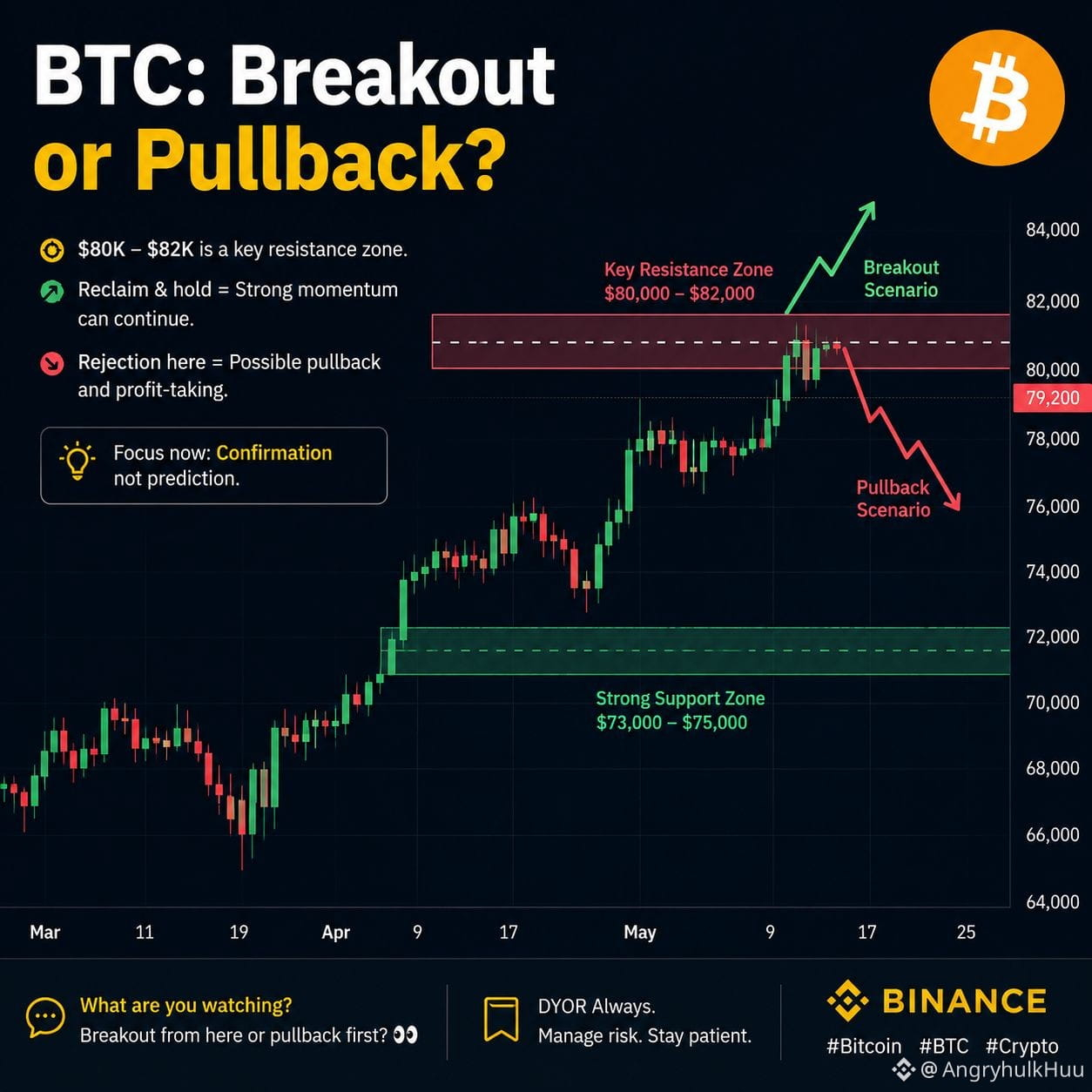
No voy a llamar a esto un regreso alcista completo solo porque BTC tocó $80K.
El movimiento en los últimos días ha sido impresionante, pero después de una subida tan fuerte, no me sorprendería que hubiera una pausa a corto plazo o un retroceso.
Para mí, la zona interesante ahora mismo es $80K–$82K.
Si BTC puede recuperar y mantener correctamente esta área, el impulso podría volverse mucho más fuerte. Si vemos rechazo, que haya toma de ganancias sería completamente normal.
Ahora mismo, me interesa más la confirmación que las predicciones.
¿Qué estás mirando: una ruptura desde aquí o primero otro retroceso? 👀
#Bitcoin #BTC #crypto
El movimiento en los últimos días ha sido impresionante, pero después de una subida tan fuerte, no me sorprendería que hubiera una pausa a corto plazo o un retroceso.
Para mí, la zona interesante ahora mismo es $80K–$82K.
Si BTC puede recuperar y mantener correctamente esta área, el impulso podría volverse mucho más fuerte. Si vemos rechazo, que haya toma de ganancias sería completamente normal.
Ahora mismo, me interesa más la confirmación que las predicciones.
¿Qué estás mirando: una ruptura desde aquí o primero otro retroceso? 👀
#Bitcoin #BTC #crypto
Ver traducción
I was looking through the Alpha reward system on @TermMax today, and the numbers actually made me stop for a moment.
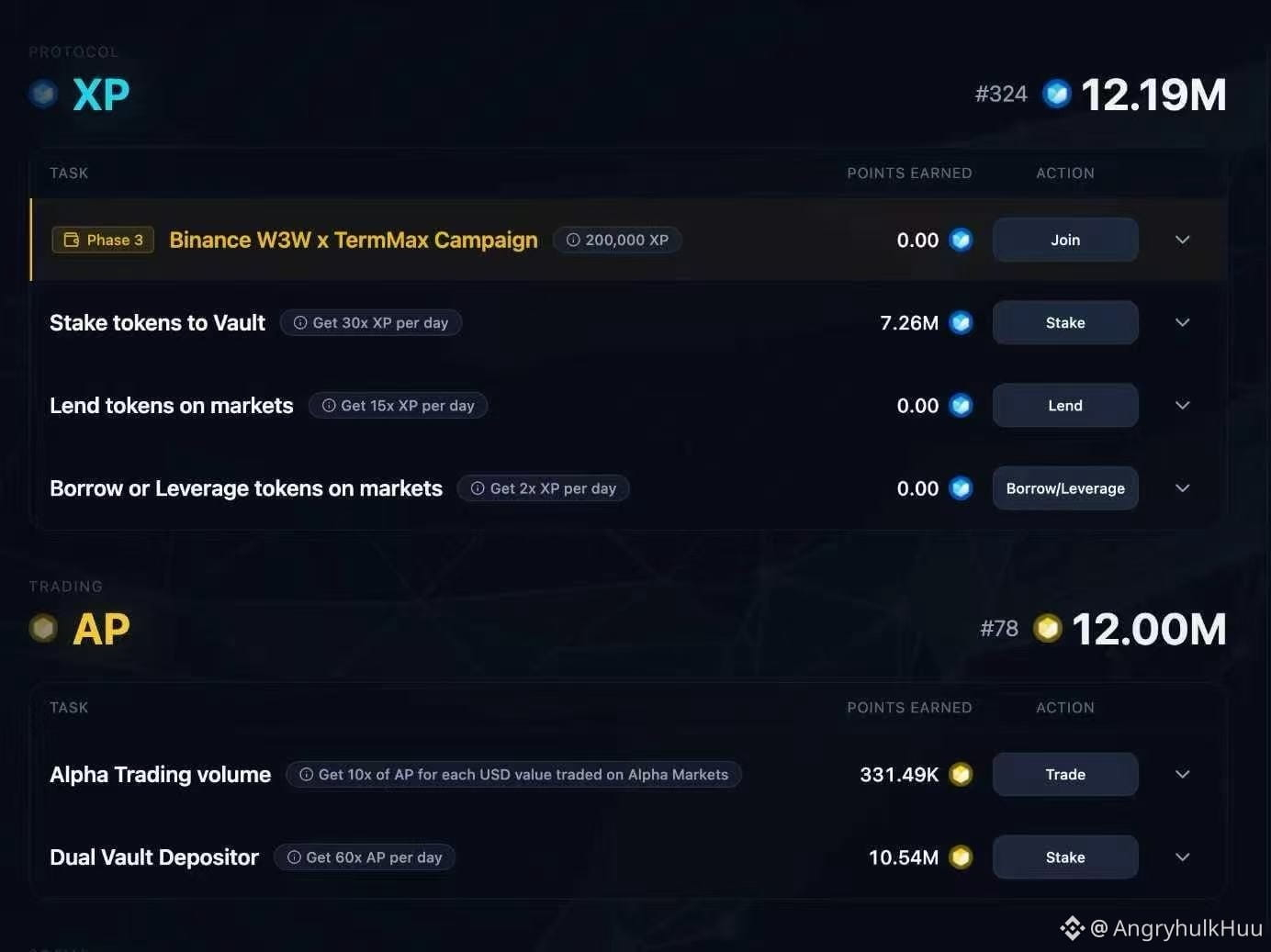
What I like is that XP and AP aren’t treated as one generic points bucket.
The current setup shows different multipliers depending on what you actually do:
• Stake tokens → 30× XP per day
• Lend → 15× XP per day
• Borrow/Leverage → 2× XP per day
• Alpha trading → 10× AP per USD traded
• Dual Vault → 60× AP per day
The Alpha trading part is especially easy to put into perspective.
$100 of trading volume × 10 = 1,000 AP.
At $1,000 volume, that becomes 10,000 AP.
Of course, AP isn’t the same thing as profit. What I find interesting is the incentive design itself.
Your activity determines which reward stream you’re contributing to, instead of everything being reduced to simply holding something and waiting.
That makes the Alpha system feel more like a record of actual participation.
For me, that’s a much more interesting way to design a points system.
$TMX #TermMax
What I like is that XP and AP aren’t treated as one generic points bucket.
The current setup shows different multipliers depending on what you actually do:
• Stake tokens → 30× XP per day
• Lend → 15× XP per day
• Borrow/Leverage → 2× XP per day
• Alpha trading → 10× AP per USD traded
• Dual Vault → 60× AP per day
The Alpha trading part is especially easy to put into perspective.
$100 of trading volume × 10 = 1,000 AP.
At $1,000 volume, that becomes 10,000 AP.
Of course, AP isn’t the same thing as profit. What I find interesting is the incentive design itself.
Your activity determines which reward stream you’re contributing to, instead of everything being reduced to simply holding something and waiting.
That makes the Alpha system feel more like a record of actual participation.
For me, that’s a much more interesting way to design a points system.
$TMX #TermMax
Ver traducción
Today I did something I usually skip when looking at a new DeFi protocol.
I stopped looking at the UI and went through @TermMax security design instead.
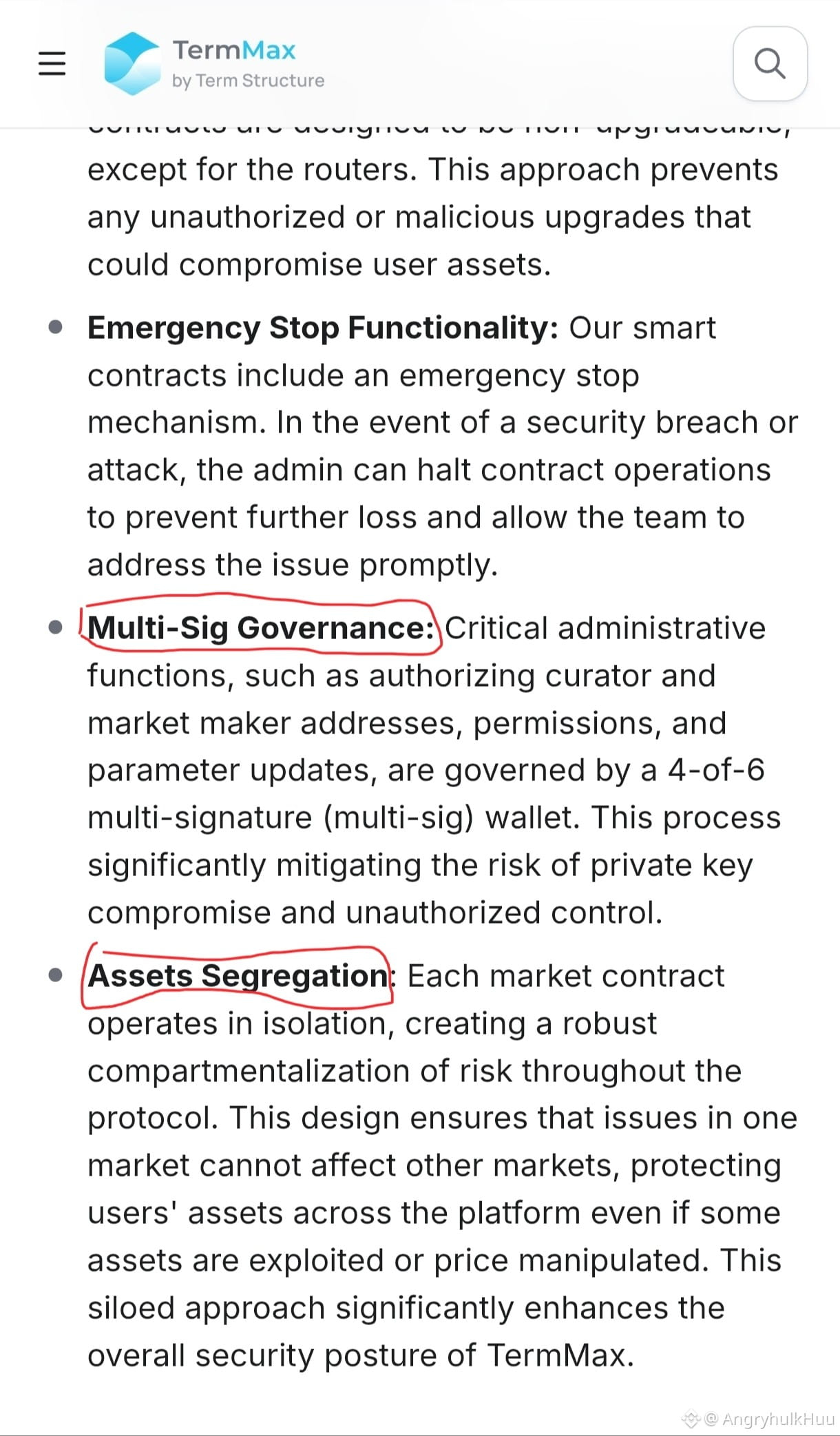
One detail I found interesting is that each market operates in isolation, so an issue in one market isn’t automatically supposed to spill across the entire protocol.
I also checked the admin setup and found that critical functions are controlled through a 4-of-6 multisig.
Those numbers matter to me more than another flashy APY screenshot.
A DeFi product can have great rates and clever mechanics, but if the underlying risk controls are weak, none of that means much.
What I’m starting to appreciate about TermMax is that the product design and the risk architecture seem to be treated as two parts of the same system.
That was probably the most useful thing I learned while digging through the docs today.
$TMX #TermMax
I stopped looking at the UI and went through @TermMax security design instead.
One detail I found interesting is that each market operates in isolation, so an issue in one market isn’t automatically supposed to spill across the entire protocol.
I also checked the admin setup and found that critical functions are controlled through a 4-of-6 multisig.
Those numbers matter to me more than another flashy APY screenshot.
A DeFi product can have great rates and clever mechanics, but if the underlying risk controls are weak, none of that means much.
What I’m starting to appreciate about TermMax is that the product design and the risk architecture seem to be treated as two parts of the same system.
That was probably the most useful thing I learned while digging through the docs today.
$TMX #TermMax
Ver traducción
I’ve spent some time going through TermMax, and honestly, the thing that stayed with me wasn’t some flashy headline.
It was the feeling of having more control over the rate.
When I’m looking at a borrowing opportunity, I don’t always want to jump in just because a market rate is available right now. Sometimes I already have a number in mind that makes sense for the strategy I’m considering.
That’s where the limit order feature started making sense to me.
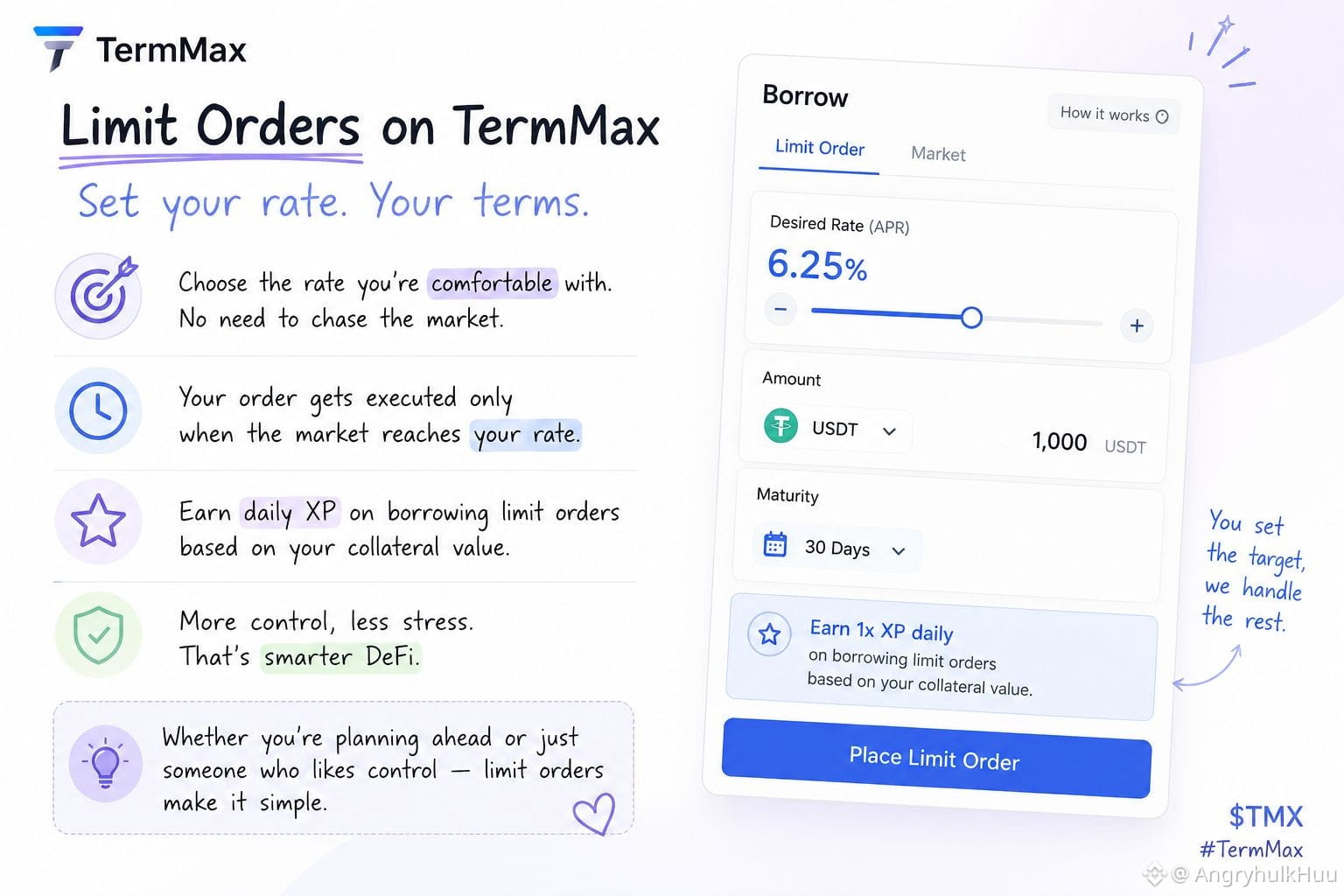
Instead of constantly watching the screen and wondering whether the rate will move into a range I’m comfortable with, I can set the rate I actually want and let the order sit there.
It sounds like a small UX improvement, but in DeFi, these small things change how you interact with a product.
I also noticed that borrowing limit orders can earn daily XP based on collateral value, which makes the feature feel more connected to the wider TermMax Alpha experience rather than being just another order type.
After going through it, my takeaway is pretty simple:
Good DeFi products shouldn’t make you watch the market every second. They should give you enough control to decide your terms and then get out of your way.
That’s probably the part of @TermMax I appreciate most so far.
$TMX #TermMax
It was the feeling of having more control over the rate.
When I’m looking at a borrowing opportunity, I don’t always want to jump in just because a market rate is available right now. Sometimes I already have a number in mind that makes sense for the strategy I’m considering.
That’s where the limit order feature started making sense to me.
Instead of constantly watching the screen and wondering whether the rate will move into a range I’m comfortable with, I can set the rate I actually want and let the order sit there.
It sounds like a small UX improvement, but in DeFi, these small things change how you interact with a product.
I also noticed that borrowing limit orders can earn daily XP based on collateral value, which makes the feature feel more connected to the wider TermMax Alpha experience rather than being just another order type.
After going through it, my takeaway is pretty simple:
Good DeFi products shouldn’t make you watch the market every second. They should give you enough control to decide your terms and then get out of your way.
That’s probably the part of @TermMax I appreciate most so far.
$TMX #TermMax
Ver traducción
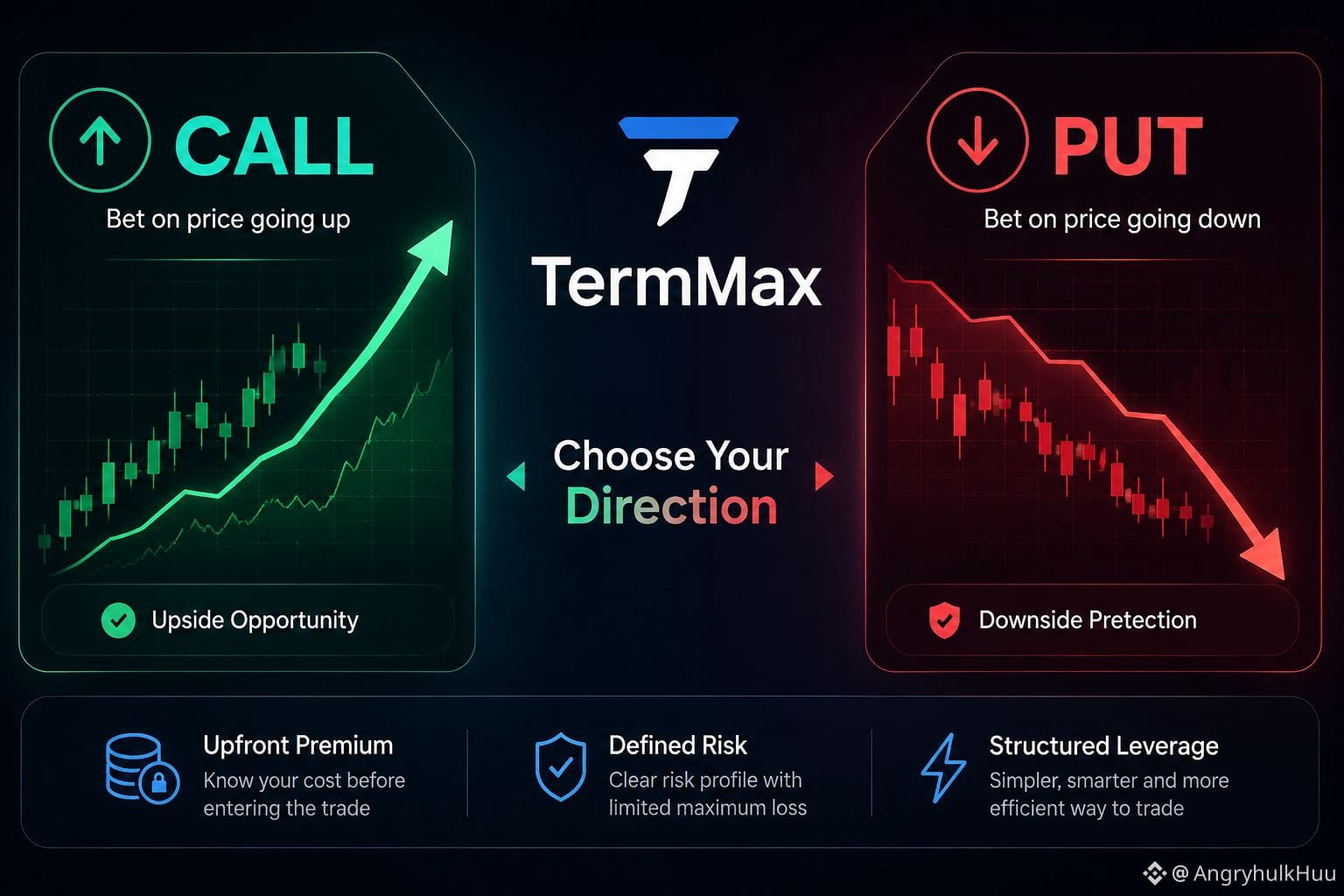
One thing I find interesting about @TermMax is how its Call/Put product changes the way leverage can be approached.
With a traditional leveraged position, you usually have to keep an eye on margin, liquidation levels and changing funding conditions. That can make a simple directional trade more complicated than it needs to be.
TermMax takes a different route. With Call/Put, the trader can choose a defined market direction and pay an upfront premium for the position. That makes the potential cost clearer before entering the trade.
For me, the interesting part isn’t simply “more leverage.” It’s having a more structured way to express a market view while knowing the cost upfront.
That’s the kind of DeFi primitive I think is worth watching.
$TMX #TermMax
With a traditional leveraged position, you usually have to keep an eye on margin, liquidation levels and changing funding conditions. That can make a simple directional trade more complicated than it needs to be.
TermMax takes a different route. With Call/Put, the trader can choose a defined market direction and pay an upfront premium for the position. That makes the potential cost clearer before entering the trade.
For me, the interesting part isn’t simply “more leverage.” It’s having a more structured way to express a market view while knowing the cost upfront.
That’s the kind of DeFi primitive I think is worth watching.
$TMX #TermMax
Ver traducción
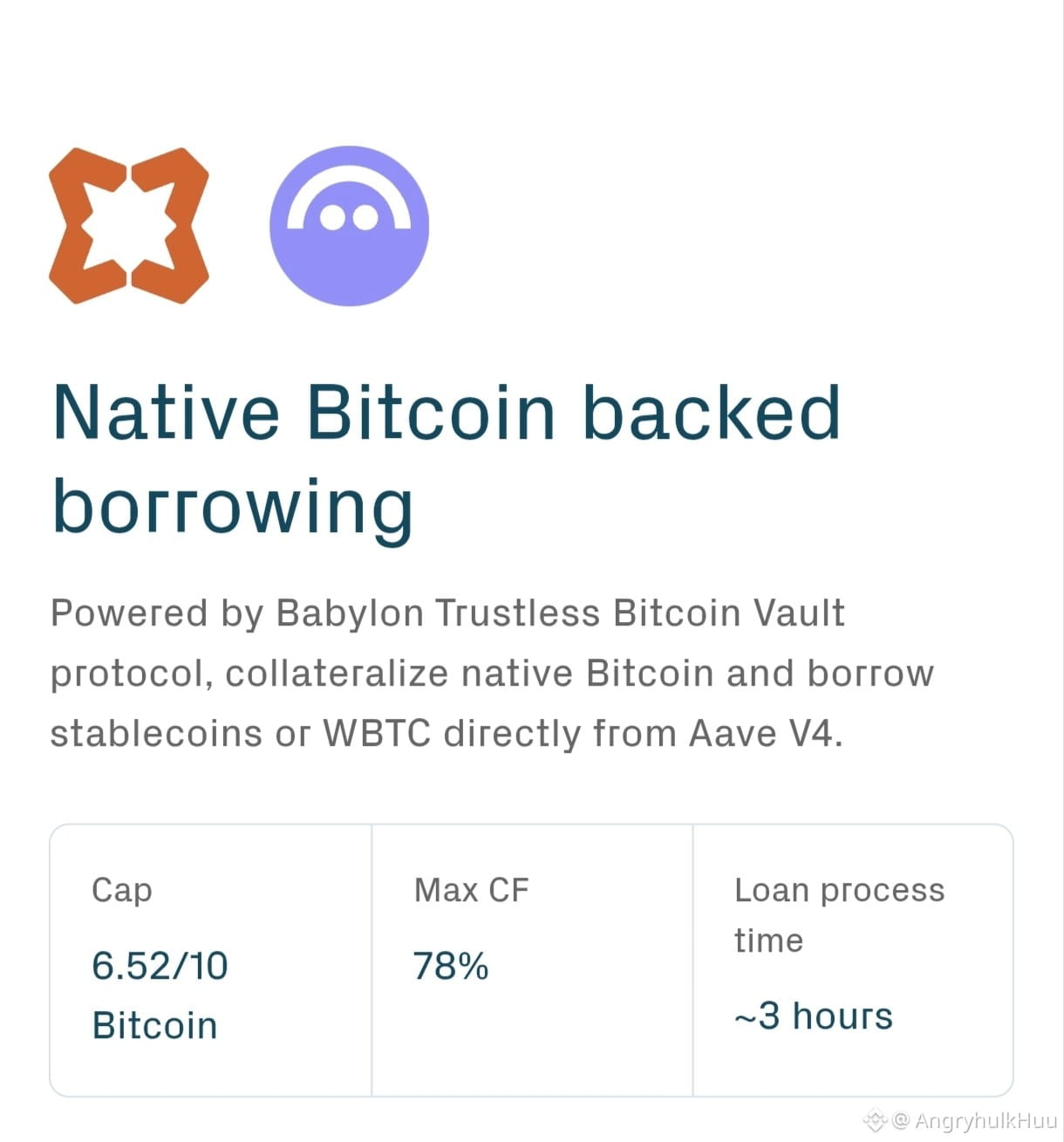
The more I learn about Bitcoin infrastructure, the more I feel that "native" matters more than most people realize. Wrapped BTC solved an important problem by bringing liquidity into DeFi, but it also introduced new trust assumptions that many long-term Bitcoin holders were never completely comfortable with.
That's why the direction @BabylonLabs_io is taking feels worth paying attention to. Instead of asking users to move away from native Bitcoin, Trustless Bitcoin Vaults are designed around preserving ownership while expanding what BTC can actually do. To me, that's a much stronger design philosophy because it doesn't force users to choose between security and utility.
I don't think the future of Bitcoin DeFi will be decided by who offers the highest yield. It will be decided by which infrastructure minimizes unnecessary trust while keeping the user experience practical. If people can unlock more value from their BTC without compromising the principles that made Bitcoin successful in the first place, that's a much more meaningful innovation than simply creating another financial product.
The strongest infrastructure is usually the one users don't have to think about. It simply works while preserving the properties they already trust. That's the direction I hope Bitcoin continues to move toward.
$BABY #baby
That's why the direction @BabylonLabs_io is taking feels worth paying attention to. Instead of asking users to move away from native Bitcoin, Trustless Bitcoin Vaults are designed around preserving ownership while expanding what BTC can actually do. To me, that's a much stronger design philosophy because it doesn't force users to choose between security and utility.
I don't think the future of Bitcoin DeFi will be decided by who offers the highest yield. It will be decided by which infrastructure minimizes unnecessary trust while keeping the user experience practical. If people can unlock more value from their BTC without compromising the principles that made Bitcoin successful in the first place, that's a much more meaningful innovation than simply creating another financial product.
The strongest infrastructure is usually the one users don't have to think about. It simply works while preserving the properties they already trust. That's the direction I hope Bitcoin continues to move toward.
$BABY #baby
Ver traducción
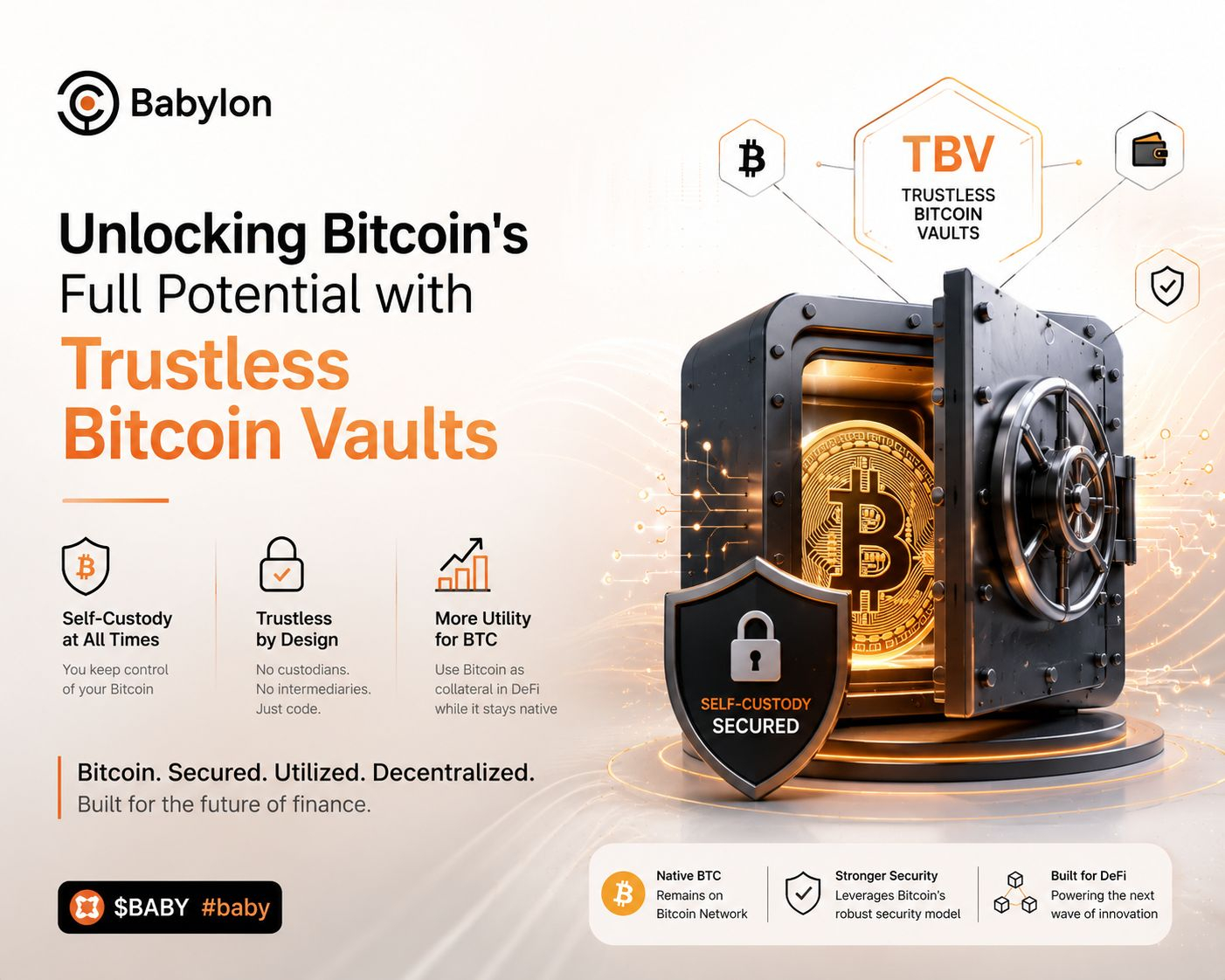
Bitcoin has always been valued for giving people full ownership of their assets, but using BTC in DeFi has often required compromises like wrapping coins or trusting centralized custodians. That's why the approach from @BabylonLabs_io feels different. Trustless Bitcoin Vaults are designed to let users keep their Bitcoin under self-custody while making it usable as collateral through cryptographic verification instead of trusted intermediaries. This means Bitcoin can remain native to its own network while becoming more productive in decentralized finance. Rather than changing Bitcoin itself, TBV builds infrastructure around its existing security model, creating new financial possibilities without sacrificing the principles that made Bitcoin valuable in the first place. If this model continues to mature, it could become an important foundation for the next phase of Bitcoin adoption.
$BABY #baby
$BABY #baby
Ver traducción
For years, Bitcoin has been seen as a store of value, but much of its capital has remained inactive. What I find interesting about @BabylonLabs_io is the focus on improving Bitcoin's capital efficiency without changing its core principles. Trustless Bitcoin Vaults are designed to let native BTC remain under user control while supporting broader financial use cases. Instead of asking users to choose between security and utility, this approach aims to deliver both. If Bitcoin is going to become a more active part of decentralized finance, building on trustless infrastructure like TBV feels like the right direction.
$BABY #baby
$BABY #baby
Ver traducción
The latest Ledger integration from @BabylonLabs_io caught my attention because it solves a real concern for long term Bitcoin holders. Most people don't want to move their BTC to wrapped versions or hand control over to a custodian just to access DeFi. Trustless Bitcoin Vaults take a different approach by keeping Bitcoin on its native chain while allowing it to be used as collateral. With Ledger Clear Signing, every vault action can be verified directly on the hardware wallet, giving users greater confidence before approving transactions. This combination of self custody, cryptographic verification, and practical DeFi access feels like meaningful infrastructure rather than another short term trend. If Bitcoin is going to play a bigger role in decentralized finance, this is the type of foundation that makes sense to build. $BABY
#baby
#baby

Ver traducción
I used to think moving funds between wallets and platforms was just part of crypto.
After spending some time reading about @grvt_io , I started questioning that.
If your assets are sitting idle every time you're not actively trading, that's capital that isn't really working for you.
What I like about GRVT's direction is the focus on making one portfolio more useful instead of asking users to constantly move funds around. It's a small shift in thinking, but it could make a big difference in everyday trading.
That's the kind of product design I'm interested in following.
#grvt
After spending some time reading about @grvt_io , I started questioning that.
If your assets are sitting idle every time you're not actively trading, that's capital that isn't really working for you.
What I like about GRVT's direction is the focus on making one portfolio more useful instead of asking users to constantly move funds around. It's a small shift in thinking, but it could make a big difference in everyday trading.
That's the kind of product design I'm interested in following.
#grvt
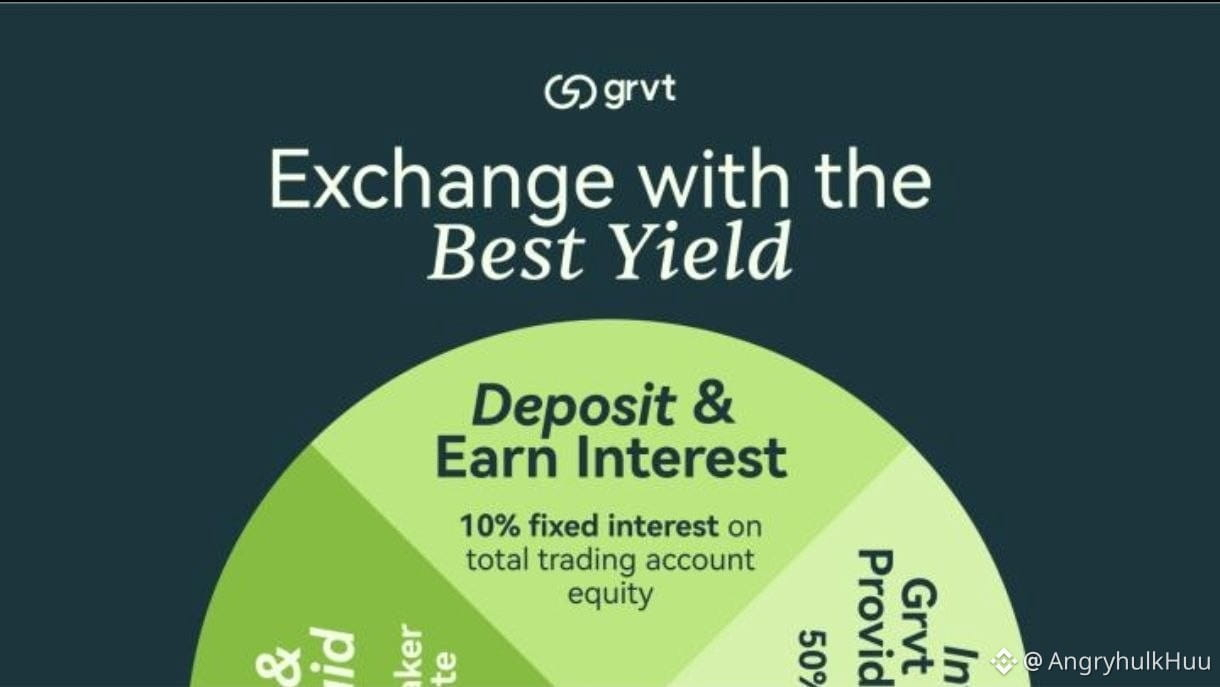
Pasé un tiempo leyendo hoy el nuevo Onchain Wealth Report de @grvt_io .
Una idea realmente me llamó la atención.
La conversación está cambiando lentamente de "¿Dónde debería operar?" a "¿Cómo puede mi capital seguir trabajando todo el tiempo?"
Esa es una forma de pensar muy diferente sobre las criptomonedas. En lugar de mover fondos entre varias aplicaciones para operar, ganar e invertir, el enfoque está pasando a cómo un solo saldo puede hacer más con menos fricción.
Ya sea que esa visión se convierta o no en el estándar, creo que es un debate que la industria necesitaba.
Espero ver cómo @grvt_io convierte esa visión en productos reales.
#grvt
Una idea realmente me llamó la atención.
La conversación está cambiando lentamente de "¿Dónde debería operar?" a "¿Cómo puede mi capital seguir trabajando todo el tiempo?"
Esa es una forma de pensar muy diferente sobre las criptomonedas. En lugar de mover fondos entre varias aplicaciones para operar, ganar e invertir, el enfoque está pasando a cómo un solo saldo puede hacer más con menos fricción.
Ya sea que esa visión se convierta o no en el estándar, creo que es un debate que la industria necesitaba.
Espero ver cómo @grvt_io convierte esa visión en productos reales.
#grvt

Ver traducción
I've finally decided how I'm handling my GRVT allocation.
At first, I was only thinking about claiming everything as soon as possible. After reading the official guide, I realized GRVT isn't just asking us to claim tokens. It's actually letting every participant choose the strategy that fits them best.
Some people need liquidity on day one, and that's completely understandable. Others are willing to wait for a higher multiplier because they believe in the long-term potential of the ecosystem.
I don't think there's a right or wrong answer here. It really depends on your own goals.
I like that @grvt_io didn't force everyone into a single option. Giving the community flexibility is a small detail, but it makes the distribution feel much more thoughtful.
Before making any decision, I'll double-check everything through the official registration page instead of relying on random posts online.
That's my approach. Curious to see how everyone else is thinking about it.
#grvt
At first, I was only thinking about claiming everything as soon as possible. After reading the official guide, I realized GRVT isn't just asking us to claim tokens. It's actually letting every participant choose the strategy that fits them best.
Some people need liquidity on day one, and that's completely understandable. Others are willing to wait for a higher multiplier because they believe in the long-term potential of the ecosystem.
I don't think there's a right or wrong answer here. It really depends on your own goals.
I like that @grvt_io didn't force everyone into a single option. Giving the community flexibility is a small detail, but it makes the distribution feel much more thoughtful.
Before making any decision, I'll double-check everything through the official registration page instead of relying on random posts online.
That's my approach. Curious to see how everyone else is thinking about it.
#grvt

Ver traducción
One of the most interesting updates from @grvt_io is the launch of Grvt Invest, a product focused on making institutional-style Real World Asset (RWA) yield more accessible. Instead of requiring large capital or complex investment processes, Grvt Invest introduces curated strategies that simplify participation while maintaining a self-custodial experience.
According to the official announcement, the platform launches with Balanced and Opportunistic strategies, giving users different ways to approach yield based on their goals. This reflects GRVT's broader vision of combining trading, earning, and investing within a single ecosystem, so capital doesn't have to sit idle while waiting for the next opportunity.
As the RWA sector continues to grow, products that make these opportunities easier to access could play an important role in bringing more users onchain. It's great to see @grvt_io focusing on practical financial tools instead of short-term hype.
#grvt
According to the official announcement, the platform launches with Balanced and Opportunistic strategies, giving users different ways to approach yield based on their goals. This reflects GRVT's broader vision of combining trading, earning, and investing within a single ecosystem, so capital doesn't have to sit idle while waiting for the next opportunity.
As the RWA sector continues to grow, products that make these opportunities easier to access could play an important role in bringing more users onchain. It's great to see @grvt_io focusing on practical financial tools instead of short-term hype.
#grvt

Parcialmente cierto
Ver traducción
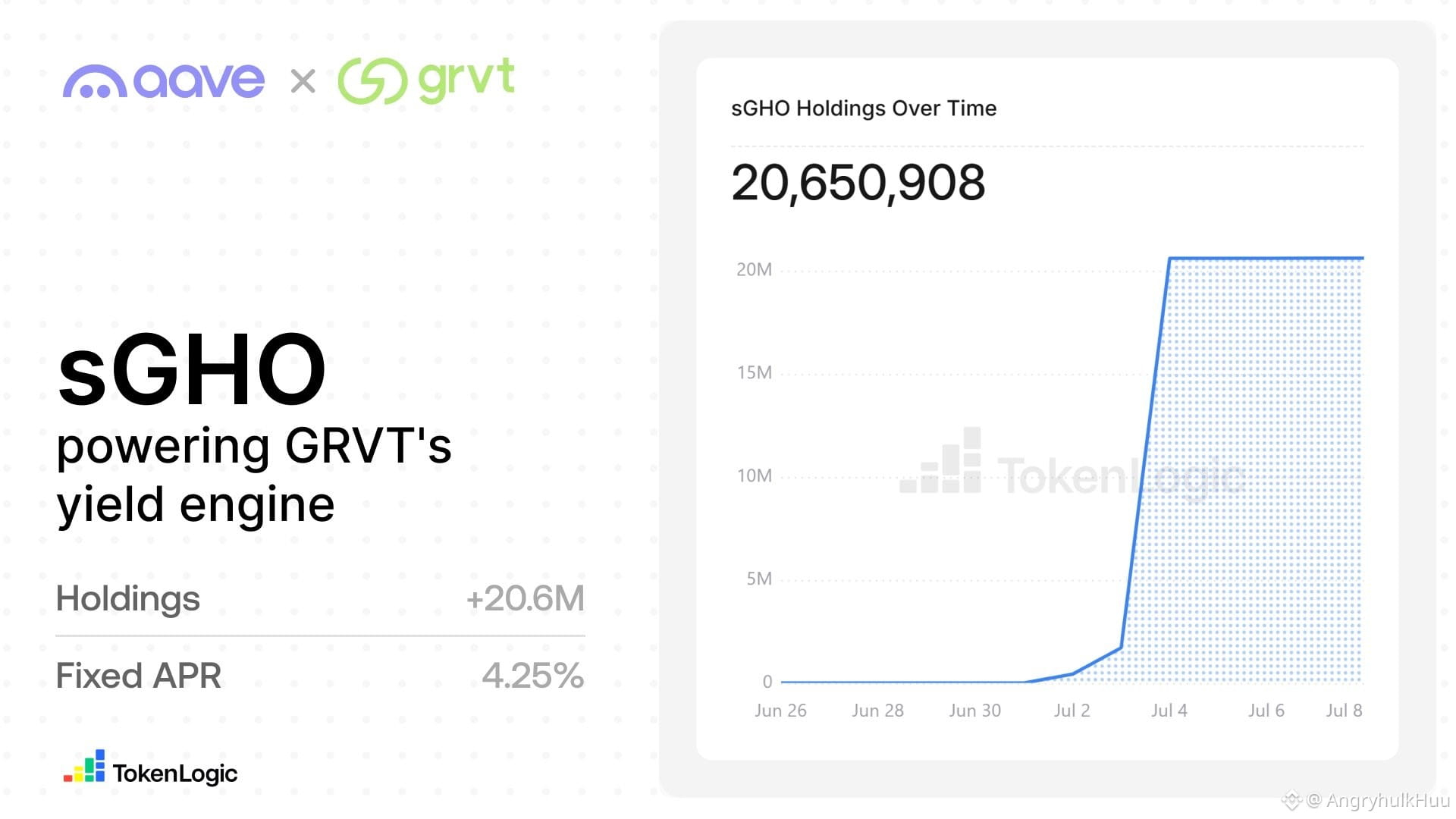
Yield only matters when it's built on reliable infrastructure. Seeing over 20.6M sGHO allocated to power GRVT's yield engine highlights growing confidence in its approach. Strong partnerships and practical utility often speak louder than hype. @grvt_io is building with long term sustainability in mind.
#grvt
#grvt
Ver traducción
Pump or dump?
Ver traducción
Walrus is quietly building one of the most interesting pieces of Web3 infrastructure. With @Walrus 🦭/acc focusing on decentralized, scalable data storage, the $WAL ecosystem feels designed for long-term builders rather than hype cycles. Real utility, real demand, real innovation. #Walrus
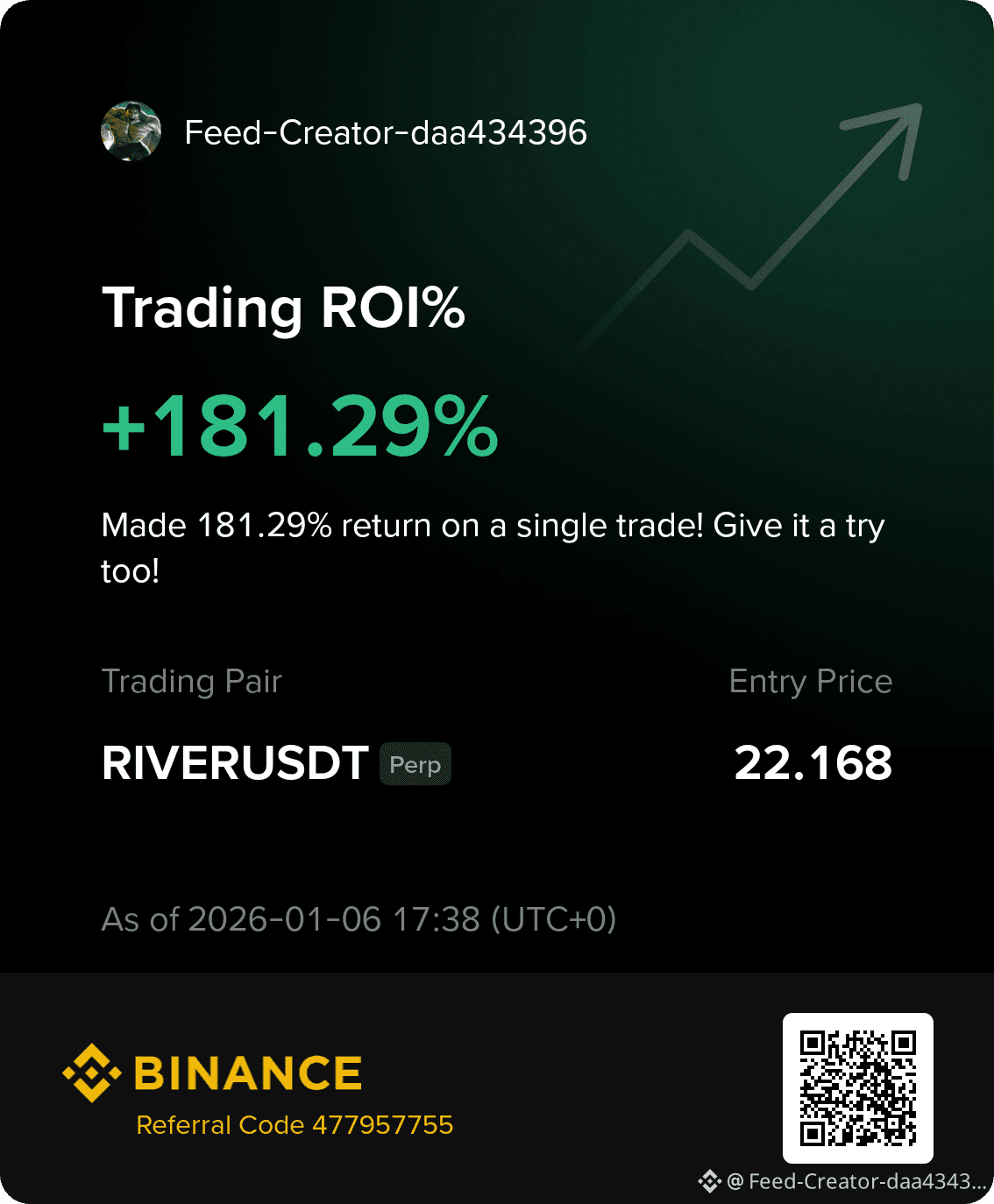
DeFi está evolucionando, y @Morpho Labs 🦋 está liderando el cambio! 🔥
$MORPHO crea una capa perfecta entre prestamistas y prestatarios, ofreciendo mayores rendimientos y mejores tasas. Es eficiencia, transparencia y descentralización en perfecto equilibrio. #Morpho
$MORPHO crea una capa perfecta entre prestamistas y prestatarios, ofreciendo mayores rendimientos y mejores tasas. Es eficiencia, transparencia y descentralización en perfecto equilibrio. #Morpho
Inicia sesión para explorar más contenidos