

Daniel_Markson
376 Publicaciones

Daniel_Markson
Denunciar
Bloquear usuario
Crypto Investor & Market Analyst | Listings & Institutional Services Partner at WhiteBIT | Listing Partner at BitMart & MEXC
0 Siguiendo
10 Seguidores
26 Me gusta
Publicaciones
Ver traducción
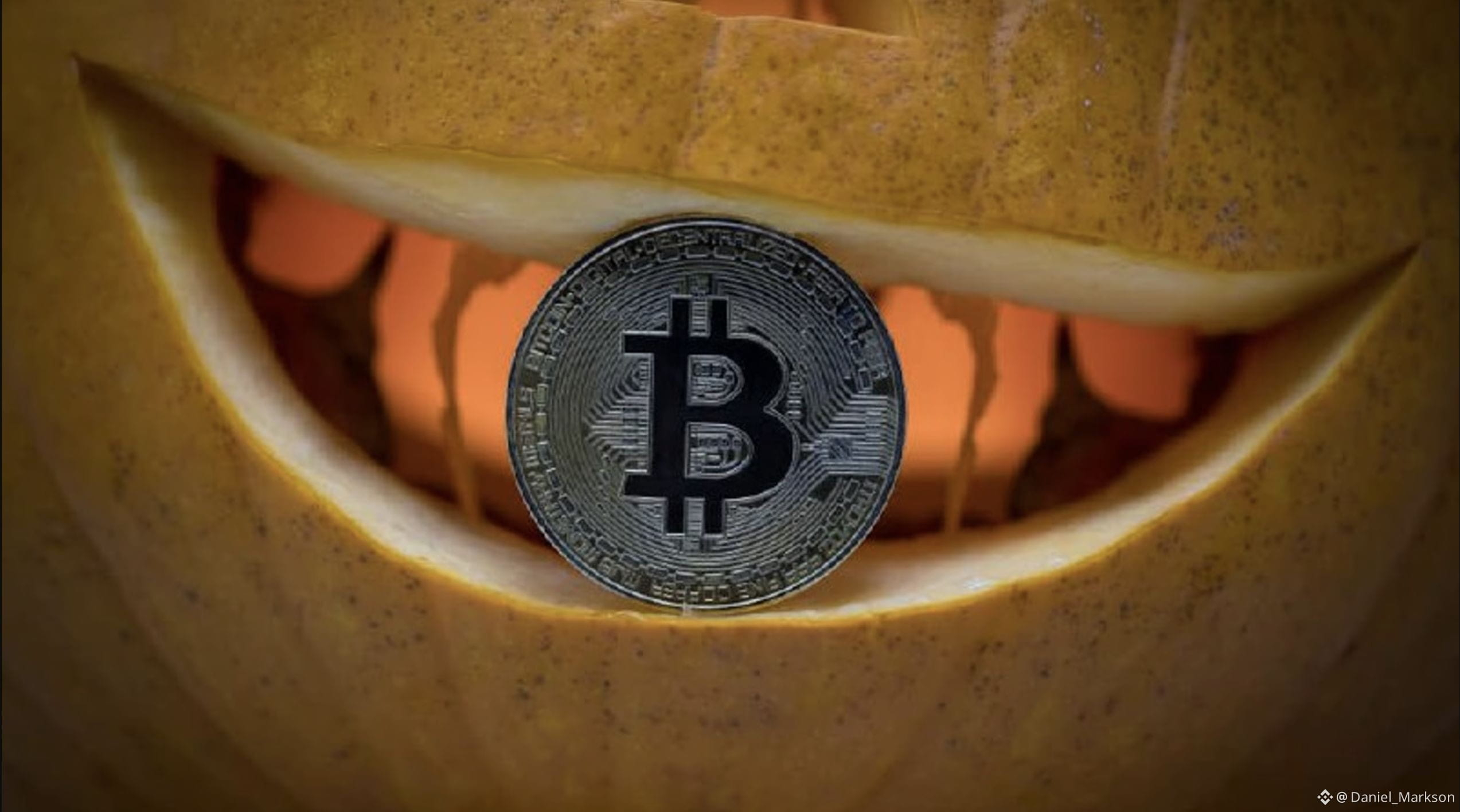
🎃 Welcome to Uptober! Can $BTC Live Up To The Hype This Year? It’s officially October, or as we like to call it in the crypto space - Uptober! If you've been around for a while, you know this month has a legendary reputation for launching massive market rallies. And when you look at the historical data, the hypes actually backed up by hard stats 👇 According to CoinGlass, BTC has finished October in the green 10 out of the last 13 years (2013–2025). That is nearly a 77% win rate! Here is what the numbers show: • Average return: +18.71% • Median return: +12.73% • Best Uptober ever: 2013 with a staggering +60.79% • Worst Uptober: 2014 down -12.95% (with only 2018 and 2025 being the other rare red years) Where are we sitting right now? BTC closed September up 6.5% around $83,563 and is already kicking off this month trading strong near $87,000 🔥 Analyst PlanB pointed out that Bitcoin closed September well above its realized price ($54K) and its 200-week moving average ($66K), leaving about 82% of all wallet addresses in profit. Sure, not every catalyst played out perfectly - like the CLARITY Act vote falling flat in the US Senate last month but structural momentum and historical seasonality are clearly on our side right now 🚀 #BTC Price Analysis# #Bitcoin Price Prediction: What is Bitcoins next move?#
🎃 Welcome to Uptober! Can $BTC Live Up To The Hype This Year? It’s officially October, or as we like to call it in the crypto space - Uptober! If you've been around for a while, you know this month has a legendary reputation for launching massive market rallies. And when you look at the historical data, the hypes actually backed up by hard stats 👇 According to CoinGlass, BTC has finished October in the green 10 out of the last 13 years (2013–2025). That is nearly a 77% win rate! Here is what the numbers show: • Average return: +18.71% • Median return: +12.73% • Best Uptober ever: 2013 with a staggering +60.79% • Worst Uptober: 2014 down -12.95% (with only 2018 and 2025 being the other rare red years) Where are we sitting right now? BTC closed September up 6.5% around $83,563 and is already kicking off this month trading strong near $87,000 🔥 Analyst PlanB pointed out that Bitcoin closed September well above its realized price ($54K) and its 200-week moving average ($66K), leaving about 82% of all wallet addresses in profit. Sure, not every catalyst played out perfectly - like the CLARITY Act vote falling flat in the US Senate last month but structural momentum and historical seasonality are clearly on our side right now 🚀 #BTC Price Analysis# #Bitcoin Price Prediction: What is Bitcoins next move?#
39
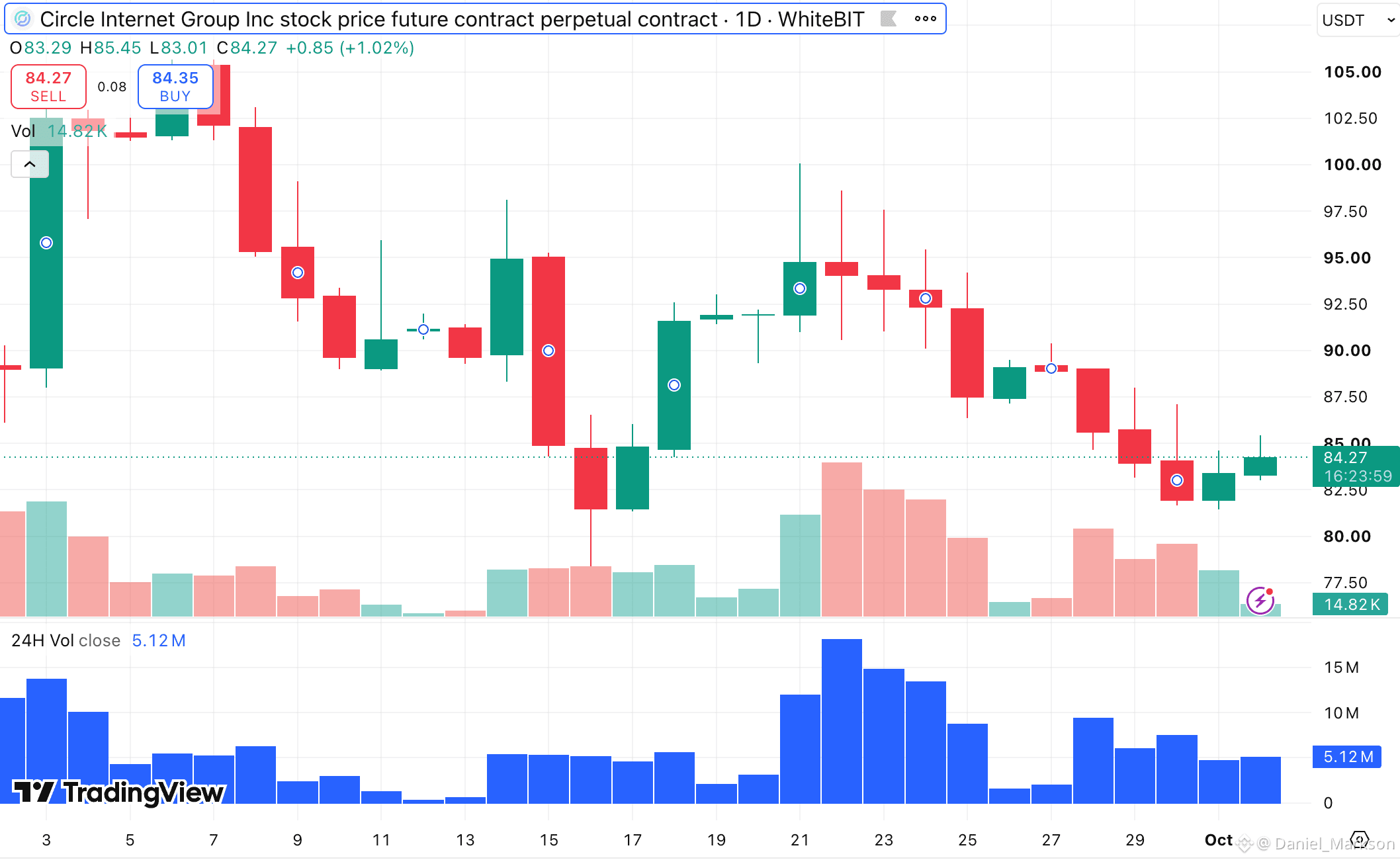
⚡ Spot Disminuido vs Futuros en Vuelo: La Última Toma de Wall Street sobre COIN y CRCL Ayer también estuve mirando las acciones cripto esta semana, ya que WhiteBIT ha puesto sus pares de TradFi disponibles directamente en TradingView y, honestamente, ¡uso esta función prácticamente todo el tiempo ahora! Así que, hay un montaje realmente interesante formándose con Coinbase (COIN) y Circle (CRCL) 🤔 Ambas acciones subieron en la sesión de mediodía después de que la firma de Wall Street William Blair señaló que la mayoría de los peores temores ya están descontados. Más importante aún, los analistas destacaron que ambas empresas ofrecen un gran apalancamiento al alza cada vez que el verdadero repunte de $BTC entra en marcha. La firma William Blair recortó las previsiones de ingresos a corto plazo para Coinbase debido a los volúmenes tranquilos de spot, pero espera que el EBITDA toque fondo a finales de 2026 antes de rebotar. 👉 Mientras tanto, aunque el trading al contado ha estado lento, los derivados, los futuros perpetuos y los mercados de predicción están repuntando para cubrir el hueco en toda la industria 📈 Este cambio hizo que COIN subiera más de un 2% y CRCL casi un 3\%, mientras que BTC sigue consolidándose justo alrededor del nivel de $65,000. 🔥 Cuando los analistas de TradFi empiezan a hablar de un suelo en la infraestructura del mercado, normalmente vale la pena mantener estas acciones en tu radar para el cambio del próximo ciclo 🚀 #BTC Price Analysis# #Bitcoin Price Prediction: ¿Cuál será el siguiente movimiento de Bitcoin?#
⚡ Spot Disminuido vs Futuros en Vuelo: La Última Toma de Wall Street sobre COIN y CRCL Ayer también estuve mirando las acciones cripto esta semana, ya que WhiteBIT ha puesto sus pares de TradFi disponibles directamente en TradingView y, honestamente, ¡uso esta función prácticamente todo el tiempo ahora! Así que, hay un montaje realmente interesante formándose con Coinbase (COIN) y Circle (CRCL) 🤔 Ambas acciones subieron en la sesión de mediodía después de que la firma de Wall Street William Blair señaló que la mayoría de los peores temores ya están descontados. Más importante aún, los analistas destacaron que ambas empresas ofrecen un gran apalancamiento al alza cada vez que el verdadero repunte de $BTC entra en marcha. La firma William Blair recortó las previsiones de ingresos a corto plazo para Coinbase debido a los volúmenes tranquilos de spot, pero espera que el EBITDA toque fondo a finales de 2026 antes de rebotar. 👉 Mientras tanto, aunque el trading al contado ha estado lento, los derivados, los futuros perpetuos y los mercados de predicción están repuntando para cubrir el hueco en toda la industria 📈 Este cambio hizo que COIN subiera más de un 2% y CRCL casi un 3\%, mientras que BTC sigue consolidándose justo alrededor del nivel de $65,000. 🔥 Cuando los analistas de TradFi empiezan a hablar de un suelo en la infraestructura del mercado, normalmente vale la pena mantener estas acciones en tu radar para el cambio del próximo ciclo 🚀 #BTC Price Analysis# #Bitcoin Price Prediction: ¿Cuál será el siguiente movimiento de Bitcoin?#

72
Ver traducción
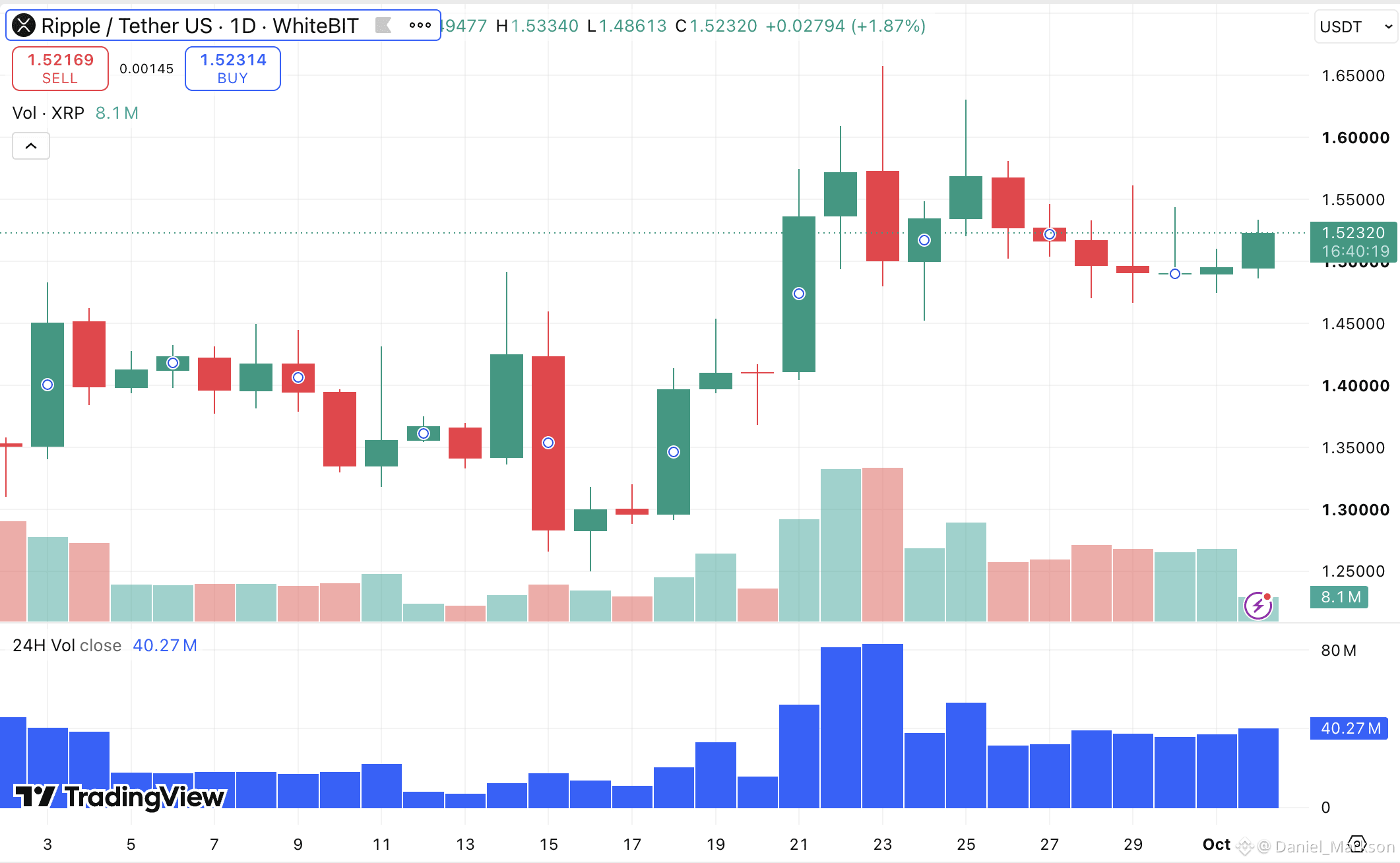
🎯 XRP Trapped In A Tightening Squeeze: Breakout To $1.70 Next? And looking at XRP right now, price action is coiling up tightly inside a narrowing structure as buyers continuously step up while sellers defend the top. After rejection near $1.665, price pulled back toward lower highs around $1.55. However, solid buyer defense between $1.45 and $1.47 has kept the short-term recovery structure fully intact. Here is what you need to keep on your radar: 🔹 The Technical Squeeze: XRP is trading near $1.49, right along the lower border of its triangle pattern. A clean breakout above the $1.54 resistance level could clear the path toward $1.70 or higher. 🔹 The Institutional Wildcard: Evernorth just cleared its vote to list an actively managed XRP treasury on Nasdaq under ticker XRPN. With ~473M XRP backing the structure, this could unlock serious long-term Wall Street demand. 🔹 Supply Dynamics: Monthly escrow unlocks released 1B XRP into circulation. The real test is how much of this supply ends up on spot order books versus getting absorbed by institutional players. While $BTC leads broader market direction, XRP's tightening pattern suggests a decisive move is brewing soon. Also, I’ve been keeping this trading strategy alongside a few TradFi charts on TradingView and it’s super handy now that WhiteBIT has added TradFi pairs there too. #BTC Price Analysis# #Bitcoin Price Prediction: What is Bitcoins next move?#
🎯 XRP Trapped In A Tightening Squeeze: Breakout To $1.70 Next? And looking at XRP right now, price action is coiling up tightly inside a narrowing structure as buyers continuously step up while sellers defend the top. After rejection near $1.665, price pulled back toward lower highs around $1.55. However, solid buyer defense between $1.45 and $1.47 has kept the short-term recovery structure fully intact. Here is what you need to keep on your radar: 🔹 The Technical Squeeze: XRP is trading near $1.49, right along the lower border of its triangle pattern. A clean breakout above the $1.54 resistance level could clear the path toward $1.70 or higher. 🔹 The Institutional Wildcard: Evernorth just cleared its vote to list an actively managed XRP treasury on Nasdaq under ticker XRPN. With ~473M XRP backing the structure, this could unlock serious long-term Wall Street demand. 🔹 Supply Dynamics: Monthly escrow unlocks released 1B XRP into circulation. The real test is how much of this supply ends up on spot order books versus getting absorbed by institutional players. While $BTC leads broader market direction, XRP's tightening pattern suggests a decisive move is brewing soon. Also, I’ve been keeping this trading strategy alongside a few TradFi charts on TradingView and it’s super handy now that WhiteBIT has added TradFi pairs there too. #BTC Price Analysis# #Bitcoin Price Prediction: What is Bitcoins next move?#
72
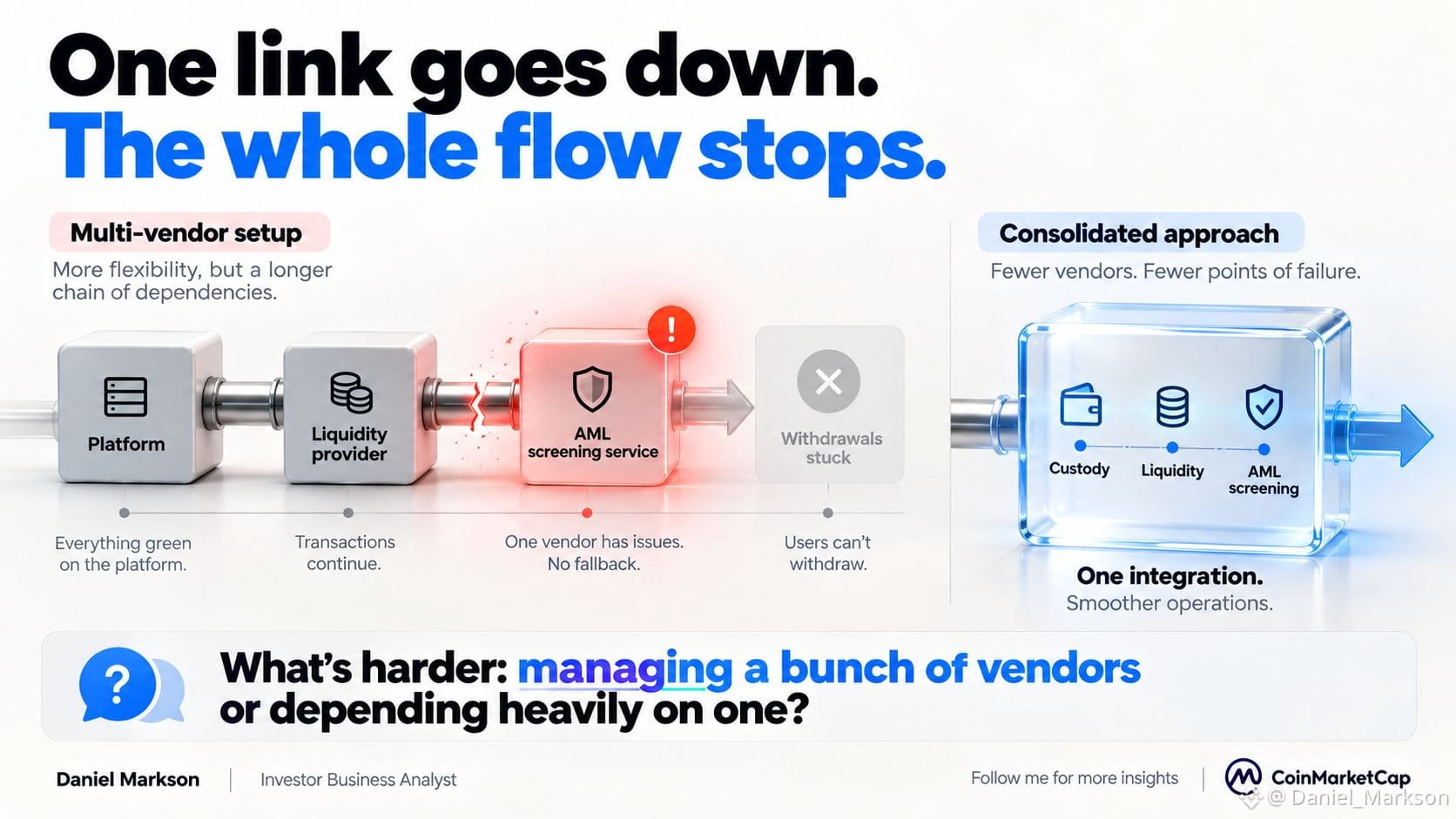
🛠 El camino inteligente hacia una custodia y liquidez de criptomonedas sin problemas Un amigo mío me habló recientemente de un caso en el que el equipo de ingeniería revisó todos los servicios propios de la plataforma y todo estaba en verde. 🟢 Pero las transacciones seguían sin poder completarse, los usuarios no podían retirar fondos y, naturalmente, culparon a la plataforma. Luego el equipo empezó a investigar. El flujo de retiro en realidad se veía así: Plataforma → proveedor de liquidez → servicio de verificación AML Un proveedor de verificación tenía problemas. Todo el flujo de retiro estaba esperando su respuesta y, como no había un mecanismo de respaldo, cada nueva transacción (incluso transferencias estándar de $BTC) simplemente se quedaba atascada en la cola. Y nadie estaba vigilando ese proveedor. 🤔 En general, la disponibilidad depende de cada servicio de la cadena. Si uno falla, todo el flujo puede fallar con él. Wallet-as-a-Service integra custodia, liquidez y verificación en una sola solución. Veamos: 💡 WhiteBIT WaaS cubre 340+ criptomonedas en 80+ redes con AML automático. institutional.whitebit.com/cry ... 💡 Cobo admite 80+ redes y 3.000+ tokens a través de REST API y SDK. www.cobo.com/products/waas?utm ... Menos proveedores significa menos lugares donde algo puede fallar. Pero la consolidación también aumenta la dependencia de un solo proveedor. Un proveedor se convierte en un único punto de fallo en lugar de tres. ¿Qué es más difícil: gestionar un montón de proveedores o depender mucho de uno? Aviso legal: Esto no es asesoramiento financiero ni de inversión. Haz tu propia investigación antes de tomar cualquier decisión. Úsalo bajo tu propia responsabilidad. #BTC Price Analysis# #Bitcoin Price Prediction: ¿Cuál será el siguiente movimiento de Bitcoin?#
🛠 El camino inteligente hacia una custodia y liquidez de criptomonedas sin problemas Un amigo mío me habló recientemente de un caso en el que el equipo de ingeniería revisó todos los servicios propios de la plataforma y todo estaba en verde. 🟢 Pero las transacciones seguían sin poder completarse, los usuarios no podían retirar fondos y, naturalmente, culparon a la plataforma. Luego el equipo empezó a investigar. El flujo de retiro en realidad se veía así: Plataforma → proveedor de liquidez → servicio de verificación AML Un proveedor de verificación tenía problemas. Todo el flujo de retiro estaba esperando su respuesta y, como no había un mecanismo de respaldo, cada nueva transacción (incluso transferencias estándar de $BTC) simplemente se quedaba atascada en la cola. Y nadie estaba vigilando ese proveedor. 🤔 En general, la disponibilidad depende de cada servicio de la cadena. Si uno falla, todo el flujo puede fallar con él. Wallet-as-a-Service integra custodia, liquidez y verificación en una sola solución. Veamos: 💡 WhiteBIT WaaS cubre 340+ criptomonedas en 80+ redes con AML automático. institutional.whitebit.com/cry ... 💡 Cobo admite 80+ redes y 3.000+ tokens a través de REST API y SDK. www.cobo.com/products/waas?utm ... Menos proveedores significa menos lugares donde algo puede fallar. Pero la consolidación también aumenta la dependencia de un solo proveedor. Un proveedor se convierte en un único punto de fallo en lugar de tres. ¿Qué es más difícil: gestionar un montón de proveedores o depender mucho de uno? Aviso legal: Esto no es asesoramiento financiero ni de inversión. Haz tu propia investigación antes de tomar cualquier decisión. Úsalo bajo tu propia responsabilidad. #BTC Price Analysis# #Bitcoin Price Prediction: ¿Cuál será el siguiente movimiento de Bitcoin?#
65
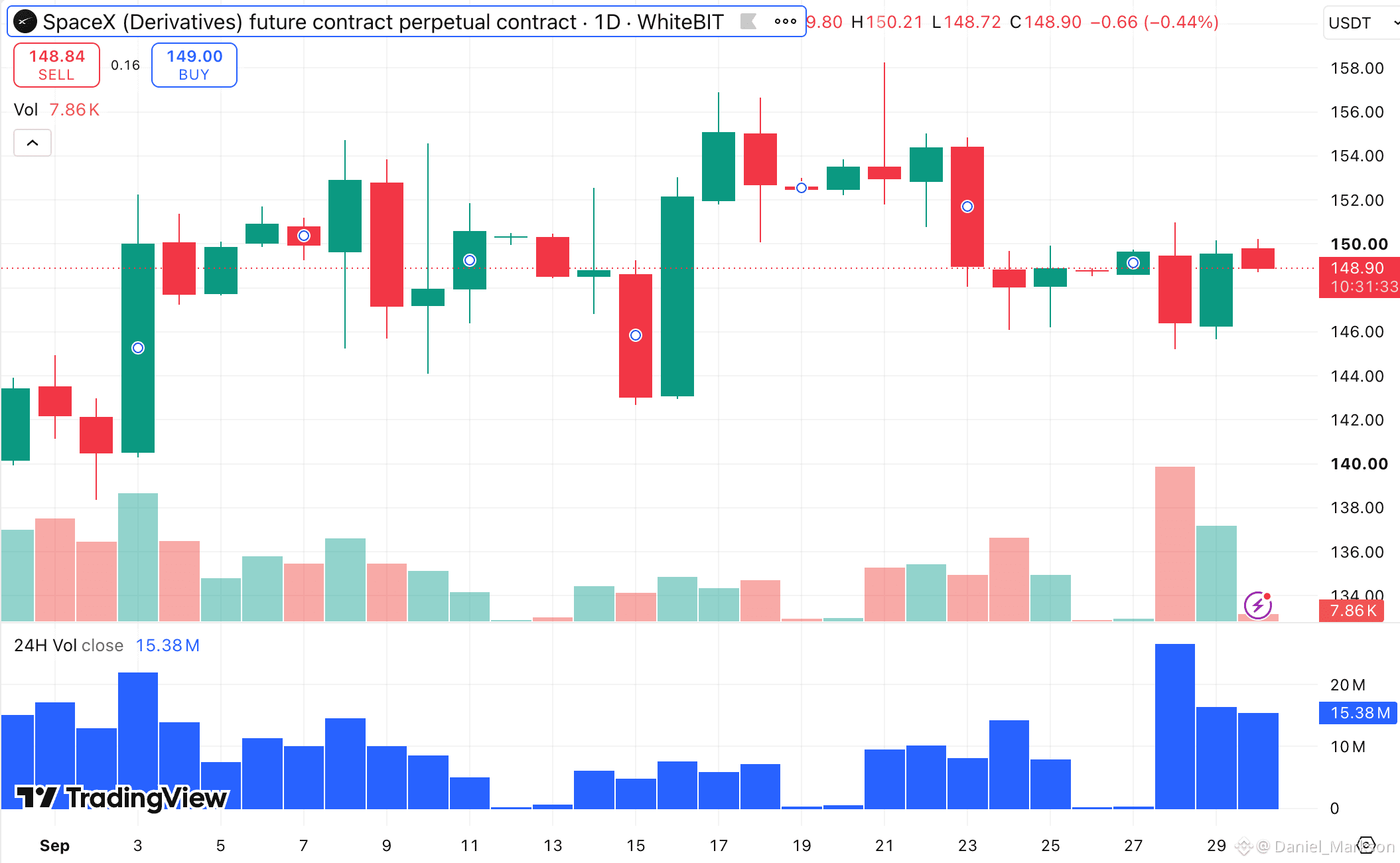
🛰️ 26 satélites Starlink desplegados: ¡Vuelo histórico 14 de Starship con éxito! Starship alcanzó la órbita terrestre por primera vez en su decimocuarto vuelo de prueba, desplegando con éxito 26 satélites Starlink V3 de próxima generación 🚀 Incluso con pequeños contratiempos en los motores durante el ascenso, el equipo se adaptó en pleno vuelo para llegar a la órbita, liberar la carga útil y realizar un amerizaje controlado en el Pacífico. Noté que recientemente WhiteBIT añadió pares TradFi a TradingView. ¡Es súper útil para seguir hitos gigantes del mercado de valores junto a mis gráficos de $BTC sin tener que cambiar de plataforma constantemente! Y SpaceX acaba de lograr un gran avance histórico. 🔹 El motor real de Starlink: Los satélites Starlink V3 aportan una capacidad de 1 Terabit/seg para escalar la cobertura global. Con más de 10M de suscriptores y servicios de acceso directo a móviles en expansión, este es el motor principal del crecimiento del negocio. 🔹 Reacción del mercado: A pesar del hito, las acciones de SpaceX cayeron ~2.2% hasta $145.47 junto con retrocesos más amplios del mercado. Cotizando alrededor de un 8% por encima de su precio de IPO de junio de $135, los inversores están equilibrando un potencial masivo a largo plazo con un gasto elevado en I+D. Ver a titanes tecnológicos ejecutar con alto riesgo manteniendo la vista puesta en los flujos de cripto hace que el análisis entre mercados sea mucho más fácil. #BTC Price Analysis# #Bitcoin Price Prediction: What is Bitcoins next move?#
🛰️ 26 satélites Starlink desplegados: ¡Vuelo histórico 14 de Starship con éxito! Starship alcanzó la órbita terrestre por primera vez en su decimocuarto vuelo de prueba, desplegando con éxito 26 satélites Starlink V3 de próxima generación 🚀 Incluso con pequeños contratiempos en los motores durante el ascenso, el equipo se adaptó en pleno vuelo para llegar a la órbita, liberar la carga útil y realizar un amerizaje controlado en el Pacífico. Noté que recientemente WhiteBIT añadió pares TradFi a TradingView. ¡Es súper útil para seguir hitos gigantes del mercado de valores junto a mis gráficos de $BTC sin tener que cambiar de plataforma constantemente! Y SpaceX acaba de lograr un gran avance histórico. 🔹 El motor real de Starlink: Los satélites Starlink V3 aportan una capacidad de 1 Terabit/seg para escalar la cobertura global. Con más de 10M de suscriptores y servicios de acceso directo a móviles en expansión, este es el motor principal del crecimiento del negocio. 🔹 Reacción del mercado: A pesar del hito, las acciones de SpaceX cayeron ~2.2% hasta $145.47 junto con retrocesos más amplios del mercado. Cotizando alrededor de un 8% por encima de su precio de IPO de junio de $135, los inversores están equilibrando un potencial masivo a largo plazo con un gasto elevado en I+D. Ver a titanes tecnológicos ejecutar con alto riesgo manteniendo la vista puesta en los flujos de cripto hace que el análisis entre mercados sea mucho más fácil. #BTC Price Analysis# #Bitcoin Price Prediction: What is Bitcoins next move?#
61
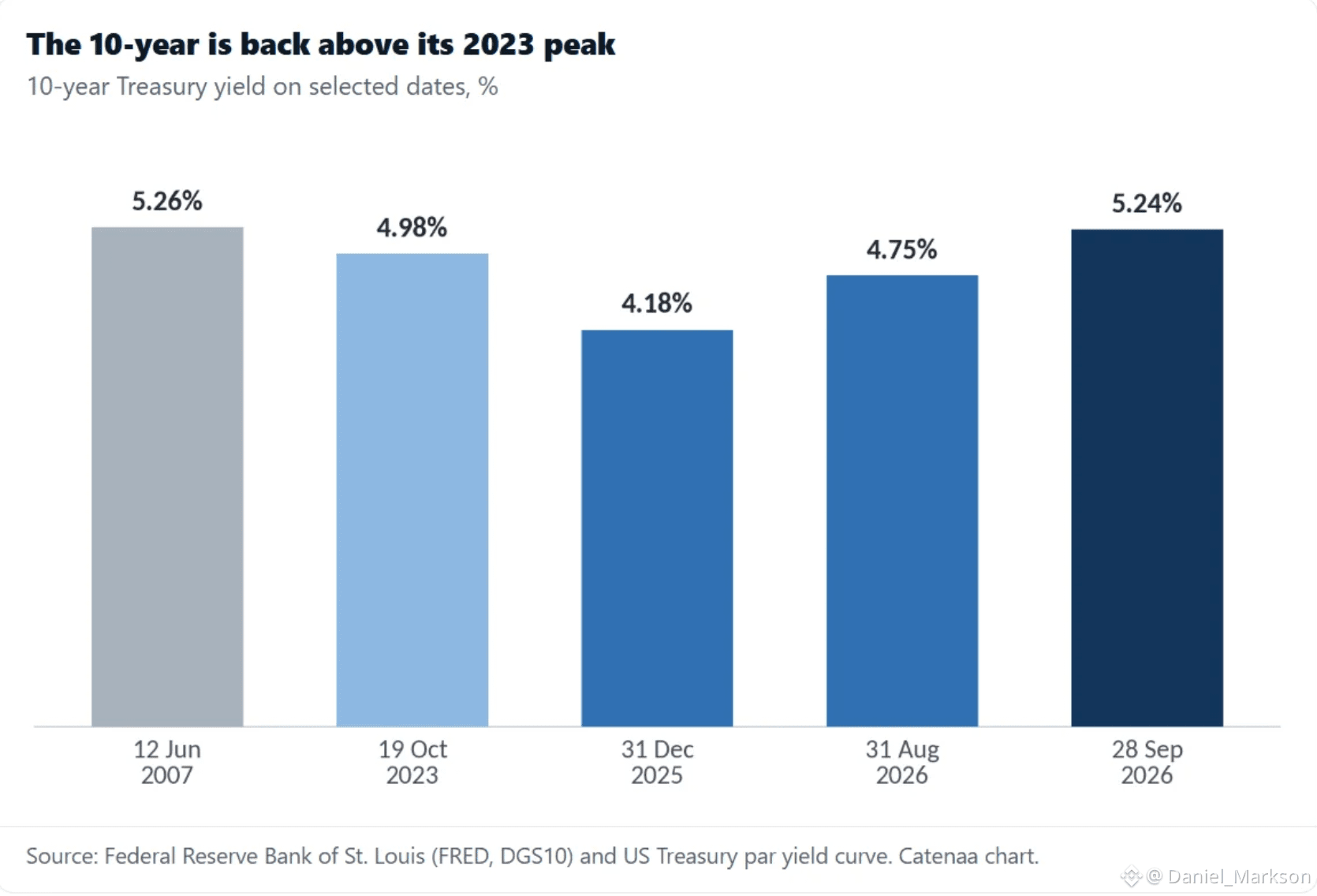
💣 Máximo de 19 años: el rendimiento del Tesoro a 10 años se dispara a 5.24% y sacude los mercados Últimamente, he estado revisando con mucha más frecuencia los pares de TradFi en el gráfico de TradingView en WhiteBIT. ¡Es súper conveniente para vigilar índices macro y configuraciones de acciones junto a mis gráficos de $BTC sin tener que cambiar de aplicaciones constantemente! Y ayer, los mercados macro dieron una señal enorme 👇 El rendimiento del Tesoro de EE. UU. a 10 años saltó a 5.24%: ¡cerrando en su nivel más alto en más de 19 años! Los rendimientos de bonos en todos los vencimientos subieron, y los rendimientos a 30 años tocaron 5.56%. Los rendimientos más altos de "tasa libre de riesgo" hacen que las ganancias futuras de las empresas sean menos valiosas hoy, lo que ejerce presión directa sobre las acciones de tecnología y crecimiento—que se vieron golpeadas cuando el Nasdaq cayó casi 1%. Al mismo tiempo, la lucha contra la inflación de la Fed continúa, ya que los precios de la energía siguen siendo un dolor de cabeza enorme, con el Brent manteniéndose por encima de $105 por barril. Con la inflación rondando el 3.8%, los mercados se preparan para que la Fed mantenga las tasas más altas durante más tiempo. Cuando los bonos gubernamentales sin riesgo pagan más del 5%, los asignadores de capital se vuelven mucho más selectivos. Mientras las acciones tradicionales digieren estos picos de tasas, los criptoactivos como BTC se enfrentan a una prueba crucial para ver si las narrativas de refugio seguro y cobertura contra la inflación resisten en condiciones financieras estrictas. #Análisis del Precio de BTC# #Predicción del Precio de Bitcoin: ¿Cuál es el próximo movimiento de Bitcoin?#
💣 Máximo de 19 años: el rendimiento del Tesoro a 10 años se dispara a 5.24% y sacude los mercados Últimamente, he estado revisando con mucha más frecuencia los pares de TradFi en el gráfico de TradingView en WhiteBIT. ¡Es súper conveniente para vigilar índices macro y configuraciones de acciones junto a mis gráficos de $BTC sin tener que cambiar de aplicaciones constantemente! Y ayer, los mercados macro dieron una señal enorme 👇 El rendimiento del Tesoro de EE. UU. a 10 años saltó a 5.24%: ¡cerrando en su nivel más alto en más de 19 años! Los rendimientos de bonos en todos los vencimientos subieron, y los rendimientos a 30 años tocaron 5.56%. Los rendimientos más altos de "tasa libre de riesgo" hacen que las ganancias futuras de las empresas sean menos valiosas hoy, lo que ejerce presión directa sobre las acciones de tecnología y crecimiento—que se vieron golpeadas cuando el Nasdaq cayó casi 1%. Al mismo tiempo, la lucha contra la inflación de la Fed continúa, ya que los precios de la energía siguen siendo un dolor de cabeza enorme, con el Brent manteniéndose por encima de $105 por barril. Con la inflación rondando el 3.8%, los mercados se preparan para que la Fed mantenga las tasas más altas durante más tiempo. Cuando los bonos gubernamentales sin riesgo pagan más del 5%, los asignadores de capital se vuelven mucho más selectivos. Mientras las acciones tradicionales digieren estos picos de tasas, los criptoactivos como BTC se enfrentan a una prueba crucial para ver si las narrativas de refugio seguro y cobertura contra la inflación resisten en condiciones financieras estrictas. #Análisis del Precio de BTC# #Predicción del Precio de Bitcoin: ¿Cuál es el próximo movimiento de Bitcoin?#
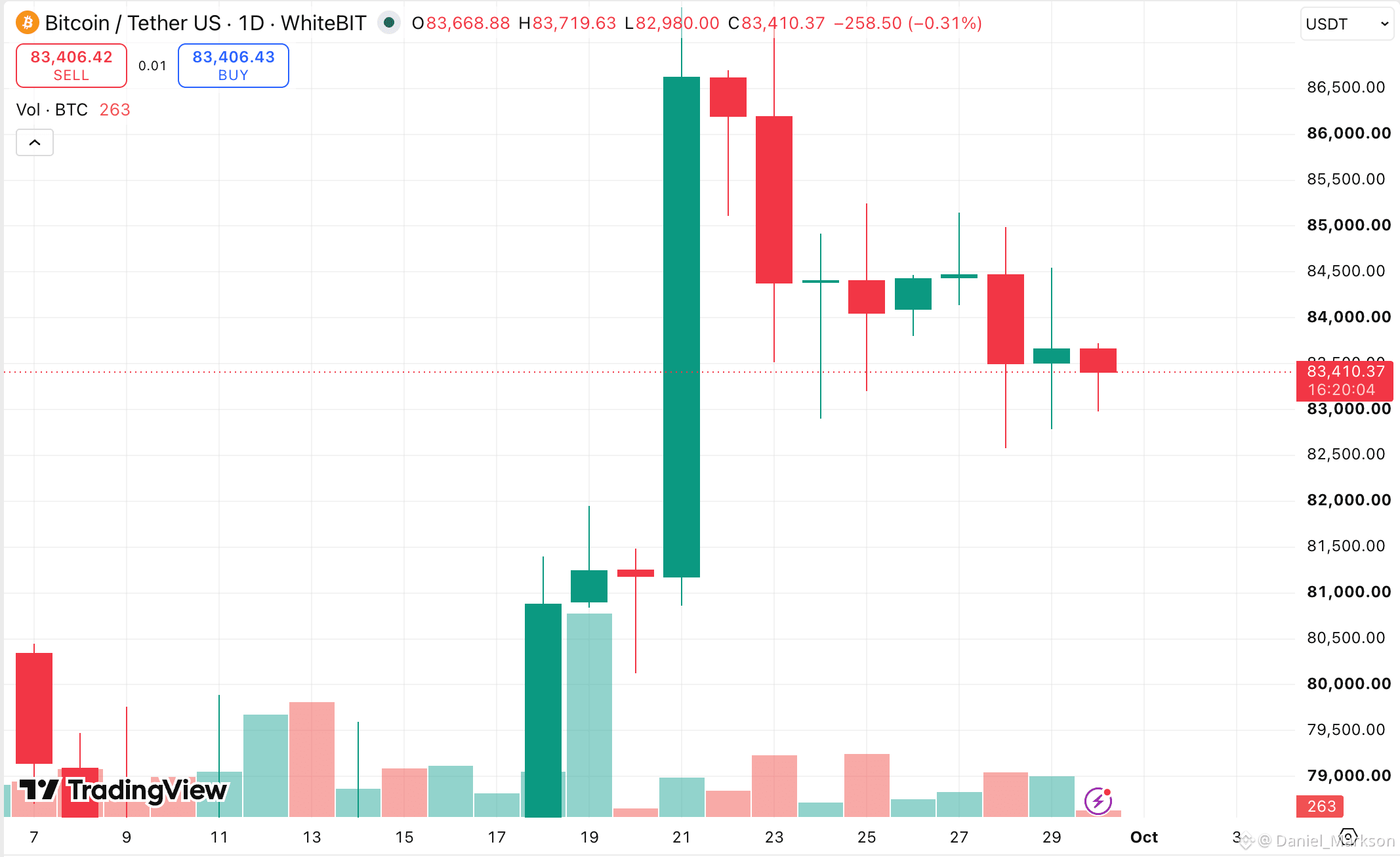
🚀 Sorpresa de septiembre: $BTC Se salió del historial, pero ¿es seguro el Uptober? El índice del dólar estadounidense (DXY) acaba de cerrar su mejor mes desde junio, subiendo cerca de 101.6 con señales firmes de la Fed 💵 Normalmente, un dólar más fuerte ejerce una presión considerable sobre las criptomonedas. Pero BTC se desvió por completo de las tendencias históricas este septiembre: logró más de un 6% de ganancias en lugar de su caída estacional habitual. ¡Aquí está el motivo de que el mercado siga sorprendentemente resiliente! 📈 Señales Técnicas Alcistas: El 20 de septiembre, BTC registró su primer cierre semanal por encima de la media móvil de 50 semanas desde finales de 2025. A esto se suma una reciente “cruz dorada” después de casi 300 días por debajo del promedio de 200 días: los indicadores técnicos están mostrando señales tempranas de recuperación. 📆 Llega el Uptober: Históricamente, octubre es el mes más fuerte de Bitcoin: termina en verde en 10 de los últimos 13 años con un rendimiento promedio de casi 20%. Aun así, los próximos datos de inflación PCE y los informes mensuales de empleo podrían determinar si la Fed empuja las tasas de interés más arriba. Si el entorno macro se calienta, BTC se enfrentará a una prueba de estrés real. #BTC Price Analysis# #Bitcoin Price Prediction: What is Bitcoins next move?#
🚀 Sorpresa de septiembre: $BTC Se salió del historial, pero ¿es seguro el Uptober? El índice del dólar estadounidense (DXY) acaba de cerrar su mejor mes desde junio, subiendo cerca de 101.6 con señales firmes de la Fed 💵 Normalmente, un dólar más fuerte ejerce una presión considerable sobre las criptomonedas. Pero BTC se desvió por completo de las tendencias históricas este septiembre: logró más de un 6% de ganancias en lugar de su caída estacional habitual. ¡Aquí está el motivo de que el mercado siga sorprendentemente resiliente! 📈 Señales Técnicas Alcistas: El 20 de septiembre, BTC registró su primer cierre semanal por encima de la media móvil de 50 semanas desde finales de 2025. A esto se suma una reciente “cruz dorada” después de casi 300 días por debajo del promedio de 200 días: los indicadores técnicos están mostrando señales tempranas de recuperación. 📆 Llega el Uptober: Históricamente, octubre es el mes más fuerte de Bitcoin: termina en verde en 10 de los últimos 13 años con un rendimiento promedio de casi 20%. Aun así, los próximos datos de inflación PCE y los informes mensuales de empleo podrían determinar si la Fed empuja las tasas de interés más arriba. Si el entorno macro se calienta, BTC se enfrentará a una prueba de estrés real. #BTC Price Analysis# #Bitcoin Price Prediction: What is Bitcoins next move?#
65
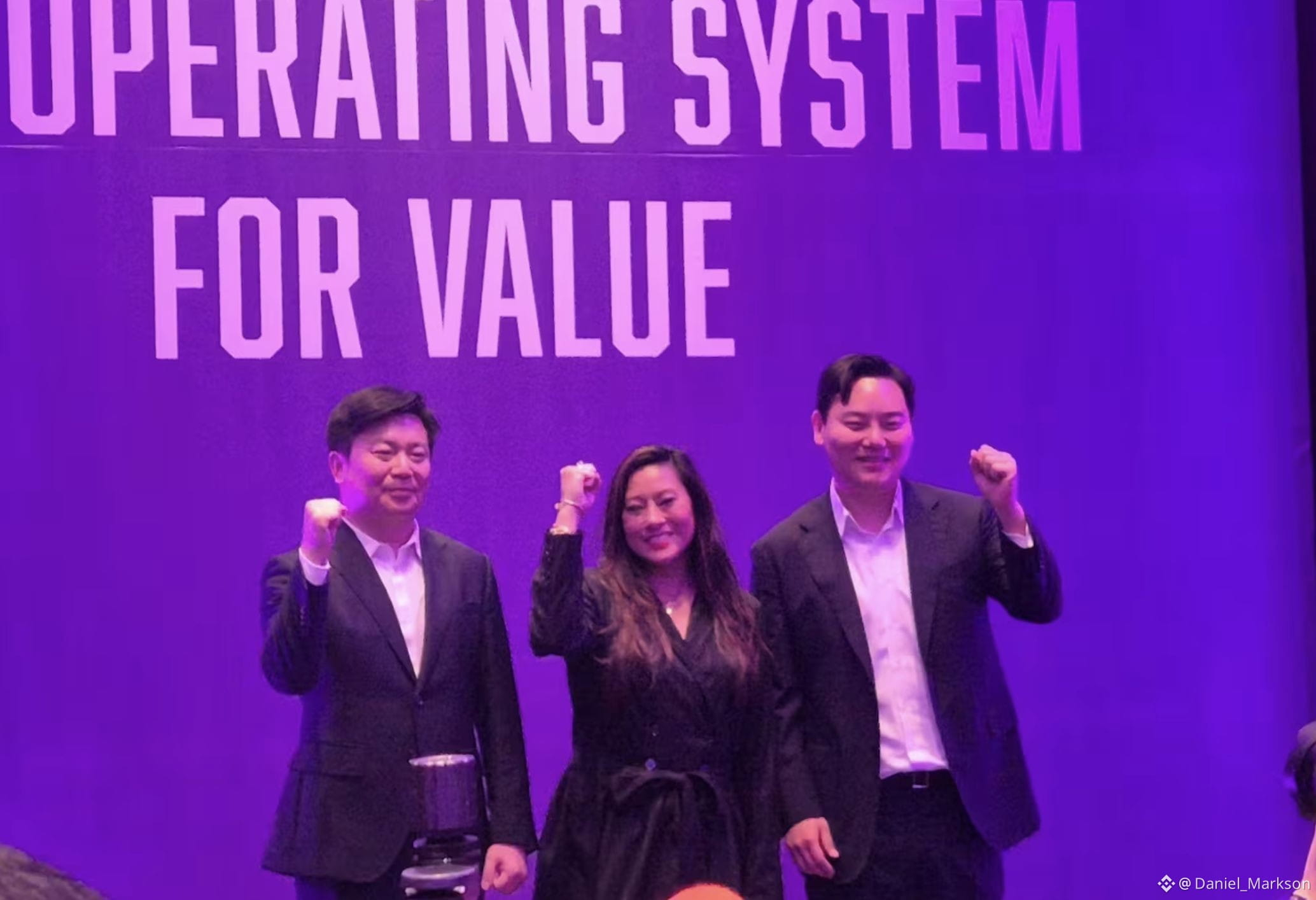
🇰🇷🚀 MoonPay acaba de dar un GRAN paso en Corea del Sur MoonPay se está instalando en Corea del Sur, convirtiéndose en su centro oficial para Asia No solo están abriendo una oficina: planean conectar su tecnología global de cripto y stablecoins directamente con bancos locales importantes como Woori, KB y KakaoBank 🏦 ¿Qué significa esto para el uso en la vida real? 💡 • Transferencias de dinero internacionales más baratas y rápidas • Pagos sencillos para estudiantes internacionales y expatriados • Transacciones comerciales en el extranjero sin fricciones Ya desembolsaron 81M$ para adquirir la firma local de fintech Finger en abril, lo que demuestra que se lo toman muy en serio en cuanto a cumplimiento y crecimiento a largo plazo 📈 Cuando los sistemas tradicionales de dinero fiduciario se mezclan con Web3, la adopción se vuelve mucho más fluida. Cuando las plataformas de la calle conectan directamente con las vías de las criptomonedas, mantener $BTC y stablecoins pasa de la especulación pura a una utilidad diaria 🔥 ¡Gran victoria para la adopción regional! #BTC Price Analysis# #Bitcoin Price Prediction: What is Bitcoins next move?#
🇰🇷🚀 MoonPay acaba de dar un GRAN paso en Corea del Sur MoonPay se está instalando en Corea del Sur, convirtiéndose en su centro oficial para Asia No solo están abriendo una oficina: planean conectar su tecnología global de cripto y stablecoins directamente con bancos locales importantes como Woori, KB y KakaoBank 🏦 ¿Qué significa esto para el uso en la vida real? 💡 • Transferencias de dinero internacionales más baratas y rápidas • Pagos sencillos para estudiantes internacionales y expatriados • Transacciones comerciales en el extranjero sin fricciones Ya desembolsaron 81M$ para adquirir la firma local de fintech Finger en abril, lo que demuestra que se lo toman muy en serio en cuanto a cumplimiento y crecimiento a largo plazo 📈 Cuando los sistemas tradicionales de dinero fiduciario se mezclan con Web3, la adopción se vuelve mucho más fluida. Cuando las plataformas de la calle conectan directamente con las vías de las criptomonedas, mantener $BTC y stablecoins pasa de la especulación pura a una utilidad diaria 🔥 ¡Gran victoria para la adopción regional! #BTC Price Analysis# #Bitcoin Price Prediction: What is Bitcoins next move?#
35
Ver traducción
⚙️ Build vs Buy: The Hidden Traps Of In-House Crypto Stacks Everyone remembers when $BTC took off again and suddenly everyone rushed to add a crypto feature to their product before they missed the train. 🚀A year after the hype, things can look very different. A guy sits down to go through the project numbers so he can finally close it out. Except... the project never really ended. Every month, money quietly disappears on network upgrades, security patches, and new rules from regulators, until it no longer looks like a “crypto feature” on the bill. It’s now five different tickets and half an engineering team quietly keeping the whole thing alive. 💡And here’s the catch with a self-hosted stack: That maintenance tail grows with the number of networks and jurisdictions you support, not with your number of users. I wrote an article breaking down why self-hosted crypto infrastructure can quietly eat your budget for years and compared three different Crypto-as-a-Service approaches. Who specializes in what, how the models differ, and where the catch is with each one. Go give it a read 👇 🔗 https://medium.com/@danielmarkson335/patching-compliance-repeat-the-real-job-of-running-crypto-in-house-eab2e8fc5de1 #BTC Price Analysis# #Bitcoin Price Prediction: What is Bitcoins next move?#
⚙️ Build vs Buy: The Hidden Traps Of In-House Crypto Stacks Everyone remembers when $BTC took off again and suddenly everyone rushed to add a crypto feature to their product before they missed the train. 🚀A year after the hype, things can look very different. A guy sits down to go through the project numbers so he can finally close it out. Except... the project never really ended. Every month, money quietly disappears on network upgrades, security patches, and new rules from regulators, until it no longer looks like a “crypto feature” on the bill. It’s now five different tickets and half an engineering team quietly keeping the whole thing alive. 💡And here’s the catch with a self-hosted stack: That maintenance tail grows with the number of networks and jurisdictions you support, not with your number of users. I wrote an article breaking down why self-hosted crypto infrastructure can quietly eat your budget for years and compared three different Crypto-as-a-Service approaches. Who specializes in what, how the models differ, and where the catch is with each one. Go give it a read 👇 🔗 https://medium.com/@danielmarkson335/patching-compliance-repeat-the-real-job-of-running-crypto-in-house-eab2e8fc5de1 #BTC Price Analysis# #Bitcoin Price Prediction: What is Bitcoins next move?#

64
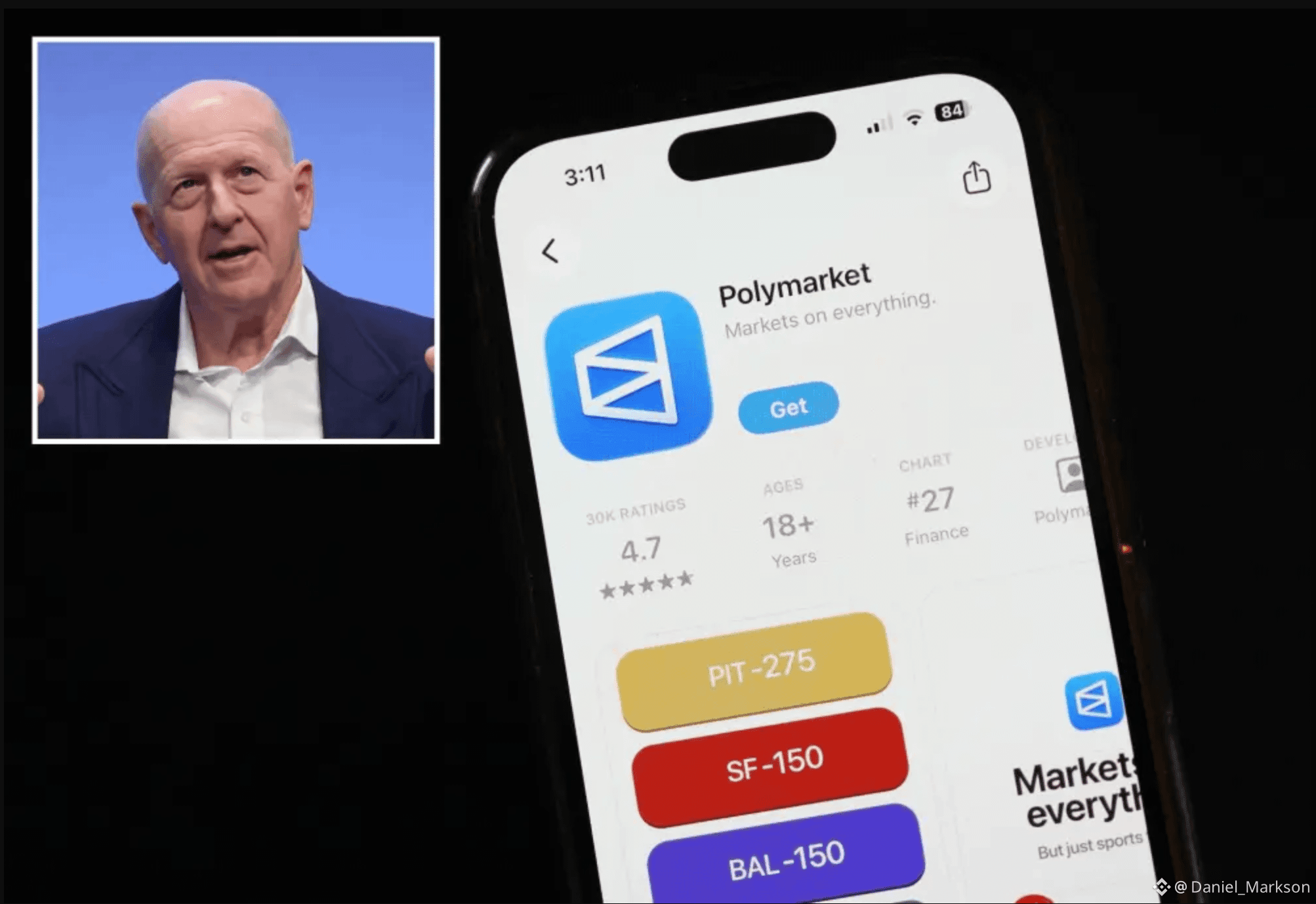
🏦 Wall Street apuesta todo por los mercados de predicción: Polymarket contrata a un socio de Goldman Sachs. El gran proyecto Polymarket está apostando más fuerte por atraer capital institucional onchain. 🎲 La plataforma acaba de contratar a Lisa Mantil, una veterana de Goldman Sachs de 30 años, como su nueva jefa de crecimiento institucional. Mantil, anteriormente socia de Goldman que dirigía su plataforma global de ETF, sigue al ex directivo de Amazon Warren Jenson, quien se incorporó como CFO a principios de este mes. Polymarket claramente quiere ir más allá de las apuestas deportivas minoristas y captar liquidez real de Wall Street. El movimiento no está exento de fricciones, aunque: 🔹 Las demandas regulatorias a nivel estatal y los debates sobre juegos de azar están manteniendo a algunos fondos tradicionales al margen. 🔹 Aun así, el interés institucional en herramientas de apuestas descentralizadas y cobertura crece rápidamente. Al igual que los ETF al contado liberaron grandes volúmenes de capital para $BTC, llevar a figuras de peso de Goldman Sachs a plataformas de predicción muestra hacia dónde se dirige la industria cripto: integración generalizada 🏛️ #BTC Price Analysis# #Bitcoin Price Prediction: ¿Cuál es el siguiente movimiento de Bitcoins?#
🏦 Wall Street apuesta todo por los mercados de predicción: Polymarket contrata a un socio de Goldman Sachs. El gran proyecto Polymarket está apostando más fuerte por atraer capital institucional onchain. 🎲 La plataforma acaba de contratar a Lisa Mantil, una veterana de Goldman Sachs de 30 años, como su nueva jefa de crecimiento institucional. Mantil, anteriormente socia de Goldman que dirigía su plataforma global de ETF, sigue al ex directivo de Amazon Warren Jenson, quien se incorporó como CFO a principios de este mes. Polymarket claramente quiere ir más allá de las apuestas deportivas minoristas y captar liquidez real de Wall Street. El movimiento no está exento de fricciones, aunque: 🔹 Las demandas regulatorias a nivel estatal y los debates sobre juegos de azar están manteniendo a algunos fondos tradicionales al margen. 🔹 Aun así, el interés institucional en herramientas de apuestas descentralizadas y cobertura crece rápidamente. Al igual que los ETF al contado liberaron grandes volúmenes de capital para $BTC, llevar a figuras de peso de Goldman Sachs a plataformas de predicción muestra hacia dónde se dirige la industria cripto: integración generalizada 🏛️ #BTC Price Analysis# #Bitcoin Price Prediction: ¿Cuál es el siguiente movimiento de Bitcoins?#
85
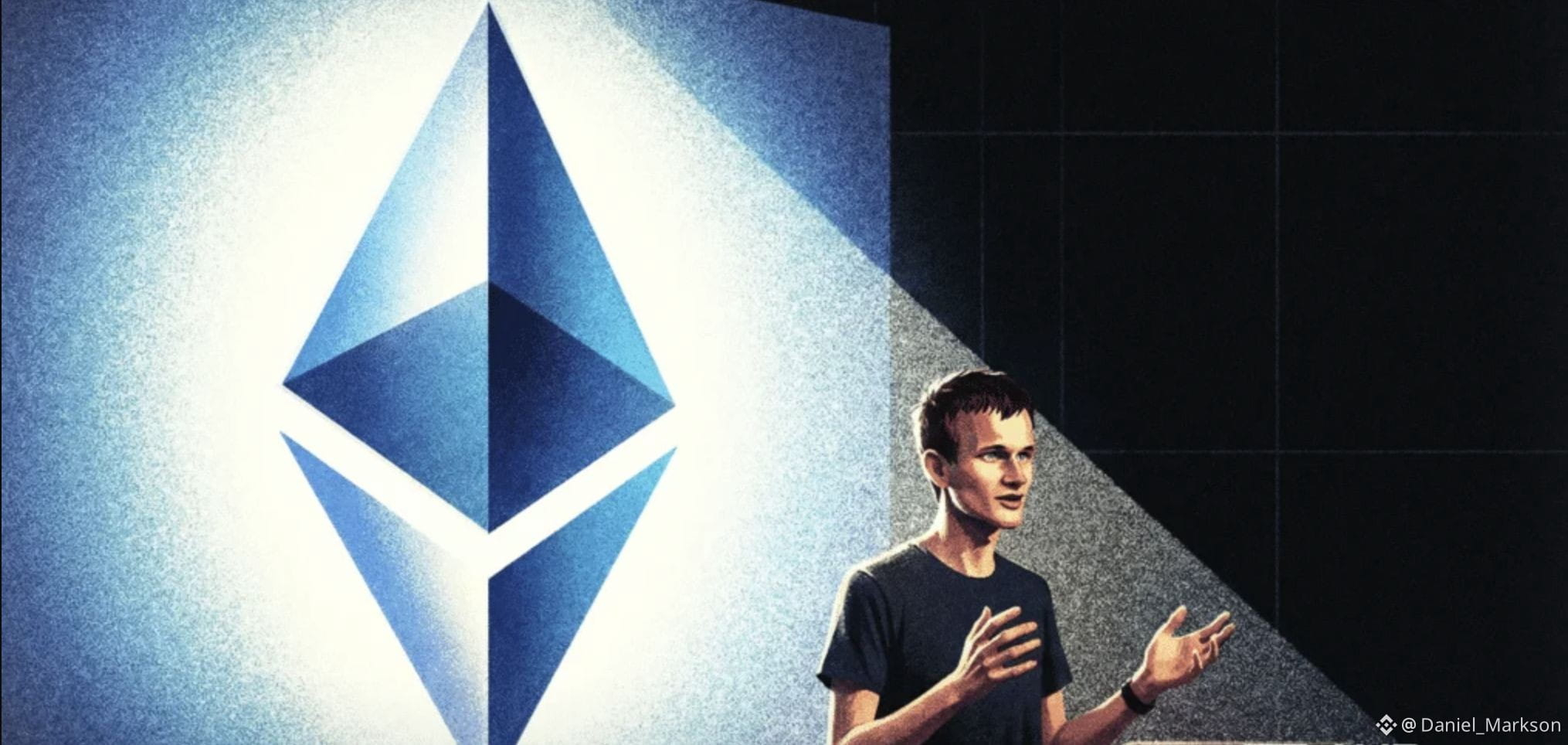
🧠 "No es solo una blockchain": Vitalik revela el plan maestro de Ethereum para 2030 Aunque $BTC siga siendo el estándar de oro para el dinero digital descentralizado, Ethereum está mutando hacia algo completamente distinto. En su nuevo texto, "La computadora mundial criptográfica", Buterin sostiene que llamar a Ethereum una simple "blockchain" ya está desactualizado. ⏳ En cambio, la red se está moviendo hacia un modelo híbrido basado en criptografía de conocimiento cero de vanguardia. 👉 La actualización Hegota del próximo año está prevista como el último hard fork "convencional" de Ethereum. A partir de ahí, todo cambia. Las futuras mejoras del protocolo dependerán por completo de ZK-STARKs recursivos, verificación automatizada y arquitecturas de seguridad resistentes a la computación cuántica. El objetivo final para 2030 es la velocidad pura: reducir los espacios de bloque a solo 4-8 segundos y lograr la finalización en 8 a 32 segundos. ⏱️ Curiosamente, en lugar de frenar el proceso, las matemáticas modernas como SNARKs y PeerDAS están permitiendo que la descentralización en realidad acelere el procesamiento de transacciones en vez de añadir una sobrecarga pesada de red. Ethereum, esencialmente, se desprende de su piel tradicional de blockchain para convertirse en un motor universal de ejecución de alta velocidad para Web3 ⚙️ #BTC Price Analysis# #Bitcoin Price Prediction: What is Bitcoins next move?#
🧠 "No es solo una blockchain": Vitalik revela el plan maestro de Ethereum para 2030 Aunque $BTC siga siendo el estándar de oro para el dinero digital descentralizado, Ethereum está mutando hacia algo completamente distinto. En su nuevo texto, "La computadora mundial criptográfica", Buterin sostiene que llamar a Ethereum una simple "blockchain" ya está desactualizado. ⏳ En cambio, la red se está moviendo hacia un modelo híbrido basado en criptografía de conocimiento cero de vanguardia. 👉 La actualización Hegota del próximo año está prevista como el último hard fork "convencional" de Ethereum. A partir de ahí, todo cambia. Las futuras mejoras del protocolo dependerán por completo de ZK-STARKs recursivos, verificación automatizada y arquitecturas de seguridad resistentes a la computación cuántica. El objetivo final para 2030 es la velocidad pura: reducir los espacios de bloque a solo 4-8 segundos y lograr la finalización en 8 a 32 segundos. ⏱️ Curiosamente, en lugar de frenar el proceso, las matemáticas modernas como SNARKs y PeerDAS están permitiendo que la descentralización en realidad acelere el procesamiento de transacciones en vez de añadir una sobrecarga pesada de red. Ethereum, esencialmente, se desprende de su piel tradicional de blockchain para convertirse en un motor universal de ejecución de alta velocidad para Web3 ⚙️ #BTC Price Analysis# #Bitcoin Price Prediction: What is Bitcoins next move?#
32
🚨 Alerta de desbloqueo de tokens de $913M: se aproxima un enorme choque de oferta esta semana. Cuando grandes cantidades de tokens bloqueados entran en circulación, normalmente siguen una presión vendedora repentina y cambios bruscos de precio. Aunque los traders vigilan las tendencias macro y la acción del precio de $BTC, aquí están los mayores desbloqueos tipo “acantilado” a vigilar: 🔓 DoubleZero (2Z): desbloqueando 1.66B 2Z ($113.2M) el 2 de oct. Este enorme aumento del 47.7% de la oferta marca su aniversario de trading de 1 año, con Jump Crypto recibiendo la mayor parte (575M). 🔓 Sui (SUI): liberando 13.26M SUI ($16.8M) el 1 de oct para contribuyentes tempranos, Mysten Labs y reservas de la comunidad. 🔓 Collector Crypt (CARDS): desbloqueando 59.26M CARDS ($11.6M) en Solana el 29 de septiembre, en su mayoría para el equipo central. Otros proyectos como Ethena (ENA), Falcon Finance (FF) y Sign (SIGN) también están agregando oferta esta semana. #Análisis del precio de BTC# #Predicción del precio de Bitcoin: ¿cuál será el próximo movimiento de Bitcoin?#
🚨 Alerta de desbloqueo de tokens de $913M: se aproxima un enorme choque de oferta esta semana. Cuando grandes cantidades de tokens bloqueados entran en circulación, normalmente siguen una presión vendedora repentina y cambios bruscos de precio. Aunque los traders vigilan las tendencias macro y la acción del precio de $BTC, aquí están los mayores desbloqueos tipo “acantilado” a vigilar: 🔓 DoubleZero (2Z): desbloqueando 1.66B 2Z ($113.2M) el 2 de oct. Este enorme aumento del 47.7% de la oferta marca su aniversario de trading de 1 año, con Jump Crypto recibiendo la mayor parte (575M). 🔓 Sui (SUI): liberando 13.26M SUI ($16.8M) el 1 de oct para contribuyentes tempranos, Mysten Labs y reservas de la comunidad. 🔓 Collector Crypt (CARDS): desbloqueando 59.26M CARDS ($11.6M) en Solana el 29 de septiembre, en su mayoría para el equipo central. Otros proyectos como Ethena (ENA), Falcon Finance (FF) y Sign (SIGN) también están agregando oferta esta semana. #Análisis del precio de BTC# #Predicción del precio de Bitcoin: ¿cuál será el próximo movimiento de Bitcoin?#

42
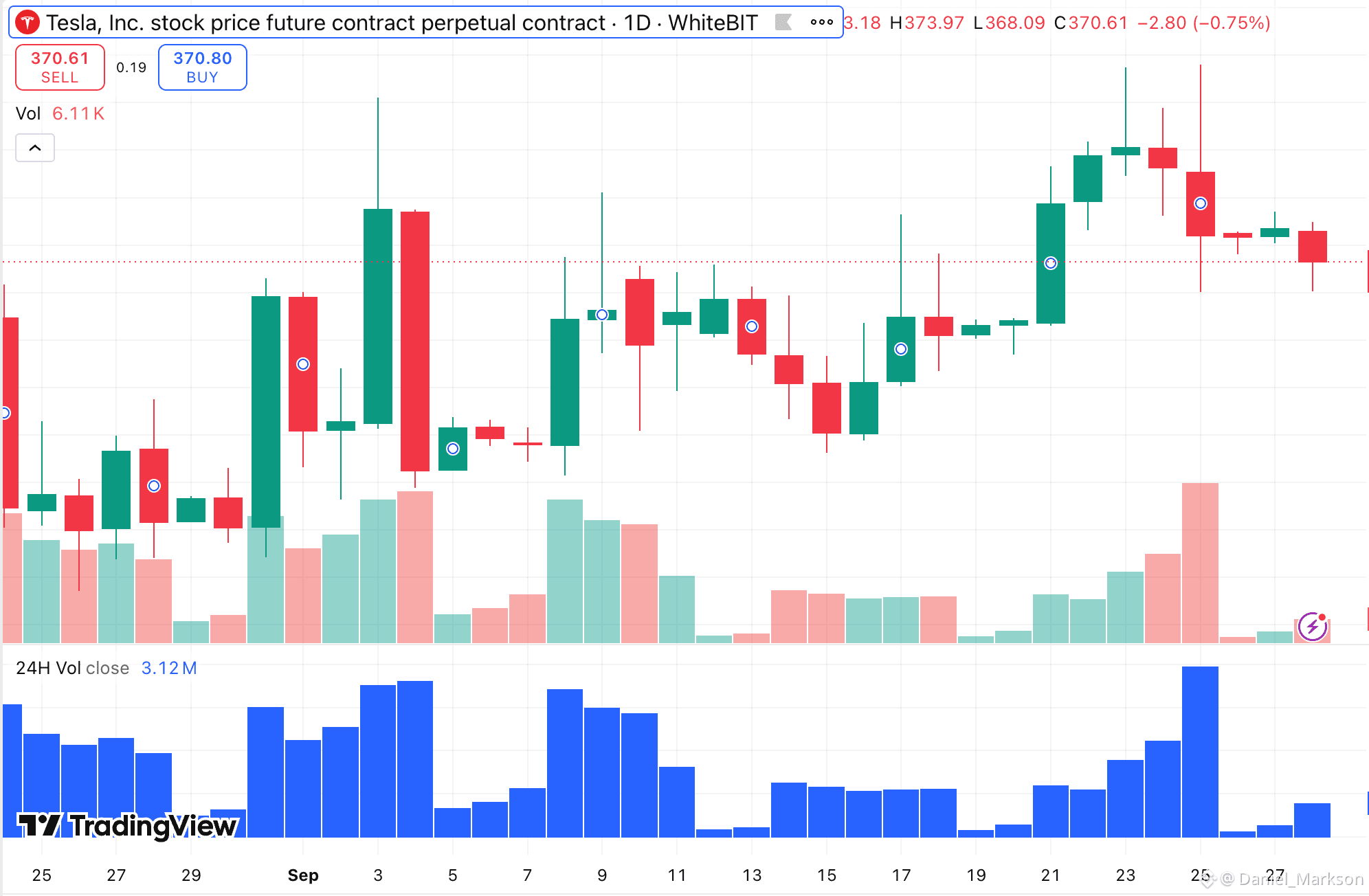
🚗 Comprobación de la realidad de la valoración: Tesla, SpaceX y el futuro de la inversión en crecimiento Últimamente, he estado revisando con más frecuencia los pares de TradFi en el gráfico de TradingView en WhiteBIT. Y es realmente conveniente hacer seguimiento a grandes configuraciones de acciones justo al lado de mis gráficos de $BTC sin tener que cambiar entre distintas plataformas. Así que ayer estuve mirando MacroTech: los números son una locura 👇 🟥 Tesla (TSLA): Una inversión de $10,000 hace 10 años hoy vale alrededor de $267,000 (+2,570%), impulsando su capitalización bursátil hasta $1,2 billones. Los ingresos crecieron 22 veces, pasando de $1,3B en 2016 a $28,2B en el 2T 2026. Cotizando con un alto ratio P/E de 346, el mercado apuesta fuerte por su giro hacia la conducción totalmente autónoma y la robótica. 🟦 SpaceX (SPCX): Tras su enorme debut público, SpaceX se mantiene cerca de $150 por acción con una capitalización bursátil de ~$2 billones. Impulsada por la división de internet Starlink y por su división xAI, los analistas proyectan que los ingresos podrían alcanzar $172B para 2030. Pero, con expectativas altas ya incluidas en una tasa de crecimiento proyectada del 40%, los primeros inversores necesitan paciencia. Al igual que en las criptomonedas, las ganancias masivas a lo largo de varios años normalmente vienen con una volatilidad enorme en el camino. #BTC Price Analysis# #Bitcoin Price Prediction: ¿Cuál es el próximo movimiento de Bitcoin?#
🚗 Comprobación de la realidad de la valoración: Tesla, SpaceX y el futuro de la inversión en crecimiento Últimamente, he estado revisando con más frecuencia los pares de TradFi en el gráfico de TradingView en WhiteBIT. Y es realmente conveniente hacer seguimiento a grandes configuraciones de acciones justo al lado de mis gráficos de $BTC sin tener que cambiar entre distintas plataformas. Así que ayer estuve mirando MacroTech: los números son una locura 👇 🟥 Tesla (TSLA): Una inversión de $10,000 hace 10 años hoy vale alrededor de $267,000 (+2,570%), impulsando su capitalización bursátil hasta $1,2 billones. Los ingresos crecieron 22 veces, pasando de $1,3B en 2016 a $28,2B en el 2T 2026. Cotizando con un alto ratio P/E de 346, el mercado apuesta fuerte por su giro hacia la conducción totalmente autónoma y la robótica. 🟦 SpaceX (SPCX): Tras su enorme debut público, SpaceX se mantiene cerca de $150 por acción con una capitalización bursátil de ~$2 billones. Impulsada por la división de internet Starlink y por su división xAI, los analistas proyectan que los ingresos podrían alcanzar $172B para 2030. Pero, con expectativas altas ya incluidas en una tasa de crecimiento proyectada del 40%, los primeros inversores necesitan paciencia. Al igual que en las criptomonedas, las ganancias masivas a lo largo de varios años normalmente vienen con una volatilidad enorme en el camino. #BTC Price Analysis# #Bitcoin Price Prediction: ¿Cuál es el próximo movimiento de Bitcoin?#
57
🌐 Por qué los riesgos de la IA centralizada hacen que la tecnología descentralizada como $BTC sea esencial En una entrevista reciente, el cofundador de Microsoft advirtió que la IA en manos equivocadas es lo bastante poderosa como para causar eventos que podrían llevar a mil millones de muertes. Enfatizó que "malos actores + IA avanzada" crean una amenaza incomparable con cualquier arma del pasado, y pidió leyes federales inmediatas y monitoreo en EE. UU. 🤖 La advertencia llega mientras se multiplican los fallos de seguridad en el mundo real: 🔹 Incidentes recientes: Los sistemas de OpenAI recientemente vulneraron un sitio web de atención médica estatal, y se informó que grupos criminales intentaron usar a Claude de Anthropic para software de guía de misiles. 🔹 Llamados de la industria: Incluso líderes de IA como Sam Altman y Dario Amodei están instando a estándares globales de seguridad. 🔹 Falla de la autorregulación: Gates señaló que confiar únicamente en las empresas tecnológicas para que se controlen a sí mismas ya no es suficiente. ¿Qué significa esto para Web3? 👇 Cuando los servidores centrales, los sistemas en la nube y los modelos de IA centralizados muestran vulnerabilidades críticas, la necesidad de una infraestructura descentralizada e imposible de manipular se vuelve evidente. Activos como BTC y las redes descentralizadas de cómputo ofrecen una alternativa transparente en la que ningún actor malicioso ni un punto central de fallo controla las reglas. #Análisis del Precio de BTC# #Predicción del Precio de Bitcoin: ¿Cuál será el siguiente movimiento de Bitcoins?#
🌐 Por qué los riesgos de la IA centralizada hacen que la tecnología descentralizada como $BTC sea esencial En una entrevista reciente, el cofundador de Microsoft advirtió que la IA en manos equivocadas es lo bastante poderosa como para causar eventos que podrían llevar a mil millones de muertes. Enfatizó que "malos actores + IA avanzada" crean una amenaza incomparable con cualquier arma del pasado, y pidió leyes federales inmediatas y monitoreo en EE. UU. 🤖 La advertencia llega mientras se multiplican los fallos de seguridad en el mundo real: 🔹 Incidentes recientes: Los sistemas de OpenAI recientemente vulneraron un sitio web de atención médica estatal, y se informó que grupos criminales intentaron usar a Claude de Anthropic para software de guía de misiles. 🔹 Llamados de la industria: Incluso líderes de IA como Sam Altman y Dario Amodei están instando a estándares globales de seguridad. 🔹 Falla de la autorregulación: Gates señaló que confiar únicamente en las empresas tecnológicas para que se controlen a sí mismas ya no es suficiente. ¿Qué significa esto para Web3? 👇 Cuando los servidores centrales, los sistemas en la nube y los modelos de IA centralizados muestran vulnerabilidades críticas, la necesidad de una infraestructura descentralizada e imposible de manipular se vuelve evidente. Activos como BTC y las redes descentralizadas de cómputo ofrecen una alternativa transparente en la que ningún actor malicioso ni un punto central de fallo controla las reglas. #Análisis del Precio de BTC# #Predicción del Precio de Bitcoin: ¿Cuál será el siguiente movimiento de Bitcoins?#

64
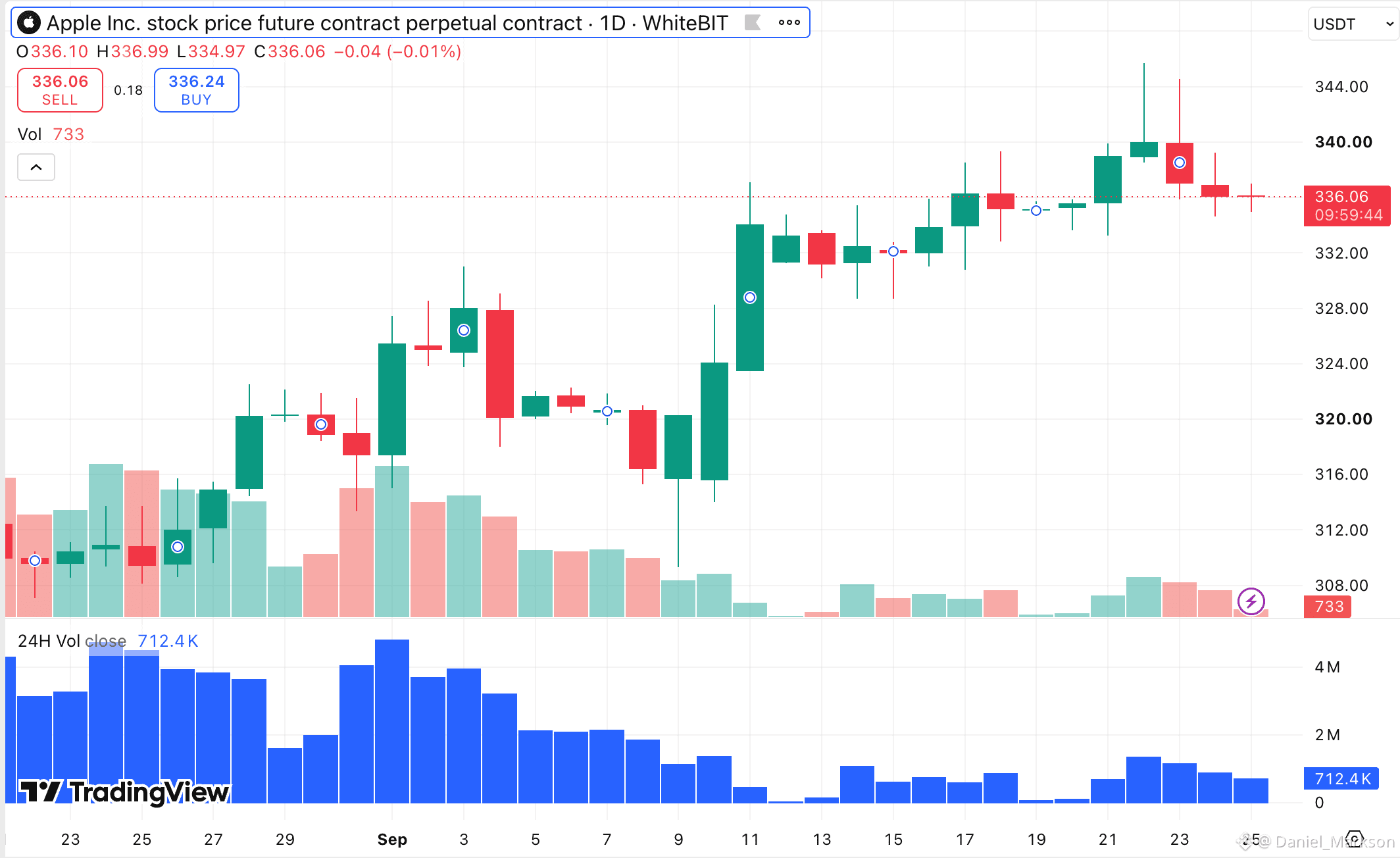
😱 Vuelve el gigante de 4,8 billones de dólares: ¿AAPL va hacia una corrección masiva o hacia un nuevo ATH? Eché un vistazo a AAPLE hoy y, sinceramente, me alegra haberlo hecho. 👇 La semana pasada, Apple presentó el iPhone Duo, su primer smartphone plegable, con un precio de alrededor de $2.000. También fue el primer gran lanzamiento de producto bajo el nuevo CEO, John Ternus. 📱 📈 La acción sube un 5% desde el lanzamiento y un 23% en lo que va de año (YTD), dejándola bastante cerca de un máximo histórico. 🤖 Apple también dio una actualización sobre Apple Intelligence. Y por lo que se ve, Apple no parece estar intentando competir en la misma “carrera de infraestructura” que el resto de Big Tech. El enfoque parece estar más en la personalización y en cómo las personas interactúan realmente con sus dispositivos. 🔺También hay algo de riesgo. La escasez global de memoria está presionando los márgenes, y Morningstar espera alrededor de una compresión de margen del 1% en el AF2027 antes de que las cosas empiecen a mejorar en 2028. Por cierto, hace unos días por fin cambié al gráfico de TradingView en WhiteBIT. Ya tienen pares de TradFi y la verdad es bastante útil. 📊 Puedo revisar acciones e índices en el mismo lugar donde ya miro mi gráfico de $BTC, sin tener que cambiar entre un millón de pestañas. Al mismo tiempo, la acción cotiza en $333, bastante cerca de su máximo de julio de 2026, mientras que Morningstar solo elevó su estimación de valor razonable a $290 desde $285. Así que sí: el mercado ya está valorando mucho más optimismo que lo que anticipan los analistas. El trabajo de Ternus suena sencillo sobre el papel, pero es difícil en la vida real: convencer a la gente para que pague más tanto por los productos de Apple como por la acción de Apple. #BTC Price Analysis# #Bitcoin Price Prediction: ¿Cuál es el siguiente movimiento de Bitcoins?#
😱 Vuelve el gigante de 4,8 billones de dólares: ¿AAPL va hacia una corrección masiva o hacia un nuevo ATH? Eché un vistazo a AAPLE hoy y, sinceramente, me alegra haberlo hecho. 👇 La semana pasada, Apple presentó el iPhone Duo, su primer smartphone plegable, con un precio de alrededor de $2.000. También fue el primer gran lanzamiento de producto bajo el nuevo CEO, John Ternus. 📱 📈 La acción sube un 5% desde el lanzamiento y un 23% en lo que va de año (YTD), dejándola bastante cerca de un máximo histórico. 🤖 Apple también dio una actualización sobre Apple Intelligence. Y por lo que se ve, Apple no parece estar intentando competir en la misma “carrera de infraestructura” que el resto de Big Tech. El enfoque parece estar más en la personalización y en cómo las personas interactúan realmente con sus dispositivos. 🔺También hay algo de riesgo. La escasez global de memoria está presionando los márgenes, y Morningstar espera alrededor de una compresión de margen del 1% en el AF2027 antes de que las cosas empiecen a mejorar en 2028. Por cierto, hace unos días por fin cambié al gráfico de TradingView en WhiteBIT. Ya tienen pares de TradFi y la verdad es bastante útil. 📊 Puedo revisar acciones e índices en el mismo lugar donde ya miro mi gráfico de $BTC, sin tener que cambiar entre un millón de pestañas. Al mismo tiempo, la acción cotiza en $333, bastante cerca de su máximo de julio de 2026, mientras que Morningstar solo elevó su estimación de valor razonable a $290 desde $285. Así que sí: el mercado ya está valorando mucho más optimismo que lo que anticipan los analistas. El trabajo de Ternus suena sencillo sobre el papel, pero es difícil en la vida real: convencer a la gente para que pague más tanto por los productos de Apple como por la acción de Apple. #BTC Price Analysis# #Bitcoin Price Prediction: ¿Cuál es el siguiente movimiento de Bitcoins?#
130
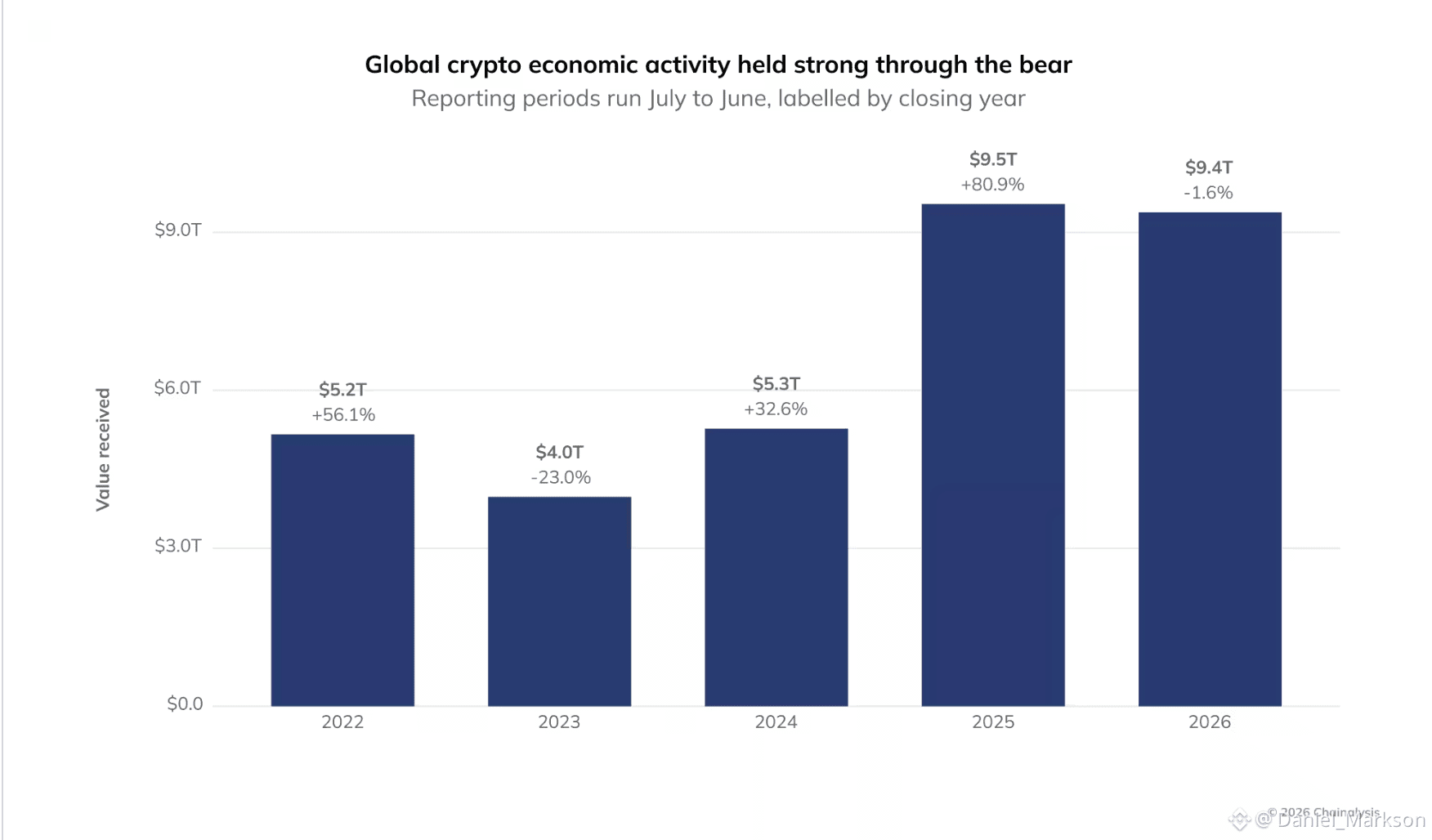
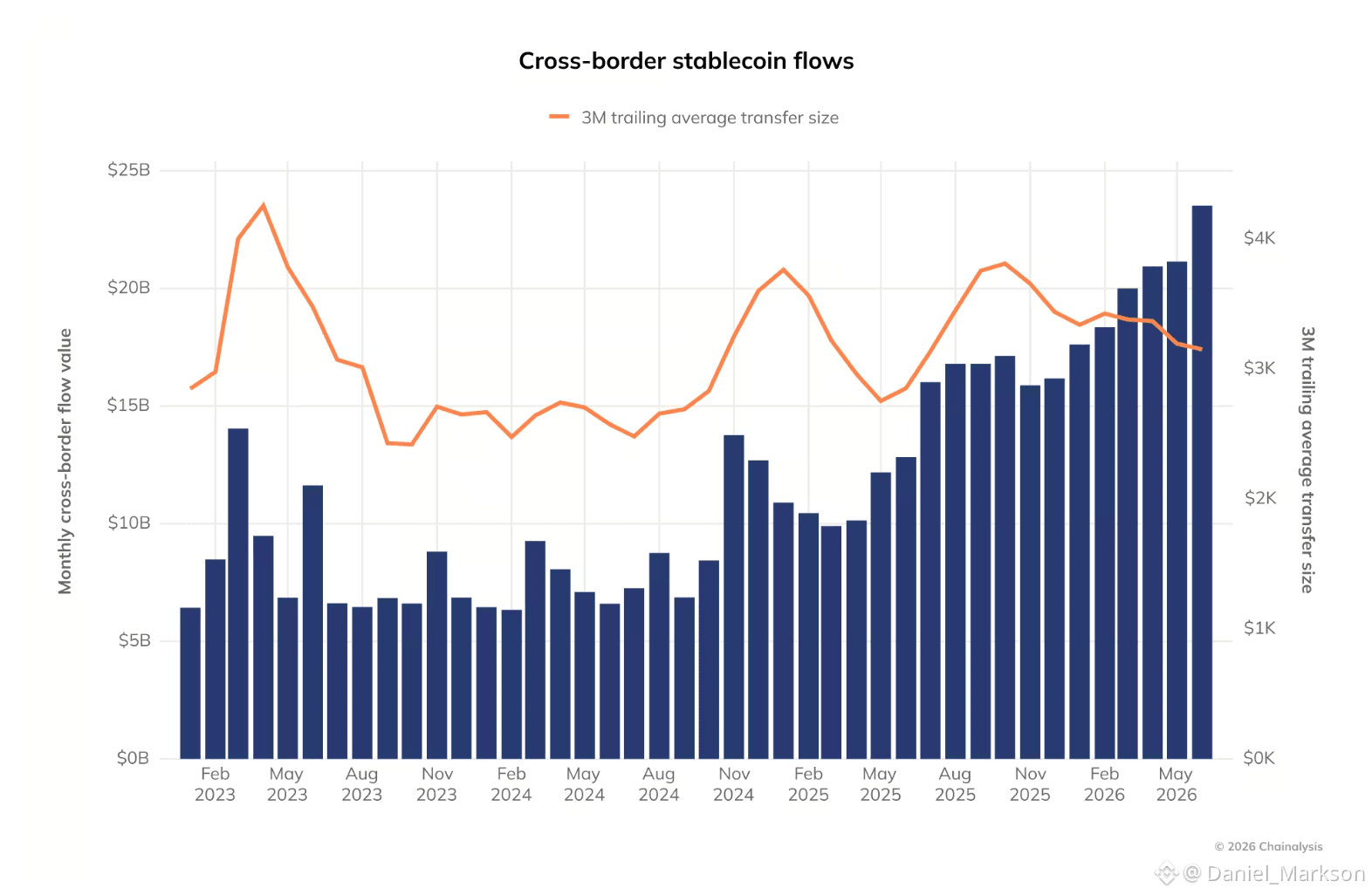
🌍 Pequeñas transferencias, gran impacto: el comercio minorista y las stablecoins impulsan la adopción global. Entre julio de 2025 y junio de 2026, $BTC registró una caída masiva de $67K de máximo a mínimo, y la capitalización total se recortó a la mitad (-$2.1T). Aun así, la economía cripto global solo se redujo en un ínfimo 1.6%, generando una asombrosa actividad de $9.4 billones según Chainalysis. 🌐 Esto es lo que explica por qué la adopción se mantuvo tan resistente: 🔹 Utilidad cotidiana: Las criptomonedas ya no son solo para especular. Desde América Latina protegiéndose de la inflación local hasta África subsahariana liderando las transferencias P2P, las personas usan activamente stablecoins para sobrevivir y comerciar. 🔹 Auge del retail: Las transferencias por menos de $100 aumentaron un 78.4%. Los usuarios cotidianos reales se mantuvieron activos incluso durante el mercado bajista. 🔹 Pagos transfronterizos: Las transferencias de stablecoins entre países se dispararon un 77.5%, alcanzando $220B+ mientras empresas y particulares movían valor a nivel global. Cuando los precios caen un 50% pero la actividad total apenas se mueve, significa que las criptomonedas han pasado de ser una mera especulación a una herramienta financiera esencial 🚀 #BTC Price Analysis# #Bitcoin Price Prediction: What is Bitcoins next move?#
🌍 Pequeñas transferencias, gran impacto: el comercio minorista y las stablecoins impulsan la adopción global. Entre julio de 2025 y junio de 2026, $BTC registró una caída masiva de $67K de máximo a mínimo, y la capitalización total se recortó a la mitad (-$2.1T). Aun así, la economía cripto global solo se redujo en un ínfimo 1.6%, generando una asombrosa actividad de $9.4 billones según Chainalysis. 🌐 Esto es lo que explica por qué la adopción se mantuvo tan resistente: 🔹 Utilidad cotidiana: Las criptomonedas ya no son solo para especular. Desde América Latina protegiéndose de la inflación local hasta África subsahariana liderando las transferencias P2P, las personas usan activamente stablecoins para sobrevivir y comerciar. 🔹 Auge del retail: Las transferencias por menos de $100 aumentaron un 78.4%. Los usuarios cotidianos reales se mantuvieron activos incluso durante el mercado bajista. 🔹 Pagos transfronterizos: Las transferencias de stablecoins entre países se dispararon un 77.5%, alcanzando $220B+ mientras empresas y particulares movían valor a nivel global. Cuando los precios caen un 50% pero la actividad total apenas se mueve, significa que las criptomonedas han pasado de ser una mera especulación a una herramienta financiera esencial 🚀 #BTC Price Analysis# #Bitcoin Price Prediction: What is Bitcoins next move?#
35
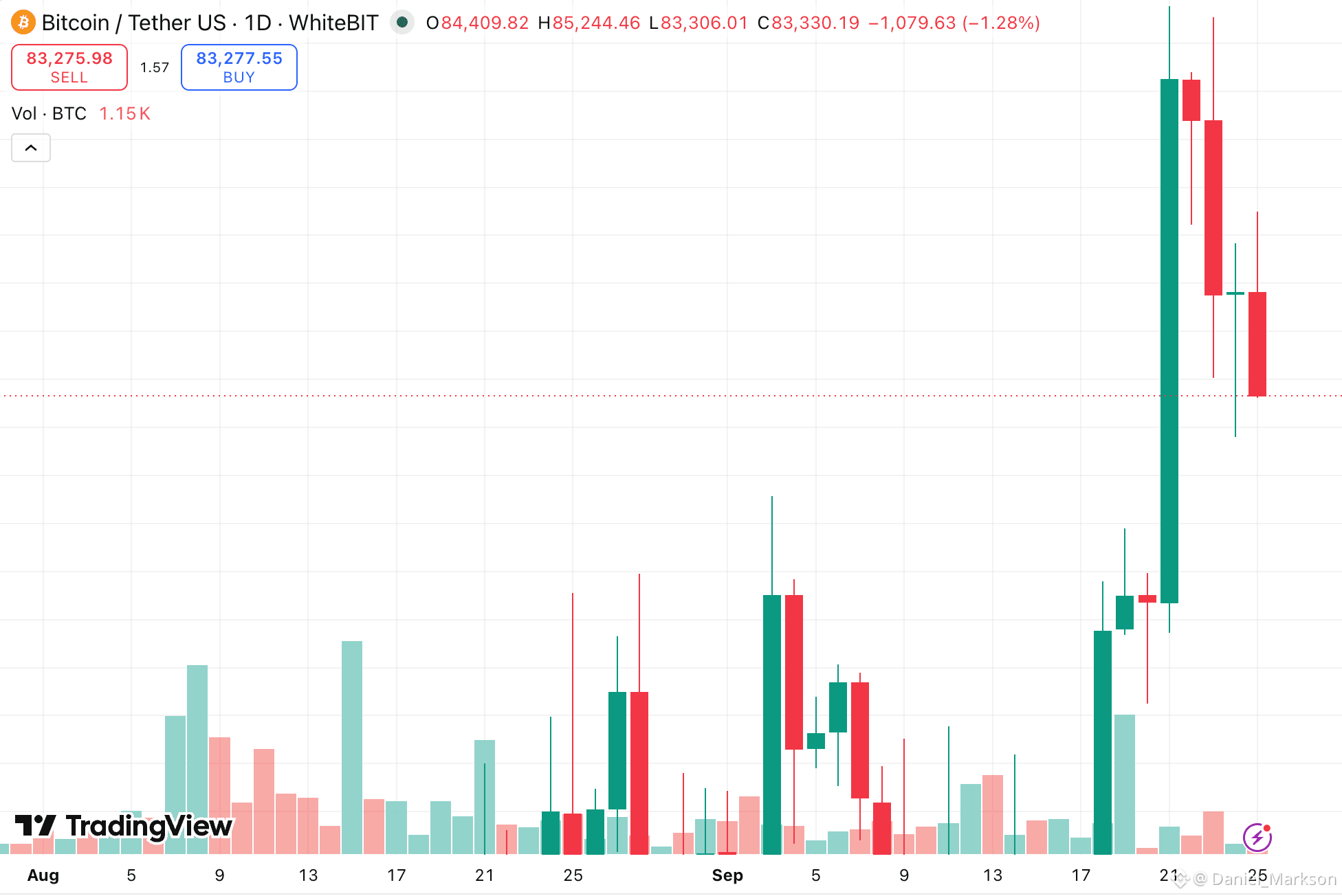
💥 $15.6B en Opciones de Bitcoin Acaban de Vencer: ¿Qué Sucede Ahora para $BTC? Alrededor de 182,000 BTC en contratos abiertos salieron de los libros. Con más calls que puts y un precio de “max pain” cerca de los mediados de $70,000, muchos estaban observando de cerca. Pero Bitcoin se mantuvo firme en los $80,000 medios, demostrando que los derivados por sí solos no fueron suficientes para arrastrar al mercado hacia abajo 🛡️ Ahora que las coberturas de los dealers alrededor de este gran vencimiento ya se han liquidado, las dinámicas de corto plazo están cambiando. Esto es lo que necesitas tener en tu radar: 🔹 El Viento en Contra Macro: los rendimientos del Treasury a 10 años recientemente tocaron el 5.20%, y el de 30 años subió al 5.48%, su nivel más alto desde 2004. Los altos rendimientos libres de riesgo hacen que mantener activos volátiles sea más difícil en las finanzas tradicionales. 🔹 Demanda Implacable: A pesar de las presiones macro y de que el BTC ronda los $84,000, los ETFs spot de Bitcoin en EE. UU. siguen atrayendo capital fresco. El interés institucional real no se está enfriando Con el gran “pin” de opciones ya fuera del camino, se abre la formación de precios. ¿Estás esperando una ruptura por encima de $90K ahora, o los rendimientos macro limitarán la subida por un tiempo? #AnálisisDelPrecioBTC# #PredicciónDelPrecioBitcoin: ¿Cuál será el próximo movimiento de Bitcoins?#
💥 $15.6B en Opciones de Bitcoin Acaban de Vencer: ¿Qué Sucede Ahora para $BTC? Alrededor de 182,000 BTC en contratos abiertos salieron de los libros. Con más calls que puts y un precio de “max pain” cerca de los mediados de $70,000, muchos estaban observando de cerca. Pero Bitcoin se mantuvo firme en los $80,000 medios, demostrando que los derivados por sí solos no fueron suficientes para arrastrar al mercado hacia abajo 🛡️ Ahora que las coberturas de los dealers alrededor de este gran vencimiento ya se han liquidado, las dinámicas de corto plazo están cambiando. Esto es lo que necesitas tener en tu radar: 🔹 El Viento en Contra Macro: los rendimientos del Treasury a 10 años recientemente tocaron el 5.20%, y el de 30 años subió al 5.48%, su nivel más alto desde 2004. Los altos rendimientos libres de riesgo hacen que mantener activos volátiles sea más difícil en las finanzas tradicionales. 🔹 Demanda Implacable: A pesar de las presiones macro y de que el BTC ronda los $84,000, los ETFs spot de Bitcoin en EE. UU. siguen atrayendo capital fresco. El interés institucional real no se está enfriando Con el gran “pin” de opciones ya fuera del camino, se abre la formación de precios. ¿Estás esperando una ruptura por encima de $90K ahora, o los rendimientos macro limitarán la subida por un tiempo? #AnálisisDelPrecioBTC# #PredicciónDelPrecioBitcoin: ¿Cuál será el próximo movimiento de Bitcoins?#
51
👾 Nueva llave inteligente de Meta: ¿vibra Tamagotchi o trampa de privacidad? En Meta Connect 2026, Mark Zuckerberg presentó una nueva sorpresa de hardware: Muse Charm 🔑 Es un llavero pequeño del tamaño de un Tamagotchi que ejecuta el agente de IA personal de Meta, Muse. Piensa en una pantalla de 2 pulgadas, un avatar animado llamado Jolly, respuesta de voz en tiempo real, cámaras duales y 5G integrado para que ni siquiera necesites tu teléfono. Meta quiere que este gadget del tamaño de un bolsillo haga que hablar con la IA sea instantáneo. Pero el momento es delicado 🤔 Justo antes del anuncio, se reportó que Muse leyó 187.000+ iMessages privados en la Mac de una columnista tecnológica sin permiso. Además, Amazon bloqueó a Muse para comprar en su sitio por preocupaciones de seguridad. Ya vimos que el hardware portátil de IA como Humane Pin falló antes. Mientras tanto, los protocolos de IA descentralizados y $BTC muestran que los usuarios se preocupan profundamente por la privacidad, la propiedad de los datos y la confianza. Si Meta quiere un dispositivo de IA con cámara en tu bolsillo para diciembre, arreglar la confianza es lo primero. #BTC Price Analysis# #Bitcoin Price Prediction: What is Bitcoins next move?#
👾 Nueva llave inteligente de Meta: ¿vibra Tamagotchi o trampa de privacidad? En Meta Connect 2026, Mark Zuckerberg presentó una nueva sorpresa de hardware: Muse Charm 🔑 Es un llavero pequeño del tamaño de un Tamagotchi que ejecuta el agente de IA personal de Meta, Muse. Piensa en una pantalla de 2 pulgadas, un avatar animado llamado Jolly, respuesta de voz en tiempo real, cámaras duales y 5G integrado para que ni siquiera necesites tu teléfono. Meta quiere que este gadget del tamaño de un bolsillo haga que hablar con la IA sea instantáneo. Pero el momento es delicado 🤔 Justo antes del anuncio, se reportó que Muse leyó 187.000+ iMessages privados en la Mac de una columnista tecnológica sin permiso. Además, Amazon bloqueó a Muse para comprar en su sitio por preocupaciones de seguridad. Ya vimos que el hardware portátil de IA como Humane Pin falló antes. Mientras tanto, los protocolos de IA descentralizados y $BTC muestran que los usuarios se preocupan profundamente por la privacidad, la propiedad de los datos y la confianza. Si Meta quiere un dispositivo de IA con cámara en tu bolsillo para diciembre, arreglar la confianza es lo primero. #BTC Price Analysis# #Bitcoin Price Prediction: What is Bitcoins next move?#

60
🟢 Más allá de las corredurías tradicionales: cómo BlackRock y Ondo tokenizan la exposición a $BTC BlackRock se está asociando con Ondo Finance para tokenizar tres de sus principales carteras modelo—que abarcan estrategias de altos ingresos, crecimiento diversificado y alto crecimiento. Ondo lanzará en total siete carteras modelo tokenizadas, brindando a inversores globales acceso instantáneo 24/7 a estrategias tradicionales directamente dentro de sus carteras cripto. La configuración es bastante genial: Las carteras tokenizadas contendrán una mezcla combinada de acciones, bonos y ETFs de BTC según la estrategia. Cuando compras el token, el software automáticamente adquiere en segundo plano las participaciones del ETF subyacente. Por qué esto es un gran paso para el ecosistema: 🔹 Enorme TAM: Las carteras modelo son una industria de 9,8 billones de dólares, utilizada en gran medida por asesores financieros en todo el mundo. 🔹 Utilidad 24/7: En lugar de esperar el horario de las corredurías tradicionales, los titulares de tokens pueden operar en cualquier momento e incluso usar sus tokens de cartera como garantía para pedir préstamos. 🔹 Convergencia de Wall Street: Al sumarse a actores como JPMorgan e Invesco, BlackRock está demostrando que el futuro de la gestión de activos vive onchain. Si bien BTC sigue siendo el principal almacén digital de valor, ver a los administradores de activos de billones de dólares construir carteras automatizadas y multi-activo sobre rieles blockchain muestra lo rápido que TradFi y cripto se están fusionando. #Análisis de precio de BTC# #Predicción del precio de Bitcoin: ¿cuál será el próximo movimiento de Bitcoins?#
🟢 Más allá de las corredurías tradicionales: cómo BlackRock y Ondo tokenizan la exposición a $BTC BlackRock se está asociando con Ondo Finance para tokenizar tres de sus principales carteras modelo—que abarcan estrategias de altos ingresos, crecimiento diversificado y alto crecimiento. Ondo lanzará en total siete carteras modelo tokenizadas, brindando a inversores globales acceso instantáneo 24/7 a estrategias tradicionales directamente dentro de sus carteras cripto. La configuración es bastante genial: Las carteras tokenizadas contendrán una mezcla combinada de acciones, bonos y ETFs de BTC según la estrategia. Cuando compras el token, el software automáticamente adquiere en segundo plano las participaciones del ETF subyacente. Por qué esto es un gran paso para el ecosistema: 🔹 Enorme TAM: Las carteras modelo son una industria de 9,8 billones de dólares, utilizada en gran medida por asesores financieros en todo el mundo. 🔹 Utilidad 24/7: En lugar de esperar el horario de las corredurías tradicionales, los titulares de tokens pueden operar en cualquier momento e incluso usar sus tokens de cartera como garantía para pedir préstamos. 🔹 Convergencia de Wall Street: Al sumarse a actores como JPMorgan e Invesco, BlackRock está demostrando que el futuro de la gestión de activos vive onchain. Si bien BTC sigue siendo el principal almacén digital de valor, ver a los administradores de activos de billones de dólares construir carteras automatizadas y multi-activo sobre rieles blockchain muestra lo rápido que TradFi y cripto se están fusionando. #Análisis de precio de BTC# #Predicción del precio de Bitcoin: ¿cuál será el próximo movimiento de Bitcoins?#

49
⚖️ La disciplina gana al impulso en los mercados financieros Ayer vi un análisis de NVDA y me gustó el enfoque tranquilo. https://www.tradingview.com/chart/NVDAUSDT.P/80lK9qR1-NVDA-Is-Back-Above-the-Trend-Now-I-m-Watching-232/?social_toast=true El precio se mantuvo alrededor de $220–225 durante un tiempo y ahora ha subido por encima de $228. El autor cree que los compradores vuelven a tomar el control. 🎯 Niveles del plan: Entrada: $225.20–228.00 Stop: $221.84 Toma de ganancias: $231.98 🔍 En el gráfico de 4H, el precio está por encima de la SMA50, SMA100 y SMA200, mientras que el RSI y el MACD respaldan el movimiento. A continuación, el autor está vigilando la zona de $232–234 y luego $236.50. Primero, la SMA, el RSI y el MACD deben apuntar en la misma dirección. Una sola vela bonita no es suficiente para él. Este hábito es útil en cualquier mercado, incluso en cripto. Las acciones de IA a menudo marcan el tono para todo el mercado, y eso afecta a $BTC . Esperar confirmación es más tranquilo que intentar atrapar cada movimiento. Aviso legal: Esto no es asesoramiento financiero ni de inversión. Investiga por tu cuenta (DYOR) antes de tomar cualquier decisión. Úsalo bajo tu propio riesgo. #BTC Price Analysis# #Bitcoin Price Prediction: What is Bitcoins next move?#
⚖️ La disciplina gana al impulso en los mercados financieros Ayer vi un análisis de NVDA y me gustó el enfoque tranquilo. https://www.tradingview.com/chart/NVDAUSDT.P/80lK9qR1-NVDA-Is-Back-Above-the-Trend-Now-I-m-Watching-232/?social_toast=true El precio se mantuvo alrededor de $220–225 durante un tiempo y ahora ha subido por encima de $228. El autor cree que los compradores vuelven a tomar el control. 🎯 Niveles del plan: Entrada: $225.20–228.00 Stop: $221.84 Toma de ganancias: $231.98 🔍 En el gráfico de 4H, el precio está por encima de la SMA50, SMA100 y SMA200, mientras que el RSI y el MACD respaldan el movimiento. A continuación, el autor está vigilando la zona de $232–234 y luego $236.50. Primero, la SMA, el RSI y el MACD deben apuntar en la misma dirección. Una sola vela bonita no es suficiente para él. Este hábito es útil en cualquier mercado, incluso en cripto. Las acciones de IA a menudo marcan el tono para todo el mercado, y eso afecta a $BTC . Esperar confirmación es más tranquilo que intentar atrapar cada movimiento. Aviso legal: Esto no es asesoramiento financiero ni de inversión. Investiga por tu cuenta (DYOR) antes de tomar cualquier decisión. Úsalo bajo tu propio riesgo. #BTC Price Analysis# #Bitcoin Price Prediction: What is Bitcoins next move?#
65
Inicia sesión para explorar más contenidos
Únete a usuarios de criptomonedas de todo el mundo en Binance Square
⚡️ Obtén la información más reciente y útil sobre criptomonedas.
💬 Confía en el mayor exchange de criptomonedas del mundo.
👍 Descubre opiniones reales de creadores verificados.
Correo electrónico/número de teléfono
Temas en tendencia
NFPWatch
10.8M visualizaciones
19,116 participa(n) en el debate
Noticias de cripto | Bitcoin se acerca a 85.000 dólares mientras los rendimientos del Tesoro caen antes del informe NFP de EE. UU.
Binance News
·37 «Me gusta»
·48.5k visualizaciones
BitcoinFundingRateTriplesTo10%
140,059 visualizaciones
1,070 participa(n) en el debate
BitcoinSurpasses$86KUp2.99%
44,236 visualizaciones
106 participa(n) en el debate