

As of 28 November 2026, Binance reports that it is operating normally: its announcement of 26 November says the withdrawal suspension from the October security incident has been fully lifted, and deposits and trading are being processed as usual. Binance states that it holds user assets at least 1:1, which any user can verify independently through Proof of Reserves, and it maintains the SAFU fund as an emergency reserve.
Is Binance Safe to Use Right Now?
The short answer, based on what can be checked: services are back, affected balances were covered by the company, and the reserve data is published for users to verify. No exchange is free of risk, so I do not ask anyone to take this on trust. The sections below show what happened, what protects users, and how to check your own balance.
What Happened — and What Was Affected?
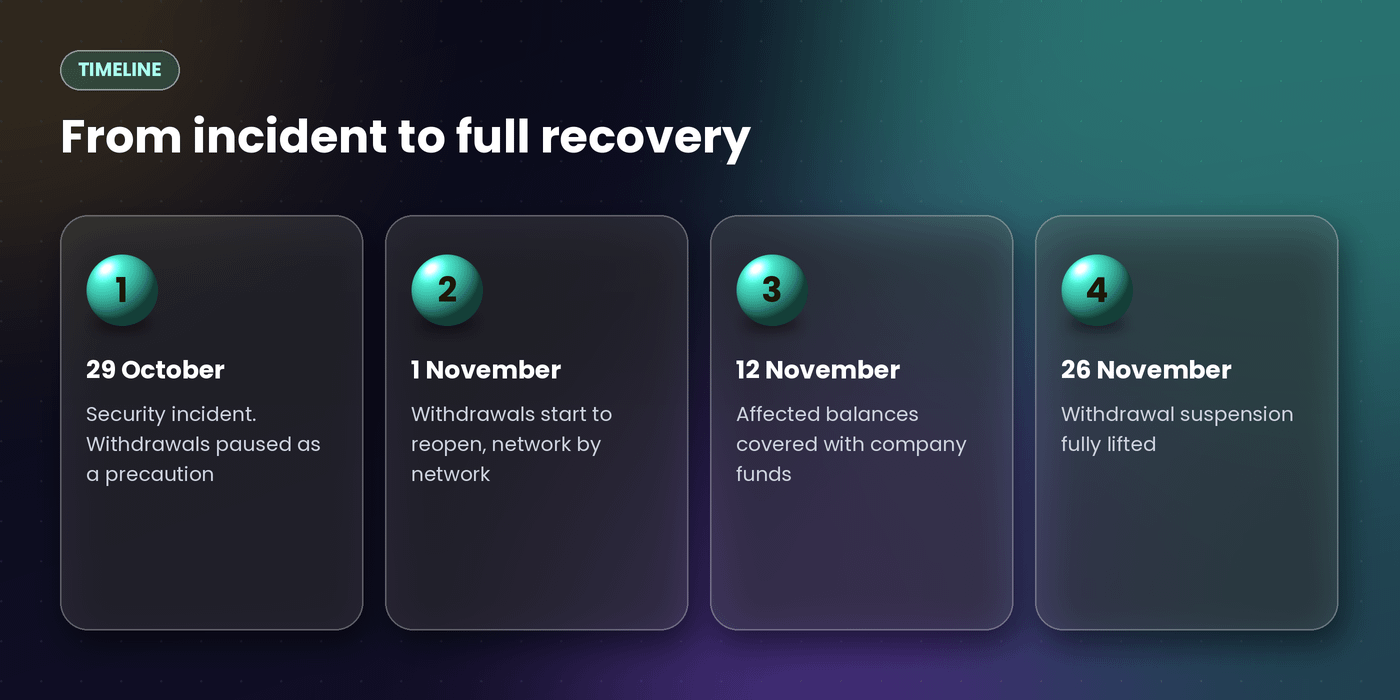
On 29 October 2026 Binance disclosed a security incident involving its hot wallets, with an estimated 6.3 billion dollars in crypto assets taken. The FBI publicly attributed the attack to a North Korea-linked group. As a precaution, Binance paused withdrawals while it investigated and tested the affected services. A small number of networks may still be paused from time to time for unrelated maintenance, which Binance describes as standard practice.
How Swiftly Binance Took Action to Help Users
Withdrawals began to reopen on 1 November, starting with the Bitcoin network, and the remaining networks followed in phases. On 12 November Binance announced that all affected balances had been covered, using more than 6.34 billion dollars of company funds from its treasury, SAFU and its futures insurance fund, and not customer money. On 26 November it declared the recovery work complete. During this period Binance also published regular updates and warned users about impersonation scams offering fake help with withdrawals or compensation.
How Are User Funds Protected on Binance?
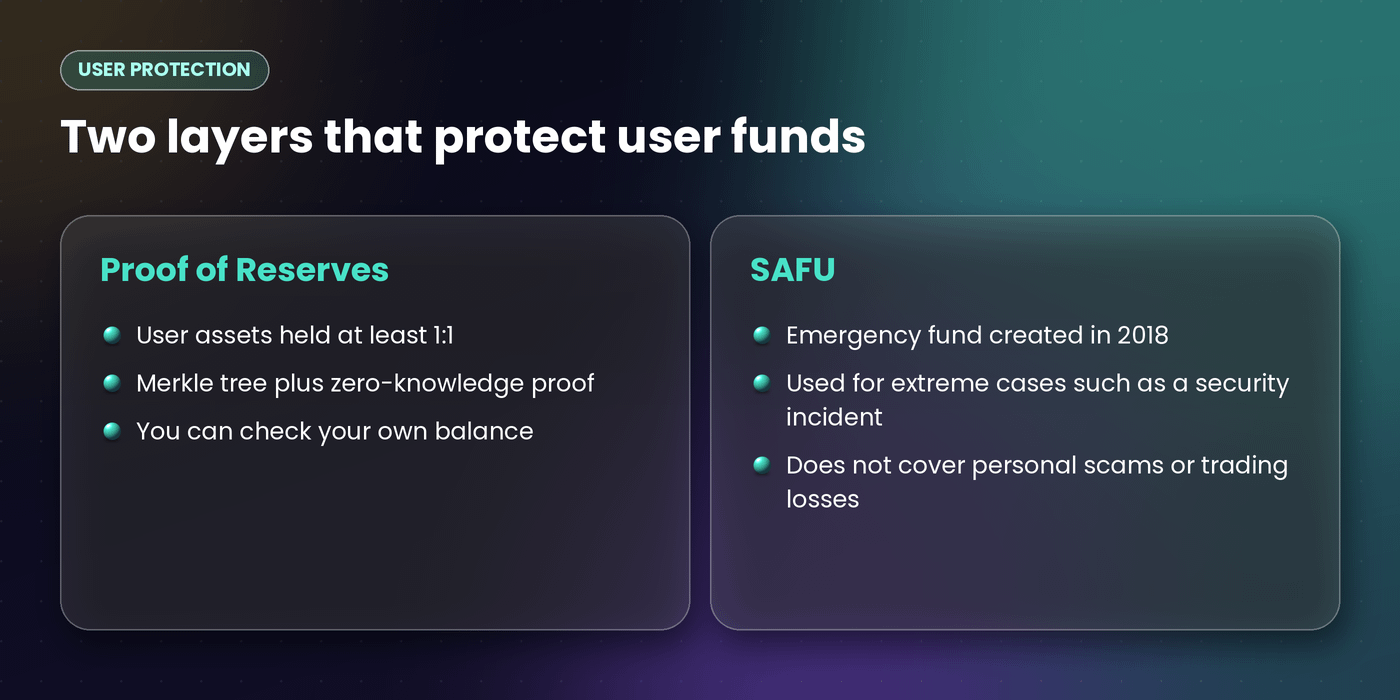
Two layers matter most. The first is the 1:1 reserve commitment, shown through Proof of Reserves with a Merkle tree and a zero-knowledge proof. A new reserve snapshot was taken on 12 November covering 198 tokens. The second is SAFU, the emergency fund for extreme cases.
What Is SAFU and When Does It Apply?
SAFU means Secure Asset Fund for Users. Binance created it in 2018 as an emergency reserve. It applies to extreme events on the platform side, such as a security incident. It does not cover losses from personal scams, phishing, or trading decisions. Part of SAFU was used in the recovery, and Binance has said it plans to rebuild the fund.
How Can I Verify My Own Balance Is Backed?
Log in on the official Binance website, open Wallet, then Overview, then Verification, and select the snapshot date. You will find your Record ID and Merkle leaf, which confirm that your balance was included. The result reflects the snapshot date, not your live balance.
Step-by-step guide: How to Verify Your Account Balance on Binance
Official page: Proof of Reserves
What Should I Do to Secure My Own Account?
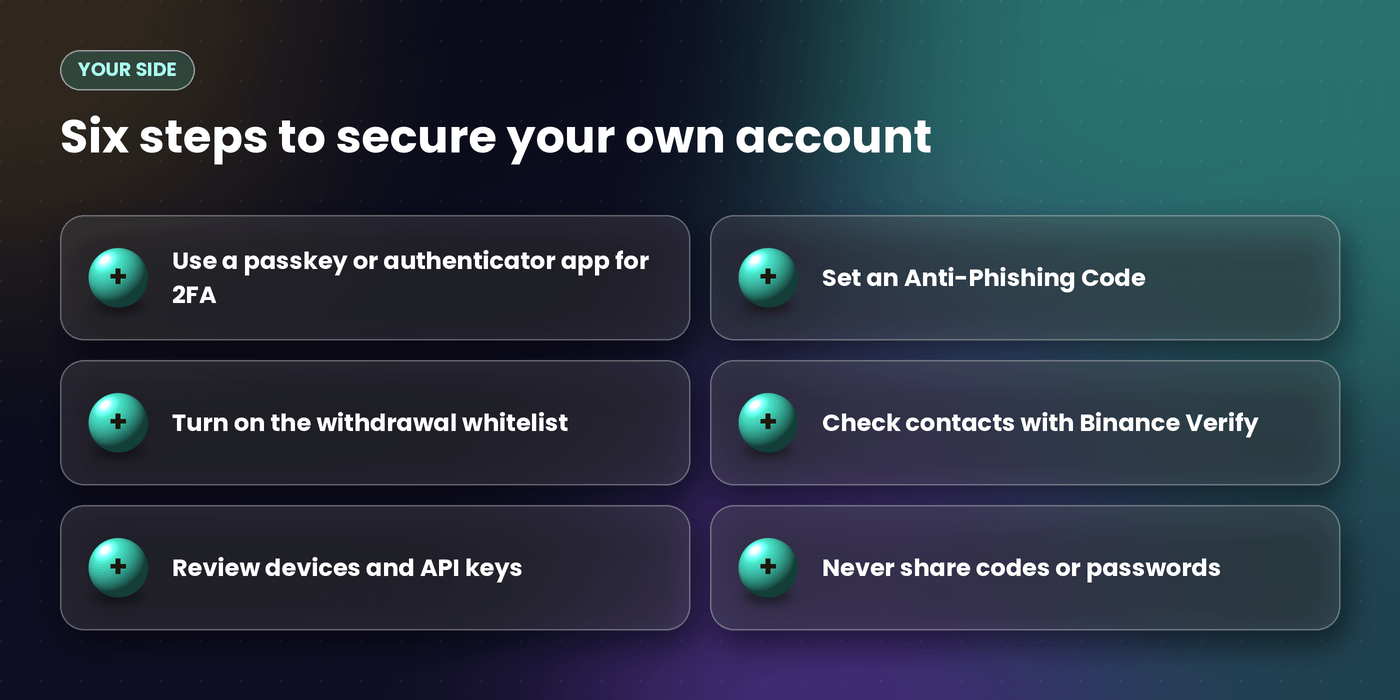
Platform security and account security are two different things. Most losses I see in the community come from phishing, not from the exchange.
Use a passkey or an authenticator app for 2FA
Set an Anti-Phishing Code so you can recognise genuine Binance emails
Turn on the withdrawal whitelist
Check any contact or link with Binance Verify before you trust it
Review your logged-in devices and API keys
Never share codes or passwords, and never send crypto to anyone who offers to help with recovery
Frequently Asked Questions
Are withdrawals working on Binance now? Binance announced on 26 November 2026 that the suspension from the October incident has been fully lifted.
Did users lose funds in the incident? Binance says it covered the affected balances with company funds.
Can I check this myself? Yes. Use the Verification page in your wallet and the Proof of Reserves page.
This article is for information only and is not financial advice. Always check the latest status on official Binance channels.