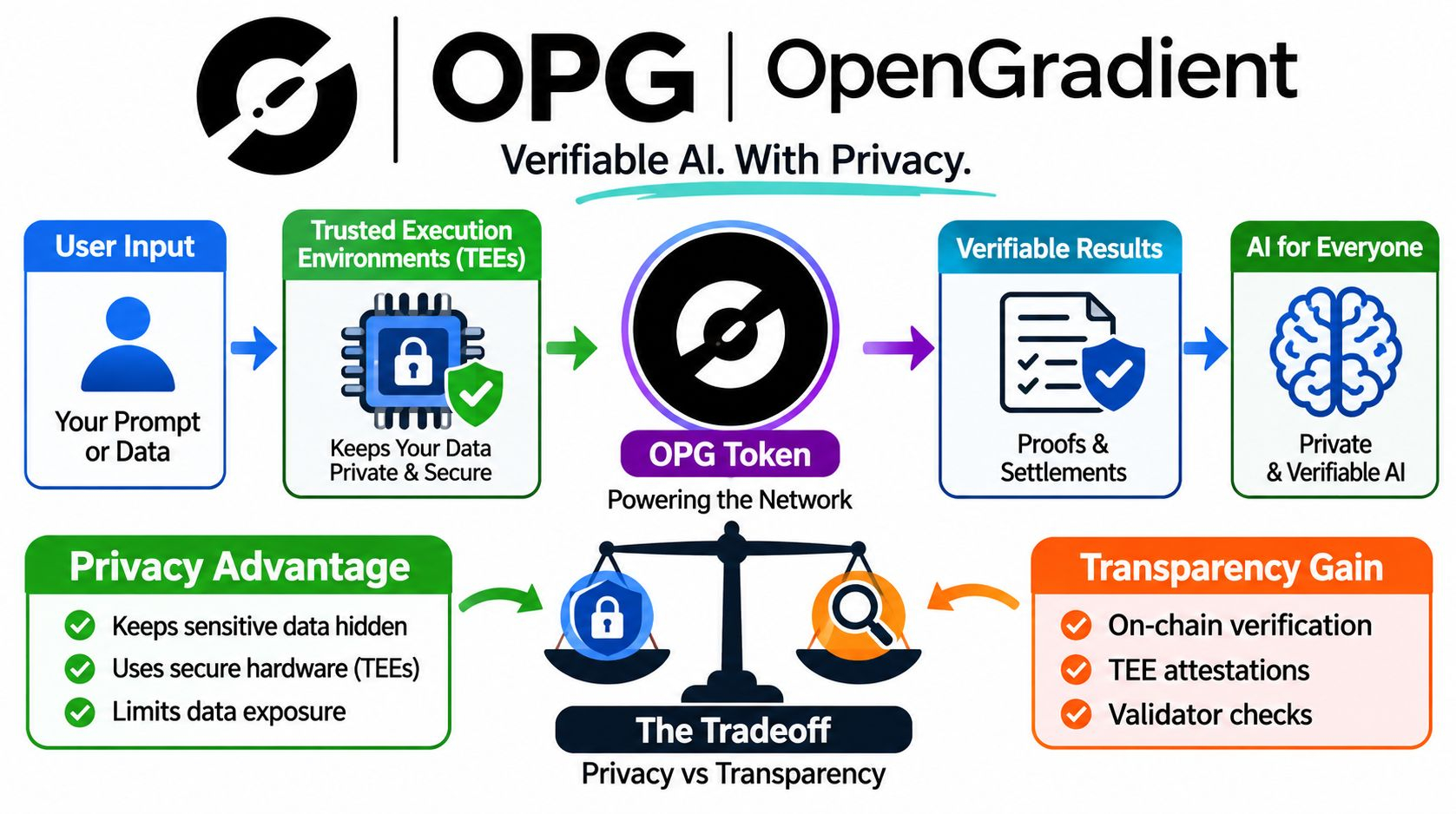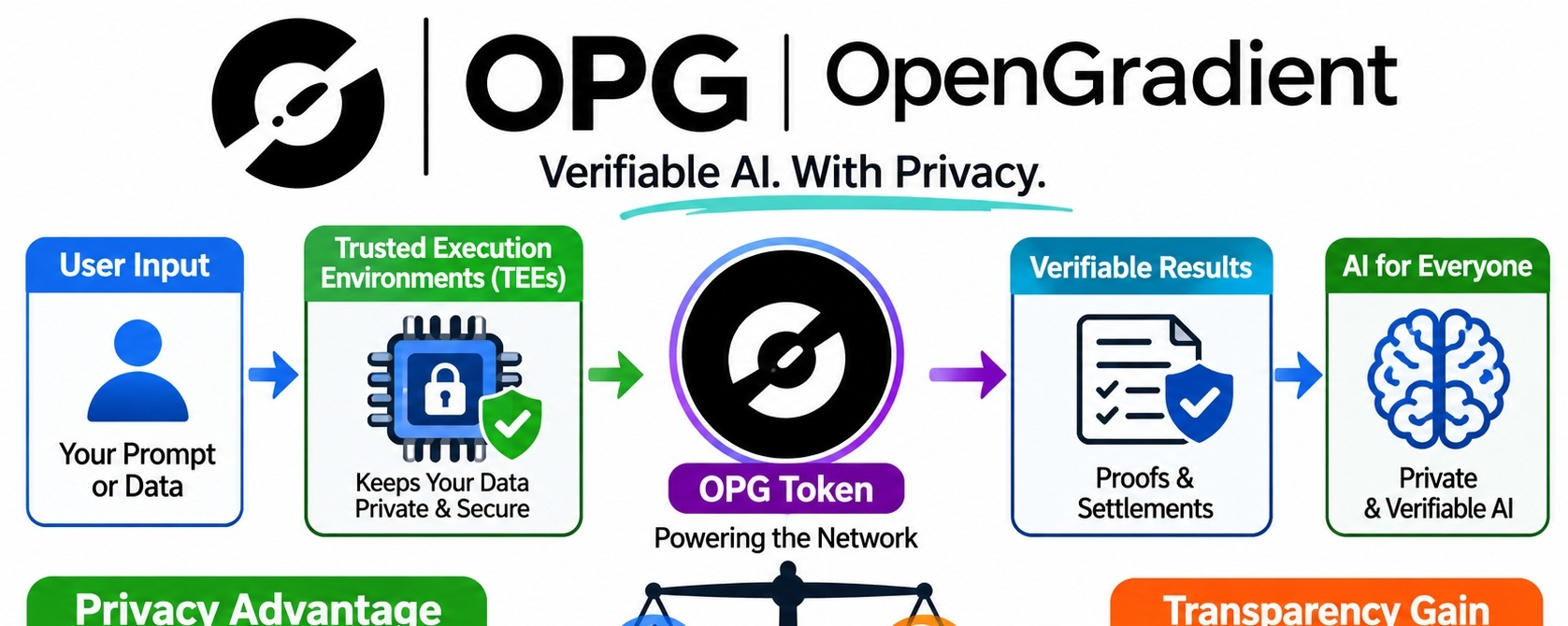

OPG is the native token of OpenGradient, a network designed to make AI computations verifiable while protecting sensitive user data. Its central tradeoff is already visible: private AI execution means outsiders cannot inspect every underlying input. That's not an oversight. It's a stated choice.
OpenGradient uses Trusted Execution Environments (TEEs), secure hardware environments designed to protect prompts from node operators. This reduces exposure of sensitive information, but it also means independent observers cannot simply inspect the original data and execution environment themselves. Privacy comes with limits on public visibility.
Holders can inspect the on-chain TEE registry, approved code measurements, hardware attestations and inference settlement records. Proofs are submitted after execution and checked by network validators. However, the documentation does not identify a named independent audit firm or a fixed external audit schedule. This is cryptographic verification, not an independent continuous audit. The PRIVATE settlement mode also keeps input and output data off-chain. OpenGradient Docs +2
Compare this with Bittensor (TAO). Its validator weight matrix and emission distributions are publicly readable, allowing greater scrutiny of incentive decisions. But its transparency can expose validator strategies to copying. More exposure, in exchange for public inspection. Learn Bittensor - Developer Guides +1
Neither approach removes counterparty risk. OpenGradient relies on hardware attestations, approved enclave code and validator verification. Bittensor relies more heavily on visible blockchain activity, validator incentives and subnet mechanisms.
OPG chooses privacy with verifiable execution, rather than publishing every piece of underlying inference data.
Which risk worries you more: trusting hardware and private execution, or exposing sensitive information for greater public