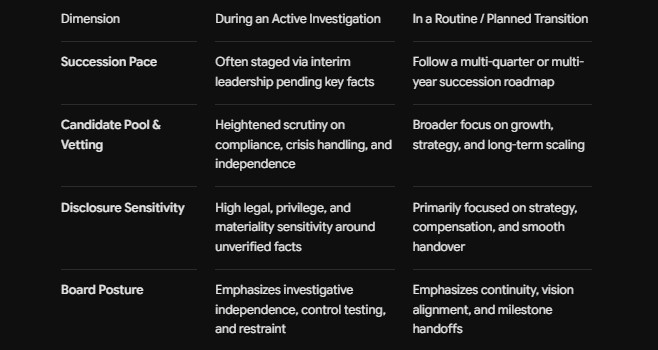
Active government or regulatory investigations reshape CEO succession timelines and board disclosures by turning leadership transitions from pre-planned talent moves into high-stakes legal and reputational events. Boards must align leadership decisions with fact-finding milestones so they neither rush into a permanent appointment before key facts emerge nor leave markets and regulators with stale or misleading disclosures.

How Investigations Affect CEO Succession Timelines
Interim Bridges Over Immediate Permanent Hires: When regulators or enforcement bodies are actively probing conduct, controls, or compliance, boards frequently install an interim CEO (often the CFO or another senior insider) rather than naming a permanent successor right away. Naming a permanent CEO too early risks locking in someone whose judgment or proximity to the issue later comes under scrutiny—or saddling a new leader with an unresolved investigative overhang.
Extended Search & Vetting Cycles: Search firms and nominating/governance committees spend extra time vetting candidates’ risk-management track records, regulatory comfort, and willingness to enforce strict compliance guardrails. Strong external candidates may hesitate to commit until the scope of the inquiry and potential liability are clearer.
Deadlines Driven by External Inquiries: Government response windows, subpoenas, agency interviews, or congressional schedules often dictate decision points more than internal board calendars. A board may wait until an investigative milestone or document production is complete before taking decisive action on leadership roles or reinstatement questions.
Separation, Clawback & Settlement Terms: Active probes complicate departure agreements, severance, equity treatment, and potential clawbacks. Boards often delay finalizing certain separation terms or negotiate conditional provisions tied to cooperation and investigative findings.
How Investigations Shape Board Disclosures
Boards and disclosure committees face a tight balancing act: complying with securities and regulatory disclosure duties while avoiding speculation or compromising legal privilege and active inquiries.
Materiality & Risk Factor Updates: When an investigation rises to a level reasonably likely to be material to investors—or exposes control weaknesses, contingent liabilities, or operational restrictions—boards update risk factors, MD&A, or periodic/current filings as facts solidify. Vague boilerplate risks criticism if known issues are omitted, while premature speculation risks inaccuracy if facts later change.
Leadership & Transition Narratives: Boards must explain executive departures, interim appointments, or governance changes clearly without prejudicing ongoing fact-finding. Investors and analysts look closely for consistency between what the company says about leadership accountability, internal controls, and the scope of the inquiry.
Consistent Messaging Across Channels: Public statements by directors, executives, or political/market commentators can create friction if off-script remarks clash with formal filings or ongoing regulatory cooperation. Disciplined boards channel external communications through authorized spokespeople and legal counsel.
Board Oversight & Governance Signals: Beyond the immediate investigation, boards increasingly face scrutiny over how they oversee succession planning, director independence, and internal controls—especially as governance expectations and disclosure rules evolve.
Succession vs. Disclosure Trade-Offs at a Glance