

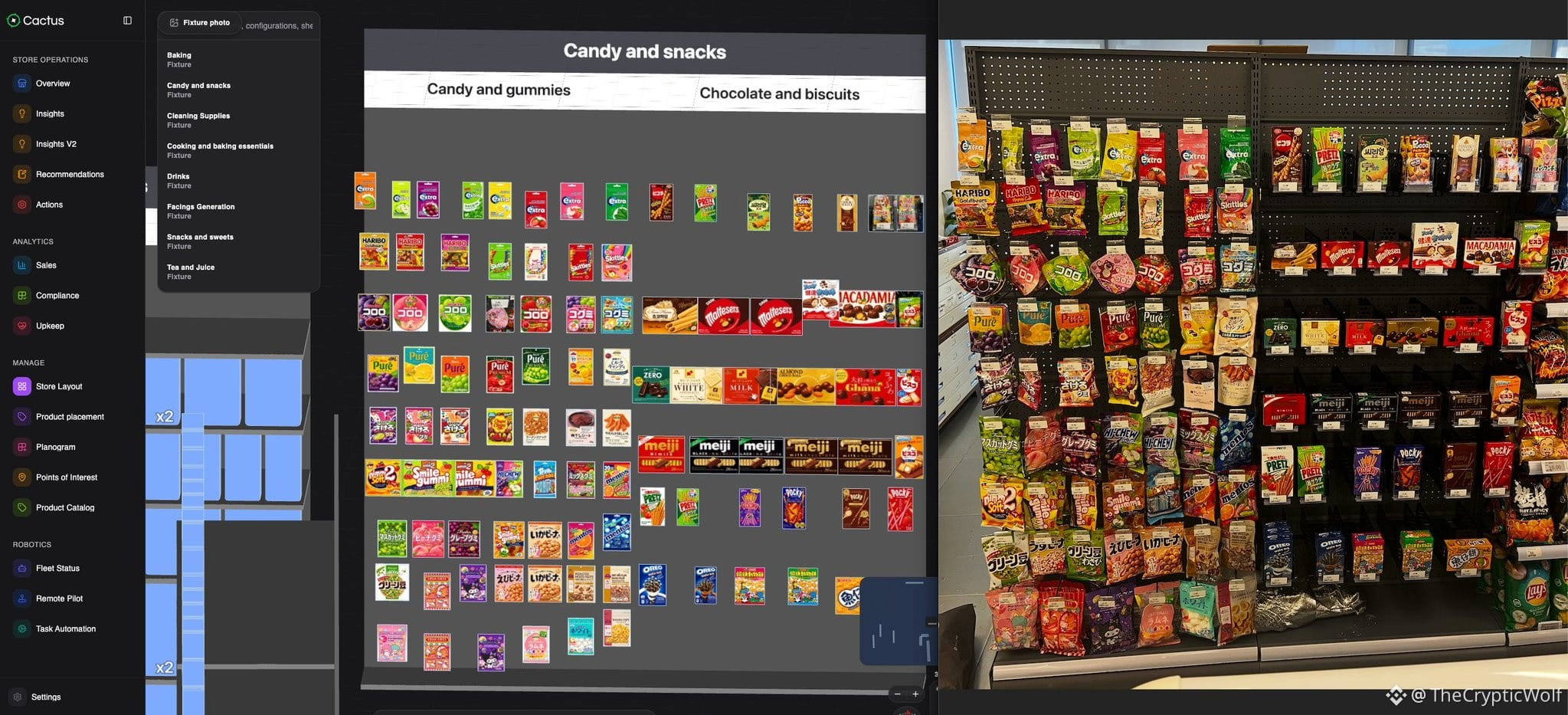
Retailers don’t always have good product images. They may have thousands of products on shelves, but no clean, structured image dataset for those products. This where $AUKI & Cactus and what they're building comes into play. Cactus is already scanning physical retail environments to understand what’s actually on the shelves. The same scans can become a source of product imagery. Instead of asking retailers to manually photograph thousands of SKUs, a store can be scanned and the products identified, mapped, and turned into usable visual data. That creates a much more practical path to adopting product image recognition: • Scan the store • Identify products • Generate/collect product imagery • Build a structured product dataset • Use it for recognition, inventory, merchandising and analytics The important part is that the physical world is producing the data. A retailer doesn’t need to start from scratch with a massive image collection project. Cactus can help turn the store itself into the dataset. Once you have reliable product level visual data, there are a lot more things you can build on top of it. This is the kind of infrastructure that makes retail/physical AI easier to deploy. $AUKI is building toward a world where physical spaces become machine readable. Cactus is a pretty good example of what that can look like. $AUKI = 100X Potential
Únete a usuarios de criptomonedas de todo el mundo en Binance Square
⚡️ Obtén la información más reciente y útil sobre criptomonedas.
💬 Confía en el mayor exchange de criptomonedas del mundo.
👍 Descubre opiniones reales de creadores verificados.
Correo electrónico/número de teléfono