


━━━━━━━━━━━━━━━━━━━━
You close a trade at a loss. Not a disaster. Just a stop-loss doing its job.
But your chest feels tight. Your eyes are glued to the chart. And a quiet voice says: "Get it back. Right now."
That voice is the start of the Revenge Trading Cycle. And it has wrecked more trading accounts than any bad indicator or surprise news event ever could.
Here's the uncomfortable truth: most traders don't blow up because of one big mistake. They blow up because one normal loss turns into a chain reaction of emotional decisions.
Let's break down how that chain forms, and how to cut it before it grows.
━━━━━━━━━━━━━━━━━━━━
◆ WHAT IS REVENGE TRADING?
Revenge trading means entering a trade mainly to recover a previous loss rather than because your plan says there is a valid setup.
The key word is "mainly." The market didn't give you the signal. Your emotions did.
✔︎ A planned trade is based on your rules
✔︎ A revenge trade is based on your wounded ego
From the outside, both can look identical on a chart. On the inside, they are completely different decisions.
━━━━━━━━━━━━━━━━━━━━
◆ HOW ONE BAD DECISION BECOMES FIVE
Let's walk through the cycle step by step. You may recognize yourself in it (most of us do).
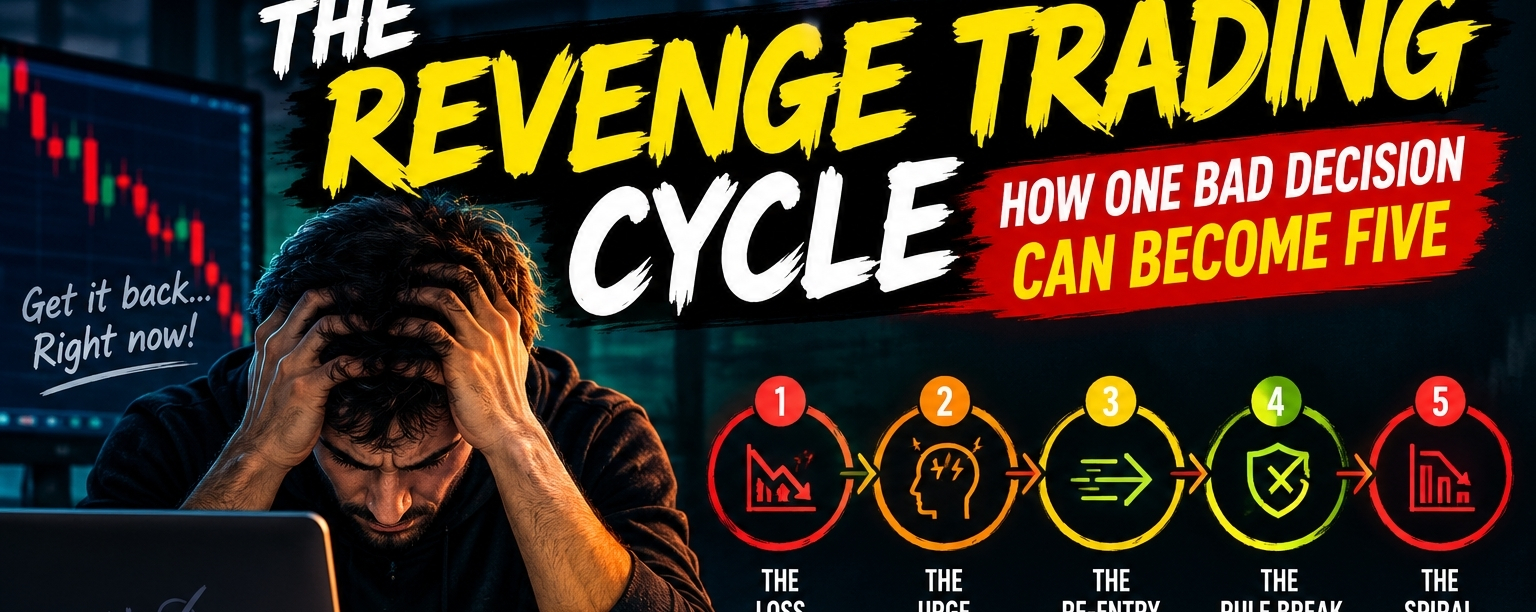
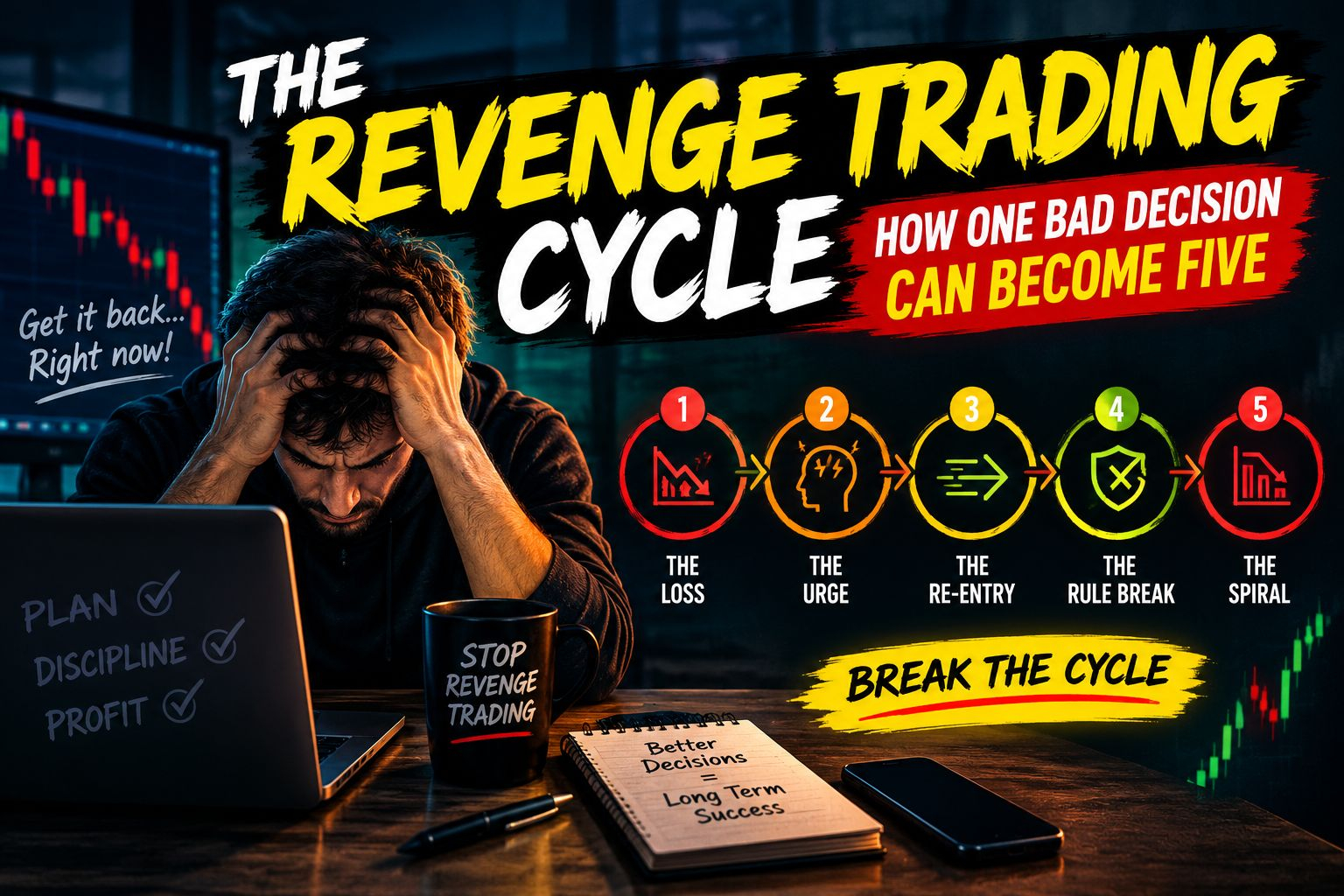
① The Original Loss
A normal loss, within your plan. But it stings. Your brain treats it like a personal defeat rather than a business cost.
② The Urge to "Fix It"
Suddenly, the loss feels unfinished. You feel you must win it back today. This is the moment the cycle either starts or stops.
③ The Rushed Re-Entry
You jump into a new position without waiting for confirmation. No clear setup, just urgency. Often the size is bigger too, because "I need to make it back faster."
④ The Rule Break
Your stop-loss moves. Or disappears. Or you skip it entirely. "Just this once" becomes the most expensive phrase in trading.
⑤ The Spiral
A second loss lands harder than the first. Now you're not trading to profit anymore. You're trading to escape the feeling. More trades, more size, less thinking.
Five decisions. One starting point. And only the first one was a normal part of trading.
━━━━━━━━━━━━━━━━━━━━
◆ WHY YOUR BRAIN FALLS FOR THIS
This isn't a character flaw. It's human wiring.
➤ Loss aversion: Research in behavioral finance suggests losses tend to feel more painful than equal gains feel good. Your brain wants to erase the pain fast.
➤ Sunk cost thinking: "I already lost this much, I can't stop now." But the market doesn't know or care what you lost.
➤ Stress response: Under pressure, the rational part of your mind gets quieter and the reactive part gets louder.
➤ The "break-even" trap: Chasing a specific number (like getting back to zero) pushes you toward bigger risks than your plan would ever allow.
The market never owes you a comeback.
━━━━━━━━━━━━━━━━━━━━
◆ 7 WARNING SIGNS YOU'RE IN THE CYCLE
Be honest with yourself here:
✔︎ You re-enter within minutes of a loss
✔︎ Your position size suddenly increases
✔︎ You're trading setups that aren't in your plan
✔︎ You're moving or removing your stop-loss
✔︎ You feel angry, anxious, or desperate while trading
✔︎ You're checking your PnL every few seconds
✔︎ You tell yourself "one more trade and I'll stop"
If you ticked two or more, pause. That's your signal.
━━━━━━━━━━━━━━━━━━━━
◆ HOW TO BREAK THE CYCLE: A 5-STEP RESET
➜ Step 1: Set a Daily Loss Limit
Decide BEFORE the session how much you're willing to lose in a day. When you hit it, you're done. No negotiation. This single rule can protect you from your worst moments.
➜ Step 2: Use a "Cooling-Off" Window
After any loss, step away for 15 to 30 minutes. Walk, drink water, breathe. Time is the cheapest anti-tilt tool there is.
➜ Step 3: Ask the Plan Question
Before every trade, ask: "Would I take this trade if I had just won?" If the answer is no, it's not a setup. It's a reaction.
➜ Step 4: Keep Position Size Consistent
Never increase your size to recover a loss. Consistency in risk is what keeps you in the game long enough to improve.
➜ Step 5: Journal the Emotion, Not Just the Trade
Write down how you felt before entering. Over time, patterns appear. You'll start spotting your triggers before they control you.
━━━━━━━━━━━━━━━━━━━━
◆ A MINDSET SHIFT THAT CHANGES EVERYTHING
Stop asking: "How do I win this back?"
Start asking: "Am I still following my process?"
A losing trade that followed your plan is a good trade. A winning trade that broke your rules is a bad habit being rewarded. And bad habits that get rewarded are the most dangerous kind.
Your job isn't to beat the market every day. Your job is to protect your capital, follow your rules, and let probabilities play out over time.
━━━━━━━━━━━━━━━━━━━━
◆ CONCLUSION
Every trader will face losses. That part is guaranteed.
What separates long-term traders from the rest isn't avoiding the first loss. It's refusing to let it become the second, third, fourth, and fifth.
Break the chain at ①. That's where the real discipline lives.
━━━━━━━━━━━━━━━━━━━━
Have you ever fallen into the revenge trading cycle? What helped you break out of it?
➤ Drop your experience in the comments, your story might help another trader today
➤ Share this with a trading buddy who needs the reminder
➤ Follow for more trading psychology insights
Let's build disciplined traders together.
━━━━━━━━━━━━━━━━━━━━
Risk Disclosure: This article is for educational purposes only and does not constitute financial or investment advice. Trading cryptocurrencies involves significant risk, and you may lose some or all of your capital. Always do your own research and only trade with funds you can afford to lose.
#EarningsSeason #ZcashDevelopersConfirmNovemberDateForNU7Upgrade #OCCIssuesFirstFinalRuleUnderGENIUSAct #TrumpExpectedToOutlineCrackdownOnOverseasCryptoScams #KoreanRetailLost6.3TrillionWonOnLeveragedETPs $BTC


