

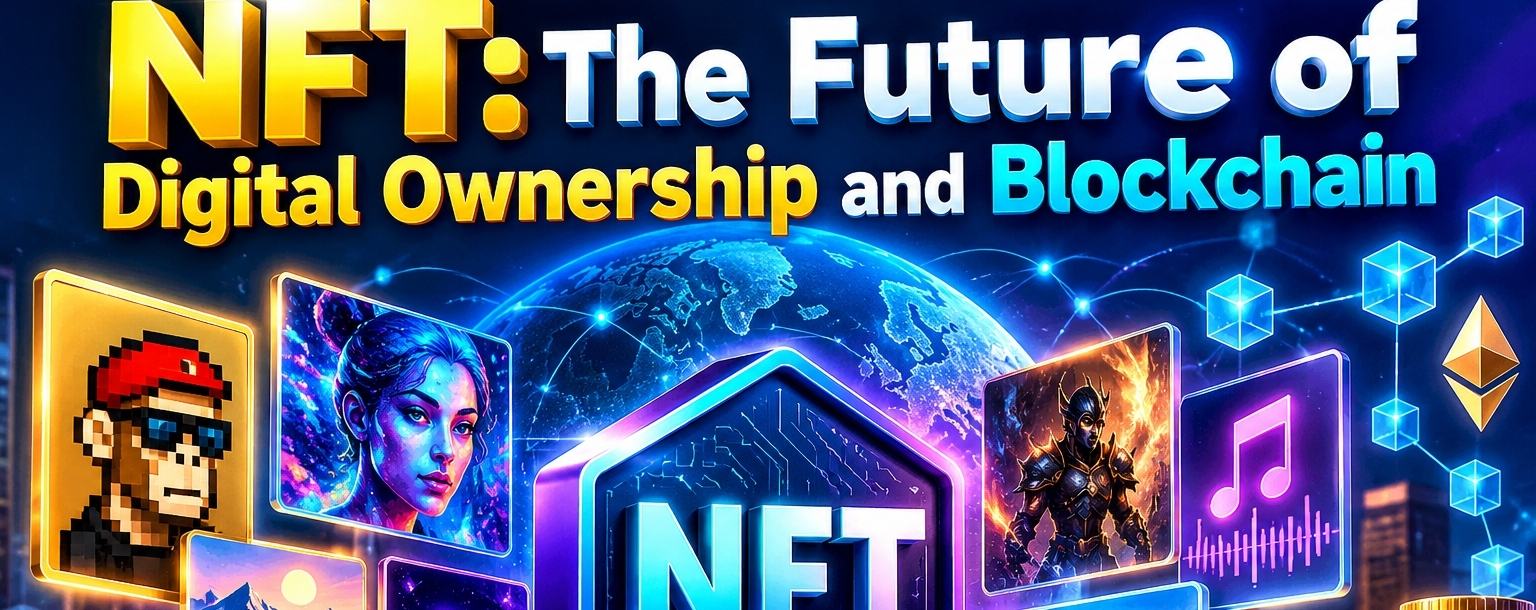

#NF The Future of Digital Ownership and Blockc$NFT
## Introduction
NFT stands for Non-Fungible Token. It is a unique digital asset that uses blockchain technology to record ownership and authenticity. NFTs have become an important topic in the cryptocurrency and digital economy because they offer new ways to create, own, buy, and sell digital items.
Unlike Bitcoin or Ethereum, which are generally interchangeable with other units of the same cryptocurrency, each NFT can have unique characteristics. NFTs can represent digital artwork, music, videos, gaming items, collectibles, event tickets, and certain real-world assets.
## How Do NFTs Work?
NFTs are created and recorded on a blockchain, a digital ledger that stores transaction information. Many NFTs use the Ethereum blockchain, although other networks also support NFT creation and trading.
When someone creates an NFT, the process is commonly called minting. The NFT can then be transferred or sold through compatible marketplaces and digital wallets.
Blockchain records can help people verify an NFT's transaction history and identify its current recorded owner. However, owning an NFT does not automatically mean owning the copyright or exclusive commercial rights to the artwork. Those rights depend on the project's terms and applicable law.
## Why Are NFTs Popular?
NFTs have attracted attention for several reasons.
1. Digital Art and Creativity
NFTs allow artists to showcase and sell digital artwork to a global audience. They can also enable new ways for creators to connect with collectors.
2. Gaming and Digital Collectibles
Some blockchain games use NFTs to represent characters, equipment, virtual land, or other digital items. Depending on the game's design, users may be able to trade these items outside the game.
3. Community and Membership
Certain NFT projects provide membership benefits, exclusive content, event access, or participation in online communities. The value of these benefits depends on the project's continued operation and the promises it can actually fulfill.
4. Real-World Applications
NFT technology is also being explored for ticketing, certificates, intellectual property management, and representing certain real-world assets. These applications may improve verification and recordkeeping, although legal and technical challenges remain.
## What Is the Future of NFTs?
The future of NFTs will likely depend on practical utility rather than hype alone. Projects that solve real problems, provide useful services, and build trustworthy communities may have better long-term prospects than projects driven only by speculation.
Gaming, digital identity, intellectual property, and tokenization are potential areas of development. Improvements in blockchain scalability, user experience, and security could also make NFTs easier for ordinary people to use.
However, the market has experienced significant price declines, changing trends, and reduced interest in many collections. Not every NFT will gain value, and some projects may disappear entirely.
Risks of Investing in NFTs
Before buying an NFT, investors should understand the risks.
First, NFT prices can be extremely volatile. An NFT purchased at a high price may later become worth much less.
Second, liquidity can be limited. Even if an NFT has a high listed price, finding a buyer willing to pay that amount may be difficult.
Third, scams and fraudulent collections remain concerns. Fake websites, stolen artwork, misleading promises, and phishing attacks can cause financial losses.
Investors should research the project's creators, purpose, community, transaction history, and security. They should never invest money they cannot afford to lose.
## Conclusion
NFTs represent an innovative application of blockchain technology that can support digital ownership, creativity, collectibles, and new online experiences. Although the market presents opportunities, it also carries substantial risks.
The strongest #EthereumSurpasses2500USDT NFT projects may be those that offer genuine utility, transparency, and lasting value rather than relying entirely on speculation.
Understanding the technology and conducting careful research are essential before participating in the #NFT marke
What do you think about NFTs? Will they become an important part of the digital economy, or will their popularity continue to decline? Share your thoughts in the comments!
#NFT #Blockchain #Crypto #Web3 #DigitalArt #NFTCommunity #CryptoNews
