

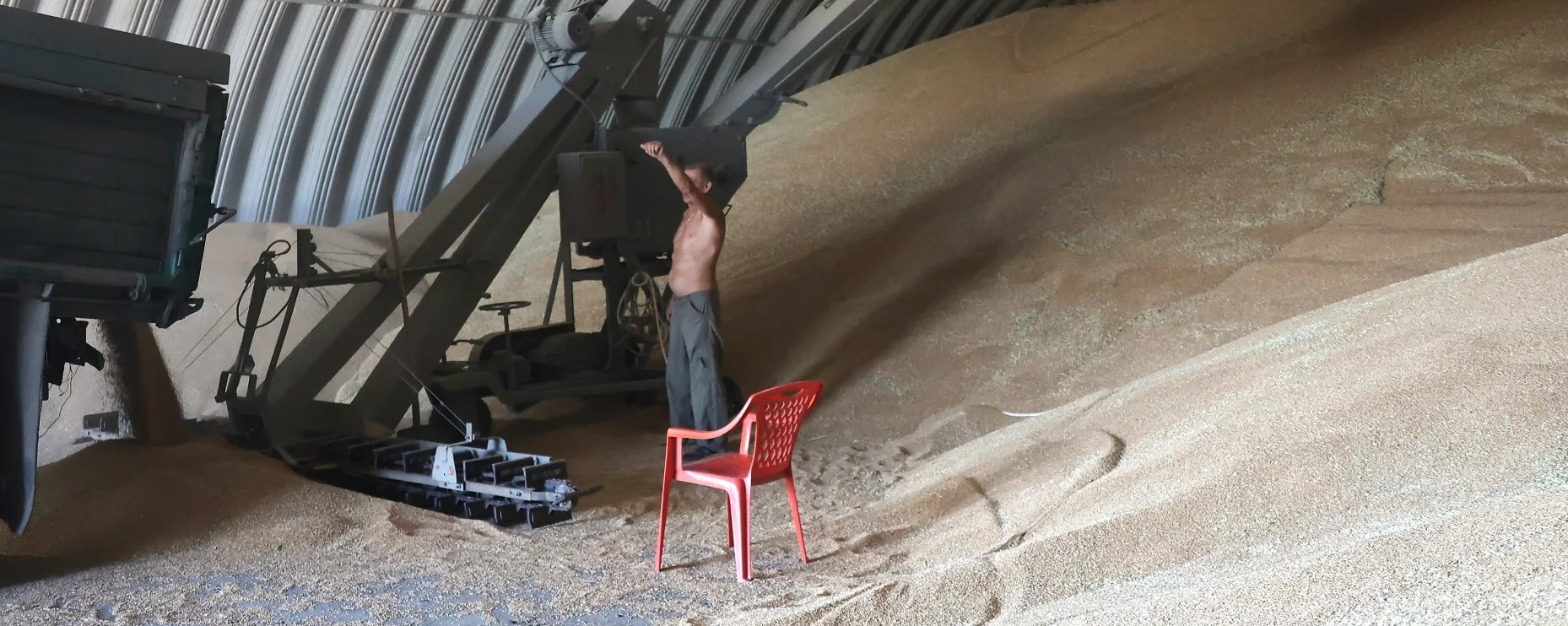

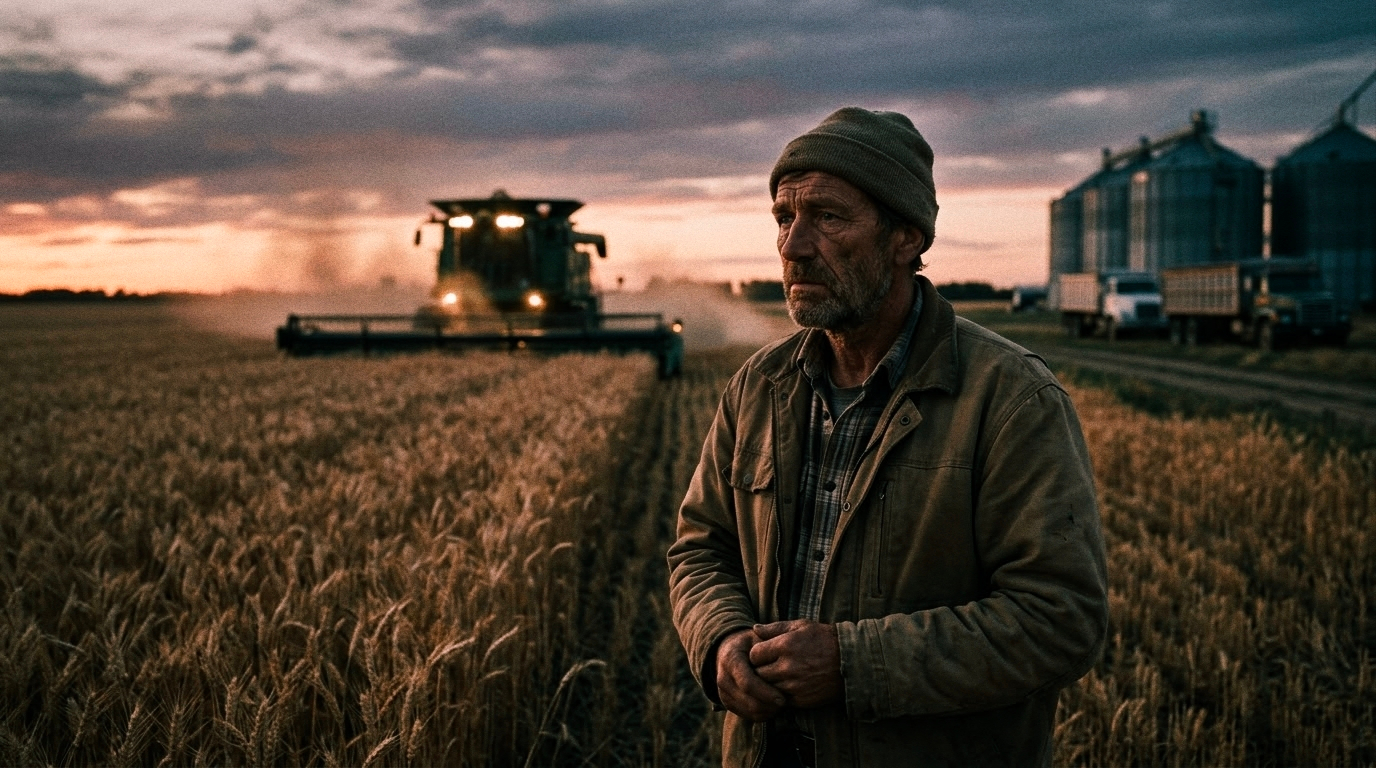
The harvest is abundant. The warehouses are full. The money is trapped. And the people feeding the world are being pushed toward an economic breaking point.
Let that sink in.
Ukraine’s agricultural crisis exposes one of the ugliest contradictions of modern warfare: a country can produce millions of tons of food and still watch its farmers struggle to survive because the machinery of global trade has been crippled.
According to the CNBC report published on October 10, 2026, Ukrainian farmers are facing mounting financial pressure as Black Sea export disruptions leave enormous quantities of grain and oilseeds stranded inside Ukraine and Russia.
This is not simply an agricultural problem.
It is a supply-chain crisis, a financial crisis, and a geopolitical weapon with consequences that reach far beyond the battlefield.
## 1. A BOUNTIFUL HARVEST THAT FARMERS CANNOT PROFITABLY SELL
Oleksandr Chumak, a farmer in Ukraine’s southern Odesa region, has spent 11 years growing crops. Yet despite a strong harvest, he says approximately 80% of his current production cannot be sold profitably.
Think about the absurdity of that situation.
Seeds have been planted. Fuel has been consumed. Fertilizers have been purchased. Workers have done their jobs. The harvest has been collected.
But where is the money?
Farmers still have to pay taxes, land rent, wages, equipment costs, and operating expenses. They must also finance the next planting season.
When the grain cannot reach buyers at an economically viable price, the harvest becomes a financial trap.
The food exists. The demand exists. The need exists.
What is broken is the ability to connect production with the global market.
And when that connection collapses, even a successful harvest can become a liability.
## 2. THE BLACK SEA IS MORE THAN WATER. IT IS AN ECONOMIC LIFELINE.
Before the war, approximately 90% of Ukraine’s major agricultural exports normally passed through the Black Sea.
That figure explains why alternative routes cannot simply replace the original system overnight.
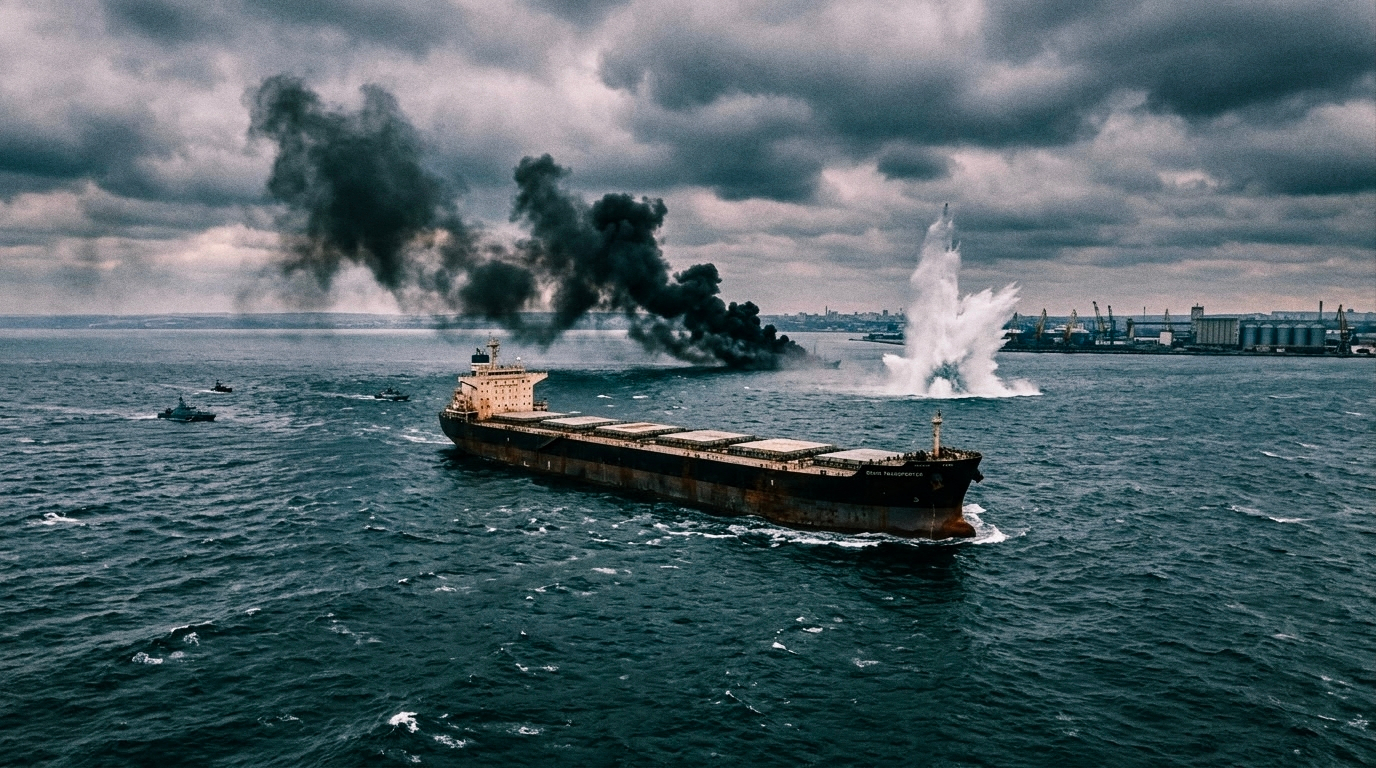
Russia’s intensified drone and missile attacks have increased the danger to commercial shipping. According to the report, the resulting security risks have made commercial shipping insurance prohibitively difficult to obtain.
Ukraine’s counterattacks have also disrupted Russian exports, further tightening the flow of agricultural commodities.
Meanwhile, alternative routes through railways, roads, rivers, and neighboring countries remain constrained by capacity, cost, infrastructure damage, and political resistance.
Some Eastern European countries have opposed grain transit arrangements amid concerns that additional supplies could undermine their domestic agricultural markets.
The Danube route faces its own logistical limitations, including low water levels and damaged infrastructure.
These are not minor inconveniences.
They are bottlenecks in a system responsible for moving enormous volumes of food across continents.
When a critical trade corridor becomes dangerous or inaccessible, the economic damage does not stop at the coastline. It travels through prices, supply contracts, production decisions, and household budgets.
## 3. MILLIONS OF TONS OF FOOD ARE TRAPPED WHILE FARMERS RUN OUT OF CASH
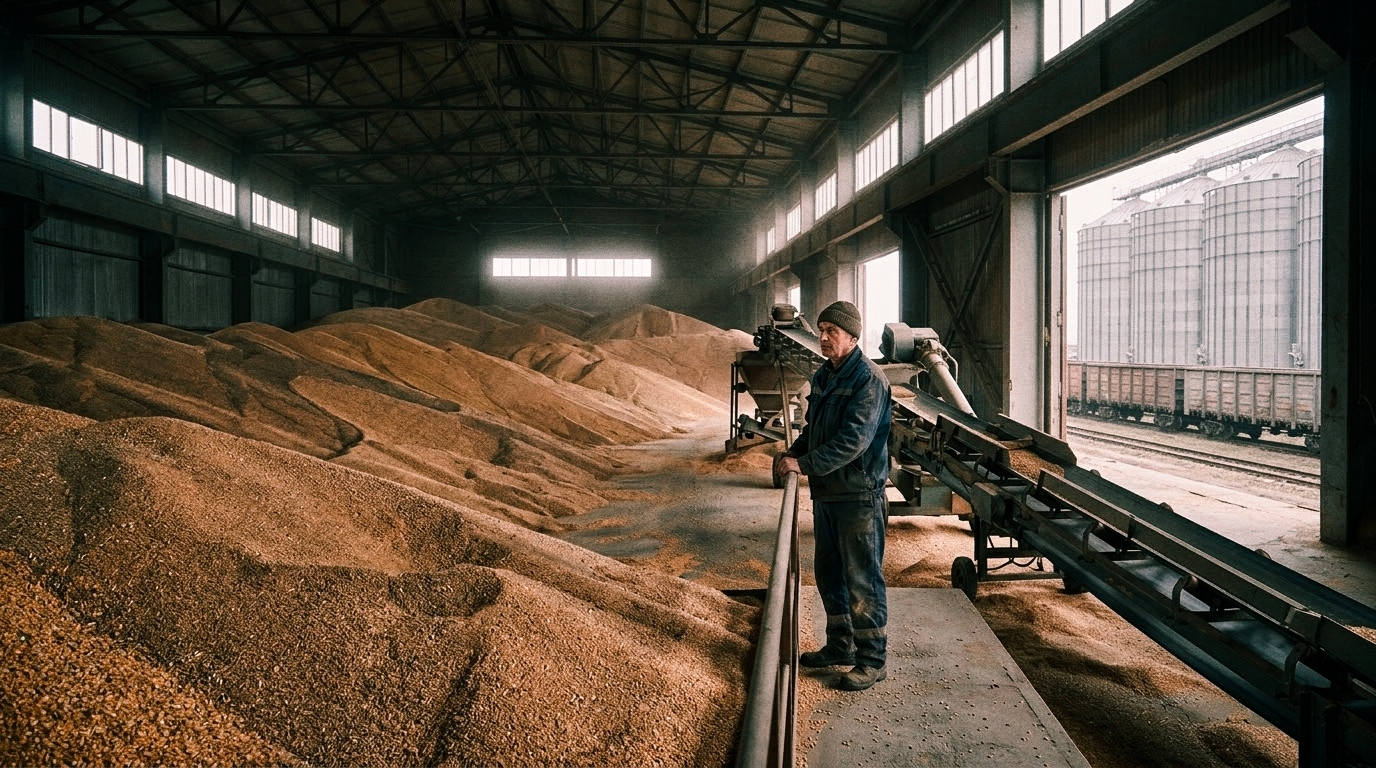
Storage facilities across Ukraine and Russia are holding millions of tons of agricultural products that would ordinarily be shipped to Europe, the Middle East, Asia, and Africa.
The consequences are brutal.
Grain occupies storage capacity. Revenue remains unrealized. Operating expenses continue. Loans become more important. And the next planting season approaches whether farmers are financially ready or not.
PrivatBank, Ukraine’s largest lender, reported providing 1.53 billion hryvnias, approximately $34.2 million, in working-capital financing to agricultural businesses between June and August 2026.
That was more than double the 718 million hryvnias lent during the same period a year earlier.
The increase illustrates the mounting need for liquidity.
But credit is not a permanent solution to a broken export system.
A loan can keep a farm operating temporarily. It cannot make an unprofitable shipment profitable, reopen a dangerous shipping lane, or guarantee that next year's harvest will find a buyer.
Borrowing can buy time. It cannot manufacture a functioning market.
## 4. THE NEXT CRISIS MAY BEGIN BEFORE THE NEXT HARVEST
Here is where the damage becomes even more dangerous.
Farmers make planting decisions based on expected revenue, production costs, access to storage, transportation, and the likelihood of selling their crops.
When those calculations stop making sense, they change what they grow—or stop planting altogether.
Chumak says he plans to reduce planting significantly, abandon corn and barley, and favor crops requiring less fertilizer.
Other agricultural producers are also reconsidering their planting strategies, increasingly favoring oilseeds and specialized crops whose prices may be less exposed to logistical costs.
This is economic survival, not a sign that the agricultural system is healthy.
Ukraine's grain and oilseed production is projected in the report to rise to 85 million tons from 80 million tons in the current year. Yet higher production does not automatically mean higher profits when exports remain constrained and existing inventories put pressure on storage and logistics.
The central danger is a destructive feedback loop:
Disrupted exports create unsold inventories.
Unsold inventories weaken domestic prices.
Weak prices squeeze farmers' cash flow.
Reduced cash flow discourages future planting.
Changes in planting patterns can then alter the quantity and mix of crops available in future seasons.
A war can damage next year's food supply without destroying a single seed. It only has to make growing that seed economically irrational.
## 5. THE WORLD DEPENDS ON A REGION IT CANNOT EASILY REPLACE
Before the war, Ukraine and Russia together accounted for more than half of global sunflower oil supplies, nearly one-fifth of barley supplies, and approximately 14% of wheat supplies, according to the United Nations figures cited in the report.
Ukraine is also a major global corn producer, with China and the European Union among its largest buyers.
These figures reveal the scale of the exposure.
Agricultural markets are interconnected. When a major exporting region becomes less accessible, importers must compete for alternative supplies, redirect trade, or absorb higher costs.
Other producers can help fill the gap, but replacement is neither instantaneous nor unlimited.
Canada, Australia, and Argentina have benefited from stronger grain harvests, while production across parts of the Middle East and North Africa has helped cushion the disruption.
Yet Europe is also facing a weak corn harvest and greater import requirements, while the United States faces its own production challenges.
The margin for absorbing another major shock can therefore narrow quickly.
And remember: grain is not just food.
It is also animal feed, a production input for food industries, and a commodity whose transportation, storage, and financing costs influence prices throughout the supply chain.
A disruption in the Black Sea can become a problem for farmers thousands of kilometers away—and eventually for consumers who have never heard of Odesa.
## 6. HERE IS THE BRUTAL PARADOX: PEACE COULD CRUSH PRICES ELSEWHERE
There is another side to this crisis that deserves attention.
As long as Ukrainian and Russian exports remain restricted, limited access to their supplies can support commodity prices in other markets.
That can benefit competing exporters.
But a ceasefire or the reopening of Black Sea shipping routes could release substantial quantities of accumulated grain into international markets.
According to Benoit Fayaud, a senior grain and vegetable-oil analyst at Expana, the return of these supplies could rapidly reverse market conditions.
Why?
Because the market would suddenly have to absorb additional exportable inventories from two major agricultural producers.
Buyers who previously depended on more expensive alternatives could redirect their purchases. Exporters in other countries could lose their pricing advantage. Domestic grain prices could fall as competition intensifies.
Fayaud warned that a restored export flow could push grain prices in other producing countries down by several tens of dollars.
This creates a vicious dilemma.
Continued disruption threatens supply availability and keeps pressure on international markets.
A sudden reopening could bring much-needed food back into circulation while simultaneously hitting competing producers with a wave of cheaper supplies.
The same geopolitical crisis that supports prices today could trigger a violent repricing tomorrow.
Peace would be welcome for its human consequences. But financial markets would still have to adjust to the sudden release of accumulated supply.
And farmers outside Ukraine should not mistake today's elevated prices for a permanent guarantee.
## 7. FARMERS ARE BEING FORCED TO MAKE DECISIONS NO BUSINESS SHOULD HAVE TO MAKE
Chumak describes working in an environment where rockets and drones can strike nearby at any time.
He says explosions can occur just 300 to 1,000 meters from where he sleeps.
This is not an abstract market equation.
These are people trying to operate farms under the threat of violence while managing costs, debt, storage constraints, and uncertain access to buyers.
They are expected to plant for the future while the infrastructure needed to sell their production remains vulnerable.
They are expected to maintain output while their financial incentives deteriorate.
And they are expected to prepare for another season without knowing whether the next harvest can be transported safely or sold at a viable price.
Demanding food production while undermining the economic conditions required to produce that food is a recipe for long-term damage.
Farmers cannot operate indefinitely on patriotism, borrowed money, and hope.
Eventually, the numbers have to work.
## 8. THE REAL WARNING: FOOD SECURITY IS ABOUT MORE THAN HOW MUCH THE WORLD GROWS
The world often measures agricultural strength through production forecasts, harvest totals, and inventories.
Those numbers matter. But they do not tell the whole story.
Food security also depends on whether crops can be stored, financed, transported, insured, exported, and purchased at prices that allow producers to remain in business.
A country can harvest more grain while its farmers become poorer.
Warehouses can be full while importers struggle to secure the right supplies.
Global inventories can exist while transportation bottlenecks prevent those inventories from reaching the people who need them.
And a temporary disruption can undermine future production if farmers respond by cutting acreage or changing crops.
That is the deeper lesson of Ukraine.
Food does not become globally available simply because it has been harvested. It becomes available when the entire economic and logistical system can move it to market.
Destroy that system, and abundance can coexist with financial distress, unstable prices, and growing uncertainty about future supply.
## THE FINAL VERDICT
The world needs Ukrainian grain.
But Ukrainian farmers need something equally fundamental: a realistic way to earn money from the food they produce.
Without functioning export routes, accessible financing, reliable logistics, and sufficient market access, even a record harvest can fail to sustain the people responsible for growing it.
The danger is not only what the world cannot buy today.
It is what farmers may decide they can no longer afford to grow tomorrow.
And the global market faces a second threat: when those blocked supplies finally return, the sudden release of accumulated inventories could send prices sharply in the opposite direction.
This is how war reaches beyond battlefields.
It changes incentives. It distorts markets. It traps capital. It reshapes production. And it transfers risk from one region to the rest of the world.
The uncomfortable truth is that global food security can be undermined long before the world runs out of food. It begins when the people who grow it lose the financial ability—or the economic reason—to keep growing it.
The harvest is not the whole story.
The route to market is.
And right now, that route is one of the most consequential pressure points in the global food economy.
---
SOURCE: CNBC, October 10, 2026 — “The world needs Ukraine’s grain. Its farmers are running out of reasons to grow it.”
This analysis is based on the supplied report. Market outcomes remain uncertain and depend on shipping access, security conditions, inventories, weather, and future trade arrangements.
#Ukraine #GlobalFoodSecurity #BlackSea #Wheat #Geopolitics #GlobalEconomy #Agriculture #CommodityMarkets #FoodCrisis #WorldNews