

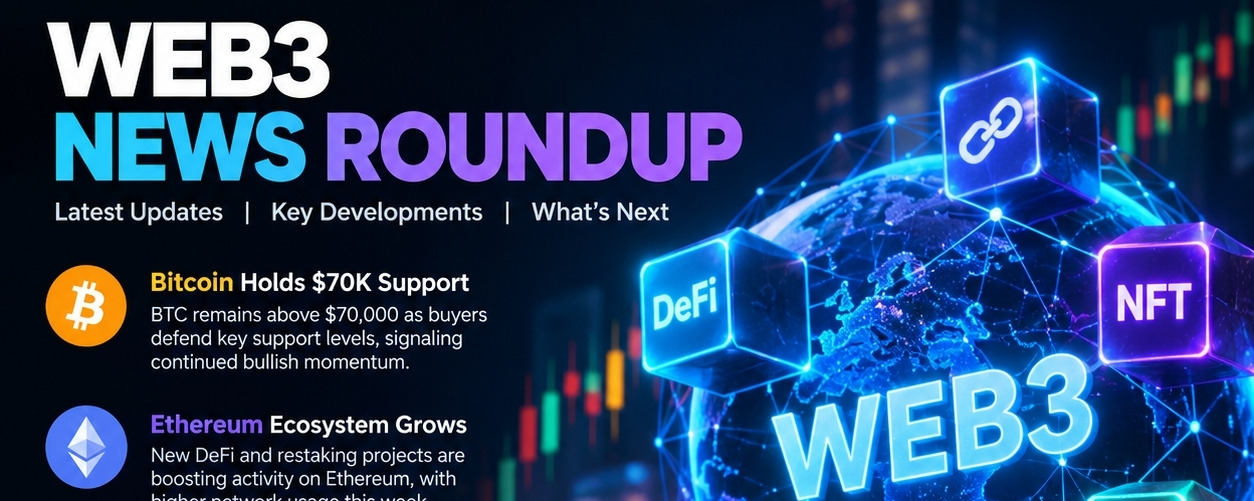

The internet is evolving.
Web1 allowed users to **read** information. Web2 made it possible to **read, create, share, and interact** through platforms such as social media and online marketplaces. Web3 aims to take this evolution one step further by giving users greater control over **ownership, digital identity, assets, and online communities**.
## What Is Web3?
Web3 is a decentralized approach to the internet built around technologies such as **blockchain, smart contracts, cryptocurrencies, decentralized applications (dApps), NFTs, and decentralized finance (DeFi).**
Instead of relying entirely on centralized platforms, Web3 can allow users to interact directly through blockchain-based networks.
The core idea is simple:
**More ownership. More transparency. More user control.**
## Why Does Web3 Matter?
Traditional internet platforms often store user data and control digital ecosystems through centralized servers.
Web3 introduces an alternative model where blockchain networks can record transactions and ownership transparently.
For example, a blockchain wallet can allow a user to hold digital assets without those assets being directly controlled by a traditional centralized platform.
This creates new possibilities for:
* Digital ownership
* Decentralized finance
* Creator monetization
* Digital identity
* Gaming
* Tokenized communities
* AI + blockchain applications
* Decentralized applications
## Web3 and DeFi
One of the biggest Web3 sectors is **Decentralized Finance (DeFi).**
DeFi applications can provide financial services such as swapping tokens, lending, borrowing, and earning yield through smart contracts.
The major difference is that many DeFi systems operate through blockchain-based protocols rather than traditional fina
ncial intermediaries.
However, DeFi also