
Moving tokens between different blockchains can sometimes feel more complicated than it should. If I have USDT on TON but want USDC on Ethereum, the traditional approach might involve bridging first and swapping afterward.
But there’s another way to think about it: instead of moving a token first, simply swap into the asset you actually want on the destination chain.
That’s where resolver-based cross-chain swaps like Omniston come in.
1. Why Move Value Between TON and Ethereum?
TON and Ethereum have different ecosystems, applications, liquidity, and users. You might hold USDT on TON but need USDC on Ethereum to interact with an Ethereum-based DeFi application.
So your real goal isn't necessarily:
“I want to bridge my USDT.”
It could simply be:
TON / USDT → Ethereum / USDC
That difference makes the whole process easier to understand.
2. Bridge-First vs. Swap-First
With a traditional bridge-first approach, you might do:
TON USDT → Bridge → Ethereum USDT → Swap → Ethereum USDC
This can mean more steps, more transactions, and potentially receiving a bridged representation before getting the asset you actually want.
A swap-first approach focuses on the final result:
TON USDT → Ethereum USDC
Instead of asking, “How do I transport this token?” you ask, “What asset do I want to receive on the other chain?”
This is the approach Omniston is designed to support.
3. What Do You Receive on Ethereum?
This is an important detail.
If you're swapping TON USDT for Ethereum USDC through a destination-asset-focused system, the goal is to receive the requested destination asset directly.
So rather than:
TON USDT → bridged USDT → USDC
the intended outcome is:
TON USDT → Ethereum USDC
That means you don't necessarily have to receive a wrapped version of your original asset and then make another swap.
4. How Does Resolver-Based HTLC Execution Work?
This is the technical part, but it can be explained simply.
Omniston uses resolvers to provide liquidity for cross-chain orders. When you request a swap, resolvers can provide quotes for completing it.
Once a quote is accepted, the source and destination sides can be secured using Hashed Timelock Contracts (HTLCs).
Think of an HTLC as a smart contract with two important conditions:
A cryptographic secret that allows the swap to complete.
A time limit that provides a refund path if the required conditions aren't met.
The source and destination transactions are linked through these conditions.
If everything goes correctly, the swap settles.
If the required conditions aren't fulfilled, the applicable refund mechanism can return the locked funds.
This creates an all-or-nothing settlement model, rather than relying on one side simply trusting the other.
5. Using STON.fi/Omniston in Practice
Now let's make it practical.
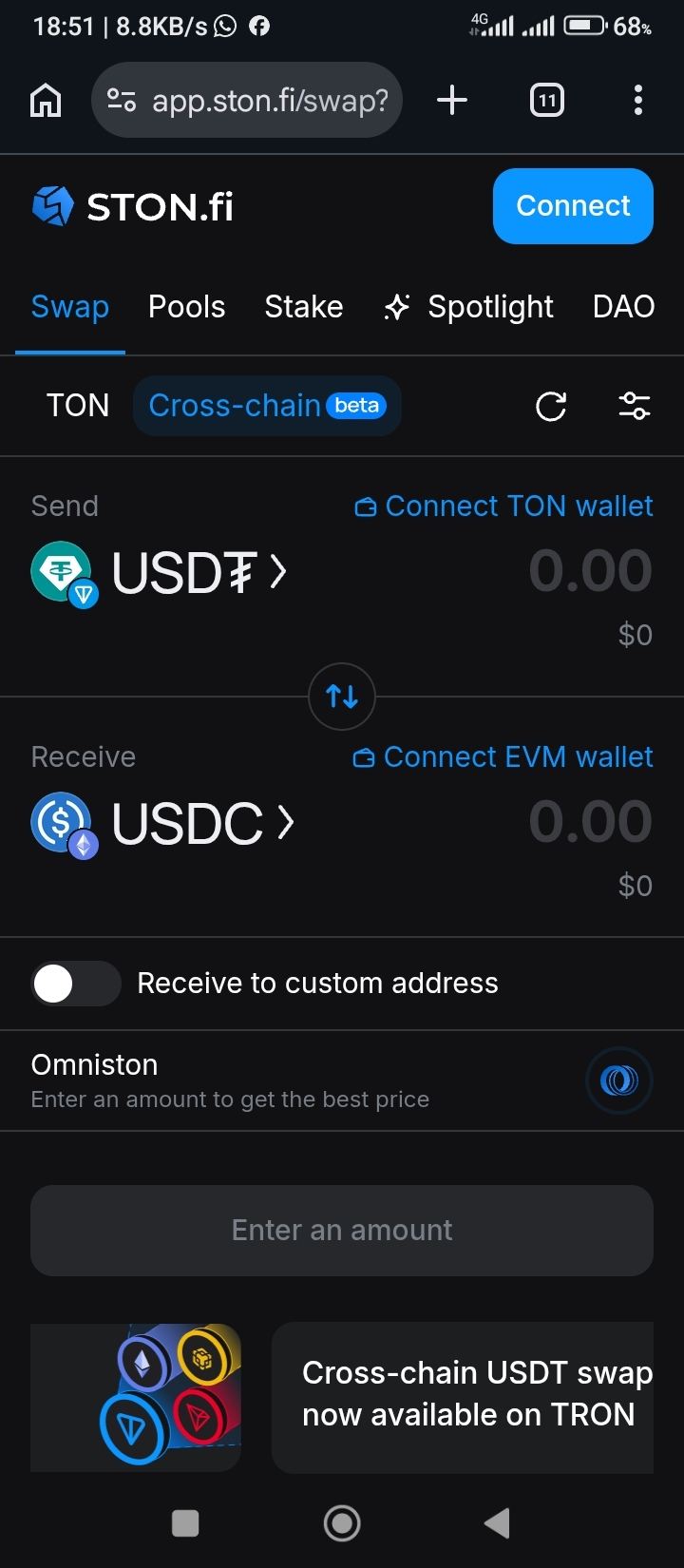
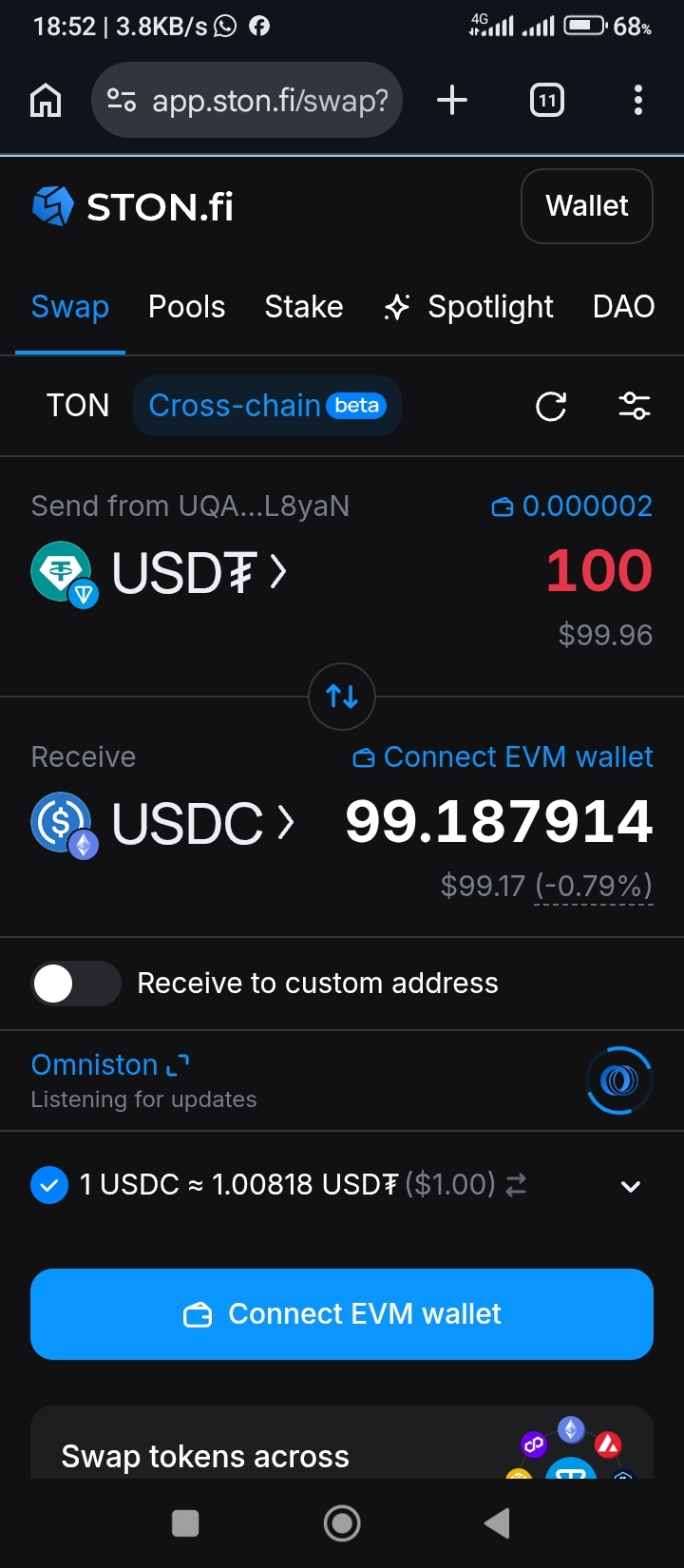
Imagine I have USDT on TON and want USDC on Ethereum.
I would select:
From: TON / USDT
To: Ethereum / USDC
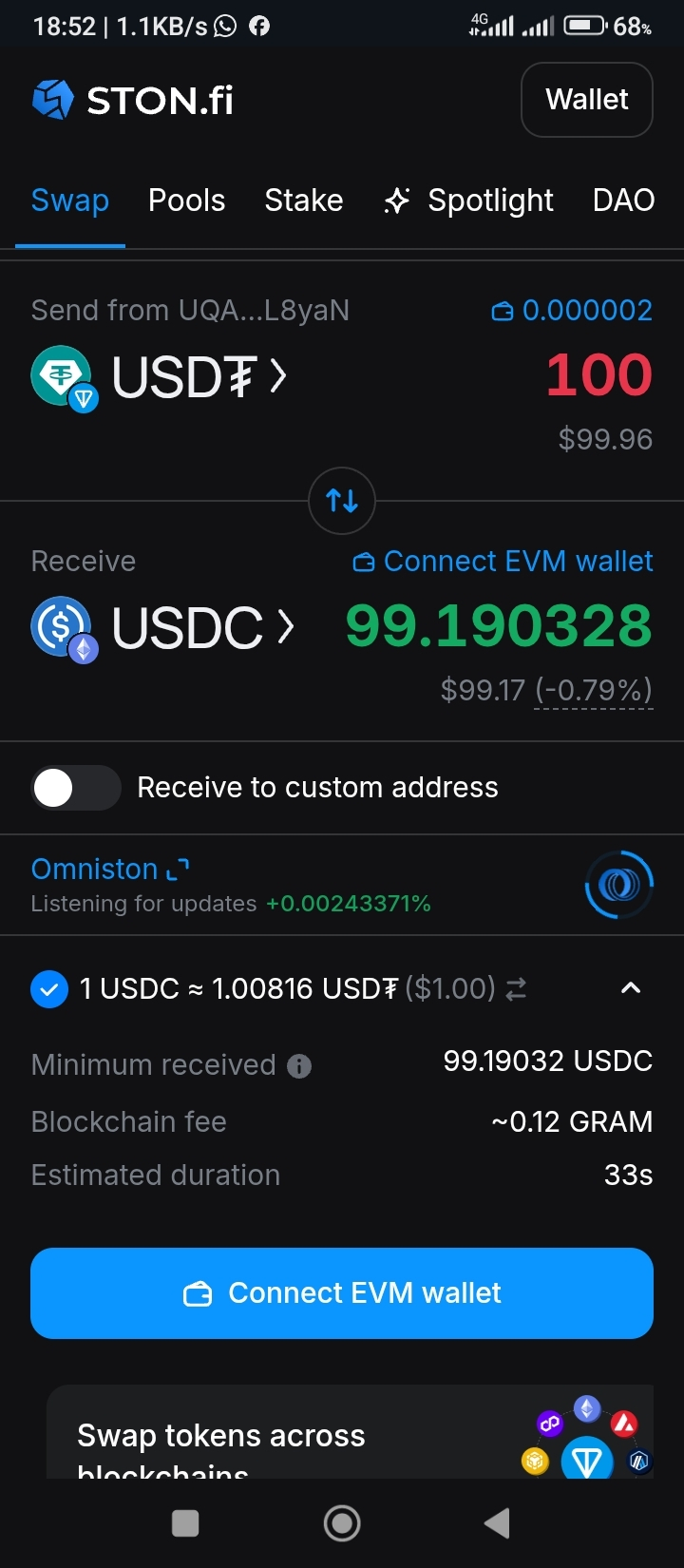
Omniston can obtain quotes from resolvers that are willing to execute the order. Once I receive a quote, I can review the amount I'll receive and the applicable fees before confirming.
After accepting the quote, the resolver provides the destination-side liquidity while the cross-chain execution is coordinated through the HTLC conditions.
The important part for me as a user is simple:
I start with TON USDT and aim to finish with Ethereum USDC.
I don't have to make the bridge itself the focus of the transaction.
6. Always Check Before You Confirm
Even with a simplified cross-chain experience, I wouldn't rush the final confirmation.
Before signing, I would check three things:
Wallet: Is the destination address correct?
Quote: How much USDC will I actually receive after fees?
Networks: Does it clearly say TON / USDT → Ethereum / USDC?
These checks are especially important because you're dealing with two different blockchain networks.
Final Thought
The biggest difference between a traditional bridge-first approach and Omniston's resolver-based model is the way we think about the transaction.
Instead of:
“How do I move my token to another chain?”
we can think:
“What asset do I want to receive on the other chain?”
With Omniston, resolvers provide destination liquidity, while HTLC-based conditions are used to coordinate settlement. The goal is direct destination-asset execution with all-or-nothing settlement conditions.
For the user, the process can be much simpler:
Choose the asset → check the quote → verify the wallet and networks → confirm the swap.
This is not a financial advise
Always do your own research DYOR