

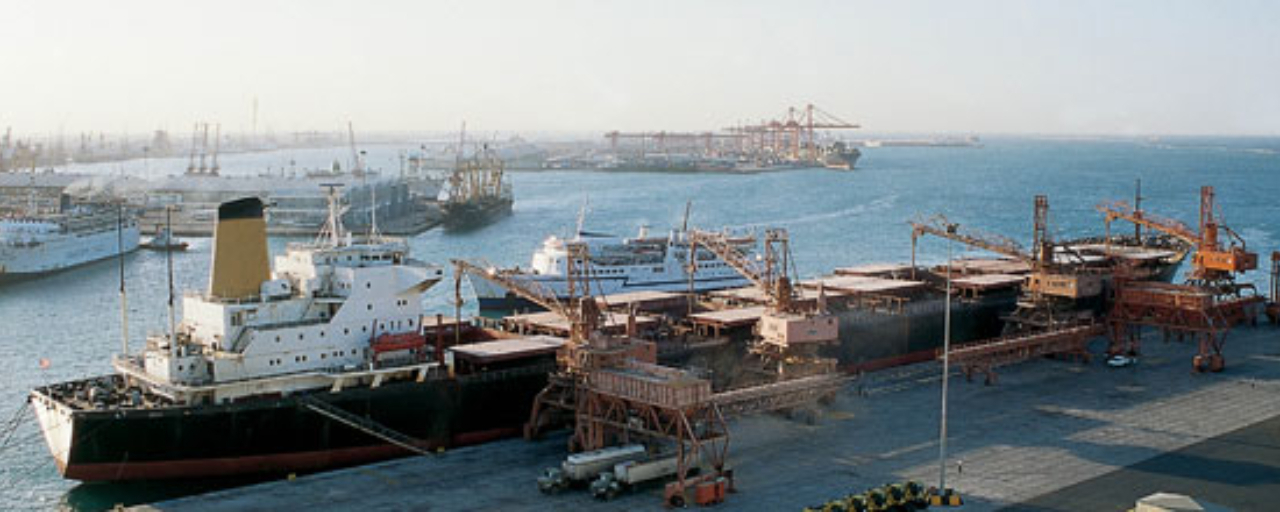

Saudi Arabia is moving crude through its East-West pipeline again, and on Tuesday oil traders decided that mattered more than a U.S.-Iran standoff going nowhere. Prices fell. Riyadh is said to have brought the line back to roughly half its pre-attack flow after drone attacks shut it down earlier this month.
The route earns its attention because of what it replaces. With shipping through the Strait of Hormuz disrupted by the Middle East conflict, the pipeline gives the world's top oil exporter another way out. Barrels cross the kingdom to the Red Sea instead of passing through the strait.
Loadings have resumed at Yanbu, the Red Sea port where the pipeline ends. Saudi Aramco told customers Monday evening what its October loading schedule from the terminal looks like, according to a refining source in Asia. That same refiner had already picked up a cargo there late last week.
The stoppage began Sept. 11, when drone attacks, which Saudi Arabia blamed on Iraqi militias, forced the kingdom to close the pipeline and halt crude exports from Yanbu. Operations resumed last Tuesday. The restart had already nudged prices lower on Monday, adding to a growing pile of evidence that Middle East shipments are recovering.
Some outside confirmation arrived Tuesday from TankerTrackers.com, a vessel-tracking firm. In a post on X, it said European Space Agency satellite images from Sept. 27 show nearly 10 million barrels of Saudi crude being loaded at Yanbu and at Al Muajjiz, a terminal to the south. Refined products are moving as well, the firm said.
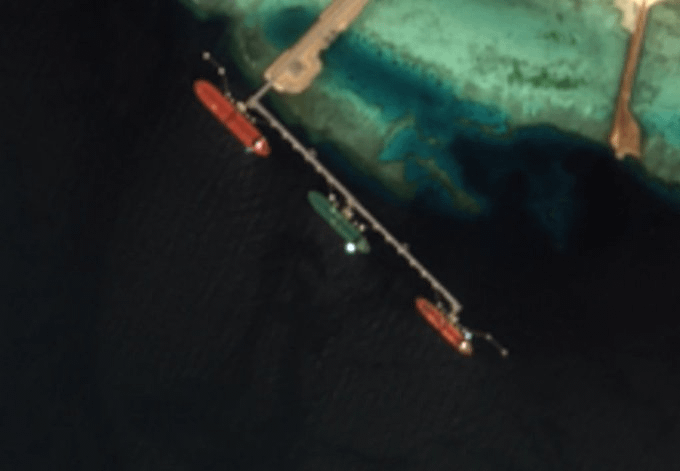
The company also counted 40 tankers in the area, though it noted the tally ignores what each vessel was doing or how close it sat to either terminal. Forty ships in view is a headcount, not a loading schedule.
The Long Road Back to Full Flow
Estimates of what the pipeline is actually carrying depend on who is counting. Two trade sources put crude loadings at Yanbu near 2 million barrels per day since last week, and an industry source described pipeline throughput at a similar level. Kpler, the ship-tracking firm, comes in higher at 2.65 million. Both figures sit far below the line's capacity of 7 million.
Kpler expects throughput to climb to between 3 million and 4 million barrels per day within days. A full return to the pre-attack rate of roughly 5.5 million could still take another month, it said in a note on Monday. One early marker of recovery: crude inventories at the Yanbu terminal rose by about 1 million barrels on Sept. 22, the first build since the attack.
The Yanbu restart is one piece of a broader pickup in Middle East shipments that followed a recovery in exports through the Strait of Hormuz. Not every route has caught up. Crude loadings at Egypt's Sidi Kerir resumed on Sept. 22 after a 10-day pause, yet tankers are still queued offshore because restrictions limit access for much of the commercial fleet, Kpler said.
Mediators Try Again
Supply was not the only thing weighing on prices. The Financial Times reported that mediators are renewing efforts to settle the U.S.-Iran war, days after President Donald Trump rejected an Iranian proposal linked to reopening the Strait of Hormuz. Negotiators were due to hand Iran an updated draft of a possible interim agreement on Tuesday, the paper said, citing two people briefed on the talks.
What Brent and WTI Did About It
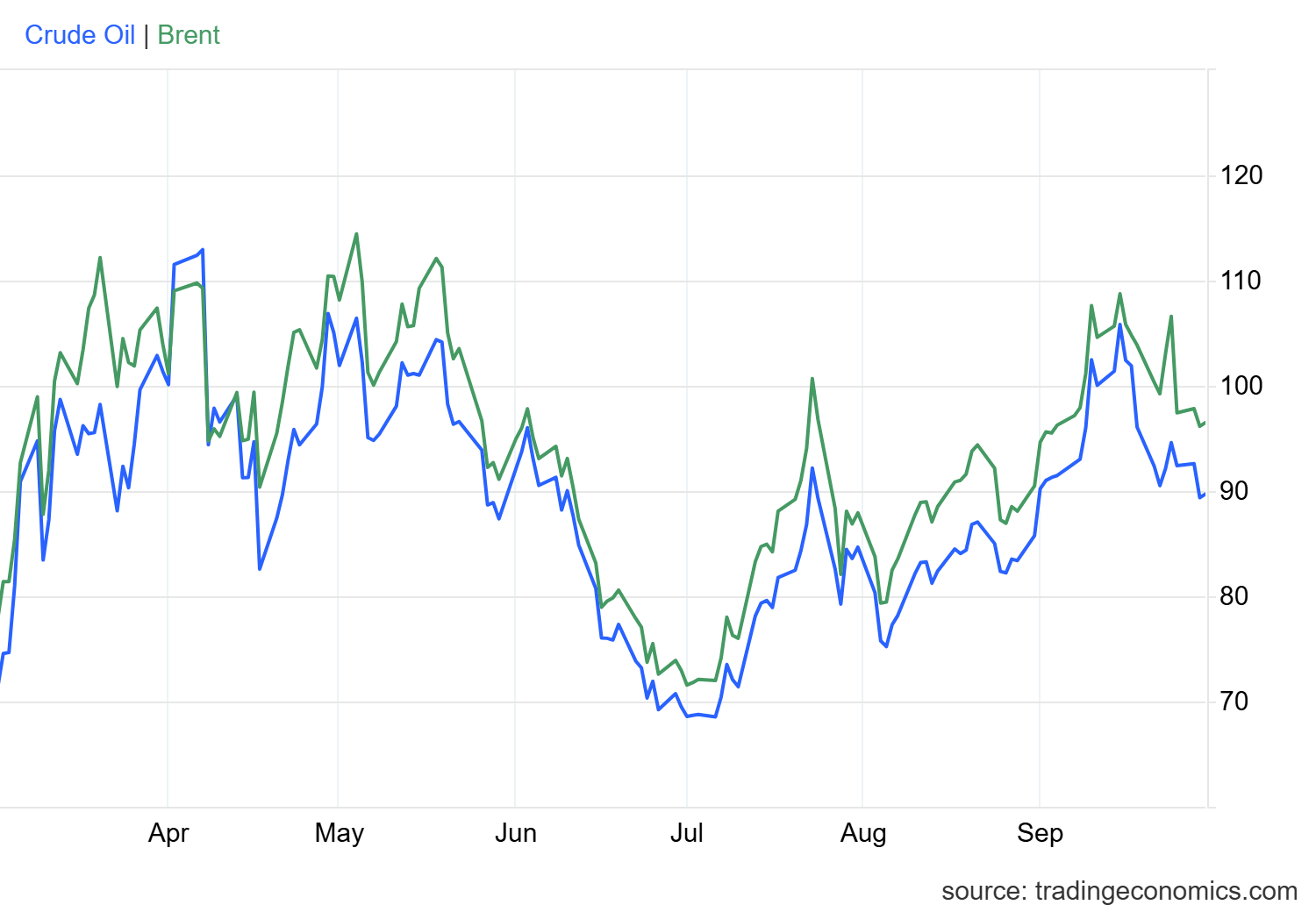
Brent crude settled at $102.59 a barrel on Tuesday, down 2.6%. U.S. West Texas Intermediate fell about 3.5% to $89.38. Early Wednesday trading brought a small bounce: WTI added 10 cents, or 0.11%, to $89.48, and Brent gained 49 cents, or 0.48%, to $103.08. A nibble, not a reversal.
Quiet Talks, Loud Statements
The pullback came as U.S. and Iranian officials reportedly held separate, indirect talks with mediators on Monday. Both sides appear to be searching for a way out of a conflict now seven months old. Iran's foreign minister, Abbas Araghchi, said Tehran passed a seven-point plan to Washington through Qatar and is waiting for an official reply.
Public messaging from Tehran was less accommodating. Major General Rezaei told state broadcaster IRIB that Iran has stated its conditions but that Trump cannot make decisions. A spokesperson for the Revolutionary Guard added that the United States has no option left but to admit failure and leave the region.
Trump answered in his own register on Tuesday. He told reporters he was unsure Iran would give up yet but expected that it would, and said the country is "doing very poorly." A U.S. blockade has cut off Iran's oil exports and the income that comes with them, and the war's costs have made daily life harder for Iranians. Iran's president told the U.N. General Assembly last week that Tehran would never surrender to U.S. pressure.
Each side says the other is the one running out of road.
A Second Chokepoint Gets Louder
Yemen's Houthis have expanded their territory, and recent reporting traces the arms behind that push to Iran and China. The Tehran-backed group has stepped up attacks in the Red Sea, widened its footprint along the Yemeni coast and asserted control over the Bab al-Mandeb Strait, a corridor global energy markets depend on.
Its arsenal leans heavily on Iranian technology and components. Chinese companies, meanwhile, are supplying goods that its drone program relies on.
That sits awkwardly beside the week's good news from Yanbu. Cargoes leaving the port for Asian buyers have to pass through Bab al-Mandeb, so the pipeline's recovery only helps as long as that corridor stays open. Saudi Arabia has repaired the pipeline. It has far less say over the water at the other end.