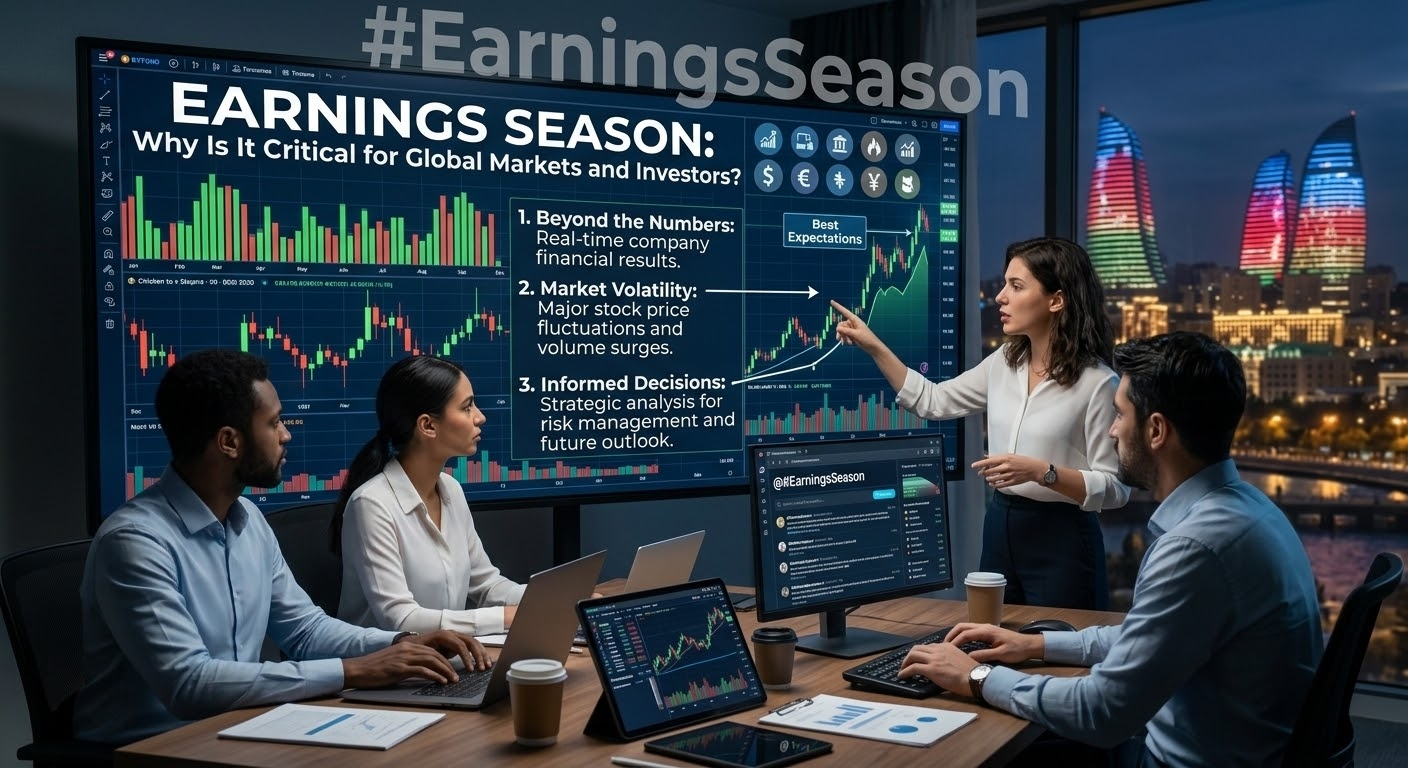

Earnings Season (#EarningsSeason): Why Is It So Important for Global Markets and Investors?
In financial markets and stock exchanges, a special excitement takes place at certain times of the year: Earnings Season (#EarningsSeason). At the end of each quarter, major companies publicly announce their financial results, revenue, profitability metrics, and forecasts for upcoming quarters. This period is one of the most crucial phases for both shareholders and general investors in determining market direction.
1. What Is Earnings Season and When Does It Happen?
Earnings season typically begins immediately after the end of each quarter (in January, April, July, and October). Major technology, banking, energy, and consumer sector giants (such as Apple, Microsoft, NVIDIA, JPMorgan, etc.) present their quarterly financial reports.
During this period, the released figures are compared against consensus estimates previously made by analysts:
When earnings beat expectations: The company's stock price can rise rapidly.
When earnings fall below expectations: Sharp declines and selling pressure may occur in the stocks.
2. Impact on Markets and Volatility
Earnings season is the period when trading volume and price volatility reach their peak levels:
Equities (Stocks): On report release days, specific company stocks can experience sharp surges or drops ranging from 5% to 20% within a few hours.
Indices (S&P 500, Nasdaq): The financial performance of large tech companies has the power to shift the trend of overall market indices.
Cryptocurrency Market: Global macroeconomic environments and sentiment in traditional stock markets directly impact crypto assets as well. Successful earnings reports from tech giants can boost risk appetite, providing positive momentum to Bitcoin and altcoins.
3. How Should Investors Evaluate This Period?
#EarningsSeason creates both great opportunities and significant risks for investors:
Focus on Future Outlook (Guidance): Just as important as how much a company earned in the past quarter is the guidance it provides for future quarters.
Risk Management: Utilizing stop-loss orders before reports are released helps reduce risks against sudden price swings.
Company Fundamentals: It is recommended to look at long-term growth strategy, cash flow, and debt obligations, rather than relying solely on short-term speculation.
Conclusion
#EarningsSeason is not merely a reporting period made of numbers; it is the most important barometer showing the health of the global economy. The trending status of this topic across social media and stock markets is a clear indication that investors are gearing up for major market movements