

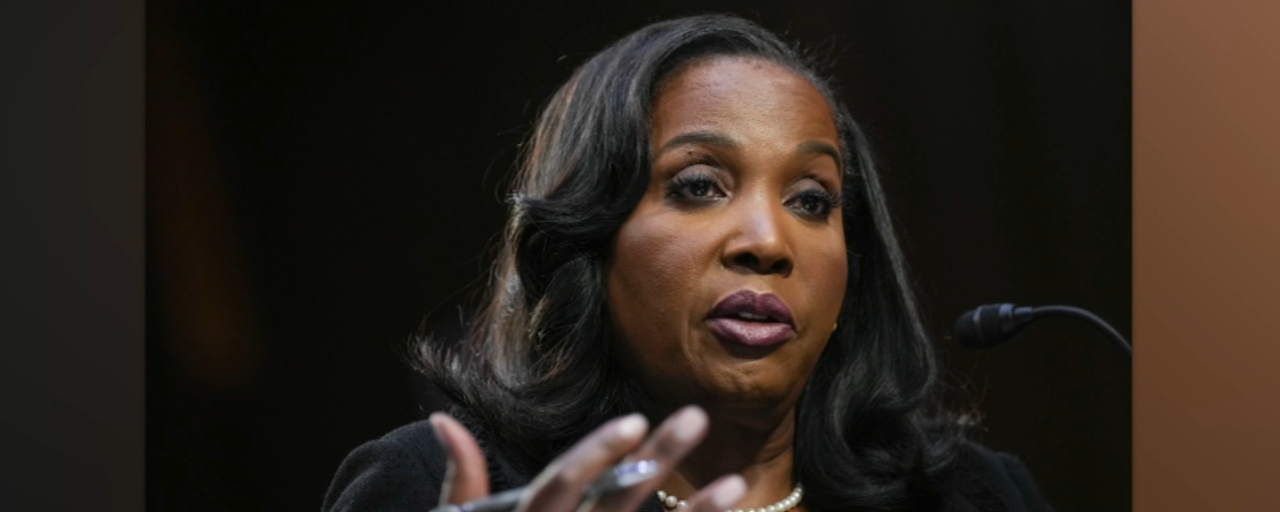

Federal Reserve Governor Lisa D. Cook, who holds a Board of Governors seat and is a permanent voter on the Federal Open Market Committee (FOMC), warned that artificial intelligence is pushing inflation up now and that the productivity payoff will arrive too late to help this year.
Delivering the opening keynote at Oakland Tech Week in California on Monday, cohosted by the Kapor Center, she flagged "some economy-wide pressure from AI-fueled demand" and pointed to the data as evidence.
Electricity and water costs are each up about 5 percent over the past year, and core goods prices are running above 3 percent annually. She expects productivity gains to bring modest disinflation within the next few years, but not in time to offset the broadening pressure later this year. That matters because inflation already sits at an estimated 3.8 percent, almost double the Fed's target, with core at 3.4 percent.
Cook voted with the rest of the FOMC for the 25 basis point hike at the September meeting, and she expects the AI buildout and higher oil prices from the Middle East conflict to keep pressure on prices in coming months.
On the labor market, she found little sign of damage so far. She sees limited evidence that AI is changing the labor market's structure, and both unemployment, at 4.1 percent in August, and layoffs remain low. Still, she stays highly attentive to a scenario where AI drives up unemployment for a time. That would leave the Fed with limited tools, since cutting rates to help workers could risk fueling inflation.
Looking ahead, she said the number and size of any further rate moves will depend on incoming inflation and labor data and on how the economy responds to the Fed's actions so far.
Key Quotes:
Inflation
I see some economy-wide pressure from AI-fueled demand.
You can see signs in the inflation data that the pressure may be broadening: Electricity and water costs are each up around 5 percent over the past year, potentially attributable in part to AI, and core goods prices, which were drifting down before the pandemic, are running over a 3 percent annual pace so far this year.
This introduces the risk that, even as inflation in the narrow AI sector moderates, new and more broadly based price pressures may take its place.
Attempting to fight sector-specific inflation with monetary policy could be a mistake. Our tools are too blunt to target narrow sectors, and addressing relative price shifts is not our role.
Total inflation rose an estimated 3.8 percent in the 12 months leading into August, almost double our target. Core inflation, which strips out energy and food prices, rose an estimated 3.4 percent.
Prices for AI-related goods—such as chips, computers, and software—have surged.
Monetary Policy
I voted along with the rest of the FOMC to raise rates by 25 basis points at the recent September meeting.
This increase was to address inflation, which has been too high for too long.
Looking ahead, I will consider what policy rate may be needed to continue to guide inflation down to our target.
The number and magnitude of any future adjustments will be informed by observations of the economy's reaction to our policy actions thus far and the inflation and labor data over the coming months.
Labor Market
At the moment, there is limited evidence that AI is yielding significant changes to the structure of the labor market.
Both the unemployment rate and layoffs remain low. Those readings have been relatively flat over the last two years, even as AI adoption has picked up.
I am highly attentive to a scenario where AI leads to at least a temporary increase in the unemployment rate.
In that case, we at the Fed would have limited tools. We could lower the federal funds rate in an attempt to bring down high unemployment, but that could risk fueling inflation.
It is my hope that AI adoption will continue to occur at a pace and in a way that allows job creation to match or exceed job destruction.
There is evidence in some sectors, including coding jobs in the software industry and in simultaneous translation, that AI might be decreasing labor demand.
Many recent college graduates are facing more difficulty finding their first jobs.
The unemployment rate has been trending down, with the most recent reading coming in at 4.1 percent in August.
Payrolls have increased, job openings have ticked up, and initial unemployment claims have trended lower.
AI & Productivity
I anticipate that productivity gains will provide modest disinflation within the next few years. However, I do not expect those effects to arrive in time to offset the broadening inflationary pressure later this year.
I am very uncertain as to the breadth and timing of these channels and will adjust my view depending on what I see in the data.
AI is poised to become the most significant technological shift of our lifetime.
Evidence shows that AI adoption is happening faster than PC or internet adoption at comparable points.
Nearly half of small employer firms are using AI, and 71 percent report increased productivity as a result.
In the long term, I am optimistic that AI-fueled productivity growth can raise living standards for all Americans.
Beyond that, any specific role for the government in the path of AI's trajectory is for elected officials to decide.
Energy & Middle East Risks
In the coming months, I expect to see continued pressure on inflation from the AI buildout, as discussed today, and from the pass-through of higher oil prices and supply chain disruptions associated with the conflict in the Middle East.
Growth & Economy
The strength seen in the labor market is also present in the broader data on economic growth, which has remained remarkably resilient over the past year.