
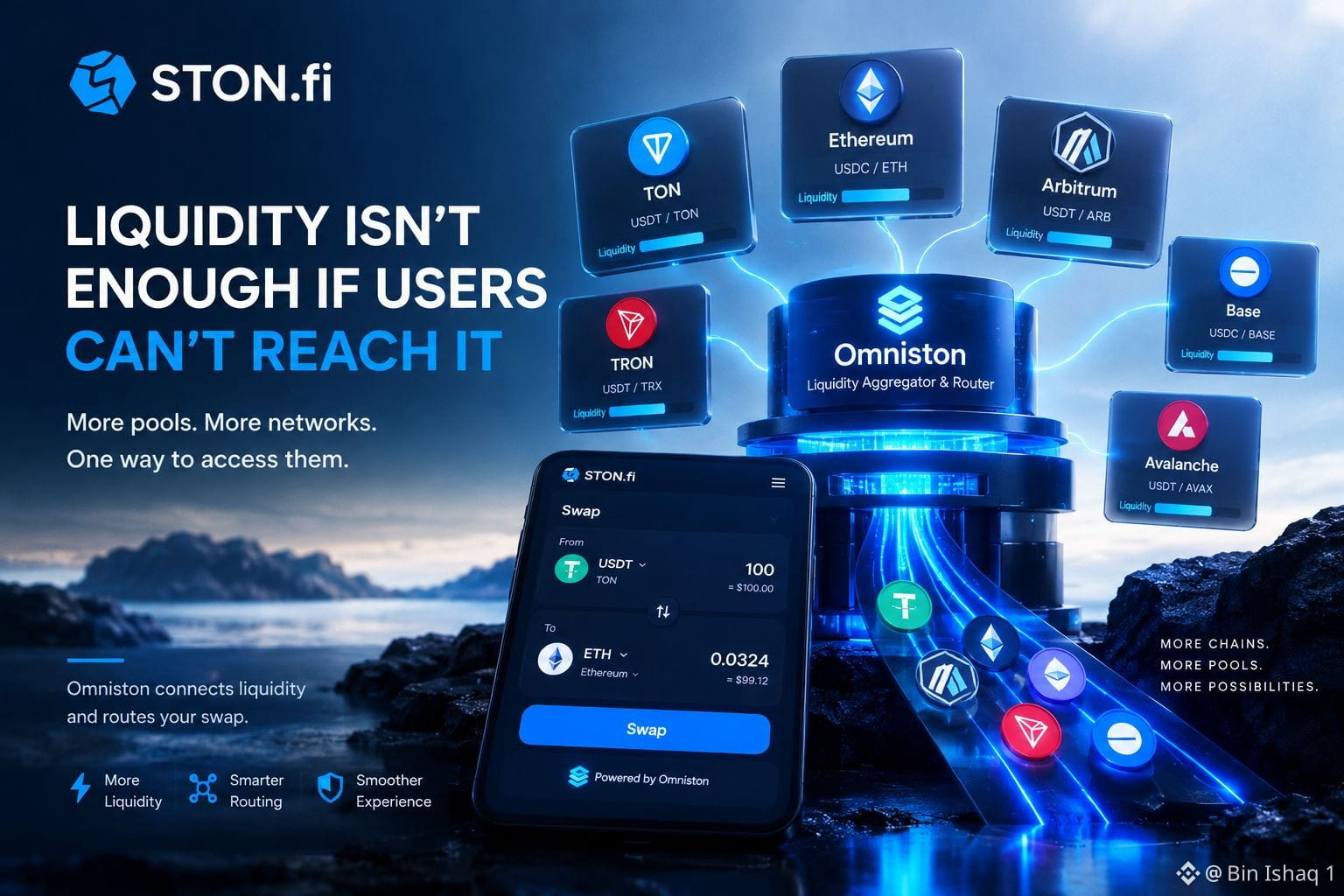
LIQUIDITY ISN’T ENOUGH IF USERS CAN’T REACH IT A DeFi protocol can have liquidity sitting across multiple pools, but that doesn’t automatically make that liquidity useful to everyone. The challenge is access. Users shouldn’t have to compare different pools, switch networks, search for routes, and figure out where the best execution might come from before every swap. STON.fi approaches this through infrastructure that connects liquidity and routes swaps across available markets. Omniston works underneath the interface, so applications can give users access to more liquidity without exposing all the complexity behind it. That creates an important distinction: liquidity is the resource, but routing is what makes the resource accessible. As more wallets, Telegram apps and DeFi products integrate this infrastructure, liquidity can become easier to reach without every application building its own routing system. For DeFi, that means the next layer of competition may not only be about who has more liquidity, but how efficiently that liquidity can be accessed. $XRP $BANK


Publicación
Aviso legal: Incluye opiniones de terceros. No es asesoramiento. Binance Ai puede utilizarse sin garantía. Consultar Términos y condiciones.