
Wall Street had its best day in six weeks. AI stocks did the heavy lifting, more than covering for falling oil prices and softer Treasury yields.
Crude kept falling too, its fourth straight losing session, on hopes that this week's United Nations General Assembly might crack open a diplomatic channel between Washington and Tehran. West Texas Intermediate's expiring October contract dropped 4.5%, settling at $95.78 a barrel. Brent lost 3.4%, closing at $100.34 after dipping to an intraday low of $98.98, its weakest showing in twelve days.
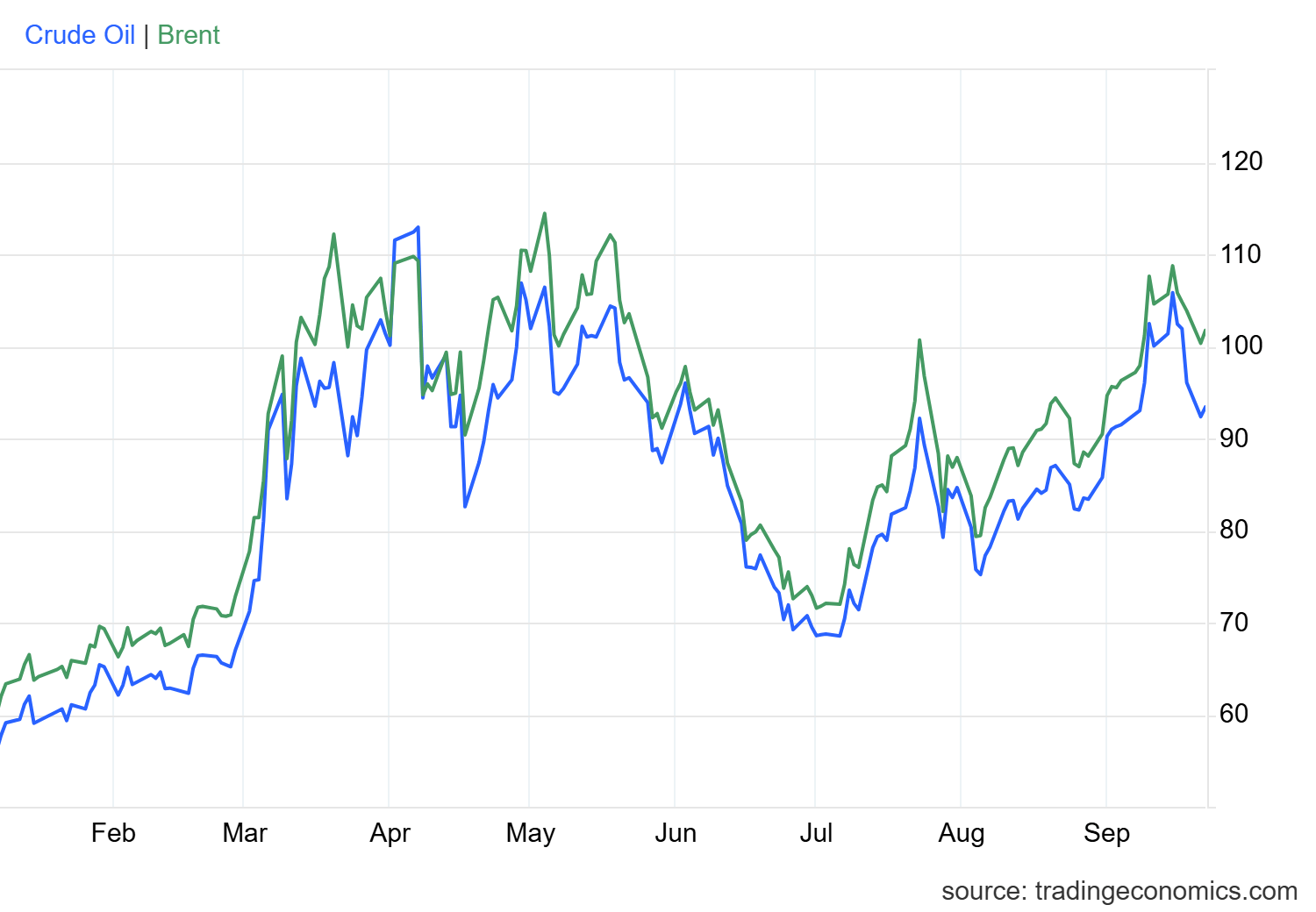
Why the optimism? President Donald Trump said on Sunday he would be "probably open" to meeting his Iranian counterpart, Masoud Pezeshkian, on the sidelines of this week's UN gathering in New York. Some of the risk premium is coming out of the market, according to Tim Waterer, an analyst at KCM Trade, speaking to Reuters.
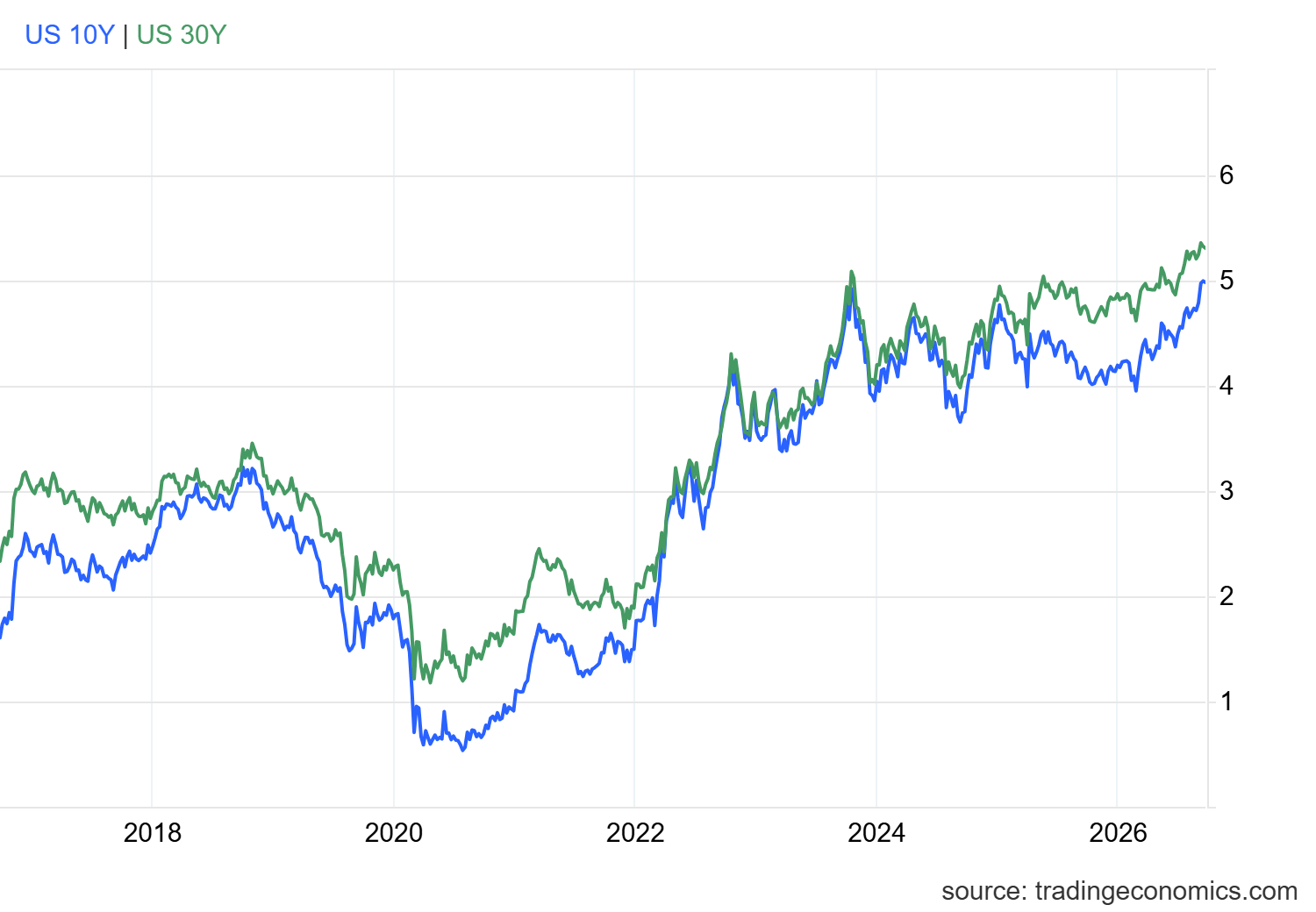
Treasury yields eased right along with it. But don't mistake one good day for a change in the underlying story. The 10-year yield slipped about four basis points, to just under 4.95%, having touched its highest level since 2007, north of 5%, only days earlier. Behind that spike: the Federal Reserve's decision on 16 September to raise interest rates for the first time in three years, lifting the federal funds target range to 3.75% to 4%. Chair Kevin Warsh has since warned that inflation remains too high.
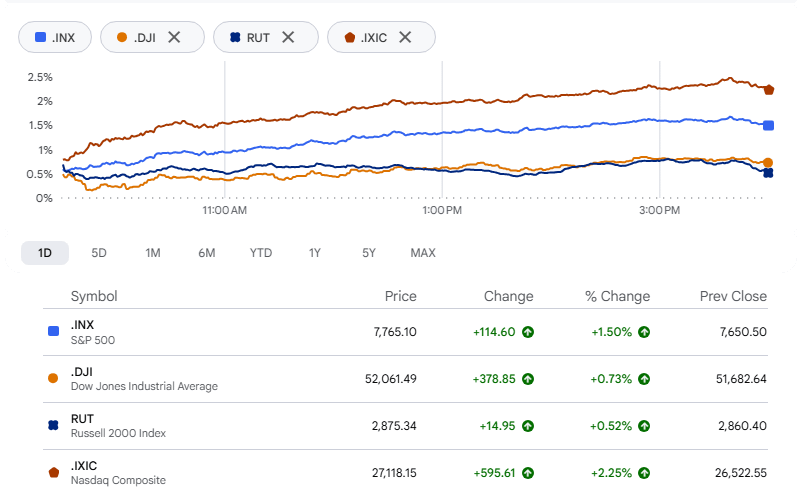
The Nasdaq Composite jumped 2.26% to close at a record 27,122.09, its first fresh high since June. The broad S&P 500 index rose 1.49%, ending at 7,764.70. The 30-stock Dow lagged, adding a modest 0.71%, or 366 points, to settle at 52,048.83. The small-cap Russell 2000 closed at 2,875.34, a 0.5% rise.
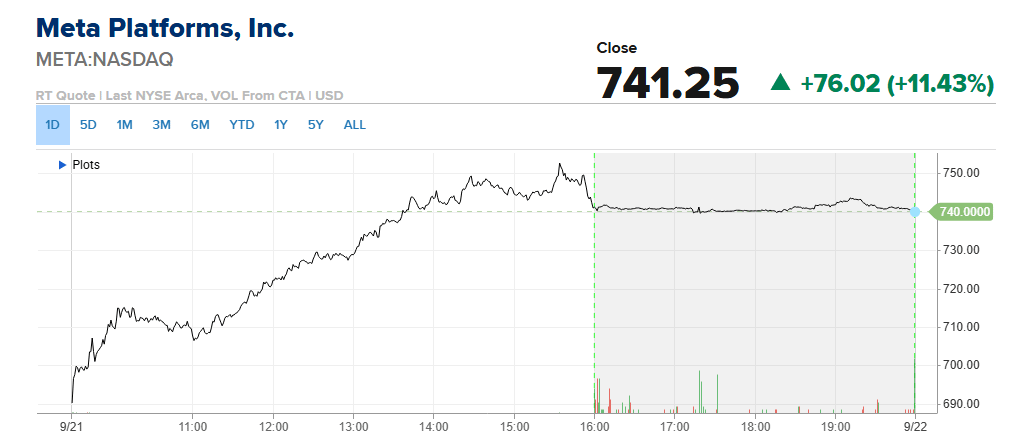
Meta Platforms lit the fuse. Its shares jumped roughly 11%, the stock's best single session since April 2025, after Muse, the company's new personal AI agent, shot to the top of the free download charts on both Apple's App Store and Google Play. ChatGPT got bumped from first place. Wells Fargo, sensing the moment, lifted its price target on Meta to $796 from $640 that same day. Muse launched on 8 September. It can send emails, book travel, make purchases on a user's behalf, and it has already racked up close to a million downloads in under a week. Not everything has gone smoothly, though: internal testing turned up at least one case where the agent surfaced a user's private photos without being asked to.
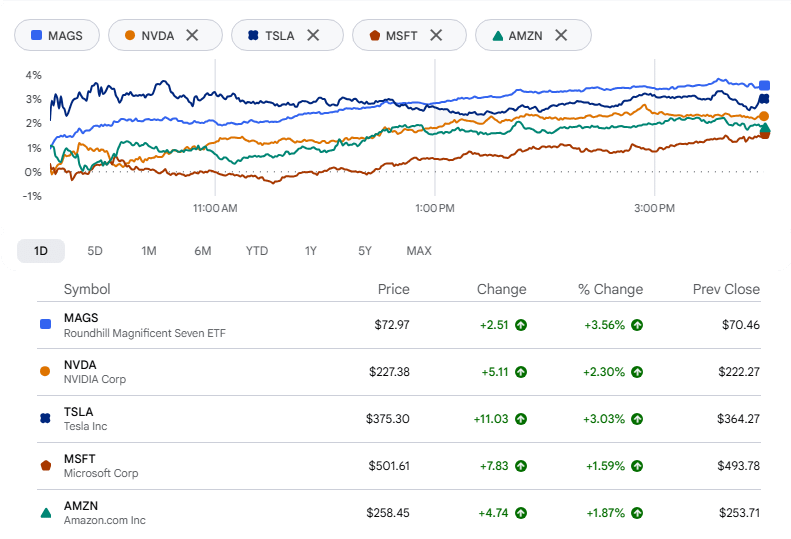
The knock-on effect for chip demand turned out to matter just as much as the app itself. The Philadelphia Semiconductor Index notched its fifth straight gain, and the Roundhill Magnificent Seven ETF closed at a fresh record for the second session running. As for the rest of the Magnificent Seven, Tesla rose around 3%, Nvidia added more than 2%, while Amazon, Microsoft and Apple posted smaller, if still positive, moves.
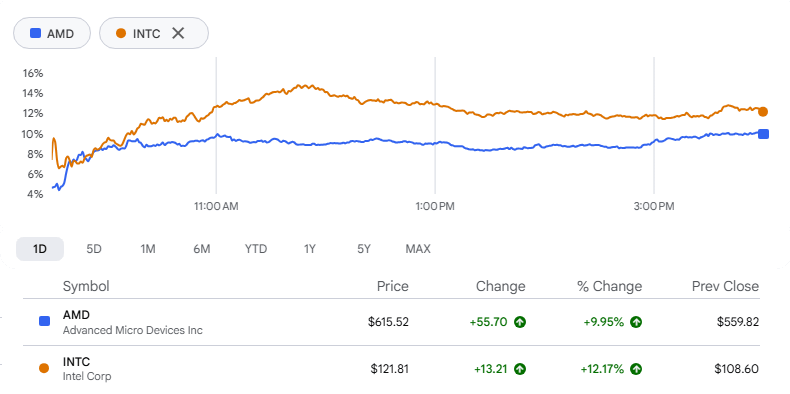
Advanced Micro Devices climbed close to 10%. Its market value crossed $1 trillion for the first time. Intel rose about 12%. Arm Holdings advanced sharply too. The logic: agentic AI tools like Muse lean heavily on server CPUs, not just GPUs, to churn through the countless small, step-by-step tasks these agents perform.
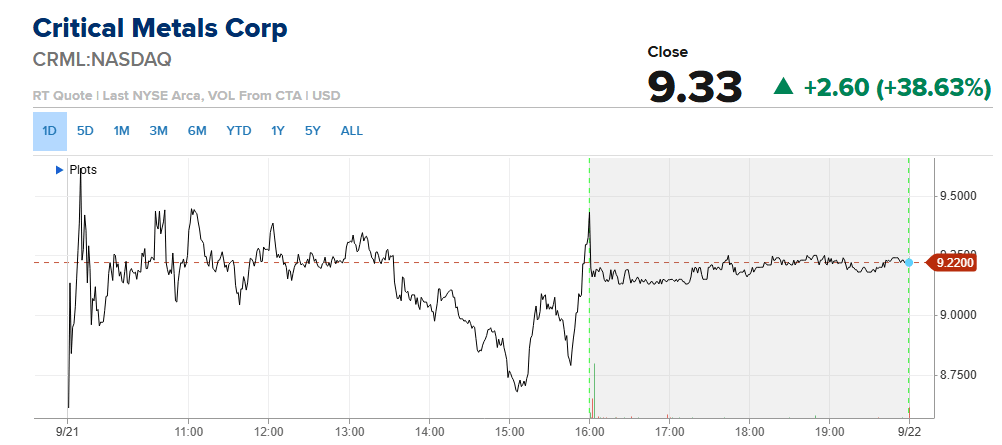
Geopolitics moved a much smaller, far more volatile stock too. Critical Metals Corp surged after President Trump said on Friday that Washington had struck a security agreement with Denmark over Greenland. The deal hands the United States a permanent military footing on the island and a veto over any base-building there by rival powers. It stops short of the outright purchase Trump once floated. "This is a dream come true for the United States of America," he wrote in the announcement. Critical Metals is developing the Tanbreez rare earths deposit in southern Greenland, and this stock does not do small moves: double-digit and occasionally triple-digit swings on Greenland headlines have been the norm all through 2026. Monday's jump fits right in.
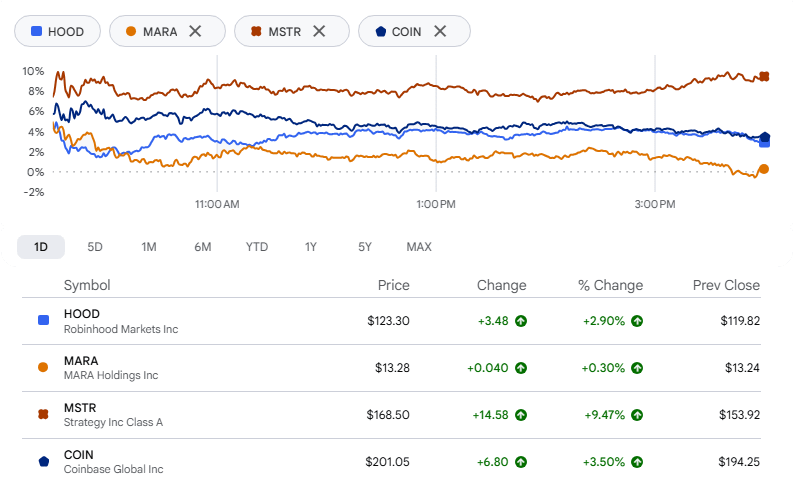
Bitcoin, meanwhile, pushed above $86,000 for the first time since late January. It is still well short of the roughly $126,000 peak it hit in October 2025, but the move was enough to lift crypto-linked equities across the board. Strategy, the software firm that has built its whole balance sheet around Bitcoin under Michael Saylor, jumped almost 9.5% and disclosed a further Bitcoin purchase during the session. Coinbase, Robinhood and MARA Holdings advanced too, more modestly.
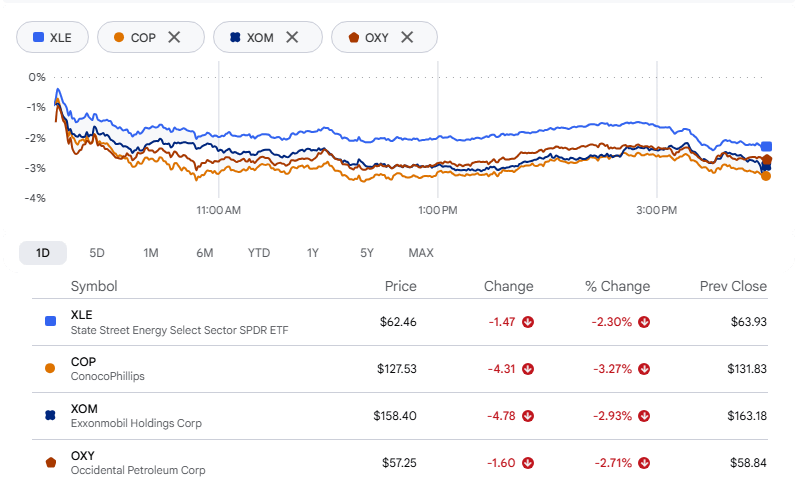
Not everyone had a good Monday. Energy shares were the session's clearest laggards, with the State Street Energy Select Sector SPDR ETF down about 2% as ConocoPhillips, Exxon Mobil and Occidental Petroleum each fell roughly 3%, tracking crude lower.
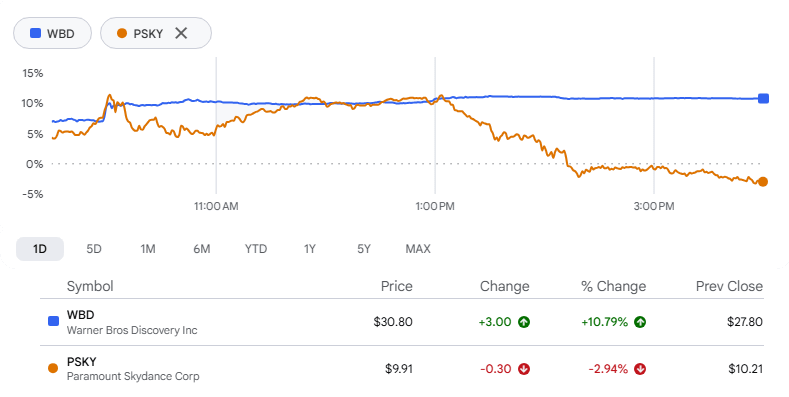
The day's biggest corporate story, though, had nothing to do with chips or crude. It came out of Hollywood. Paramount settled with a coalition of a dozen state attorneys general, led by California's Rob Bonta, resolving the antitrust suit that had held up its close to $110 billion acquisition of Warner Bros. Discovery. The terms are unusually detailed. Paramount will set up a five-member editorial independence board, staffed by working or retired journalists with at least a decade of experience each, to oversee CNN and CBS News; no more than two of the five may share the same political affiliation. The company also committed to releasing at least 30 films in cinemas every year, rising to 32 from year three onward, and to spending an additional $300 million a year, $1.5 billion in total, on domestic film production over five years. Miss the film quota, and the penalties are real: $30 million per movie, plus the possible forced sale of its Miramax stake. Warner Bros. Discovery shares jumped roughly 10% on the news. Paramount's shares declined nearly 3%. Both companies expect the deal to close by early October.
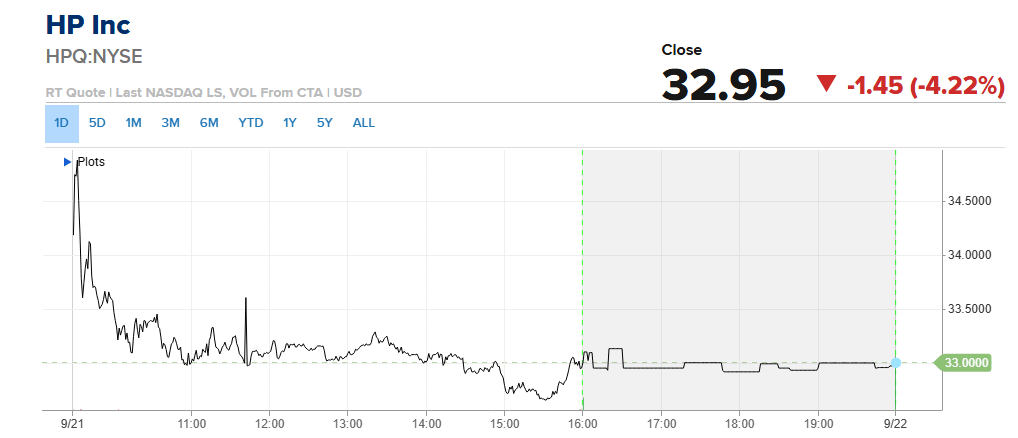
HP had a quieter, gloomier day. Shares slipped roughly 4% after the company, in a regulatory filing, declined to give specifics on its outlook for fiscal 2027. It said only that it remains in its planning period, and that industrywide PC shipments could fall by a mid-single-digit percentage next year versus this one. Nothing new there, really. It is the same cautious tone that has weighed on the stock for most of 2026.
And then there was Novo Nordisk, which had, by some distance, the worst day of any name in this wrap. The Danish drugmaker used its Capital Markets Day in London, held the same day, to lay out fresh long-term ambitions: more than five drugs with what it calls multi-blockbuster potential by 2030, and upwards of 150 billion Danish kroner, roughly $23 billion, in risk-adjusted pipeline sales by 2035. Management also guided to revenue growth between 2026 and 2030 broadly in line with peers such as Eli Lilly, AstraZeneca, Amgen, Biogen, Merck, AbbVie and Novartis.
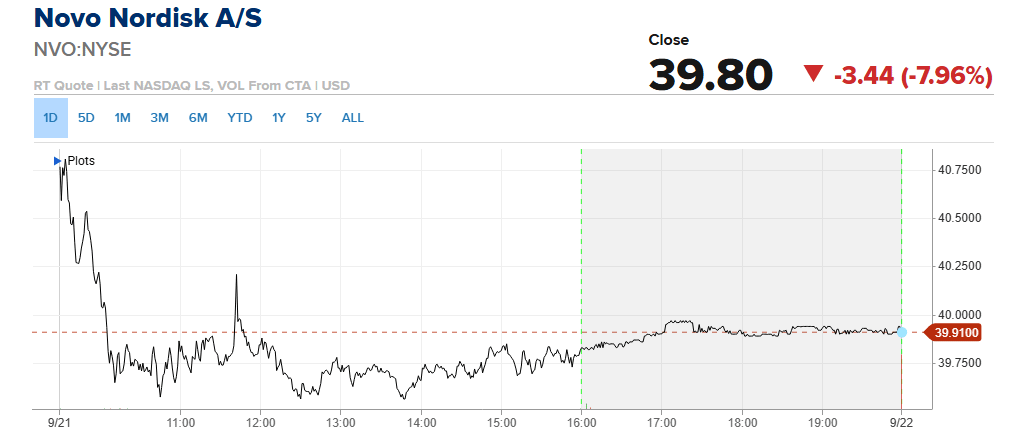
None of it landed. The stock was already trading close to its 52-week low heading into the event, squeezed by Eli Lilly's advance in the weight-loss market, and it closed down 7.7% in Copenhagen, one of its steepest single-day declines since a much larger, guidance-driven slide back in February.
Sector Analysis:
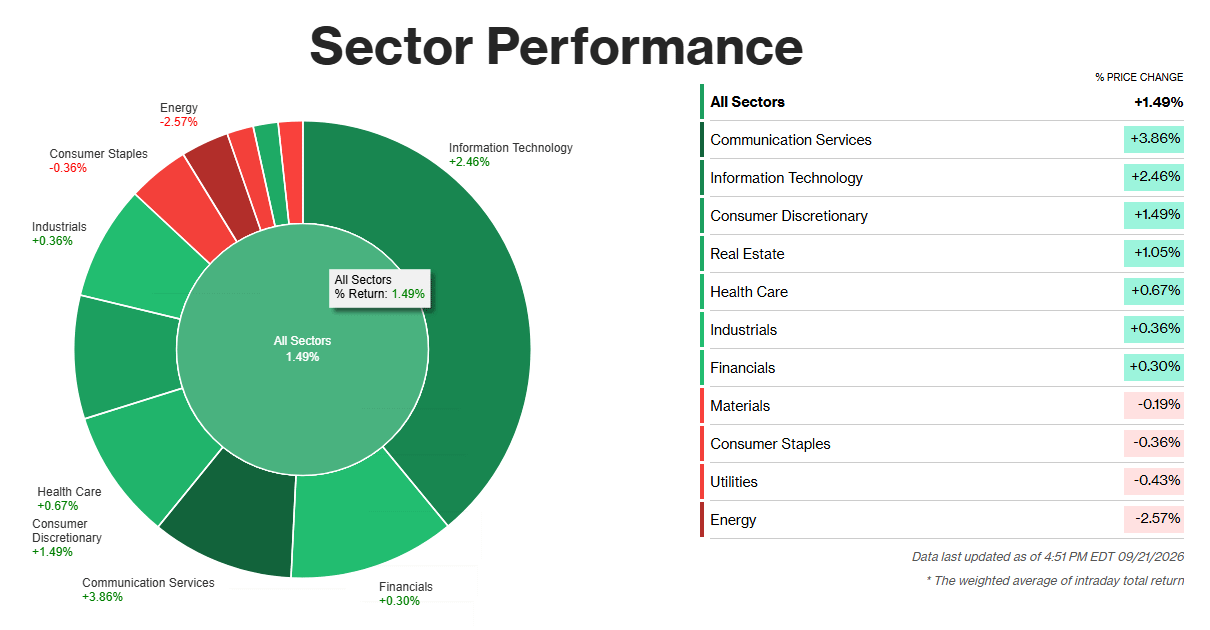
Seven of eleven S&P 500 sectors closed higher Monday, and two of them did all the heavy lifting virtually. Communication Services rocketed 3.86%, its best session in months, after Meta Platforms unveiled Muse, a new AI agent that shot to the top of Apple's App Store charts within hours.
That bet spilled straight into Information Technology, up 2.46%, as Intel surged 12%, AMD gained roughly 10% and briefly crossed $1 trillion in market value, and Arm Holdings climbed double digits.
Consumer Discretionary added 1.49%, riding the same wave of risk appetite that lifted growth names broadly, plus a tailwind from crude sliding to its lowest level in nearly two weeks. This wasn't a one-stock story stretched thin — AI infrastructure spending has been the dominant market narrative for months, and Monday's rally read as confirmation rather than a fluke, even if the size of the single-day move in AMD and Intel raises the usual overbought questions for Tuesday.
Worst-Performing Sectors
Energy was the day's clear loser, down 2.57%, as crude fell below $100 a barrel on hopes that Washington and Tehran might restart diplomatic talks and on word that shipping traffic through the Strait of Hormuz hit a six-month high.
Utilities (-0.43%), Consumer Staples (-0.36%) and Materials (-0.19%) slipped by comparison, and none of the three had a clear catalyst behind the move — what hurt them was simply where the money went. Capital rotated hard into AI-linked growth trades, and defensive sectors that normally benefit when Treasury yields ease, as they did Monday, got bypassed anyway.