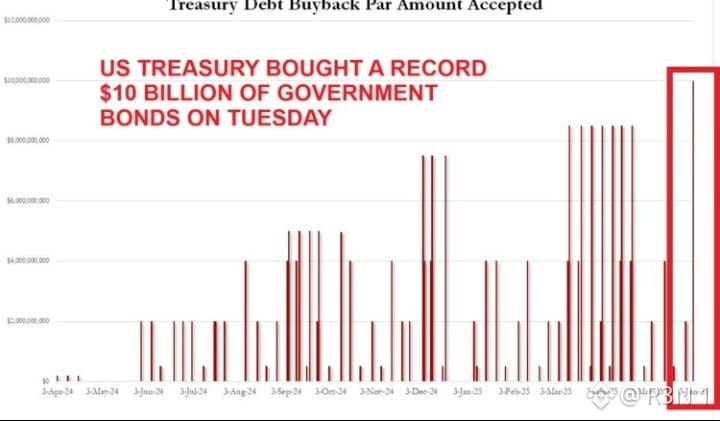
This isn't the Fed buying bonds, it's the Treasury Department running buyback operations, and those are two different institutions with two different mandates. The Fed just hiked rates this week. It isn't expanding its balance sheet through classic QE right now, its own reserve management purchases are scheduled at zero for September.
What's actually driving the "stealth QE" narrative is Treasury Secretary Bessent's buyback program, which doubled its cap from $2B to $4B per operation starting September 9, covering 10 to 30 year securities, after briefly touching a $6B ceiling on one operation. This retires older long dated bonds funded by new short term bill issuance. Total debt outstanding doesn't actually shrink, it's a refinancing operation, not debt reduction, and it doesn't expand the money supply the way Fed asset purchases would.
That distinction matters for the BTC connection. Bitcoin's rally toward $69,000 to $70,000 in August did track this buyback announcement closely, per multiple contemporaneous reports, and the mechanism is plausible, easing long end bond market stress can loosen broader financing conditions that risk assets respond to. But calling it QE overstates what's happening. A Fed economist quoted on this exact question drew the line clearly, QE removes duration risk and stimulates, reserve management purchases just maintain ample reserves for rate control.
My honest read: there's a real liquidity story here, it's just not the one the headline suggests. Treasury operations easing bond market friction is a genuine, if narrower, tailwind than a Fed balance sheet expansion would be.
What I'm watching: whether Treasury's buyback pace holds or expands further, since that's the actual lever in this story, not anything happening at the Fed.
$BTC #BTC Price Analysis# $HYPE
What's actually driving the "stealth QE" narrative is Treasury Secretary Bessent's buyback program, which doubled its cap from $2B to $4B per operation starting September 9, covering 10 to 30 year securities, after briefly touching a $6B ceiling on one operation. This retires older long dated bonds funded by new short term bill issuance. Total debt outstanding doesn't actually shrink, it's a refinancing operation, not debt reduction, and it doesn't expand the money supply the way Fed asset purchases would.
That distinction matters for the BTC connection. Bitcoin's rally toward $69,000 to $70,000 in August did track this buyback announcement closely, per multiple contemporaneous reports, and the mechanism is plausible, easing long end bond market stress can loosen broader financing conditions that risk assets respond to. But calling it QE overstates what's happening. A Fed economist quoted on this exact question drew the line clearly, QE removes duration risk and stimulates, reserve management purchases just maintain ample reserves for rate control.
My honest read: there's a real liquidity story here, it's just not the one the headline suggests. Treasury operations easing bond market friction is a genuine, if narrower, tailwind than a Fed balance sheet expansion would be.
What I'm watching: whether Treasury's buyback pace holds or expands further, since that's the actual lever in this story, not anything happening at the Fed.
$BTC #BTC Price Analysis# $HYPE