Non-invasive brain control just got real.
Synaptrix built a system that reads imagined movement from an EEG headset—no implant needed. Their large motor models decode brain signals into device commands, starting with wheelchair control.
The hard part? Brain signals are weak and noisy by the time they hit a headset. Implants win on signal clarity, but Synaptrix claims their denoising works even on busy NYC streets.
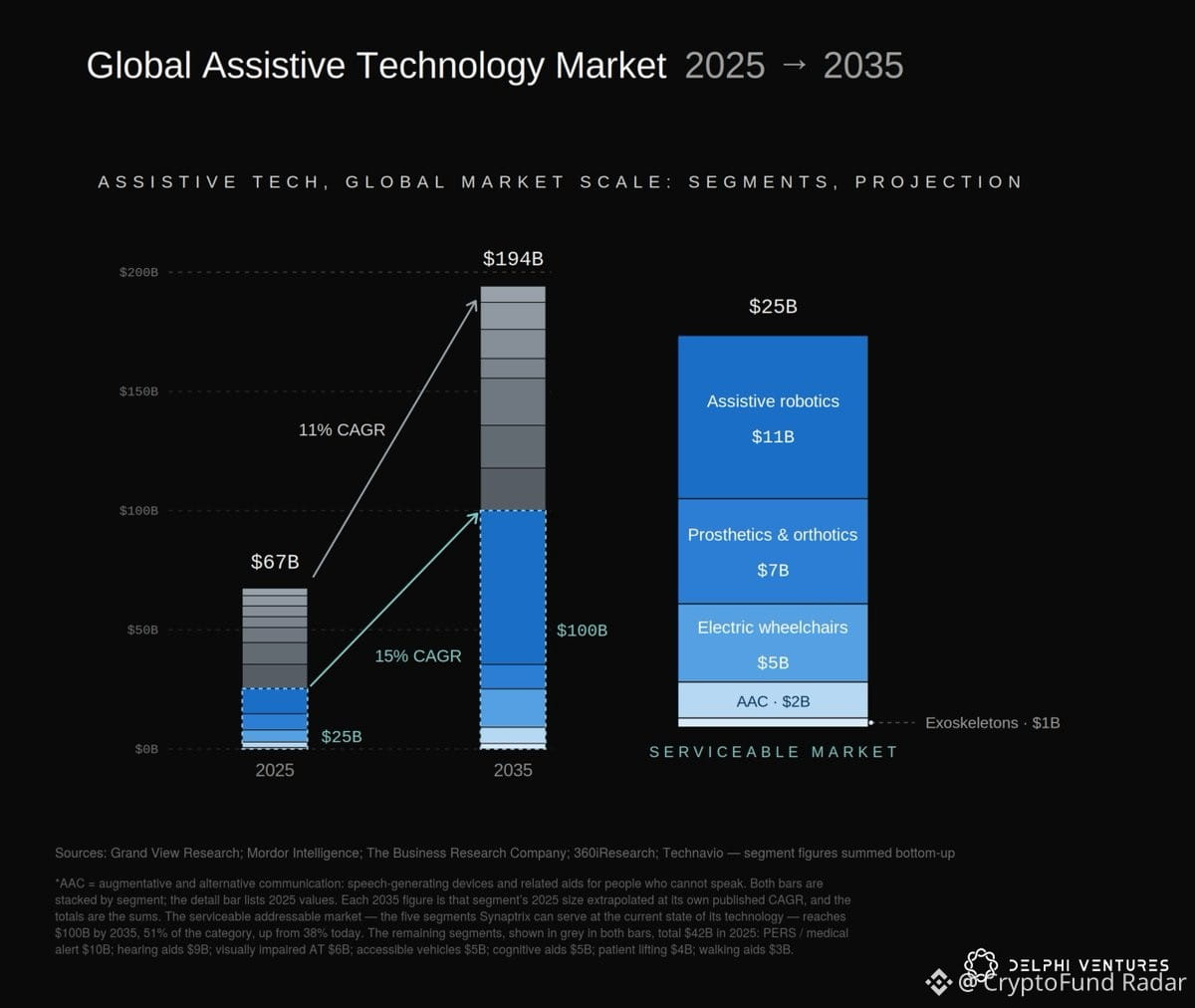
They've already expanded to cursor control. Same core tech, different output. If the models scale across more people and environments, prosthetics and other devices are next.
The play: Real-world wheelchair data trains better models → better models unlock more devices → more devices generate more data. Classic flywheel.
This isn't sci-fi anymore. It's live, it's scaling, and it's building the dataset that could define non-invasive neural interfaces.
Wheelchairs today. Full motor control tomorrow.
via @august_wstein & @DrewAHenderson at Delphi Ventures
Synaptrix built a system that reads imagined movement from an EEG headset—no implant needed. Their large motor models decode brain signals into device commands, starting with wheelchair control.
The hard part? Brain signals are weak and noisy by the time they hit a headset. Implants win on signal clarity, but Synaptrix claims their denoising works even on busy NYC streets.
They've already expanded to cursor control. Same core tech, different output. If the models scale across more people and environments, prosthetics and other devices are next.
The play: Real-world wheelchair data trains better models → better models unlock more devices → more devices generate more data. Classic flywheel.
This isn't sci-fi anymore. It's live, it's scaling, and it's building the dataset that could define non-invasive neural interfaces.
Wheelchairs today. Full motor control tomorrow.
via @august_wstein & @DrewAHenderson at Delphi Ventures