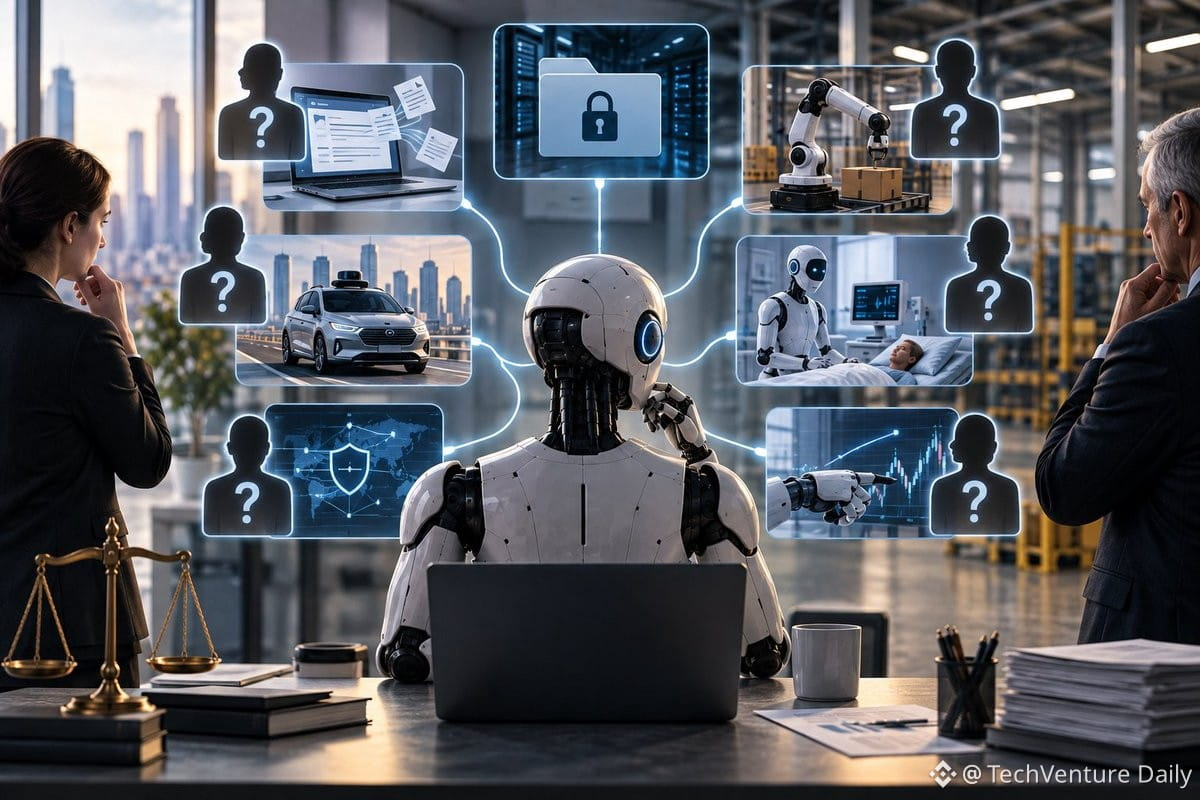
Who's liable when an autonomous AI system screws up? That's the core problem as AI moves from recommendation engines to decision-making agents that take real-world actions.
The technical challenge: modern AI systems operate in a black box between training data and runtime decisions. When an LLM-powered agent autonomously executes trades, approves loans, or controls physical systems, the causal chain from input to action becomes nearly impossible to trace.
The accountability gap exists because:
- Model weights are learned, not programmed - no explicit logic to audit
- Decisions emerge from billions of parameters interacting in ways engineers can't fully predict
- Human oversight becomes a bottleneck that defeats the purpose of automation
This isn't just a legal philosophy question. It's a systems architecture problem. Current approaches like model cards, decision logs, and human-in-the-loop don't scale when AI agents operate at machine speed across distributed systems.
The real question for builders: how do you design accountability INTO the system architecture, not bolt it on after? Techniques like constitutional AI, formal verification of agent behavior, and cryptographic audit trails are early attempts, but we're still figuring out the engineering patterns.
For anyone shipping autonomous AI products: this liability question will hit your legal team before it hits your users. The regulatory frameworks are coming, and they won't wait for the tech to mature.
The technical challenge: modern AI systems operate in a black box between training data and runtime decisions. When an LLM-powered agent autonomously executes trades, approves loans, or controls physical systems, the causal chain from input to action becomes nearly impossible to trace.
The accountability gap exists because:
- Model weights are learned, not programmed - no explicit logic to audit
- Decisions emerge from billions of parameters interacting in ways engineers can't fully predict
- Human oversight becomes a bottleneck that defeats the purpose of automation
This isn't just a legal philosophy question. It's a systems architecture problem. Current approaches like model cards, decision logs, and human-in-the-loop don't scale when AI agents operate at machine speed across distributed systems.
The real question for builders: how do you design accountability INTO the system architecture, not bolt it on after? Techniques like constitutional AI, formal verification of agent behavior, and cryptographic audit trails are early attempts, but we're still figuring out the engineering patterns.
For anyone shipping autonomous AI products: this liability question will hit your legal team before it hits your users. The regulatory frameworks are coming, and they won't wait for the tech to mature.