


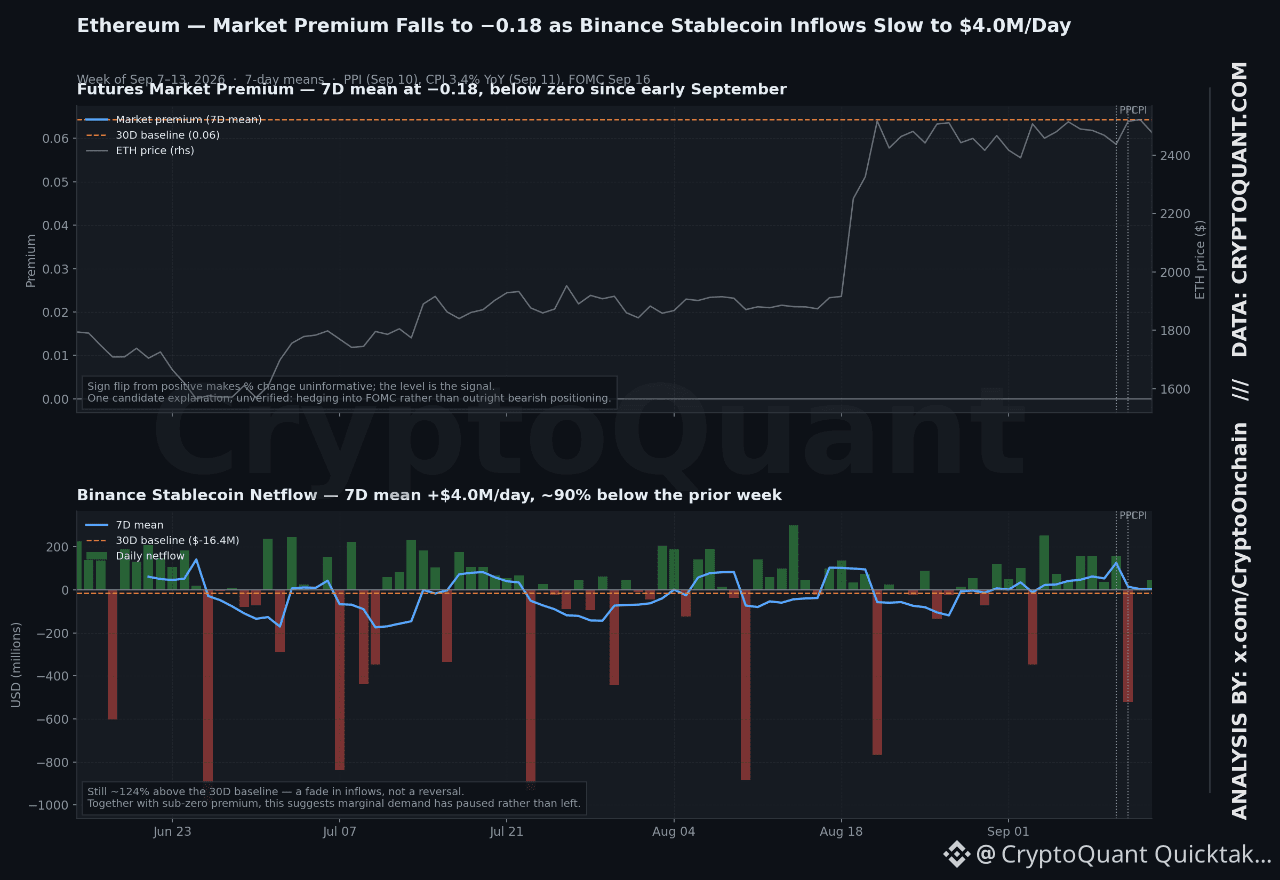
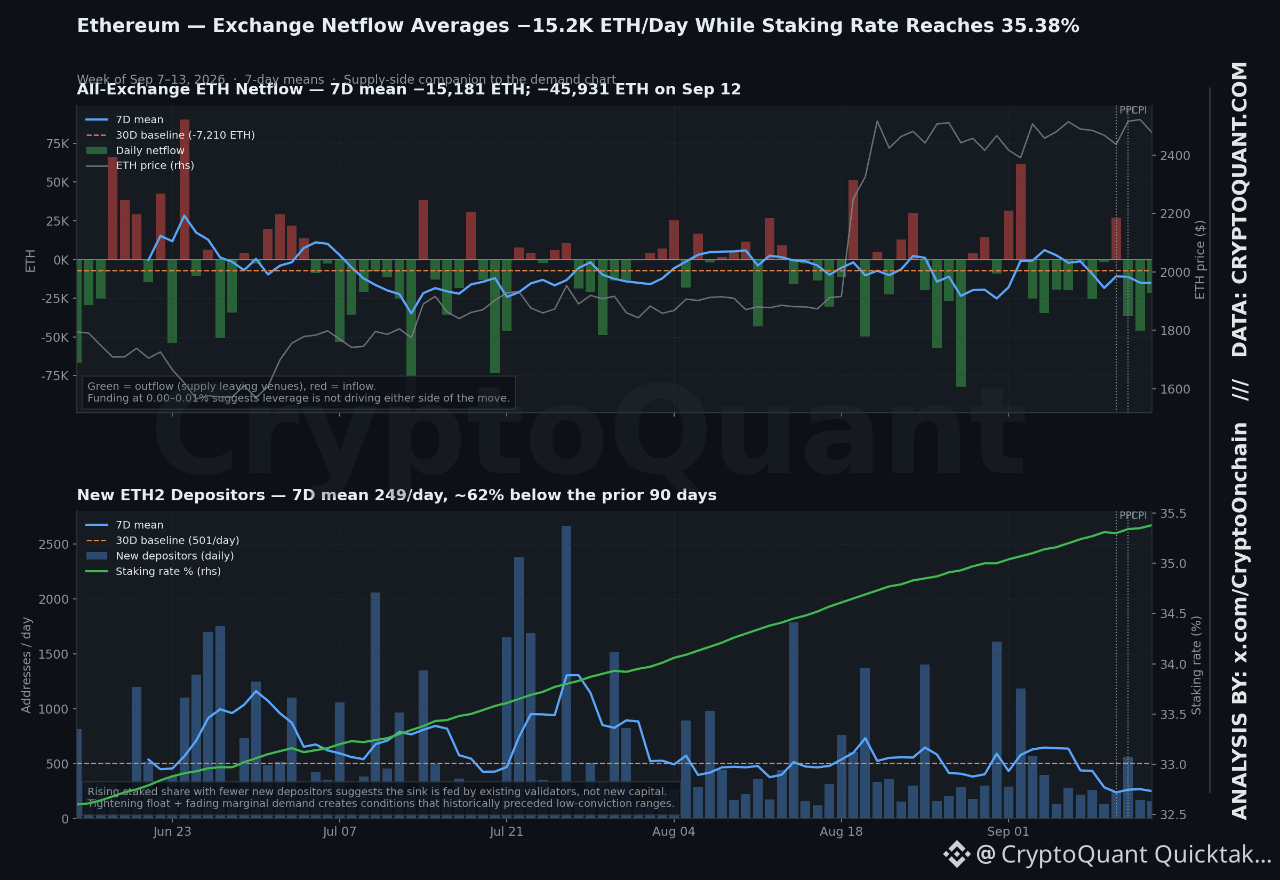
Ethereum’s futures market premium averaged −0.18 over the seven days to Sep 13, 2026. Stablecoin netflow into Binance averaged +$4.0M per day in the same window. New ETH2 depositors averaged 249 per day.
Caveats first. The market premium crossed from positive to negative, so its percentage change is not meaningful; the level is the signal. Binance stablecoin inflow is down about 90% from last week but still 124% above the 30-day baseline — a fade, not a reversal. Median transfer and fee series are excluded because near-zero denominators inflate their percentages.
Macro: PPI printed 5.4% YoY on Sep 10 and CPI 3.4% (core 2.4%) on Sep 11; the 10-year held 4.95% into the Sep 16 FOMC. ETH closed at $2,477 on Sep 13, inside the $2,391–$2,522 band held since Aug 31. One candidate explanation, unverified: the negative premium may reflect hedging into FOMC rather than outright bearish positioning.
Against baseline, the two demand channels tracked here are cooling together. Last week’s stablecoin staging at Binance has largely stopped, futures trade below spot, and Coinbase premium sits at −0.05. Supply, however, keeps tightening: exchange netflow averaged −15,181 ETH/day and the staking rate reached 35.38%. The drop in new depositors suggests that sink is fed by existing validators rather than new capital. Funding at 0.00–0.01% indicates leverage is not driving either side.
A tightening float paired with fading marginal demand creates conditions that historically preceded low-conviction ranges — ones that resolve on an external catalyst rather than on flows alone.
For now, the clearest reading is: supply keeps leaving Binance and its peers, but the capital that was staging to absorb it has paused ahead of the Fed.
Written by CryptoOnchain