


Bitcoin trades 24/7, but its price swings increasingly follow Wall Street's clock.
A study using 87,672 hourly Kraken BTC/USD observations found that 13:00-21:59 UTC accounted for 50.6% of daily realized variance in 2022-2025, up from 38.4% in 2016-2018. Those nine hours make up just 37.5% of a day. Volatility peaks shifted with U.S. daylight saving time, and the U.S.-hours variance share fell on NYSE holidays.
Macro releases, ETF-related hedging and cross-asset portfolio adjustments may help explain this pattern. Yet the main structural break appeared in November 2021, not at the January 2024 spot ETF launch. ETFs alone cannot explain the shift.
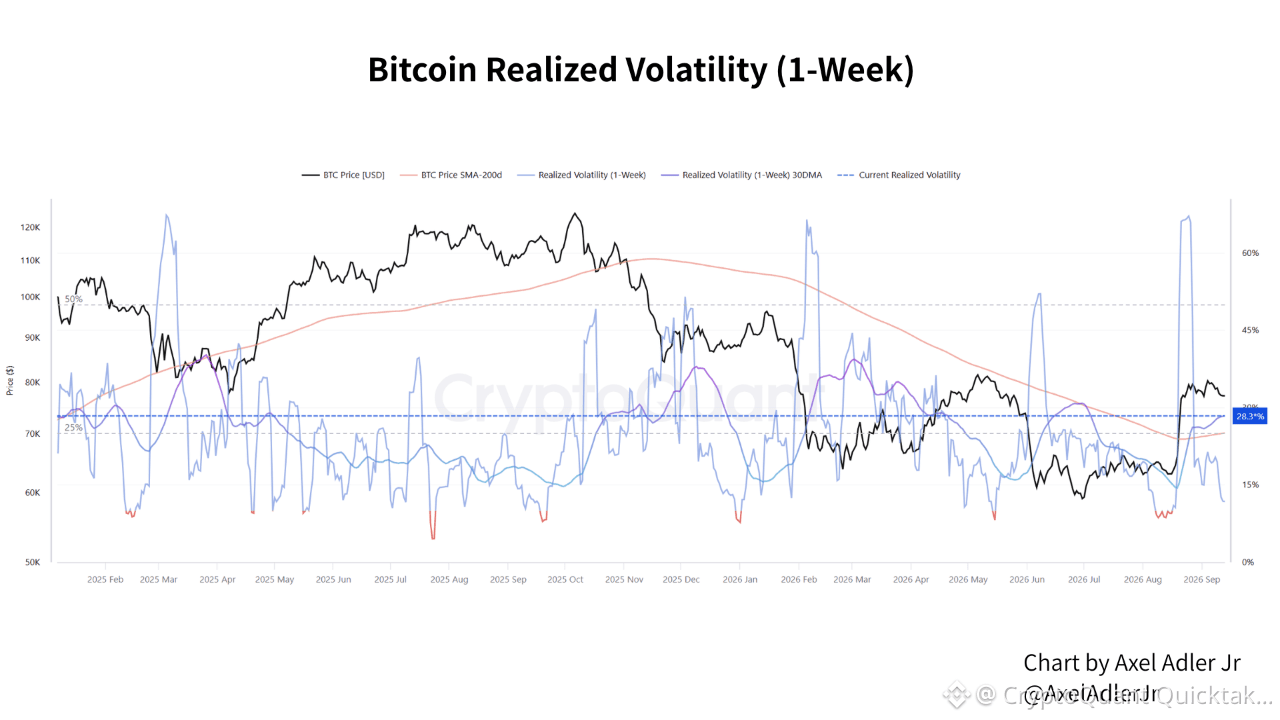
Axel Adler Jr.'s chart shows annualized one-week realized volatility jumping above 60% during Bitcoin's late-August rebound before falling into the teens. BTC remains near $77,000, above its roughly $70,000 200-day moving average.
The chart measures how much Bitcoin moved; the study examines when volatility concentrates. Neither predicts its next direction. The findings also come from one exchange, not every market.
Lower volatility means recent calm, not future safety. Bitcoin never closes, but the information and capital moving it still have working hours.
Written by XWIN Japan