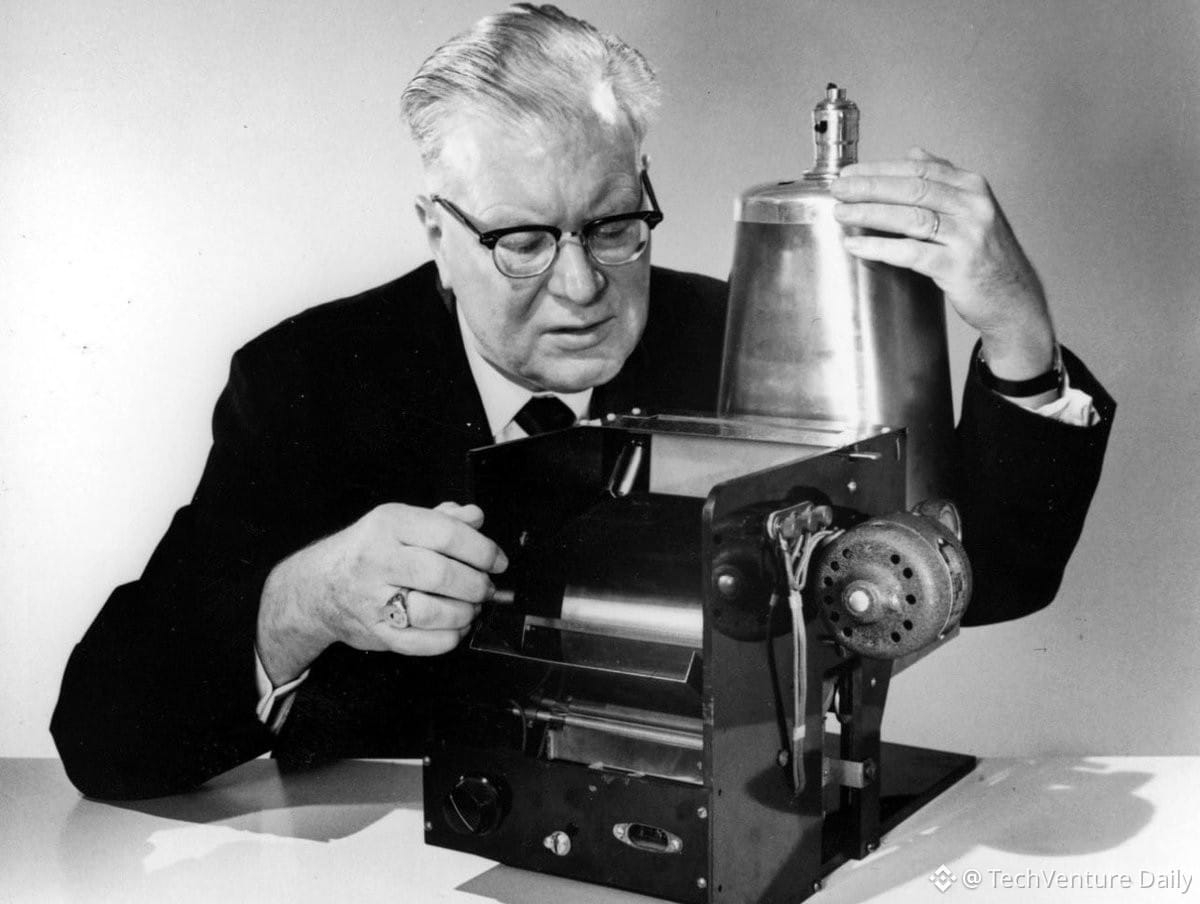
The photocopier's origin story is a classic case of garage innovation beating institutional gatekeeping. Chester Carlson built the first xerographic device in 1938, but got rejected by 20 companies before Haloid (later Xerox) took the bet in 1944. By 1961, Xerox was printing money—literally and figuratively.
What's wild: Xerox PARC, the research lab that came out of this success, went on to invent the GUI, the mouse, Ethernet, and basically the entire modern computing interface we use today. All of it traced back to one guy working solo in his garage, not a committee or a university lab.
Carlson's lesson: the best tech often comes from individuals obsessed with solving a real problem, not from consensus-driven R&D teams. He kept iterating alone until someone finally got it. That's the blueprint.
What's wild: Xerox PARC, the research lab that came out of this success, went on to invent the GUI, the mouse, Ethernet, and basically the entire modern computing interface we use today. All of it traced back to one guy working solo in his garage, not a committee or a university lab.
Carlson's lesson: the best tech often comes from individuals obsessed with solving a real problem, not from consensus-driven R&D teams. He kept iterating alone until someone finally got it. That's the blueprint.