
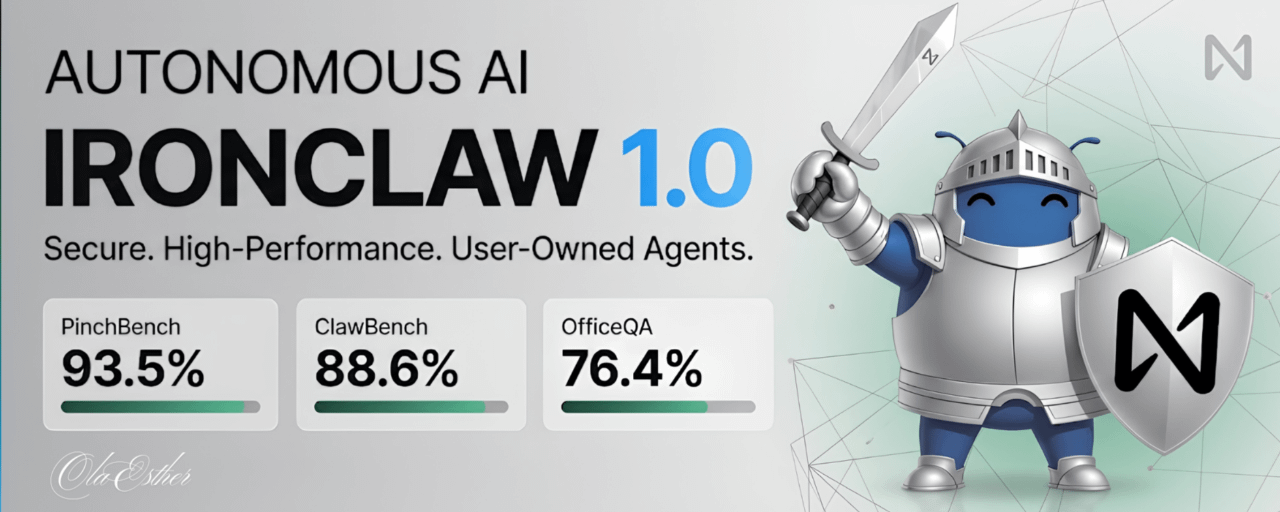

As autonomous AI agents evolve from experimental scripts into always-on enterprise assistants, traditional software frameworks face a critical bottleneck: safety and continuity. When an agent possesses unrestrained authority to query databases, write code, or execute financial transactions, a single flaw in reasoning can lead to catastrophic execution errors.
To solve this, @NEAR Protocol is redefining autonomous execution with the launch of IronClaw 1.0, an open-source agent framework engineered to separate cognitive decision-making from physical execution.
IronClaw 1.0: Separating Thinking from Acting
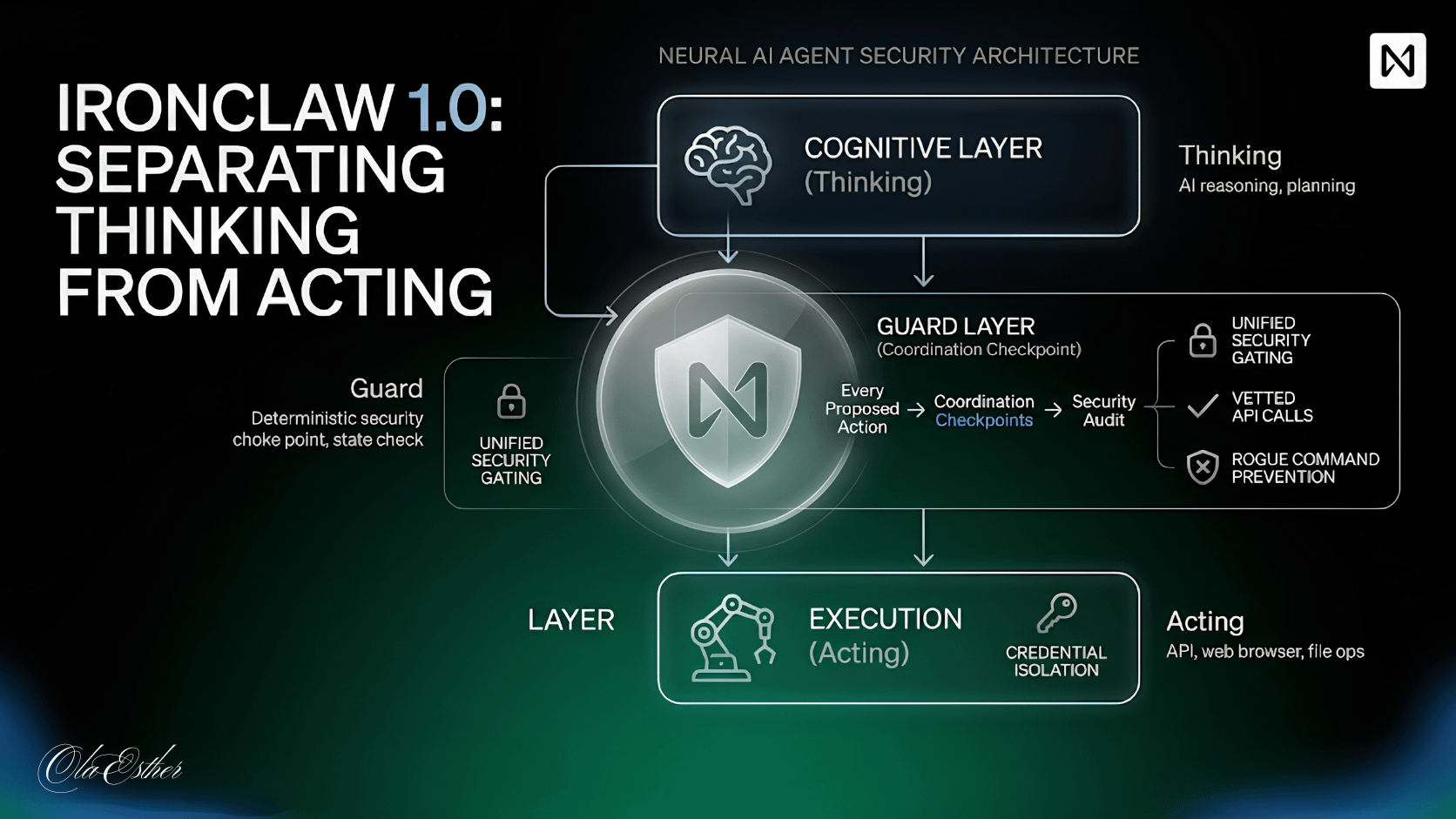
At the core of #IronClaw 1.0 is a fundamental structural rethink: the component that decides what to do is strictly separated from the component that performs the action.
[ Cognitive Layer (Thinking) ] ──► [ Guard Layer (Checkpoint) ] ──► [ Execution Layer (Acting) ]
Positioned between reasoning and execution sits the "Guard" layer—a centralized, deterministic coordination checkpoint. Every proposed action must pass through this single security choke point before taking effect.
A single checkpoint in front of every action is the kind of design people assume costs capability... Instead, it yields a system that is safer by default without sacrificing operational velocity.
By routing all intent through a unified Guard, IronClaw prevents agents from executing unvetted API calls, leaked credentials, or rogue commands.
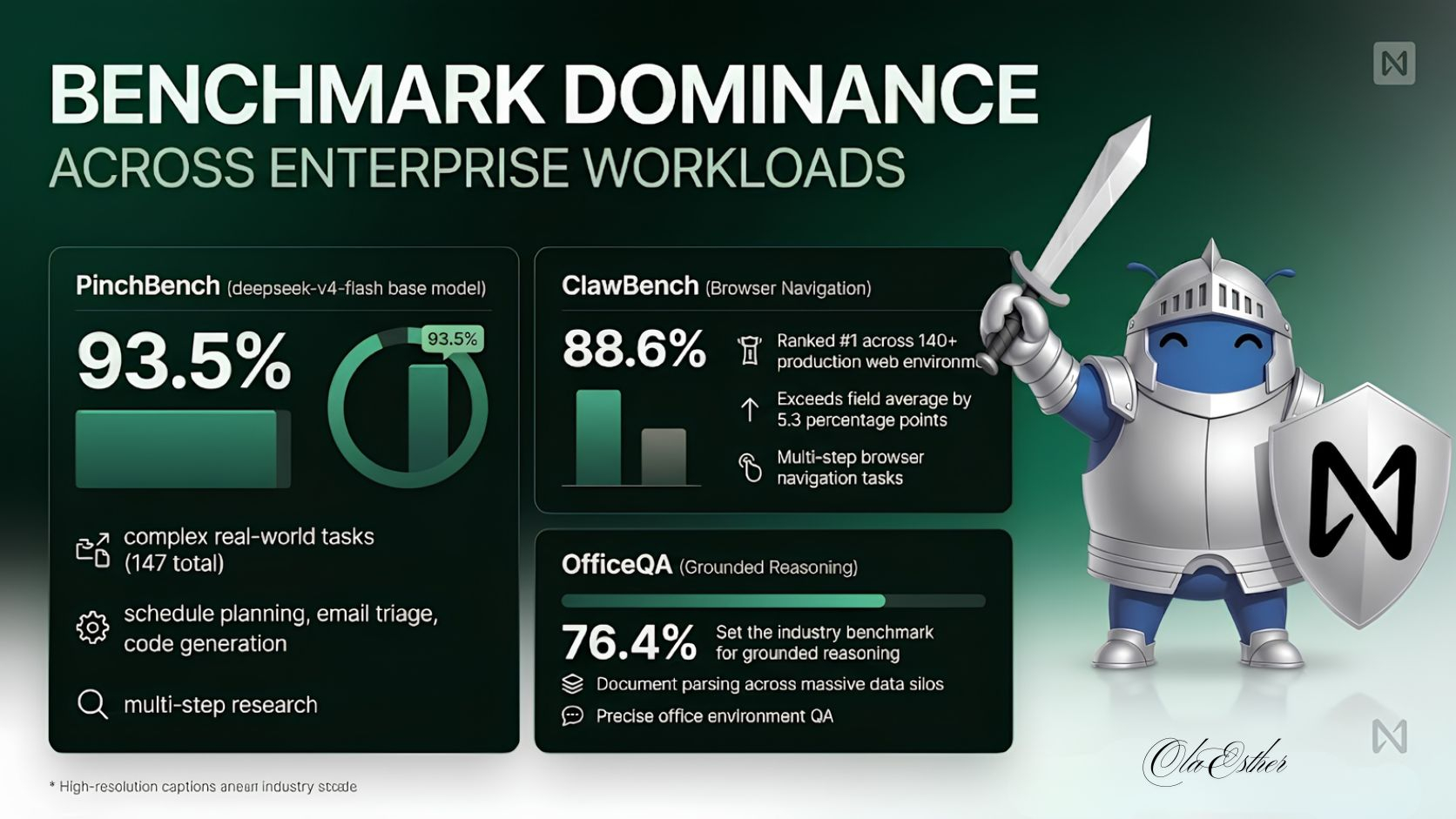
Benchmark Dominance across Enterprise Workloads
To validate this architecture, IronClaw 1.0 was evaluated alongside competing frameworks using the deepseek-v4-flash base model. The results demonstrate that strict security gating enhances rather than hinders agentic performance:
● PinchBench (93.5%): Outperformed top competing agent harnesses on 147 complex real-world tasks, including schedule planning, email triage, code generation, and multi-step research.
● ClawBench (88.6%): Ranked #1 across 140+ production web environments, leading the field average by 5.3 percentage points on multi-step browser navigation.
● OfficeQA (76.4%): Set the industry benchmark for grounded reasoning and document parsing across massive enterprise data silos.
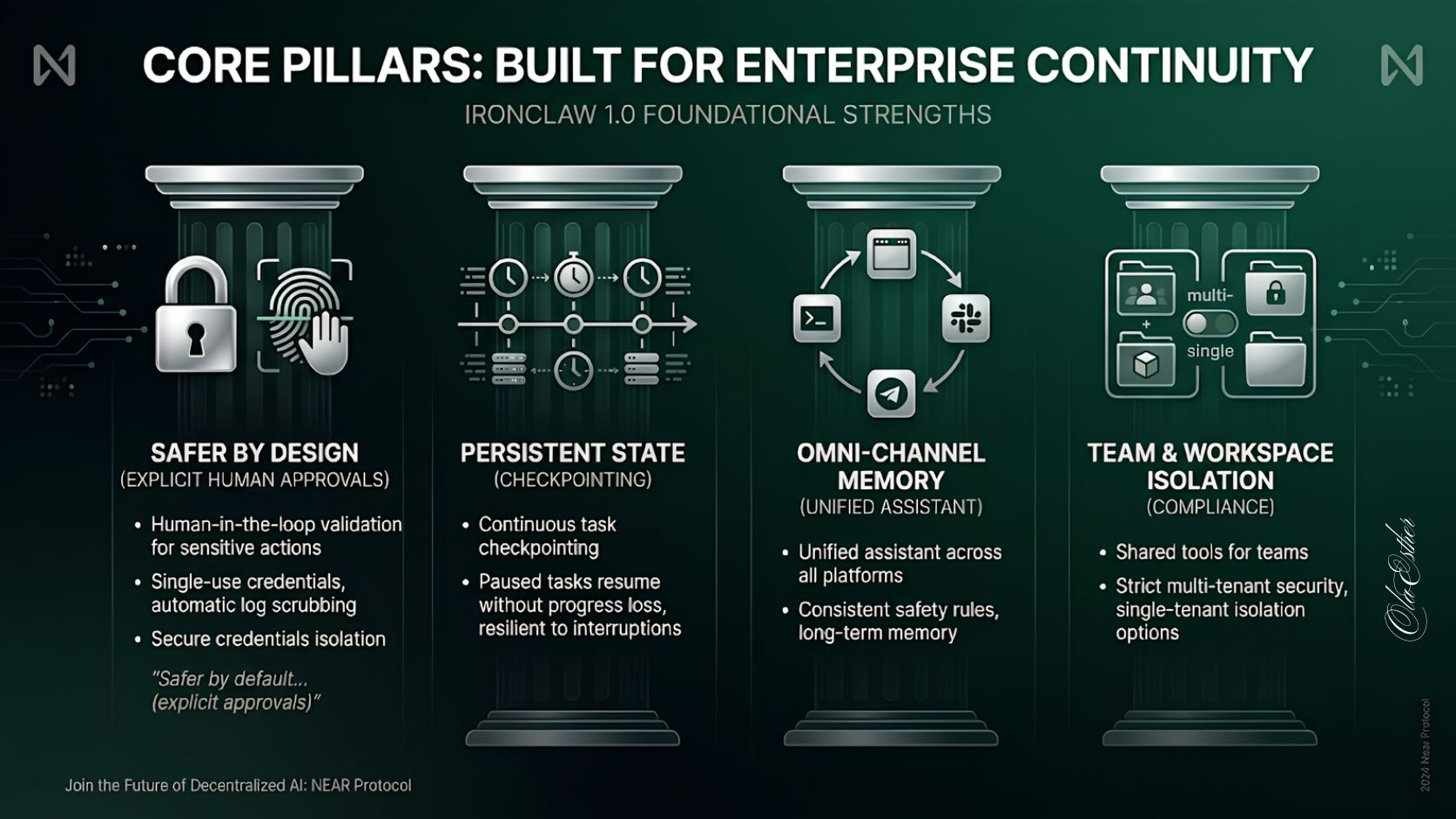
Core Pillars: Built for Enterprise Continuity
Beyond static benchmarks, IronClaw addresses the practical operational challenges of enterprise deployments:
1. Safer by Design: Requires explicit human-in-the-loop approvals for sensitive state changes. Secrets, API keys, and credentials are single-use by default and automatically scrubbed from logs and reports.
2. Persistent State Checkpointing: Traditional agents lose context if interrupted. IronClaw continuously writes state checkpoints, allowing tasks paused for permissions or system restarts to resume immediately without losing progress.
3. Omni-Channel Memory: Integrates across CLI, Web, Slack, and Telegram as a single unified assistant. Cross-channel interactions preserve identical safety rules, preferences, and long-term memory.
4. Team & Workspace Isolation: Supports both multi-tenant team environments—where shared tools accelerate workflow discovery—and strict single-tenant isolation for compliance-heavy enterprise requirements.
The Infrastructure Backbone: NEARAI and Staking
An agent framework is only as reliable as the underlying network powering it. As #NEARAI advances toward next-generation agent rollouts like OpenClaw, the broader NEAR Protocol ecosystem provides the necessary decentralized, user-owned compute layer.
Within this framework, Staking on NEAR extends far beyond generating validation yield. Staked capital provides the economic security and Sybil resistance required to validate hardware-enforced Trusted Execution Environments (TEEs) and zero-knowledge inference nodes.
Staking acts as the foundational economic guarantee securing the decentralized cloud—ensuring that when autonomous AI agents negotiate, hold state, or process financial primitives on behalf of users, the underlying infrastructure remains censorship-resistant, verifiable, and user-owned.
By pairing IronClaw's safe execution harness with NEAR’s economically secured consensus layer, Web3 is establishing the blueprint for the emerging agentic economy.