


¿En qué se diferencia el riesgo de los puentes del modelo de intercambio atómico de Omniston?
A medida que las finanzas descentralizadas se expanden a través de múltiples redes, mover activos entre ecosistemas se ha convertido en una de sus operaciones más importantes — y más riesgosas. Un usuario puede tener un activo en una cadena de bloques pero necesitar un activo equivalente en otra. Tradicionalmente, los puentes han resuelto este problema creando una conexión entre cadenas mediante liquidez mancomunada, activos envueltos, validadores, relayers u otros mecanismos de coordinación.
Sin embargo, estos sistemas introducen suposiciones adicionales de confianza y seguridad.
Omniston adopta un enfoque diferente para su modelo de intercambio atómico. En lugar de depender de una reserva compartida del puente o de un mecanismo convencional de bloqueo y acuñación, el sistema puede usar liquidez proporcionada por el resolvedor junto con HTLCs (Contratos de Timelock Hashed) emparejados, para coordinar los dos lados de un intercambio.
La distinción es importante porque la arquitectura determina no solo cómo se mueven los activos, sino también cómo se manejan los fallos.
¿De Dónde Proviene el Riesgo del Puente?
Los puentes convencionales a menudo dependen de infraestructura que se sitúa entre dos blockchains independientes. Esa infraestructura puede convertirse en un punto de fallo muy poderoso.
1. Las reservas compartidas pueden convertirse en objetivos de alto valor
Muchas arquitecturas de puentes mantienen activos en contratos que, en conjunto, representan liquidez para los usuarios. Cuando se acumulan grandes cantidades de valor en un solo contrato, ese contrato se vuelve un objetivo atractivo para los atacantes.
Una vulnerabilidad en el mecanismo de reservas, la lógica de retiro, el sistema de contabilidad o la capa de autorización puede potencialmente afectar a muchos usuarios simultáneamente.
Esto crea un problema de concentración: una sola explotación puede tener consecuencias mucho más allá de una transacción.
2. Los validadores y los relayers introducen suposiciones adicionales de confianza
Diferentes puentes usan diseños distintos, pero algunos dependen de validadores externos, comités de mult-firma, relayers u otros participantes para observar transacciones en una red y autorizar acciones en otra.
Estos participantes deben verificar correctamente la información y seguir las reglas del protocolo.
Cuanta más coordinación externa se requiere, más posibles puntos de fallo existen. La comprometida, la colusión, la caída (downtime), errores de implementación o la verificación incorrecta de mensajes pueden interferir potencialmente con las operaciones del puente.
3. Los activos envueltos crean riesgo de representación
Un activo puenteado no necesariamente es el activo nativo en sí.
En muchos sistemas de puentes, los usuarios depositan un activo original en un sistema y reciben una representación de ese activo en otra cadena. El activo representado depende de que el puente continúe honrando la relación subyacente.
Si falla el mecanismo de custodia de origen o la infraestructura del puente, la representación envuelta puede dejar de tener el respaldo esperado.
Esto crea una capa de riesgo que no existe exactamente en la misma forma cuando dos partes intercambian activos directamente mediante un mecanismo atómico.
4. La lógica de bloqueo, acuñación y retiro puede crear exposición sistémica
Las operaciones tradicionales de puentes pueden implicar varios pasos conectados:
Bloquear activo → verificar evento → autorizar mensaje → acuñar o liberar activo → procesar retiro
Cada paso introduce una lógica que debe funcionar correctamente.
Un fallo en un componente crítico puede potencialmente propagarse a través de toda la arquitectura del puente. Como el sistema a menudo gestiona activos pertenecientes a muchos usuarios, el impacto puede volverse sistémico en lugar de específico de una transacción.
Cómo Funciona el Modelo de Intercambio Atómico de Omniston
El enfoque atómico de Omniston cambia la estructura de la transacción.
En lugar de crear una relación permanente entre dos redes mediante una reserva compartida y una representación envuelta, una operación puede estructurarse en torno a un pedido específico y a una liquidez específica proporcionada por un resolvedor.
A un nivel simplificado, el flujo se ve así:
1. El acuerdo establece las condiciones de la transacción
El intercambio comienza con parámetros definidos como:
El activo de origen
El activo de destino
La cantidad
Las condiciones de ejecución aplicables
Un hashlock criptográfico compartido
El hashlock se vuelve una parte importante del mecanismo de liquidación porque ambos lados de la transacción pueden vincularse al mismo secreto.
2. Los activos de origen del usuario se bloquean
Los activos del usuario pueden colocarse en un HTLC del lado de origen.
Un HTLC combina dos conceptos:
Hashlock: el activo puede reclamarse cuando se revela el secreto correcto.
Timelock: si la liquidación no ocurre dentro del período requerido, el activo puede volverse reembolsable según las reglas del contrato.
Esto significa que la transacción no depende simplemente de que otra parte prometa completar el intercambio más tarde.
3. El resolvedor bloquea la liquidez de destino
El resolvedor proporciona el lado opuesto de la operación y bloquea la liquidez de destino en otro HTLC.
Crucialmente, los dos HTLCs usan la misma condición subyacente de hashlock.
Esto crea una relación criptográfica entre los dos lados del intercambio.
4. El revelado del secreto habilita la liquidación
Cuando se revela el secreto válido, puede usarse para reclamar los activos bloqueados correspondientes.
Por lo tanto, el mismo secreto vincula la liquidación de ambos lados.
En lugar de depender de un intermediario para mover manualmente el valor entre cadenas, la transacción utiliza condiciones criptográficas predefinidas para coordinar la ejecución.
5. Los timelocks proporcionan una ruta de reembolso
La atomicidad no significa que cada transacción deba tener éxito.
Significa que la lógica del contrato establece condiciones para una liquidación exitosa y condiciones de recuperación cuando no se cumplen esos requisitos.
Si las condiciones necesarias no se cumplen antes del tiempo de espera relevante, los mecanismos HTLC proporcionan una ruta para que los activos bloqueados se reembolsen según sus reglas.
Esto crea una propiedad de seguridad importante: el fallo no debería significar automáticamente una pérdida permanente de los fondos bloqueados.
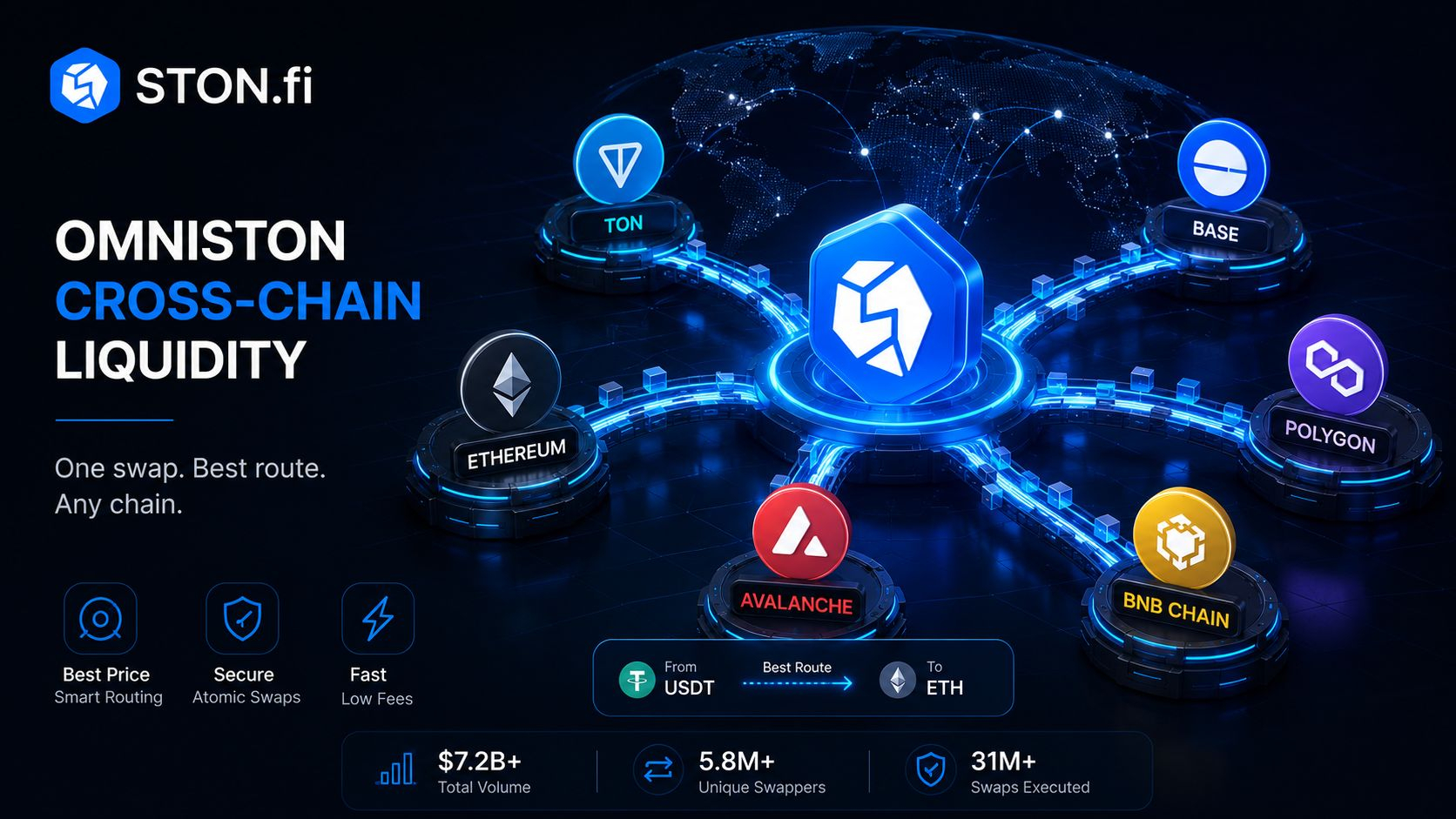
Modelo de Puente vs Modelo de Intercambio Atómico
La diferencia fundamental es la fuente de la confianza.
Un puente convencional puede depender de una capa de infraestructura compartida que conecte redes entre sí. Por ello, los usuarios heredan las suposiciones de seguridad de ese puente.
El modelo atómico de Omniston se centra, en cambio, en la liquidez específica de la transacción y en las condiciones criptográficas específicas de la transacción.
En lugar de decir:
“Confía en esta infraestructura de puente compartida para mantener la relación entre estos activos.”
el modelo atómico se parece más a:
“Estos dos lados de esta operación en particular solo pueden liquidar cuando se cumplen las condiciones predefinidas.”
Esa es una diferencia arquitectónica significativa.
Por qué Importa Eliminar las Reservas Compartidas del Puente
Una de las características más importantes del modelo atómico es que no requiere una reserva compartida del puente para la ruta atómica.
Los resolvedores suministran liquidez para intercambios individuales en su lugar.
Esto cambia el posible alcance (radio de explosión) de ciertos fallos.
Si un puente convencional tiene una gran reserva centralizada y esa reserva se ve comprometida, las consecuencias pueden potencialmente afectar a todo el conjunto (pool) de usuarios que dependen de ella.
Con liquidez del resolvedor específica por transacción, el riesgo se asocia de forma más directa con el intercambio individual y con los mecanismos que protegen ese intercambio.
Esto no hace que el sistema sea libre de riesgos. Cambia dónde vive el riesgo.
En lugar de concentrar el problema alrededor de una reserva común, la arquitectura distribuye la ejecución a través de intercambios individuales gobernados por sus propias condiciones.
El Papel de la Atomicidad
La palabra “atómico” es importante porque describe la relación de liquidación prevista.
Para un intercambio atómico correctamente estructurado, el resultado deseado es, esencialmente:
Ambos lados liquidan con éxito
o
Ninguna de las dos partes queda comprometida permanentemente, y los activos relevantes pasan a ser reembolsables después del tiempo de espera aplicable.
Esto es fundamentalmente diferente de una arquitectura en la que una parte envía un activo y luego espera que un intermediario cree, libere, acuñe o reenvíe el activo correspondiente en otro lugar.
Las condiciones atómicas reducen la necesidad de confiar en que un intermediario complete exitosamente cada etapa del proceso.
¿Qué Riesgos Aún Tiene el Modelo Atómico?
Sería un error describir los intercambios atómicos como si eliminaran todo riesgo entre cadenas o de DeFi.
Principalmente cambian el modelo de riesgo.
Riesgo de contrato inteligente
Los HTLCs se implementan mediante contratos inteligentes o lógica equivalente en la blockchain. Los errores en esos contratos aún pueden crear vulnerabilidades.
El diseño criptográfico correcto no protege contra una implementación defectuosa.
Riesgo de blockchain
Las blockchains subyacentes siguen formando parte del modelo de seguridad.
La congestión de la red, la reorganización, la caída (downtime), un comportamiento inesperado del protocolo u otros eventos a nivel de cadena pueden afectar la ejecución.
El mecanismo atómico no puede hacer que una blockchain subyacente sea inmune a sus propios riesgos.
Riesgo de liquidez del resolvedor
Los resolvedores son responsables de proporcionar la liquidez del lado de destino.
Un resolvedor puede no tener suficiente liquidez, puede retirar liquidez, o puede cotizar condiciones que ya no son atractivas para el usuario.
El modelo elimina ciertas suposiciones del puente, pero aún depende de la liquidez disponible de la contraparte.
Riesgo de cotización y de ejecución
Un intercambio técnicamente exitoso aún puede ser desfavorable desde el punto de vista económico.
Las tasas de cambio pueden cambiar, la profundidad del mercado puede ser diferente y las condiciones de ejecución pueden moverse entre la generación de la cotización y la liquidación.
Por lo tanto, los usuarios deben evaluar la cantidad de salida real y los términos de ejecución en lugar de enfocarse solo en la arquitectura.
Riesgo de cartera y de firma
La liquidación atómica no puede proteger a un usuario que firma la transacción incorrecta, interactúa con una interfaz maliciosa o proporciona un activo no intencionado.
La seguridad de las carteras sigue siendo fundamental.
Riesgo de identificación de activo y de red
Los entornos entre cadenas pueden contener activos con nombres similares, direcciones de contrato diferentes o múltiples representaciones.
Los usuarios deben verificar que están intercambiando el activo previsto en la red prevista.
Un mecanismo de liquidación seguro no puede corregir una transacción que se configuró incorrectamente, ya sea intencionalmente o por accidente.
Pedidos Grandes y Finalización Parcial
Otra consideración importante es que los pedidos grandes pueden dividirse en sub-intercambios independientes.
Esto puede mejorar la flexibilidad de la ejecución y facilitar la obtención de liquidez.
Sin embargo, también significa que la transacción en general no siempre debe verse como un único evento indivisible.
Algunas partes pueden ejecutarse mientras que otra parte no.
Por lo tanto, los usuarios deben entender la estructura de ejecución de pedidos más grandes y confirmar cómo se manejan las partes completadas y no completadas.
El Panorama Más Amplio
La comparación entre el riesgo de un puente y el riesgo de un intercambio atómico de Omniston no es simplemente una cuestión de qué sistema es “seguro” y cuál es “inseguro”.
La pregunta más útil es:
¿Qué suposiciones deben cumplirse para que la transacción tenga éxito de forma segura?
Un puente convencional puede requerir confianza en reservas compartidas, mecanismos de custodia, conjuntos de validadores, relayers, verificación de mensajes, contabilidad de tokens envueltos y lógica de liberación entre cadenas.
Un modelo de intercambio atómico cambia esa dependencia hacia:
Liquidez del resolvedor + condiciones criptográficas + corrección del contrato inteligente + confiabilidad de la blockchain.
Ese es un modelo de fallos sustancialmente diferente.
Conclusión Práctica
La arquitectura del puente a menudo introduce infraestructura compartida que puede convertirse en un punto de concentración de liquidez y confianza.
El modelo de intercambio atómico de Omniston aborda el intercambio entre redes de forma diferente al usar liquidez del resolvedor y HTLCs emparejados vinculados a condiciones criptográficas compartidas.
El concepto esencial es sencillo:
El intercambio cumple o bien con las condiciones predefinidas de liquidación, o bien el mecanismo de tiempo de espera proporciona una ruta de reembolso.
Esto no elimina todos los riesgos. Los contratos inteligentes aún pueden contener errores; las blockchains aún pueden fallar; los resolvedores aún pueden enfrentar limitaciones de liquidez; las cotizaciones pueden cambiar; las carteras pueden verse comprometidas; y los usuarios aún pueden seleccionar los activos o redes incorrectos.
Pero la arquitectura cambia las suposiciones de seguridad.
En lugar de depender de una reserva compartida del puente y de mecanismos de acuñación o liberación controlados por un intermediario, la ruta atómica puede hacer que el intercambio individual sea la unidad de coordinación.
Para los usuarios, la lección práctica también es igual de importante: antes de firmar, verifiquen el activo exacto, la red, la cantidad, la cotización, la ruta compatible con resolvedores, los términos de ejecución y las condiciones de reembolso.
Los intercambios atómicos no hacen que el trading entre cadenas sea libre de riesgo. Hacen que las reglas que rigen la liquidación sean mucho más explícitas y específicas para cada transacción.
Esa diferencia está en el corazón de entender el riesgo del puente frente al modelo de intercambio atómico de Omniston.
Explora más sobre STON.FI