


Rain Protocol has used decentralized governance to resolve a dispute over its Credit Refund program, with token holders approving a settlement that has now resulted in the permanent destruction of 7.4 billion RAIN tokens.
The dispute emerged after the Rain Foundation identified coordinated activity involving multiple wallets that it said was designed to bypass the program’s $5,000-per-user allocation cap. Rather than decide the response internally, Rain put a proposed settlement to a vote by RAIN token holders, while Foundation and team-controlled wallets abstained.
CASE STUDY | This Major Blockchain Ecosystem is Facing Unintended Consequences of Decentralized Governance
The community approved a plan under which the Foundation committed $23 million in USDT to buy remaining locked refund allocations at $0.0031 per RAIN, with the purchased tokens earmarked for permanent removal from circulation.
Following the close of the claims period, Rain burned 7,419,354,838 RAIN, representing about 1.035% of circulating supply. The tokens were worth about $108 million at the time of the burn, according to the protocol.
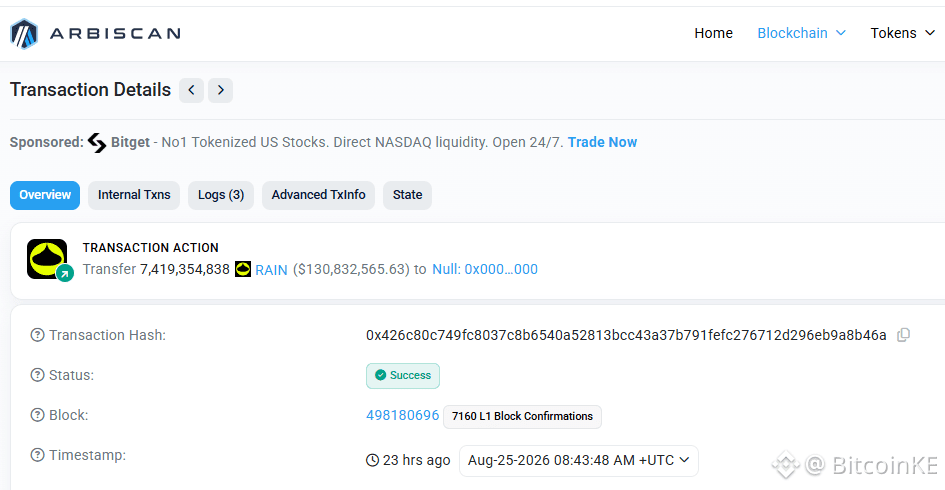
The episode highlights a practical use of DAO governance:
Allowing token holders to determine how a contentious protocol-level dispute is resolved, while the final decision is executed transparently on-chain.
“Governance matters most when a decision has real consequences for the people participating in a protocol,” said Rain CEO, Roy Shaham.
“The community made the decision, the Foundation committed the capital, and this burn completes that decision transparently on-chain for anyone to verify. That is the standard decentralized governance should be held to as Rain moves into V2.”
CASE STUDY | This Leading DAO Exploit Shows the Biggest Risk to On-Chain Governance is Governance Itself
Stay tuned to BitKE on DeFi updates.
Join our WhatsApp channel here.
Follow us on X for the latest posts and updates
Join and interact with our Telegram community
_____________