#termmax @TermMax Hoy estaba leyendo la documentación de TermMax y hubo una cosa que realmente llamó mi atención
Eran las Órdenes por Rangos.
Al principio el nombre sonaba complicado. Pero la idea es en realidad bastante simple:
¿Qué pasa si no quiero aceptar la tasa de préstamo que me da el protocolo? ¿Y si quiero establecer mis propias condiciones?
Eso es básicamente lo que TermMax está intentando habilitar.
Su documentación ofrece un ejemplo muy claro:
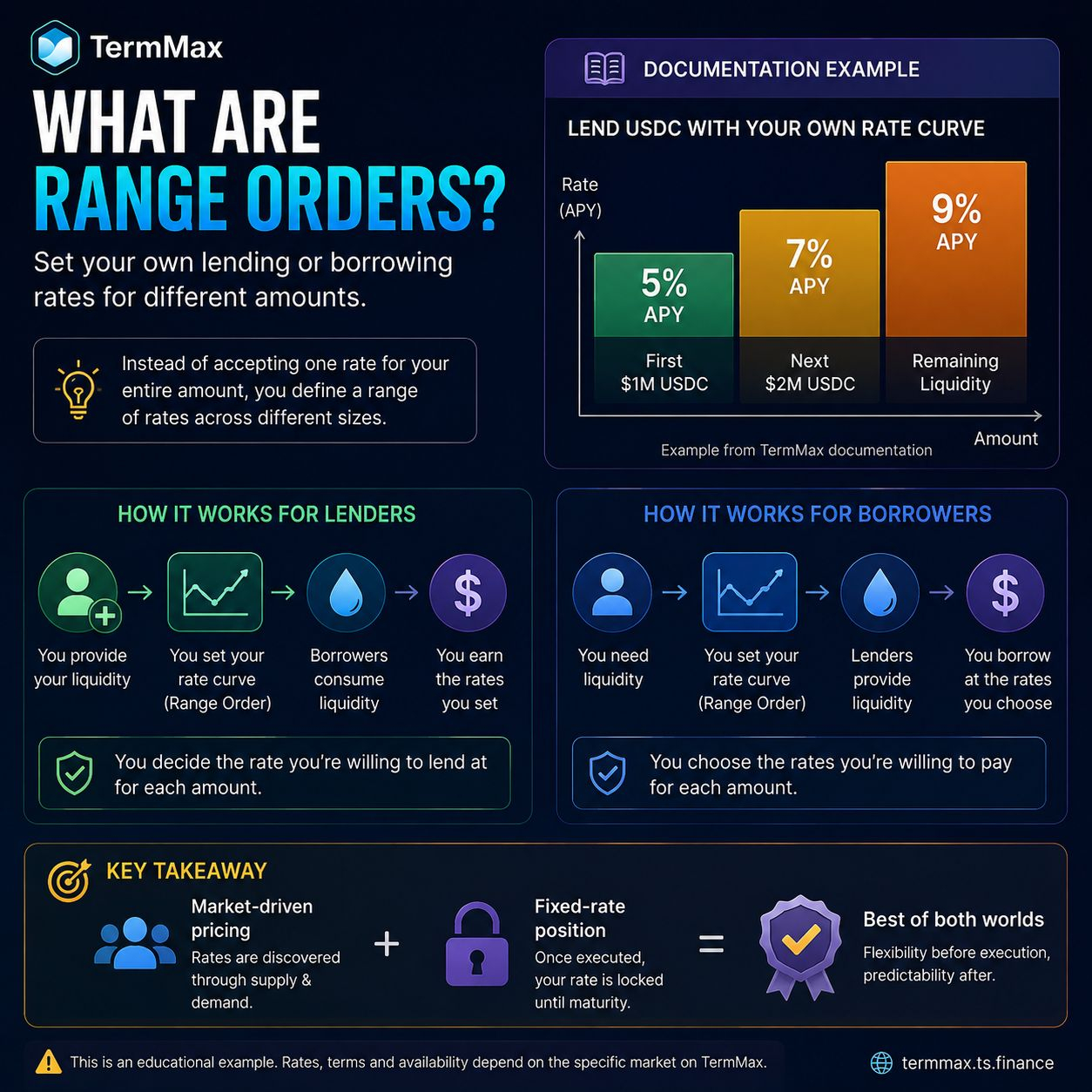
Imagina que quiero prestar USDC.
Podría configurar:
🔹 Los primeros $1M → 5%
🔹 Los siguientes $2M → 7%
🔹 Liquidez restante → 9%
Así que no es simplemente presionar “Lend” y aceptar cualquier APY que aparezca en mi pantalla.
Estoy diciendo:
“Hasta esta cantidad, estoy dispuesto a prestar a esta tasa. Si quieres más de mi liquidez, quiero una tasa más alta.”
Y los prestatarios también pueden crear sus propias curvas de tasas.
Este fue el momento en que las Órdenes por Rangos finalmente cobraron sentido para mí.
Una posición a tasa fija no significa que todo el mercado tenga una sola tasa fija.
El mercado aún puede descubrir un precio a través de prestamistas y prestatarios que establecen las condiciones que están dispuestos a aceptar.
Luego, una vez que la posición se ejecuta, obtienes la previsibilidad de una tasa fija.
En realidad, es una combinación bastante interesante:
Precios impulsados por el mercado → posición a tasa fija.
Me resultó mucho más fácil entenderlo después de ver el ejemplo en su documentación.
#TermMax #DeFi #RangeOrders #FixedRate
Eran las Órdenes por Rangos.
Al principio el nombre sonaba complicado. Pero la idea es en realidad bastante simple:
¿Qué pasa si no quiero aceptar la tasa de préstamo que me da el protocolo? ¿Y si quiero establecer mis propias condiciones?
Eso es básicamente lo que TermMax está intentando habilitar.
Su documentación ofrece un ejemplo muy claro:
Imagina que quiero prestar USDC.
Podría configurar:
🔹 Los primeros $1M → 5%
🔹 Los siguientes $2M → 7%
🔹 Liquidez restante → 9%
Así que no es simplemente presionar “Lend” y aceptar cualquier APY que aparezca en mi pantalla.
Estoy diciendo:
“Hasta esta cantidad, estoy dispuesto a prestar a esta tasa. Si quieres más de mi liquidez, quiero una tasa más alta.”
Y los prestatarios también pueden crear sus propias curvas de tasas.
Este fue el momento en que las Órdenes por Rangos finalmente cobraron sentido para mí.
Una posición a tasa fija no significa que todo el mercado tenga una sola tasa fija.
El mercado aún puede descubrir un precio a través de prestamistas y prestatarios que establecen las condiciones que están dispuestos a aceptar.
Luego, una vez que la posición se ejecuta, obtienes la previsibilidad de una tasa fija.
En realidad, es una combinación bastante interesante:
Precios impulsados por el mercado → posición a tasa fija.
Me resultó mucho más fácil entenderlo después de ver el ejemplo en su documentación.
#TermMax #DeFi #RangeOrders #FixedRate