#termmax @TermMax
Analizar el código base central y las especificaciones técnicas de @TermMax revela una redefinición fundamental de la mecánica de DeFi de renta fija. La mayoría de los protocolos de préstamos tradicionales intentan forzar productos de tasa fija en pools de liquidez uniformes y rígidos. Esto rutinariamente conduce a una fragmentación severa de la liquidez entre diferentes fechas de vencimiento o expone a los proveedores de liquidez a una alta pérdida impermanente.
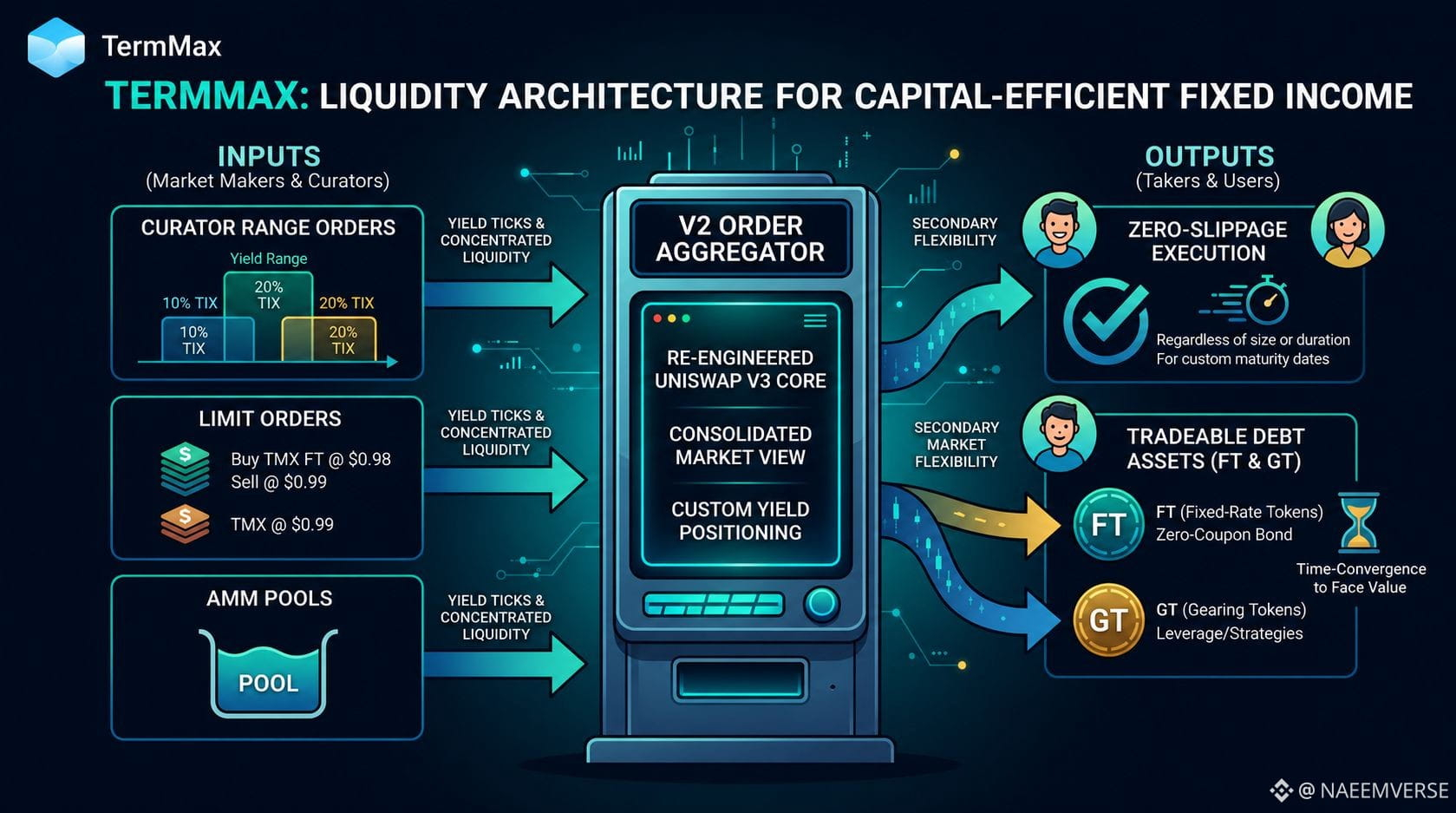
TermMax resuelve este cuello de botella mediante su AMM personalizable con Órdenes por Rango. En lugar de forzar el trading a tasa fija en curvas invariantes tradicionales, los Market Makers pueden posicionar la liquidez a través de ticks de rendimiento altamente específicos.
Al agregarse a través del Agregador de Órdenes V2, el sistema consolida órdenes por rango de curadores, órdenes límite y pools de AMM en una capa de ejecución unificada. Para los tomadores, esto significa ejecución con cero deslizamiento independientemente del tamaño de la posición o la duración.
Además, al tokenizar la deuda en Tokens de Tasa Fija de Cero Cupón (FT), los usuarios conservan liquidez en el mercado secundario. No solo estás bloqueando capital; estás manteniendo un activo negociable que converge de forma constante hacia su valor nominal a medida que se acerca la fecha de vencimiento.
Al combinar una gestión granular de rangos de liquidez con trading secundario flexible, #TermMax crea una configuración eficiente en capital diseñada para ejecutar estrategias de rendimiento institucional.
Cuando las órdenes de rango de liquidez eliminan el deslizamiento para vencimientos personalizados, ¿la financiación a tasa variable se vuelve obsoleta para los actores institucionales?
Analizar el código base central y las especificaciones técnicas de @TermMax revela una redefinición fundamental de la mecánica de DeFi de renta fija. La mayoría de los protocolos de préstamos tradicionales intentan forzar productos de tasa fija en pools de liquidez uniformes y rígidos. Esto rutinariamente conduce a una fragmentación severa de la liquidez entre diferentes fechas de vencimiento o expone a los proveedores de liquidez a una alta pérdida impermanente.
TermMax resuelve este cuello de botella mediante su AMM personalizable con Órdenes por Rango. En lugar de forzar el trading a tasa fija en curvas invariantes tradicionales, los Market Makers pueden posicionar la liquidez a través de ticks de rendimiento altamente específicos.
Al agregarse a través del Agregador de Órdenes V2, el sistema consolida órdenes por rango de curadores, órdenes límite y pools de AMM en una capa de ejecución unificada. Para los tomadores, esto significa ejecución con cero deslizamiento independientemente del tamaño de la posición o la duración.
Además, al tokenizar la deuda en Tokens de Tasa Fija de Cero Cupón (FT), los usuarios conservan liquidez en el mercado secundario. No solo estás bloqueando capital; estás manteniendo un activo negociable que converge de forma constante hacia su valor nominal a medida que se acerca la fecha de vencimiento.
Al combinar una gestión granular de rangos de liquidez con trading secundario flexible, #TermMax crea una configuración eficiente en capital diseñada para ejecutar estrategias de rendimiento institucional.
Cuando las órdenes de rango de liquidez eliminan el deslizamiento para vencimientos personalizados, ¿la financiación a tasa variable se vuelve obsoleta para los actores institucionales?