#dusk $DUSK @Dusk Yo a menudo pensé que la tokenización de activos del mundo real era simplemente una cuestión de tomar activos financieros tradicionales y envolverlos en una blockchain pública y transparente.
Los relatos superficiales suelen tratar la tokenización como una simple mejora de libro mayor, un proceso directo de trasladar valores heredados de papel a la cadena para ganar velocidad y accesibilidad.
Pero a medida que leía más sobre $DUSK me di cuenta de que la ejecución requiere una infraestructura mucho más profunda.
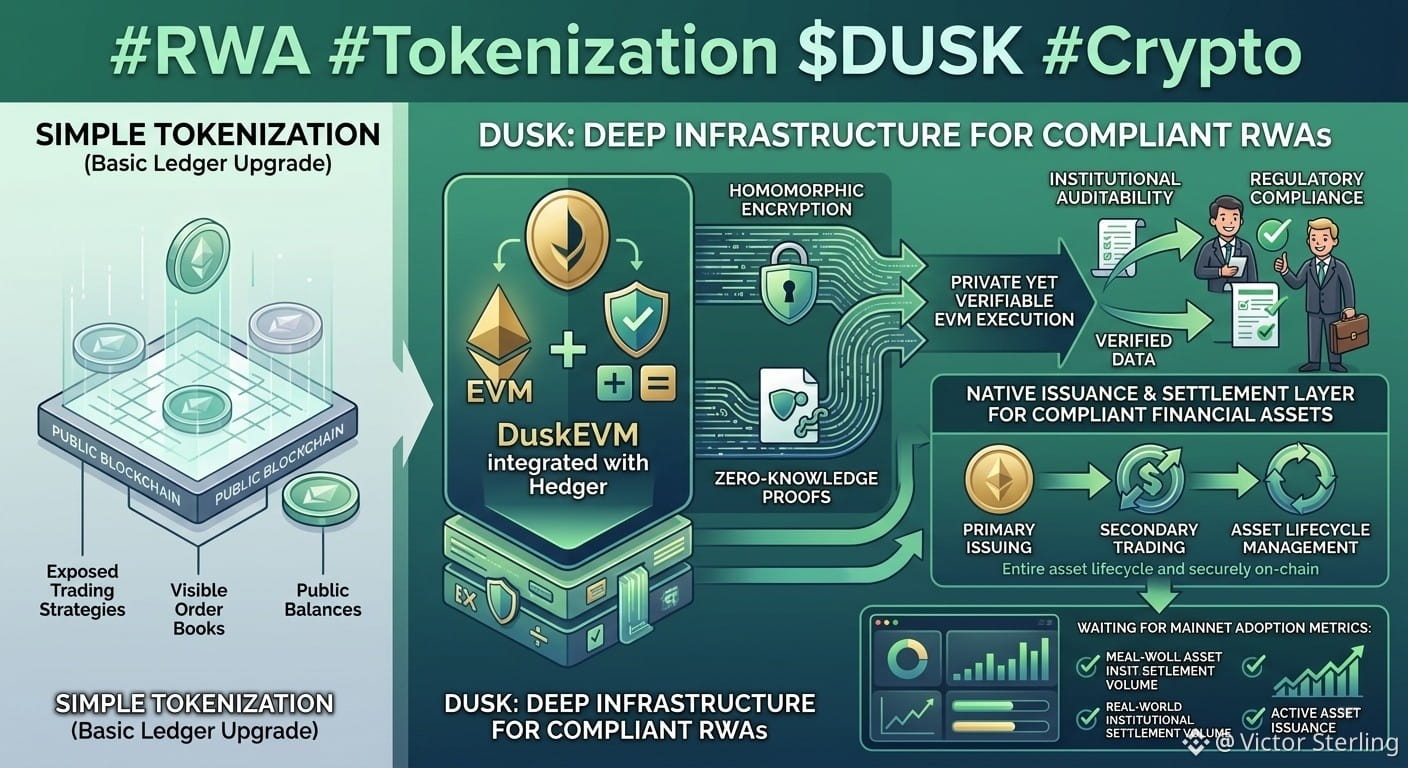
Lo que llamó mi atención fue DuskEVM integrado con Hedger, que permite una ejecución EVM privada pero verificable al combinar cifrado homomórfico con pruebas de conocimiento cero directamente dentro de entornos estándar de contratos inteligentes.
Este mecanismo técnico resuelve un enorme dilema institucional en los mercados financieros tradicionales. Las instituciones financieras reguladas no pueden exponer estrategias de negociación confidenciales, libros de órdenes o saldos de carteras en libros mayores públicos. Sin embargo, exigen auditabilidad para el cumplimiento normativo. La ejecución verificable y privada salva exactamente esta fricción entre la confidencialidad del cliente y la supervisión legal.
Al conectar esta funcionalidad con el ecosistema más amplio de Dusk, se revela un objetivo general y claro: establecer una capa nativa de emisión y liquidación para activos financieros compatibles. En lugar de simples tokens envoltorio, incorporar privacidad auditable directamente en la ejecución habilita una emisión primaria genuina, negociación secundaria y una gestión del ciclo de vida de activos on-chain de nivel institucional.
En última instancia, una arquitectura técnica convincente debe demostrar su valor en el mundo real bajo condiciones de mercado en vivo. Me mantengo objetivo y espero métricas de adopción de mainnet—en particular el volumen real de liquidación institucional y la emisión activa de activos—antes de sacar una conclusión definitiva sobre su utilidad a largo plazo y su trayectoria de adopción.
#RWA #Tokenization $DUSK #Crypto
Los relatos superficiales suelen tratar la tokenización como una simple mejora de libro mayor, un proceso directo de trasladar valores heredados de papel a la cadena para ganar velocidad y accesibilidad.
Pero a medida que leía más sobre $DUSK me di cuenta de que la ejecución requiere una infraestructura mucho más profunda.
Lo que llamó mi atención fue DuskEVM integrado con Hedger, que permite una ejecución EVM privada pero verificable al combinar cifrado homomórfico con pruebas de conocimiento cero directamente dentro de entornos estándar de contratos inteligentes.
Este mecanismo técnico resuelve un enorme dilema institucional en los mercados financieros tradicionales. Las instituciones financieras reguladas no pueden exponer estrategias de negociación confidenciales, libros de órdenes o saldos de carteras en libros mayores públicos. Sin embargo, exigen auditabilidad para el cumplimiento normativo. La ejecución verificable y privada salva exactamente esta fricción entre la confidencialidad del cliente y la supervisión legal.
Al conectar esta funcionalidad con el ecosistema más amplio de Dusk, se revela un objetivo general y claro: establecer una capa nativa de emisión y liquidación para activos financieros compatibles. En lugar de simples tokens envoltorio, incorporar privacidad auditable directamente en la ejecución habilita una emisión primaria genuina, negociación secundaria y una gestión del ciclo de vida de activos on-chain de nivel institucional.
En última instancia, una arquitectura técnica convincente debe demostrar su valor en el mundo real bajo condiciones de mercado en vivo. Me mantengo objetivo y espero métricas de adopción de mainnet—en particular el volumen real de liquidación institucional y la emisión activa de activos—antes de sacar una conclusión definitiva sobre su utilidad a largo plazo y su trayectoria de adopción.
#RWA #Tokenization $DUSK #Crypto