Cada vez que me inscribo en algo regulado, es la misma rutina: pasaporte, dirección, documentos, prueba de esto, prueba de aquello.
Luego se lo entrego todo a otra empresa y básicamente confío en que lo mantenga Seguro.
Eso es lo que hizo que Citadel me hiciera clic.
La idea es bastante simple: en lugar de entregar repetidamente los datos subyacentes, mantienes el control de tu identidad y pruebas solo lo que la otra parte realmente necesita saber.
Digamos que un servicio necesita saber si pasaste KYC.
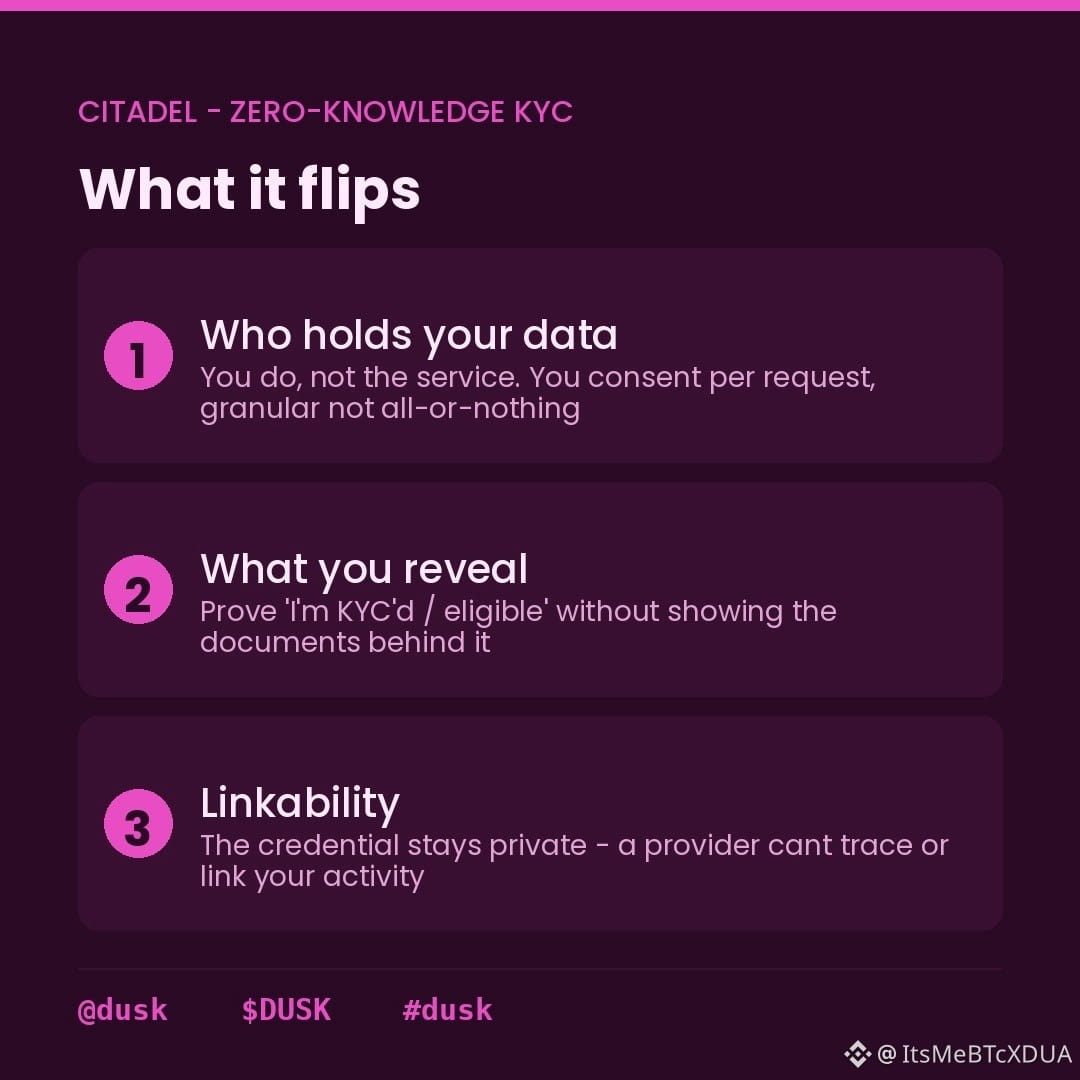
No necesariamente necesita que tu pasaporte esté sentado en su base de datos. Podrías demostrar que estás verificado con KYC, que eres elegible para algo o que tienes un cierto certificado sin revelar toda la información detrás de esa afirmación.
Esa es la parte interesante de usar pruebas de conocimiento cero aquí. El servicio obtiene la respuesta que necesita sin obtener el archivo completo.
Y hay otra parte que al principio pasé por alto: la vinculabilidad.
Un sistema de credenciales puede volverse menos privado si la credencial en sí se convierte en algún identificador público que sigue tu actividad por todas partes. El diseño de Citadel usa credenciales privadas y sesiones específicas del servicio en su lugar, lo cual es un modelo mucho más limpio para evitar que la identidad y la actividad queden conectadas de forma trivial.
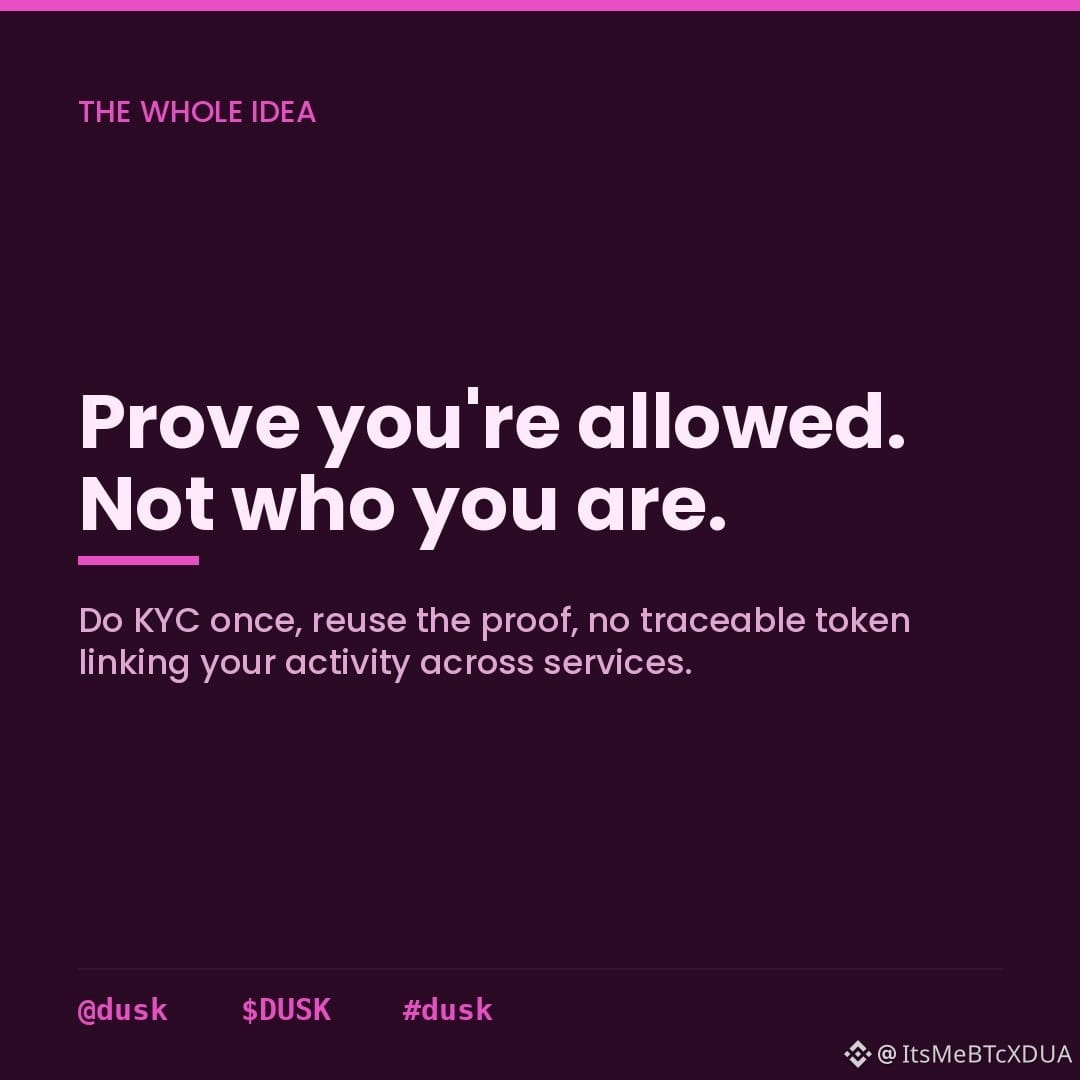
La idea más grande es que podrías verificar tu identidad una vez y reutilizar esa prueba en distintos servicios, en vez de reiniciar el mismo proceso de KYC cada vez.
Sin embargo, todavía hay una pega.
La identidad autosoberana no hace que los problemas difíciles desaparezcan. Todavía tienes la gestión de claves y de credenciales, y las instituciones todavía necesitan aceptar este tipo de prueba como suficiente para cumplir con sus requisitos de cumplimiento.
Así que quizá el problema más difícil no es la criptografía en absoluto.
¿El verdadero desafío es que las instituciones se sientan cómodas con una identidad controlada por el usuario en lugar de las bases de datos que han estado construyendo durante años?
@Dusk
$DUSK #dusk
Luego se lo entrego todo a otra empresa y básicamente confío en que lo mantenga Seguro.
Eso es lo que hizo que Citadel me hiciera clic.
La idea es bastante simple: en lugar de entregar repetidamente los datos subyacentes, mantienes el control de tu identidad y pruebas solo lo que la otra parte realmente necesita saber.
Digamos que un servicio necesita saber si pasaste KYC.
No necesariamente necesita que tu pasaporte esté sentado en su base de datos. Podrías demostrar que estás verificado con KYC, que eres elegible para algo o que tienes un cierto certificado sin revelar toda la información detrás de esa afirmación.
Esa es la parte interesante de usar pruebas de conocimiento cero aquí. El servicio obtiene la respuesta que necesita sin obtener el archivo completo.
Y hay otra parte que al principio pasé por alto: la vinculabilidad.
Un sistema de credenciales puede volverse menos privado si la credencial en sí se convierte en algún identificador público que sigue tu actividad por todas partes. El diseño de Citadel usa credenciales privadas y sesiones específicas del servicio en su lugar, lo cual es un modelo mucho más limpio para evitar que la identidad y la actividad queden conectadas de forma trivial.
La idea más grande es que podrías verificar tu identidad una vez y reutilizar esa prueba en distintos servicios, en vez de reiniciar el mismo proceso de KYC cada vez.
Sin embargo, todavía hay una pega.
La identidad autosoberana no hace que los problemas difíciles desaparezcan. Todavía tienes la gestión de claves y de credenciales, y las instituciones todavía necesitan aceptar este tipo de prueba como suficiente para cumplir con sus requisitos de cumplimiento.
Así que quizá el problema más difícil no es la criptografía en absoluto.
¿El verdadero desafío es que las instituciones se sientan cómodas con una identidad controlada por el usuario en lugar de las bases de datos que han estado construyendo durante años?
@Dusk
$DUSK #dusk