


Crypto Made Simple: A Beginner's Guide to Digital Money
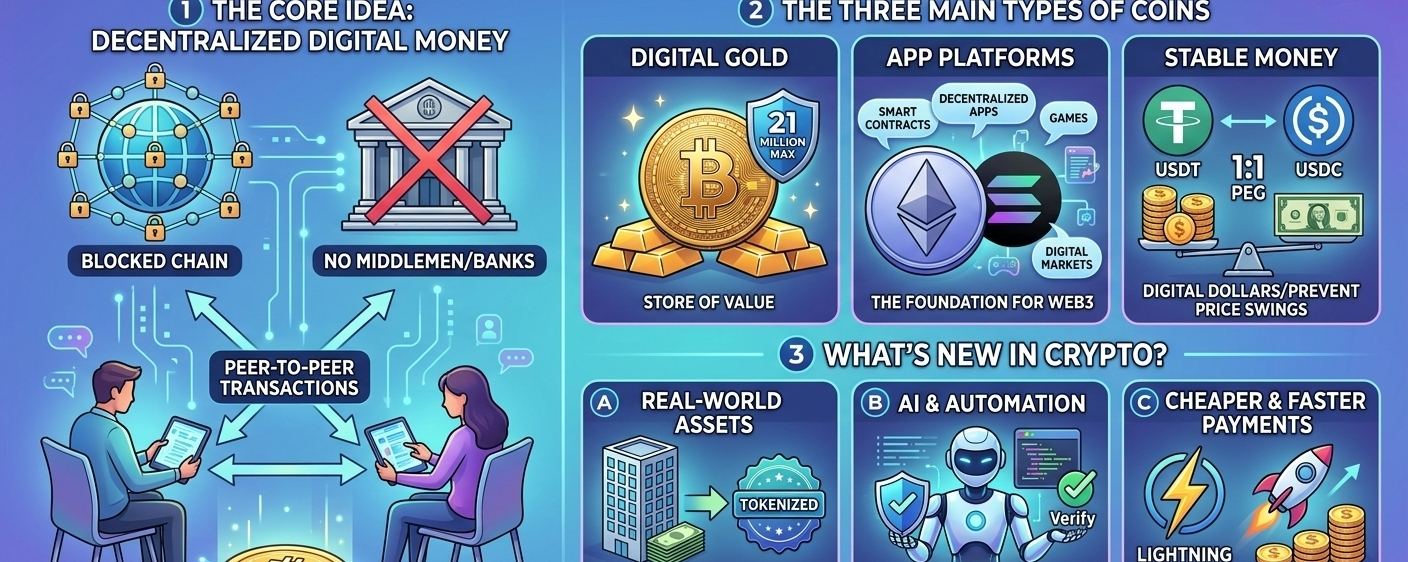
Cryptocurrency might seem complicated with all its technical jargon, but the core idea is simple: it is digital money designed to work without banks or middlemen.
Instead of a single company or government controlling the system, cryptocurrencies use a secure shared network called a blockchain to record transactions transparently and safely.
The Three Main Types of Coins
To understand the market quickly, you can divide most popular coins into three clear groups:
CategoryRolePopular ExampleWhat It DoesDigital GoldStore of ValueBitcoin (BTC)Scarcity-driven asset used to store wealth over time.App PlatformsSmart Contracts & TechEthereum (ETH), Solana (SOL)"App stores" of Web3 that power apps, games, and digital markets.Stable MoneyDigital CashUSDT, USDCPegged 1:1 to the US Dollar to prevent price swings.
The Big Players Explained
Bitcoin (BTC): The first and most famous cryptocurrency. Because there will only ever be 21 million Bitcoins created, many people view it as digital gold to protect against inflation
Ethereum (ETH): Ethereum introduced smart contracts—computer programs that automatically execute agreements without needing a middleman. Most decentralized apps and decentralized finance (DeFi) platforms are built on top of Ethereum.
Solana (SOL): Built for high speed and tiny transaction fees. It handles thousands of transactions per second, making it popular for everyday decentralized trading and gaming.
What’s New in Crypto?
Real-World Connection: Traditional finance is moving on-chain. Banks and funds are beginning to tokenize everyday assets like government bonds and real estate.
AI & Automation: New tools allow autonomous software agents to manage digital portfolios and verify network operations automatically.
Cheaper & Faster Payments: High fees on main networks are being solved by "Layer-2" add-ons and high-speed blockchains, making instant cross-border payments cheap and accessible.
Key Takeaway
Crypto is no longer just about wild price guesses—it is evolving into an infrastructure for fast global payments, digital ownership, and internet-native financial apps.