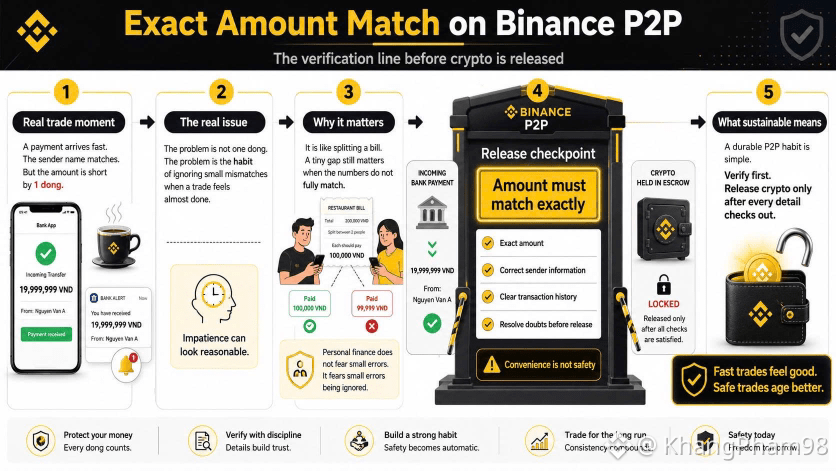
Una vez vendí USDT en Binance P2P en una tarde cualquiera, esperando el café mientras miraba el teléfono. El dinero llegó rápido, el nombre del remitente era correcto, pero faltaba un dong en el importe. El comprador dijo que no importaba, yo cancelé la orden.
El problema no era un dong. El problema era la costumbre de pasar por alto pequeñas discrepancias cuando el intercambio estaba casi terminado. En las criptomonedas, la impaciencia muchas veces viste con mucha elegancia las ropas de la razón.
Lo veo parecido a recibir dinero juntado para una cuenta compartida. Todo el mundo dice que que falten unos miles no pasa nada, pero la persona que tiene el dinero igual se siente inquieta si la división no coincide. Las finanzas personales no odian los errores pequeños; solo odian que los errores se tomen a la ligera.
Que el importe coincida hasta el último dong en Binance P2P es como la línea pintada al borde de un andén. No hace que el tren vaya más rápido, pero nos recuerda ponernos en el lugar correcto antes de que se abran las puertas. Entre billeteras, códigos, órdenes y capturas de pantalla, el número desnudo es lo más sobrio.
Puedo discutir conmigo mismo que un proceso rígido puede hacer que la experiencia sea más lenta. Pero ir unos minutos más despacio sigue saliendo más barato que una liberación equivocada. Binance P2P no debería ser un lugar para poner a prueba la buena fe, sino un lugar donde los datos hablen en vez de los sentimientos.
Durable no significa tener muchas órdenes, órdenes rápidas ni cumplidos después de un intercambio. Durable significa que el dinero está absolutamente correcto, que la información del remitente coincide, que el historial está claro y que las dudas se resuelven antes de que las criptomonedas salgan de la billetera. El ecosistema solo está sano cuando los usuarios se acostumbran a una disciplina pequeña.
Por eso veo la coincidencia del importe hasta cada dong como la prueba mínima en Binance P2P. Cualquiera que lo vea como algo engorroso quizá esté confundiendo comodidad con seguridad. La pregunta restante es si queremos operar más rápido o dormir más tranquilos.
@Binance Vietnam #BinanceP2PAnToan
El problema no era un dong. El problema era la costumbre de pasar por alto pequeñas discrepancias cuando el intercambio estaba casi terminado. En las criptomonedas, la impaciencia muchas veces viste con mucha elegancia las ropas de la razón.
Lo veo parecido a recibir dinero juntado para una cuenta compartida. Todo el mundo dice que que falten unos miles no pasa nada, pero la persona que tiene el dinero igual se siente inquieta si la división no coincide. Las finanzas personales no odian los errores pequeños; solo odian que los errores se tomen a la ligera.
Que el importe coincida hasta el último dong en Binance P2P es como la línea pintada al borde de un andén. No hace que el tren vaya más rápido, pero nos recuerda ponernos en el lugar correcto antes de que se abran las puertas. Entre billeteras, códigos, órdenes y capturas de pantalla, el número desnudo es lo más sobrio.
Puedo discutir conmigo mismo que un proceso rígido puede hacer que la experiencia sea más lenta. Pero ir unos minutos más despacio sigue saliendo más barato que una liberación equivocada. Binance P2P no debería ser un lugar para poner a prueba la buena fe, sino un lugar donde los datos hablen en vez de los sentimientos.
Durable no significa tener muchas órdenes, órdenes rápidas ni cumplidos después de un intercambio. Durable significa que el dinero está absolutamente correcto, que la información del remitente coincide, que el historial está claro y que las dudas se resuelven antes de que las criptomonedas salgan de la billetera. El ecosistema solo está sano cuando los usuarios se acostumbran a una disciplina pequeña.
Por eso veo la coincidencia del importe hasta cada dong como la prueba mínima en Binance P2P. Cualquiera que lo vea como algo engorroso quizá esté confundiendo comodidad con seguridad. La pregunta restante es si queremos operar más rápido o dormir más tranquilos.
@Binance Vietnam #BinanceP2PAnToan